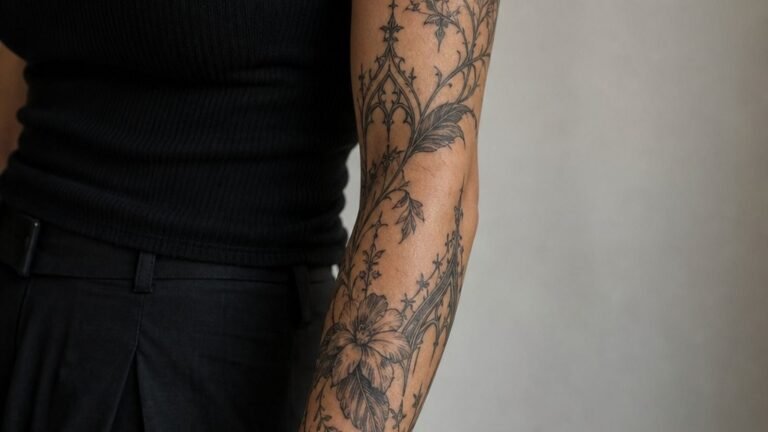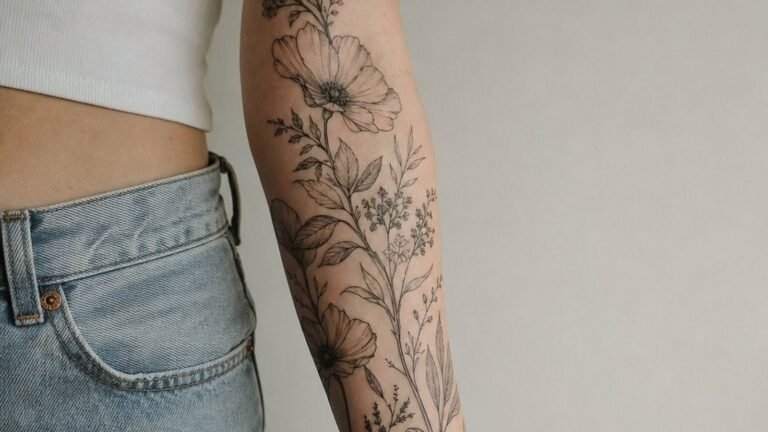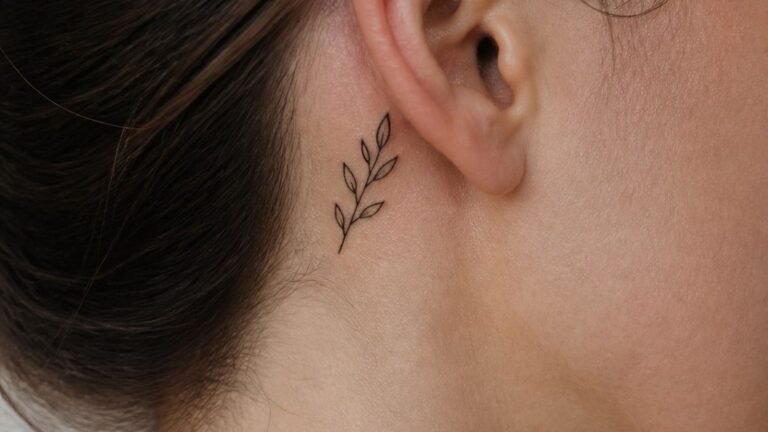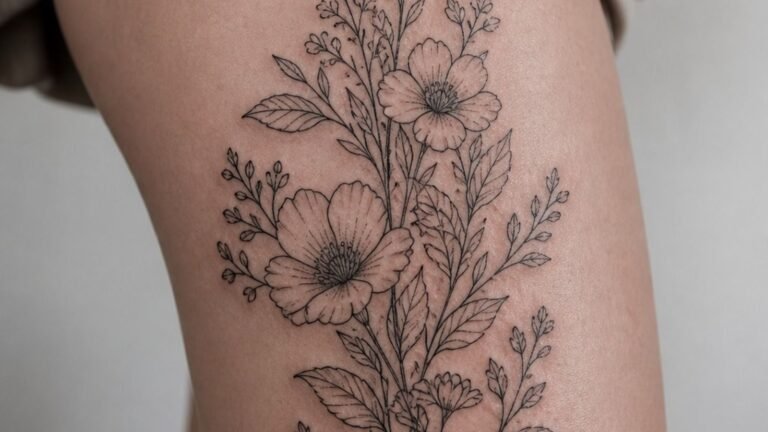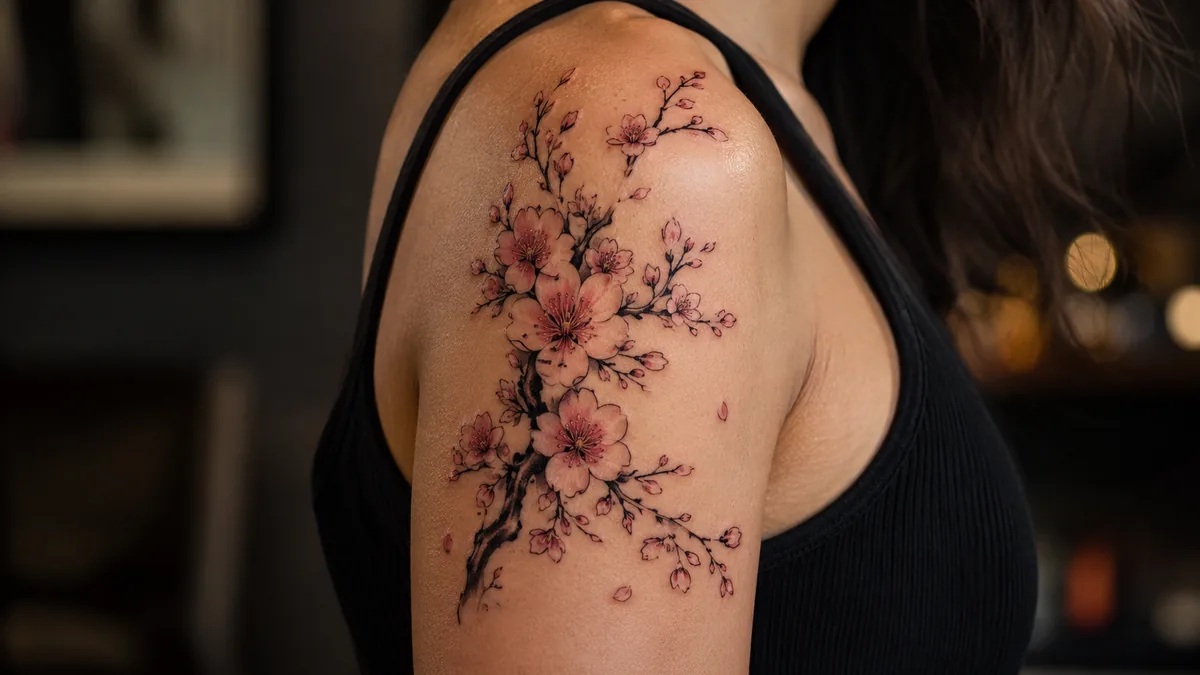
The sakura flower tattoo is one of the most requested pieces in any shop, and for good reason. Cherry blossoms carry real weight. They mean something before you even pick a style.
the sakura tattoo is about the beauty of impermanence. Short lives, huge impact. That message hits different for different people, and that’s exactly why it works on so many different bodies.
What Sakura Actually Symbolizes
The sakura flower is tied to the Japanese concept of mono no aware, which roughly translates to the bittersweet awareness that nothing lasts. Cherry blossoms bloom hard for about two weeks, then they’re gone. That cycle is the whole point. The tattoo carries that same energy: life is short, live it fully.
Most people who get this piece are marking something. A loss, a transition, a decision to stop waiting around. The symbolism isn’t decorative fluff. It’s a real philosophical stance rendered in ink on skin. That’s why it reads with weight even in a simple, small format.
Japanese and East Asian Cultural Roots
The whole point of sakura is that it falls. Your tattoo should feel like it's mid-drop.
In Japan, cherry blossoms have been central to art, poetry, and ceremony for over a thousand years. Hanami, the tradition of gathering under blooming sakura trees, dates back to the Nara period around 710 AD. Samurai culture adopted the flower as a symbol of honorable death: beautiful, sudden, without lingering.
Chinese culture also holds the plum blossom and cherry blossom in high regard, associating them with feminine beauty and resilience. In Korea, the cherry blossom represents purity and the fleeting nature of youth. These aren’t interchangeable readings, but they all point the same direction: brief beauty, deep meaning.
Popular Design Variations
The most classic version is a branch with clustered blossoms, a few petals falling mid-air. That falling petal detail is key because it’s doing the storytelling. You can also go with a single bloom, a full tree wrapping a limb, or a watercolor-style scatter of petals. Traditional Japanese irezumi treatment gives you bold outlines, flat color fill, and heavy contrast that reads from across the room.
Fine line sakura has exploded lately. Super delicate, minimal, almost botanical illustration style. It looks incredible fresh but needs a skilled hand to execute cleanly. Another strong option is black and grey realism where petals get full texture and shading. Each style hits a different emotional register, so pick the one that matches why you’re getting it, not just what looks good on Instagram.
Color vs. Black and Grey
Full color sakura is stunning. Soft pinks, dusty roses, and warm whites layered with skill look alive on skin. The challenge is saturation. Pink is a notoriously tricky pigment to hold long term, especially on lighter skin tones. Your artist needs to pack that color solid on the first pass. Bold will hold. Thin, streaky color will fade patchy and look rough at the five-year mark.
Black and grey gives you longevity without the color gamble. A skilled artist can whip shade the petals into something that looks almost three-dimensional. The contrast is sharper, the aging is more predictable. If you’re in a high-wear zone like hands or feet, black and grey is usually the smarter call. It’ll still be reading clean years from now when a color piece in the same spot might be a blur.
Best Placement and How It Ages
Sakura branches were made for long real estate. The inner arm, ribcage, thigh, and back shoulder are all natural fits for a flowing branch composition. The spine works beautifully for a vertical branch design. These spots get moderate sun and friction, which keeps aging predictable. Petals hold their shape better in areas where skin doesn’t fold or crease constantly.
Avoid high-wear spots for fine-line sakura specifically. Fingers, palms, and the inside of the wrist near the crease will blur faster than you want. That said, a bold traditional Japanese sakura on the forearm? That thing will hold sharp for decades if the lines were laid clean. Fine line on the collarbone or behind the ear stays crispy longer than fine line on the hand. Placement is strategy, not just aesthetics.
Pain Level by Zone
Most popular sakura placements land in the mild to moderate pain range. The outer thigh and upper arm are easy sessions. The inner arm is manageable for most people. The ribcage is where it gets spicy, especially if the piece wraps toward the sternum or floats over the floating ribs. Long sessions on the ribs will test you.
The spine is an intermediate burn, not unbearable but you’ll feel every pass. Behind the ear and on the collarbone can be surprisingly sharp due to bone proximity and thin skin. For your first big piece, stick to the outer upper arm or thigh. Get your bearings before committing to a full rib panel on a first tattoo.
Who Gets This Tattoo and How to Make It Yours
This piece crosses every demographic in the shop. Guys, women, every age bracket, first timers and heavily tattooed collectors. That breadth can make it feel generic if you’re not intentional. The symbolism is universal enough that your personal angle is what differentiates it. Are you marking a death, a birth, the end of a hard chapter? Tell your artist. That context shapes every compositional choice.
Adding personal elements keeps it specific: a date worked into the branch, a meaningful bird perched among the blossoms, a family name in kanji if you have Japanese heritage, or a specific number of blooms. Some clients incorporate the ashes of a loved one into the ink itself, which is legal in most states with a licensed practitioner. The sakura is a strong enough image to carry extra weight. Use it.