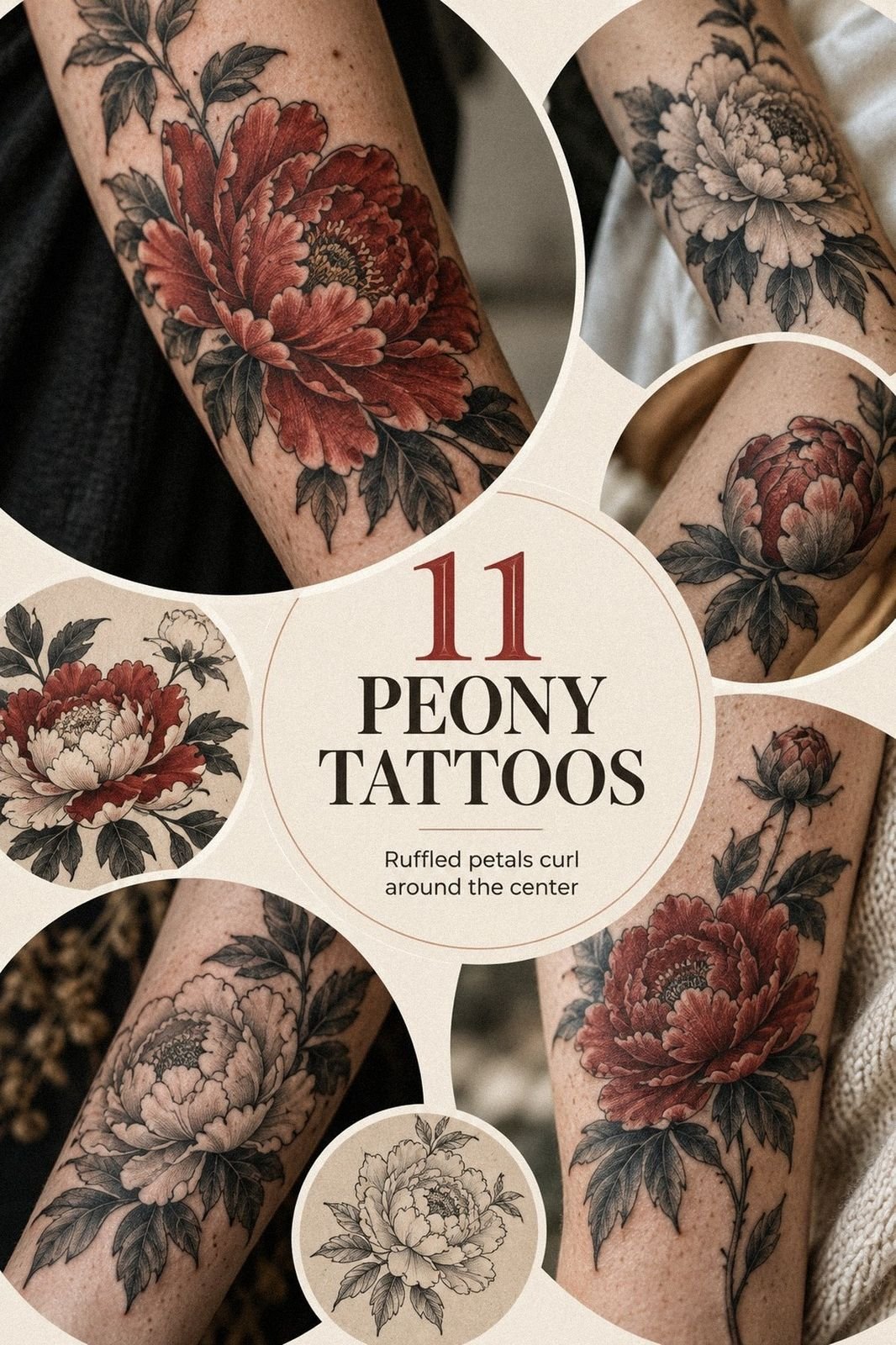
My dainty sun tattoo was a small piece, but I treated the decision like it mattered, because it does. I got mine the week I turned 30, kept the rays open, and chose a low-wear spot. It healed clean, stayed crisp, and still reads like a sun instead of a fuzzy little soup.
- I Chose a Tiny Crescent Sun Tattoo
- I Sketched Rays Around My Initials
- I Tested Fine Line Sun Proportions
- I Picked Black Ink For Crisp Rays
- I Compared Sun Tattoo Designs Carefully
- I Placed The Sun Below My Collarbone
- I Checked The Placement In Photos
- I Considered Pain Before Booking
- I Asked For Clean, Even Linework
- I Added A Meaningful Center Symbol
- I Reviewed My Artist’s Small Tattoos
- I Approved The Final Stencil Size
- I Followed Dainty Sun Tattoo Aftercare
- I Watched The Fine Lines Settle
- I Protected My Tiny Sun Tattoo
1I Chose a Tiny Crescent Sun Tattoo
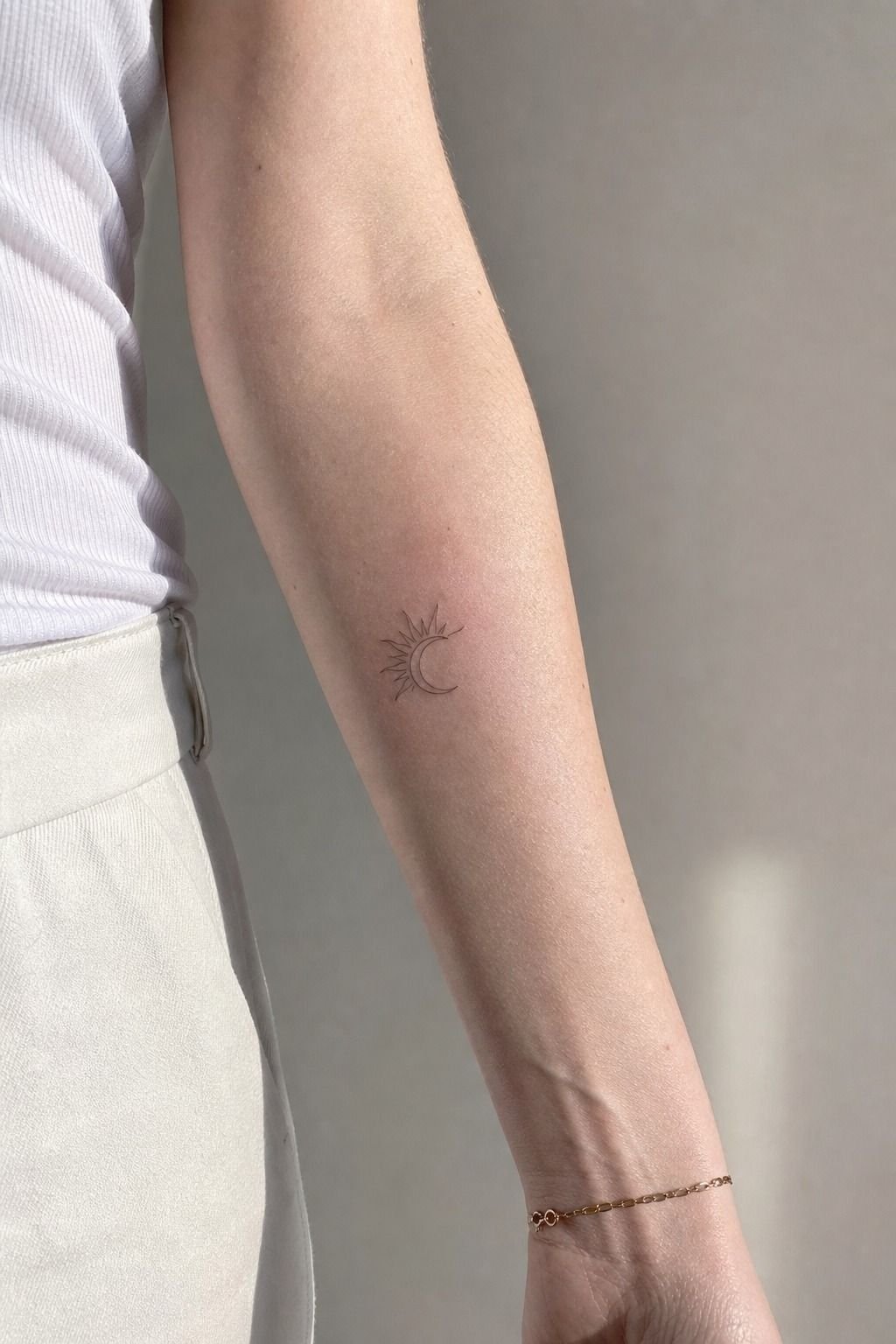
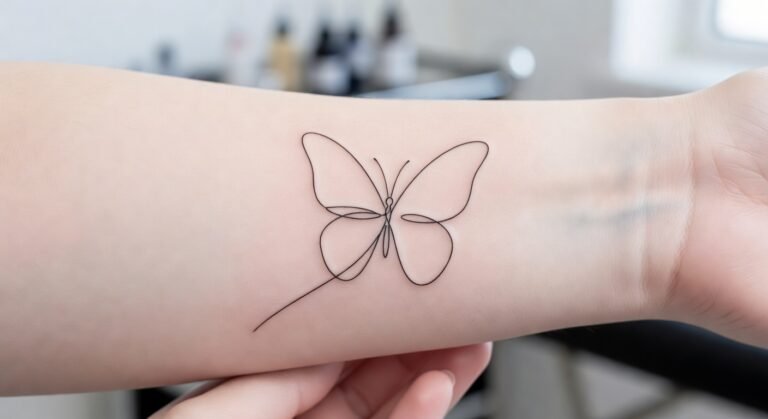
I wanted a tiny crescent sun tattoo that felt personal without turning my forearm into a billboard. A simple half-circle, eight uneven rays, and breathing room between every line. That airy layout is why it still looks refined instead of crowded.
You can make your sun soft, bold, or graphic, but don’t cram a whole celestial chart into one inch of skin. I’d skip extra stars, clouds, and a quote if the piece is under 1.5 inches. Your eye needs clear shapes, and your skin needs enough space for them to age cute on you.
I used my sun tattoo meaning guide to sort out what I wanted the symbol to hold. For me, it landed on steadiness, not some huge announcement.
Quiet ink. Still mine.
2I Sketched Rays Around My Initials
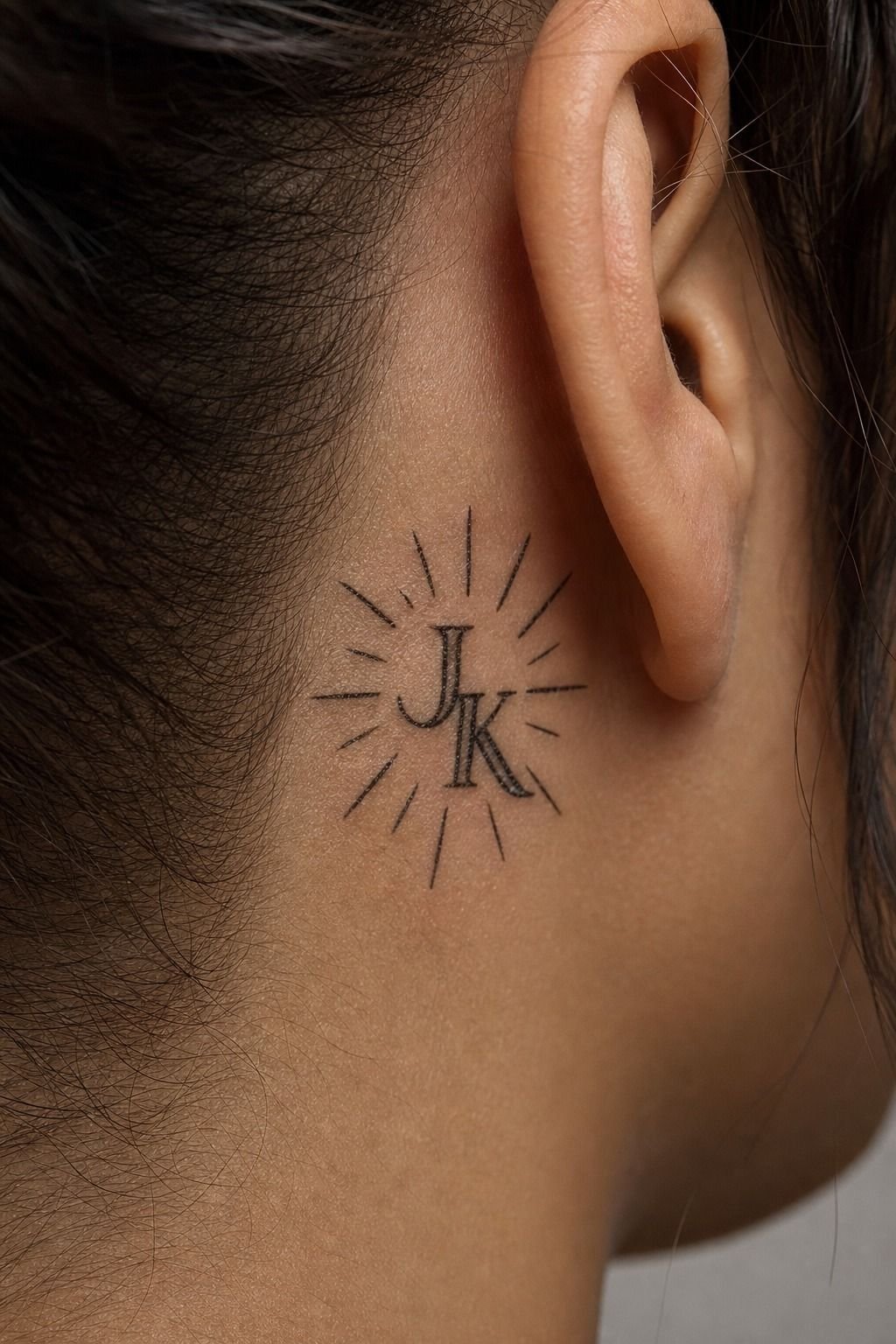
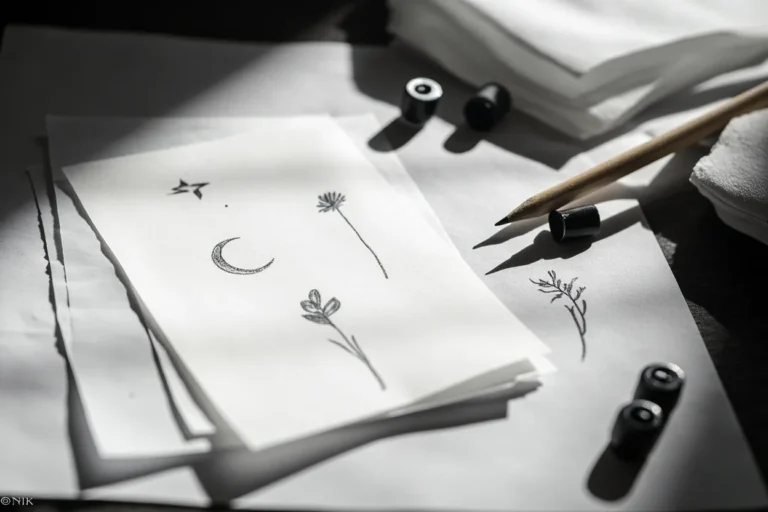
Behind the ear looks intimate, especially with a tiny initial sitting in the center of a sun. I drew mine with a 0.5 mm black fineliner first, then cut the ray count down until it stopped looking busy. Less ink did more.
You’ll want your initials large enough that the artist can pull them in one clean pass, not ten fuzzy ones. A letter that’s too delicate can heal patchy or widen into an unreadable squiggle. I told my artist I wanted crispy and confident lines, then let her adjust the spacing.
But don’t hand over a Pinterest screenshot and demand an exact copy. Bring references for vibe, placement, and line weight. Your tattoo should fit your body, not somebody else’s camera angle.
3I Tested Fine Line Sun Proportions
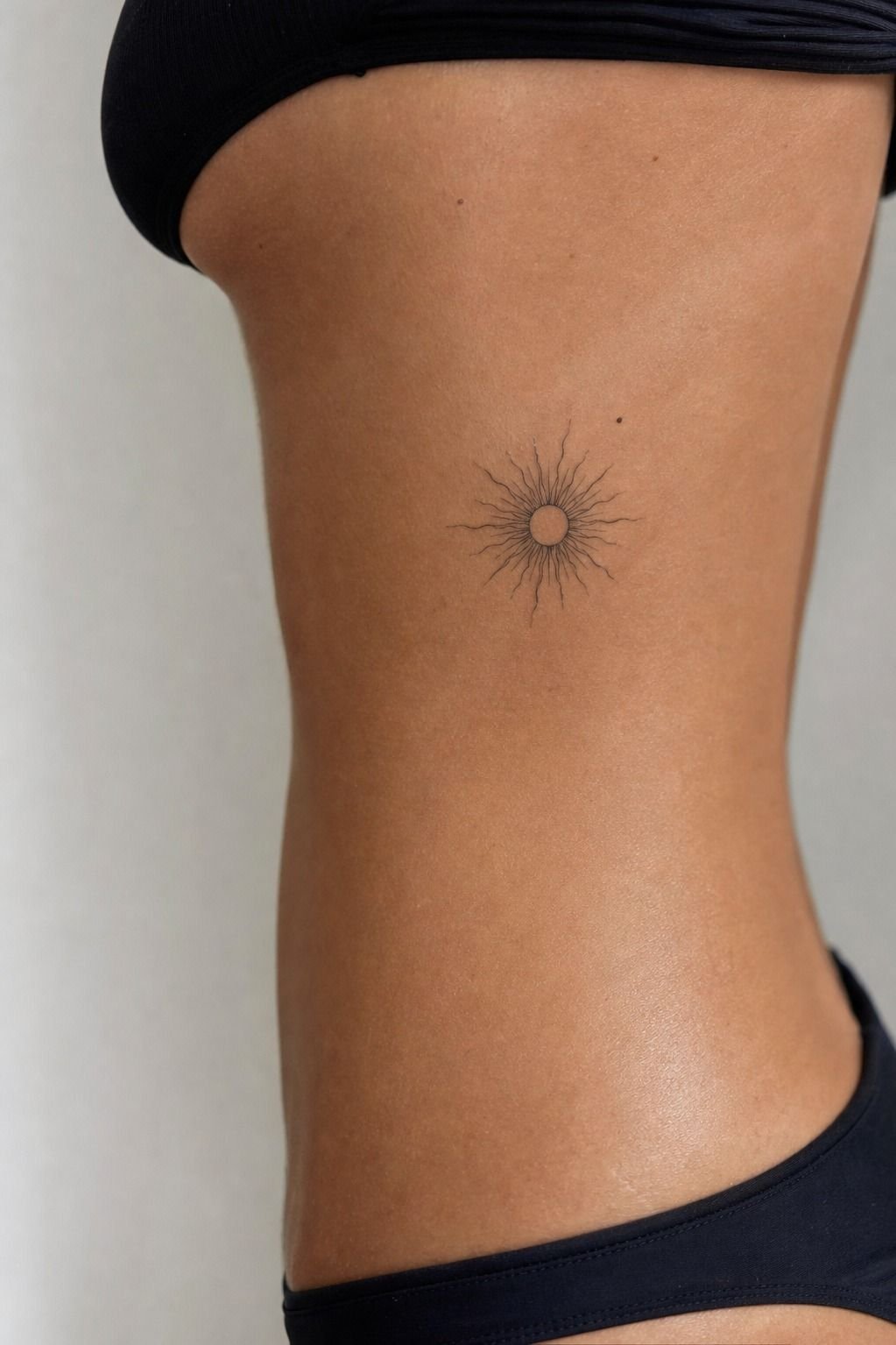
A fine line sun tattoo on the ribs can look breathtaking in a photo, but ribs move when you breathe, twist, and sleep. I tested mine by tracing the design at 1 inch, 1.5 inches, and 2 inches on paper before I booked. The 1.5-inch version won.
If you’re choosing a side-rib placement, give the rays enough length to read from across the room. Tiny super-detailed rays can turn to soup later, especially where skin stretches. I’d take eight clean rays over twenty hair-thin ones every time.
And yes, ribs are spicy. Lines feel sharper there, while shading becomes more of a dull burn. You can tap out for five rather than try to prove something to your artist.
4I Picked Black Ink For Crisp Rays
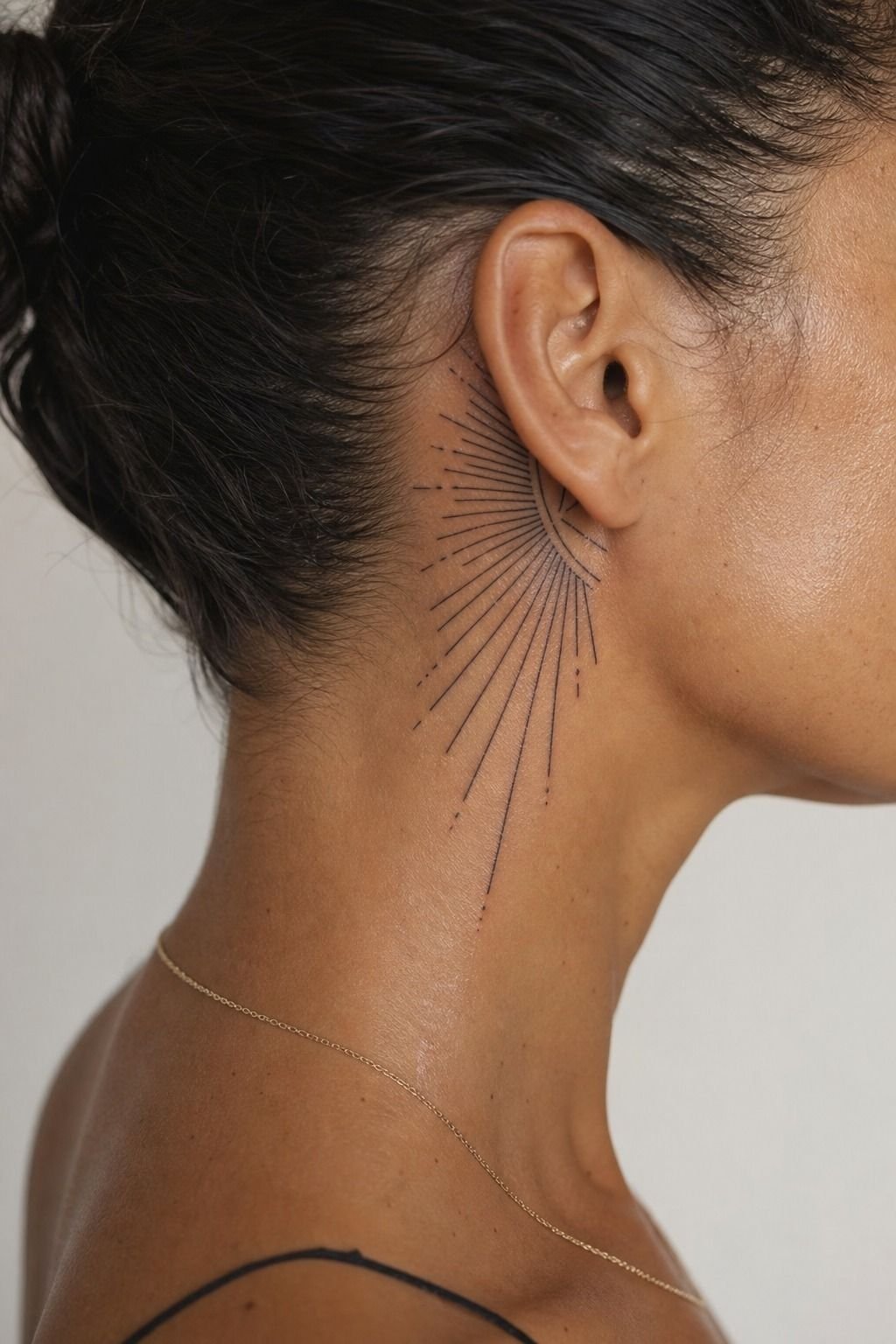
Black was the right call for my rays.
5I Compared Sun Tattoo Designs Carefully
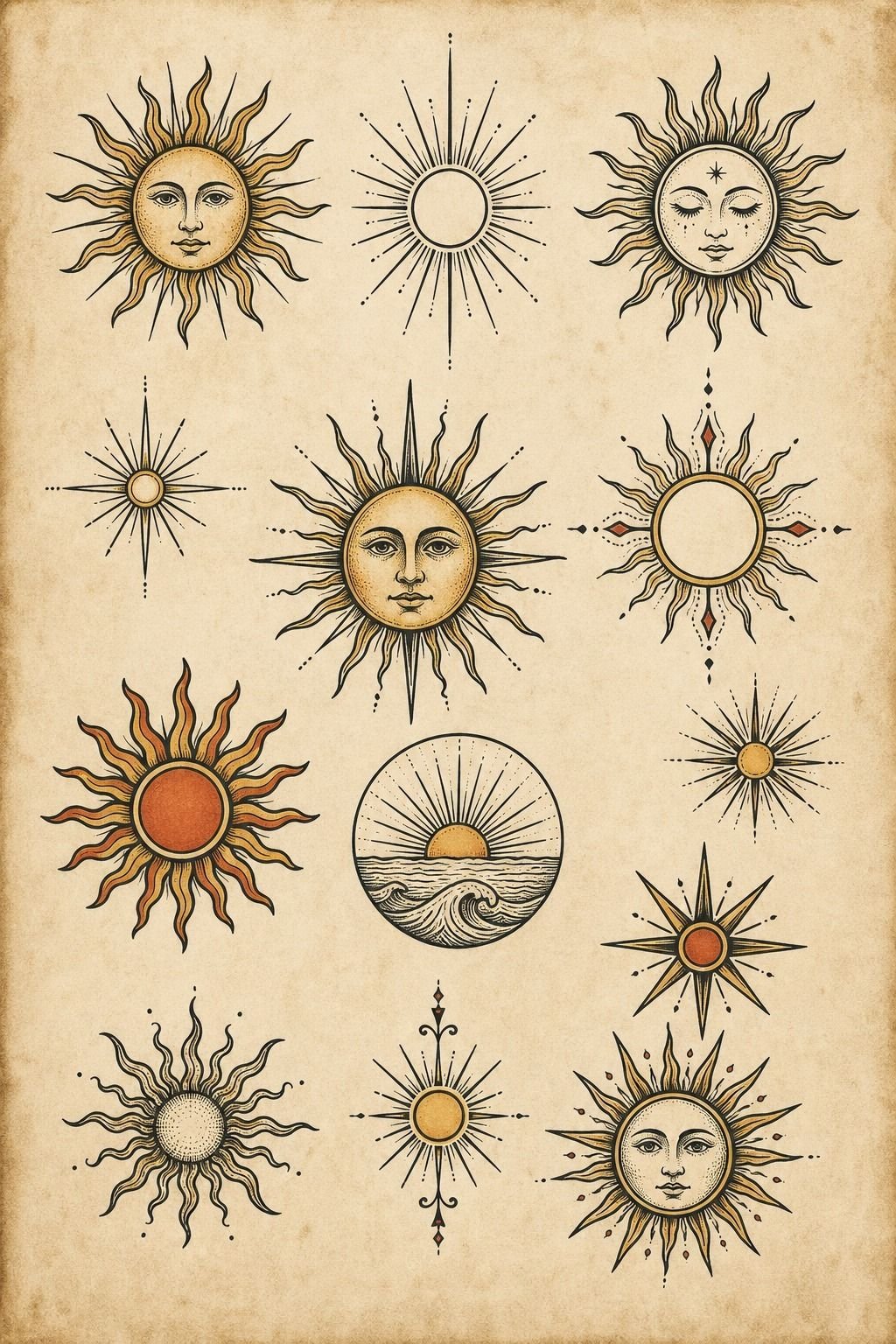
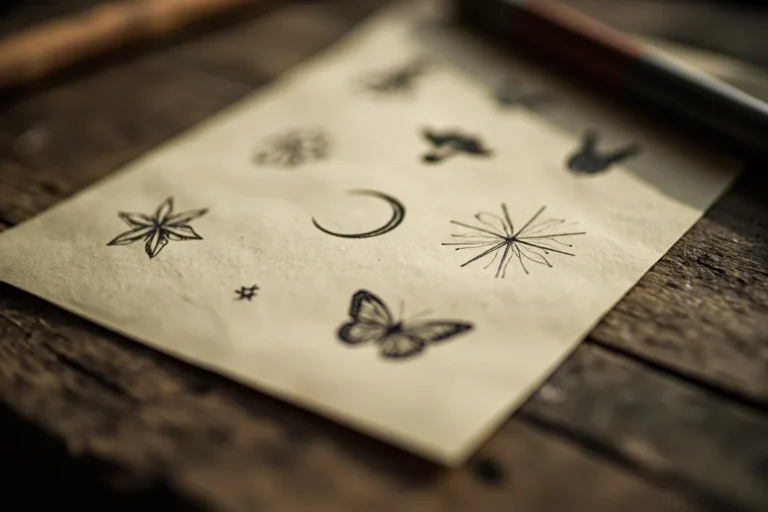
I spread out a black-ink flash sheet beside my saved photos and got honest about what I liked. Traditional suns had more weight.
Fine line suns felt subtle. Celestial faces looked captivating, but most were too detailed for the size I wanted.
You don’t need a custom piece just because a tattoo is meaningful. Flash can be solid when the artist’s linework is clean and the design has room to breathe. I’d pick artist-drawn flash over a copied online design any day, because you’re getting work that already fits their hand.
My losing option was a sun with a full face, tiny lashes, and sixteen rays. Cute on paper.
Too much on skin. I went with a simple crescent shape and let the negative space do its job.
6I Placed The Sun Below My Collarbone
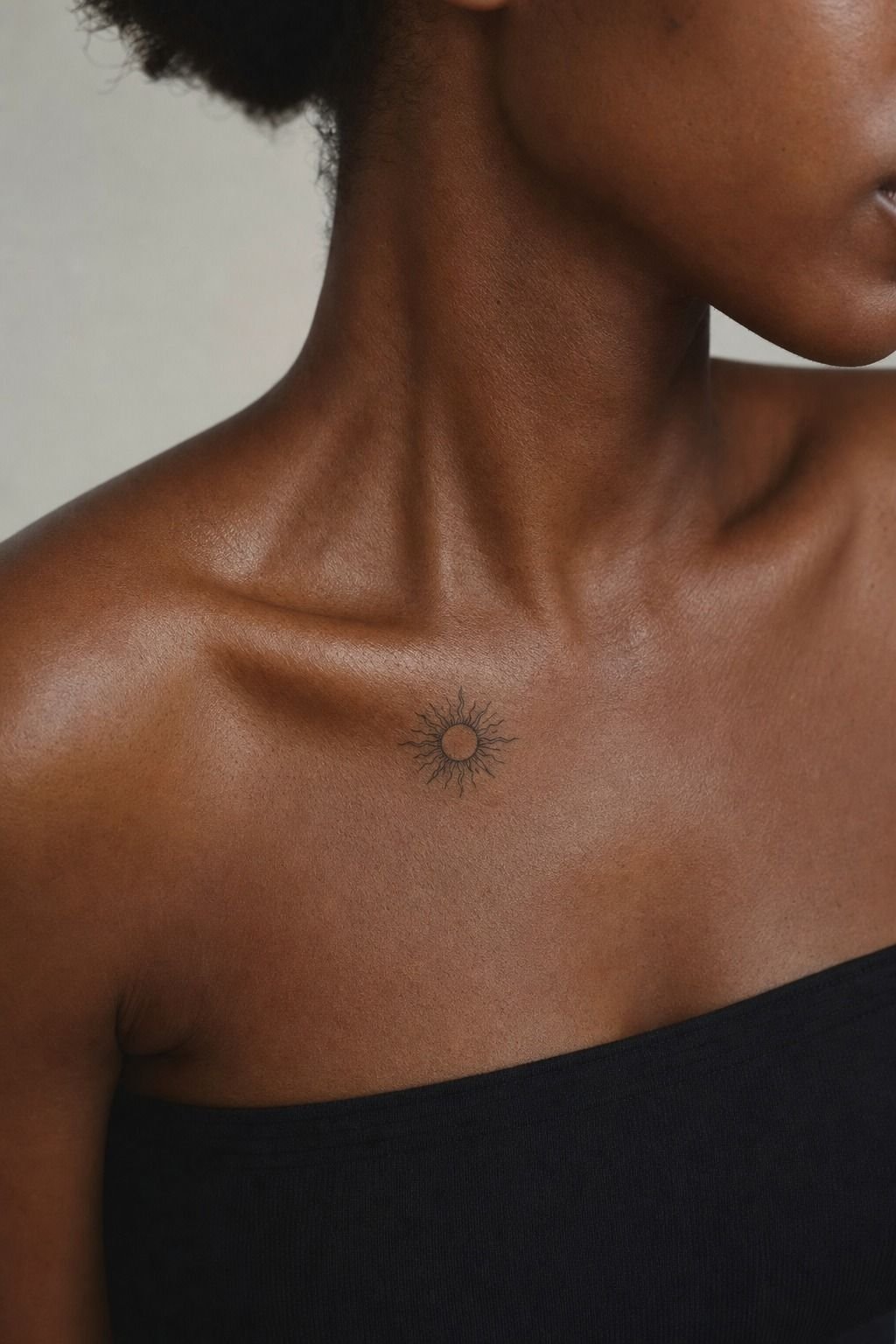
Below the collarbone gave my tattoo a peaceful amount of visibility without putting it in my face all day.
7I Checked The Placement In Photos
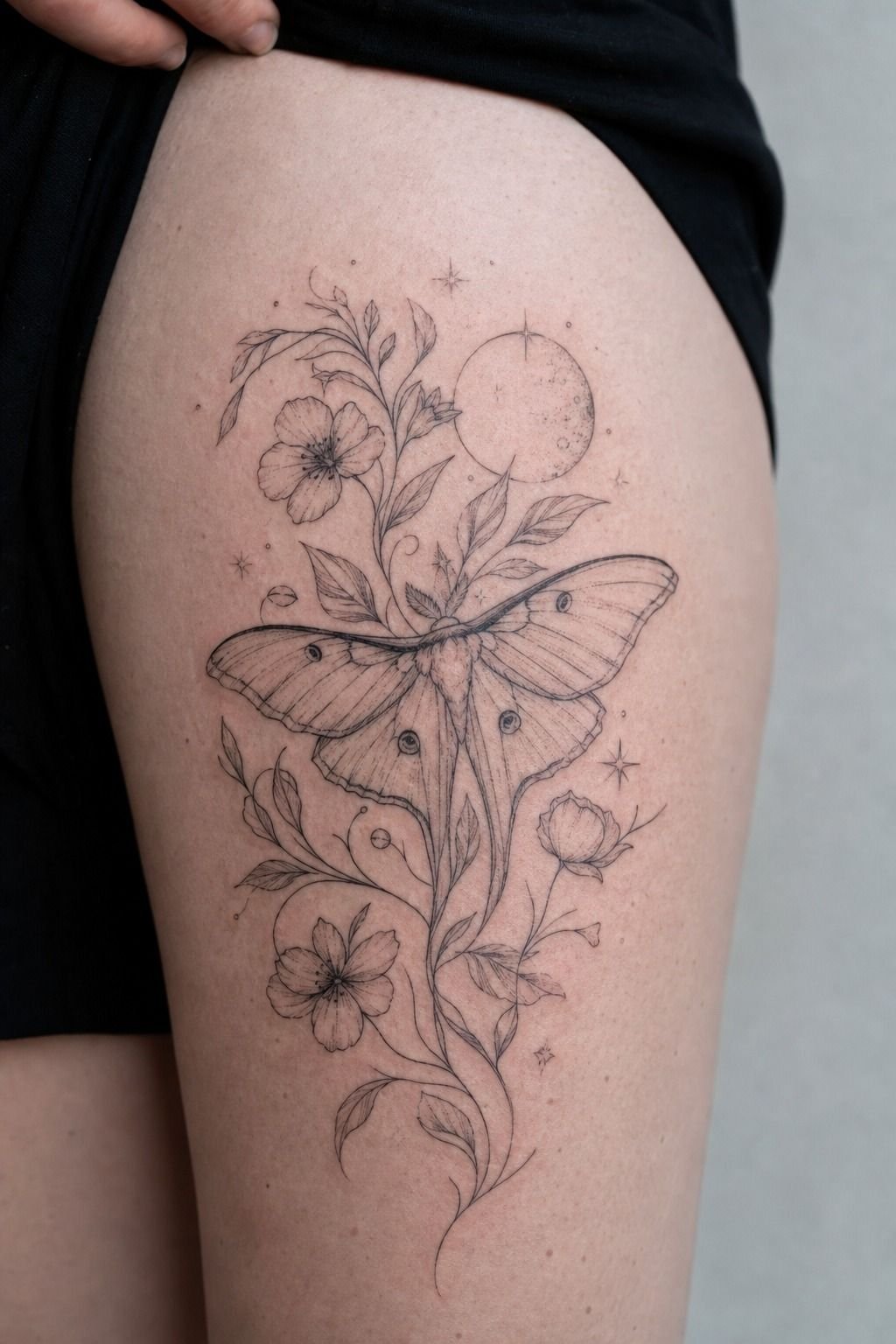
Before the appointment, I took photos of the stencil on my thigh in daylight, bathroom light, and the harsh little flash that exposes everything. The fine line stencil transfer looked different in each shot, which was the whole point of checking.
Your tattoo has to work on your moving body, not only in the studio mirror. I looked for a spot where the circle stayed round when I walked and where the rays didn’t disappear into a crease. Outer thigh won because it’s low-wear and gives tiny designs room.
But don’t overthink symmetry until you freeze up. Bodies aren’t flat grids. A slight angle that follows your muscle flow will look more organic than a ruler-straight design that ignores your anatomy.
8I Considered Pain Before Booking
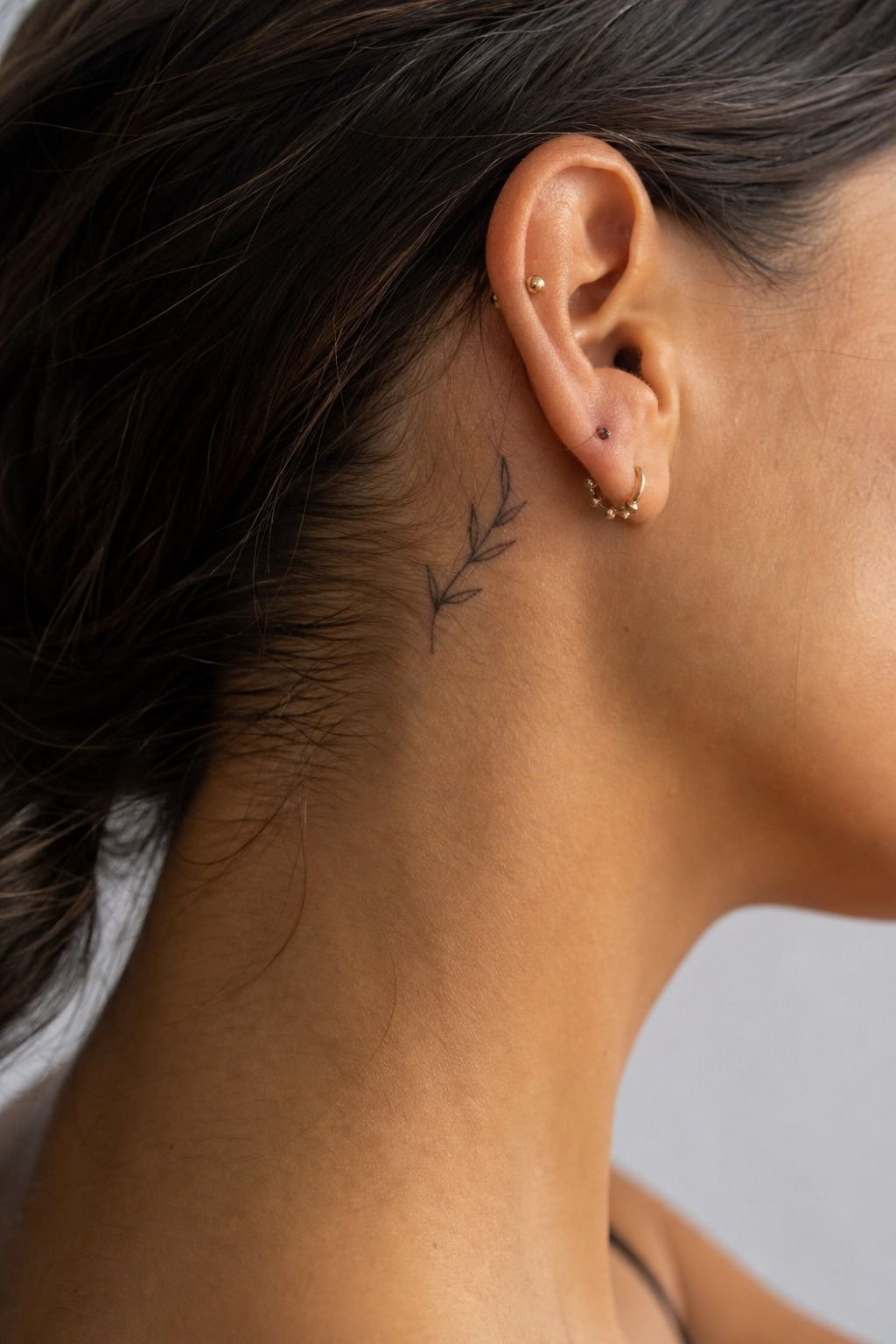
I booked a placement I could sit through without white-knuckling the chair.
9I Asked For Clean, Even Linework
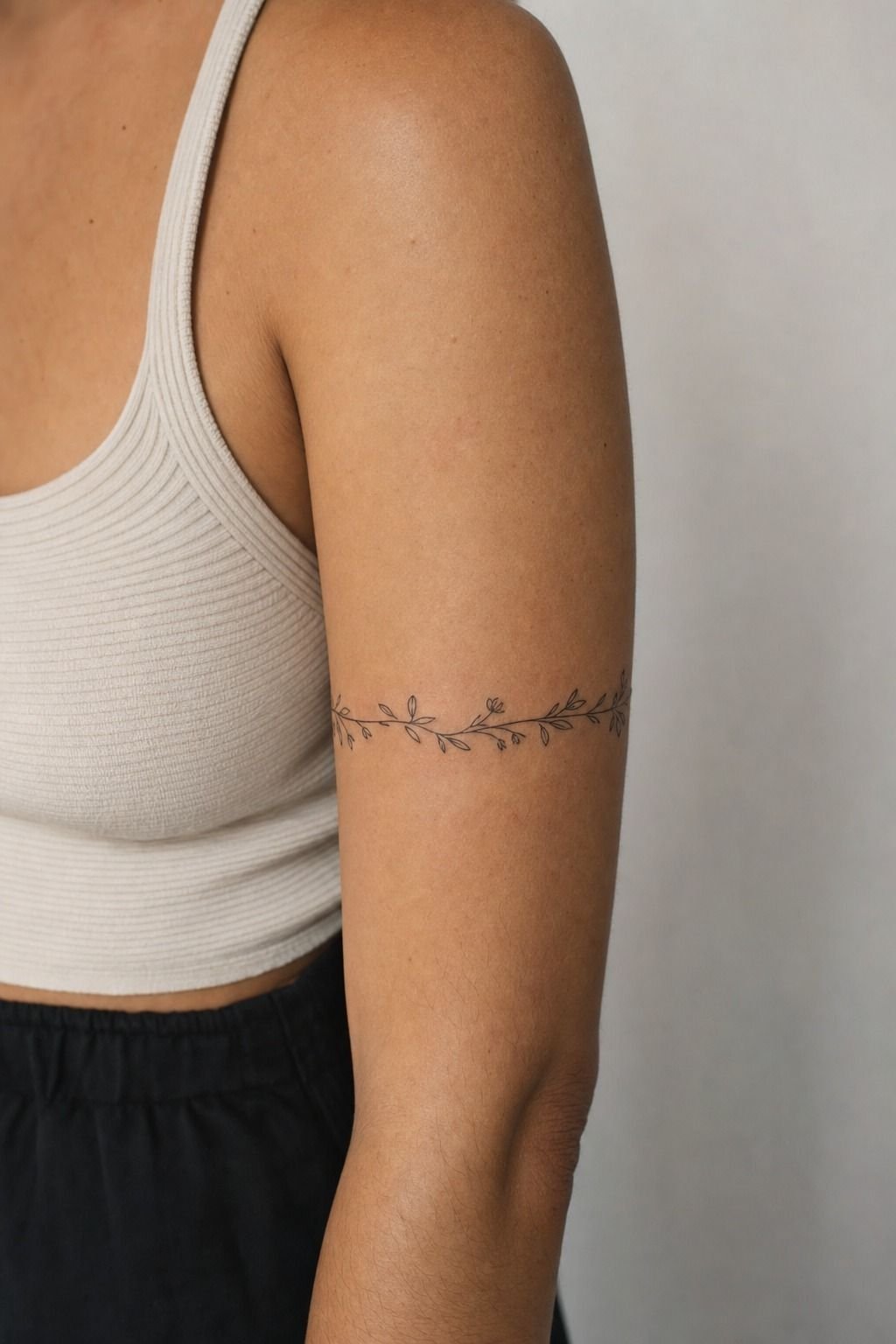
This was my non-negotiable: one clean pull, not ten fuzzy ones. I asked for single-needle linework with a slightly heavier outer curve, then lighter rays that wouldn’t look scratchy. The difference is small in the chair and huge once it heals.
You should look closely at healed photos in an artist’s portfolio. Fresh tattoos are glossy and forgiving. Healed work tells you whether their lines stay solid, whether their circles wobble, and whether they know when to stop before the skin gets chewed up.
I’d skip anyone whose tiny tattoos all look grey, overworked, or blurry at the edges. “Fine line” isn’t a free pass for weak application. Clean can be delicate.
It shouldn’t be timid.
10I Added A Meaningful Center Symbol
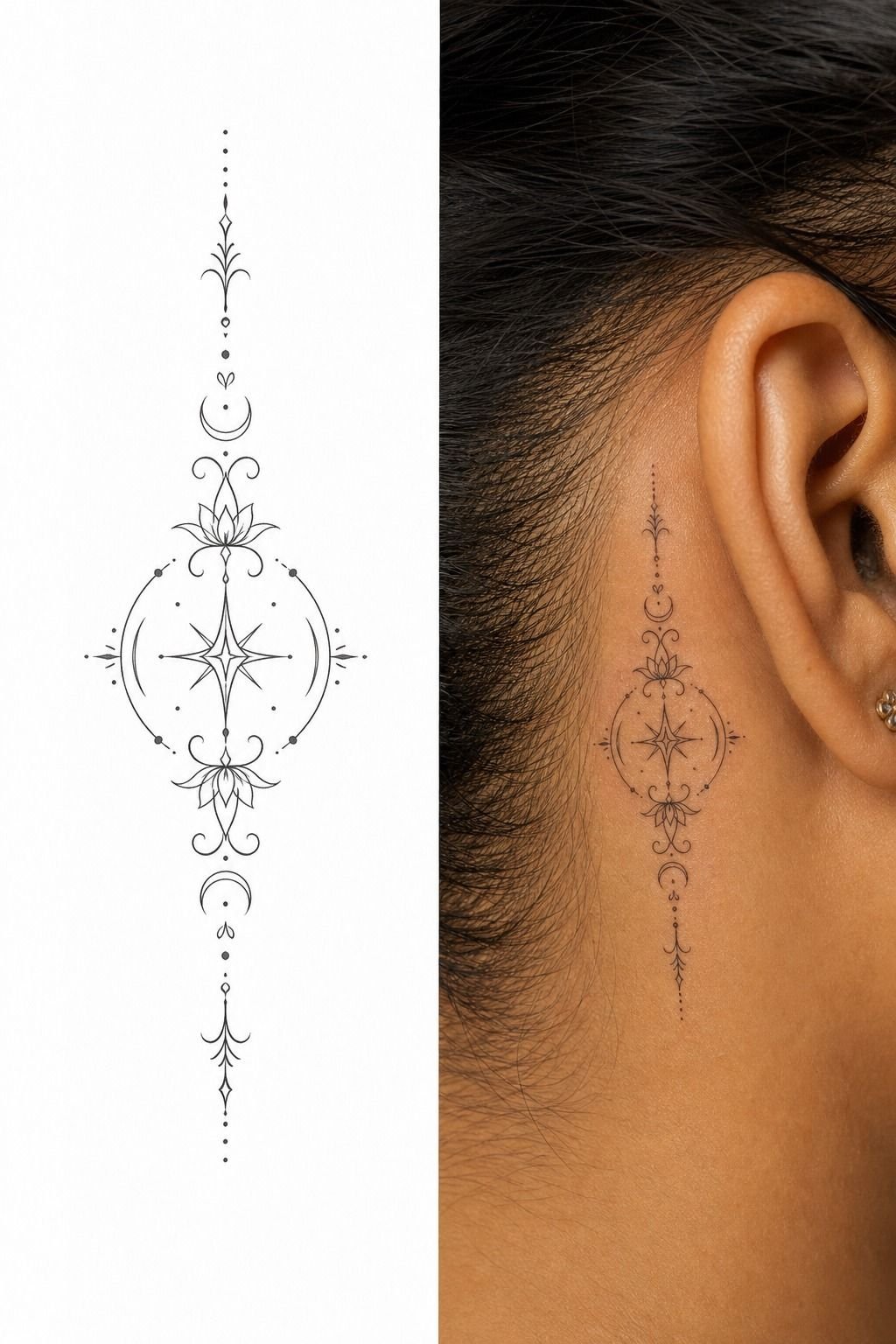
I put a small initial in the center, but you could use a dot, a tiny heart, a birth-year numeral, or a miniature moon. The center-symbol rule is simple: it needs to be legible without swallowing the sun.
You’re choosing one detail that makes the tattoo yours, not building a family tree inside a circle. I considered adding three initials, then realized it would make the center too dense. One letter gave the design an intimate feeling and left the rays looking soft around it.
If you’re leaning celestial, compare it against a sun moon and stars tattoo before committing. A moon-and-sun combo can be gorgeous, but it needs more skin than a single dainty mark.
11I Reviewed My Artist’s Small Tattoos
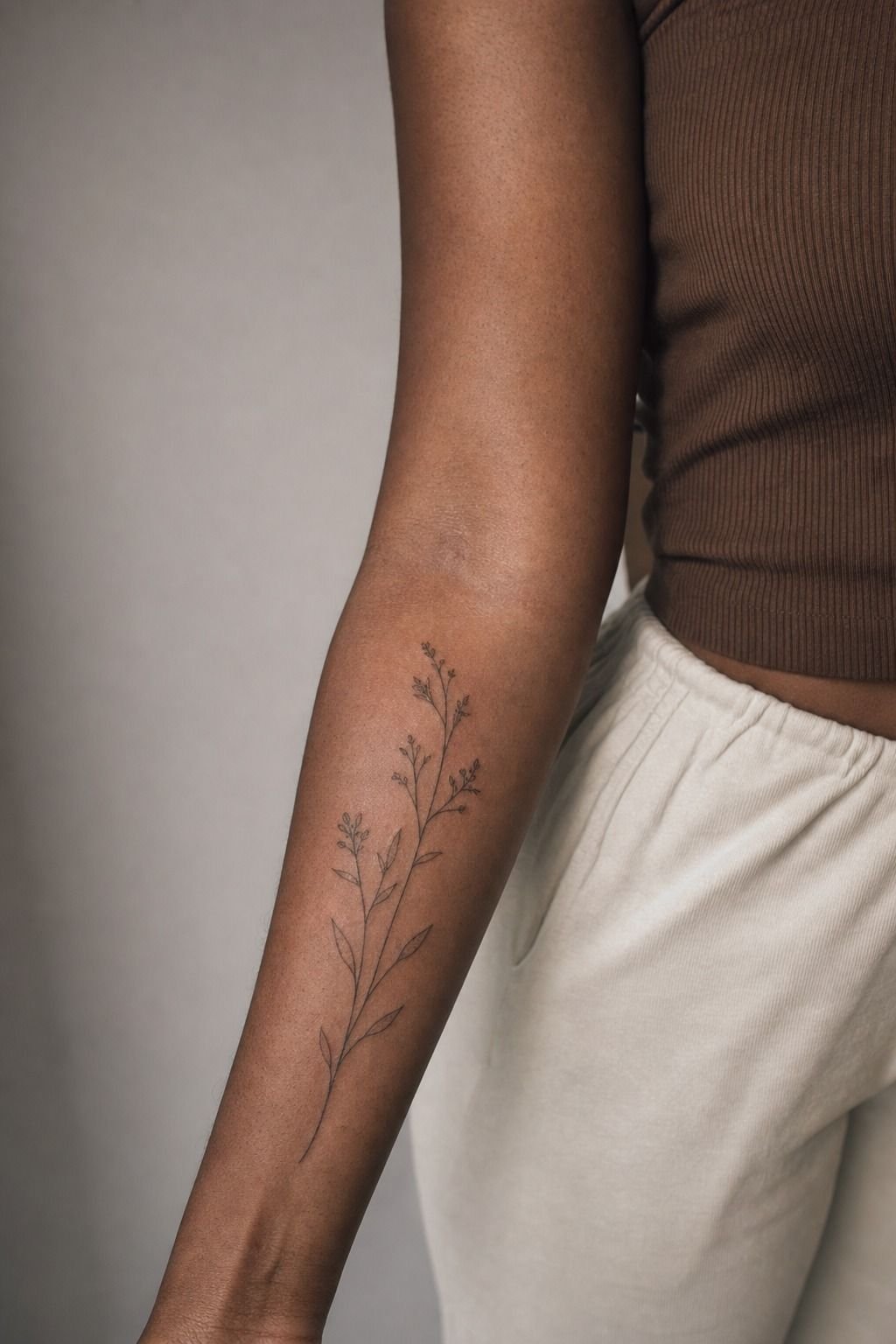
I didn’t choose my artist because her feed had the most followers. I chose her because her healed black-and-grey fine line work looked clean on different skin tones, different placements, and different kinds of bodies. That mattered more.
You should zoom in on circles, lettering, and tiny details. Look for smooth curves, even saturation, and linework that hasn’t blown out. Ask whether the artist uses a single needle or a small liner for designs at your chosen size, then listen to the answer.
And check that the studio feels professional. Fresh gloves. Wrapped equipment.
Clear aftercare instructions. A calm artist who’ll tell you when your reference needs simplification is worth more than somebody who says yes to every bad idea.
12I Approved The Final Stencil Size
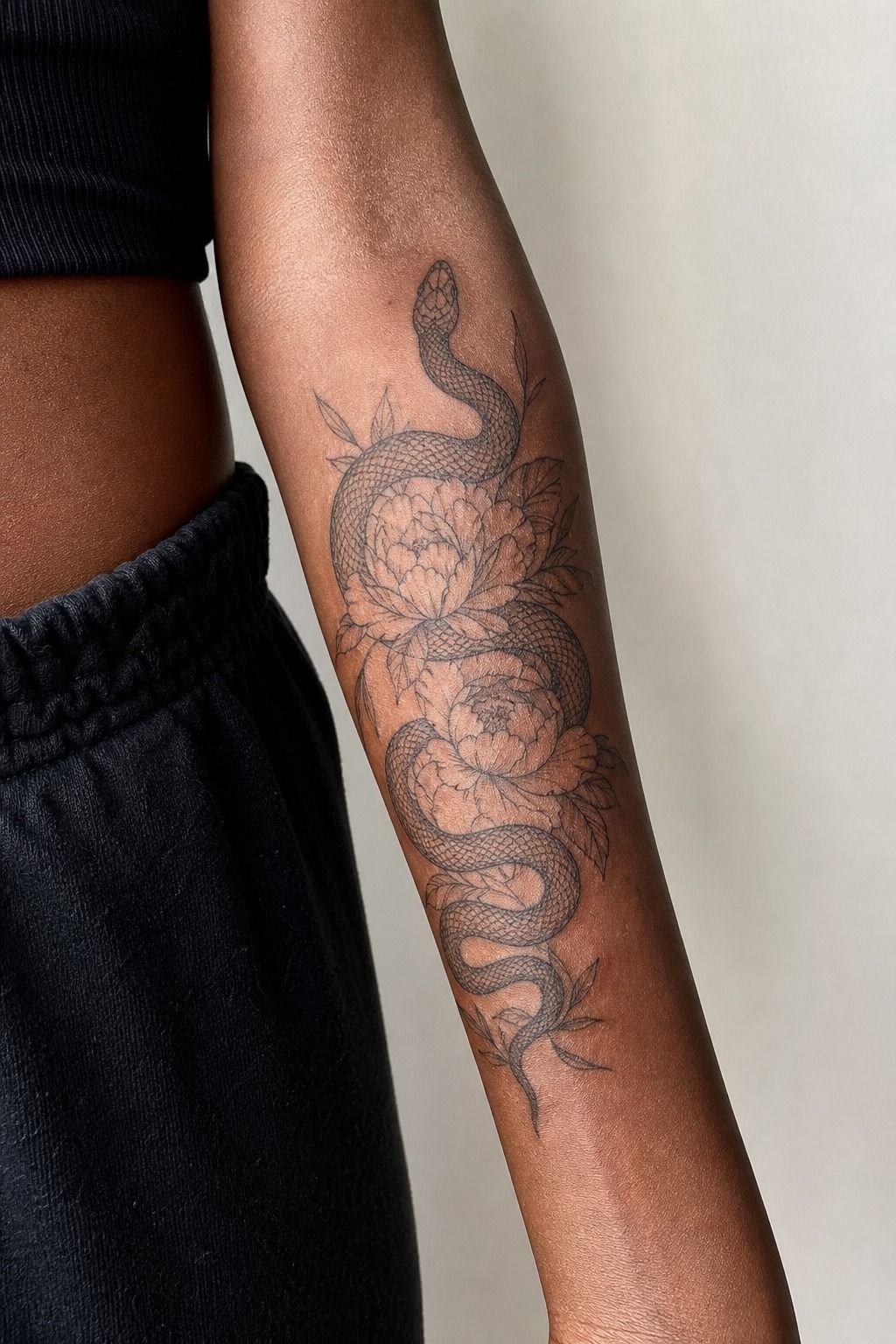
The stencil looked smaller on my skin than it did on an iPad. That’s normal. I asked to see it one size bigger before we started, and that extra bit of space made the rays look more elegant from arm’s length.
You can always go slightly bigger. You can’t pull a healed tattoo apart once the lines begin to settle. For a dainty forearm sun, I’d rather see a design around 1.25 to 2 inches than force it into a cramped 0.75-inch circle.
My artist moved the purple stencil a few millimeters twice. Worth it. The final position followed the forearm instead of sitting like a sticker, and it gave the tattoo a bright little moment whenever I turned my wrist.
13I Followed Dainty Sun Tattoo Aftercare
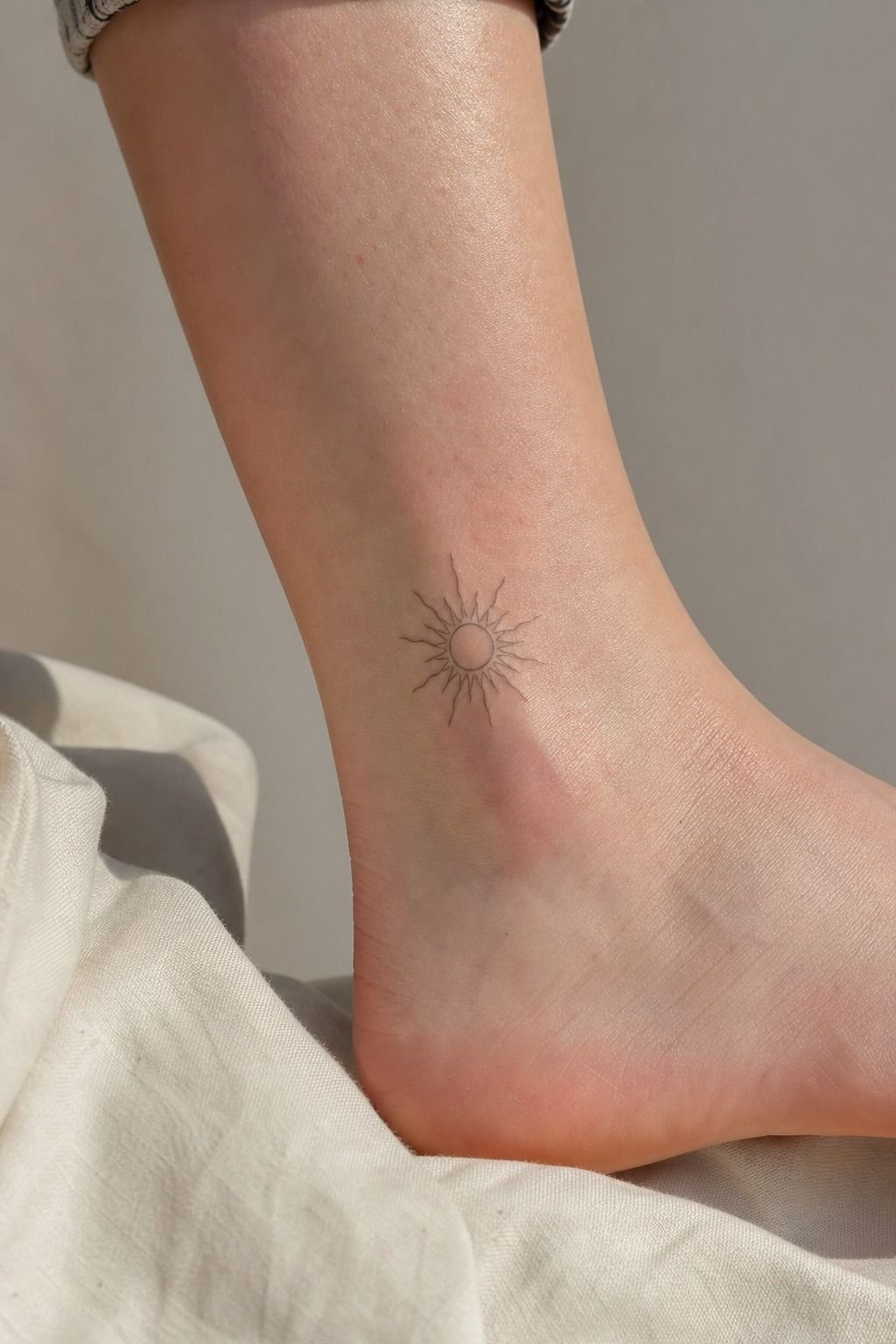
The first few days, your tattoo is an open wound.
14I Watched The Fine Lines Settle
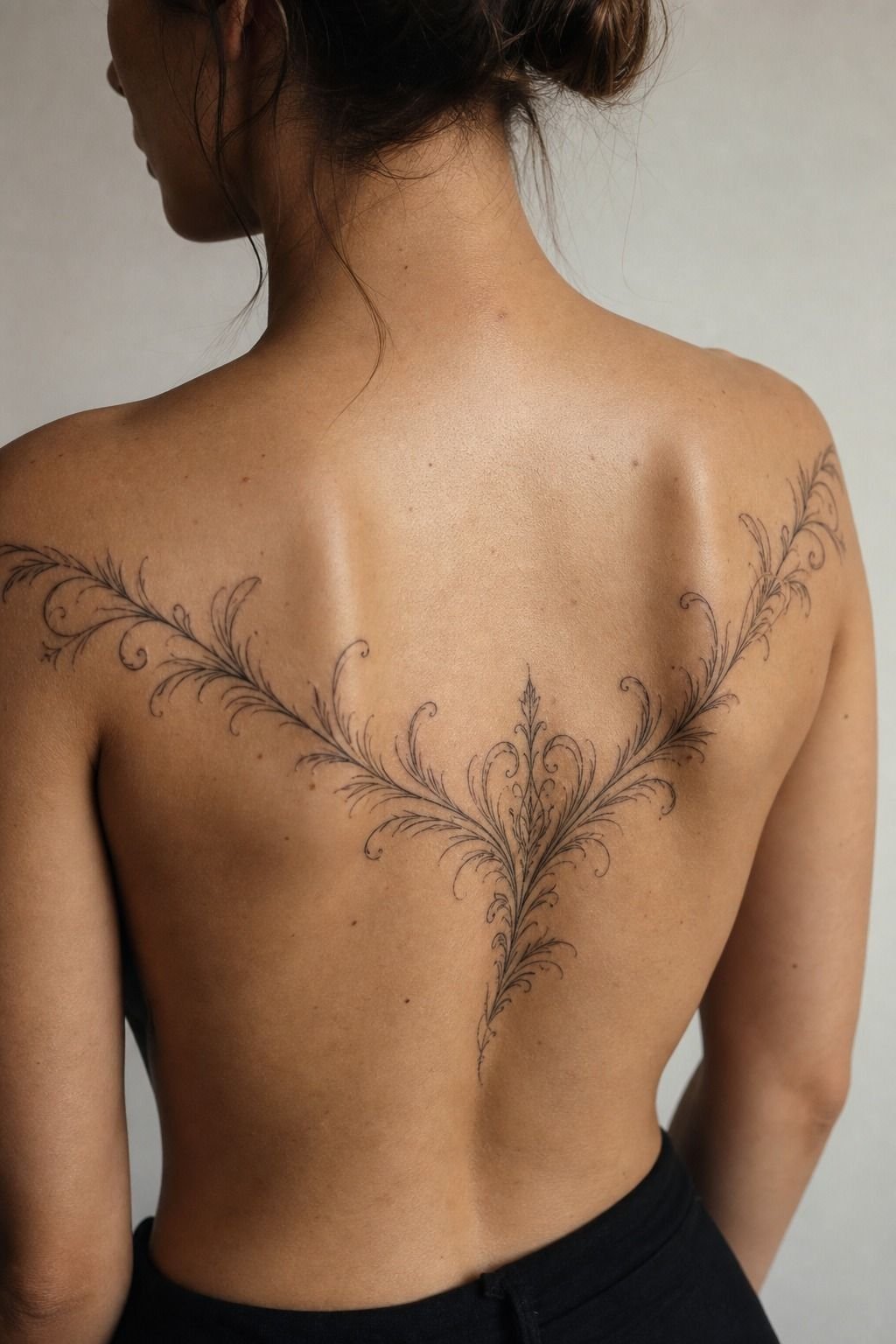
Around week two, the tattoo looked dull and slightly cloudy under that shiny silver-skin layer. I knew it was healing, but I still stared at it harder than I’d like to admit. Fine line tattoos can look faint before they settle.
Your surface healing usually takes about 2 to 3 weeks. The deeper healing process can take 2 to 3 months, so don’t judge the final result while it’s peeling, itchy, or temporarily muted. Let the skin calm down first.
But if you see spreading redness, heat, worsening pain, or thick discharge, contact a medical professional. Normal peeling is one thing.
An infection isn’t something to tough out. My lines came back crisp once the silver skin cleared, and the open spacing was exactly why they held.
15I Protected My Tiny Sun Tattoo
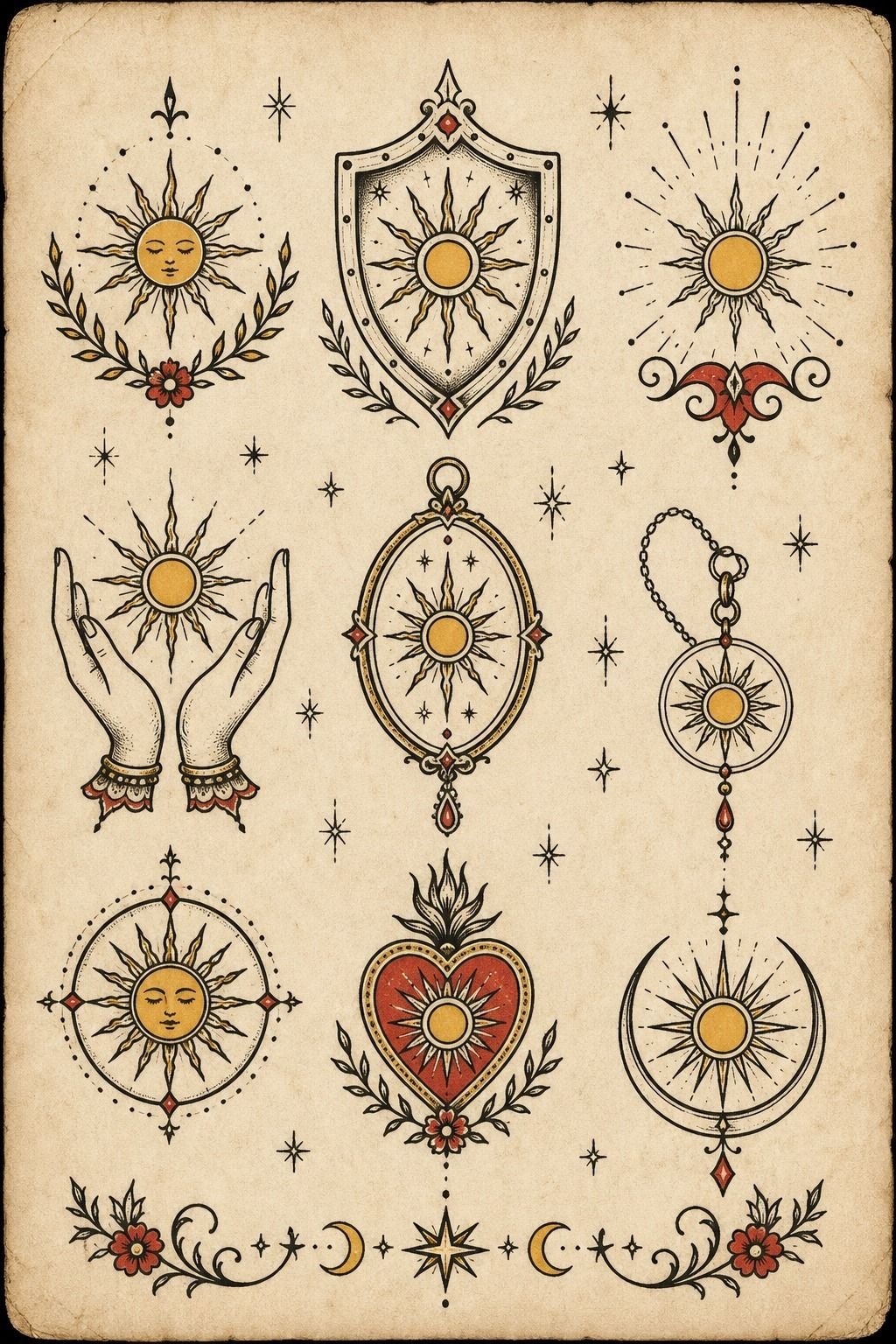
A tiny sun tattoo is not high-maintenance, but sun exposure can fade it faster than you’d think. Once mine was fully healed, I used broad-spectrum SPF 30 or higher whenever the forearm was exposed for long stretches.
Boring answer. Real answer.
You can’t keep a tattoo pristine forever, and you shouldn’t expect it to stay frozen in time. Skin changes.
Ink softens. But black linework, decent placement, and basic UV protection give you a much better shot at a tattoo that stays readable.
I keep the aftercare simple, then move on with my life. If you need a clear refresher before beach weather, protect your tattoo from sun covers the practical stuff without the panic.
The Open-Space Rule I’d Keep
I’ve tattooed enough small botanical and meaningful pieces to know that people rarely regret making a design clearer. They regret trying to squeeze their whole story into a thumbnail.
A dainty sun works because it’s a symbol you recognize in half a second: round center, clean rays, intentional space. That’s the job.
You can make it more dramatic with uneven rays, more serene with a crescent shape, or more personal with one letter in the middle. But don’t confuse detail with meaning. A tiny tattoo doesn’t need to prove how much you feel.
It needs to sit cleanly on your skin and still make sense after years of showers, sunlight, movement, and ordinary life.
I’ve watched clients get stuck between the “more is more” reference and the version that’ll heal nice. The second option is usually better.
Not safer in a boring way, just better built. A small sun with a readable center, 6 to 10 open rays, and black contrast will outlast a micro-scene full of tiny symbols.
And the emotional part is real. You may look down at it after a rough week and feel steadier.
You may forget it’s there until light catches the curve of the line. That’s why I like these tattoos. They’re intimate, not loud.
They don’t need an audience to work.
How Much It Cost
My tiny sun fell above the shop minimum and below an hourly session because it was simple, black, and quick. In the US, studio minimums typically run about $50 to $100, while artists often charge around $100 to $250 per hour depending on experience, city, and demand.
You can save money by choosing a clean flash design, but don’t bargain-shop for a tiny tattoo. Bad fine line work can cost more to cover than a solid first appointment. I’d spend the money on an artist whose healed work you trust.
The Questions I Get Asked Most
How much does a dainty sun tattoo usually cost?
A dainty sun tattoo usually costs about $100 to $300 in the US. A simple black design keeps the session short, though many studios have a $50 to $100 minimum and artists may charge $100 to $250 hourly.
– Small black linework – One low-wear placement – Minimal shading
Are dainty sun tattoos a good idea for a first tattoo?
Yes, they can be a great first tattoo if you keep the design open and choose a tolerable spot. Simple lines are easier to read as they age than a tiny design packed with details.
– Outer forearm – Outer thigh – Upper arm
How do I choose a tattoo artist for a dainty sun tattoo?
Choose an artist with healed small tattoos, not only polished fresh photos. Crispy healed linework is the proof that matters. You should also check studio hygiene, placement skill, and whether they’ll push back on a design that’s too small.
– Healed portfolio photos – Smooth circles and lettering – Clean, wrapped setup
How much do dainty sun tattoos hurt?
Pain depends more on placement than the design. Forearm, thigh, and shoulder placements are usually more manageable, while ribs, feet, hands, and sternum tend to feel much spicier.
– Lines, sharp sensation – Shading, dull burn – Color packing, strongest burn
How long does a dainty sun tattoo take to heal?
Surface healing usually takes about 2 to 3 weeks, while full healing can take 2 to 3 months. Gentle washing and sun avoidance protect the fresh lines while your skin settles.
– Unscented soap – Thin moisturizer layer – No pools or picking
What’s the best placement for a dainty sun tattoo?
Outer forearm and outer thigh are strong choices because they’re visible, lower-wear, and give fine lines room to breathe. Low-wear skin helps a small tattoo age more cleanly than fingers or feet.
– Forearm, visible and calm – Thigh, more private – Collarbone, visible but spicier
Where I’d Start First
If I had to pick one, I’d start with the outer forearm placement. It gives a tiny sun enough flat, low-wear skin to stay readable instead of getting swallowed by friction. Pin the idea, then ask your artist to size it up until those rays can breathe.