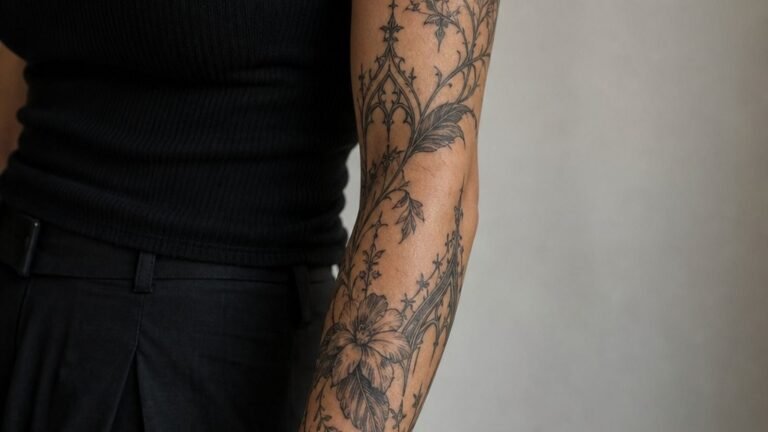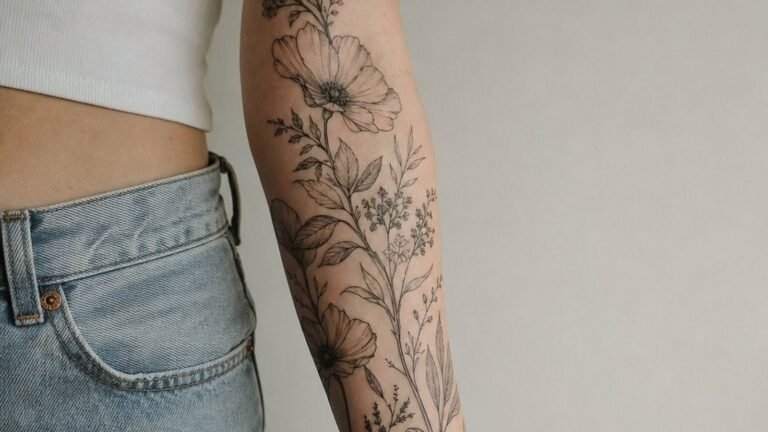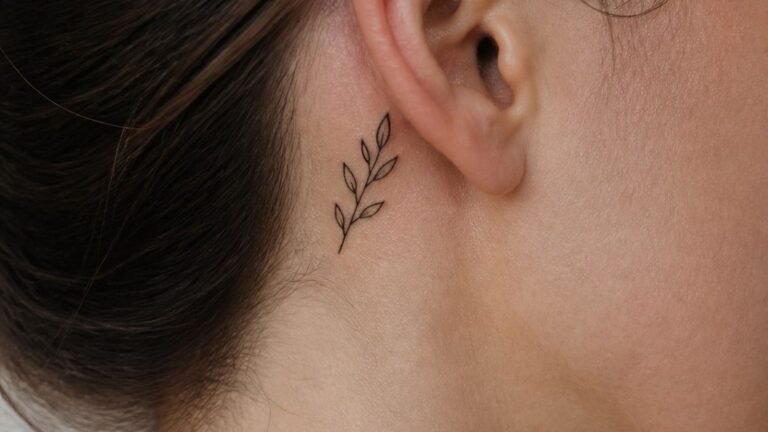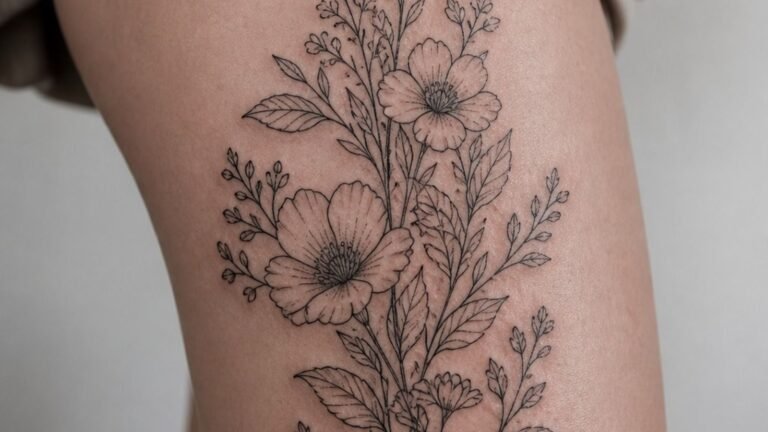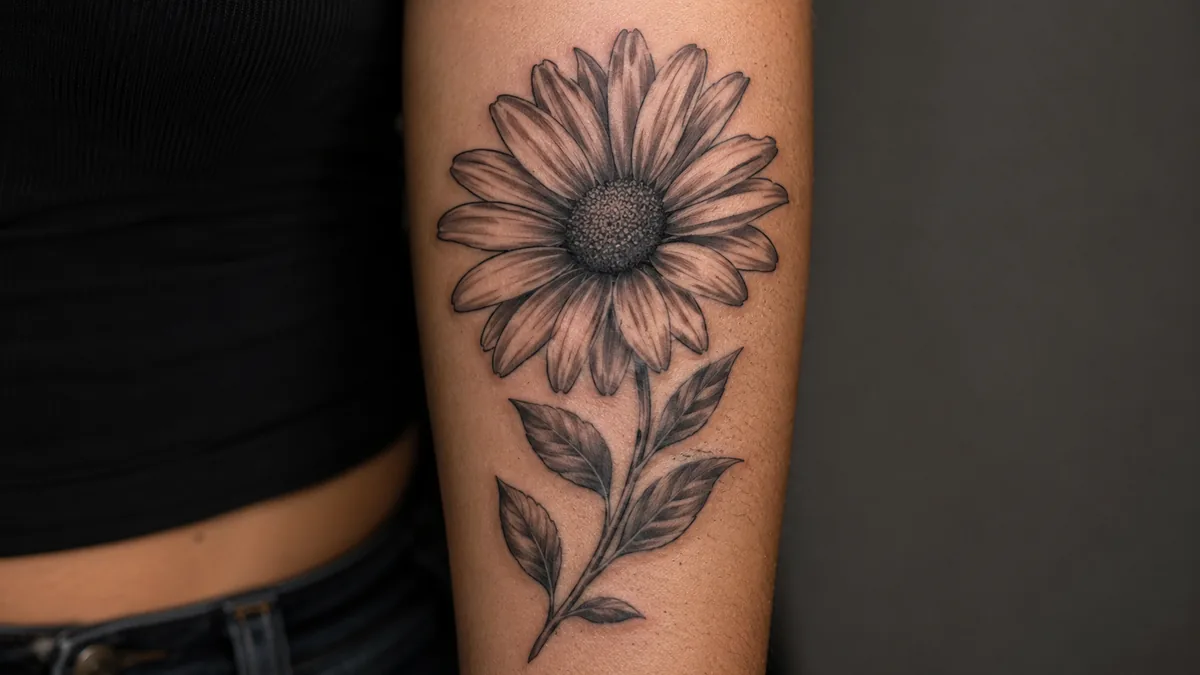
The daisy is one of those tattoos that looks simple on the surface and carries more weight than people expect. It’s not just a pretty flower. It’s a symbol tied to purity, loyalty, and fresh starts for centuries, and it translates onto skin in a dozen different ways.
If you’re getting a single fine-line daisy on your wrist or a bold, saturated cluster wrapping your thigh, the meaning behind it is real and layered. Here’s what the daisy actually means, where that meaning comes from, and how to wear it right.
Core Symbolism: What a Daisy Tattoo Actually Means
The daisy’s most consistent meaning across cultures is innocence and purity. It’s a flower that grows wild, close to the ground, without much fuss. That simplicity reads as honesty. A lot of people get daisy tattoos to mark a fresh chapter, a new beginning, or a return to who they were before something hard happened. It’s optimistic without being saccharine.
The daisy also carries strong associations with loyalty and true love, partly from the old ‘he loves me, he loves me not’ petal game most people grew up with. That connection to love and uncertainty, to hope and patience, makes it a popular choice for relationship-themed tattoos. It sits somewhere between romantic and grounded, which is a rare combination for a flower.
Historical and Cultural Roots Worth Knowing
Simple on purpose, the daisy doesn't apologize for being exactly what it is.
In Celtic tradition, daisies were associated with the souls of children who died young. They were seen as a way to ease grief, which gave the flower a quiet, spiritual weight that still shows up in memorial tattoos today. The Romans tied daisies to Belides, a nymph who transformed into the flower to escape pursuit. That transformation angle resonates with people getting tattoos about change or survival.
In Victorian flower language, called floriography, the daisy meant innocence and loyal love. Victorians used flowers to send coded messages, and the daisy was a sincere one. None of this is invented symbolism. These meanings built up over real centuries of use, and they’re still alive in why people choose this flower for their skin.
Design Variations That Change the Meaning
A single daisy, small and clean, reads as minimalist and personal. A bouquet or cluster adds abundance and joy to the symbolism. Adding a bee to the daisy leans into themes of community and hard work. Pair it with a butterfly and you’re talking transformation. Wrap a daisy around a sun and the solar energy of the flower gets amplified, brightness, clarity, a new day starting.
Wilting or half-dead daisies carry a totally different message. Some people want the contrast: beauty alongside decay, joy alongside loss. That’s a valid read and it makes for a more complex, interesting piece. Daisy chains lean into childhood nostalgia and a sense of play. The design choice shapes the meaning as much as the flower itself does.
Style Options: Fine Line, Bold, Black and Grey
Fine-line daisies are everywhere right now, and they look crispy fresh out of the shop. Thin, detailed petals, delicate centers, sometimes with subtle dot work shading. They age faster than bolder work, especially on high-wear zones like fingers and wrists. If you go fine line, placement matters a lot. Avoid areas that see a lot of sun and friction or you’ll watch those lines spread and blur within a few years.
Black and grey daisies with whip shading have serious longevity. The contrast holds, the petals read from across the room, and the style ages gracefully. Neo-traditional daisies, with bold outlines, saturated yellows, and thick petal fills, are built to last and pop on any skin tone. Illustrative and watercolor styles look stunning in photos but tend to soften over time. Bold will hold. That’s not an opinion, that’s physics.
Color vs. Black and Grey
Yellow and white are the classic daisy colors, and they translate beautifully into tattoos when done right. Bright yellow centers with white petals on a colored background pop hard, but white ink is tricky. It fades, it shifts, and on lighter skin tones it can almost disappear within a year. A good artist will use light grey or very pale tones to give the illusion of white without the fade risk.
Full-color daisies in the neo-traditional style, saturated petals, deep green leaves, rich yellow centers, age better than watercolor but still need solid outlines to keep their shape over time. Black and grey with strategic negative space is a bulletproof approach. The natural white of the skin reads as the petals, the grey shading gives dimension, and the whole piece holds tight for years without a touch-up.
Placement and How It Ages on Skin
The ankle, inner wrist, and collarbone are the most popular daisy spots. They all look great fresh. The ankle and wrist are higher-wear zones. Skin there moves constantly, sees sun, and takes friction from clothing. Fine-line work in these spots needs touch-ups. If you want something that holds for years without much maintenance, the upper arm, shoulder, thigh, or ribcage are lower-wear and give the piece room to breathe.
A single daisy fits almost anywhere. A full sleeve element or a large botanical piece needs real estate. The back, the thigh, and the upper arm give an artist the space to do something exceptional with shading, depth, and botanical detail. Pain levels: collarbone and ribs are spicy. Ankle and inner wrist are moderate. Upper arm and thigh are generally mild. Know what you’re walking into.
Who Gets Daisy Tattoos and How to Make It Yours
Daisy tattoos attract a wide range of people, but a few themes come up repeatedly. People marking the end of a hard season. People honoring someone they lost, especially a child or someone young. People celebrating a fresh start after recovery, a breakup, a move, a big life shift. The simplicity of the flower makes it feel personal without being heavy-handed. It says what it needs to say without explaining itself.
To make a daisy tattoo genuinely yours, think about what specific meaning you’re carrying into it. A birth month detail, a specific color that ties to a person or place, a companion element like a date, initials, or another flower with its own meaning. Talk to your artist about it. A good artist will take that context and build something that fits your body and your story, not just a flash sheet copy. That conversation is half the work.