Dotwork art can stay crisp for years if you give the dots enough breathing room. I almost chose a tiny, overloaded wrist design early on, and I’m glad I sized it up before it became a blurry little mess. Black ink, clean spacing, and a placement that isn’t constantly chewed up matter more than chasing a Pinterest-exact reference.
- Dotwork Art Forearm Band Tattoo
- Dot Work Mandala Sternum Tattoo
- Dotwork Tattoo Design With Crescent Moon
- Dot Work Drawing Behind The Ear
- Dotwork Art Blackwork Shoulder Tattoo
- Dot Work Mandala Upper Back Tattoo
- Dotwork Tattoo Design For Finger Tattoos
- Dot Work Drawing Botanical Ankle Tattoo
- Dotwork Art Geometric Calf Tattoo
- Dot Work Mandala Rib Cage Tattoo
- Dotwork Tattoo Design With Sacred Geometry
- Dot Work Drawing Minimalist Wrist Tattoo
- Dotwork Art Floral Hip Tattoo
- Dot Work Mandala Elbow Tattoo
- Dotwork Tattoo Design For Neck Placement
- Dot Work Drawing Celestial Hand Tattoo
- Dotwork Art Compass Chest Tattoo
- Dot Work Mandala Thigh Tattoo
- Dotwork Tattoo Design With Animal Silhouette
1Dotwork Art Forearm Band Tattoo
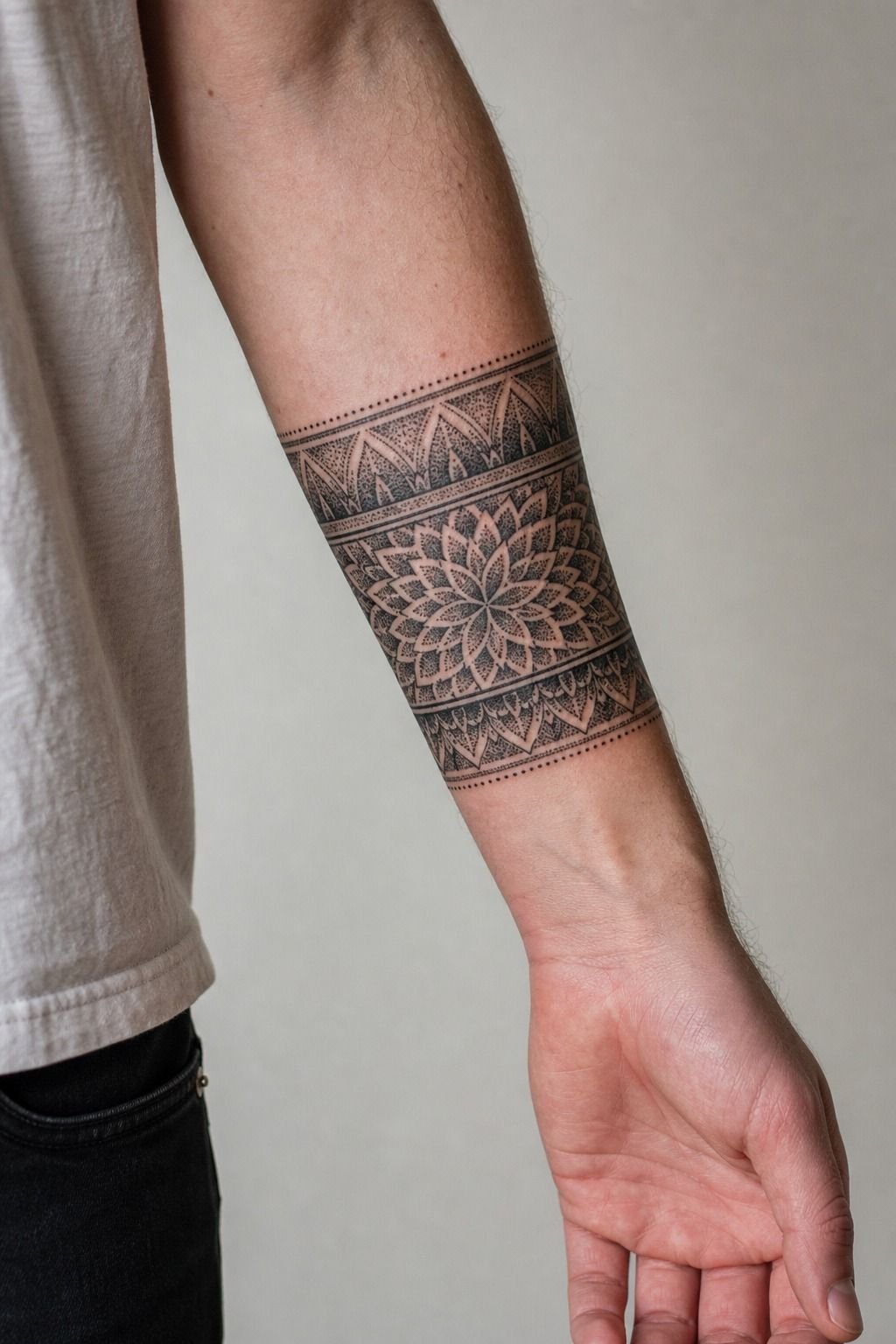
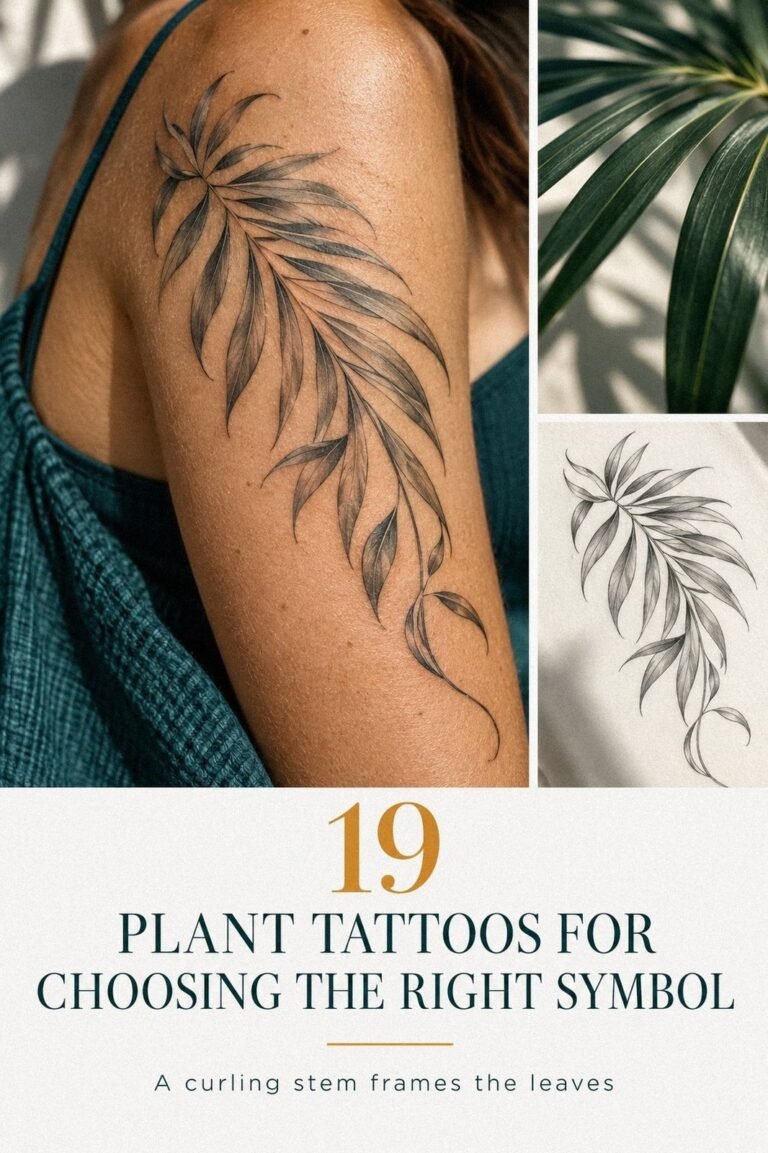
Wrap a forearm band with deliberate negative space, not a solid row of tiny decorations. You want the pattern to read around the arm from wrist to elbow, especially on fair, cool-pink skin where black dots look sharp in daylight.
A black pigment dot field with wider gaps between the geometric marks gives you a bold, modern result. I’d skip hairline-thin borders here. Your forearm moves constantly, and crispy outlines hold the whole band together.
Keep it at least 1 inch wide if you want multiple dot densities. Smaller than that, and your delicate detail can turn to soup as the skin changes.
If you’re deciding between flash and a custom layout, start with this dotwork tattoo guide. Your artist should fit the band to your actual arm, not force a flat design around a cylinder.
2Dot Work Mandala Sternum Tattoo
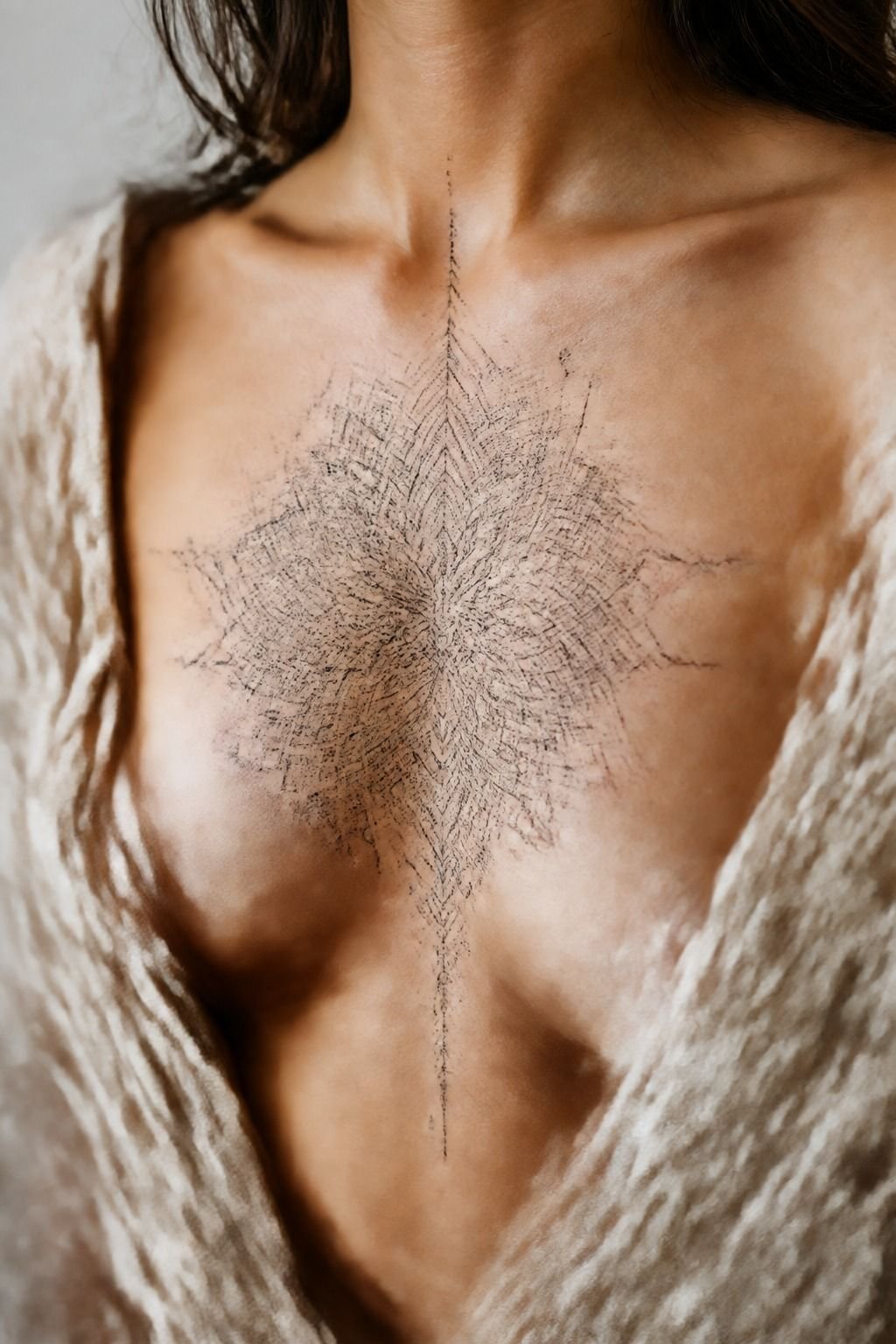
Build the mandala outward from the sternum’s centerline.
3Dotwork Tattoo Design With Crescent Moon
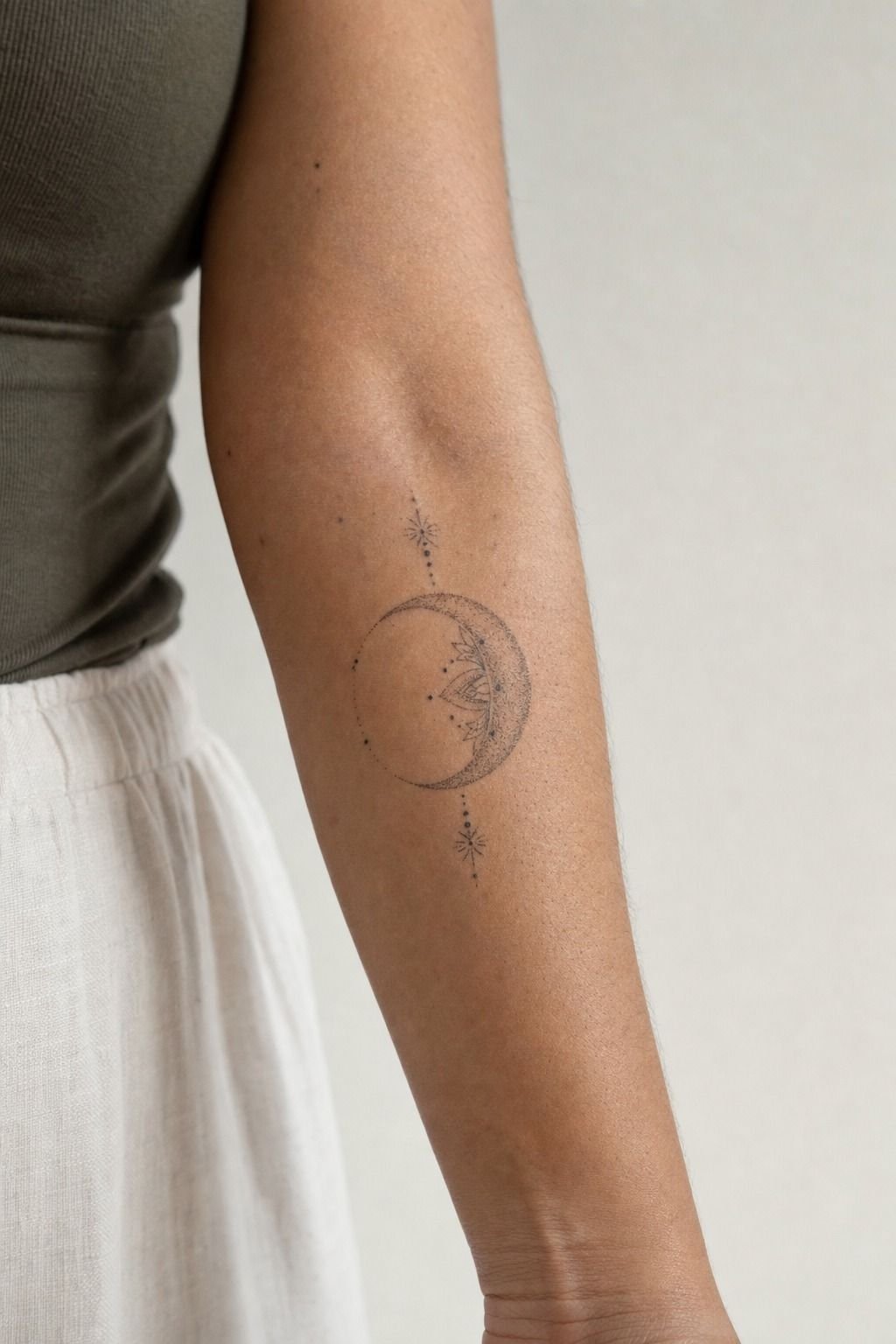
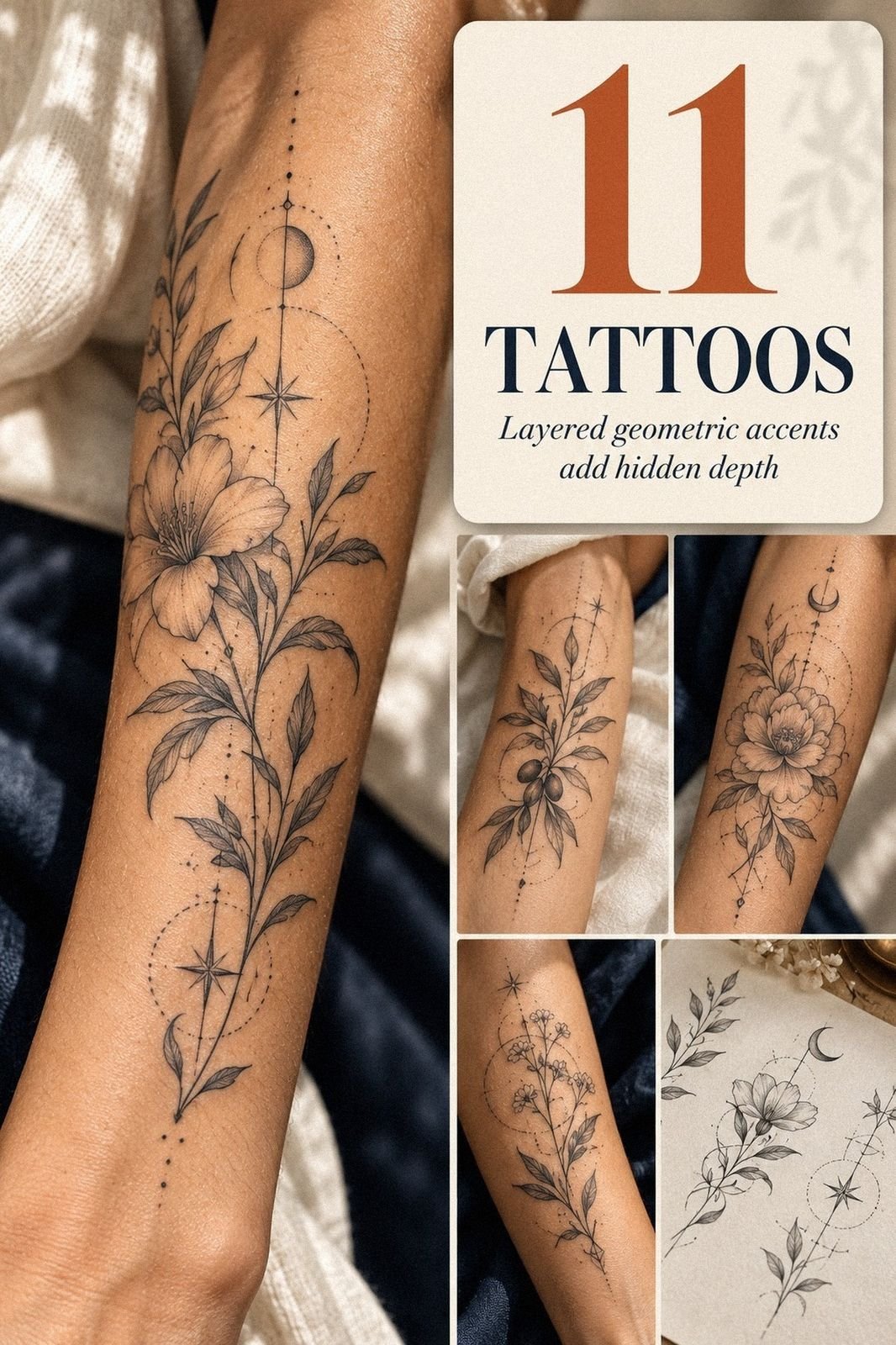
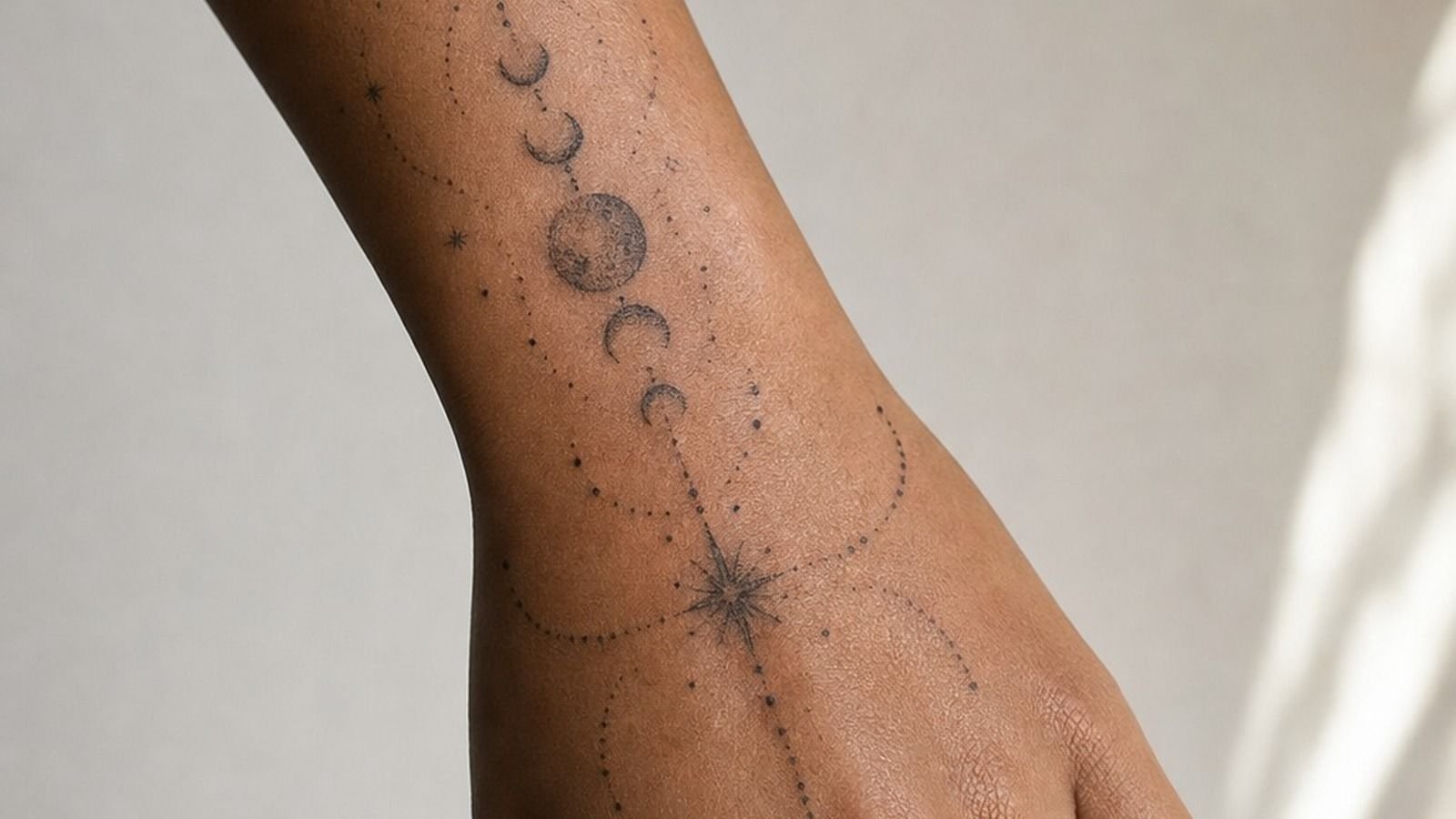
Use the crescent moon as the dark anchor, then let the dotwork create its glow. On a healed olive-skin forearm, that contrast looks calming without getting too precious.
A single-needle crescent outline paired with pepper shading works better than filling every star, cloud, and orbit. Your moon should be the first thing your eye catches, while the dots soften the edge.
I’d place this on the outer forearm instead of the inner wrist. That low-wear zone gets less friction, and your lines will age nicer there.
Want more reference language before your appointment? Look through tattoo flash art and save shapes, not someone else’s exact tattoo.
4Dot Work Drawing Behind The Ear
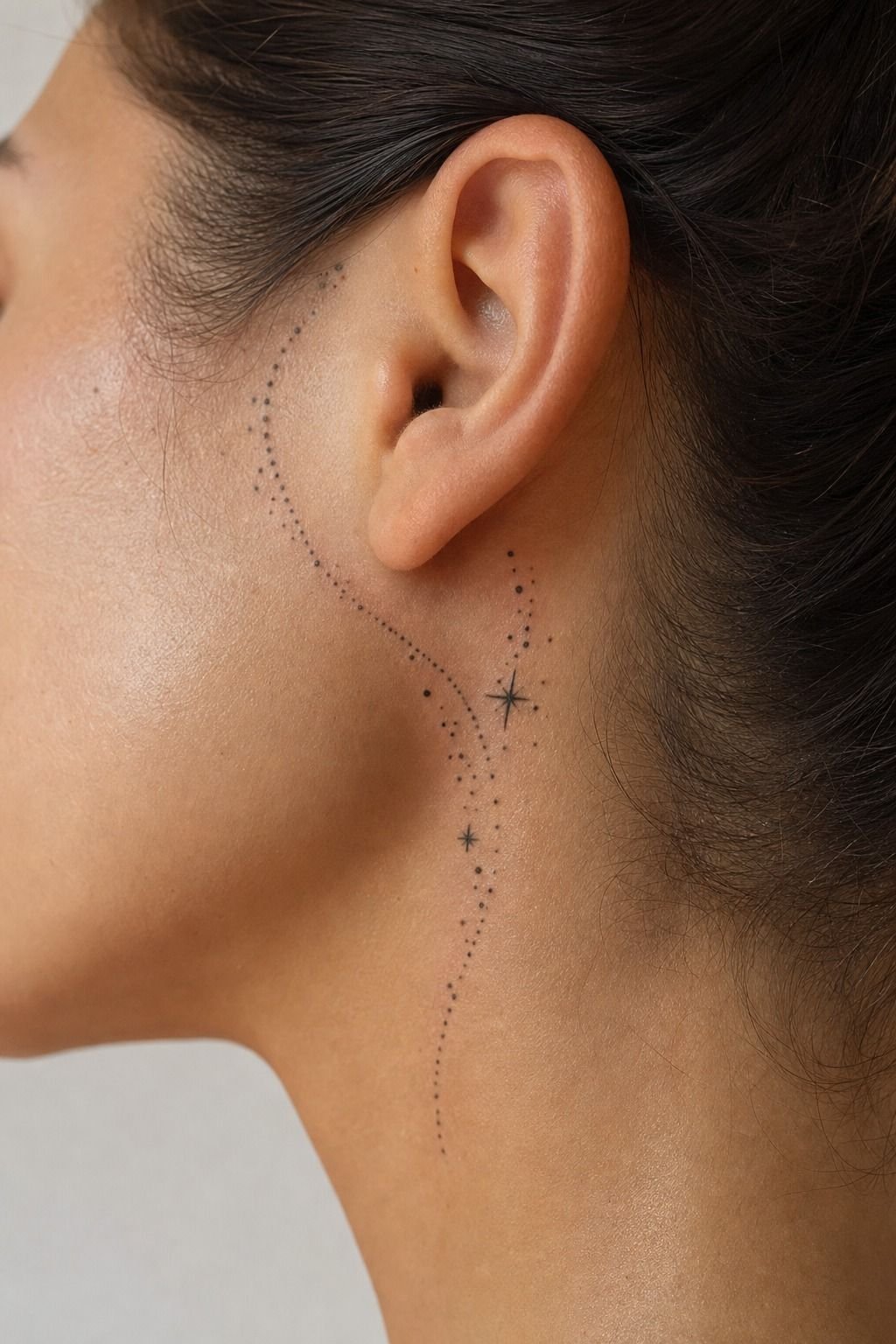
Keep behind-the-ear dotwork simple enough to survive hair products, sun, headphones, and daily washing. A small arc that follows your ear’s curve looks refined because it works with your anatomy.
Use black stipple dots and one clear silhouette, maybe a tiny sunburst or three-petal motif. Your artist should map it while you’re sitting upright, since your skin shifts more here than people expect.
That size behind the ear is gonna blur if it’s packed with microscopic mandala rings. Bump the design slightly down toward the neck so it breathes.
And remember, it’s visible. You’ll want an artist whose healed work is clean, not scratchy.
5Dotwork Art Blackwork Shoulder Tattoo
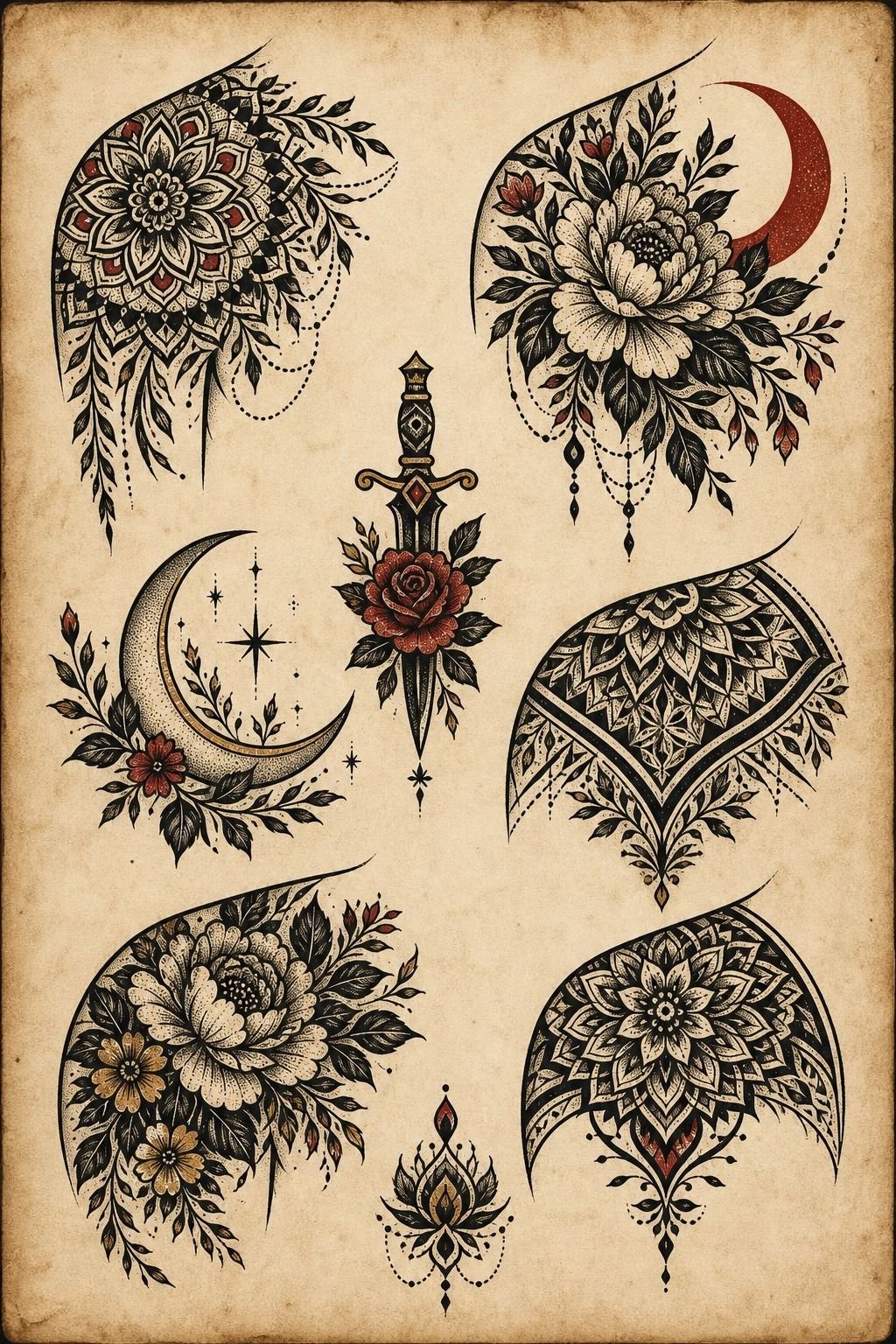
Choose a shoulder design with a heavy blackwork backbone.
6Dot Work Mandala Upper Back Tattoo
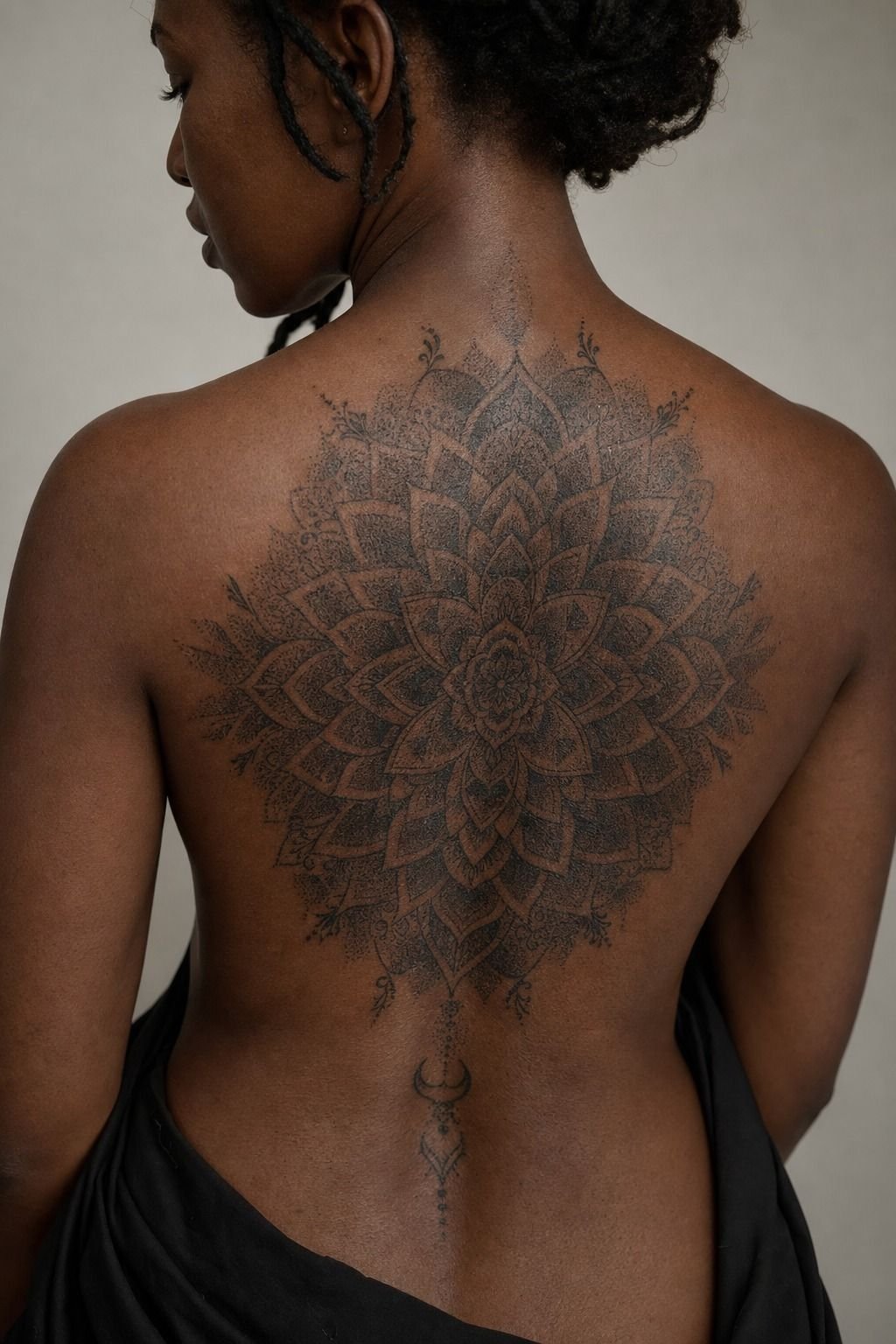
Frame an upper-back mandala between the shoulder blades, where you’ve got broad, forgiving skin and a naturally symmetrical canvas. On deep ebony skin, strong black contrast and open negative space are your best friends.
Use opaque black ink for the outer rings and a lighter dot gradient toward the center. You don’t need every dot to be identical. Controlled variation makes the shading feel soft, not patchy.
Your artist should keep the widest part around 5 to 7 inches if the design has layered geometry. That gives the lines enough room to stay clean through healing.
This placement is relatively chill compared with ribs or sternum. You’ll still feel it, but it’s a solid choice for your first larger dotwork piece.
7Dotwork Tattoo Design For Finger Tattoos
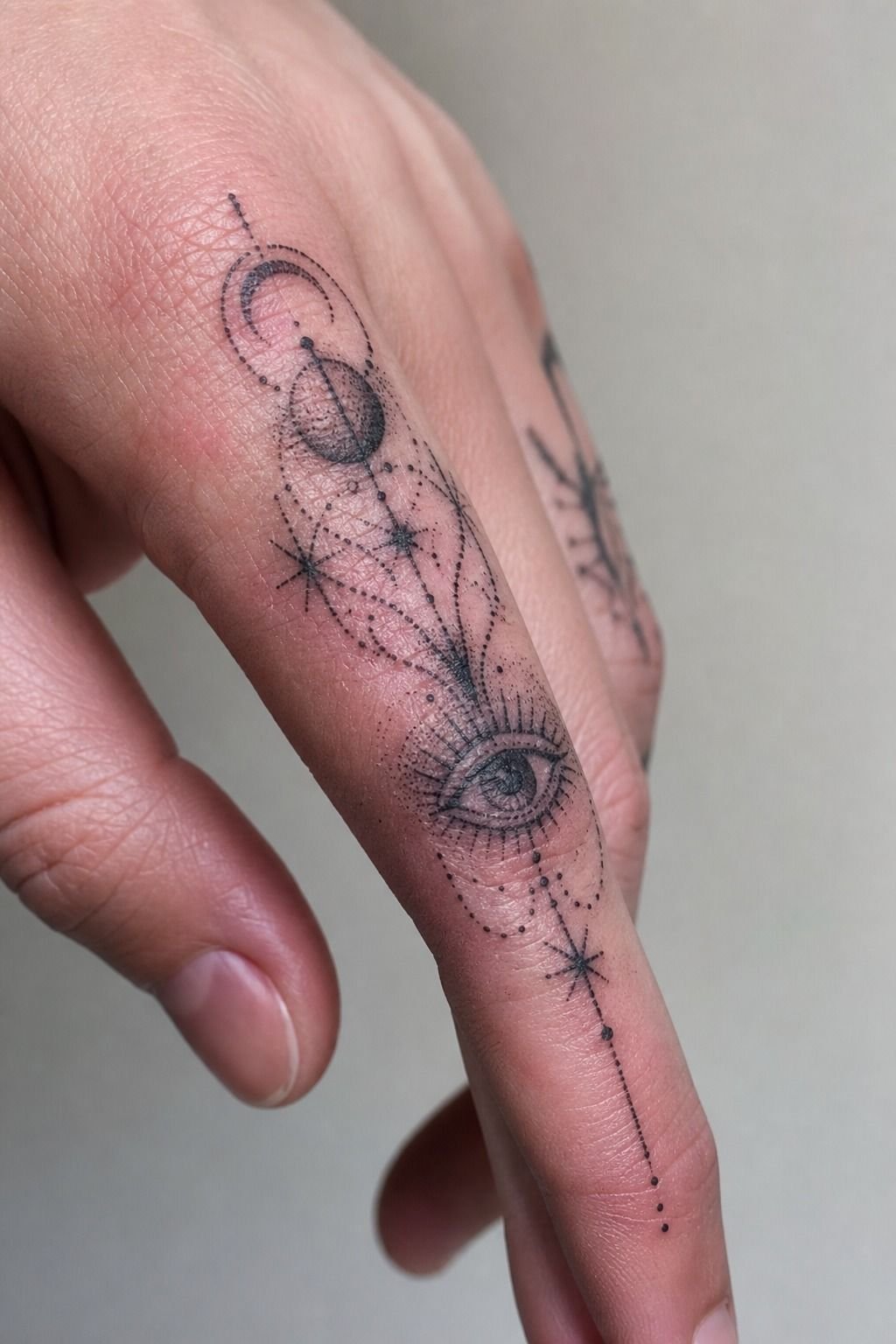
Keep finger dotwork brutally simple. A tiny row of dots, a star, or one narrow ornamental band can look charming, but fingers are high-wear zones and they demand maintenance.
A minimal black dot cluster is the move here. Your hands see soap, sunlight, friction, and constant bending, so don’t expect a delicate mini-mandala to stay crisp forever.
I tell clients this straight: fingers are for people who accept touch-ups. You might need one after healing, especially along the sides and knuckles.
8Dot Work Drawing Botanical Ankle Tattoo
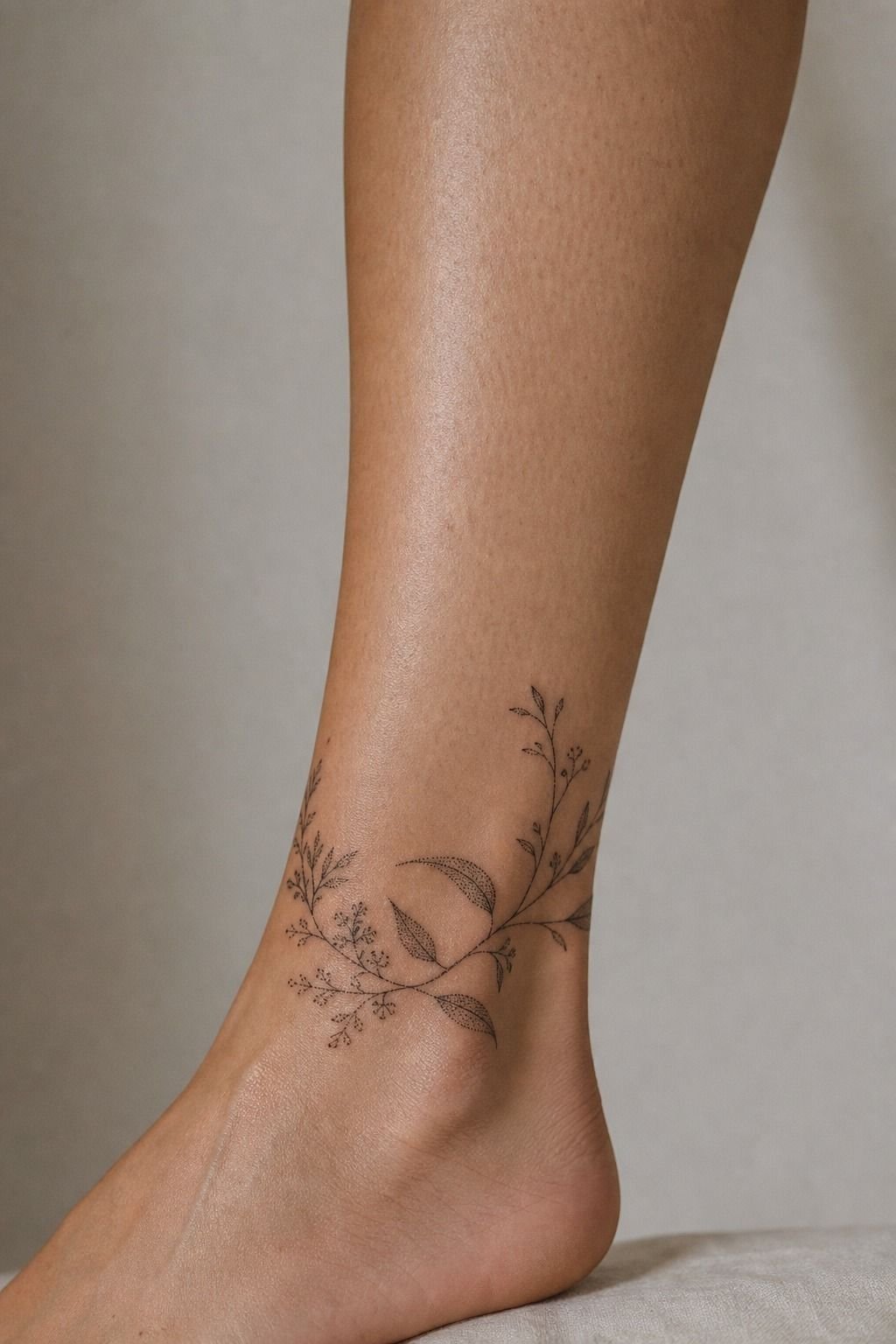
Let a botanical ankle piece climb with the leg instead of circling it like a bracelet. A stem, fern, or small flower spray looks organic when it follows the ankle bone’s direction.
Use fine black botanical linework with dot-shaded leaves, not full color packing. Your ankle has less soft tissue, so expect the needle to feel spicy near bone.
I’d avoid a dense black patch directly over the ankle joint. Shoes and socks can rub that area raw during the first 2 to 3 weeks of surface healing.
Wash it with gentle unscented soap, then use a thin layer of ointment. Don’t suffocate it. And keep your shoes from grinding against it while it peels like a sunburn.
9Dotwork Art Geometric Calf Tattoo
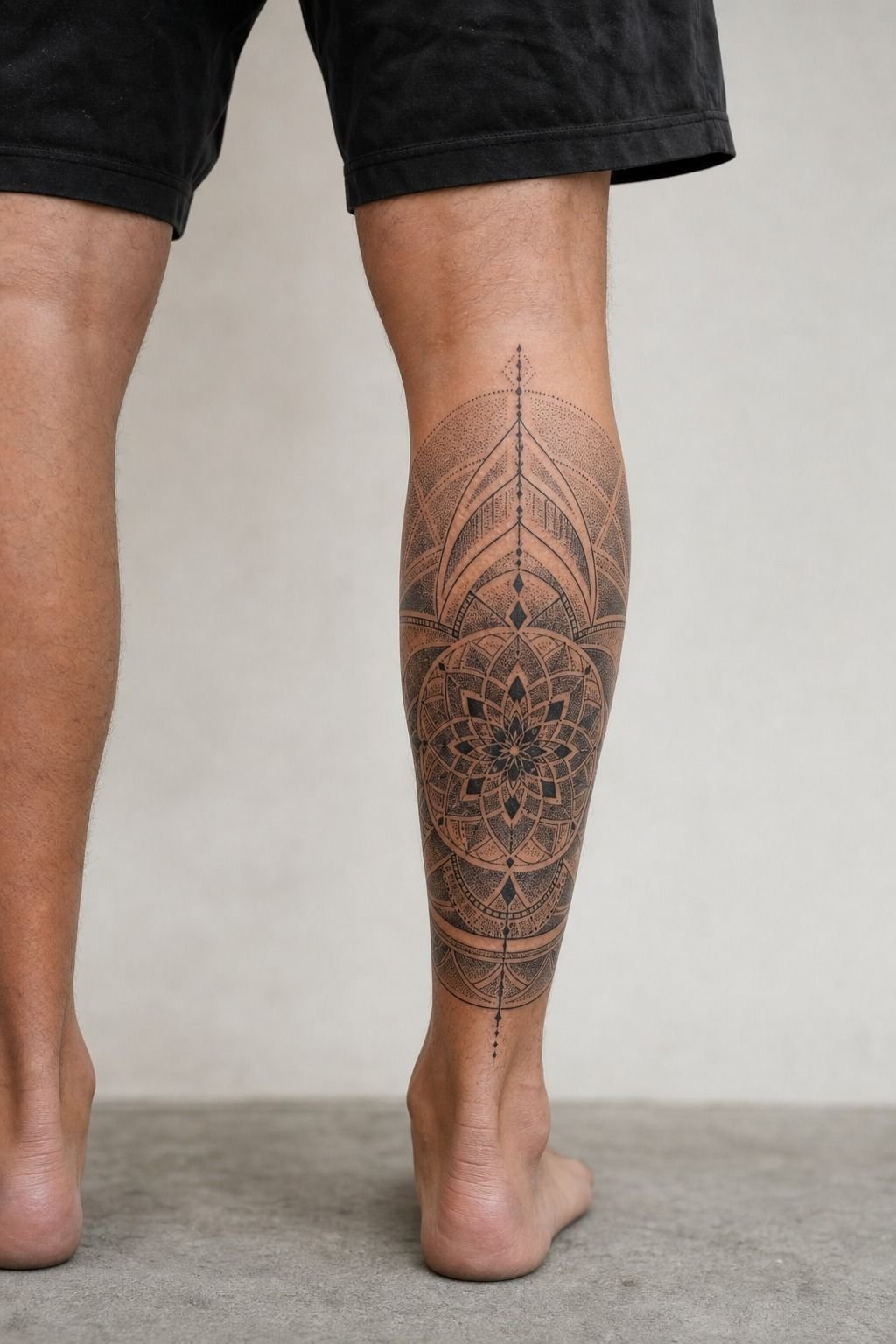
Anchor a geometric calf tattoo to the calf’s muscle shape. You want the design to taper with your leg, not sit as a square panel that ignores the body underneath.
A compass-style dotwork grid with thicker black nodes gives you contrast without making the entire calf look heavy. Your artist can use whip shading to fade the background into skin.
The calf is a peaceful place for detail because you have room. A 6- to 8-inch design can carry circles, triangles, and clean dot gradients without needing to shrink everything down.
But don’t make every line the same weight. A little hierarchy is what keeps your geometry from reading like a worksheet.

10Dot Work Mandala Rib Cage Tattoo
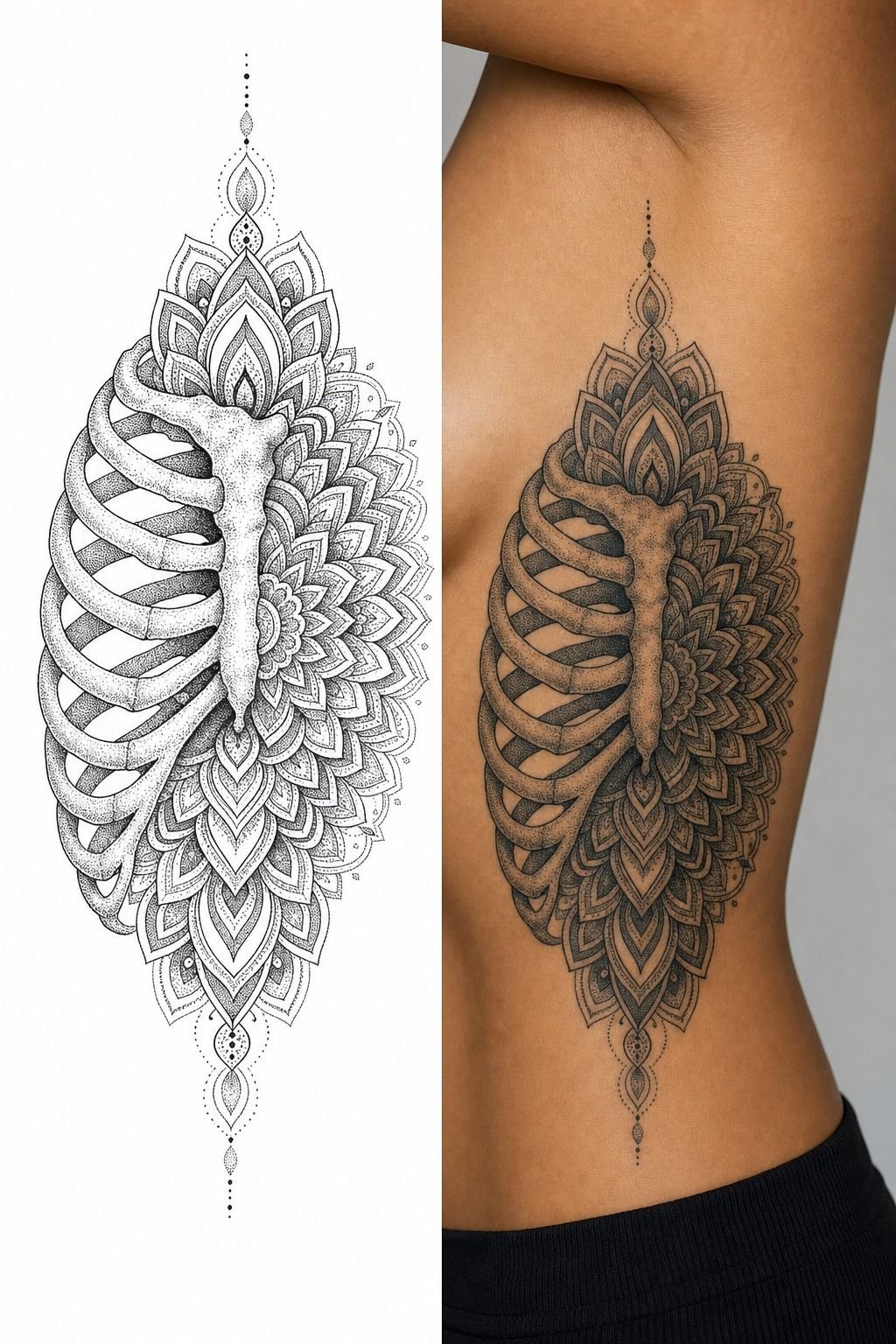
Compare the stencil with the healed version before you commit to a rib-cage mandala. On paper, every tiny dot looks gorgeous. On moving skin, you need stronger spacing and calmer choices.
A large central lotus mandala with open petals will hold better than a packed lace pattern. Your ribs expand when you breathe, and the session can feel intense fast.
This is not the placement for your first four-hour appointment if you don’t know your pain tolerance. Start with a 2- to 3-hour session, eat beforehand, and bring water.
But the payoff is intimate and elegant. The tattoo peeks out with certain clothes, then disappears when you want it to.
11Dotwork Tattoo Design With Sacred Geometry
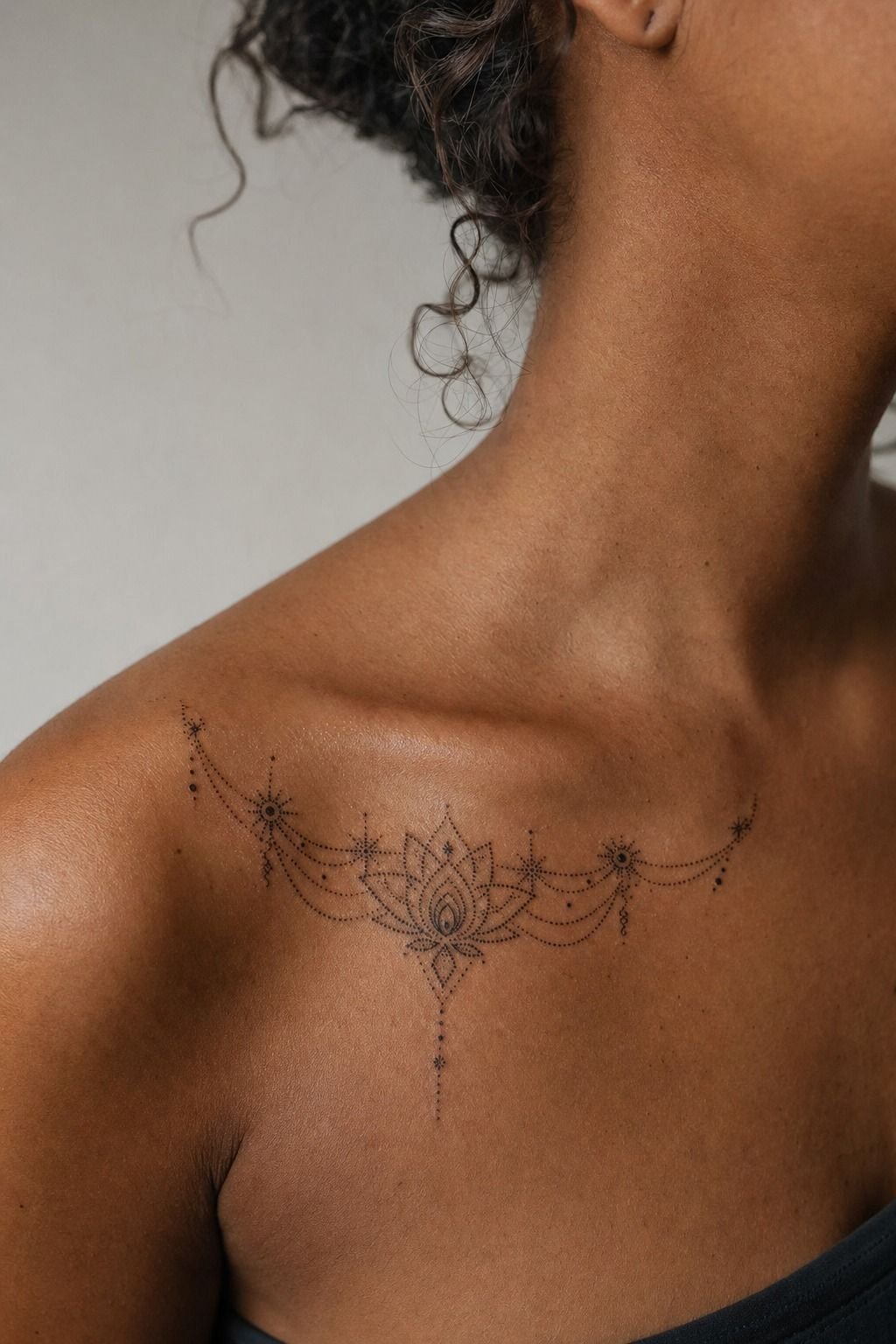
Use sacred geometry for structure, not as a pile of symbols. A collarbone piece can be captivating when the circles follow your clavicle instead of fighting it.
Start with precise black geometric lines, then add dot shading behind one or two shapes only. You’ll get depth without turning the whole collarbone into visual noise.
I’d skip ultra-thin overlapping circles if you want longevity. They look delicate fresh, sure, but too many intersections can soften together over time.
Your artist should show you healed examples, not just fresh photos. If their dots are clean at one year, that’s the portfolio evidence you need.
12Dot Work Drawing Minimalist Wrist Tattoo
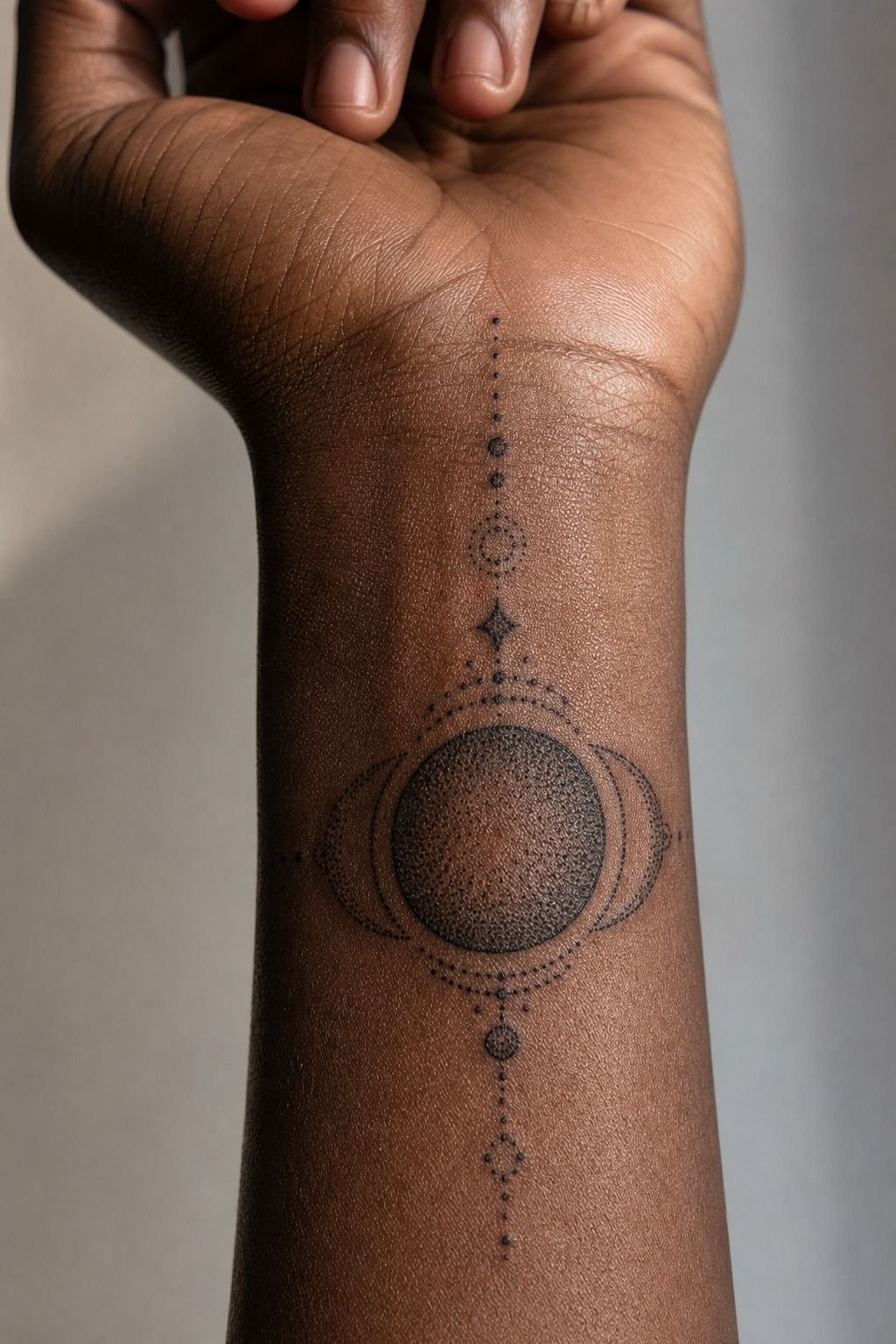
Make the wrist tattoo readable in one glance.
13Dotwork Art Floral Hip Tattoo
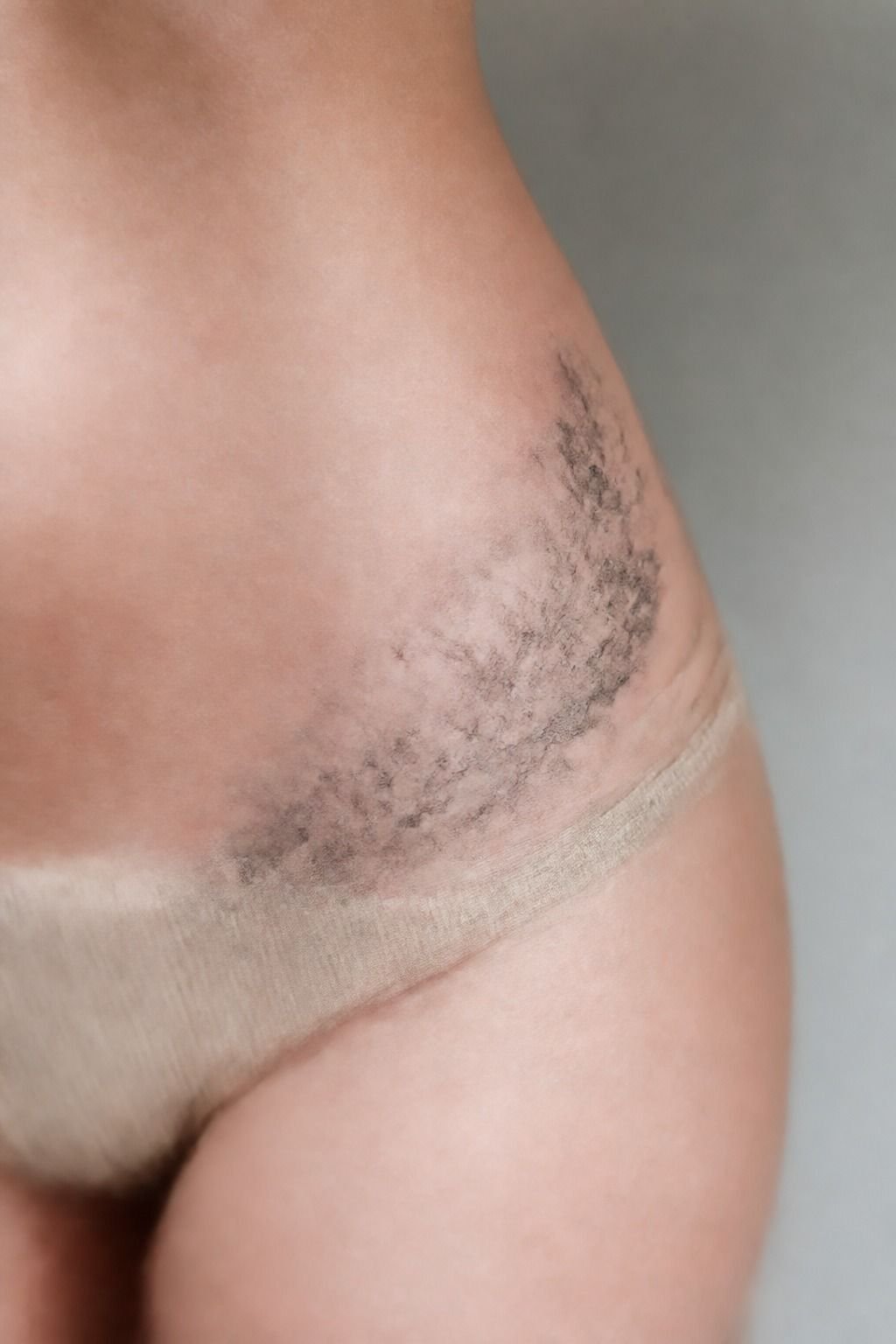
Let florals drift across the hip rather than placing one centered flower like a decal. The curve of your lower waist can make the stems feel soft and intentional.
Use black-and-grey peony shading with dotwork in the petals and leaves. A few solid black leaves give the airy detail somewhere to land.
The hip can handle a larger composition, around 5 to 8 inches, without crowding the design. Your artist can keep the blooms open, then push contrast in the darkest folds.
I’d skip watercolor here unless it’s anchored with line. Watercolor alone may look gentle fresh, but it doesn’t give your floral enough structure to age well.
14Dot Work Mandala Elbow Tattoo
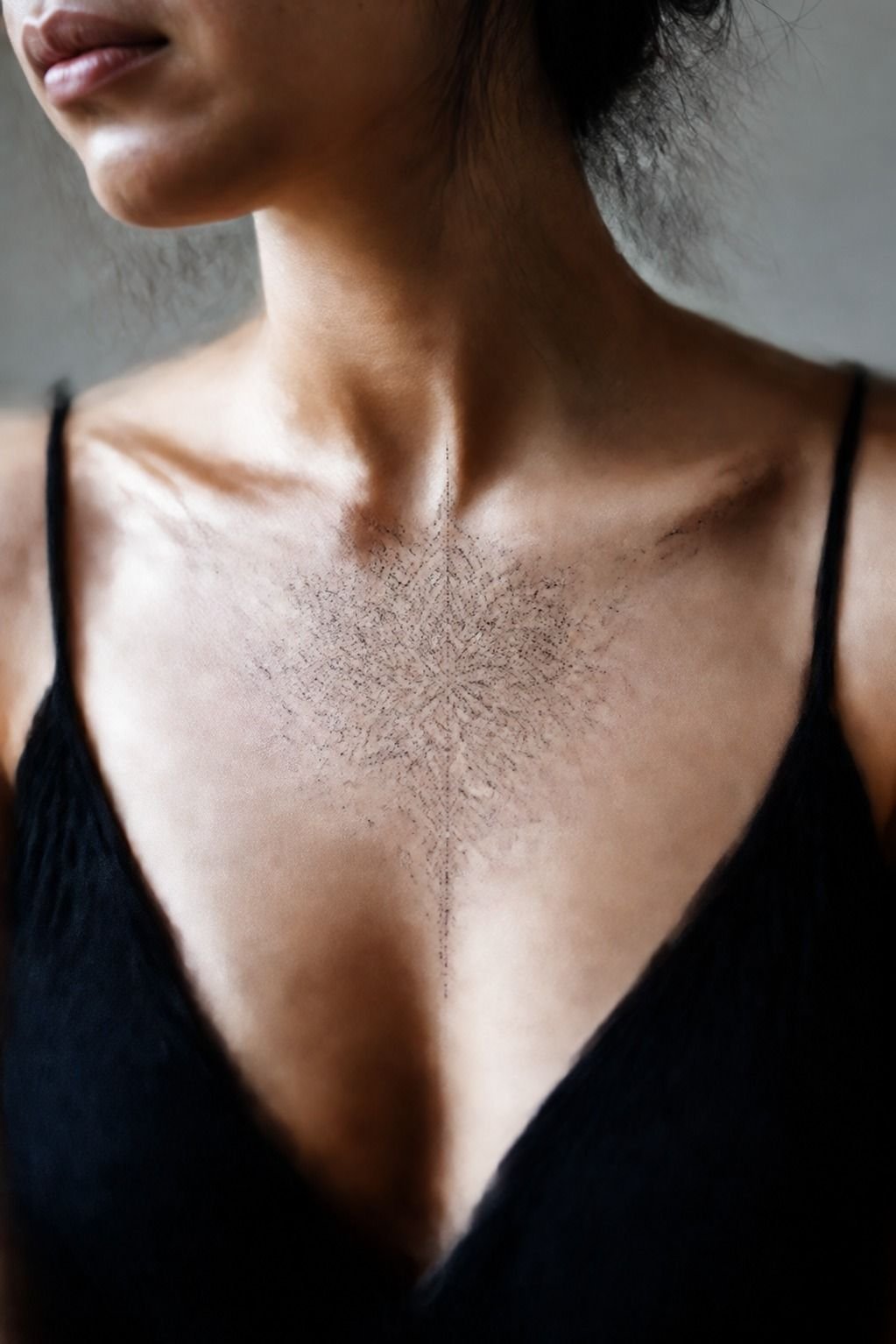
Use the elbow’s movement as part of the design. A mandala that radiates around the point can look bold, while a dense center directly on the hinge can heal unevenly.
The elbow-centered dot ring should be slightly open at the joint, then fuller on the surrounding skin. Your artist can use larger dots near the bend and finer gradients farther out.
This spot is spicy and high-wear. You’ll bend it, sleep on it, and probably knock it against something before it’s done peeling.
Don’t pick at the flakes. It’s tempting, I know. But you can pull color out and leave your clean pattern looking patchy.
15Dotwork Tattoo Design For Neck Placement

Choose neck placement over tiny behind-the-ear clutter if you want a design that can grow. A flash-sheet concept with ornamental dots and one strong central shape gives you options before you commit.
A black ornamental neck motif should follow the side or back of your neck, not sit dead center unless you want full visibility. Your artist needs to check it in a mirror while you turn your head.
I’d avoid copying a random flash sheet exactly. Bring references for vibe, then let your artist redraw it for your proportions.
If you like tattoo history and stylized lettering beside ornamental work, see this art Chicano tattoo guide. Different lane, same lesson: flow beats copying.
16Dot Work Drawing Celestial Hand Tattoo
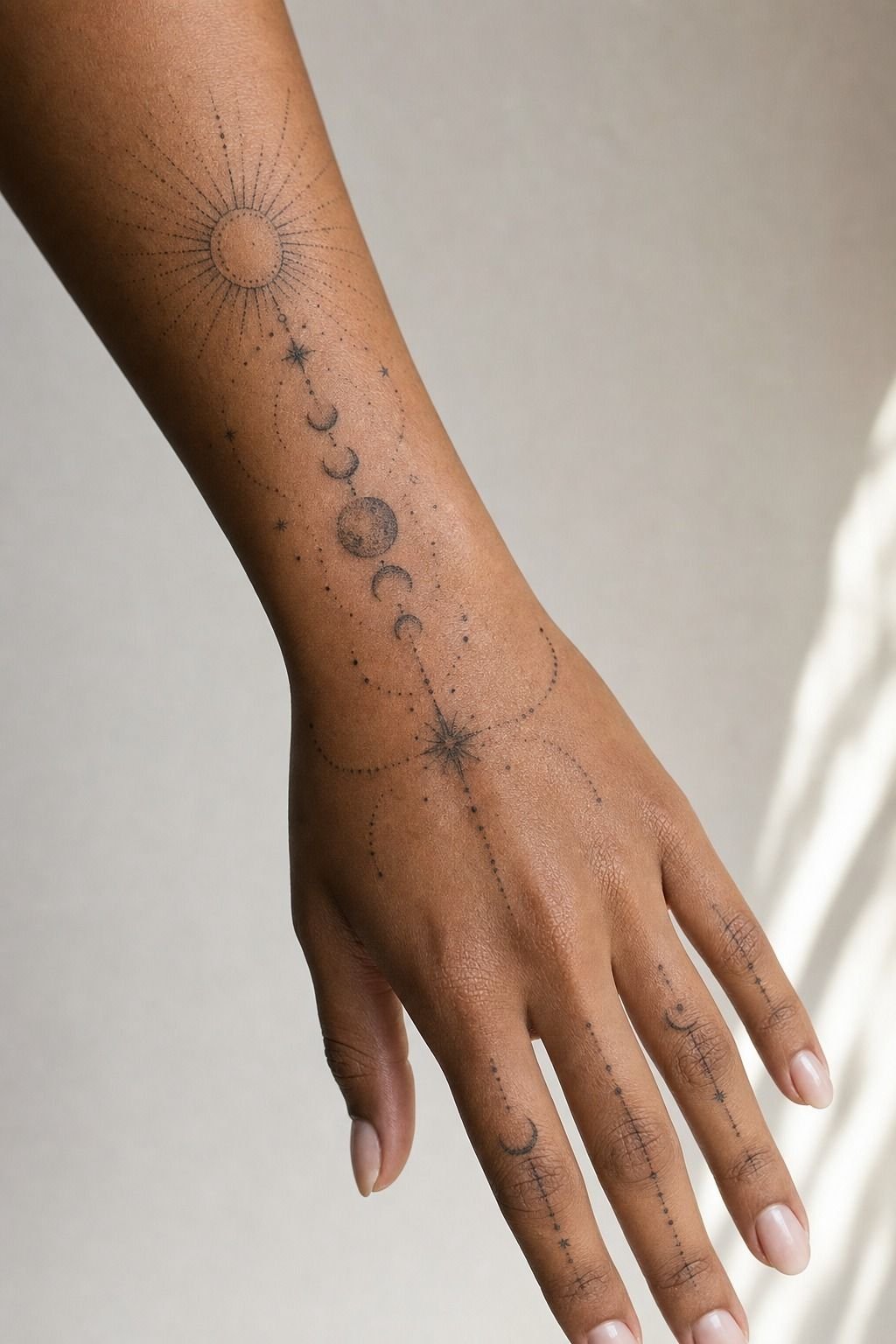
Choose a celestial hand design only if you’re cool with maintenance. A sun, moon, and dot halo can look gorgeous across golden-tan skin, but hand tattoos get worn hard.
A black celestial hand motif needs bold outer lines and simplified rays. Skip the miniature constellations between every knuckle. That’s where detail goes to die.
Your artist should use one clean pull for each line, not ten fuzzy ones. You’ll want healed photos from them, especially for hands.
And sunscreen matters once it’s healed. UV fades black ink, period. Keep it covered in strong sun, and don’t soak it in pools during the first few weeks.
17Dotwork Art Compass Chest Tattoo
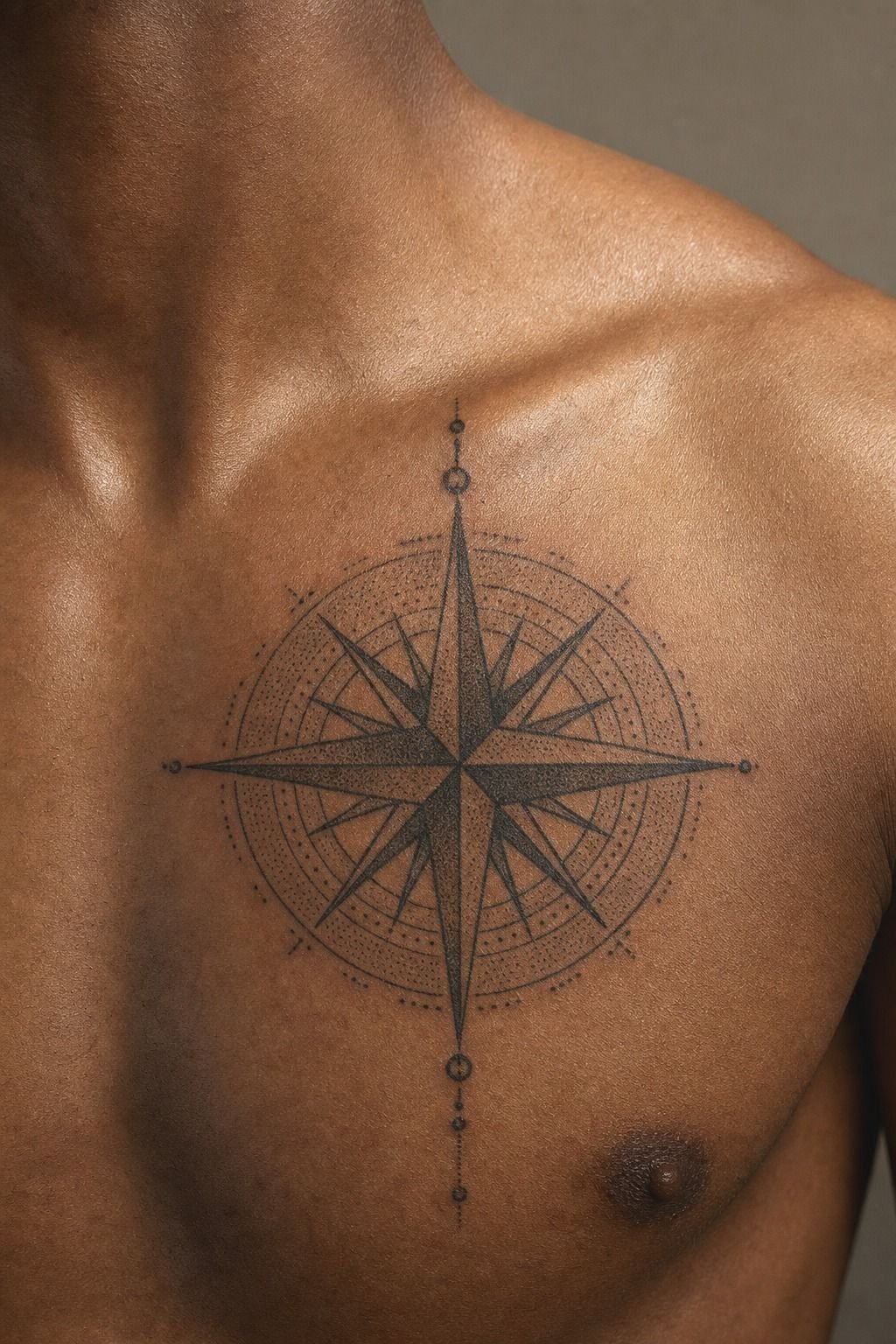
Center a compass on the chest only if you want it to be seen as a statement.
18Dot Work Mandala Thigh Tattoo
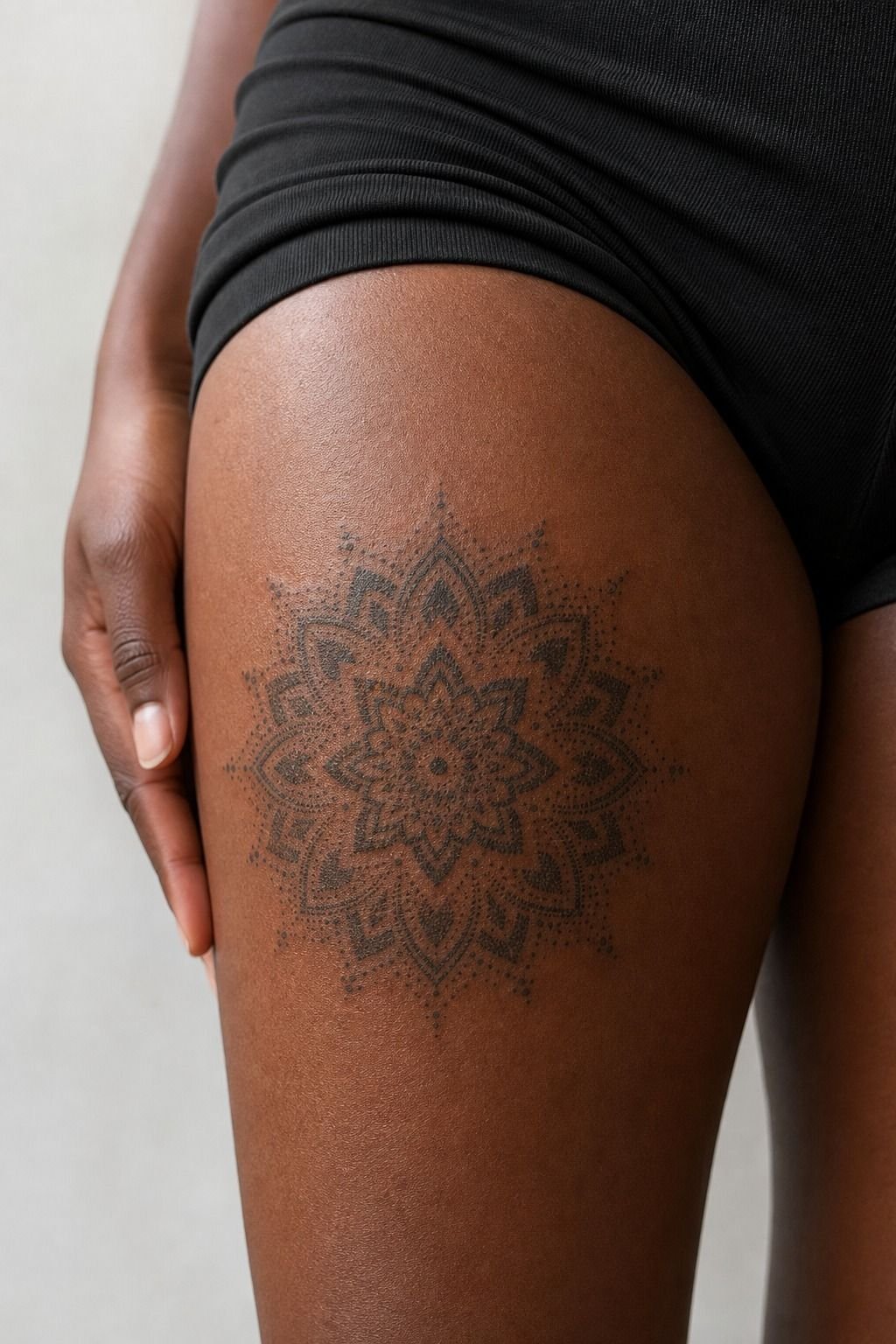
Build a thigh mandala with enough scale to enjoy the detail. The upper thigh is low-wear, forgiving, and one of the better places for your first serious dotwork session.
A large black mandala flower can run 7 to 10 inches and still feel balanced. You get room for soft stipple gradients, crisp petals, and a few saturated black anchors.
The pain is usually more tolerable than ribs, feet, or sternum. You can settle in, breathe, and let your artist work without every pass feeling like a crisis.
I’ve watched clients choose the thigh after struggling through a tiny rib piece, and it’s a totally different experience. More comfortable.
More room. Better results.
19Dotwork Tattoo Design With Animal Silhouette
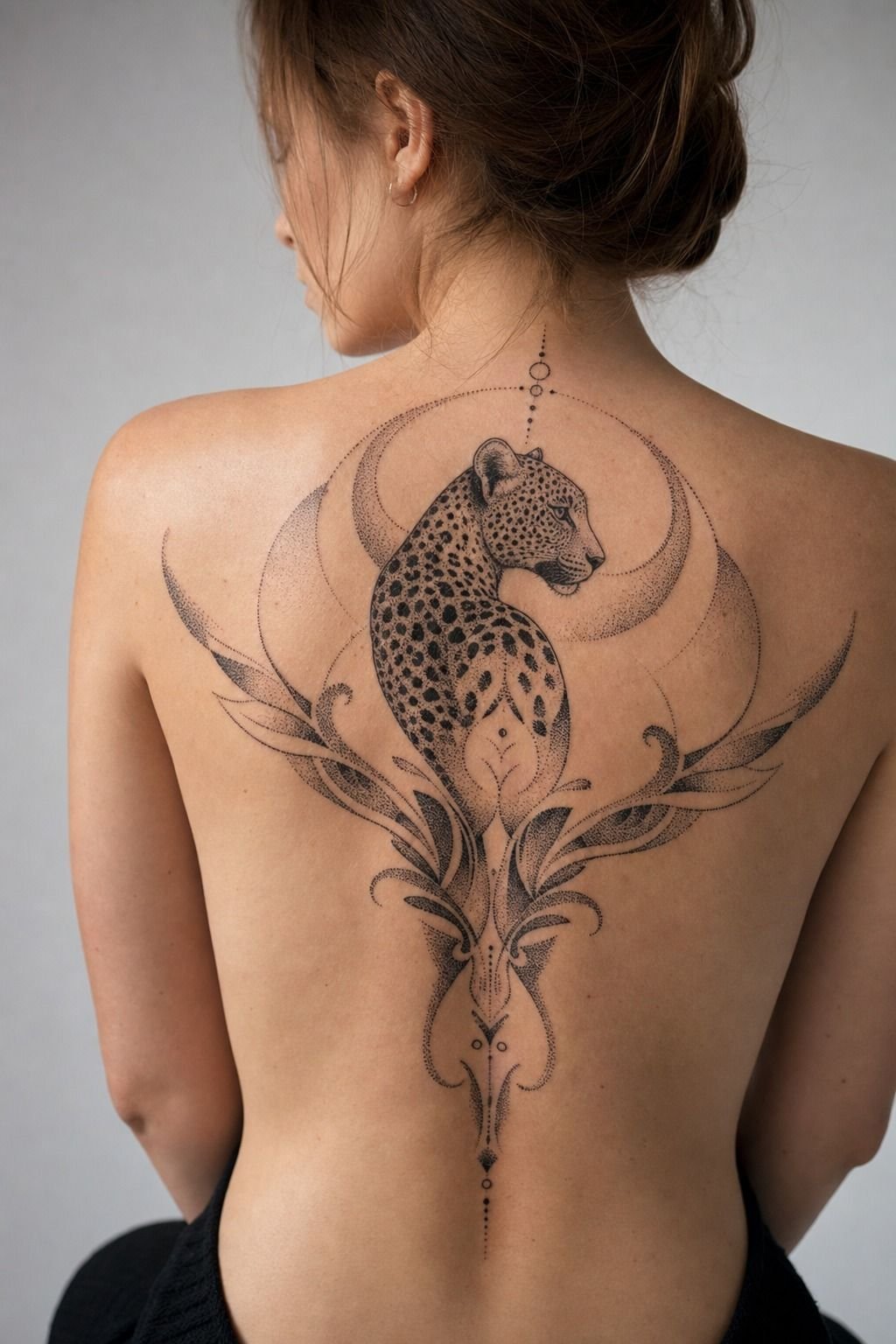
Use an animal silhouette as the anchor, then let dotwork suggest fur, feathers, mountain ridges, or night sky around it.
The Breathing-Room Rule I Won’t Bend
I’m Hazel, and the dotwork tattoos I worry about aren’t the big black ones. They’re the tiny, over-explained ones.
Somebody brings in a screenshot with a moon, twelve stars, a birth flower, coordinates, a quote, and a mandala squeezed into an area the size of a quarter. They want every dot preserved.
I get why. Your tattoo means something, and you don’t want to lose any of it.
But skin isn’t paper. It’s warm, moving, living tissue.
Ink settles. Lines spread a little.
The small gaps that look almost too open on day one are often the reason a tattoo still reads clearly years later. That’s not me trying to make your piece less personal.
It’s me trying to make sure you can still recognize it.
I’d rather give you one strong crescent with a clean halo than twenty tiny symbols fighting for attention. I’d rather move a wrist tattoo up the forearm than promise a delicate design will stay sharp in a high-wear crease.
Sometimes that means you need to let go of a detail you thought was essential. Annoying, maybe.
Necessary, often.
The artist matters too. Look for crispy and confident lines, healed work, and dot gradients that don’t turn muddy.
A good dotwork artist knows when to stop. They won’t overwork your skin trying to make every pinprick equally dark.
Your tattoo doesn’t have to say everything. It just has to say the right thing clearly.
The Questions I Get Asked Most
How much does a Dotwork Art usually cost?
Most dotwork tattoos cost about $100 to $300 for a small-to-medium piece, depending on placement and detail. Shop minimums commonly run about $50 to $100, while many US artists charge roughly $100 to $250 hourly. Your artist and region set the real number.
Are Dotwork Art a good idea for a first tattoo?
Yes, especially on the outer forearm, thigh, or shoulder. Clear black contrast gives you a tattoo that can age well without demanding a huge first session. Pick a simple shape that feels like you, then let it breathe.
How do I choose a tattoo artist for Dotwork Art?
Look at healed photos first. Clean healed linework matters more than fresh, glossy pictures under studio lights. You want consistent dots, smooth gradients, strong hygiene practices, and an artist whose portfolio includes the exact style you’re asking for.
How much do Dotwork Art hurt?
Pain depends on placement. Outer arms, shoulders, and thighs are usually more manageable; ribs, sternum, hands, feet, and elbows are spicier. Lines feel sharp, shading feels like a dull burn, and color packing tends to hurt most.
How long does a Dotwork Art take to heal?
Surface healing usually takes 2 to 3 weeks, while deeper settling can take 2 to 3 months. Gentle aftercare keeps it clean: unscented soap, a thin layer of moisturizer, no pools, no picking, and limited sun.
What’s the best placement for Dotwork Art?
The outer forearm and upper thigh are strong picks. Low-wear skin gives your dots more room to stay readable, and both placements are usually easier to sit through than ribs, feet, or sternum. Your design size should match the area.
Where I’d Start First
If I had to pick one, I’d start with the outer forearm band. Your skin gives it room, the pattern can stay bold, and you’ll see it every day without betting on a high-wear zone. Pin it for later and compare it with this dotwork tattoo guide.