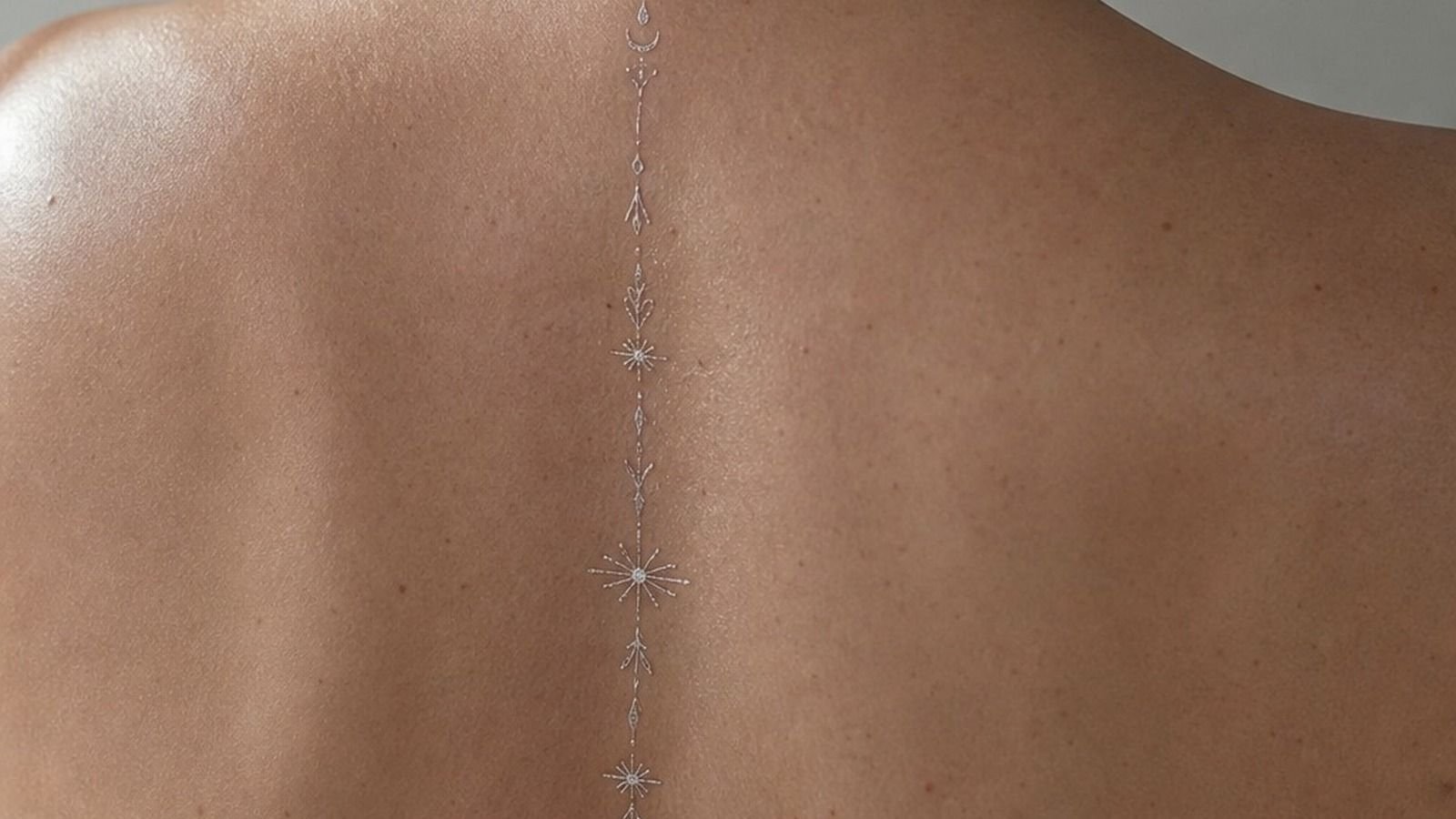
I almost talked myself out of my spine piece three times before I booked the session. I’d read every Reddit thread about blowout, every warning about how fine line on bone heals patchy, every horror photo of ink that turned to grey soup within a year. I went anyway. Six weeks later the line down my back still reads clean from across the room, and I’m going to walk you through every single thing that made that happen so yours can do the same. Worth it!
I’m Hazel. I tattoo out of a small studio in Portland, Oregon, mostly fine line and floral work on women who want something quiet and meaningful. I’ll walk you through this like you’re sitting in my chair asking me the real questions.
Here’s what it looked like before
A blank stretch of skin from the nape to mid-back that I’d been quietly saving for two years. No other ink nearby, no tan lines from that summer’s bikini, just fair cool-pink skin that flushed the second anyone touched it.
The kind of canvas that photographs beautifully and freaks you out under needle because every millimeter shows. I’d carry reference photos in my phone, screenshot studio aftercare guides, and ask friends who’d been tattooed by the same artist what hurt most. I had the design, I had the date, I just didn’t have the nerve.
My hesitation was honest, not cute. Fine line on the spine has a reputation for a reason, and I’d seen enough bad healed photos to know the risk!
Is a fine line spine tattoo actually a good idea?
Short answer: yes, if you respect the placement. The spine heals predictably between the shoulder blades because the skin is thick, the area doesn’t flex much with movement, and the lines you put there age slow compared to high-wear spots like the wrist or ribs. It’s one of the few places on the body where a true single-needle piece can stay crisp for years.
The catch is the bone underneath. Directly over the spinous processes (those bony bumps you can feel down your center line), the dermis is thinner and the needle vibrates harder.
That’s where blowout starts. A skilled artist will shift the line a few millimeters off-center to land on the muscle belly, not the bone.
If your artist isn’t doing that, they’re not paying attention, and it’s worth saying so before they start.
The other thing nobody mentions: your body weight matters more than your skin tone. I tattoo clients of every skin color on the spine and the heal is the same. What changes the heal is your general health at the time of the session, how well you sleep, what you eat the day of, and whether you’re fighting off a cold.
A tattoo done when you’re tired and underfed will heal worse than the same tattoo done on a client who’s been hydrating and eating real food. That’s not gatekeeping, it’s just how skin responds to trauma.
Take care of yourself for two weeks before the appointment and your linework will reward you.
- Tracing the spine line in silver pen
- Choosing the exact thoracic anchor point
- Picking a single-needle rose stem
- Sizing the work between the shoulder blades
- Stretching skin with two fingers pre-poke
- Letting sound win over silence in the chair
- Drawing a serpent in one flowing curve
- Mapping moon phases stacked on vertebrae
- Picking script height against line weight
- Lining up the stencil slightly off-center
- Choosing a minimalist butterfly between vertebrae
- Working through the lumbar curve slowly
- Healing under a soft cotton tee
- Sleeping flat those first three nights
- Watching fine lines settle at week two
- Avoiding the sun for the first year
- Booking the six-week touch-up session
- Steering clear of stretch marks long term
- Pairing the spine tattoo with a wrist companion
1Tracing the spine line in silver pen
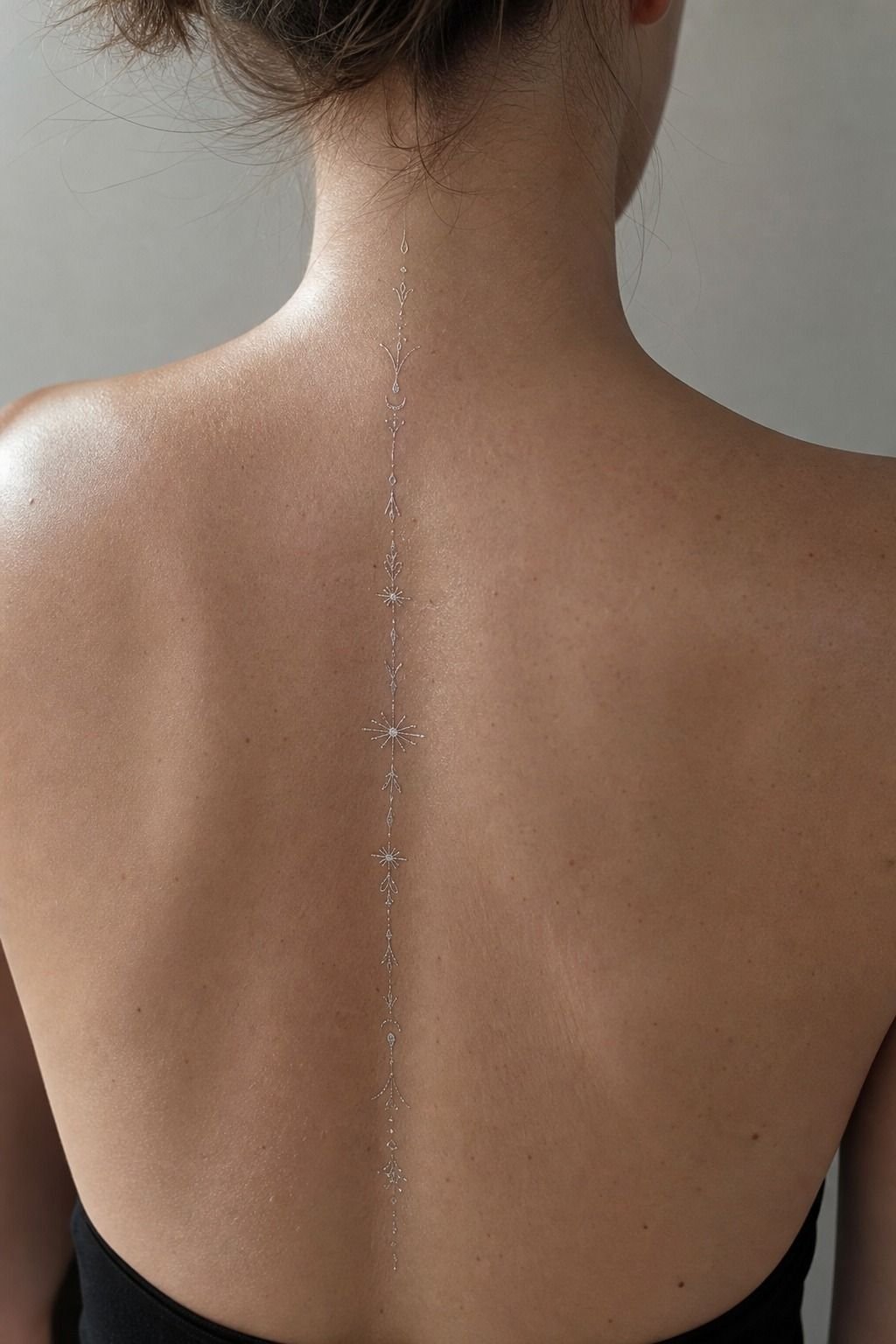
Before any needle touches you, your artist will mark the path with a silver skin-safe pen. That first line down the center is the single most important stroke of the whole session because every dot of ink follows it.
On me, the line ran from just below the C7 vertebra (that bony knuckle at the base of your neck) down to the lumbar curve, a little under fourteen inches. It looks like nothing on the table and it looks like a nervous promise when you stand up.
Trust it. The pen washes off in five minutes anyway, and a real artist will redo it twice before they’re happy. If yours lays it down once and starts tattooing, that’s a small red flag.
A clean paper stencil is the cheapest insurance you’ll buy.
2Choosing the exact thoracic anchor point
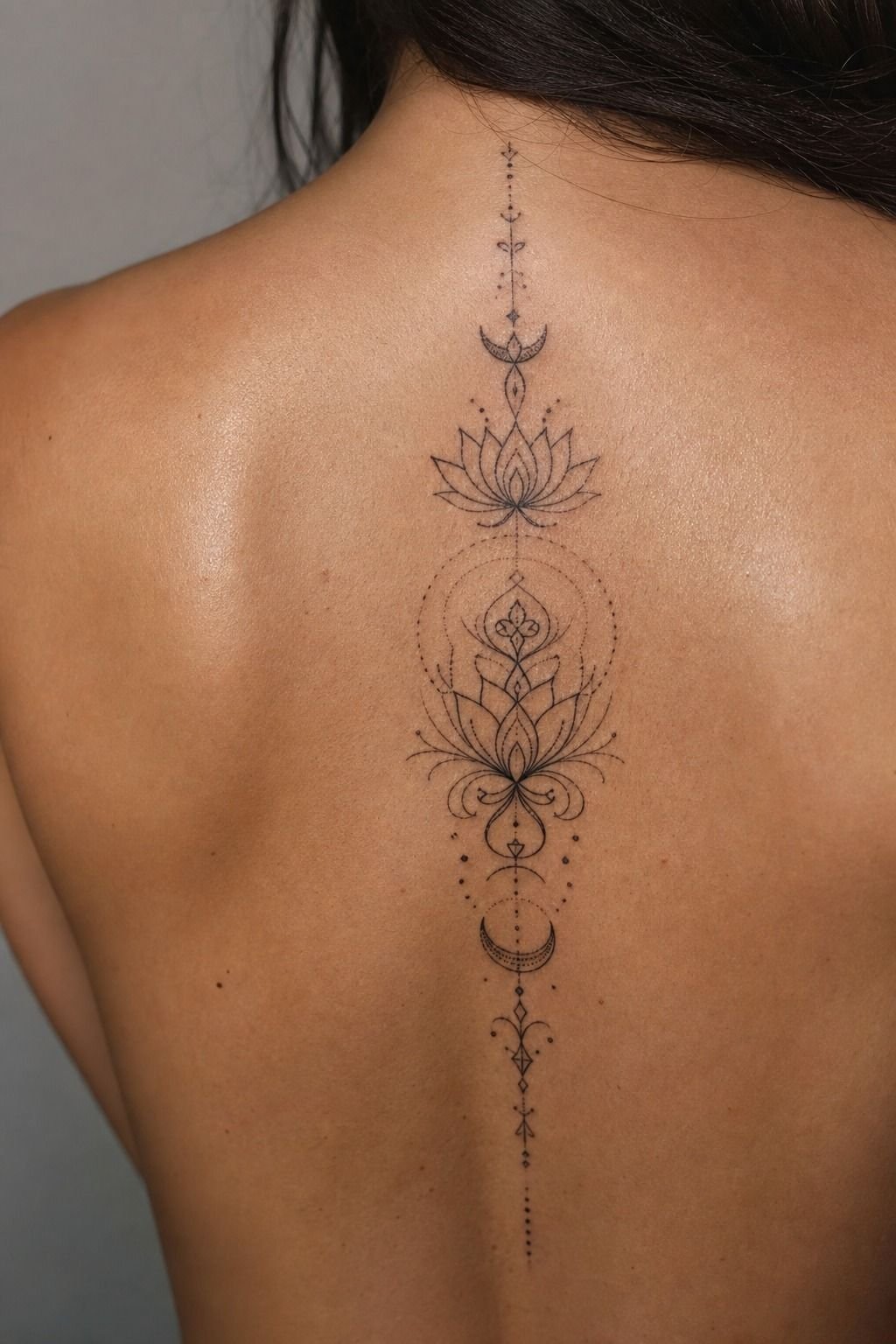
Anchor point is where the design starts and where the heaviest visual weight sits. Most spine pieces die because the artist begins too high or too low and the piece floats awkwardly on the back.
I asked mine to begin at the T4 vertebra, between the shoulder blades, roughly bra-strap level on most bodies, so the linework had ribs to grip onto and a natural visual break before the lower curve. The thoracic anchor is where your eye lands first in photos, so get this right and the rest forgives small mistakes.
Get it wrong and the whole thing looks like it’s sliding off your back like a sticker that’s lost its adhesive. If you’re stacking multiple small elements, start here and work down.
Don’t start at the tailbone and march up, you’ll run out of visual hierarchy.
The other side of the anchor decision is what you leave empty. Negative space above and below the piece is what lets the eye rest.
A spine piece that runs from nape to tailbone with no gaps reads as a stripe, not a piece. Most of the feminine back tattoos I see go wrong are over-stuffed.
Three small pieces down the spine with breathing room between them will always look better than one long piece trying to fill the space. The empty skin is part of the design.
3Picking a single-needle rose stem
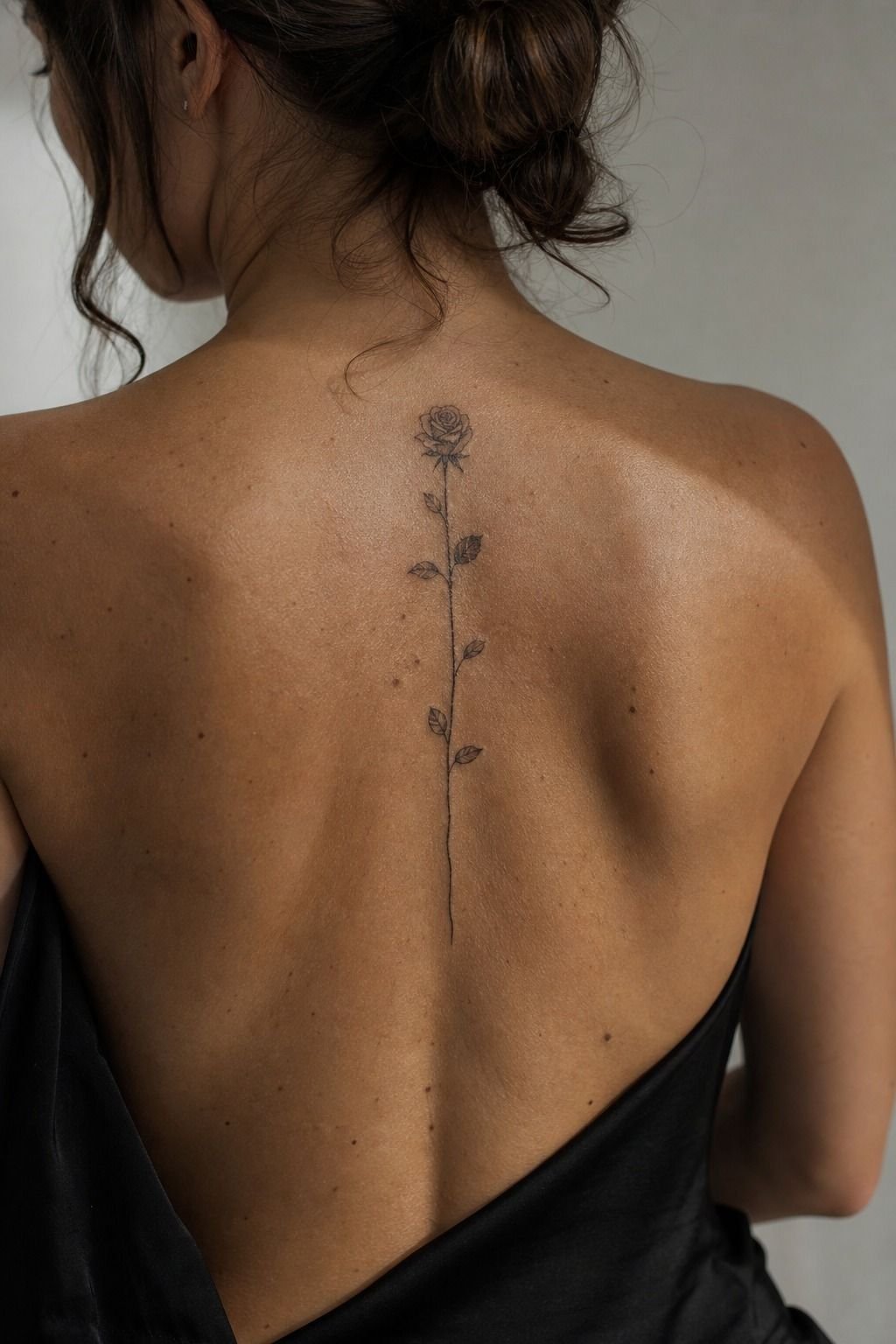
A single-needle rose stem is the gold standard for fine line spine work because the line weight stays consistent from petal to leaf to stem.
4Sizing the work between the shoulder blades
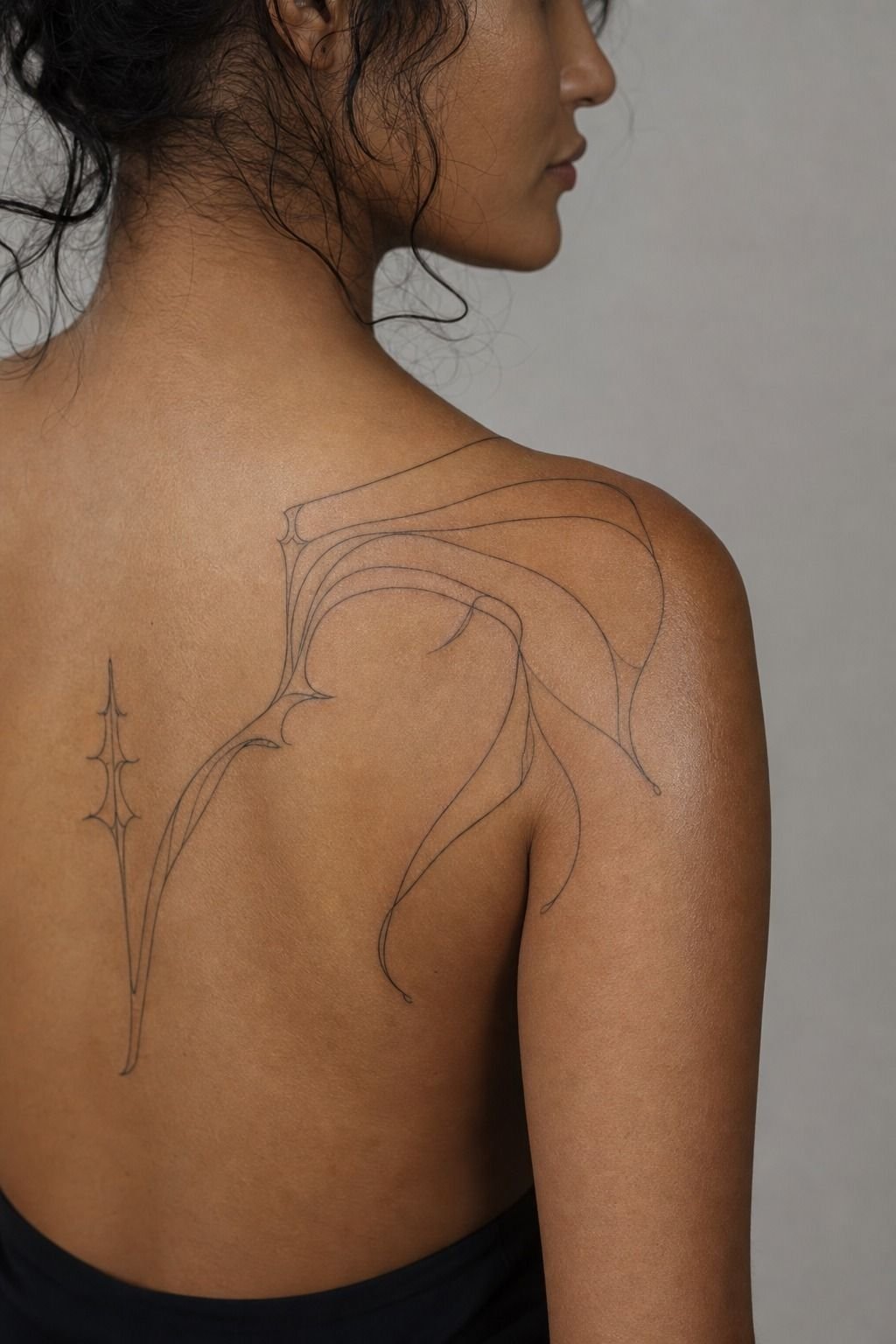
Between the shoulder blades is the safest stretch of real estate on your whole back. The skin on the upper back is relatively thick, it doesn’t flex much with movement, and the lines you put there age slow.
My piece measured roughly four inches tall by six inches wide once stenciled, big enough to read detail from three feet away but small enough not to compete with future work. The mistake I see most often is sizing too small.
A wrist-sized tattoo between the shoulder blades will mush out in two years. Bump it up.
Give the lines room to breathe and they’ll reward you for years. Our spine tattoo ideas roundup has a dozen sizing references if you want to see real proportions on real bodies.
Size also depends on your body size. A six-inch piece reads differently on someone who is five foot two versus six foot one.
Tall clients can go bigger without losing the delicate feel because they have more surface area to spread the linework across. Smaller clients should stay closer to four inches tall so the piece doesn’t overpower the back.
Your artist will size the stencil to your body, but it’s worth pushing back if the stencil feels too small. This is your back for life, not theirs.
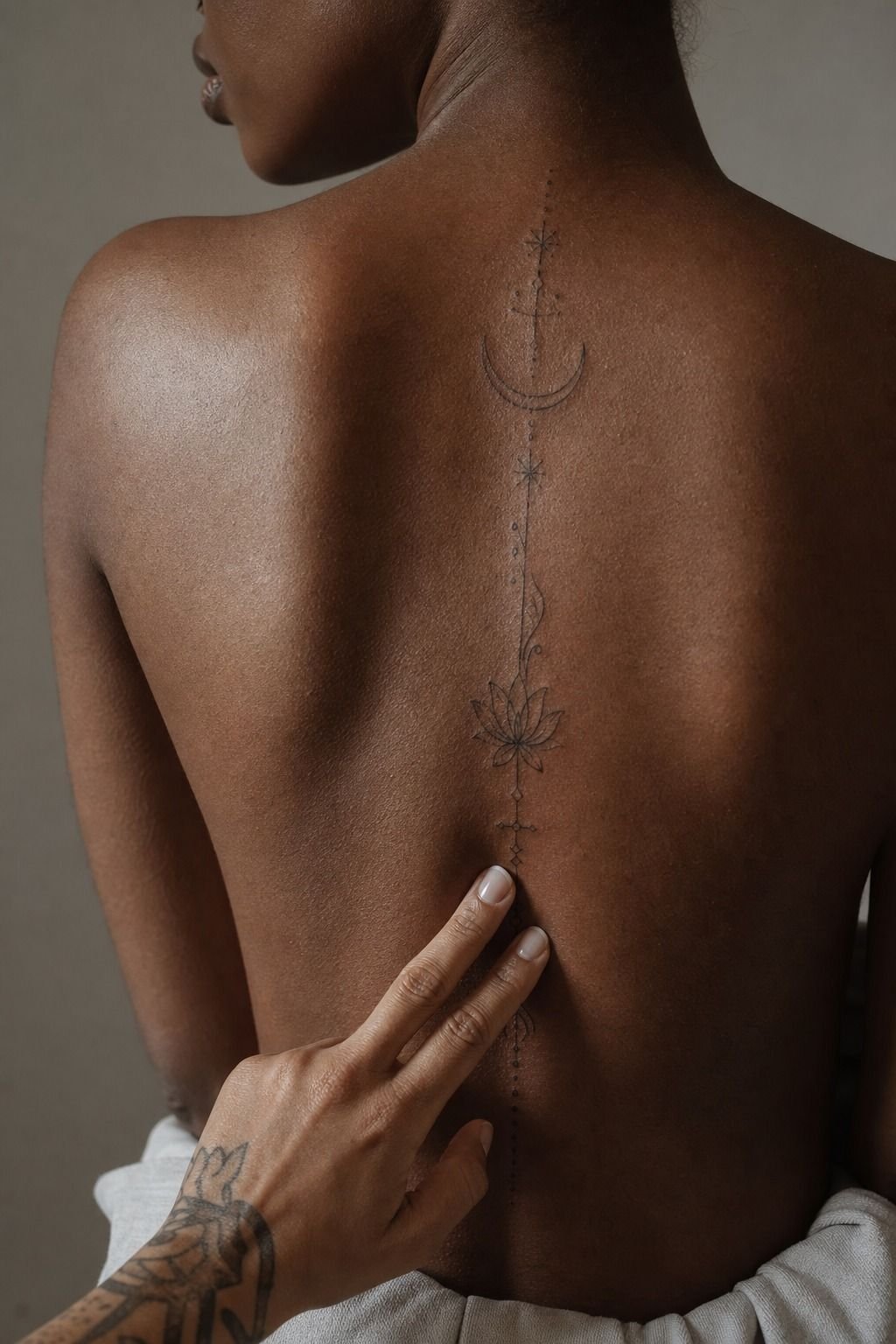
5Stretching skin with two fingers pre-poke
Every single poke on a spine tattoo needs skin stretched taut, or the line wobbles. My artist used his free hand to pinch and pull the skin on either side of the line, two-finger stretch, then tattoo.
When the stretch slipped, he’d pause, reposition, and only then continue. This is the unsexy part nobody Instagrams but it’s the difference between a crispy line and a fuzzy one. You’ll feel the stretch more than the needle in some spots, and that’s normal.
If your artist is tattooing loose skin, that’s how blowout happens, and that’s also how your fine line piece turns to soup within a year. Stretch, then poke. Every single time.
A good artist uses their non-dominant hand for the stretch so the dominant hand can stay locked into the linework position. The grip matters.
Two-finger pinch and pull, not a flat palm. Flat palm stretch on the spine will distort the line because the palm is wider than the line and the skin lifts unevenly.
If your artist uses the heel of the palm to stretch, that’s a sign they’re coming from a body-work or massage background rather than a tattoo background. You want tattoo background.
6Letting sound win over silence in the chair
I bring headphones to every session. I bring a podcast, a playlist, something to listen to.
Spine work is long, the bone transmits vibration, and silence makes every sensation louder. My artist had a speaker playing low-fi in the background, we talked when I wanted to, and I closed my eyes when I didn’t. The session flew by.
The clients I’ve seen who white-knuckle it in silence are the ones who tap out at hour two. Bring sound.
Save your nervous system. Worth every minute.
Bring water and a snack with real sugar too. Low blood sugar mid-session is what causes most of the dizzy spells I see in the chair.
Apple juice boxes are the move. Sip one halfway through and your body handles the adrenaline way better than if you tough it out on nothing.
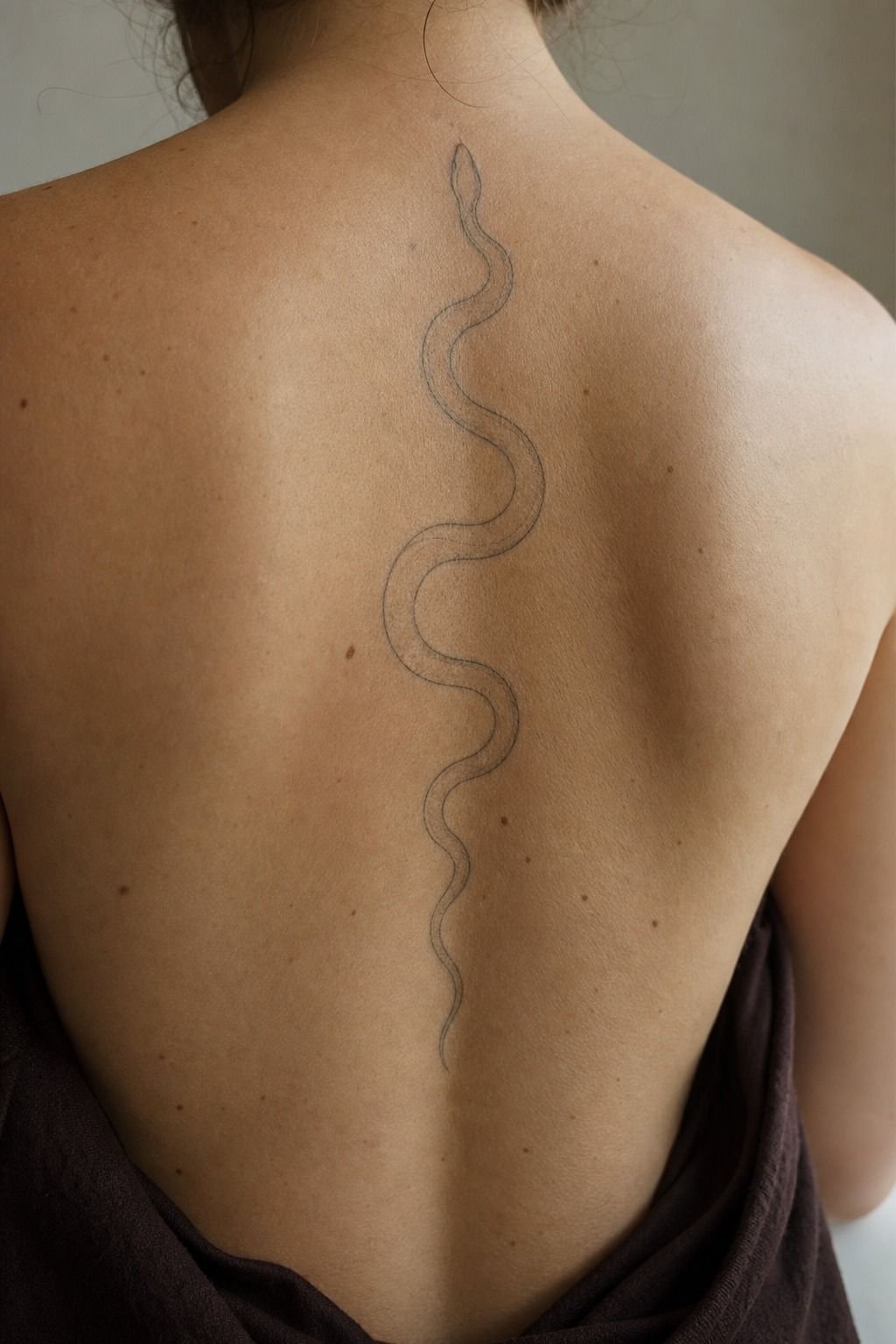
7Drawing a serpent in one flowing curve
The serpent design was the heart of my piece, and my artist laid it in one continuous line from tail to tongue. One flowing curve.
No dots, no patches, no going back. Fine line spine work is unforgiving because there’s nowhere to hide a wobble. When I asked him how he kept the line so steady, he said he breathes out as the needle moves. Sounds woo-woo until you watch him do it.
The exhale thing works. Try it on your next session, especially anywhere the line has to cross bone. Single-pass linework is a craft move, and you can read more about how it differs from traditional packing in our tattoo styles explained breakdown!
Single-pass isn’t the only way to lay fine line. Some artists prefer a double-pass technique, going over the same line twice with very low voltage to build up a slightly more saturated line that holds better long-term.
The trade-off is healing: a double-pass can overwork the skin if the artist isn’t careful. On fair skin it usually heals fine.
On darker skin tones or areas with more melanin, the overworked skin is more likely to hyperpigment and leave a shadow around the line. Worth asking your artist which technique they use before booking.
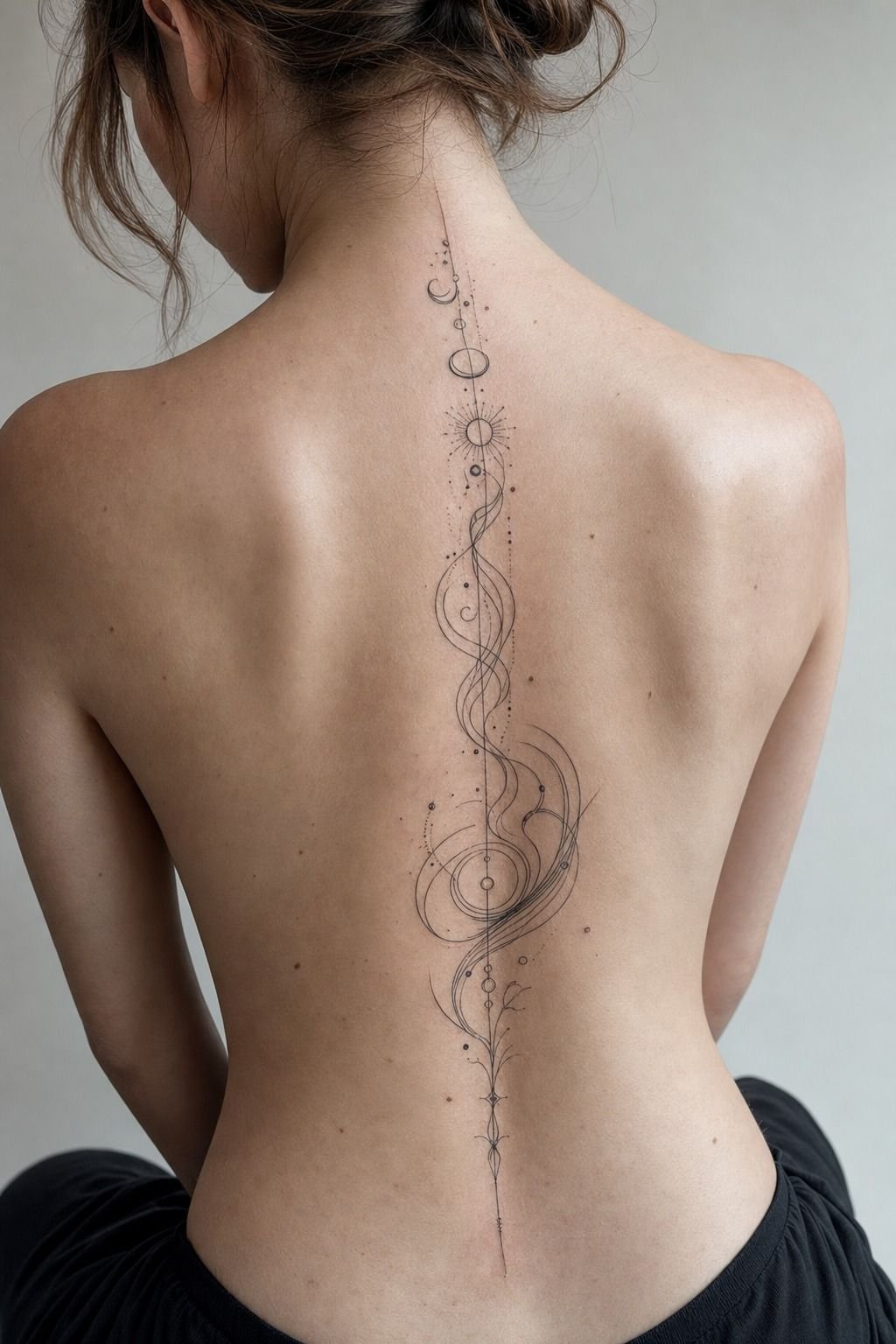
8Mapping moon phases stacked on vertebrae
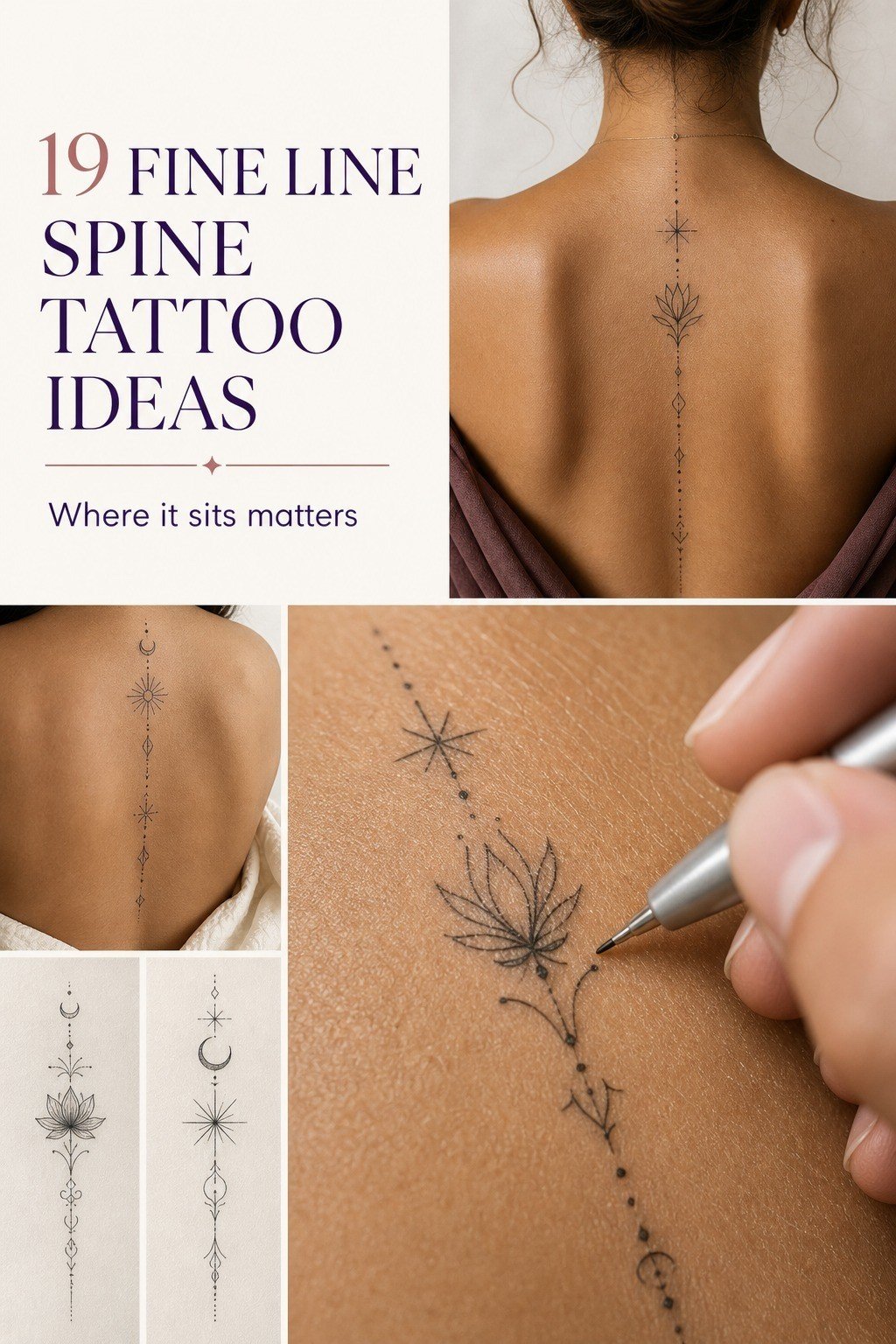
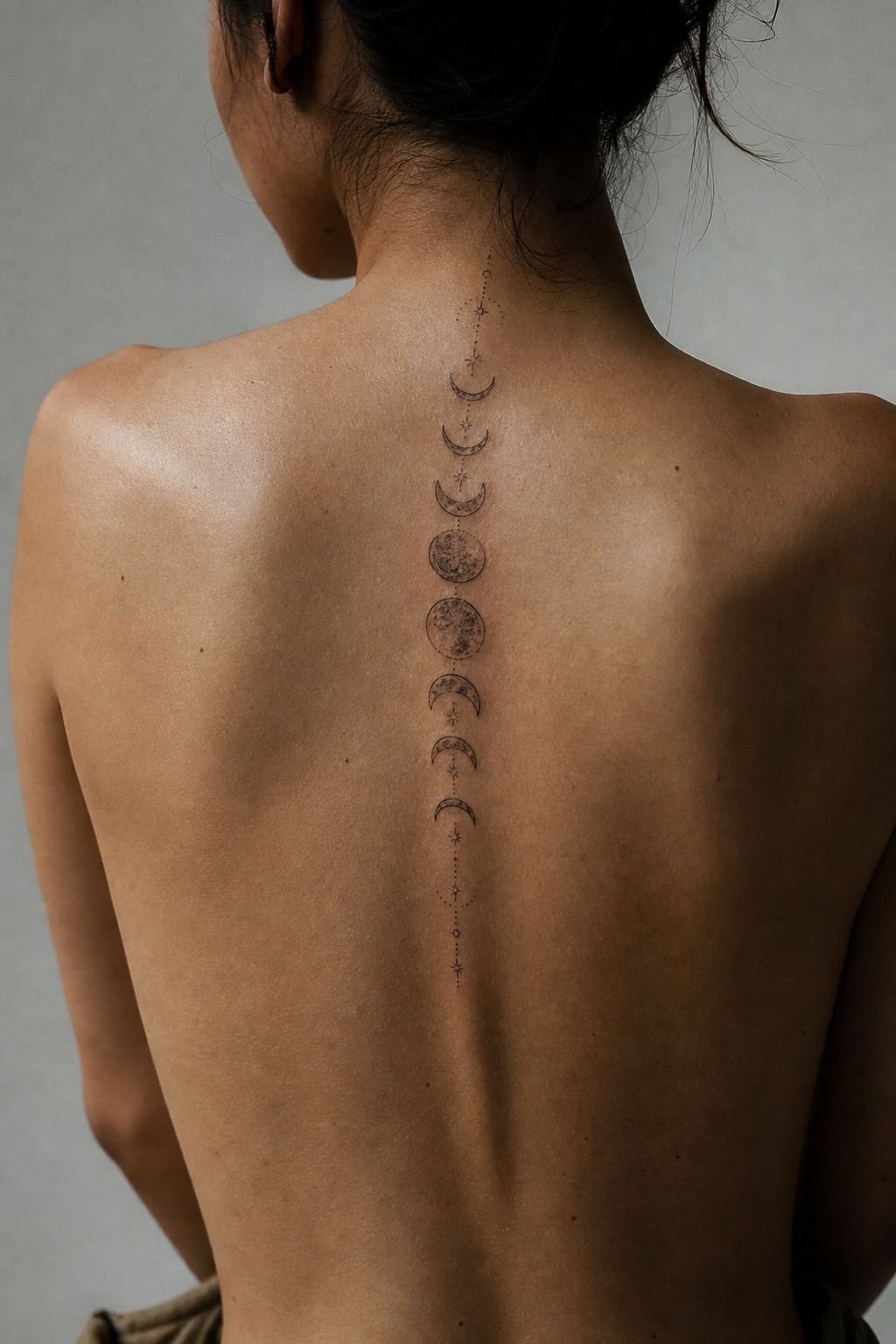
Moon phases on the spine are popular for a reason: each phase is a tiny circle, easy to space evenly, and they read like beads on a string.
9Picking script height against line weight
Script tattoos fail when the letter height doesn’t match the line weight. A thick bold line and a tiny script letter reads muddy.
A delicate script letter needs an even more delicate line. The rule I give my own clients: letter height should be at least four to five times the width of your thinnest line, and the thinnest line in script should still be visible from arm’s length.
If your artist is sketching letters that look gorgeous under a magnifier but vanish at three feet, they’ll mush out within a year. Worth a redesign now!
If you’re doing a single word or a short phrase, stick to classic script fonts that have been around forever (Optima, Edwardian, Snell Roundhand). Modern calligraphic fonts look great in mockups and turn into mush under the needle. The fonts that survive the skin test are the ones that were designed for print before tattoo culture existed.
Fine line vs traditional on the spine: which one ages better?
Traditional American linework, the bold black outlines Sailor Jerry built his whole scene on, holds its shape on the spine for ten to fifteen years with minimal fade. Fine line is the opposite trade-off.
The thinner the line, the faster it softens. You’re trading longevity for delicacy. On the back between the shoulder blades, where the skin is thick and the sun exposure is moderate, fine line can last five to seven years before it needs a touch-up.
That’s actually a great trade-off if the design is small and meaningful rather than big and bold. The piece I have is fine line.
My artist uses a 3RL and the line is still readable at four years. Bold traditional will outlive it by a decade. Pick the one that matches what you want to feel when you look at your back.
The third option most people forget about is blackwork with negative space, a solid black shape with the linework cut out of it. That gives you the bold longevity of traditional with the delicate visual feel of fine line.
It works brilliantly on the spine because the negative space reads as skin, and the black holds like iron. If you want the look of fine line without the touch-up cycle, ask your artist about a blackwork negative-space version of your design.
10Lining up the stencil slightly off-center
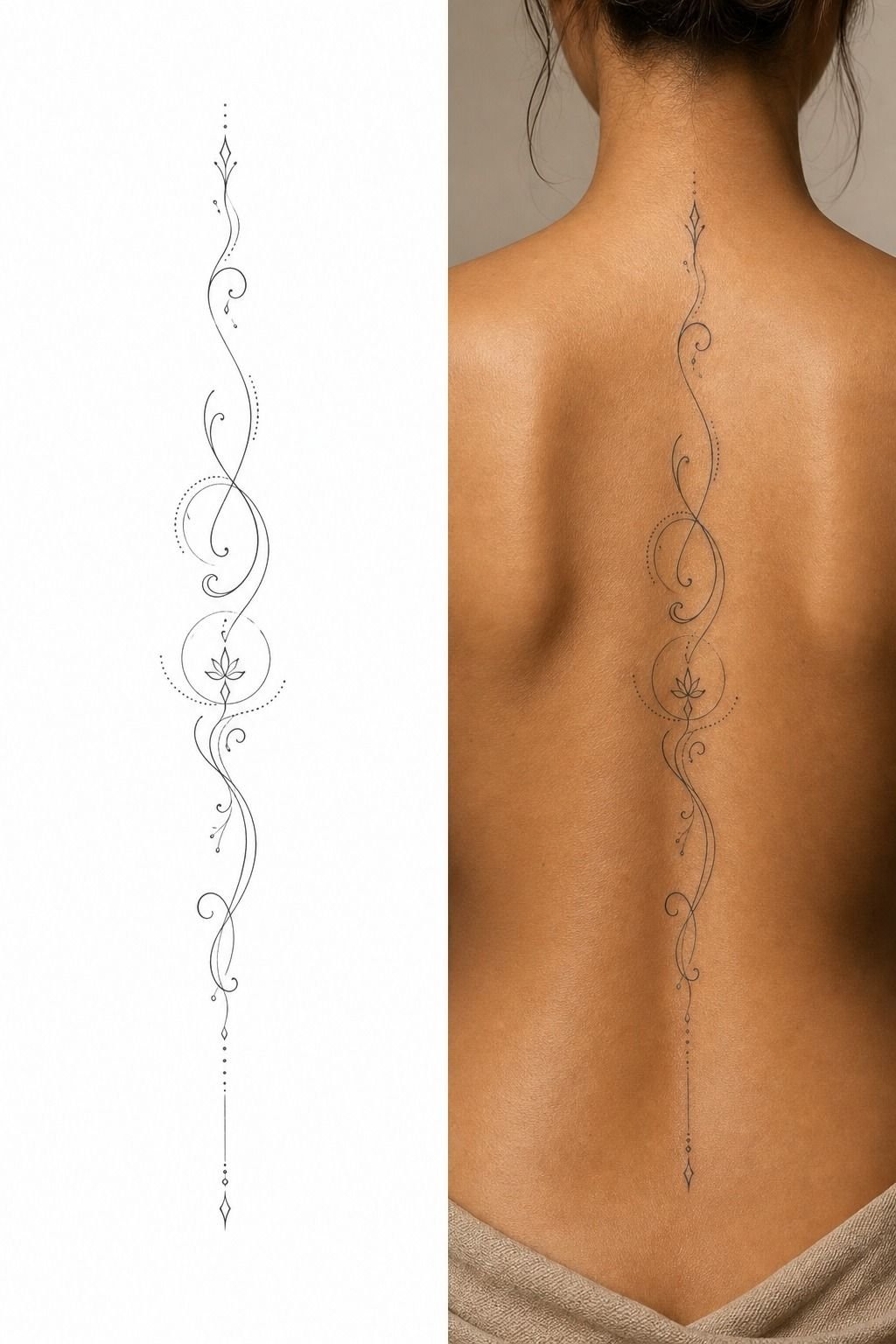
Perfectly centered spine tattoos look fake in photos. Slightly off-center, a few millimeters to one side, reads as natural, like the body picked the placement.
My artist intentionally offset the stencil by about 4mm because, in his words, “real spines aren’t rulers.” This is a small detail that makes a huge difference in how the final piece photographs. Don’t correct it if your artist does this on purpose.
They’re not being sloppy. They’re being honest about anatomy. The same logic applies to the tattoo placement chart, which treats every body part as a starting point, not a perfect grid.
The 4mm offset also matters for the sternum tattoo placement on the chest, which is the closest cousin to a spine piece in terms of visible bone. Slight asymmetry reads as natural there too. Anywhere a tattoo runs along the body’s center line, slightly off-center is the move.
11Choosing a minimalist butterfly between vertebrae
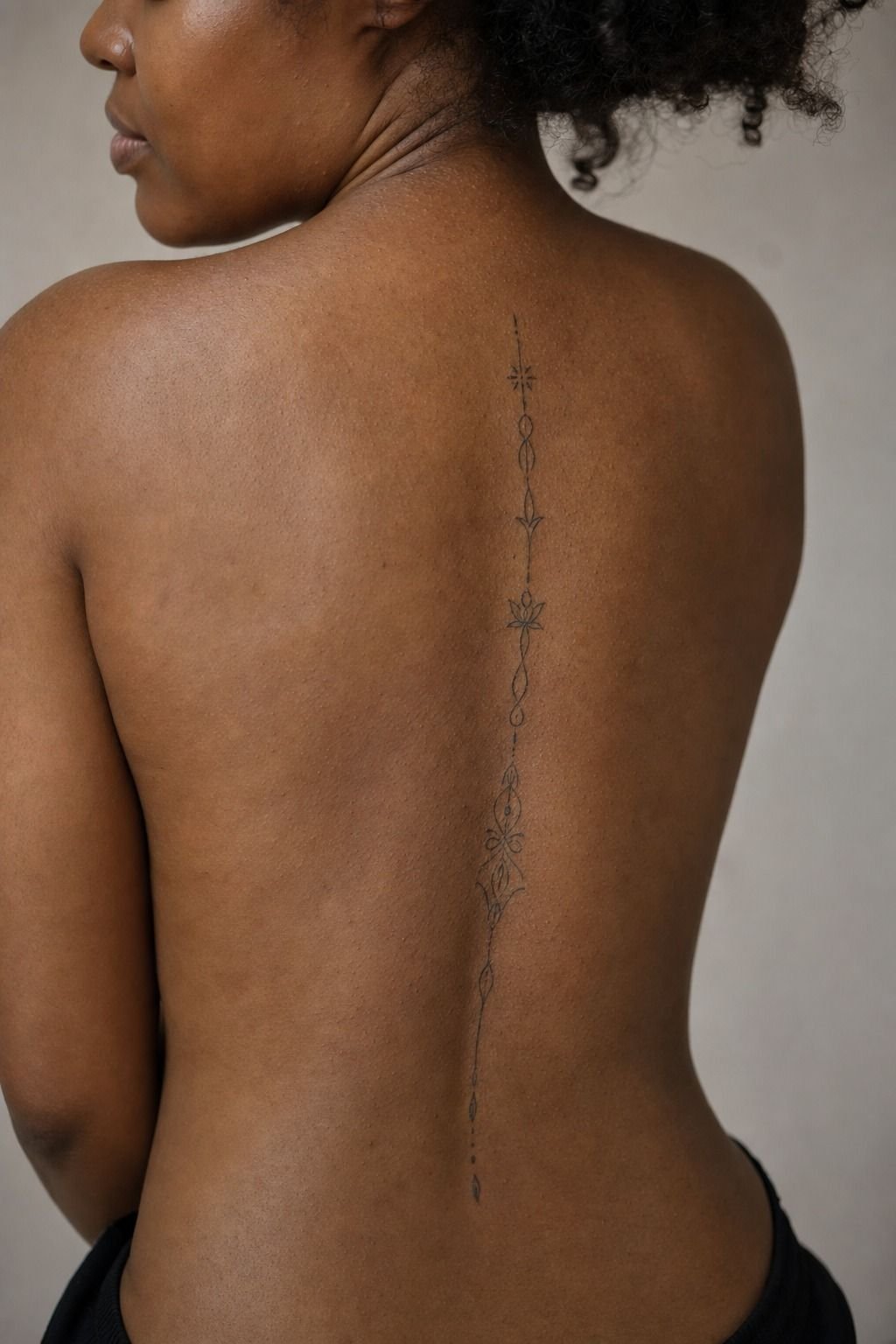
Between T2 and T3 I placed a small minimalist butterfly, wingspan maybe two inches, single needle outline only. Why that spot? The butterfly sat in a natural visual break where my eye wanted rest. A piece without breathing room looks busy, even in fine line.
Negative space is the whole game. If you’re stacking elements down the spine, leave at least an inch of clean skin between each one. The gap is what lets the linework sing. I think more first-timers blow out their spine pieces by cramming them than by going too small.
Air is design.
Butterflies in fine line also work as standalone pieces above or below the main element. A single monarch butterfly between the shoulder blades is a complete design on its own if you size it large enough (three to four inches wingspan). Smaller than that, and it disappears.
12Working through the lumbar curve slowly
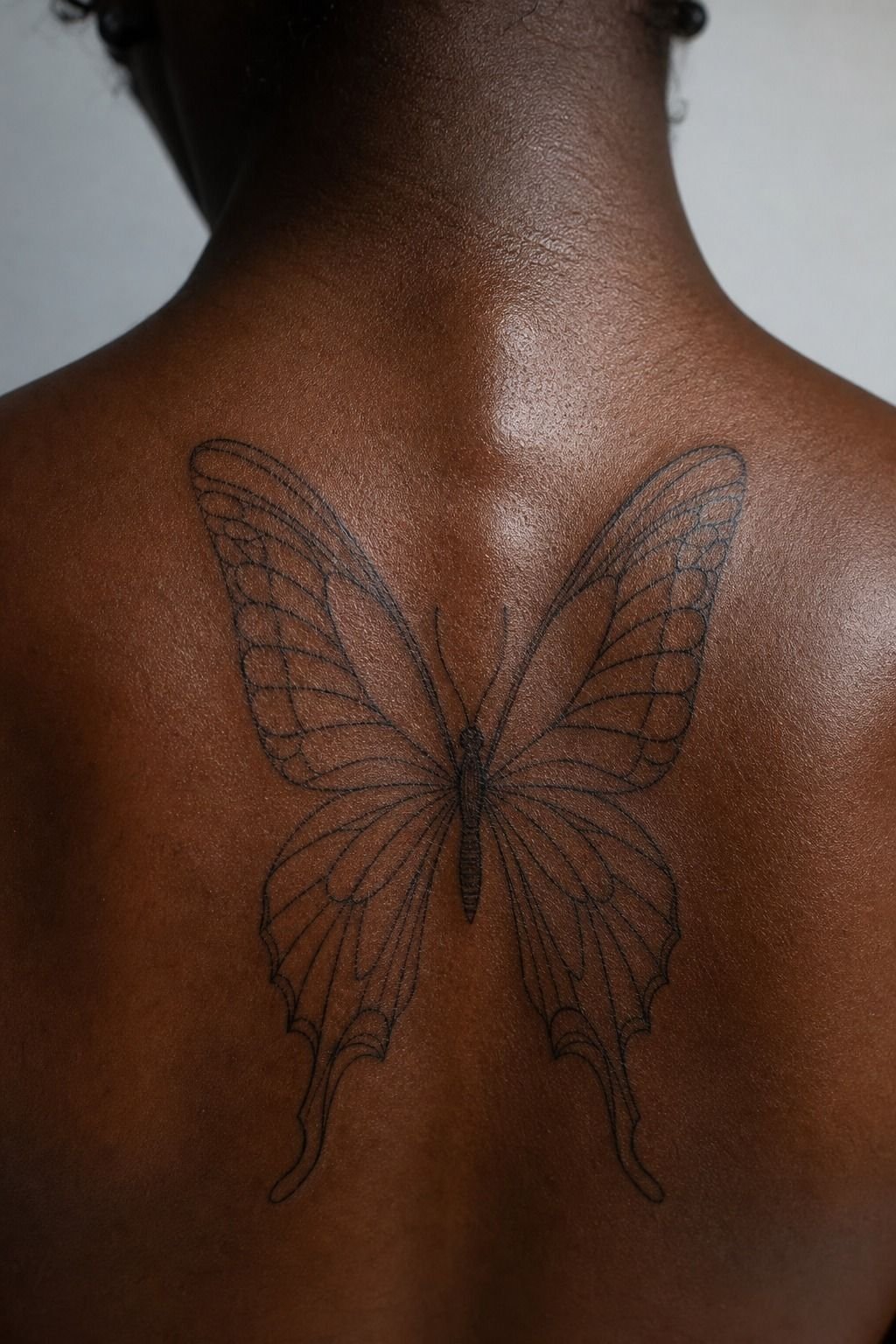
The lumbar curve, lower back, above the sacrum, is where most spine tattoos blow out because the skin is thinner, the bone is closer, and the body’s natural sway stretches the line mid-poke.
13Healing under a soft cotton tee
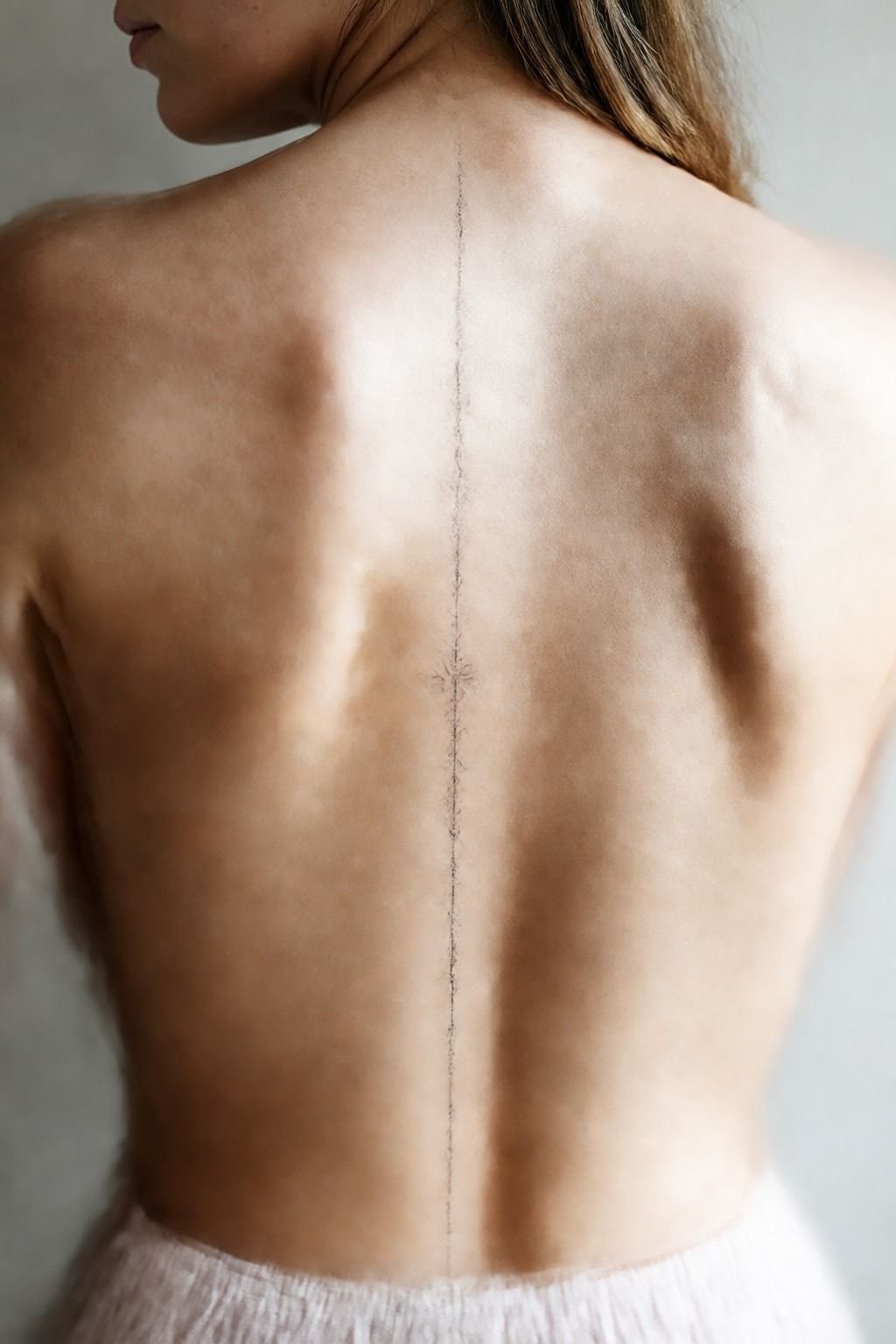
After-care begins the second the needle leaves. I wore a soft cotton tee, clean, loose, nothing synthetic. No bra strap pressing on the fresh ink, no tight waistband, no fabric that could snag a scab. The first 48 hours it’s an open wound, treat it like that.
Wash with gentle unscented soap (Dove Sensitive or Dr. Bronner’s Baby Unscented are the two I keep at home), lukewarm water, pat dry with paper towel, thin layer of plain ointment (no perfumed lotions, no antibiotic cream unless your artist says otherwise).
Cotton breathes. Polyester suffocates. Choose cotton.
If you want a deeper walkthrough, my full tattoo aftercare guide breaks down day one through day thirty.
A thin layer of Hustle Butter is the move for the first three days. After day three, switch to a fragrance-free lotion like Lubriderm or CeraVe.
The ointment-to-lotion transition matters because ointment suffocates the skin if you keep using it past day three or four. The skin needs to breathe to finish healing.
Watch for the moment your tattoo stops feeling sticky and starts feeling like regular skin again. That’s your cue to switch.
14Sleeping flat those first three nights
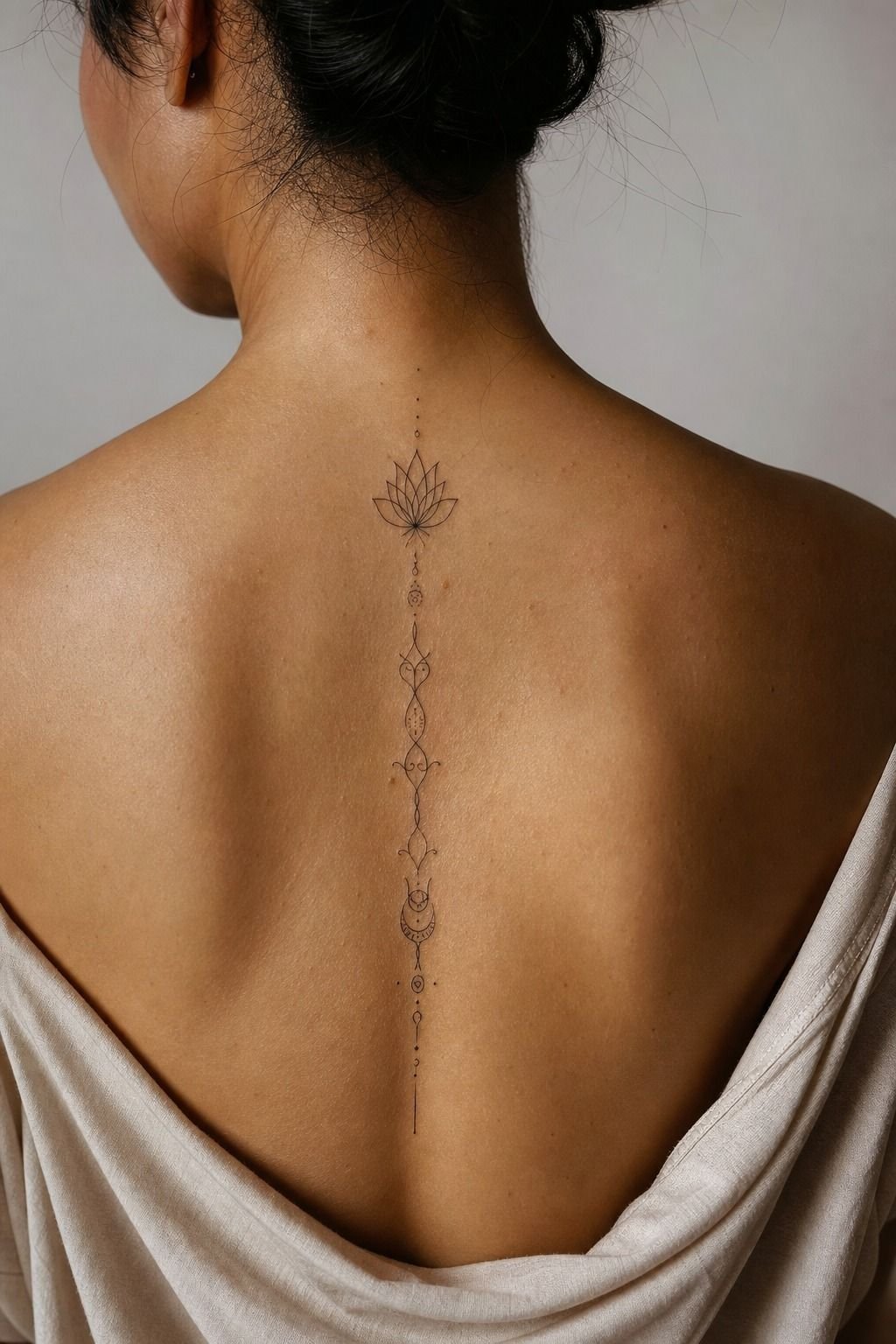
Sleeping on a fresh spine tattoo is impossible if you’re a side sleeper. I slept flat on my back for three nights with a clean cotton pillowcase changed every night.
Yes, it’s awkward. Yes, you’ll wake up at 3am wondering if you’re doing it right. You’re doing it right if the tattoo isn’t touching fabric when you’re horizontal. Side sleeping drags scabs, pulls ink out, and leaves patchy lines.
Flat is the move! Get a second pillow if you need to prop yourself still. The how to sleep with a new tattoo piece has positioning tricks for back sleepers, side sleepers, and stomach sleepers, all of them worth a read!
If you have a recliner or a chair that reclines, the first night is way easier in the chair than in bed. The slight recline keeps pressure off the spine without you having to consciously hold still. Most people sleep better in a recliner for night one and switch to the bed for nights two and three.
15Watching fine lines settle at week two
Week two is when fine line tattoos scare people. The lines look dull, the ink looks patchy, the skin looks dry and silvery.
This is normal. It’s the stage every artist calls silver skin: the top layer has healed but the deeper ink hasn’t fully settled yet.
Don’t pick, don’t scrub, don’t panic. Most pieces that look rough at week two heal beautifully by week six.
If you want the full timeline, the tattoo healing stages day by day guide maps exactly what to expect each week.
Around week three you might see the Milady patch appear, a slightly shiny square or oval where the tattoo looks like it’s lost its ink. This is healing skin overgrowing the original line.
Don’t panic, don’t touch it, the line will reappear as the skin normalizes. Most clients think they’ve lost color when in fact the ink is just hiding under a thin layer of new skin for a week or two.
16Avoiding the sun for the first year
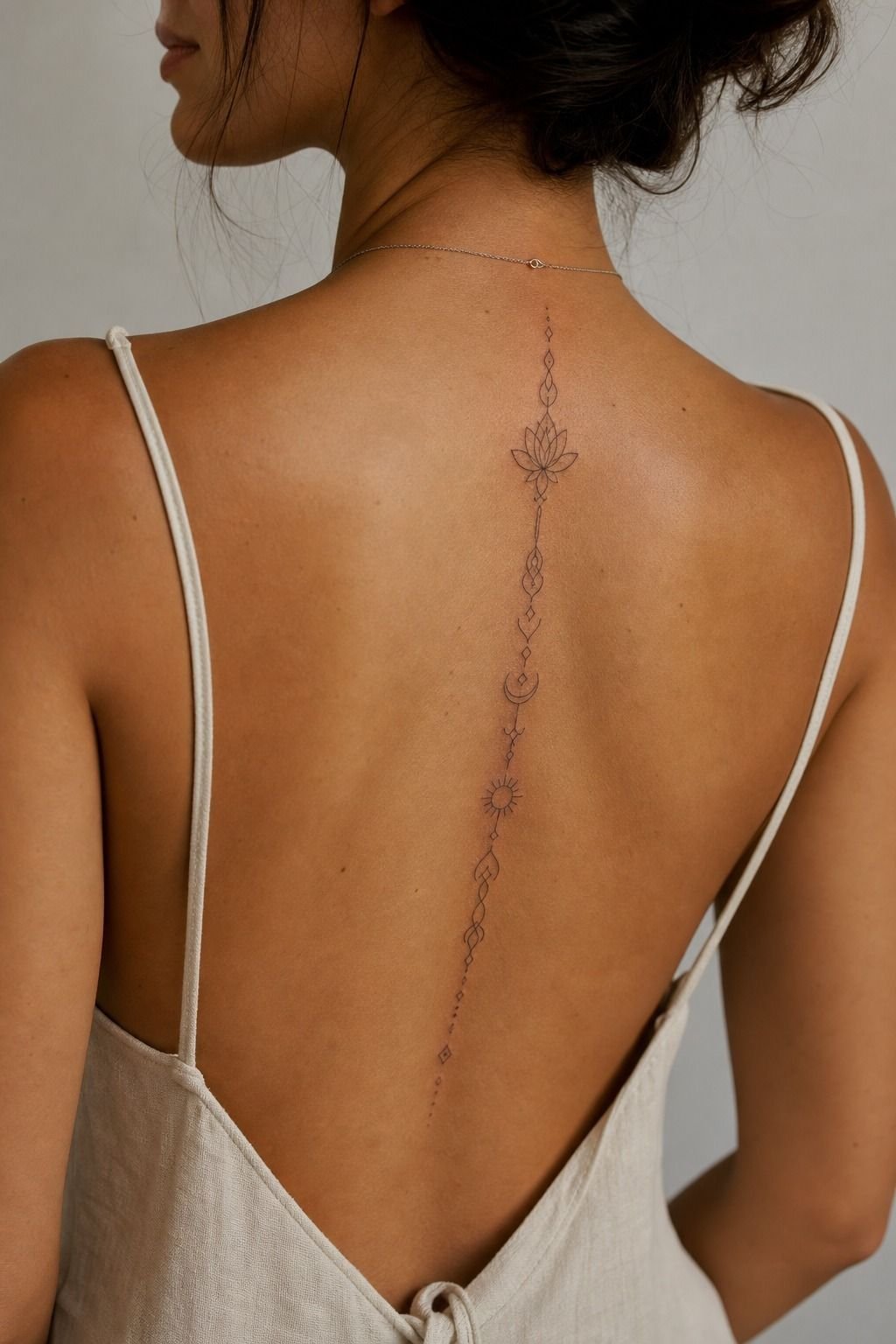
Sun is the single fastest way to ruin a fine line tattoo.
17Booking the six-week touch-up session
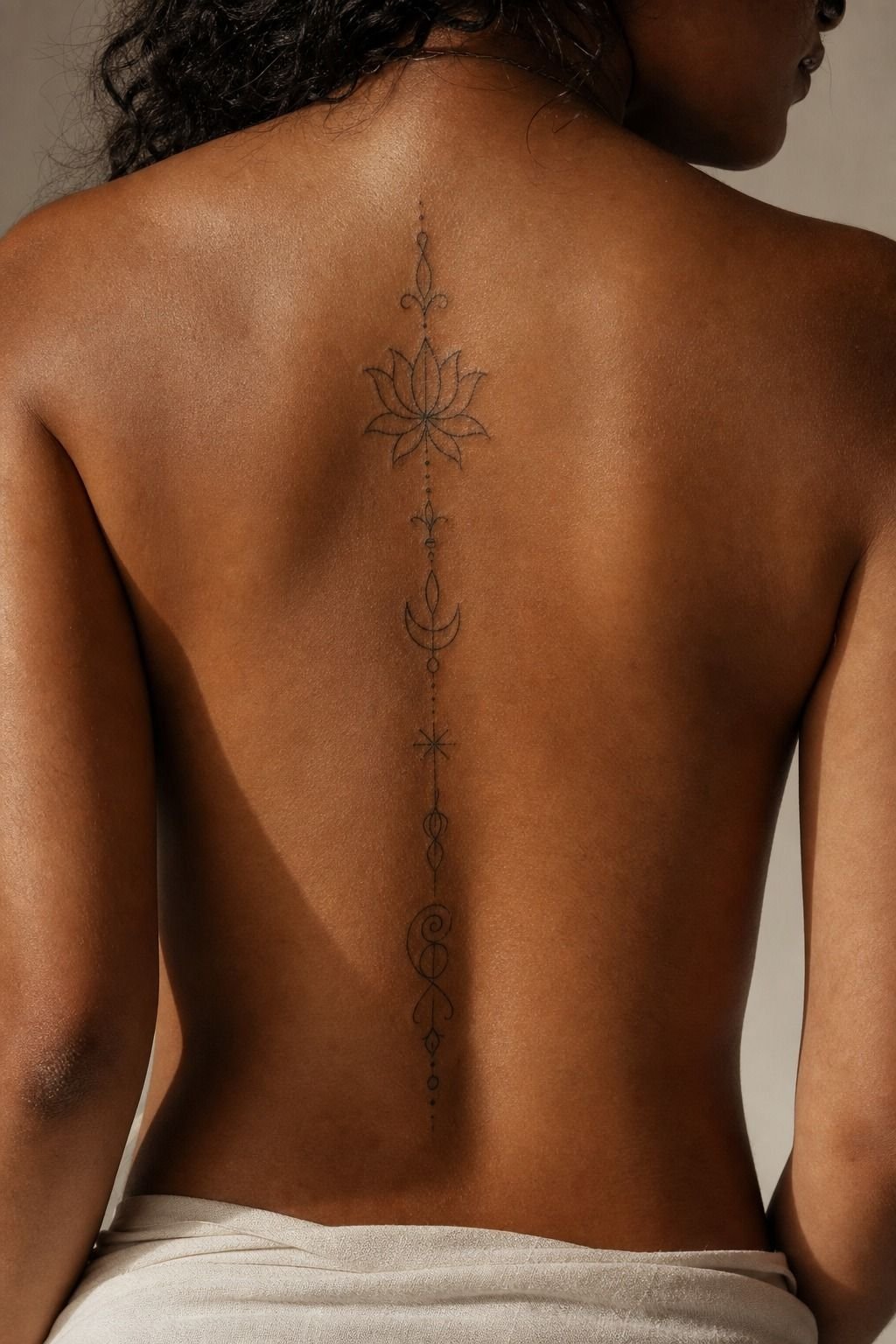
Every fine line tattoo I’ve ever gotten or done has needed a small touch-up. The line that looked perfect at week one will have one tiny gap at week six, every time.
This is why every serious artist includes one free touch-up in the session price. I booked mine at the six-week mark, walked in, sat down, and my artist spent ten minutes filling in two small spots. Free, quick, painless. Don’t skip it.
Don’t argue about it. Touch-ups are part of the deal and they make the piece look like it’s been healed for years. Our tattoo touch up guide goes through when a touch-up is worth it and when you’re just chasing a perfection that doesn’t exist.
If your artist doesn’t include a touch-up in the session price, that’s a yellow flag. Fine line tattoos almost always need one.
A studio that doesn’t bake it into the rate is either inexperienced with fine line or trying to charge you twice. Ask about the touch-up policy before you book.
If the answer is vague or the artist says “we’ll see how it heals,” find another artist.
18Steering clear of stretch marks long term
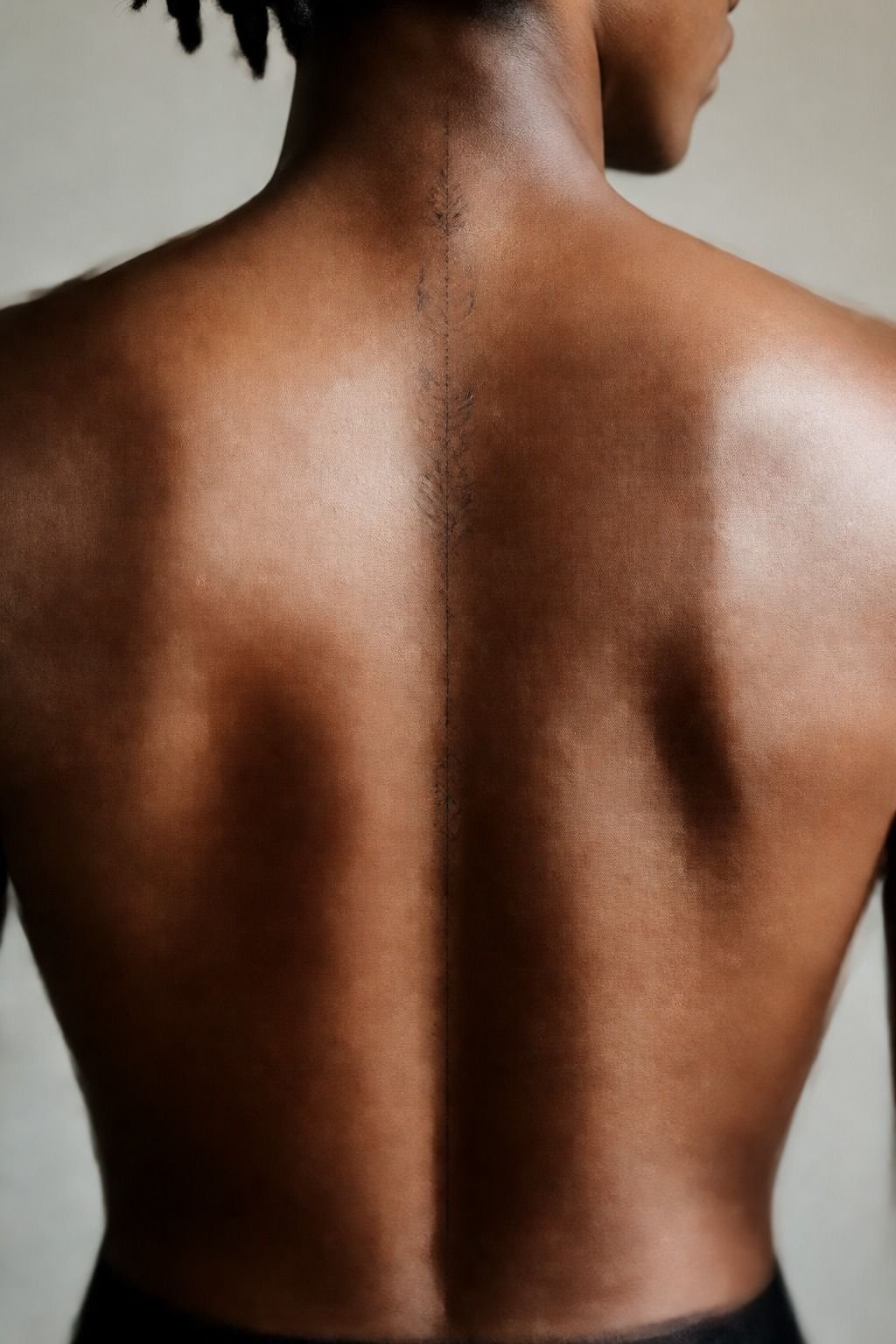
Fine line tattoos age ugly across stretch marks because the line breaks every time the skin stretches further. I’m not saying don’t get tattooed if you have stretch marks.
I’m saying avoid laying your design directly on top of them. My artist asked me to mark any existing stretch marks before he stenciled, and he routed the linework around them.
If you’re planning pregnancy, weight change, or muscle building, tell your artist upfront. They’ll adjust the design so it survives the changes.
The stretch mark tattoo guide has a longer read on how scar tissue and stretch marks hold ink differently from healthy dermis.
Stretch marks on the back are usually horizontal lines from growth spurts, pregnancy, or weight change. They run perpendicular to the spine, which means they cross most spine tattoos at some point.
A good design accommodates them by either running the linework in the same direction as the stretch marks (parallel, not perpendicular) or by rerouting the design to avoid them entirely. Don’t let your artist try to tattoo straight through a stretch mark.
The line will gap the moment the skin stretches again.
19Pairing the spine tattoo with a wrist companion
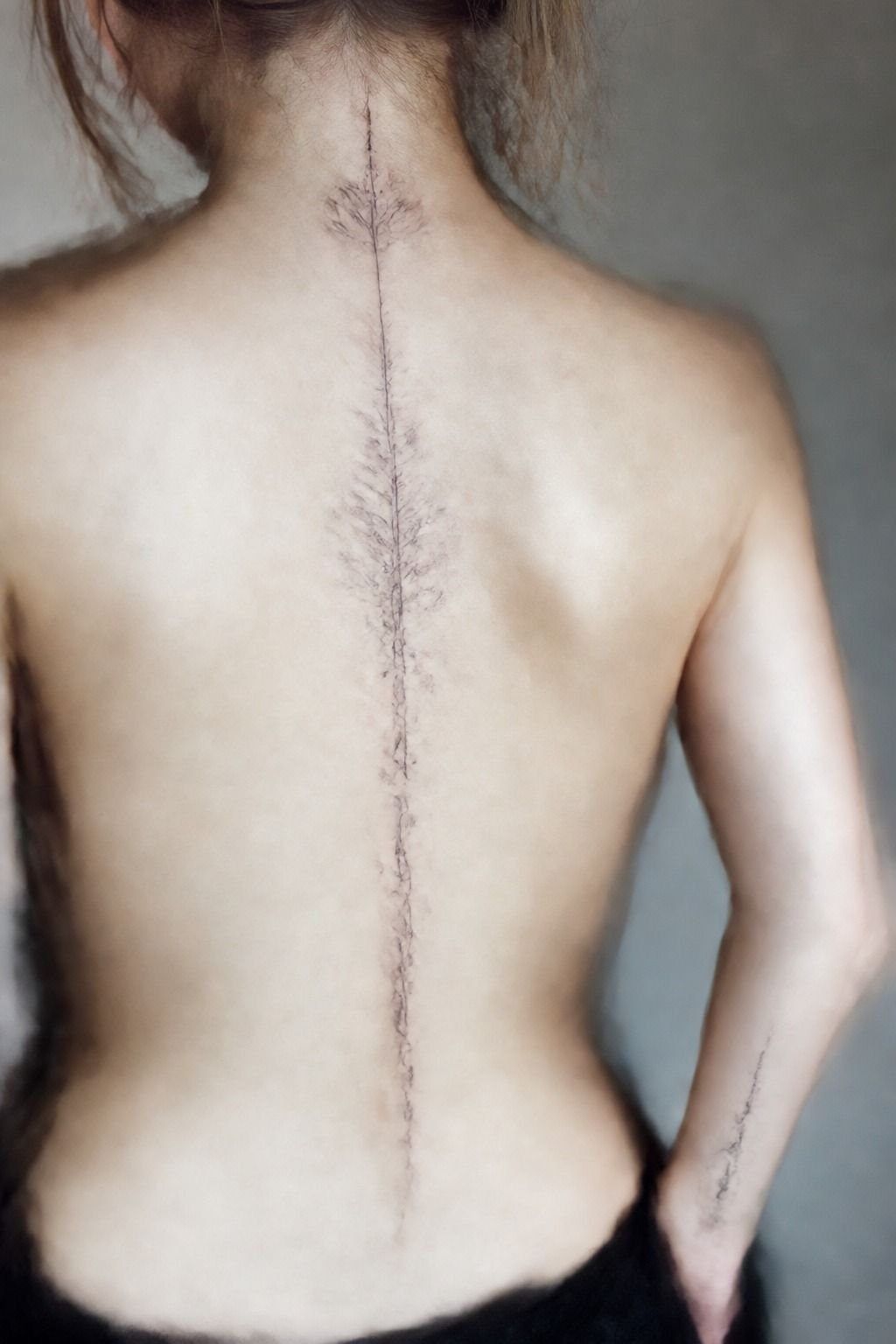
Six months after my spine healed, I got a tiny matching single-needle piece on my inner wrist. Same needle setup, same artist, same ink brand.
The wrist is a high-wear zone, so I went in knowing it would need touch-ups every two to three years. That’s the deal with wrist ink.
If you want something that never fades, don’t put it on your wrist. If you want something quiet that you can hide under a watch band and re-tattoo when it fades, the wrist is gorgeous.
The small wrist tattoo ideas page has a few options that hold up better than most.
A matching set on the spine and wrist also gives you a built-in story. When someone asks about the wrist piece, you mention the spine piece.
When someone asks about the spine piece, you mention the wrist piece. It’s marketing for your own ink, and it’s how a lot of my regulars end up adding their third or fourth piece to the collection over the years.
Fine line is habit-forming.
Behind the studio: how my Portland chair is set up
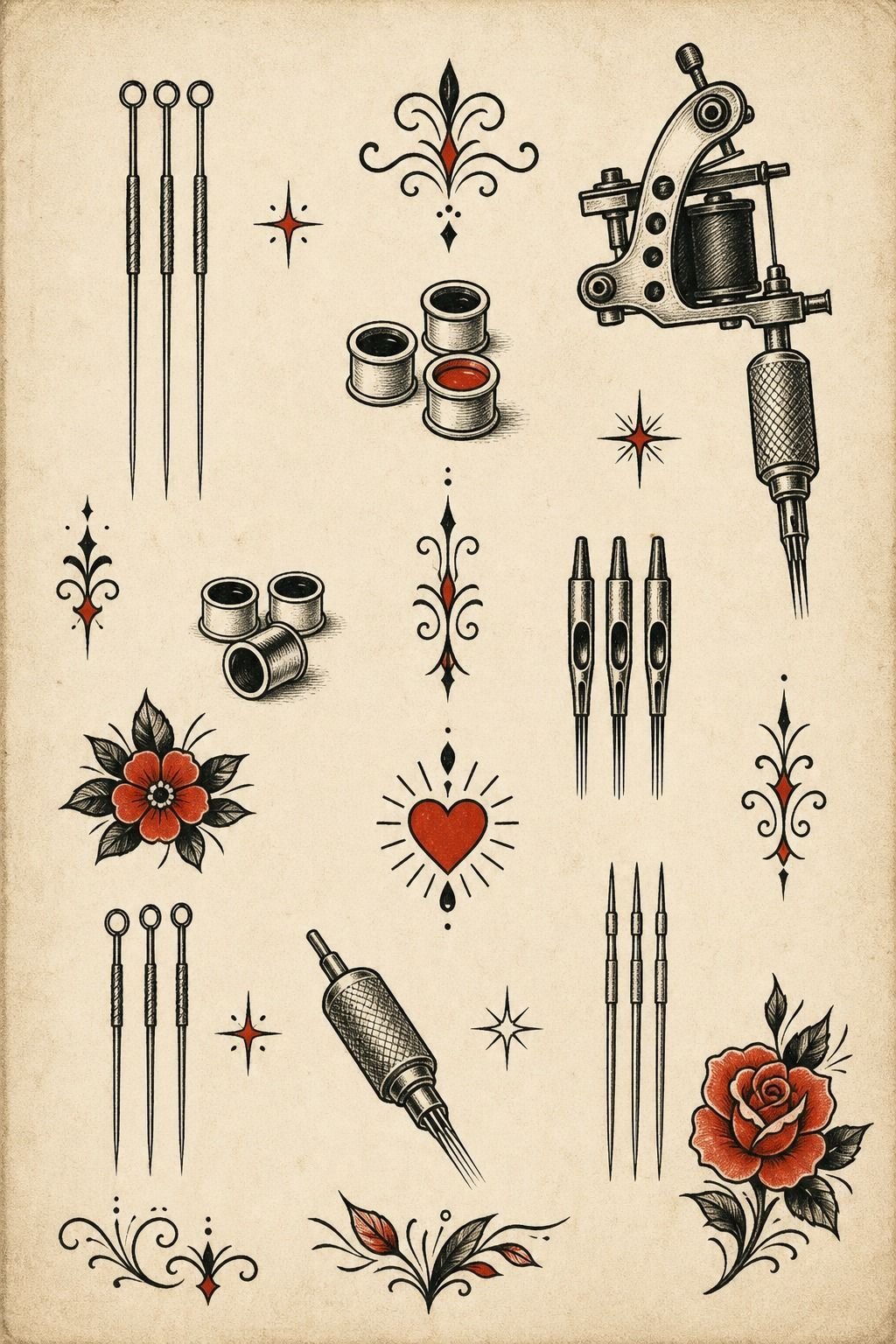
Most clients don’t think about this, but the chair setup matters. I work out of a Cheyenne Hawk Pen machine with disposable cartridge needles (no dipping, no cross-contamination, no autoclave stress), Eikon EMS power supply set to run at 7.5 volts for linework and 6.5 for shading, and Dynamic Triple Black ink, which is what most of my fine line regulars end up wearing for years without a fade issue.
The pen machine gives me the consistent needle depth I need for crispy 3RL linework. Coil machines have their place, but for fine line on the spine, pen machines win on consistency. If your artist is using a coil setup for fine line, ask why.
If the answer is “I’ve always done it this way,” that’s your cue to look elsewhere. The custom process matters; if you want the full walkthrough, my custom tattoo design process page covers how I take a brief from the first sketch to the final stencil.
Voltage matters more than most artists admit. Going below 6 volts on a pen machine for fine line produces a softer line that heals faster but ages out quicker.
Going above 8 volts produces a darker line that’s harder on the skin during the session. The sweet spot for single-pass fine line is 7 to 7.5 volts on most modern pen machines.
If your artist is running at 9 or 10, they’re set up for bold work, not fine line.
How much does a fine line spine tattoo cost?
Honest numbers from my session, paid in a mid-range US studio in a major city:
Typical US ranges: minimum studio shop fee runs $50 to $100 just to sit down, hourly rates land between $100 and $250 depending on artist reputation and city. A spine piece this size is rarely a one-and-done session.
Mine took two sittings because I tapped out at hour three the first time. Both sessions were billed at the same hourly rate.
Budget for two sessions if you’re new to long sits, and ask upfront whether the touch-up is included (it should be). For a deeper cost breakdown, our how much does a tattoo cost US guide compares custom rates across cities and styles.
And don’t forget the tip line: how much to tip a tattoo artist covers the etiquette without the awkwardness.
A few of my regulars ask if they can negotiate on price. Short answer: no.
Tattoo hourly rates aren’t marked up enough to absorb a discount. If an artist says yes to a discount, they’re either desperate for work or they cut corners on setup.
Neither one is good for your linework. The right move is to save up and book the artist whose work you actually want.
A cheaper tattoo that ages badly is more expensive in the long run than a slightly pricier one that heals clean.
What does fine line spine tattoo pain actually feel like?
Spine tattoos sit in the middle of the pain scale. Bony zones hurt most: ribs, sternum, spine directly over vertebrae, hands, feet. Softer zones (lower back, mid-back between shoulder blades) hurt less, more like a dull hot scratch than a sharp one.
Most people tap out from the vibration, not the pain. The vibration travels up and down the spine in a way that makes some clients nauseous by hour two.
Eat a real meal before your session, hydrate for two days ahead, and bring sugar snacks for the chair. If you want a placement-by-placement map, the most painful tattoo spots chart sorts every common spot from “spicy” to “you’ll be fine.” And if you’re comparing zones, least painful places to get a tattoo lists the chillest real estate on the body.
If you’re nervous about the pain, numbing cream like Hush or Dr. Numb can help, but it changes how the skin takes ink and most fine line artists prefer you skip it.
The skin gets slightly spongy under numbing cream, which makes crisp lines harder to lay. For a four-hour fine line session, save the numbing cream for the lumbar curve only if you have to.
Talk to your artist about it before the session starts.
How long does a fine line spine tattoo take to heal?
Surface healing takes about 2 to 3 weeks, full settling takes 2 to 3 months. The first week is the open-wound phase (wash, thin ointment, no soaking).
Weeks two and three are the itchy peel phase, and yes, it’ll peel like a sunburn. Don’t pick the flakes.
Let them fall off naturally or you’ll pull color out with them. After week four the lines sharpen back up.
Sun is the enemy for the first year, keep it covered or use SPF 50 once healed. The tattoo peeling guide explains what’s normal peeling versus what’s a sign something’s off.
The most common mistake I see in healing is over-moisturizing. Clients glob on Aquaphor like they’re icing a cake, the skin suffocates, and the linework looks foggy at week three.
A thin layer is all you need. If you can see the ointment glistening on the skin, you’ve used too much.
Blot off the excess with a clean paper towel and let the skin breathe.
How to choose an artist for a fine line spine tattoo
Look at healed photos, not fresh ones. Ask to see work that’s at least one year old, ideally three.
Confirm they tattoo with single-needle or 3RL setups routinely. Check the studio’s hygiene (autoclave, single-use needles, packaged ink caps, single-use gloves). If their portfolio is full of thick traditional linework but you want delicate fineline, they’re not your artist.
The how to choose a tattoo artist page walks through the full screening process. And before you book, what to ask a tattoo artist before booking gives you the exact question list to bring to the consult.
How to read a tattoo portfolio is the deeper cut on telling a strong portfolio from a slick Instagram feed.
Your artist should have at least 50 spine pieces in their portfolio before you book them for a spine piece. Anything less and they’re still working out the placement logistics on your back. Spine tattoos are unforgiving.
You want an artist who has done hundreds, not ten. Ask to see their specific spine examples, not just their general fine line work.
A Few Things Worth Answering
How much does a fine line spine tattoo usually cost?
A fine line spine tattoo in the US typically runs between $400 and $1,500 depending on size, artist, and city. Hourly rates sit around $100 to $250, and most studios have a $50 to $100 minimum shop fee. Smaller pieces can land closer to $300, full-back custom work climbs past $2,000.
Are fine line spine tattoos a good idea for a first tattoo?
Yes, because the spine heals predictably, the lines age slow on thick skin between the shoulder blades, and a fine line design gives you room to choose something meaningful without committing to a full sleeve. Pick a small anchor piece, an artist whose healed work you trust, and a placement that won’t fight your lifestyle. Read our fine line tattoo ideas roundup for first-timer-friendly options.
How do I choose a tattoo artist for a fine line spine tattoo?
Look at healed photos, not fresh ones. Ask to see work that’s at least one year old. Confirm they tattoo with single-needle or 3RL setups routinely.
Check the studio’s hygiene (autoclave, single-use needles, packaged ink caps). If their portfolio is full of thick traditional linework but you want delicate fineline, they’re not your artist.
The tattoo red flags piece covers the warning signs worth noticing during your consult.
How much do fine line spine tattoos hurt?
Spine tattoos sit in the middle of the pain scale. Bony zones hurt most: ribs, sternum, spine directly over vertebrae, hands, feet. Softer zones (lower back, mid-back between shoulder blades) hurt less, more like a dull hot scratch than a sharp one.
Most people tap out from the vibration, not the pain. Take a break, breathe, drink water.
You’ll make it.
How long does a fine line spine tattoo take to heal?
Surface healing takes about 2 to 3 weeks, full settling takes 2 to 3 months. The first week is the open-wound phase (wash, thin ointment, no soaking).
Weeks two and three are the itchy peel phase (don’t pick, let flakes fall off naturally). After week four the lines sharpen back up.
Sun is the enemy for the first year, keep it covered or use SPF 50 once healed.
What’s the best placement for a fine line spine tattoo?
Between the shoulder blades is the sweet spot for most people, thick skin, low movement, lines age slow. The lumbar curve works but requires a slower hand.
Avoid placing fine line directly over the most bony vertebrae if you’re pain-sensitive. Browse our spine tattoo ideas roundup for placement inspiration.
Can a blown-out fine line spine tattoo be fixed?
Sometimes. A small blowout can be softened with a careful touch-up using a slightly thicker needle and a darker pigment, but the ink has already migrated under the skin.
A big blowout usually needs laser fading before a cover-up. The can you fix a bad fine line tattoo page covers what works, what doesn’t, and what to ask your artist before committing.
Where I’d Start First
If I had to pick one move that saved my piece, it’s the artist. I spent three months looking at healed portfolios before I booked, and that’s why the lines are still crispy four years later. A good single-needle artist with healed photos is the whole game.
Everything else, the placement, the design, the aftercare, is supporting work. Book the artist first.
The rest follows. If you’re hunting, start with the fine line tattoo needles longevity placement guide, then cross-reference with the tattoo consultation guide so you walk into the first meeting knowing exactly what to ask.