
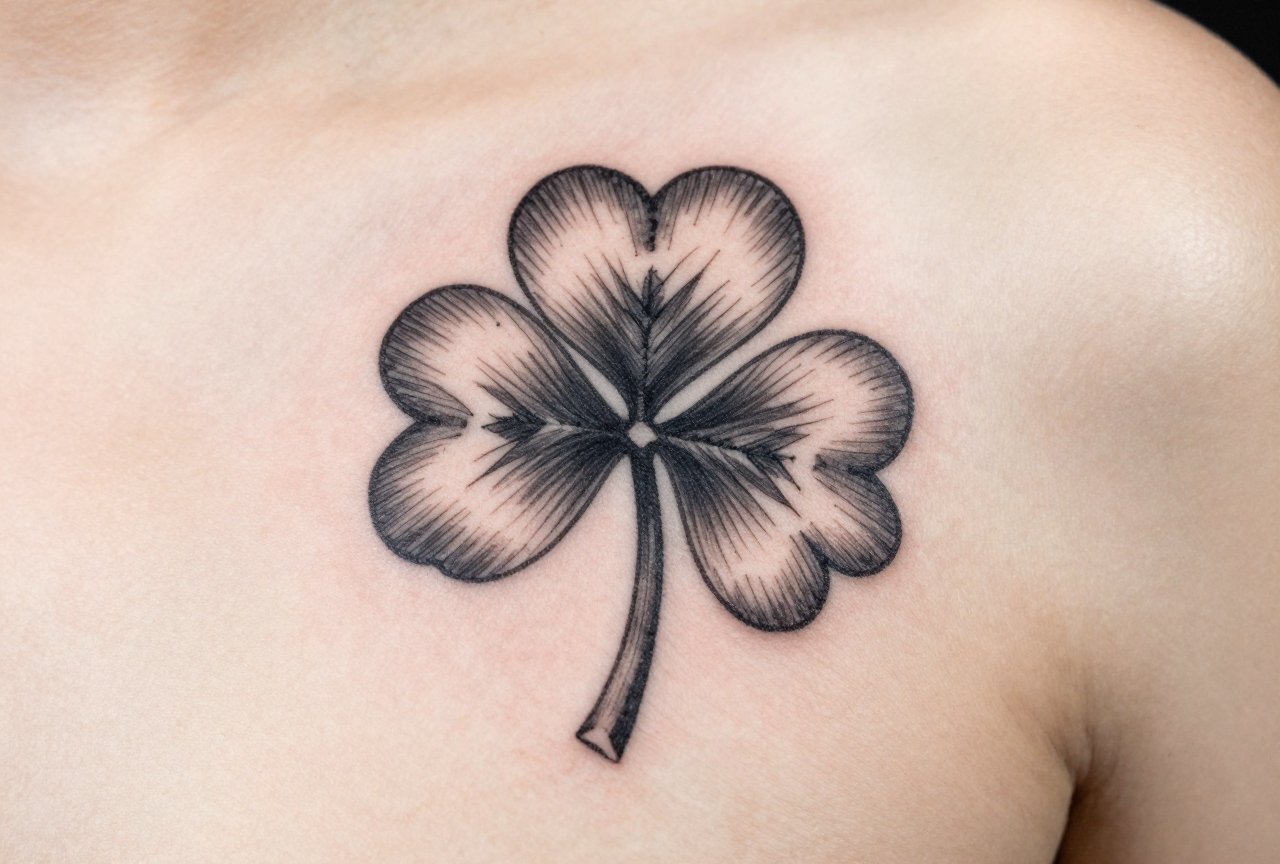
A four leaf clover tattoo primarily represents good fortune and rare luck. The natural occurrence of a four-leaf clover is estimated at about 1 in 5,000, which is part of what gives the symbol its power. Beyond luck, each leaf traditionally symbolizes faith, hope, love, and luck itself, making this a meaningful choice for many tattoo collectors. The strong connection to Irish heritage and Celtic culture adds layers of identity and ancestral pride to this popular botanical design.
Symbolism and History
The four leaf clover’s symbolism stretches back centuries through multiple cultural threads. In Irish folklore, the shamrock with its three leaves was already sacred as a symbol of the Holy Trinity, and the rare fourth leaf was considered a miraculous blessing from nature. The Celts viewed clovers as protective charms that could ward off evil spirits and reveal hidden truths.
Each leaf carries its own traditional meaning:
- First leaf: Faith
- Second leaf: Hope
- Third leaf: Love
- Fourth leaf: Luck
Some interpretations add a fifth meaning when a fifth leaf is included in the design: wealth or prosperity. During the Victorian era, four leaf clovers became popular good-luck tokens carried into battle and sewn into clothing. The symbol crossed into American culture through Irish immigration, where it became intertwined with St. Patrick’s Day celebrations and broader notions of fortunate discovery.
Common Styles
Tattoo artists interpret the four leaf clover through numerous artistic approaches, each carrying slightly different aesthetic weight:
- Realistic botanical: Detailed veining, natural green shading, and dewdrops for a lifelike appearance
- Traditional American: Bold black outlines, saturated greens, sometimes paired with banners or scrollwork
- Celtic knotwork: Interwoven stems or leaves incorporating endless knot patterns
- Minimalist line art: Simple, clean geometry for subtle placement
- Watercolor: Splashed green pigments without hard outlines, creating an ethereal quality
- Memorial designs: Incorporating dates, names, or angelic elements for remembering loved ones
Many collectors personalize their clover with additional symbols: horseshoes for compounded luck, gold coins for prosperity, butterflies for change, or Irish flag colors for heritage pride. The stem length and leaf shape vary significantly between interpretations, from heart-shaped leaves to elongated, pointed botanical accuracy.
Placement Options
The four leaf clover’s compact, symmetrical shape makes it adaptable to nearly any placement. Small designs work beautifully as finger tattoos, behind-the-ear placements, or ankle accents, though these areas experience faster fading due to friction and sun exposure. The wrist and forearm allow for slightly larger detail while maintaining visibility as a personal talisman.
For more elaborate Celtic knotwork or companion elements, the shoulder blade, upper arm, and calf provide excellent canvas space. The ribcage and collarbone areas suit medium-sized designs that follow natural body contours. Some collectors choose foot or heel placement as a lucky step forward metaphor, though these locations rank among the more painful tattoo experiences and require careful aftercare due to constant use.
Who Gets This Tattoo
The four leaf clover attracts diverse collectors with equally varied motivations. Irish-Americans and those with Celtic ancestry often choose this design as a permanent connection to their roots, sometimes incorporating family crest elements or county colors. Gamblers, entrepreneurs, and performers frequently select the clover as a professional luck charm they carry everywhere they go.
Many people choose this tattoo after surviving difficult periods, framing the fourth leaf as the fortunate outcome of enduring faith, hope, and love through hardship. Parents sometimes get matching clover tattoos representing their children, with each leaf symbolizing one family member. The design also appeals to those who have found rare, unexpected love or friendship, interpreting the clover as a metaphor for their unlikely good fortune in relationships.
Some collectors specifically seek out naturally found four leaf clovers and have their exact specimen tattooed, preserving a moment of genuine luck in permanent ink. This practice connects the tattoo to a specific time and place, turning general symbolism into personal narrative.
Related Symbols
Collectors drawn to the four leaf clover often explore related symbols that complement its meanings:
- Shamrock (three leaves): The more common Irish symbol, representing the Holy Trinity and broader Irish identity rather than luck specifically
- Horseshoe: Another universal luck symbol, often paired with clovers in combined designs
- Celtic trinity knot: Shares the Irish heritage connection with more abstract, interwoven geometry
- Acorn and oak leaf: Celtic strength and potential symbolism with natural botanical appeal
- Ladybug: European good-luck insect with similar compact, colorful tattoo potential
- Maneki-neko: Japanese beckoning cat for prosperity and fortune, offering cross-cultural luck symbolism
There is also a meaningful thread among people who are not particularly superstitious but choose the clover because it represents hope and the willingness to believe in fortunate outcomes even when evidence is mixed. That is a different emotional register than pure luck symbolism, and it tends to produce tattoos with more personal weight because the wearer is choosing optimism rather than claiming special fortune. That distinction matters when you explain the piece to someone who asks.
Design Details That Matter
The four leaf clover is deceptively simple as a design concept but has considerable range in execution. One decision that shapes the final look significantly is leaf shape. Botanical clovers have rounded, slightly heart-shaped leaflets. Stylized versions often elongate the leaves for drama or simplify them to nearly geometric shapes. Traditional American versions use a specific thick-outlined aesthetic that reads as decorative rather than naturalistic. Decide early whether you want something that could be mistaken for a real clover or something that signals “tattoo” immediately.
The stem and border treatment also matters. A bare clover floating on the skin reads very differently from one anchored with a curved banner, surrounded by small shamrocks, or set against a horseshoe. Combined designs can add significant personal meaning but also require more space and more planning to execute cleanly.
Color is straightforward for most collectors: green, obviously. But the shade of green matters in tattooing. Some greens fade toward teal or blue over time. Others stay closer to the original hue. Ask your artist about the specific green inks they use and how those colors have healed in their work on skin tones similar to yours. A botanical piece that shifts color significantly over the years can look unintentional rather than aged.
Final Thoughts
The four leaf clover endures as one of tattooing’s most accessible yet meaningful designs, bridging folk tradition with personal significance. Its compact versatility suits first-time collectors and experienced enthusiasts alike, while its layered symbolism allows for genuine depth beneath a seemingly simple image. Whether honoring heritage, marking survival, or carrying a private luck ritual, this tattoo connects to a deep human hope for fortunate outcomes in an uncertain world. The best four leaf clover tattoos combine technical execution with authentic personal connection, turning a common symbol into an individual’s unique story of faith, hope, love, and the luck they have found or seek.









