
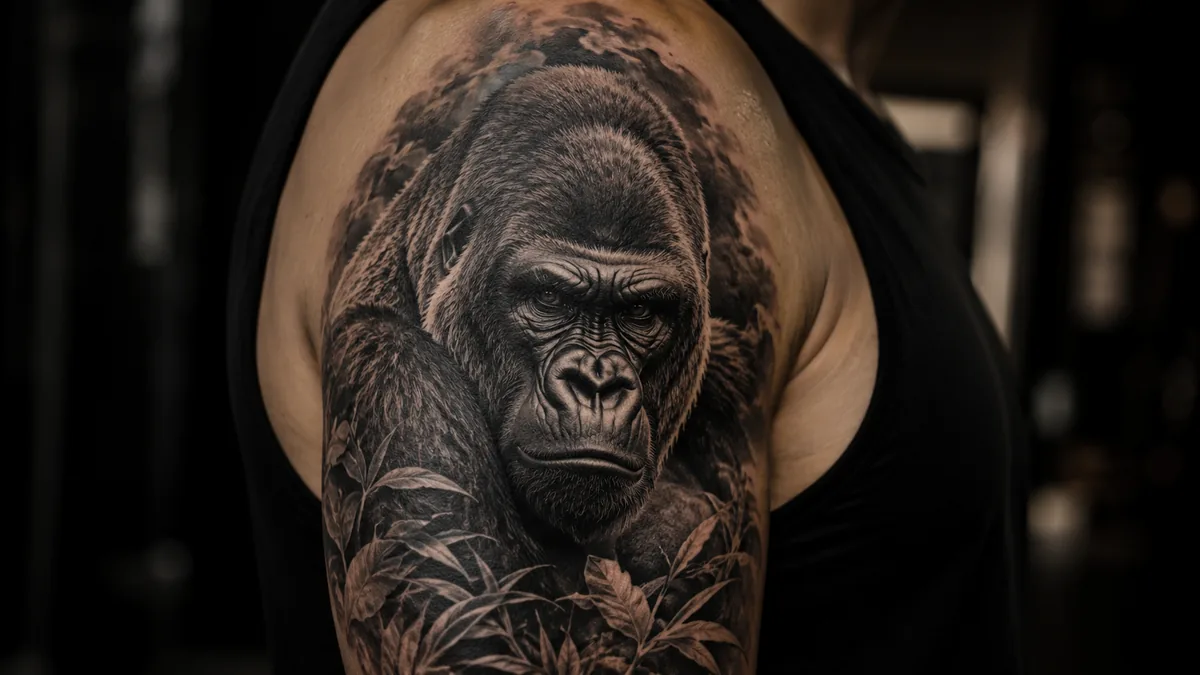
The gorilla tattoo hits different from other animal pieces. It’s not subtle, and that’s the point. People who get gorillas inked aren’t looking to blend in. They’re making a statement about who they are, what they protect, and where they came from.
the gorilla represents raw strength paired with deep intelligence. Not brute aggression, not mindless force. Gorillas are peacekeepers in the wild. They only fight when pushed. That combination of calm authority and explosive power is exactly why this image resonates with so many people sitting in the chair.
Core Meaning: Strength, Intelligence, and Calm Authority
The gorilla is the heaviest living primate and one of the most intelligent animals on earth. In tattoo culture, that translates directly. People get this piece to represent power that doesn’t need to announce itself. A silverback doesn’t roar to prove dominance. He just exists, and everything around him adjusts. That energy is what most clients are after when they book a gorilla tattoo.
A secondary thread running through the meaning is wisdom. Gorillas are observant, strategic, emotionally complex animals. Tattooers and clients alike talk about this piece as a symbol for someone who thinks before they act, who carries serious weight without cracking. It’s less about aggression and more about being the most capable person in the room without making a scene about it.
Family, Loyalty, and Protection
The gorilla doesn't need to roar to be the most powerful thing in the room.
Gorillas are family animals. A silverback’s entire identity is organized around protecting his group. That’s a core reason why fathers, veterans, and older siblings gravitate toward this tattoo. It’s a visual shorthand for being the one who stands between your people and whatever’s coming at them. That meaning lands clean and reads instantly.
Motherhood gorilla pieces are equally powerful and more common than people expect. A mother gorilla carrying or grooming her young is one of the most emotionally loaded compositions you can put on skin. It captures unconditional protection without sentimentality. If you want something that says family without spelling it out, a gorilla with her infant does the work quietly and completely.
Cultural and Symbolic Background
Gorillas don’t carry heavy mythology the way wolves or dragons do. They’re native to Central and West Africa, and in some West African traditions, the gorilla has been viewed as a forest guardian, a powerful spiritual presence connected to the wilderness and ancestral strength. That context gives the image a grounded, earth-connected resonance that some clients specifically want to honor.
In broader modern symbolism, the gorilla gained cultural weight through 20th-century media and conservation movements. Organizations like the Dian Fossey Gorilla Fund brought real gorillas into public consciousness as individuals with names, personalities, and family bonds. For some clients, the tattoo carries a conservation or environmental meaning. They’re honoring an endangered species and what it represents.
Popular Design Variations
The silverback portrait is the workhorse of gorilla tattoo design. Chest puffed, direct gaze, total presence. Done in black and grey realism, a good silverback portrait with heavy contrast and tight fur texture reads across a room and heals solid. The face-forward composition works well on the chest, shoulder, or thigh where you have flat real estate to fill properly.
Geometric and neo-traditional gorilla pieces have carved out serious space. Geometric builds the animal from shapes and negative space. Neo-trad gives it bold outlines and stylized color, often pulling in flowers or crowns as supporting elements. Chest-beating poses and profile shots work better in illustrative styles. Tribal-inspired gorillas show up less frequently but carry clear lineage to West African graphic traditions when done with real research behind them.
Black and Grey vs. Color
Black and grey is where the gorilla truly lives. The animal’s dark coat, the texture of coarse fur, the shadow under a brow ridge, all of that translates beautifully into a grey wash with solid black anchors. A skilled artist using whip shading and tight black and grey realism can make the fur feel tactile. It ages well because you’re not counting on color saturation to carry the piece.
Color gorilla tattoos exist, but they need a clear reason to be in color. Some clients go for deep jewel tones, purples and teals, in a more fantasy or illustrative direction. Watercolor gorilla pieces surface occasionally but age rough. The thin, spread pigment in watercolor fades and blurs faster than crispy solid linework. If you want your piece reading clean in ten years, black and grey or bold neo-trad with saturated, well-packed color are the smart calls.
Best Placements and How It Ages
The chest, upper arm, shoulder, and thigh are the go-to spots for gorilla tattoos, and for good reason. These are relatively flat zones with enough surface area to let the composition breathe. A portrait needs space or the detail compresses and muddies over time. Chest placements age well if kept out of the fold of the armpit. Upper arm sleeves built around a gorilla centerpiece are one of the most requested full-arm concepts.
Avoid cramming a detailed gorilla into high-wear, high-flex zones like the inner elbow, back of the knee, or wrist if you want it reading clean long-term. Those areas stretch and fold constantly and fine detail blows out or fades faster. Hands and fingers are spicy for pain and notorious for requiring touch-ups. Ribs are also spicy but provide a long, flat canvas that works for full profile compositions if you can handle the session.
Who Gets This Tattoo and How to Make It Personal
Gorilla tattoos cross a wide range of clients. Parents, coaches, military, combat athletes, anyone who carries serious responsibility for other people. It also pulls in people who identify with the quiet-strength archetype, who are often underestimated and have made peace with that. The image doesn’t require explanation. It communicates directly.
Personalizing a gorilla piece is straightforward. Add a crown for royalty or self-sovereignty. Incorporate a birth flower, a specific background setting, or a child’s name worked into a banner beneath the image. Some clients bring in a specific gorilla they want referenced, Koko, Harambe, a gorilla they saw at a particular zoo. That specificity makes a strong image into a personal one. Talk to your artist about what the piece should say about you specifically, not just gorillas in general.









