
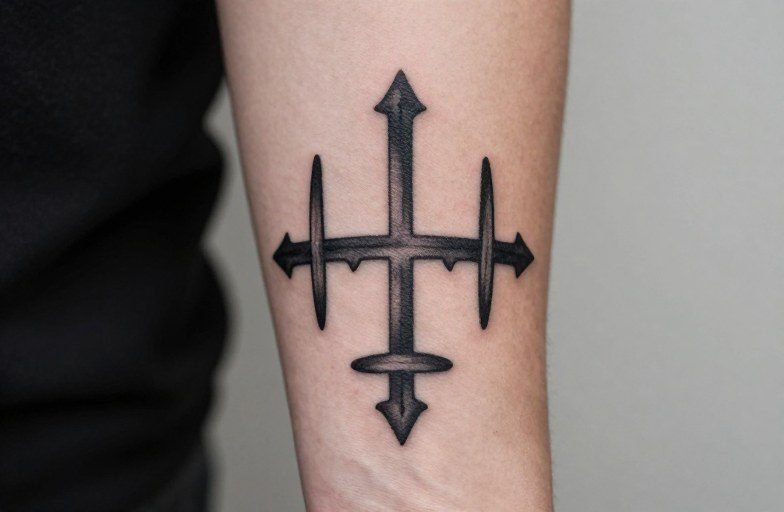
Gypsy symbols in tattooing generally refer to imagery drawn from Romani culture, vintage circus and carnival aesthetics, and the romanticized “traveler” archetype, think crystal balls, tarot motifs, wagons, moons, and the iconic female portrait with headscarf and hoop earrings. The meaning varies sharply between cultural appreciation, personal identification with nomadic freedom, and pure visual nostalgia for the 1960s-70s American traditional tattoo revival of this imagery.
Symbolism & Core Meaning
The Female Portrait
The classic “gypsy girl” head portrait ranks among the most recognizable American traditional designs. Heavy black outlines, limited color palette of red, green, yellow and black, and that distinctive three-quarter view with flowing hair and ornate jewelry. Symbolically, this figure carries associations with intuition, mystery, and feminine independence. The kerchief or headscarf references traditional dress; the gold coins and earrings suggest fortune and prosperity. Some wearers choose this as a tribute to a strong maternal figure, others for the aesthetic alone.
Divination and Fortune Objects
Crystal balls, playing cards, and moons frequently accompany the portrait or stand alone. A crystal ball represents seeking knowledge, uncertainty about the future, or the desire to see clearly. Specific cards matter: the ace of spades traditionally signified death or bad luck in soldier and sailor tattooing, while hearts and diamonds lean positive. Crescent moons paired with this imagery emphasize cycles, change, and nighttime intuition. These elements work best when chosen deliberately rather than assembled randomly.
Personal & Modern Meanings
Nomadic Identity and Freedom
For people with actual Romani heritage, these symbols can express cultural pride and connection to historically persecuted ancestry. The wagon or vardo, those elaborately carved horse-drawn homes, functions as a powerful emblem of self-sufficient mobility and domestic ingenuity. For others without that background, the same imagery often represents rejection of mainstream settlement, a love of travel, or identification with outsider status. The meaning here depends heavily on the wearer’s actual relationship to movement and marginalization.
Reclamation and Critique
Some contemporary wearers consciously engage with the problematic aspects of “gypsy” as a romanticized stereotype. The term itself is considered a slur by many Romani people; “Roma” or “Romani” is preferred. A modern approach might pair traditional imagery with text, specific cultural symbols like the wheel (representing the Romani flag), or collaborative design with Romani artists. This shifts the tattoo from passive consumption to active dialogue.
- Actual Romani heritage: cultural continuity, survival, pride
- Traveler lifestyle: van life, backpacking, seasonal work
- Outcast identity: punk, queer, artistic subcultures
- Aesthetic appreciation: vintage tattoo flash, circus nostalgia
- Critical engagement: acknowledging stereotype while reclaiming visual power
Similar & Related Symbols
Several tattoo traditions overlap significantly with gypsy imagery. The American traditional circus and carnival suite shares visual DNA: banners, bold lettering, strongman figures, and sideshow attractions. Sailor Jerry and other mid-century artists treated these as interchangeable aesthetic vocabulary.
Mexican folk art, particularly the “la Calavera Catrina” and Day of the Dead portraiture, offers another parallel, ornate female faces with symbolic objects, though rooted in entirely different cultural soil. The “mystical woman” archetype also appears in Art Nouveau imagery, tarot-inspired decks like the Rider-Waite-Smith tradition, and vintage advertising for spiritualists and mediums.
Distinct from these, actual Romani cultural symbols include the wheel ( chakra in Romani, unrelated to South Asian chakra concepts), the red dress or sash in some communities, and specific floral patterns from regional traditions. These rarely appear in mainstream tattooing but carry authentic weight when they do.
History & Cultural Roots
American Tattoo Tradition
The “gypsy” as tattoo subject solidified during the 1920s-1950s American traditional period, often linked to circus and carnival culture where tattooed performers and traveling shows intersected. Sailors and soldiers encountered these designs in port cities, and the imagery spread through flash sheets, the reference designs hung in shop windows. The romanticized version drew little from actual Romani experience and much from popular entertainment’s “exotic” stereotype.
European Context
Some trace the visual connection to European depictions of Romani people in 19th-century art and literature, where the “fortune teller” became a stock character. This imagery predates American tattooing by decades but fed into the same stereotype pipeline. The historical reality of Romani people in Europe involved centuries of enslavement, forced assimilation, and genocide, particularly during the Holocaust, where estimates suggest 220,000-500,000 Romani people were killed. This weight matters when choosing these symbols casually.
Design Tips & Pairings
Classic American Traditional Execution
For authentic vintage feel, insist on bold black outlines, limited color saturation, and specific technical choices: a single needle for tight detail in jewelry and eyes, larger groupings for solid black fills. The face should dominate compositionally, typically 3-4 inches minimum for legibility. Traditional placement favors outer upper arm, thigh, or chest panel where the portrait can breathe. Avoid overly small sizes, facial features muddy quickly.
Contemporary Adaptations
Modern approaches might incorporate photorealism, watercolor backgrounds, or fine-line detail while maintaining recognizable iconography. Pairing the portrait with specific personal objects (a grandmother’s brooch, a traveled route) grounds the generic imagery in actual biography. Script elements work best when integrated into banner or scroll formats rather than floating nearby. Consider negative space: a crystal ball rendered as un-inked skin surrounded by dense pattern creates effective contrast.
- Strong pairings: roses, snakes, daggers, moons, stars, playing cards
- Weak pairings: unrelated Japanese imagery, hyperrealistic elements mixed with traditional
- Color longevity: red and yellow fade fastest; black and dark green hold
- Skin tone considerations: yellow and light green can disappear on deeper complexions
How It Ages on Skin
The classic gypsy portrait ages well when executed properly because its design principles anticipate tattoo degradation. Heavy black outlines create boundaries that prevent color bleeding. Limited, high-contrast color palette maintains readability even as individual pigments shift. The large facial features, eyes, lips, jewelry, remain identifiable at distance even if fine detail softens.
Specific aging concerns: thin lines in hair strands and lace tend to blur together over 10-15 years. White highlights, often used for jewelry sparkle, frequently yellow or disappear entirely. Small text in banners becomes illegible. The crystal ball, if rendered with subtle gray shading, can flatten to a gray blob without sufficient black structure underneath.
Sun exposure accelerates fading dramatically on these color-heavy designs. The red cheeks and lips common in traditional execution are particularly vulnerable. Placement on areas with less sun exposure (upper inner arm, torso) preserves vibrancy longer than outer forearms or calves. Touch-ups every 7-10 years keep the design crisp, particularly for collectors who want that fresh-painted look.
Line-only versions age most gracefully but sacrifice the distinctive color impact that defines the style. A compromise: heavier black shading in hair and clothing, selective color in face and jewelry, accepting that the palette will mute to a softer, more unified tone over decades.
Final Word
Gypsy symbols in tattooing carry genuine visual power and problematic historical baggage simultaneously. The imagery works best when chosen with awareness, of its stereotype origins, of actual Romani experience, of what specifically draws you to these designs. A well-executed traditional portrait holds up for decades; a poorly considered one becomes a permanent mark of casual cultural borrowing. Research your artist’s actual experience with this specific vocabulary, ask about their pigment choices for longevity, and know if you’re claiming identity, appreciating aesthetics, or something more complicated between those poles. The tattoo will outlast your current understanding of it; design accordingly.
Frequently Asked Questions
Is it culturally appropriate to get a gypsy tattoo if I’m not Romani?
This depends on your specific design and intent. Generic “fortune teller” imagery from American traditional tattooing is widely accepted as vintage aesthetic, but claiming Romani cultural symbols or identity without heritage is generally criticized. Research whether your specific design elements carry cultural weight beyond vintage tattoo flash.
How much should I expect to pay for a quality traditional gypsy portrait?
A properly executed piece from an experienced American traditional artist typically runs $400-800 for palm-sized, $800-1500 for larger work, depending on your market. Color saturation and the technical demands of clean facial features justify the investment. Flash designs from the shop’s existing sheets may cost less than custom work.
Can a gypsy tattoo be covered up or modified later?
The heavy black outlines and dense color saturation that make these designs distinctive also make them challenging to cover. Black can be lasered or incorporated into darker new designs, but the facial structure is hard to disguise completely. Plan for the long term rather than assuming modification options.
Related Tattoo Meanings
- Hands Touching Tattoo Meaning: Connection, Creation The Divine
- Happy Face Tattoo Meaning: Smiles, Irony, and Ink
- Heart Rate Tattoo Meaning: Life, Loss Everything Between
- Explore more









