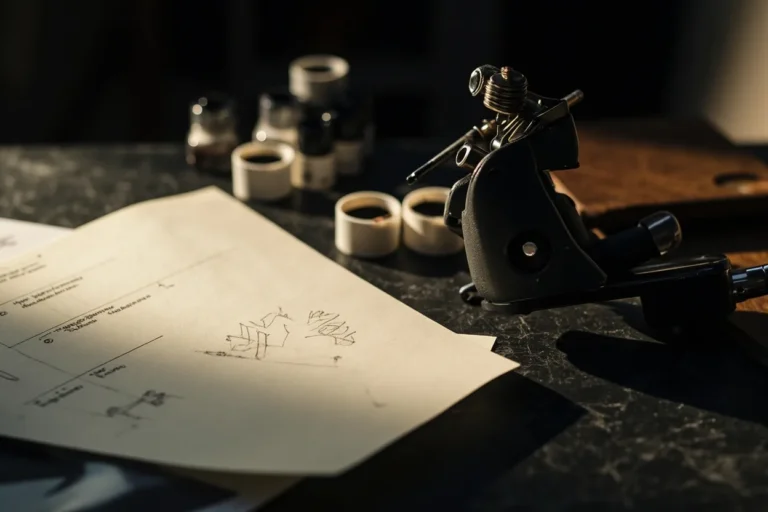
A decent tattoo machine costs anywhere from $50 for a cheap Amazon kit to $1,500 or more for a professional rotary or custom coil machine. Most working artists I know spend between $300 and $800 on their daily driver. If you’re asking because you’re thinking about buying your first machine, slow down. The price tag is only the beginning of what you’ll actually spend.
What You’re Actually Buying
First off, most of us call them “machines,” not “guns.” I’ve had old timers correct me on that since my apprenticeship. But I know clients search “tattoo gun,” so let’s be real about what that money gets you.
There are two main types: coil machines and rotary machines. Coil machines buzz. You know that sound from shops. They use electromagnetic coils to drive the needle, and they’re what I learned on. Rotary machines run on a motor, quieter, smoother, and they’ve taken over most of the industry in the last decade. Both work. Both have price ranges that’ll make your head spin.
Cheap Kits vs. Real Equipment
Those $50-$100 kits online? I’ve seen them. Clients bring them in sometimes, proud of their “setup.” I tell them straight: that’s not equipment, that’s a liability. The machines are inconsistent, the needles are questionable, and the power supplies spike voltage like a failing car battery. You’re not saving money. You’re buying a scar.
Real coil machines from builders like Aaron Cain or Seth Ciferri start around $300 and climb fast. Custom frames, hand-wound coils, specific capacitor setups, I’ve watched a single machine sell for $900 at convention. That’s one liner. You need shaders too.
Rotary Machines and the Price Spread
Rotary machines have exploded. A solid workhorse like a Cheyenne Hawk or FK Irons Spektra runs $400-$700. The Bishop Rotary lineup sits in that same range. Then you get into wireless machines, no clip cord, no foot pedal, just the machine and a battery pack. Those start around $600 and top out past $1,200. I tattooed with a wired machine for twelve years before switching wireless. Now I can’t go back, but that transition cost me.
- Budget rotaries: $150-$300 (workable, not great)
- Professional rotaries: $400-$700 (industry standard)
- Wireless machines: $600-$1,200+ (convenience premium)
- Custom/hand-built coils: $300-$1,500+ (collector territory)
The Hidden Costs Nobody Talks About
The machine itself is maybe a third of your actual spend. I tell every apprentice: budget for the ecosystem, not the tool.
Power Supplies, Cords, and Pedals
A reliable power supply costs $100-$300. Cheap ones fluctuate, and fluctuating voltage means inconsistent needle depth. That’s how you blow out lines or leave patchy shading. Foot pedals run $30-$80. Clip cords, $20-$50 each, and they wear out. I’ve had cords fail mid-tattoo. Not fun.
Needles, Grips, and Disposable Setup
Cartridge needles, what most of us use now, run $15-$40 per box of 20. I go through a box on a busy Saturday. Disposable grips, barrier film, clip cord covers, dental bibs, Green Soap, stencil solution, Vaseline. Your “machine” budget needs to cover this ongoing burn. I probably spend $200-$400 monthly on supplies, and I’m not even in a high-volume street shop anymore.
Machine Maintenance and Replacement
Coil machines need tuning. Springs wear. Contact screws drift. I’ve sat at my station at 10 PM adjusting a machine for tomorrow’s appointments. Rotary machines need less maintenance but they do fail, motors burn, bearings seize. Budget for repair or replacement. Nothing lasts forever in a working shop.
Apprenticeship vs. Teaching Yourself
Here’s where I get real with you. Buying a machine doesn’t make you a tattoo artist. I’ve watched people buy kits, practice on friends, and end up with infections, blown-out tattoos, and permanent regret. The skin doesn’t forgive.
A proper apprenticeship, what I did, what most reputable artists did, means working under a licensed artist for 1-3 years. You might pay for it, or you might work it off cleaning tubes and mopping floors. During that time, you’ll use shop equipment, learn on it, break it, fix it. Only after you’re tattooing consistently do you start building your own kit.
Some states require apprenticeship hours for licensing. Others are wild west. Check your local health department. But even where it’s not required, I wouldn’t trust an artist who skipped it. The machine is the least of your learning curve.
Used Machines and the Secondhand Market
There’s a whole economy of used tattoo equipment. Facebook groups, convention floor sales, shop bulletin boards. I’ve bought and sold machines this way. A used rotary in good shape might run half retail. But you need to know what you’re looking at.
Check for needle bar play, motor noise, grip thread wear. Ask why they’re selling. I’ve seen machines dumped because they never ran right, some builder’s experiment that never quite worked. Great deal on paper, nightmare in skin. Buy from someone whose work you can see, whose reputation you can verify.
What Clients Should Know
Maybe you’re not buying a machine at all. Maybe you’re just curious what your artist spent. Here’s the thing: the cost of their machine matters less than what they do with it.
I’ve tattooed with a $200 machine that outperformed a $600 one because I knew it. I’ve seen artists with $2,000 setups produce mediocre work because they bought skill they didn’t have. The machine is an extension of the hand. The hand needs training.
When you’re pricing tattoos, the machine cost is baked into the hourly or flat rate. My shop charges $150/hour. That covers my equipment, my supplies, my rent, my insurance, my continuing education, my years of building this skill. The machine itself is a fraction of what you’re paying for.
Key Takeaways
- Real tattoo machines start around $300 for professional-grade equipment; anything under $150 is suspect
- Rotary machines dominate now, but coil machines still have their place and their devotees
- Your total starter investment, including power supply, needles, supplies, and training, easily hits $1,000-$2,000
- Apprenticeship is the only responsible path to tattooing; buying a machine first is backwards
- The artist matters infinitely more than the machine price; good hands make good tattoos regardless of budget
I’ve been in this industry long enough to see trends come and go. Machines get lighter, quieter, more expensive. But the fundamentals don’t change. Respect the skin. Learn properly. Buy equipment that won’t fail you mid-line. And if you’re just starting out, find a mentor before you find a vendor. Everything else follows from there.
Frequently Asked Questions
Can I legally buy a tattoo machine without a license?
In most U.S. states, yes, there’s no federal restriction on purchasing tattoo equipment. However, actually using it on human skin without proper licensing and training violates health department regulations in most jurisdictions and can result in serious fines.
Why do some artists still prefer coil machines over rotaries?
Coil machines offer more direct feedback and adjustable “give” that some artists prefer for specific techniques like traditional bold lining or whip shading. They’re also repairable by hand, whereas rotary failures often mean sending the machine back to the manufacturer.
How long does a good tattoo machine typically last?
With proper maintenance, a quality coil machine can last decades, I’ve seen artists using machines from the 1990s. Rotary machines generally last 3-7 years depending on usage, with motor replacement sometimes needed. The grip and body outlast the internal components.
Is it worth paying extra for a wireless tattoo machine?
Wireless machines eliminate cord drag and foot pedal clutter, which reduces fatigue during long sessions. For artists tattooing 4+ hours daily, the $200-$400 premium often pays for itself in comfort. For occasional or hobby use, wired machines work fine at lower cost.
Related Tattoo Guides
- How Long to Keep a Tattoo Covered: A Real Shop Guide
- Tattoo Cost Guide: What You ll Actually Pay in 2024
- How to Read a Tattoo Portfolio
- Explore more