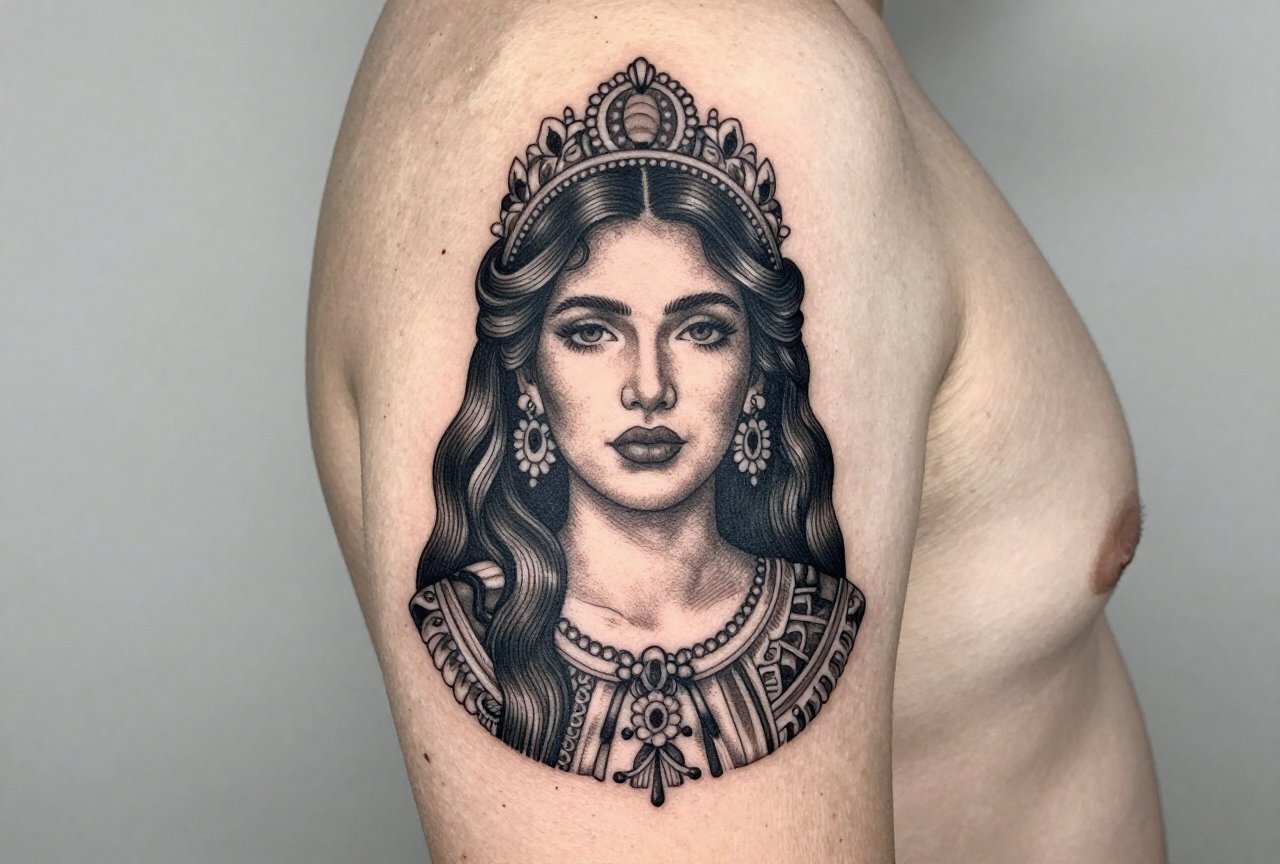
A La Llorona tattoo means you’re carrying something heavy. The Weeping Woman from Mexican folklore, who drowned her children and wanders waterways wailing for them, has become one of the most emotionally loaded images in Chicano and Latinx tattooing. It’s grief made visible, a warning, a mother’s love twisted into something that won’t die.
Symbolism & History
I’ve tattooed La Llorona on mothers who lost kids, on daughters who watched their mothers unravel, on people who just feel haunted. The story shifts depending on who’s telling it. Sometimes she’s a murderer. Sometimes she’s a victim of colonial violence, of male betrayal, of her own breaking point. That flexibility is what makes her stick in skin.
The Folklore Roots
The tale predates borders. Indigenous versions existed before Cortés. La Malinche got folded in later, the translator, the traitor, the mother of mixed-race Mexico, weeping for what collaboration cost her. In my chair, clients rarely want the Disney version. They want the river siren with black eyes, the one who doesn’t ask permission before she takes.
What She Represents Today
Modern wearers latch onto different threads:
- Unprocessed grief, the kind that keeps you walking at night
- Maternal sacrifice, what mothers give up, what they become
- Cultural identity, claiming Mexican or Chicano roots against erasure
- Survivor’s guilt, living when someone you loved didn’t
- Warning, don’t go down this path, don’t become this
One client, a social worker in East LA, got La Llorona on her ribs after a kid she couldn’t save. She told me, “She’s not evil. She’s just the part of me that won’t stop screaming.” That’s the tattoo working right there.
Common Variations & Styles
How she’s rendered changes everything. I’ve seen delicate watercolor Lloronas that look like they’ll wash off in rain, and I’ve blasted solid black-and-grey ones that feel like they were already in the skin, waiting.
Black-and-Grey Realism
This is the shop standard, especially in Chicano tradition. Flowing veil, hollow eyes, hands reaching or clutching. Shading matters enormously here, soft grey wash for the ghostly quality, heavy blacks for the water and shadows. The face is the make-or-break. Too pretty and she’s a pin-up; too corpse-like and she loses the tragedy. I spend more time on reference photos for Llorona faces than almost any other figure tattoo.
Neo-Traditional and Stylized
Bolder lines, limited color palette, often just red for a rose or blood, maybe blue-green for water. These read cleaner from distance and age better on tricky spots. The stylized approach lets artists push the horror elements: elongated fingers, too-wide mouth, eyes that follow you.
Scene-Based Compositions
Full river settings, moonlit nights, drowned children as silhouettes. These need space, thigh, back, ribs. I did one on a guy’s calf where La Llorona emerges from actual waves that wrap his muscle. The movement of the body part becomes part of the story. That’s the placement thinking that separates decent tattoos from ones that live right.
Best Placements
Where you put her changes how she reads to you and everyone else.
- Upper arm/shoulder, visible, declarative. Common for first-timers wanting to claim the symbol publicly.
- Ribs, private, painful. The weeping woman pressed against your own breath. We see this a lot with deeply personal grief stories.
- Thigh, space for detail, easy to conceal. Popular with women who want the image for themselves, not the viewer.
- Back piece, the full narrative. I’ve worked two back pieces that took multiple sessions; both clients said they needed the weight distributed, carried by their whole frame.
- Forearm, daily confrontation. You see her when you reach for things. That’s intentional for some people.
Skin type matters with all that water imagery. On darker skin, I push for higher contrast and more solid black in the shadows so the grey wash doesn’t disappear during healing. On very fair skin, too much black can look harsh in five years. I tell clients this straight: the river needs to read as water, not mud, in 2029 and 2039 both.
Who Chooses This Tattoo / Personal Meanings
There’s no single profile. I’ve tattooed La Llorona on a 19-year-old art student from Boyle Heights and a 54-year-old white guy from Orange County who married into a Mexican family and lost his wife to cancer. Both made sense. Both hurt to do.
Women and Maternal Grief
Most common demographic. Postpartum depression, miscarriage, abortion, children grown distant or dead. The tattoo becomes a way to say “I am still mourning” without having to explain. One woman told me she chose La Llorona over a traditional memorial portrait because “a portrait is a person. She’s a feeling.”
Chicano Cultural Reclamation
For second- or third-generation Mexican-Americans, folklore tattoos often replace religious imagery that doesn’t fit anymore. La Llorona carries culture without requiring church. She’s specifically Mexican in a way that resists full assimilation. I hear this in consultations: “My grandma told me this story. I want to keep telling it.”
The Haunted
Some clients connect less to motherhood and more to being pursued by something. Addiction survivors. People who did damage they can’t undo. La Llorona as mirror, not ancestor. These are usually the most intense sessions. We don’t talk much. The needle does the work.
Similar Symbols
Clients sometimes cross-shop La Llorona with related imagery. Worth knowing the distinctions.
- Santa Muerte, death as protector, not mourner. More transactional, less narrative. Often more colorful, more overtly religious.
- La Malinche, the historical figure, sometimes conflated. Less supernatural, more political. Usually depicted as living woman, not ghost.
- Pietà imagery, Christian mother mourning son. Similar emotional register but different cultural weight and visual language.
- Japanese yūrei, white kimono, long black hair, also water-associated. Some clients mix aesthetics; purists in both traditions side-eye this.
- Siren/mermaid figures, the dangerous water woman, but without the maternal grief core. Lighter, more sexual, less tragic.
I’ve had clients bring reference photos of all five, unsure which direction. Usually the conversation that follows, what exactly are you mourning, what do you want to carry, reveals whether La Llorona is the right vessel.
Final Thoughts
La Llorona tattoos work because the story refuses to settle. She’s villain and victim, monster and mother, cultural inheritance and personal wound. Good tattooing of her requires technical skill, those veils, that water, those eyes, but more than that, it requires the artist to understand what the client is actually asking to carry. I’ve been doing this fifteen years and I still learn something new every time someone sits down and says “her.”
If you’re considering this, sit with the story first. Which version? Which feeling? The tattoo will outlast the impulse. Make sure she’s yours.
Frequently Asked Questions
Does a La Llorona tattoo have to be scary or can she look beautiful?
She can absolutely be beautiful, tragic beauty is the point. I’ve done Lloronas with delicate features and flowing hair that still read as ghostly through pale grey eyes and water-washed skin. The horror lives in the expression, not necessarily gore. Talk to your artist about what emotional register you want.
Is it disrespectful to get this tattoo if I’m not Mexican?
It depends on context and connection. Having a genuine relationship to the story, through family, community, or deep study, matters more than blood alone. I tell clients: if you can’t explain why you chose her beyond “she looks cool,” reconsider. The tattoo should represent a real bond, not aesthetic tourism.
How well does all that water and veil detail hold up over time?
Water and fabric are tricky aging subjects. Fine lines in veils can blur; light grey washes can fade to nothing. I build La Lloronas with enough solid structure, dark hair anchors, strong eye sockets, defined water edges, that the image stays readable even as softer details settle. Plan for a touch-up in 5-7 years if you want her pristine.
Can La Llorona be combined with other symbols like roses or religious imagery?
Common and powerful. Roses often represent the children or lost love. Candles, prayer hands, or milagros can frame her as altarpiece. I’ve seen her with monarch butterflies for migrant souls, with river reeds for specific geography. The combination should deepen the story, not clutter it.
Related Tattoo Meanings
- Lemon Tattoo Meaning: Symbolism, Styles Placement Guide
- Line Chin Tattoo Meaning: Symbolism, Style Why People Get It
- Lipstick Tattoo Meaning: Symbolism, Styles Personal Significance
- Explore more