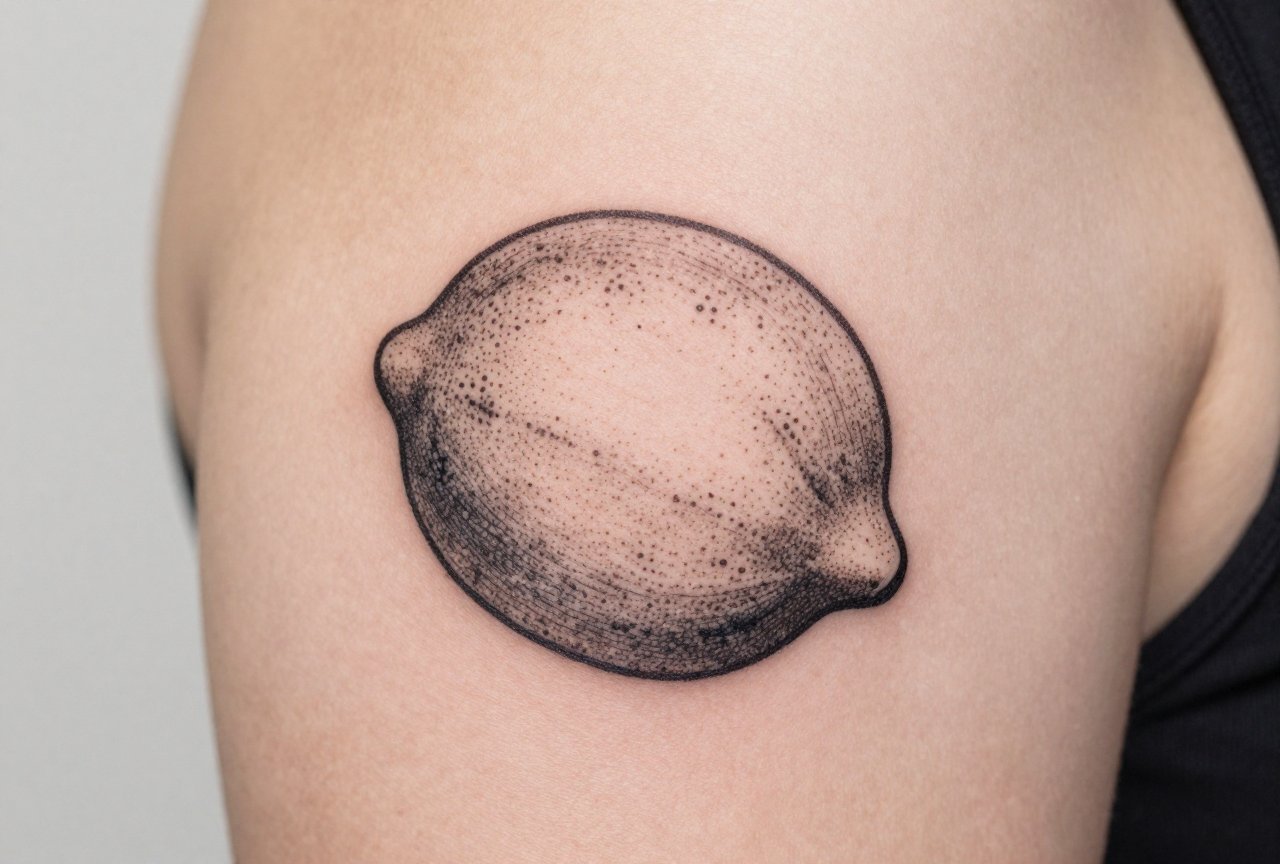
A lemon tattoo typically symbolizes resilience, the ability to turn life’s sour moments into something meaningful, and a fresh, bold approach to living. People choose it after hardship, during recovery, or simply because they love the visual punch of yellow on skin. The meaning shifts with context, one person’s lemon honors a grandmother’s orchard, another’s marks a divorce they survived.
Symbolism & History
The Sour-to-Sweet Narrative
I’ve tattooed lemons on folks who’ve been through it. The phrase “when life gives you lemons” isn’t just a bumper sticker in my shop, it’s a genuine reset point for people. The fruit carries this built-in tension: the waxy bright exterior versus the mouth-puckering interior. That duality reads beautifully in tattoo form. A lemon half shows the inside, the vulnerability. Whole lemons stay optimistic, almost defiantly cheerful.
Historically, lemons traveled trade routes as luxury goods before becoming everyday staples. Mediterranean cultures associated them with purification and longevity. In Victorian floriography, yes, fruit had codes too, lemons signaled zest for life, sometimes with a hint of caution. The tattoo inherits all this baggage, which is part of why it works. You’re not just getting a cute fruit; you’re tapping into centuries of human experience with bitter and sweet.
Color Psychology on Skin
Yellow ages tricky. I’ve watched lemon tattoos go muddy after five years when the yellow wasn’t saturated enough or when artists cheaped out on pigment. Good lemon work needs that warm cadmium layered properly. The color itself carries meaning, happiness, warning, energy. On skin, it demands attention. I’ve had clients tell me strangers ask about their lemon more than their elaborate sleeves. It’s approachable. People feel safe asking.
Common Variations & Styles
Botanical Realism
Single lemons with leaves and thorned branches. This style leans into the plant’s actual structure, glossy skin, porous pith, those little oil glands that spray when you cut one. I did a lemon branch wrapping a forearm last year where we got the leaf serration perfect. The client was a botanist. She cried. Realism works best with some size; tiny lemons lose the detail that makes them read as lemons and not generic yellow ovals.
Traditional & Neo-Traditional
Think bold black outlines, limited but punchy color palettes, maybe a banner reading “SOUR” or “SWEET.” Traditional lemon tattoos often pair with other motifs, knives, teacups, snakes. The style’s graphic nature solves the aging problem; those thick lines hold. I tell clients who want longevity without constant touch-ups: traditional handles yellow better than watercolor every single time.
- Minimalist line work: Single needle, no fill, often placed on wrists or behind ears. Clean, modern, but fades faster without black anchoring it.
- With quotes: “Make lemonade,” handwritten script, sometimes wrapping the fruit. The typography matters as much as the image, bad lettering kills the piece.
- Pairings: Lemons with honey jars (sweetening the deal), with salt rims (margarita culture, coastal living), with skulls (memento mori with a twist).
- Sliced/dripping: Shows juice, seeds, the messy reality. Popular with people who reject polished perfection.
Best Placements
Where you put a lemon changes how people read it. I’ve seen this play out in my chair hundreds of times.
Forearms and calves give the round shape room to breathe. The curve of a lemon mirrors muscle structure nicely there. Ribs and hips work for more private meanings, something you choose to show, not something displayed constantly. The pain level on ribs means clients usually feel committed to the symbolism; they’re not getting flash art on a whim.
Behind the ear and on hands trend hard right now. Hand lemons are bold, everyone sees them, including potential employers. I’ve talked clients down from hand placement when their lemon was tied to trauma processing; you don’t always want that conversation with strangers. Behind the ear stays subtle, peeking from hair, personal.
Thighs and upper arms allow for composition with other elements. A lemon tree, multiple fruits, a still life with a glass. The skin there holds color well, less sun exposure if you’re smart about sunscreen.
Who Chooses This Tattoo / Personal Meanings
The Recovery Narrative
We see this a lot. Addiction recovery, cancer remission, leaving abusive relationships. The lemon becomes a private trophy. One regular in my shop got a lemon on her ankle after five years sober, she said the early years were “all rind, no juice,” but she’d learned to squeeze something useful from the struggle. She didn’t want the typical recovery symbols. The lemon felt hers alone.
Regional and Family Connections
California kids with backyard trees. Italian-Americans honoring ancestral groves. Floridians who grew up with citrus in their yards. The tattoo becomes landscape memory, not just metaphor. I tattooed a whole lemon branch on a guy from Amalfi who said his nonno’s trees were bulldozed for a hotel. The piece was mourning and preservation simultaneously.
The Aesthetic-First Crowd
Not every lemon tattoo needs heavy meaning. Some people just like how yellow looks against their skin tone. I respect that. The best tattoo is one you want to see every morning. I’ve had clients bring Pinterest boards of kitchen witch aesthetics, cottagecore vibes, vintage fruit crate labels. They want the vibe, not a therapy session. That’s valid. The meaning can grow into the image over time.
Similar Symbols
Clients often browse between lemons and related imagery before deciding. Here’s how the conversation usually goes in consults:
- Oranges: More abundance, less edge. Sunshine without the bitterness. Good for purely positive narratives.
- Limes: Similar resilience story but reads more tropical, less classic. Often chosen by coastal people or cocktail culture folks.
- Peaches: Softness, sexuality, Southern identity. Less about overcoming, more about embodying.
- Pomegranates: Persephone myth, fertility, darkness. Heavier symbolism, more complex visually.
- Olive branches: Peace, specifically. Less personal struggle, more universal hope.
The lemon occupies this sweet spot between approachable and meaningful. It’s not as loaded as a rose, not as blank as a geometric shape. You can explain it quickly or let it stay mysterious.
Final Thoughts
A lemon tattoo works because it’s specific. Everyone knows the taste, the smell, the sting of juice in a cut. That shared sensory memory makes the symbol immediate. If you’re marking survival, honoring place, or just love the color, the lemon holds up. I’ve watched them age on skin for fifteen years now. The good ones, solid line work, proper saturation, sun protection, stay bright. The cheap ones blur into yellow smudges that clients eventually cover.
Choose an artist who understands botanical structure, who won’t just slap a circle with points on you. Ask to see healed photos, not just fresh work. And know why you’re getting it, even if that reason is simply “it makes me happy.” That’s enough. The meaning lives in the wearing, not just the choosing.
Frequently Asked Questions
Does a lemon tattoo work for darker skin tones?
Absolutely. The key is working with an artist experienced in melanin-rich skin who knows which yellow pigments show up vibrantly. Golden yellows and oranges often read better than pale lemon shades. I’ve seen stunning lemons on every skin tone, the saturation strategy just changes.
How fast does yellow ink fade in a lemon tattoo?
Yellow fades faster than black or dark blue, especially with sun exposure. Expect some softening after 3-5 years. A good artist builds saturation with multiple passes, and you need SPF commitment. Touch-ups every few years keep it crisp.
What’s the average cost for a detailed lemon tattoo?
Small simple lemons run $150-300. Detailed botanical pieces with leaves and shading hit $400-800 depending on size and artist rate. Hand or foot placement often costs more due to difficulty. Don’t bargain shop on something you’ll wear forever.
Can I combine a lemon with other fruits or flowers in one piece?
Yes, and it often strengthens the story. Citrus groves with blossoms show growth cycles. Lemons with lavender or herbs create kitchen-garden narratives. Just give your artist reference photos of how the plants actually grow together, forced combinations look awkward.
Related Tattoo Meanings
- Firefly Tattoo Meaning
- Line Chin Tattoo Meaning: Symbolism, Style Why People Get It
- Lipstick Tattoo Meaning: Symbolism, Styles Personal Significance
- Explore more