
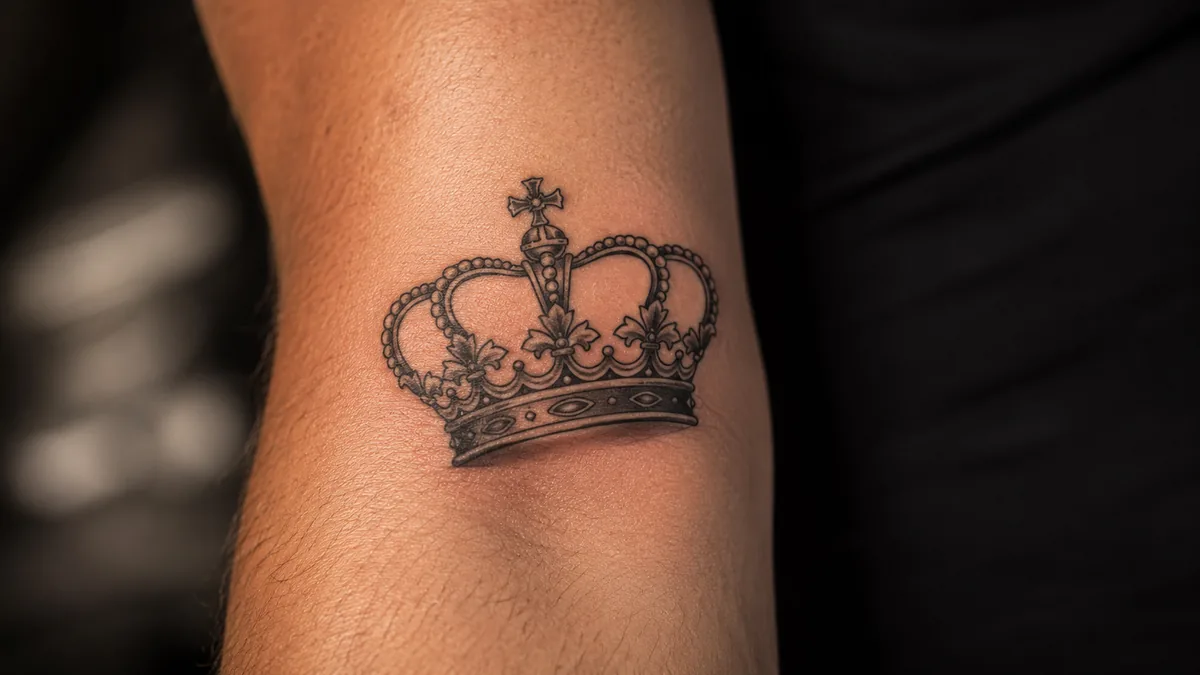
A crown tattoo means one thing at its core: power. Whether that’s power over yourself, your past, or your place in someone else’s life, the crown is one of the oldest symbols of authority humans ever put on paper, stone, or skin.
It’s also one of the most versatile pieces in the shop. A tiny fine-line crown behind the ear reads completely different from a bold, jeweled crown taking up a forearm. Same symbol, different story. Here’s what people actually mean when they get one.
Core Meaning: Authority and Self-Worth
The most common reason people get a crown tattoo is simple: they own their life. It’s a statement of self-rule. You don’t answer to anyone. You’ve been through it and come out on top. That’s the reading most artists hear in consultations, and it holds up across genders and ages. The crown says ‘I am in charge of my own story.’
A second layer that comes up just as often is inner royalty. Not arrogance, but self-respect earned the hard way. People who’ve survived addiction, trauma, or a rough chapter get crowns to mark the moment they stopped letting circumstances run them. It’s a quiet declaration, not a flex.
Historical and Cultural Background
You don't earn a crown tattoo, you claim it.
Crowns as symbols go back thousands of years across Egypt, Rome, Greece, and medieval Europe. Every major civilization used the crown to mark rulers, gods, and divine authority. That symbolic weight carries straight into tattoo culture. When someone wears a crown on their skin, they’re tapping into a lineage of meaning that runs deep without needing to explain it.
In Christian iconography, a crown of thorns carries a completely different meaning: suffering, sacrifice, and spiritual faith. That specific design is popular in religious tattoos and reads clearly to anyone familiar with it. Latin American tattoo culture also uses the crown heavily, often combined with sacred hearts or religious figures, marking devotion rather than dominance.
Popular Design Variations
The classic five-point royal crown is the most tattooed version. Clean geometry, reads from across the room, bold enough to hold in black and grey or color. Jeweled crowns add rubies, diamonds, and emeralds rendered in stippling or bold color. Skull crowns combine mortality with power, a common combo in traditional and neo-trad work. Floral crowns go softer, often chosen for themes of femininity or nature.
Crown of thorns is its own category entirely, usually done in black and grey with tight detail on the barbs. Barbed wire crowns pull a similar aesthetic but with a harder, more defiant edge. Name or word crowns, where letters form the crown shape, are popular for memorial pieces or honoring a child. Each variation shifts the meaning noticeably, so the design choice matters as much as the placement.
Black and Grey vs. Color
Black and grey crowns are workhorses. They age predictably, especially when done with solid black fills on the base and whip shading on the interior. A good black and grey crown with crispy lines will still read clean fifteen years in, as long as it’s in a low-wear zone. Artists can push a lot of dimension with contrast alone, making gems look faceted without a drop of color.
Color crowns pop harder fresh but need maintenance in high-wear spots. Saturated jewel tones, deep reds, and sapphire blues in a crown look incredible right after healing but fade faster on hands, fingers, or wrists. If you want color, the upper arm, thigh, or calf gives the pigment a real shot at longevity. Wherever you put it, make sure the linework is solid underneath. Color without clean lines is just blur waiting to happen.
Best Placements and How It Ages
The crown works almost anywhere because it’s a compact, self-contained shape. Nape of the neck is a classic spot, reads well when hair is up, and the skin there is relatively stable. Upper chest pieces let the crown sit high and visible without the wear a hand placement brings. Forearm crowns are crowd-pleasers, easy to show or cover, and the skin takes ink well.
Fingers and hands are spicy to sit and notorious for blowout and fading. A crown on a finger will need touch-ups. Ribs and sternum are a different kind of spicy but age beautifully if you stay lean. Behind the ear is trendy for fine-line mini crowns, but that skin creases with age. Whatever placement you choose, bold will hold better than ultra-fine linework in the long run, especially in high-movement zones.
Crown Tattoos and Relationship Symbolism
Matching crown sets are a staple in the shop. King and queen crown pairs are one of the most requested couples tattoos out there. One partner wears the king’s crown, the other the queen’s, and together the set completes. It’s a declaration of partnership and equal standing in the relationship. Simple concept, strong imagery, easy to customize to a couple’s style.
Memorial crown tattoos come up often too. A crown above a name or portrait signals that the person being honored was royalty to the wearer. ‘She was my queen’ or ‘he was my king’ is the sentiment, and it’s genuine. Parent-child memorials use it the same way. The crown in this context shifts from self-empowerment to tribute, and that’s a completely different emotional weight behind the same image.
Who Gets Crown Tattoos and How to Make Yours Yours
Crown tattoos cut across every demographic in the shop. Men, women, every age bracket, first tattoo or fiftieth. The design is flexible enough to carry very different personal meanings without losing its visual identity. That universality is part of why it’s stayed popular for decades without feeling played out. A good crown never really goes out of style.
To make it personal, build in specific details. Your birth month gemstone in the setting. A number worked into the band. A loved one’s initial hidden in the metalwork. Your artist can incorporate fine details that read as decoration to a stranger but mean everything to you. That’s the difference between a flash crown and a piece with a story. Talk it through in your consultation and let the design grow from there.









