
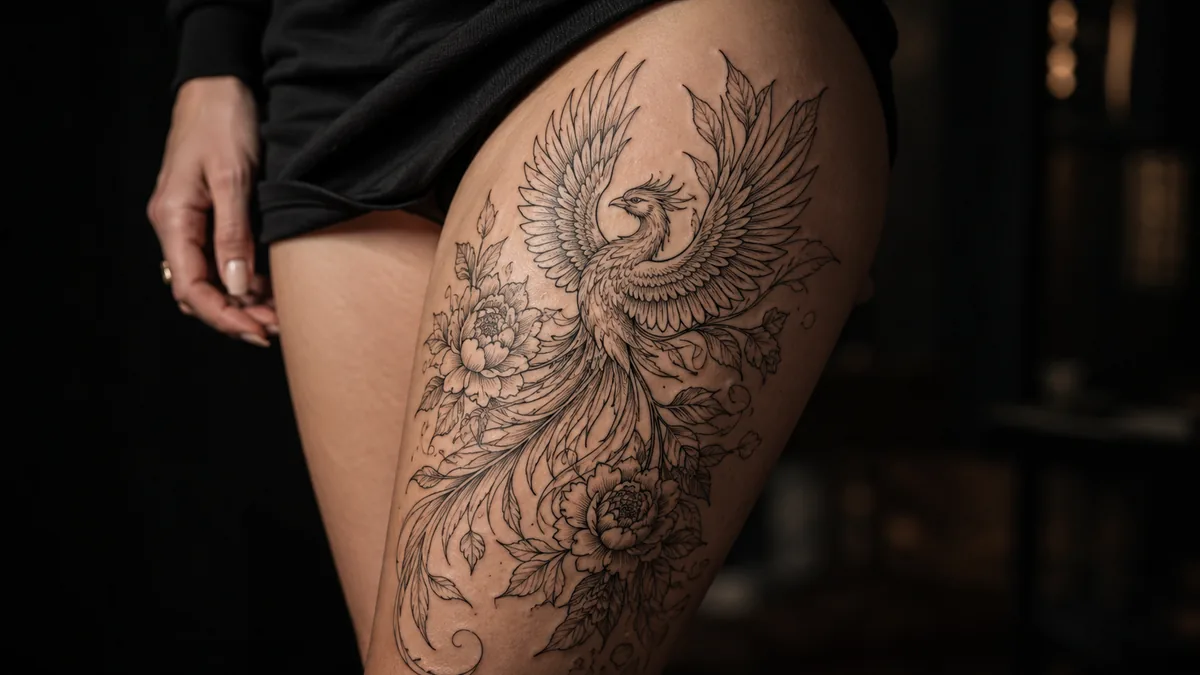
A lining tattoo is exactly what it sounds like: the outline, the contour, the skeleton of a design rendered in clean, unbroken line work. But people get them for reasons that go way beyond aesthetics. The line itself carries meaning, from minimalist intention to a declaration that bold structure is enough.
Whether it’s a single fine line portrait, thick black outlines with zero fill, or a full geometric piece built entirely from contours, the lining tattoo signals clarity. It says: this is the shape of the thing, stripped down, nothing hidden. That restraint is the whole point.
Core Meaning: Structure, Clarity, and Intention
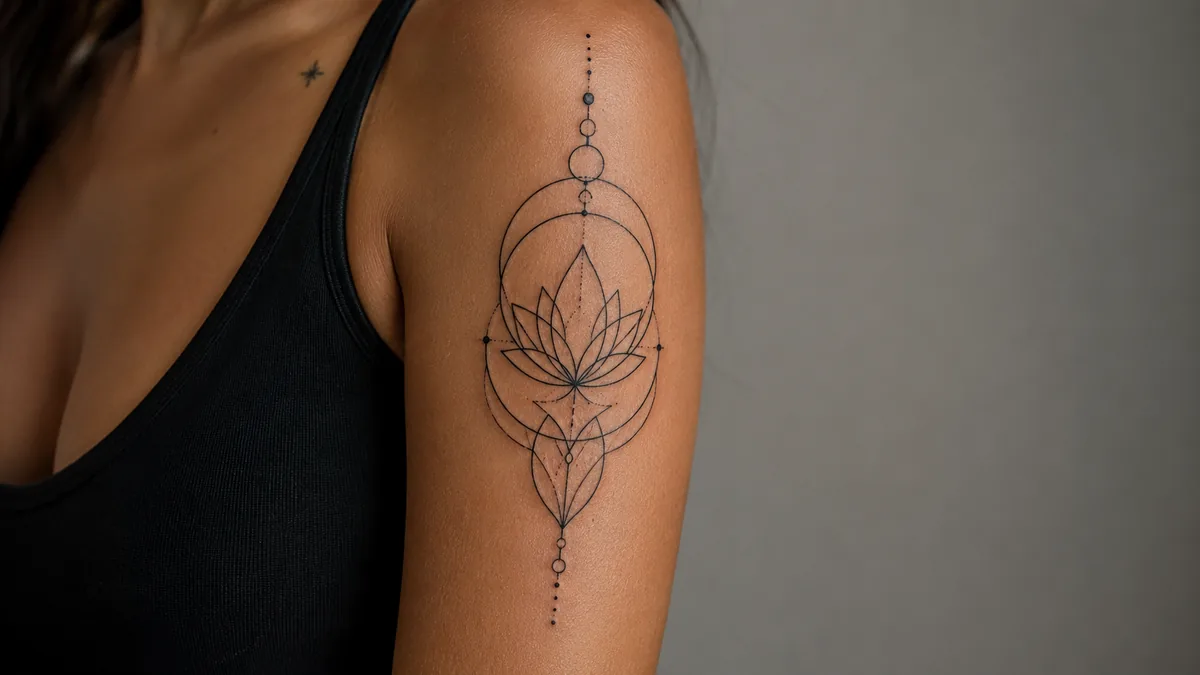
A lining-only tattoo, where the outline does all the work without fill or shading, tends to carry a message of definition. You’re marking a boundary. You’re saying this shape, this subject, this idea matters enough to outline permanently on your body. It’s deliberate minimalism, not laziness. The line is confident. It knows what it is.
That confidence reads as strength in tattoo culture. A clean, crisp line is technically harder to pull off than it looks. Wobbles and inconsistencies have nowhere to hide under shading. So people who choose pure line work often appreciate craft and precision, and they want a tattoo that communicates that same precision about the subject matter itself.
Symbolism Across Common Lining Tattoo Subjects
The line is where the idea ends and the skin begins.
The meaning of a lining tattoo shifts hard based on what’s being outlined. A single continuous line face or figure represents unbroken connection, the idea that a person or relationship is whole and complete without ornamentation. Mountain outlines suggest a stripped-back relationship with nature, aspiration without ego. Botanical line work, leaves and stems with zero fill, reads as growth in its purest form.
Animals rendered in outline only often symbolize the essence of that creature’s energy rather than a literal depiction. A wolf outline is instinct and loyalty at their core. A bird outline is freedom before color makes it pretty. Removing fill forces the viewer to engage the shape, the idea, not the surface. That’s the symbolism: essence over appearance.
Historical and Cultural Roots of Line Work in Tattooing
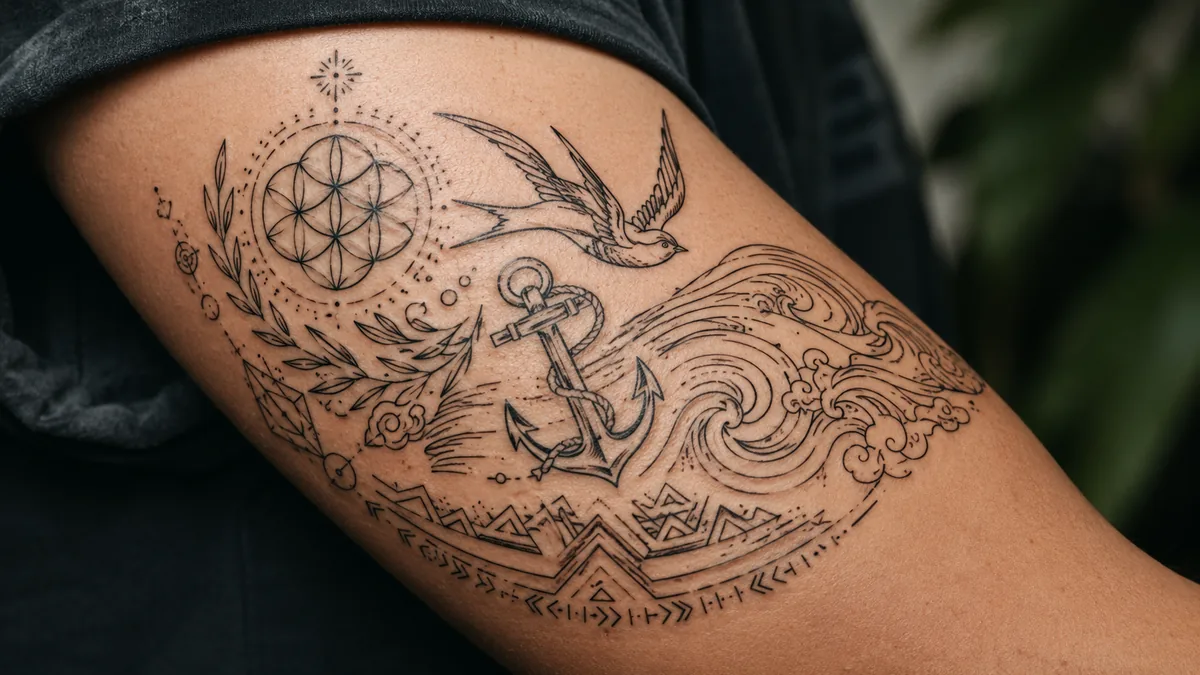
Line work is the foundation of almost every tattoo tradition on earth. Polynesian tatau, Japanese tebori, Maori ta moko, American traditional, all of it starts with the line. In cultures like Maori, the lines themselves encode genealogy, social rank, and spiritual identity. The outline isn’t decorative, it’s documentary. Every curve means something specific to that individual’s lineage.
In American traditional tattooing, thick solid outlines were a practical requirement. Early machines and inks made bold lines essential for longevity. Flash designs from the 1920s through the 1980s relied on heavy black outlines so tattoos stayed readable after healing, even decades later. That structural heritage is why bold outlines still carry a sense of timelessness and authority in modern studios.
Design Variations: Fine Line vs. Bold Line vs. Geometric
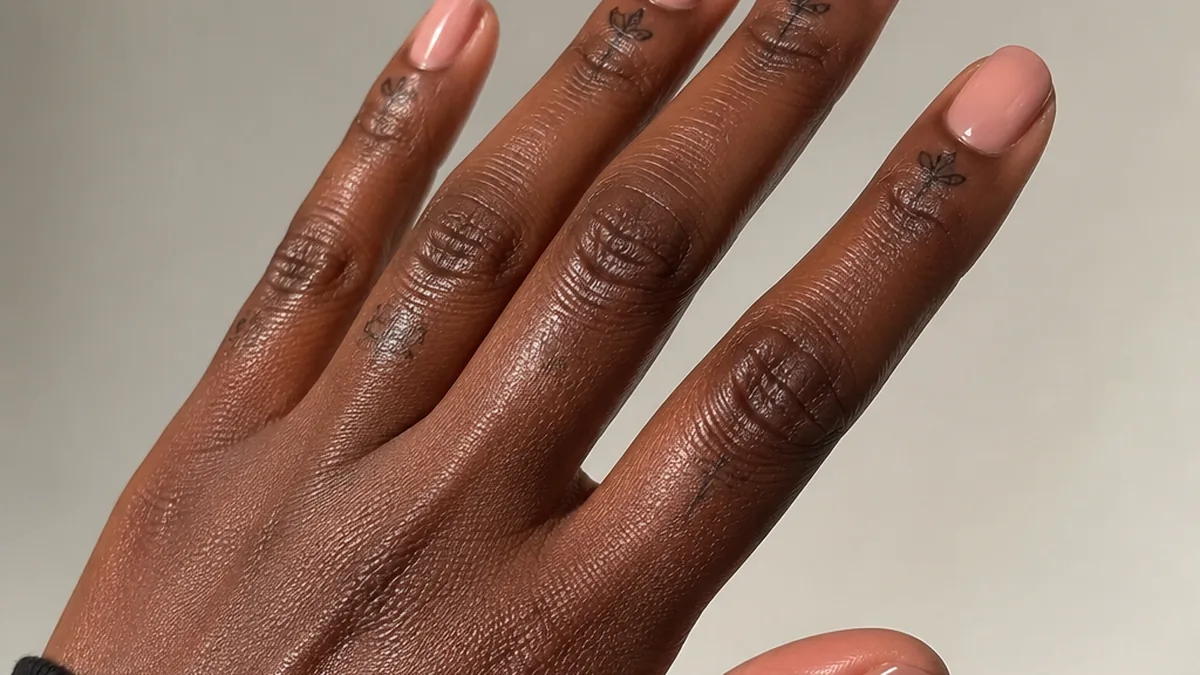
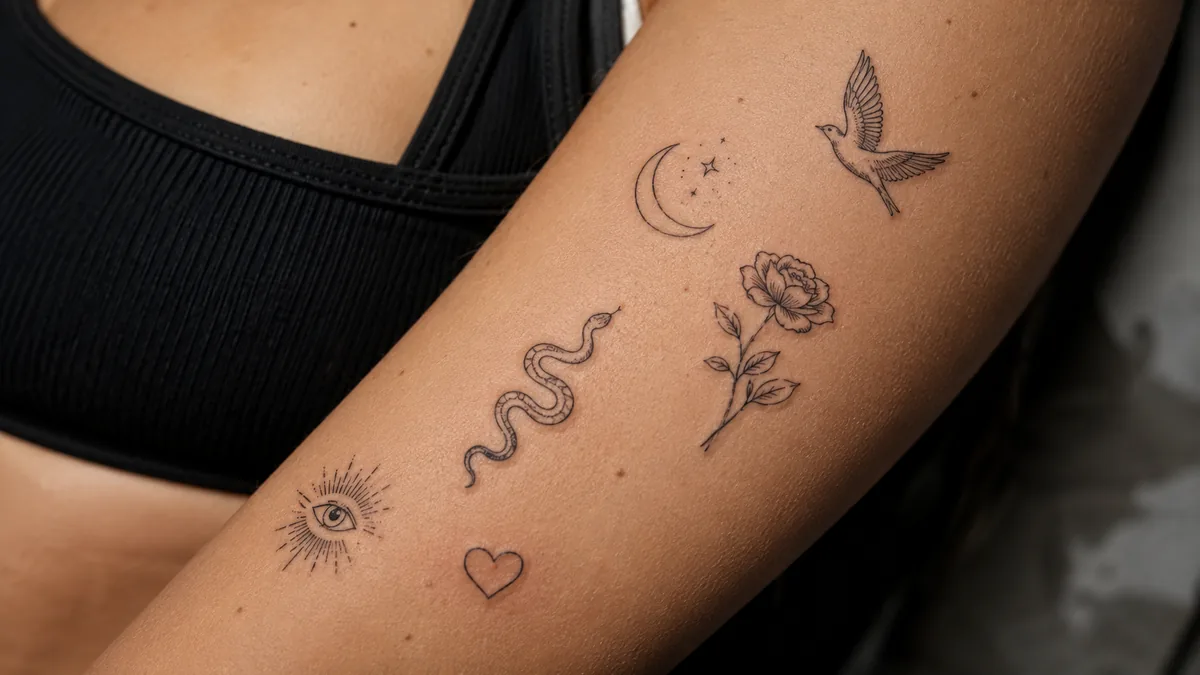
Fine line tattooing uses needles grouped tightly, often a single needle, to produce hair-thin outlines. These look stunning fresh and photograph beautifully, but they require low-wear placement to age well. They’re soft, delicate, and lean toward personal or intimate meaning. Think tiny botanical sprigs, portrait outlines, script. Highly detailed, subtle from across the room.
Bold line work uses thicker needle groupings and saturated black to build lines that hold through years of sun and skin movement. These read from across the room, even after a decade. Geometric lining, sacred geometry, mandalas, architectural shapes, sits between the two. The lines need to be precise and consistent or the symmetry breaks down fast. Each style has a different personality and a different conversation with aging.
Color vs. Black and Grey in Lining Tattoos
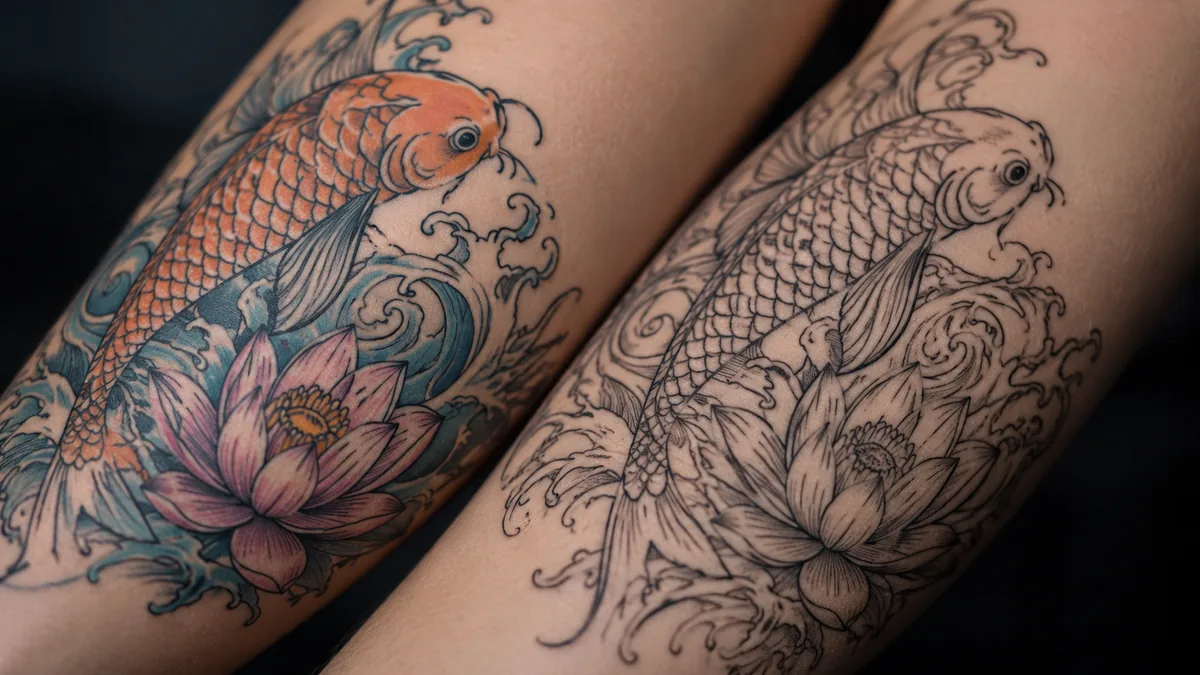
Most lining tattoos stick to black. Pure black outlines age more predictably than colored lines. Black ink oxidizes to a blue-green over time but stays readable. Colored outlines, especially fine lines in red, orange, or yellow, can fade significantly within five to ten years depending on sun exposure and skin tone. If you want the line to carry the full weight of the piece forever, black is the honest choice.
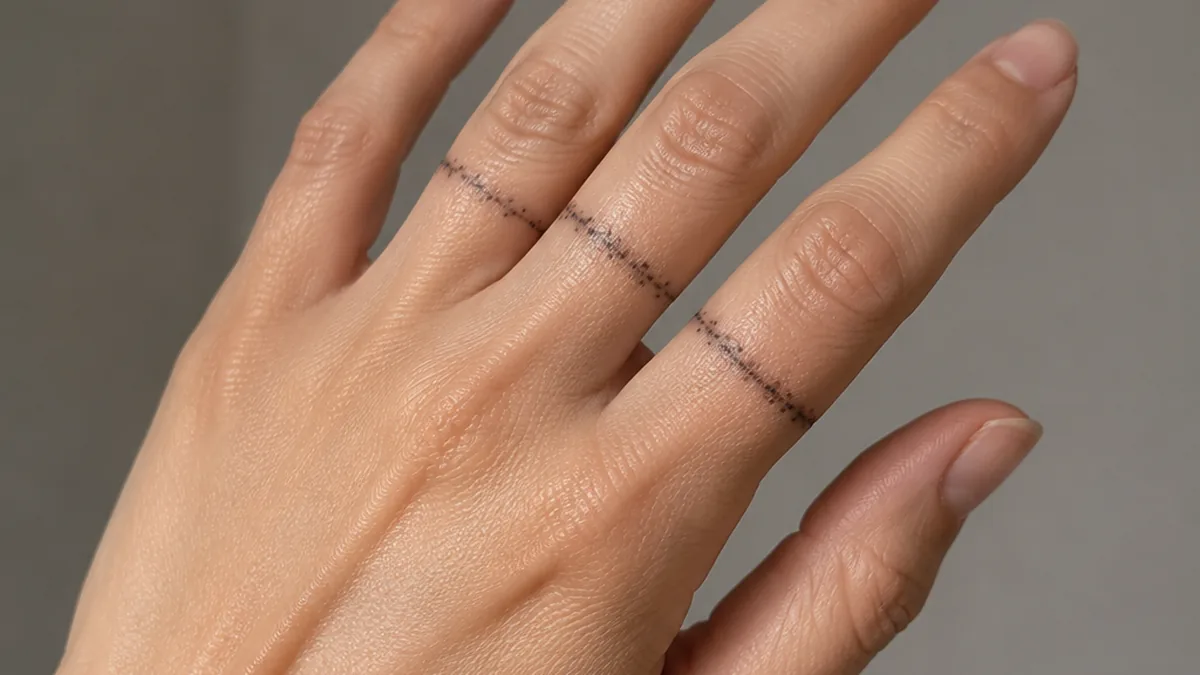
That said, a black outline with minimal color accents can be striking without muddying the concept. Some artists do full geometric lining in jewel tones with great results when ink quality is high and placement is smart. If you go that route, commit to aftercare and touch-ups. Colored fine lines on high-wear spots like fingers or wrists will blur and ghost faster than almost anything else.
Best Placements and How Lining Tattoos Age
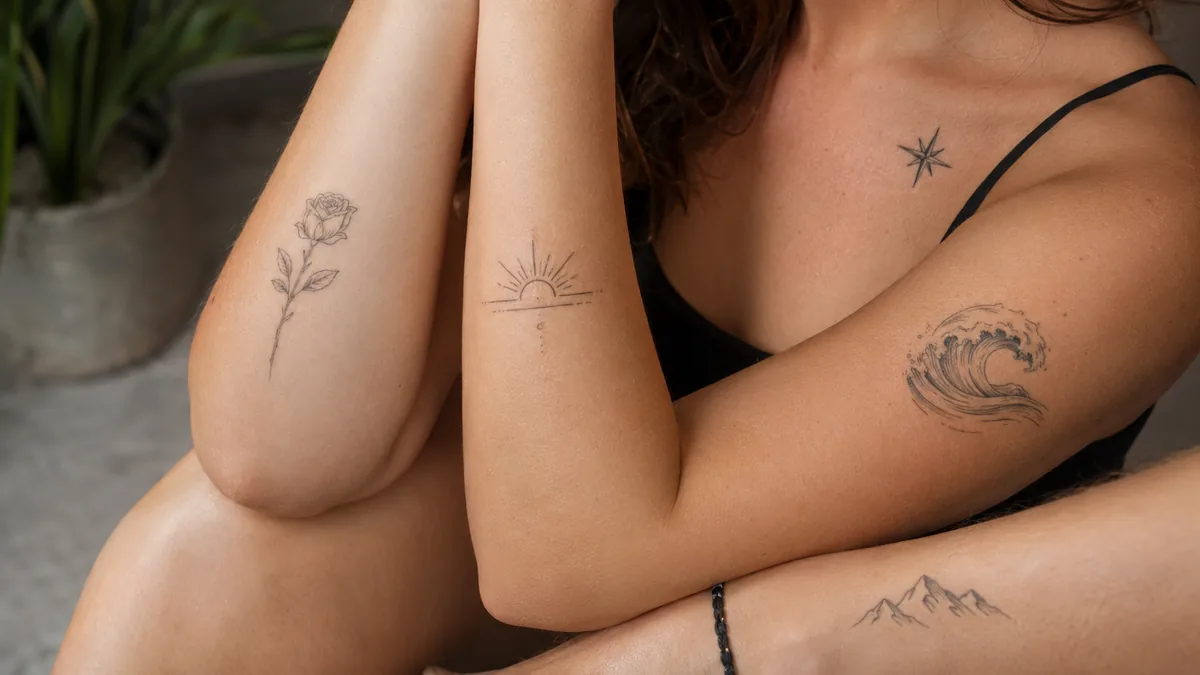
Fine line work belongs on low-friction, low-sun zones. Inner forearm, upper arm, sternum, back of the shoulder, thigh. Anywhere that doesn’t fold constantly or catch daily UV will let those thin lines stay crisp longer. Avoid fingers, feet, elbows, and knees for fine line. The skin folds and rubs too much. Blowout risk goes up on thin-skinned spots like wrists and ankles, especially with a heavy hand.
Bold line tattoos are more forgiving with placement. They can handle forearms, calves, and even hands better than fine line work because the ink mass holds its shape through moderate spread. Any lining tattoo, fine or bold, benefits from a solid touch-up at the one-year mark once the skin has fully settled. Plan for that gap and choose your artist accordingly.
Pain by Placement: What to Expect
Lining hurts more than shading for most people. The needle passes over the same path with sustained pressure to build a clean, unbroken line, versus the gentler repeated passes of whip shading. Fine line work on bony areas, ribs, sternum, spine, is especially spicy because the artist works slowly with a tight grouping and has zero room for flinching. One twitch can break the line.
Fleshier zones, outer thigh, upper arm, calf, are manageable for most people. Inner arm and inner thigh are sensitive due to thin skin and nerve density but not as rough as ribs or the ditch. If you’re planning a large geometric piece with a lot of continuous line work, plan shorter sessions. Fatigue in the skin shows up in the lines.
Who Gets Lining Tattoos and How to Make It Personal
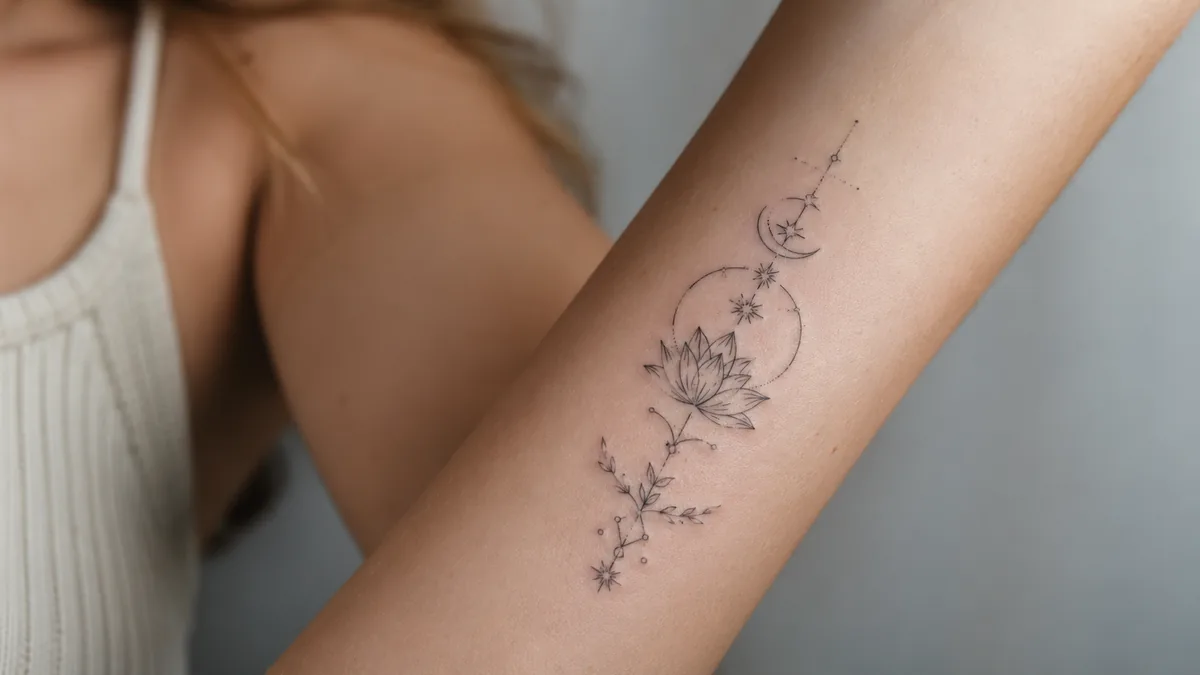
People drawn to lining tattoos tend to appreciate restraint. They want their ink to communicate something specific without noise. Architects, artists, people who think in systems and structures often gravitate toward geometric line work. People processing grief or marking a relationship often choose outline portraits or silhouettes for the same reason: the shape of something is enough.
Making it personal means choosing a subject with real weight and finding an artist whose line control you trust. Look at their healed work, not just fresh photos. Anyone can make a clean line look good straight off the machine. Seeing how it holds after a year tells you whether the depth and saturation are actually there. Bring reference, talk about scale, and be honest about placement if you want it to last.









