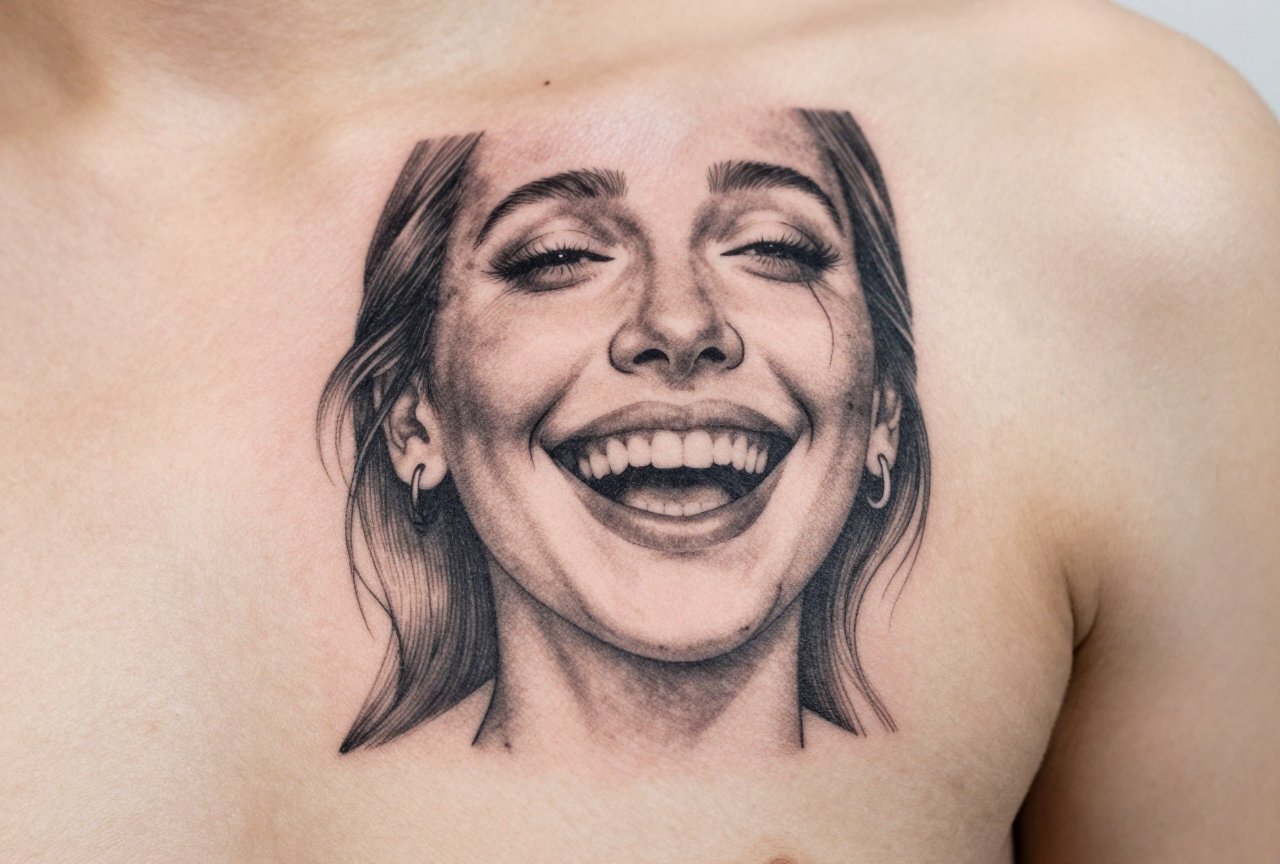
The laugh now cry later tattoo carries a powerful message about the dual nature of human existence. It represents the idea of enjoying life’s pleasures in the present while recognizing that pain and sadness may follow. Rooted in street culture and popularized by hip-hop, this design uses contrasting theatrical masks or faces to symbolize the emotional spectrum everyone experiences.
Symbolism & History
The imagery draws directly from the ancient theatrical concept of comedy and tragedy masks, known as the Sock and Buskin. These symbols have represented the full range of human emotion for thousands of years. In tattoo culture, the phrase and imagery gained massive traction through West Coast hip-hop in the 1990s, particularly with the album “Laugh Now, Cry Later” by rapper Ice Cube in 2006 and earlier references throughout rap culture. The design speaks to a philosophy of living fully in the moment, often emerging from communities where tomorrow was never guaranteed. The symbolism resonates across demographics because it captures a universal truth: no emotional state lasts forever.
- The smiling face represents celebration, confidence, and living without fear
- The crying face embodies regret, consequences, and the pain that often follows reckless choices
- Together they illustrate the balance between action and consequence, pleasure and responsibility
- The theatrical origin connects personal struggle to timeless human narratives
Common Variations & Styles
Artists interpret this concept through numerous visual approaches, each carrying slightly different energy. Traditional American style uses bold lines and limited color palettes for a timeless look. Chicano black-and-grey realism produces stunningly detailed faces with photographic depth, often incorporating religious elements like praying hands or rosaries. Some collectors choose split-face designs where one half smiles and the other weeps, merged into a single head. Others prefer two separate masks facing each other, or one above the other in a vertical composition. Script-heavy versions incorporate the words “Laugh Now” and “Cry Later” directly into the design, sometimes with additional phrases like “Smile Now, Cry Later” or the Spanish equivalent “Sonríe Ahora, Llora Después.”
- Realistic portrait style with dramatic lighting and shadow
- Traditional or neo-traditional with bold outlines and saturated colors
- Minimalist line work for subtle, contemporary aesthetics
- Clown or jester faces replacing classical theatrical masks
- Incorporation of hourglasses, clocks, or dice to emphasize time and chance
Best Placements
The dual nature of this design makes it adaptable to many body locations depending on desired visibility and scale. Large back pieces allow for elaborate scenes with full background elements like cityscapes or clouds. The outer upper arm provides excellent canvas for medium-sized compositions with strong readability. Chest placements, particularly over the heart, add emotional weight to the symbolism. Forearms and calves work well for elongated vertical designs with stacked faces. Hands and fingers accommodate smaller, simpler versions though these require more frequent touch-ups due to wear. The neck remains a bold choice that signals commitment to the philosophy behind the ink.
- Upper arm/shoulder for balanced medium-scale compositions
- Forearm for personal visibility and daily reminder
- Chest for emotional significance and larger detailed work
- Back for expansive narrative scenes with multiple elements
- Thigh for substantial pieces with room for intricate detail
Who Chooses This Tattoo / Personal Meanings
This design attracts diverse individuals unified by lived experience rather than demographic. Many who have survived difficult upbringings, incarceration, or street life choose this tattoo as honest documentation of their journey. The phrase acknowledges that survival sometimes requires emotional armor, enjoying moments of peace while understanding their fragility. Others select it after significant loss, honoring the happiness they once shared with someone now gone. Some interpret it as motivational, a reminder to seize opportunities before circumstances change. The tattoo also appeals to performers and artists who literally live between public celebration and private struggle. For many, it represents mature acceptance rather than cynicism, the wisdom of appreciating good times without naive denial of life’s hardness.
- Individuals with lived experience in challenging environments
- Those processing grief while honoring joyful memories
- Performers navigating public success and private difficulty
- People embracing carpe diem philosophy with clear-eyed awareness
- Anyone acknowledging that growth often comes through contrast
Similar Symbols
Several related designs explore comparable themes of duality and impermanence. The comedy and tragedy masks alone, without the phrase, offer a more classical theatrical reference. Yin-yang symbols address balance but with less emotional specificity. Memento mori imagery, including skulls with flowers or hourglasses, similarly reminds viewers of life’s temporary nature. Japanese Buddhist concepts of mujō (impermanence) appear in cherry blossom and wave tattoos. The phrase “This too shall pass” captures temporal change without the emotional polarity. Clown tattoos, particularly crying or evil clowns, explore the same mask concept through different cultural lenses. Some collectors combine multiple symbols, placing laugh now cry later imagery alongside roses, clocks, or religious iconography to personalize the message.
- Classic theater masks without accompanying text
- Memento mori and vanitas imagery
- Yin-yang and balance-oriented symbols
- Crying clown or jester designs
- “This too shall pass” script tattoos
Final Thoughts
The laugh now cry later tattoo endures because it refuses easy answers. It does not promise that joy wins over sorrow, or that suffering leads inevitably to wisdom. Instead, it sits honestly with life’s contradictions, honoring both the party and the hangover, the triumph and the cost. For those who wear it, this design often marks not despair but hard-won perspective, the kind that comes only from experiencing both sides fully. Whether rendered in meticulous black-and-grey or bold traditional color, it remains one of tattoo culture’s most emotionally direct statements about what it means to be human.