
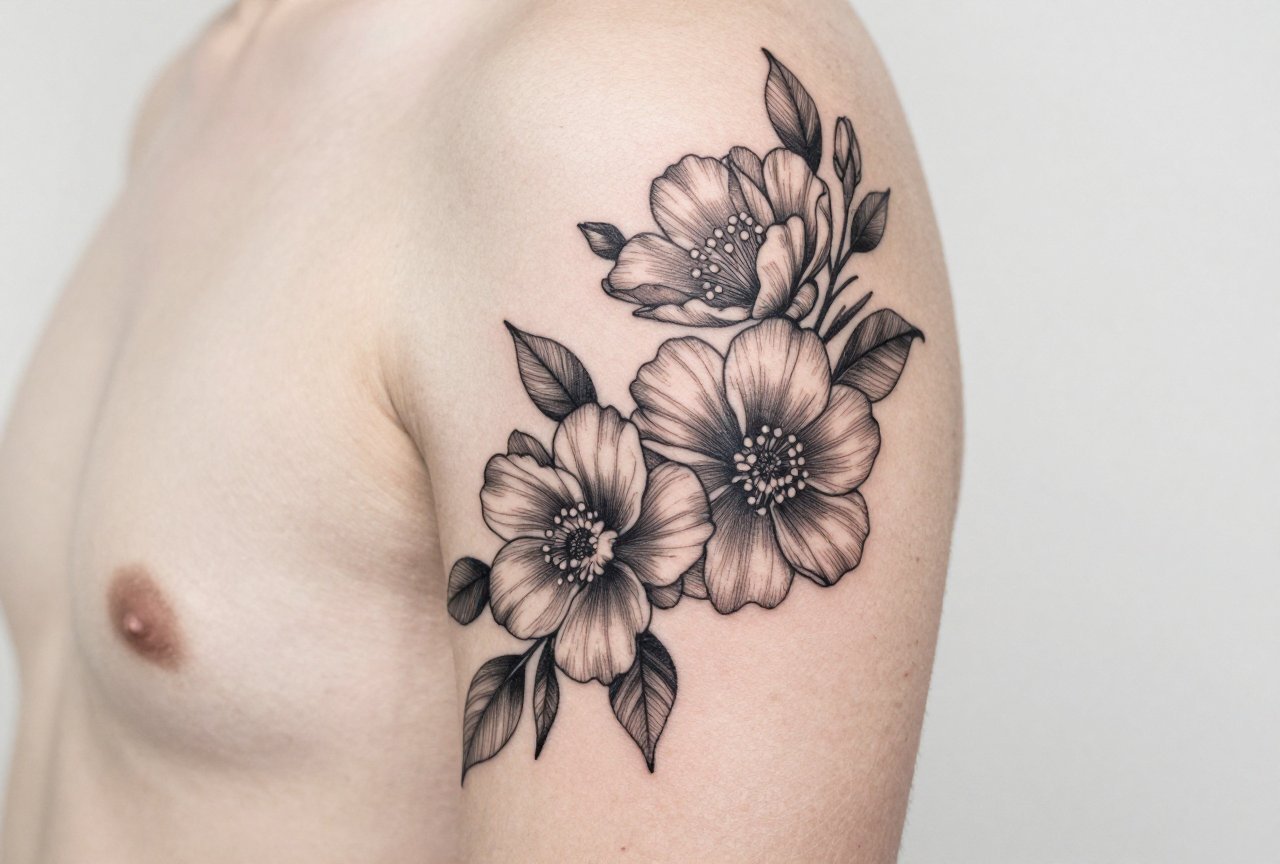
Flowers have been one of the most enduring subjects in tattoo art, carrying meanings that span love, loss, rebirth, and the fleeting nature of life. What a flower tattoo means depends on the type of bloom, its color, cultural context, and the wearer’s own story. From the red rose to the lotus rising from mud, floral tattoos let people externalize complex emotions through imagery that has resonated across every civilization that has put needle to skin.
Symbolism and History
Flower symbolism in body art goes back thousands of years. Ancient civilizations used botanical imagery in rituals and personal adornment long before Western fine-line tattooers made it their calling card. The language of flowers, floriography, became especially codified during the Victorian era, when specific blooms communicated sentiments that social convention prevented from being spoken aloud. That coded communication translated naturally into permanent body art.
Different cultures layered their own readings onto the same plants. In Japanese tattoo tradition, cherry blossoms represent samurai acceptance of mortality and the beauty of impermanence. Hindu and Buddhist iconography treats the lotus as an emblem of spiritual awakening, purity emerging from difficult circumstances. Western tattooing associated roses with romantic love, lilies with innocence and renewal, and poppies with grief for fallen soldiers. The cyclical nature of flowers blooming, fading, and returning made them powerful metaphors for growth and loss across virtually every culture that studied the natural world carefully.
Common Styles
Artists and collectors have developed distinct approaches to floral work. The style you choose often shifts the symbolic weight of the bloom itself.
- Traditional American: Bold outlines, a limited palette, and iconic imagery like roses paired with daggers or anchors. The aesthetic emphasizes loyalty and working-class resilience in a way fine line never quite matches.
- Japanese Irezumi: Peonies symbolize wealth and bravery, often paired with koi or dragons in large compositions that tell layered stories. The style has centuries of technical refinement behind it.
- Fine Line and Botanical Illustration: Scientifically accurate renderings celebrate a specific species, often chosen because that plant grew in your grandmother’s garden or bloomed during a significant year.
- Black and Grey Realism: Photographic detail without color creates a somber, memorial quality. Lilies, chrysanthemums, and roses all read well in this approach when the subject deserves that weight.
- Watercolor: Splashes of unbounded color suggest emotional intensity and rejection of rigid structure. The technique suits wearers celebrating personal freedom or artistic identity.
- Minimalist and Single Line: Stripped-down designs focus on essential form. The restraint carries its own weight, suggesting simplicity and quiet conviction.
- Pressed or Dried Flower: Deliberately desaturated imagery evokes nostalgia and the beauty found in things past their peak, a quality that grows more interesting as the tattoo ages.
Placement Options
Where a flower lives on the body shapes how it reads and how you experience it over time. These placements have become closely associated with floral work for practical and symbolic reasons.
- Shoulder and Collarbone: The natural curve complements organic flower shapes. Works well for designs that should be visible without demanding attention.
- Forearm and Wrist: High-visibility spots that serve as daily reminders. Wrist flowers often carry self-love or resilience meanings, worn like permanent jewelry.
- Ribcage and Side: Generous canvas for larger compositions like vines or bouquets. The proximity to the heart lends extra emotional weight to memorial pieces.
- Thigh and Hip: Space for detailed large-scale work that remains easily concealable in professional settings.
- Back and Spine: The vertical axis suits stemmed flowers and cascading arrangements. Spine placement tends to read as personal growth and standing through difficulty.
- Behind the Ear and Neck: Delicate, intimate spots for private meaning, often chosen for small blooms representing something whispered rather than declared.
Who Gets This Tattoo
Flower tattoos cross every demographic. Many wearers choose birth flowers representing children, partners, or parents, building permanent botanical family portraits. Survivors of difficult periods often select flowers that bloomed during their hardest seasons, literalizing the metaphor of growth through adversity. Gardeners and nature-focused people tattoo species they cultivate, marking a lifelong relationship with a particular plant.
Those who have lost someone commonly choose funeral flowers or blooms connected to the deceased, creating portable memorials that keep a connection alive. Some collectors pursue flower tattoos purely for aesthetic reasons, which needs no deeper justification. The gendered associations of floral tattoos have shifted considerably. Men have increasingly moved toward flowers as symbols of emotional openness, cultural connection, or rejection of rigid masculine performance scripts.
The most considered flower tattoos emerge when you develop personal significance beyond generic symbolism, arriving at a design that resists easy interpretation by outsiders while remaining deeply felt by the person wearing it.
Related Symbols
Collectors drawn to flower tattoos often explore adjacent imagery that extends botanical meanings into richer combinations.
- Butterflies and Moths: Share themes of change and fragility. Pairing with flowers emphasizes the pollinator relationship.
- Skulls: The memento mori tradition combines flowers with skulls to address impermanence directly. Roses and wilting blooms work especially well in this pairing.
- Snakes: Wrapped through floral compositions, serpents introduce danger, wisdom, or temptation, creating tension between beauty and threat.
- Bees and Hummingbirds: These pollinators emphasize productivity, community, and the sweetness of effort alongside flowers.
- Clocks and Hourglasses: Timepieces paired with wilting flowers address mortality and urgency in a way that is impossible to ignore.
- Herbs and Medicinal Plants: Lavender, sage, and mugwort carry protective and calming associations for wearers drawn to folk traditions.
Choosing the Right Species
The species you choose matters more than most first-time collectors realize. A rose is not just a rose: a red rose means romantic love, a yellow rose means friendship, a black rose signals loss or grief, and a white rose points to innocence or new beginnings. Similarly, sunflowers signal joy and loyalty, peonies suggest wealth and good fortune in East Asian traditions, and wildflowers often represent freedom from convention. If you have a specific flower in mind, spend time researching its cultural and historical associations before committing. You may find layers of meaning you did not know existed, or you may rule out a flower because its symbolic history conflicts with what you are trying to express.
Many collectors choose their birth flower, the flower traditionally associated with their birth month, as a natural starting point. January gets carnations and snowdrops. February gets violets and primroses. The system exists in multiple traditions and a simple search will surface the options for your birth month. Starting there gives you a personal anchor that is harder to explain away as generic.
Final Thoughts
Flower tattoos have lasted because they offer infinite variation within universal recognition. Rendered in bold traditional color or whisper-fine linework, whether marking grief or celebrating a simple love of beauty, floral designs connect wearers to some of the oldest human traditions in tattooing. The most satisfying pieces come from genuine collaboration between collector and artist, matching specific species, styles, and placements to stories worth making permanent. The design you land on should feel specific enough that no one else would have chosen it in exactly the same way.









