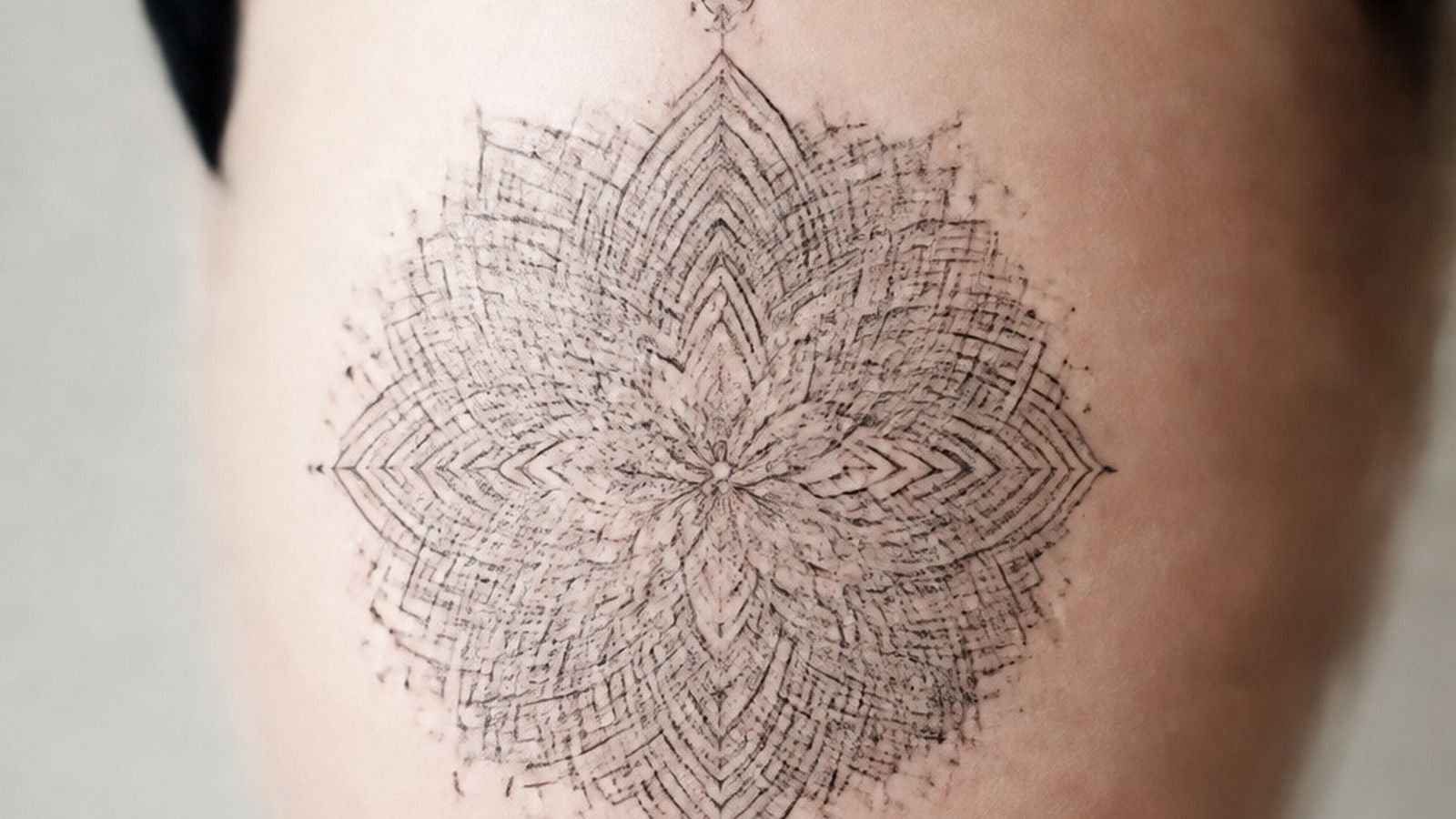
Modern mandala art stays crisp when you give the pattern enough skin, contrast, and a placement that can wear it. I’ve watched people bring in a tiny, screenshot-perfect design, then realize it’ll turn to soup on a wrist. Start cleaner. Your tattoo will thank you.
- Start with a crisp geometric mandala tattoo
- Pick hard blackwork mandala line density
- Place the mandala along your sternum
- Choose a new mandala with negative space
- Map radial symmetry around your ankle
- Build colorful mandala tattoo accents carefully
- Use creative mandala art drawing references
- Balance dotwork petals with bold outlines
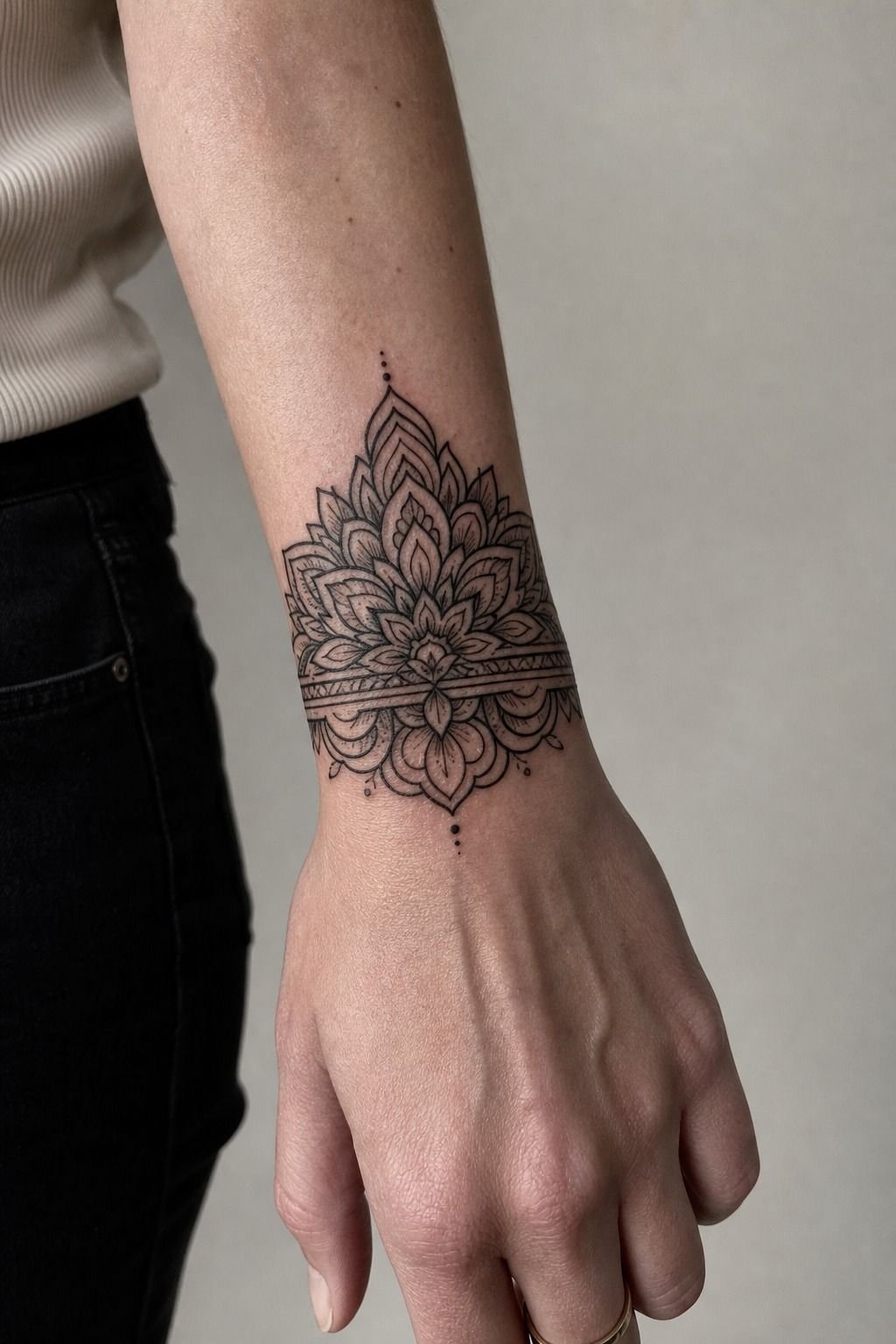
- Match the mandala to your wrist
- Plan a mandala sleeve focal point
- Anchor fine lines before adding color
- Select symbols that sharpen personal meaning
- Compare pain across mandala tattoo placements
- Ask your artist for stencil alignment
- Keep repeated petals clean and readable
- Protect fresh mandala ink during healing
- Check healed contrast before expanding details
- Pair mandala geometry with botanical elements
- Budget custom modern mandala tattoo sessions
1Start with a crisp geometric mandala tattoo
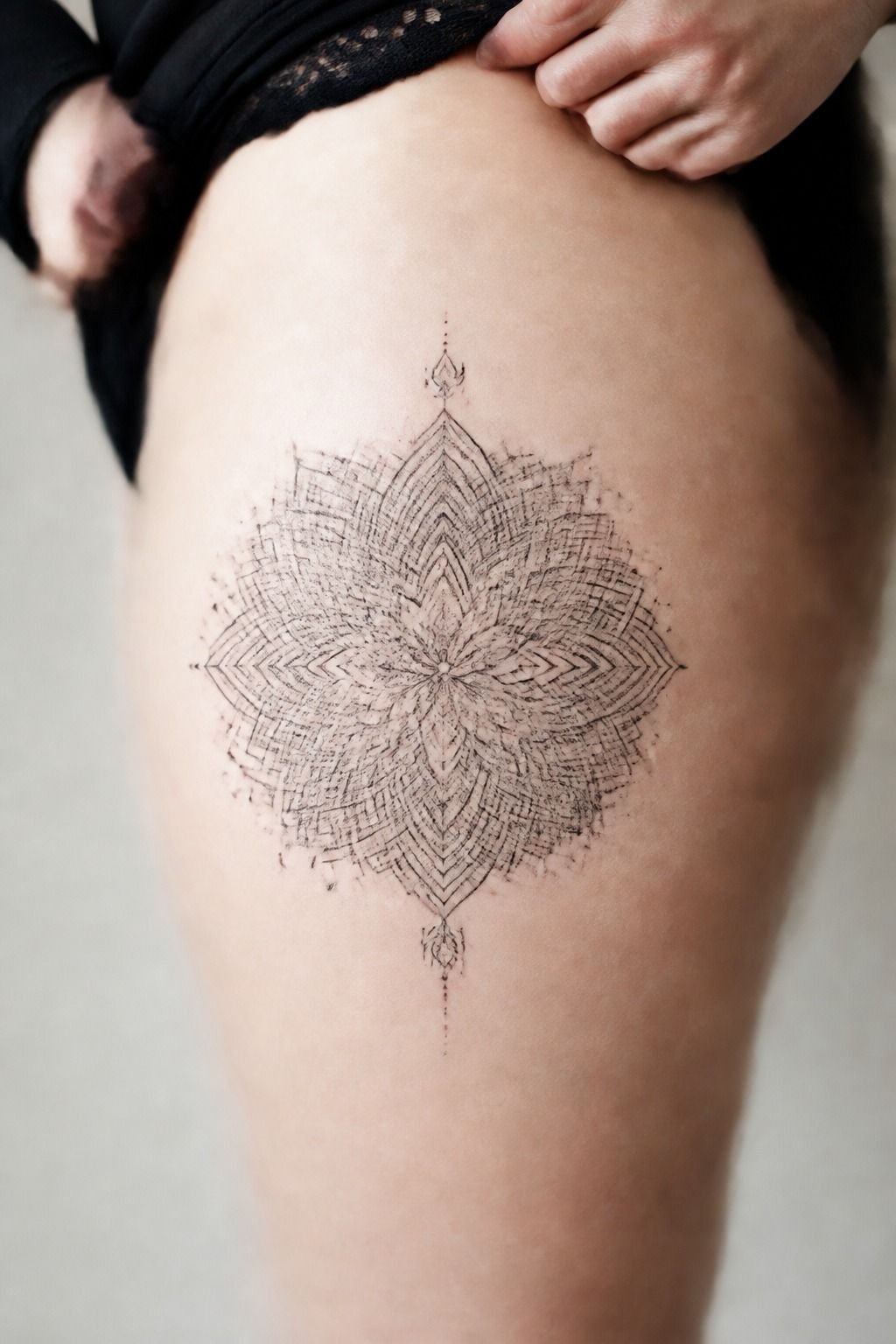
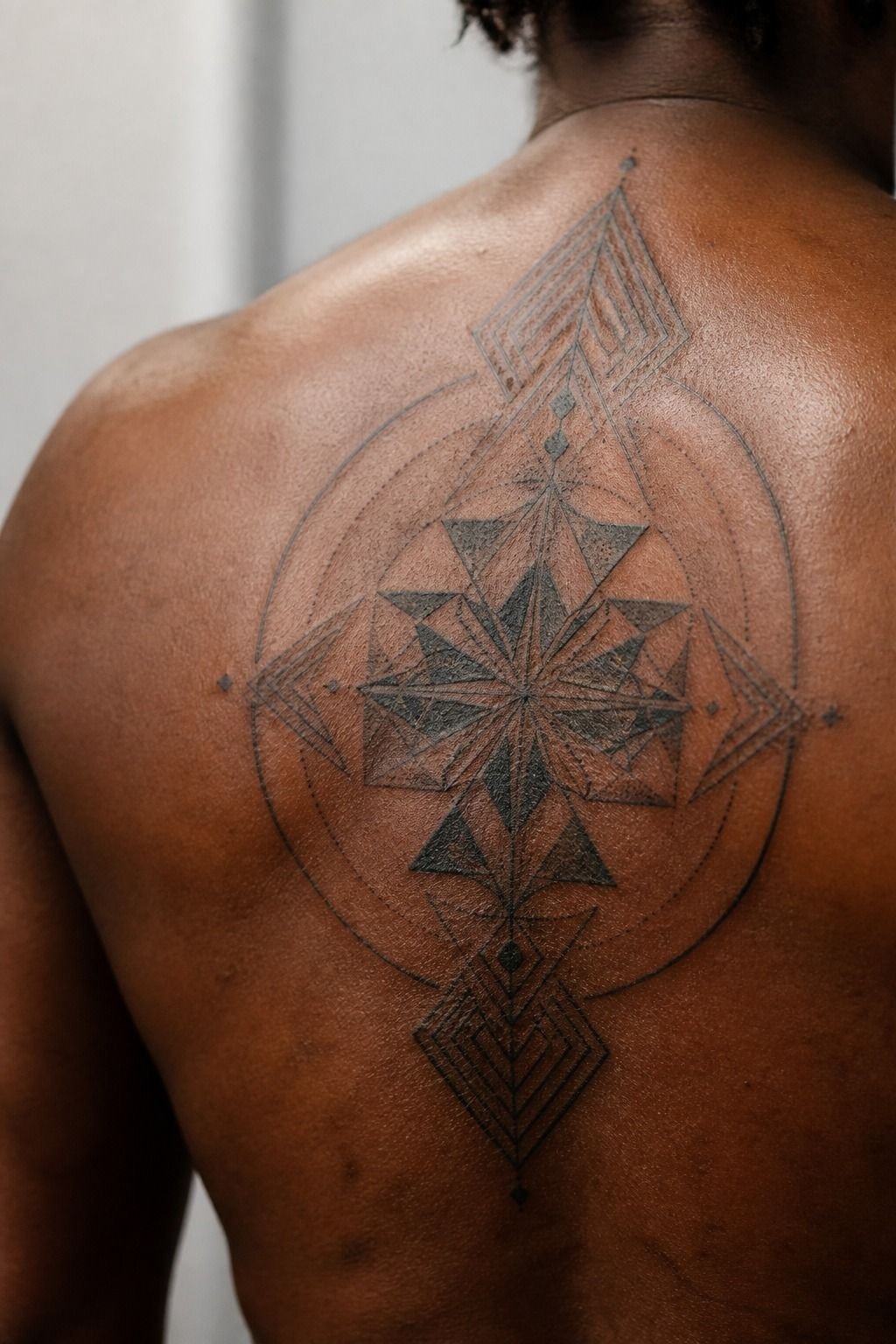
Begin with one clear center point and build outward in even rings. On a thigh, you’ve got room for a geometric mandala tattoo with petals, diamonds, and black negative-space breaks that read from across the room.
Keep the smallest repeated shapes at a size your artist can pull in one clean pass. I’d rather see you use a 4-inch design with breathing room than squeeze six rings into 2 inches. The tiny version may look delicate today, but it won’t stay that way.
Ask for a stencil before you commit. Your thigh is a low-wear zone, so it’s a solid first choice if you want clean, modern symmetry that ages cute on you.
2Pick hard blackwork mandala line density
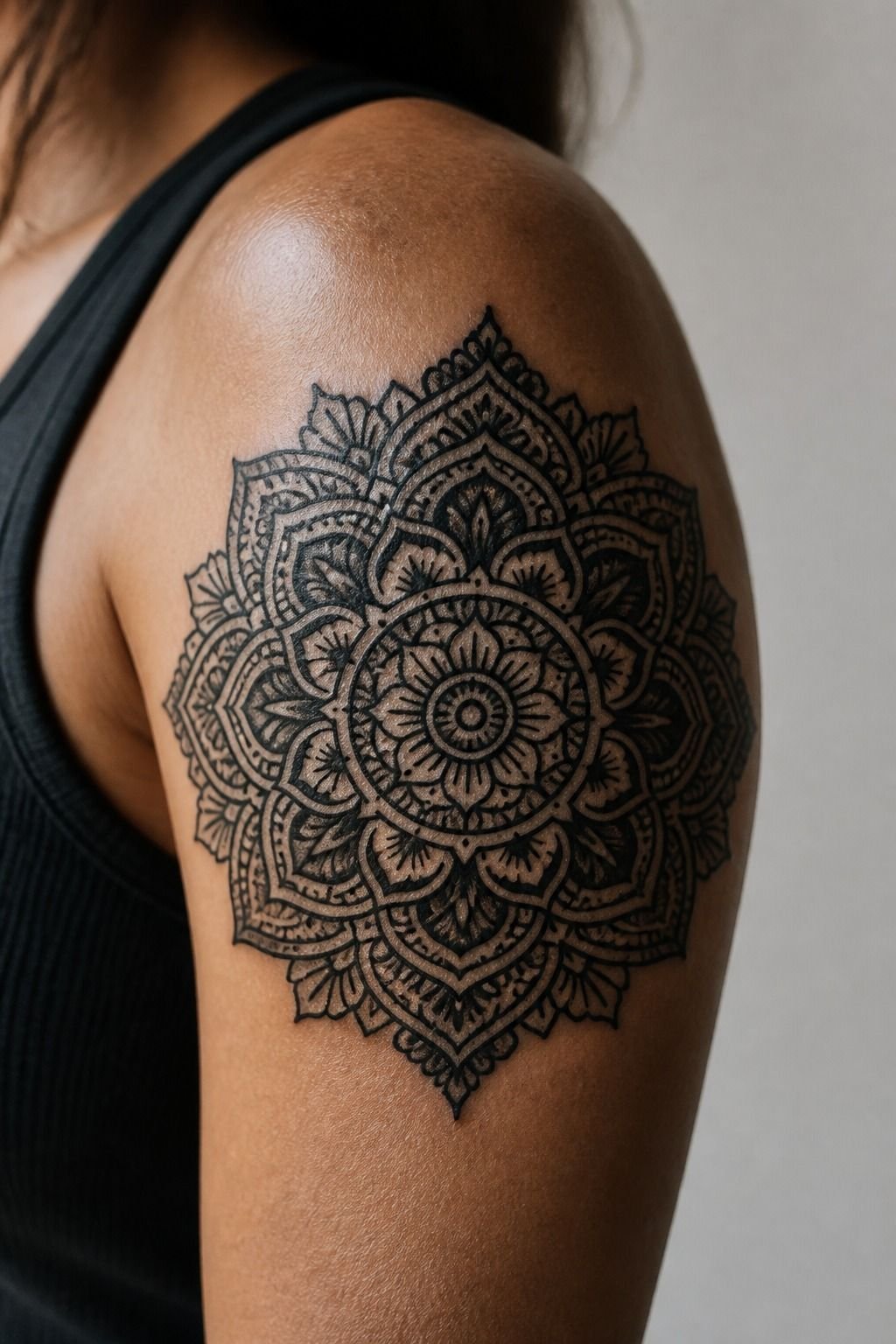
Hard Mandala Art needs contrast, not a thousand nervous little marks. Pick bold outer lines first, then let dotwork and fine details sit inside those boundaries. Dynamic Black tattoo ink gives blackwork the saturated, solid look you want.
Your artist should vary line weight. Thick outlines hold the shape while thinner interior lines add rhythm, so the whole piece doesn’t heal flat.
But don’t ask for every petal to be single needle. That’s where a clean concept gets chewed up.
I’d skip packed black behind every section. Negative space makes the black look darker, and your skin gets a chance to breathe.
3Place the mandala along your sternum
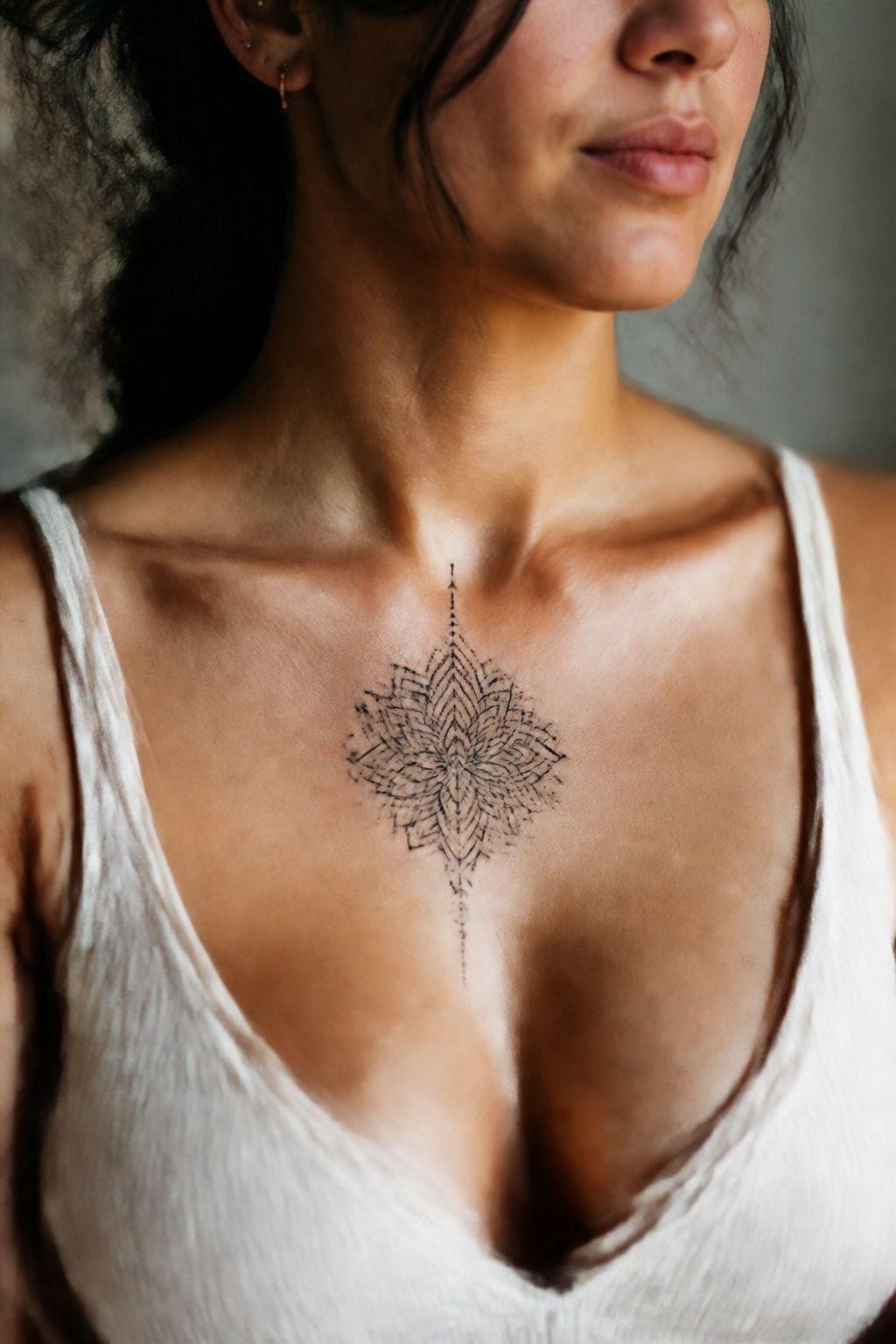
A sternum mandala looks best when the center follows your actual midline, not the center of a reference photo.
4Choose a new mandala with negative space
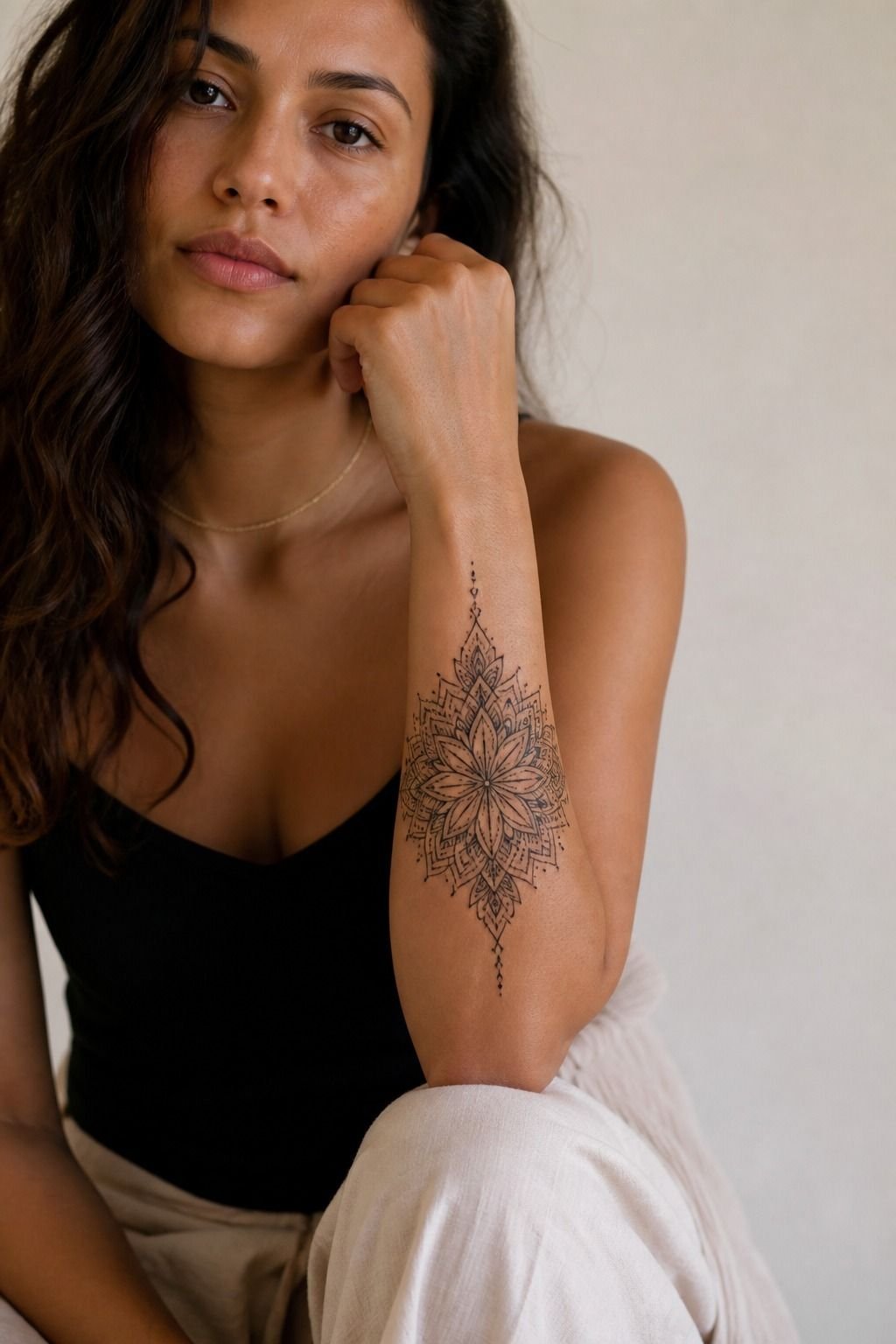
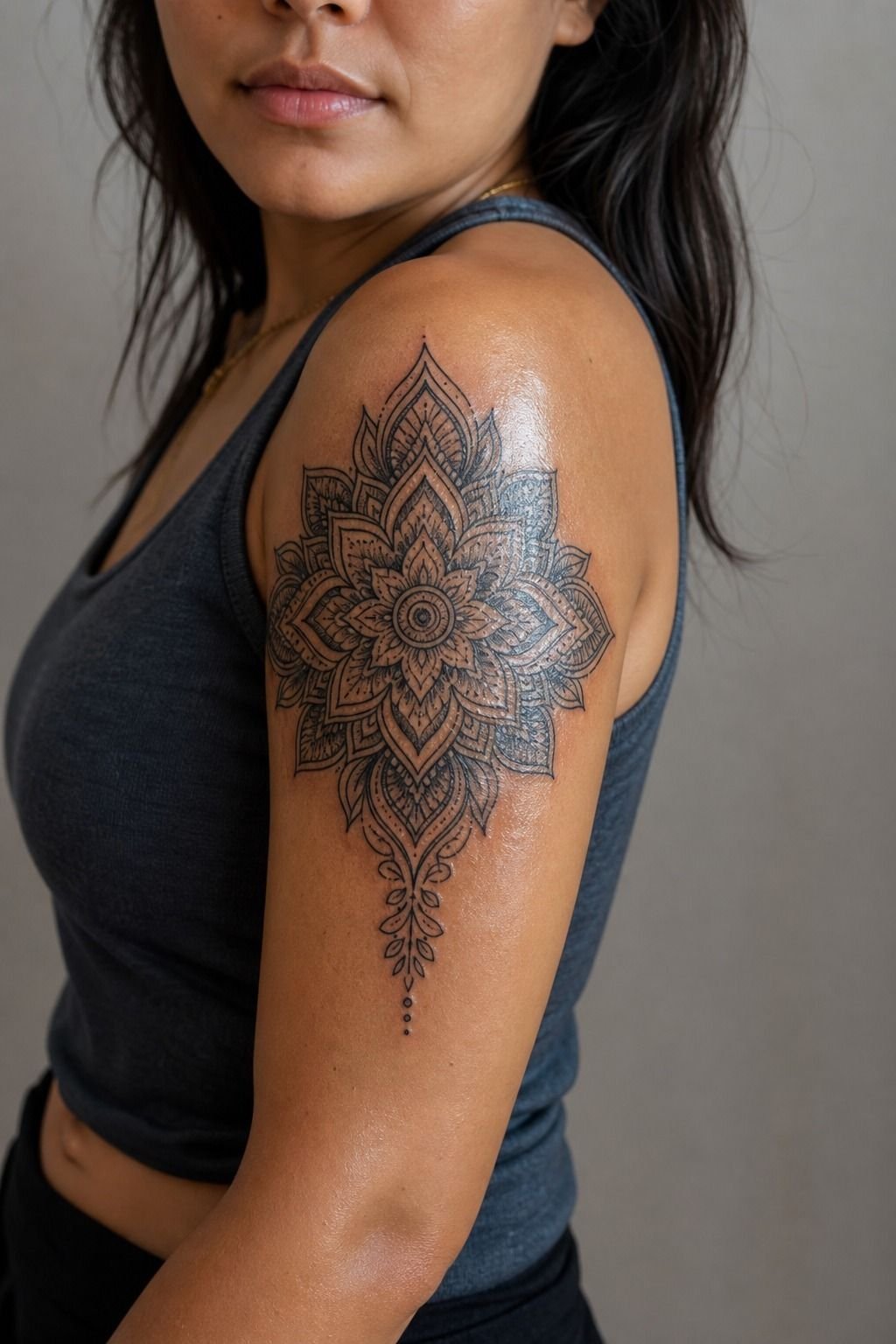
New Mandala Art should use blank skin as part of the composition. On an inner forearm, that means leaving clean channels between leaf shapes, petals, and dotwork rings instead of filling every gap.
Try a 3- to 5-inch vertical flow with a single-needle needle grouping only for the smallest interior details. Your forearm moves constantly, so wide negative space keeps the pattern airy and readable when your wrist bends.
I’ve seen clients chase an all-black reference and regret it once the details close up. But a mandala with calm open skin beside the blackwork heals softer and stays legible longer. That’s the better call.
For more placement references, look through this geometric mandala tattoo guide.
5Map radial symmetry around your ankle
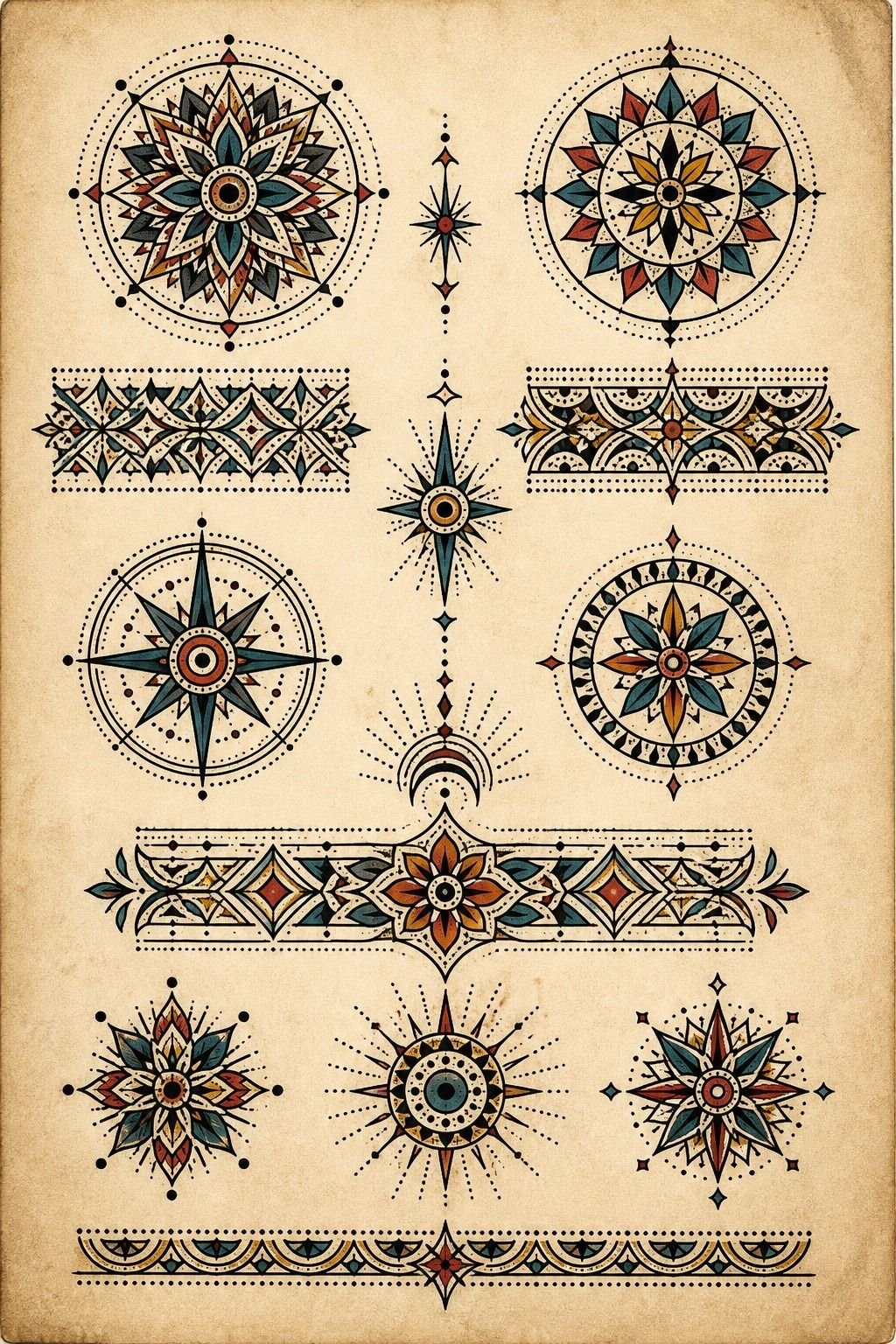
Before you tattoo an ankle mandala, draw the radial pattern on paper and decide where the circle can break.
6Build colorful mandala tattoo accents carefully
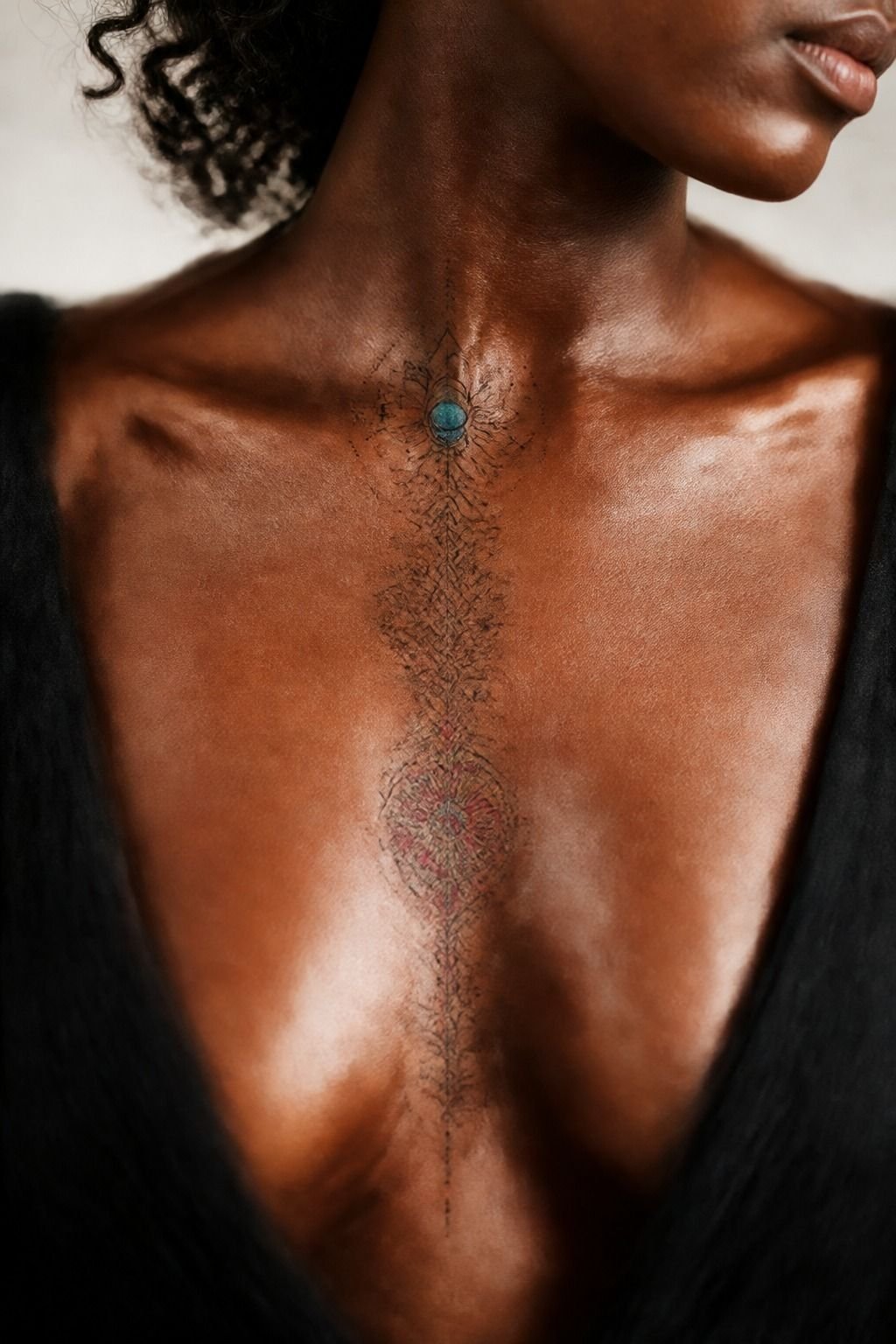
Colorful Mandala Design works when black linework does the heavy lifting. Start with crisp black outlines, then add one or two saturated accents inside selected petals, such as red, cobalt, or warm ochre.
On deep skin, I’d choose Eternal Ink colors only after your artist talks through undertone and healed contrast. You need enough value difference for color to show, not a pale wash that disappears after the first few weeks.
Color packing is the spiciest part, and overworking the skin can leave a patchy heal. Keep the palette disciplined. One bright red ring can look captivating; seven competing colors usually look confused.
7Use creative mandala art drawing references
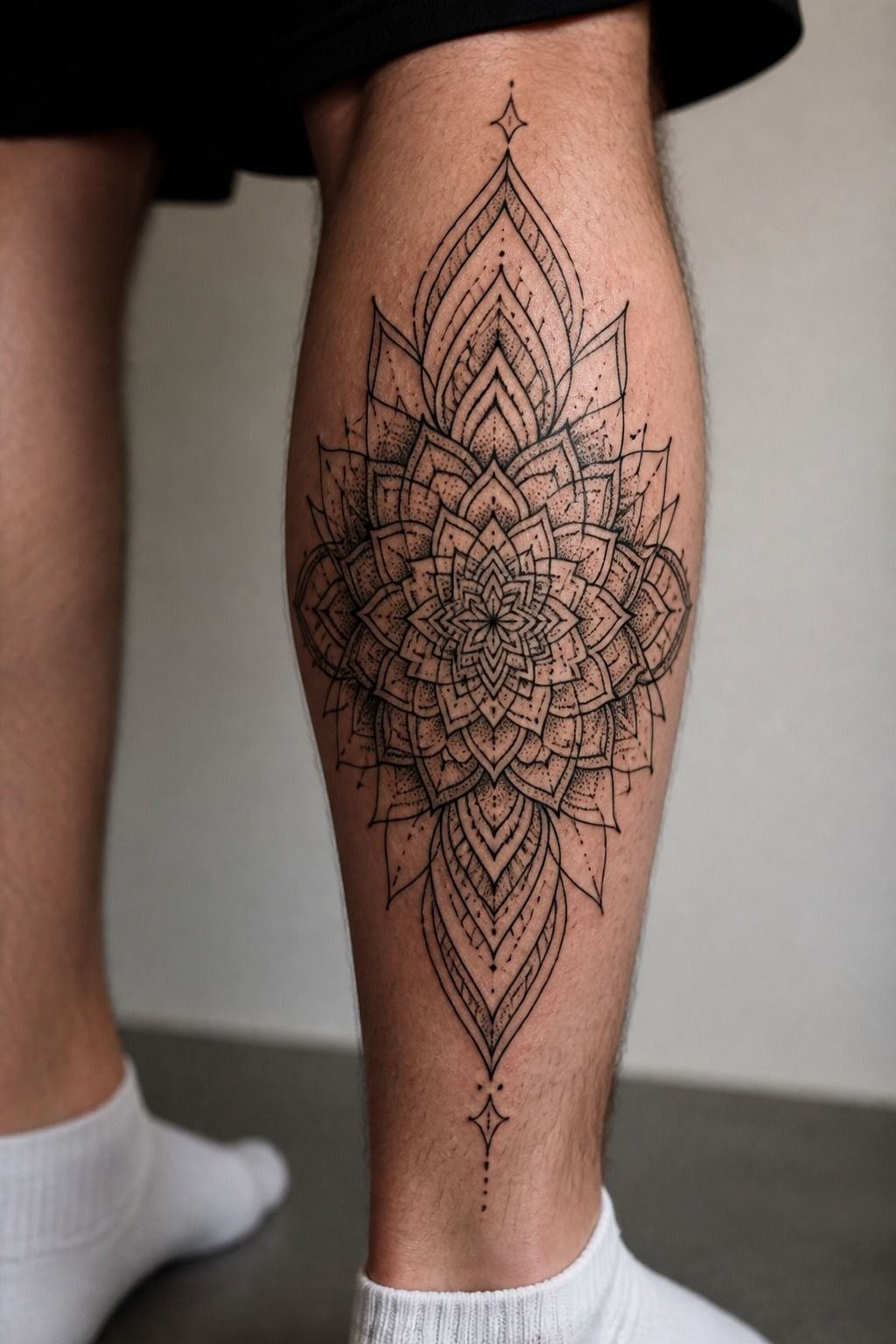
Mandala Art Drawing Creative references are useful for structure, not for copying somebody else’s exact tattoo.
8Balance dotwork petals with bold outlines
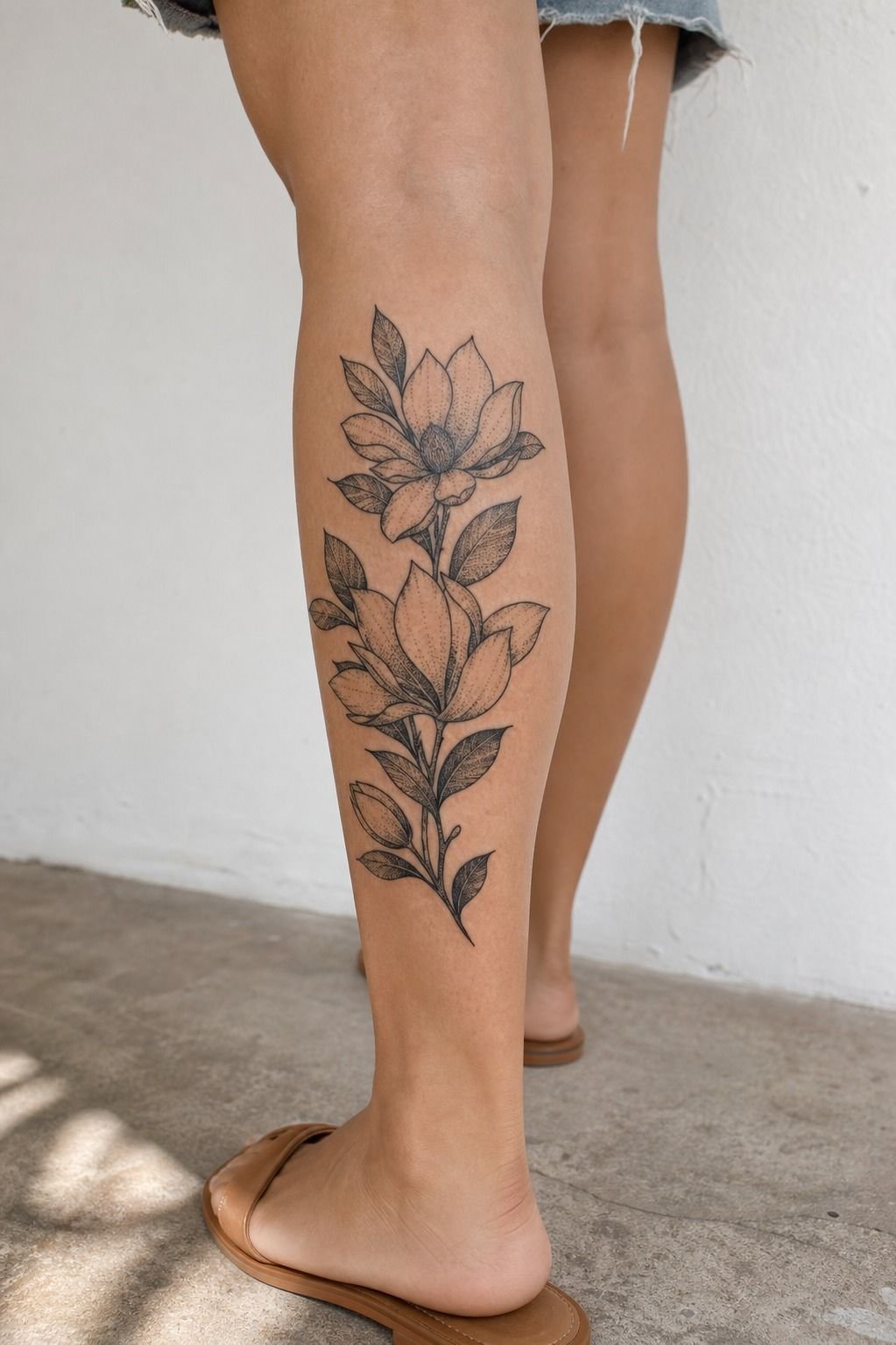
Dotwork petals need a sturdy outline somewhere nearby. Put the soft pepper shading inside larger petals, then frame the whole mandala with a bolder contour so it won’t heal into grey fuzz.
A grey wash set can make the center feel soothing and dimensional without turning every section black. Your artist should whip shade lightly, building texture without scratching at the skin fifty times.
Don’t make all petals equally dark. The eye needs a route through the design. I’d push the contrast at the center and outer rim, then keep the middle rings more open.
That’s how it reads clean from a few feet away.
9Match the mandala to your wrist
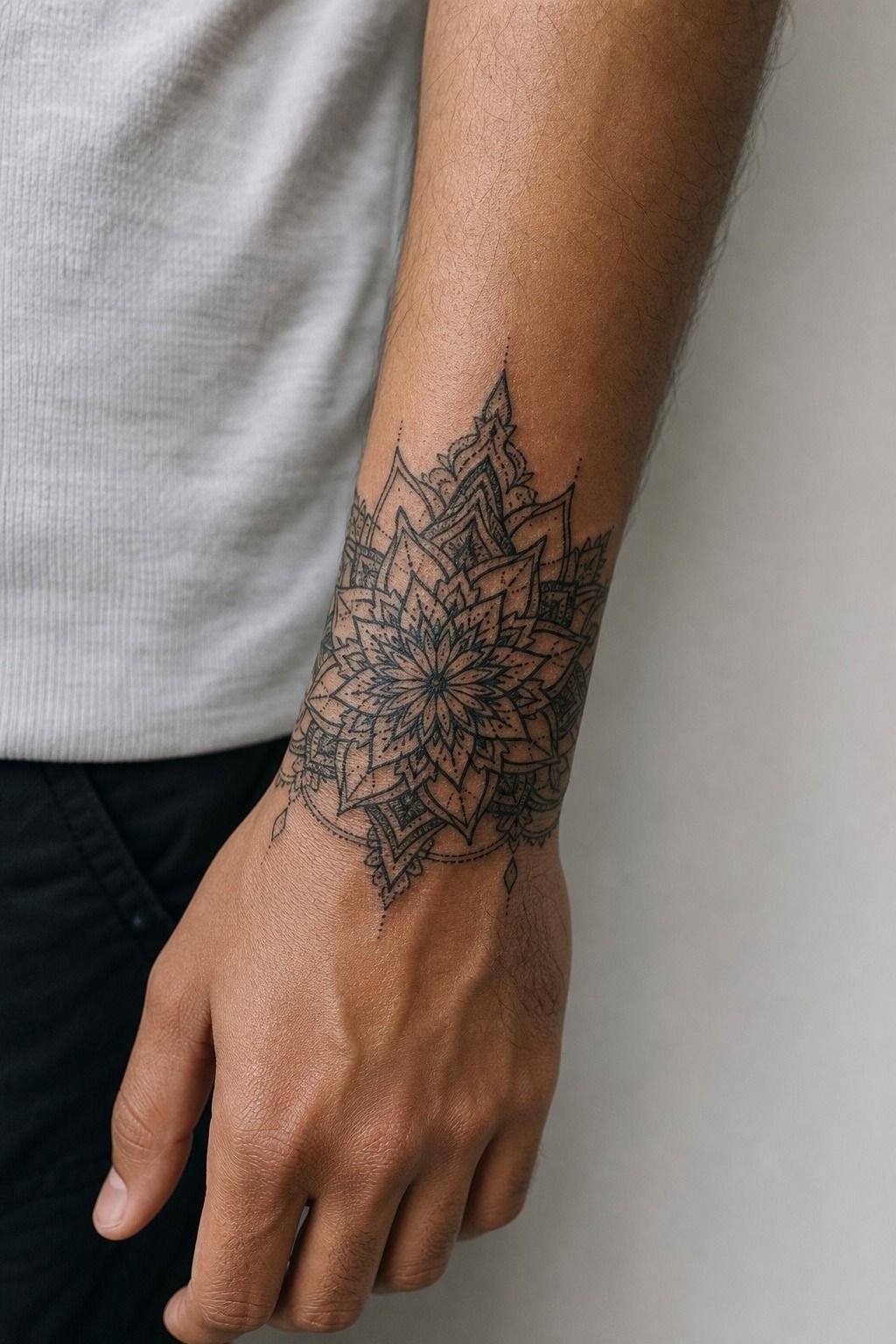
Your wrist isn’t a flat bracelet stand. Match the mandala to the narrow top plane, and allow the side details to taper toward the tendons. A centered 2.5-inch design usually has more room to breathe than a dense wraparound cuff.
Use Spirit Classic stencil transfer and look at it with your hand relaxed. If the outer petals disappear into the side of your wrist, shrink the number of rings, not the whole design.
That size on a wrist is gonna mush out if every segment is micro-detail. Bump it up the forearm if you want more geometry. Fingers and wrists are for people who accept touch-ups.
10Plan a mandala sleeve focal point
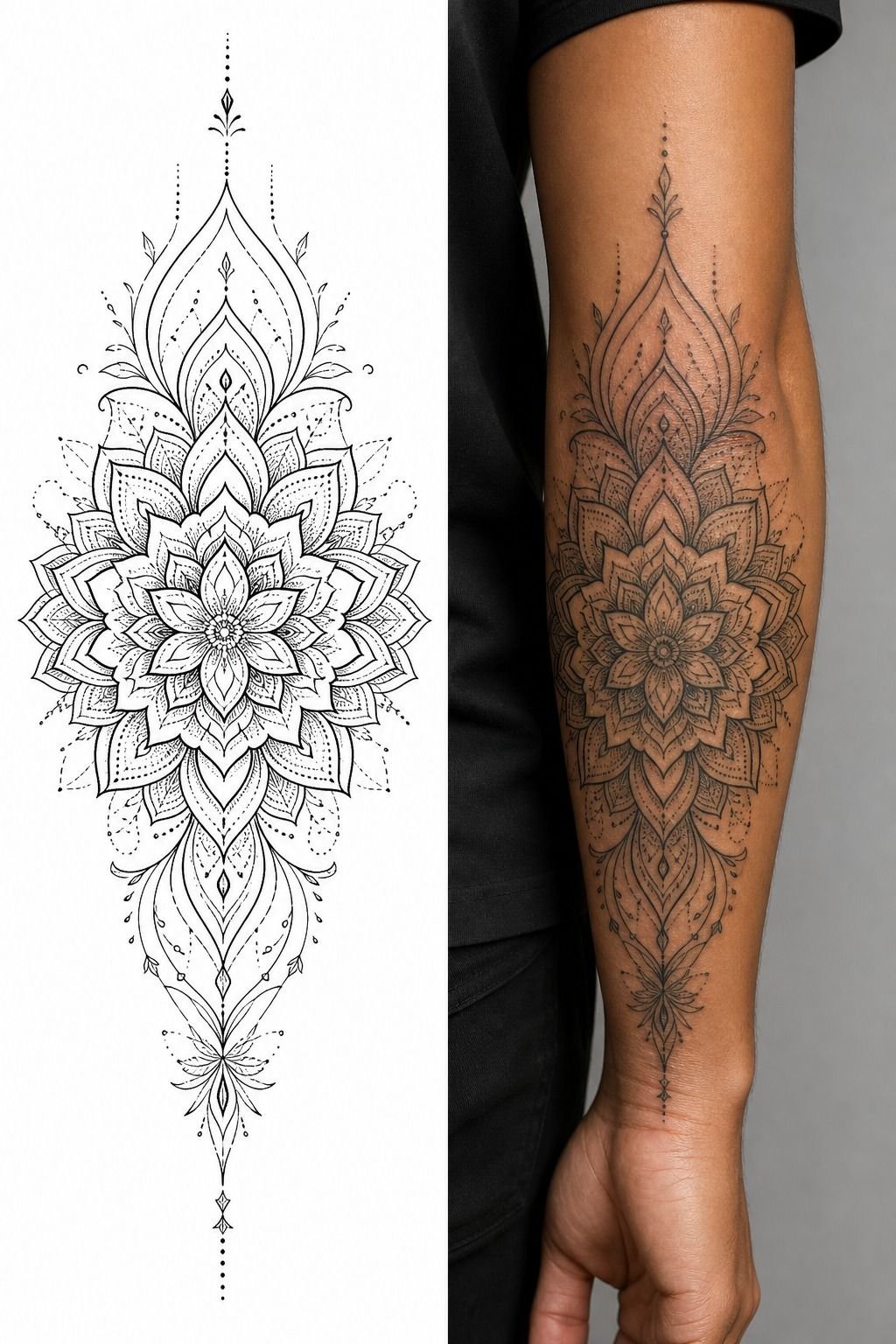
A sleeve needs a focal point before it needs filler. Put the biggest mandala where your eye naturally lands, usually outer forearm, upper arm, or elbow cap, then let smaller geometry connect around it.
The Three-Ring Anchor Rule is simple: one large circle, two supporting repeat patterns, and enough plain skin between them that your sleeve doesn’t look like wallpaper. Your artist can show you a paper stencil beside a healed example before committing.
I’d skip building a sleeve from random flash picked six months apart. It can be fun, but it rarely flows. Start with the anchor, then decide whether you want blackwork, botanical breaks, or a softer illustrative border.
For more pattern options, see the blackwork geometric tattoo dotwork mandala guide.
11Anchor fine lines before adding color
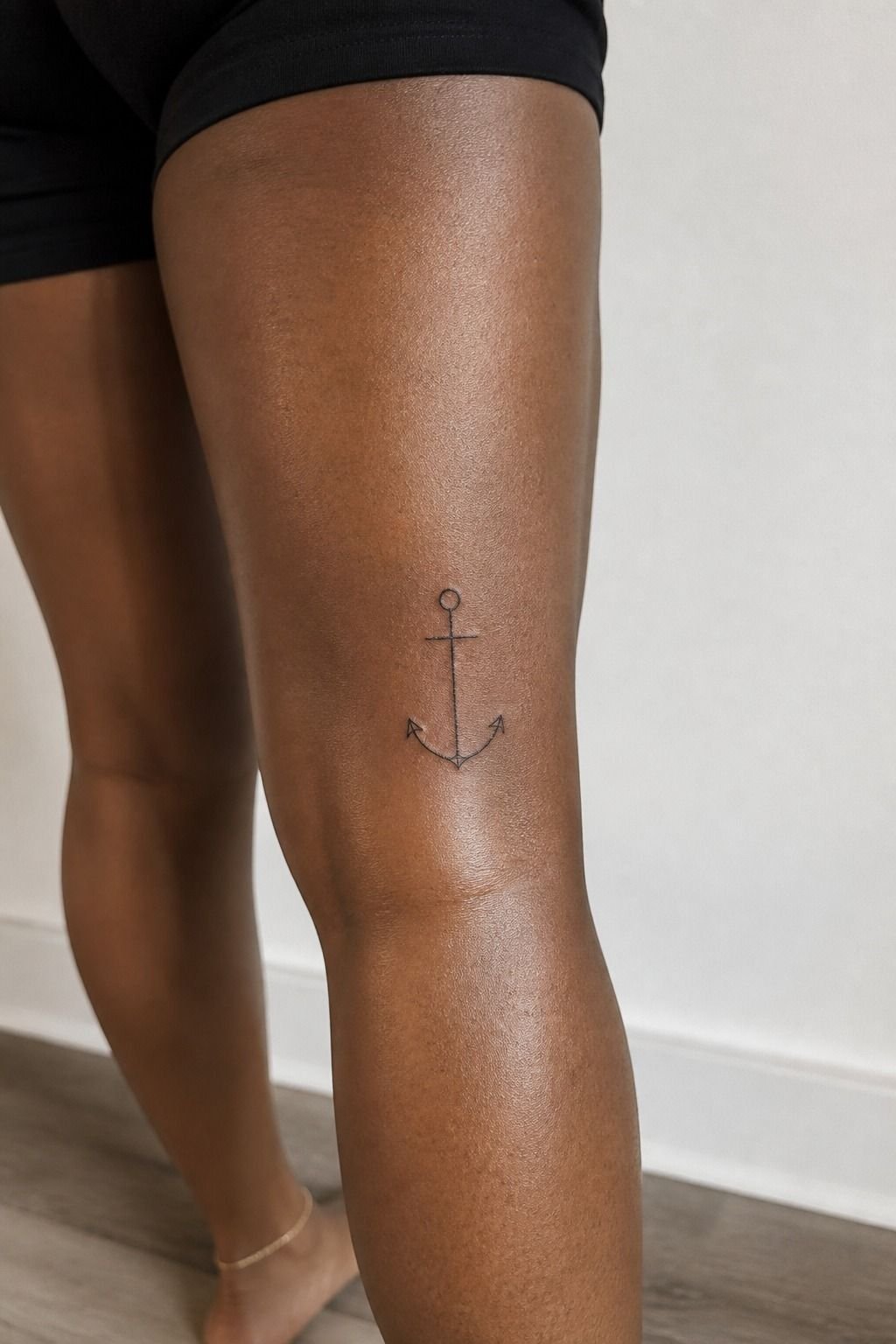
Fine line needs an anchor. Start with black outlines that can stand alone, then add color only where it gives the mandala a clear job, like a small red sun, blue petal tips, or a warm halo.
On a calf, a Cheyenne single-needle cartridge can give your artist crispy details, but the design still needs enough spacing to heal velvety instead of patchy. Fine line isn’t fragile. Bad planning is.
And don’t chase watercolor without linework. Watercolor looks soft and modern when it’s anchored with line; without it, it can fade into a vague stain. Your future self deserves a tattoo with edges.
12Select symbols that sharpen personal meaning
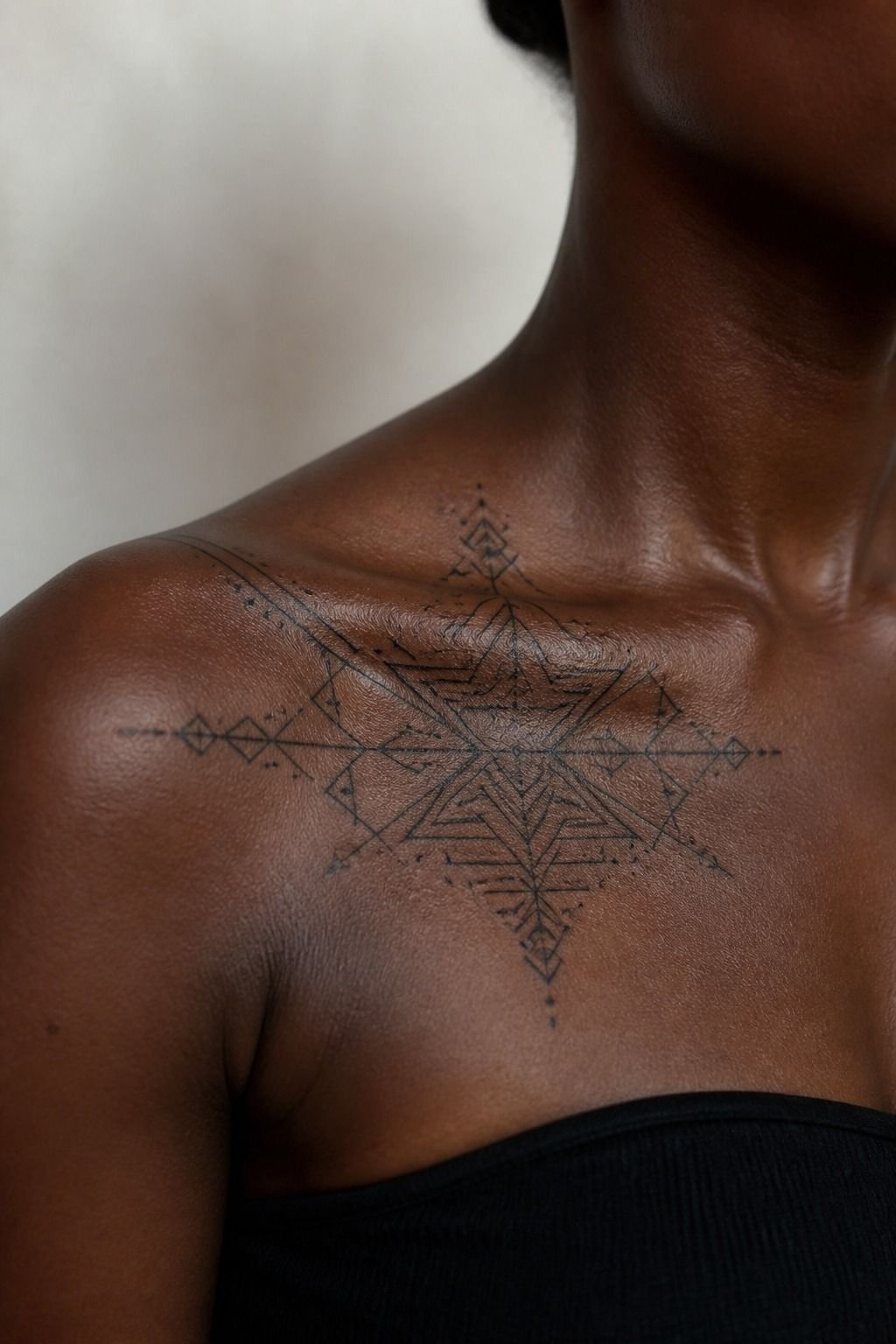
Pick symbols that make the mandala more personal without stuffing it full of explanations. A moon phase, tiny initial, protective eye, or birth flower can sit in the center if it still supports the geometry.
The One-Story Center Method keeps your tattoo from becoming a visual résumé. Choose one symbol that matters, then let repeated petals carry the rest. You don’t need five meanings competing on your collarbone.
Use a round liner needle for small symbolic marks, but ask your artist what will still read after healing. A microscopic date may not. A simple crescent, star, or four-petal flower usually ages more gracefully.
13Compare pain across mandala tattoo placements
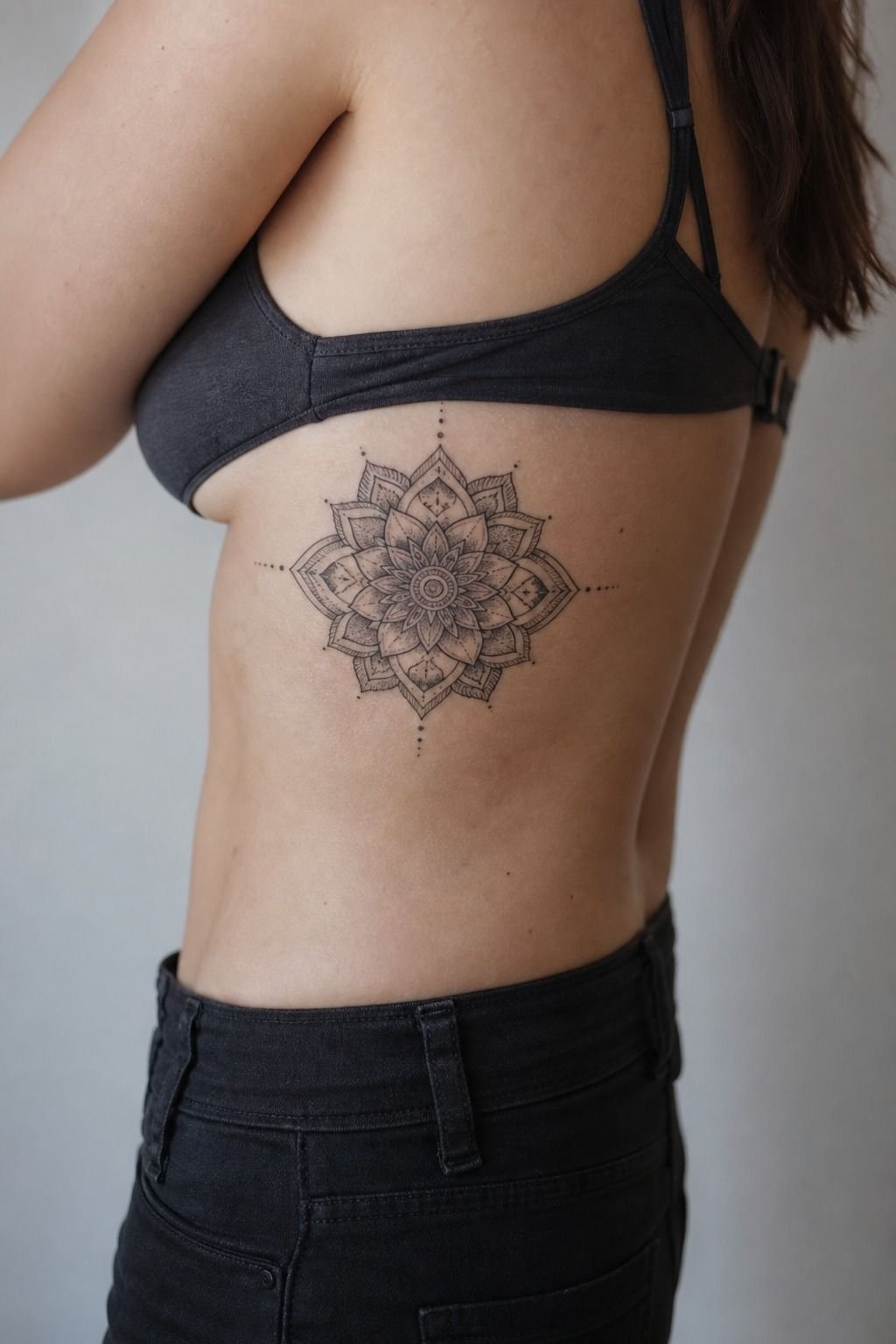
Pain changes the plan. Outer arm, calf, and thigh are usually chill enough for longer sessions, while ribs, sternum, feet, hands, and knees can get spicy fast.
Here’s a practical placement guide for a modern mandala:
Lines feel sharper, shading is a dull burn, and solid color fill can be rough. But you don’t win anything by white-knuckling it. Tap out for five rather than pass out on me!
14Ask your artist for stencil alignment
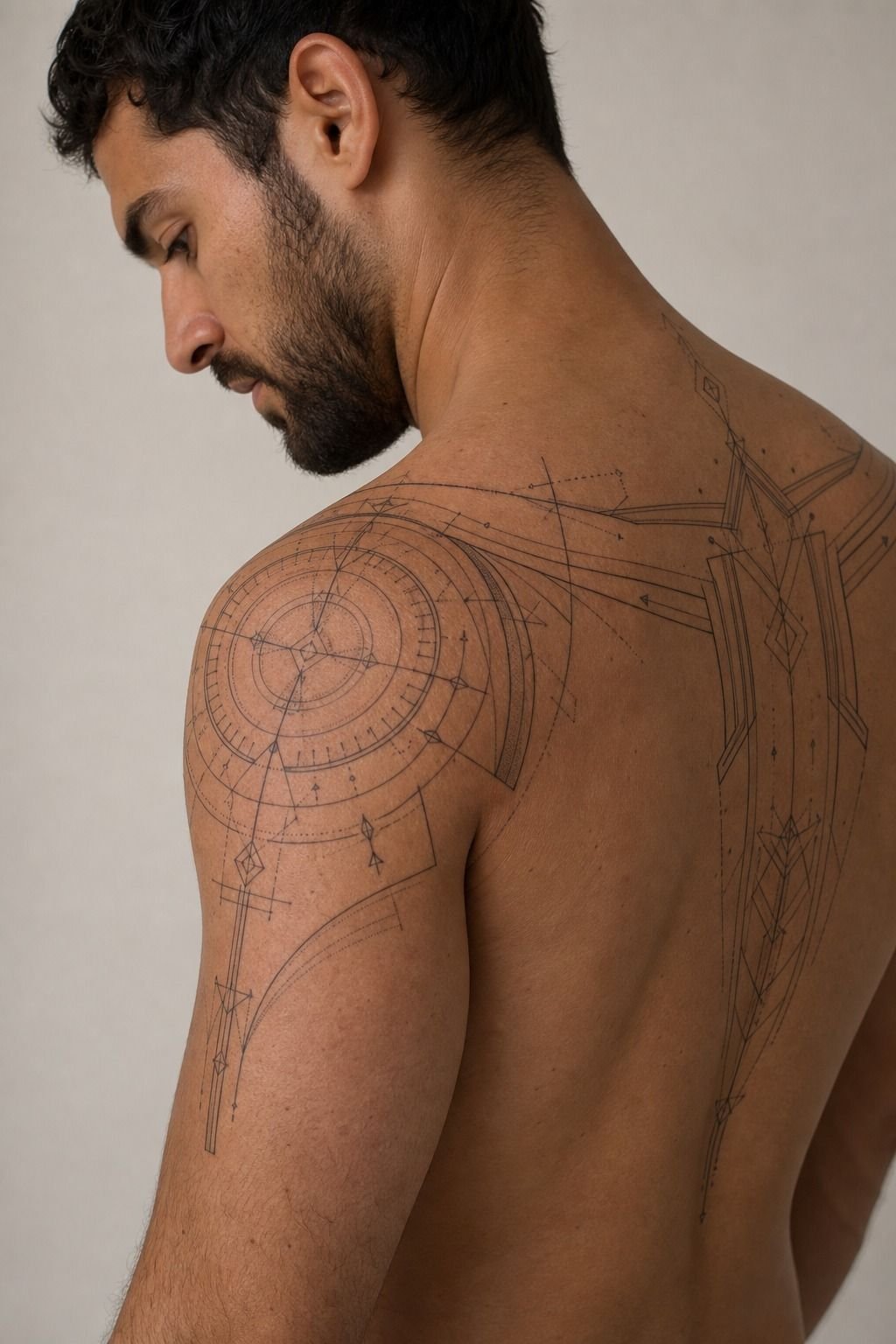
Ask for alignment checks from three angles: straight on, your normal posture, and your arm relaxed at your side.
15Keep repeated petals clean and readable
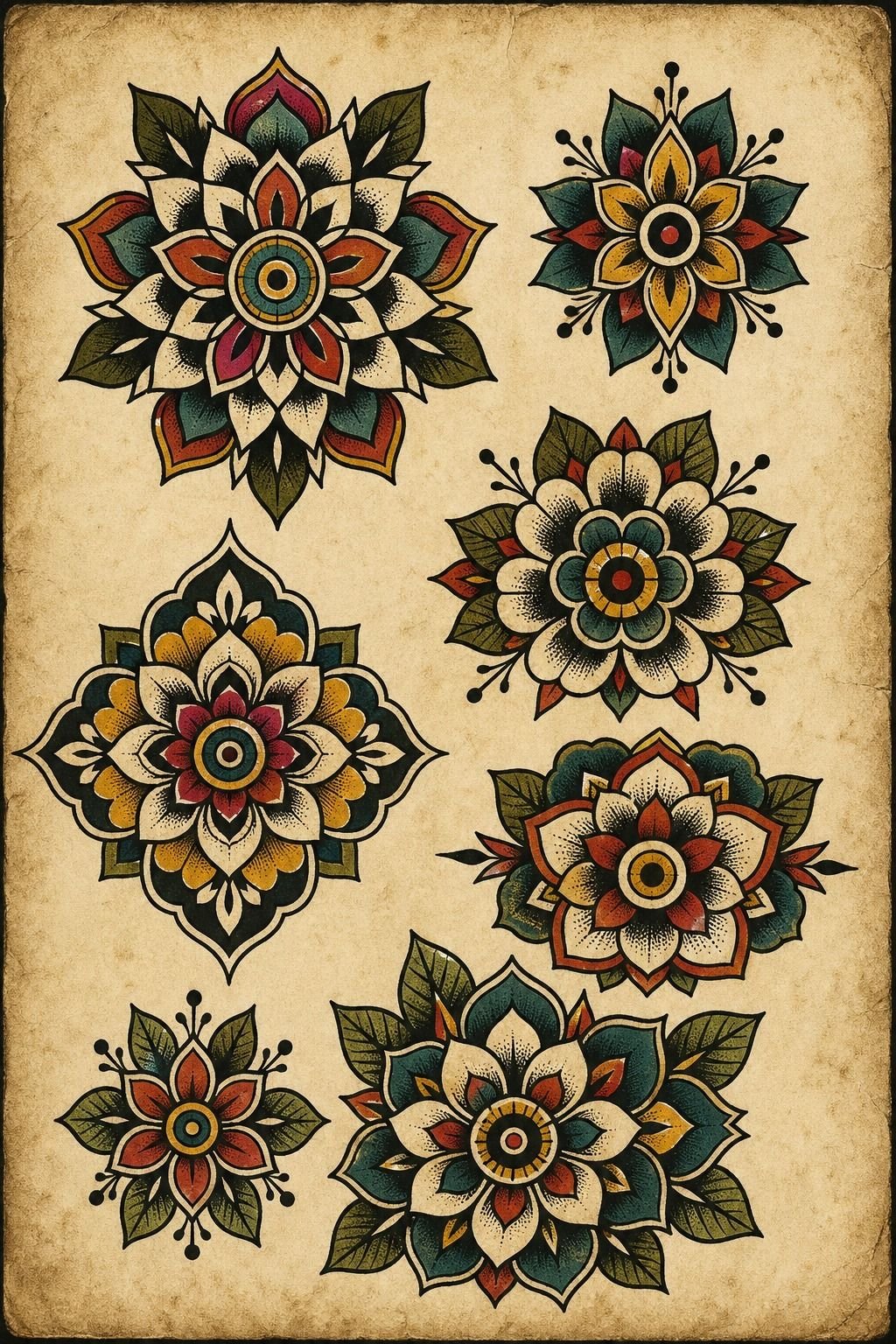
Repeated petals only work when the spacing is consistent. On a flash sheet, count how many major petals you can fit before the outside ring gets too narrow, then remove one if the gaps look cramped.
Use black archival drawing ink for your planning sketch and keep the smallest triangles, dots, or teardrops larger than your instinct says. Tiny detail feels sophisticated on paper. On skin, it can become soup.
I’d take eight clean petals over sixteen fragile ones every time. The pattern still feels harmonious, but your artist can make one confident pull instead of ten fuzzy ones. Clean beats complicated.
Every single time!
Browse tattoo flash art if you want to compare simpler repeat patterns before booking.
16Protect fresh mandala ink during healing
For the first few days, your fresh mandala is an open wound, so treat it like that. Wash it gently with unscented soap, pat it dry, then use a thin layer of Aquaphor Healing Ointment or the aftercare your artist recommends.
Don’t suffocate it under thick lotion. Your tattoo will peel like a sunburn around days 4 through 10, and you can’t pick the flakes or you may pull color out.
Keep it out of pools, hot tubs, direct sun, and rough gym friction while the surface heals. Surface healing is usually about 2 to 3 weeks; deeper settling can take 2 to 3 months.
Boring aftercare. Great results!
17Check healed contrast before expanding details
Wait until the existing mandala is fully settled before you add new detail around it. Silver skin can look healed while the tattoo is still finding its final contrast, so give your body time to show what stayed dark and what softened.
Take a clear photo in natural daylight after the 2- to 3-month mark. Then you and your artist can decide whether the outer ring needs more black, wider gaps, or no change at all.
But don’t automatically “fix” every light spot. Some softness is normal, especially with dotwork. I’d only expand details if the carbon black pigment has healed flat enough that the next layer won’t crowd the original design.
18Pair mandala geometry with botanical elements
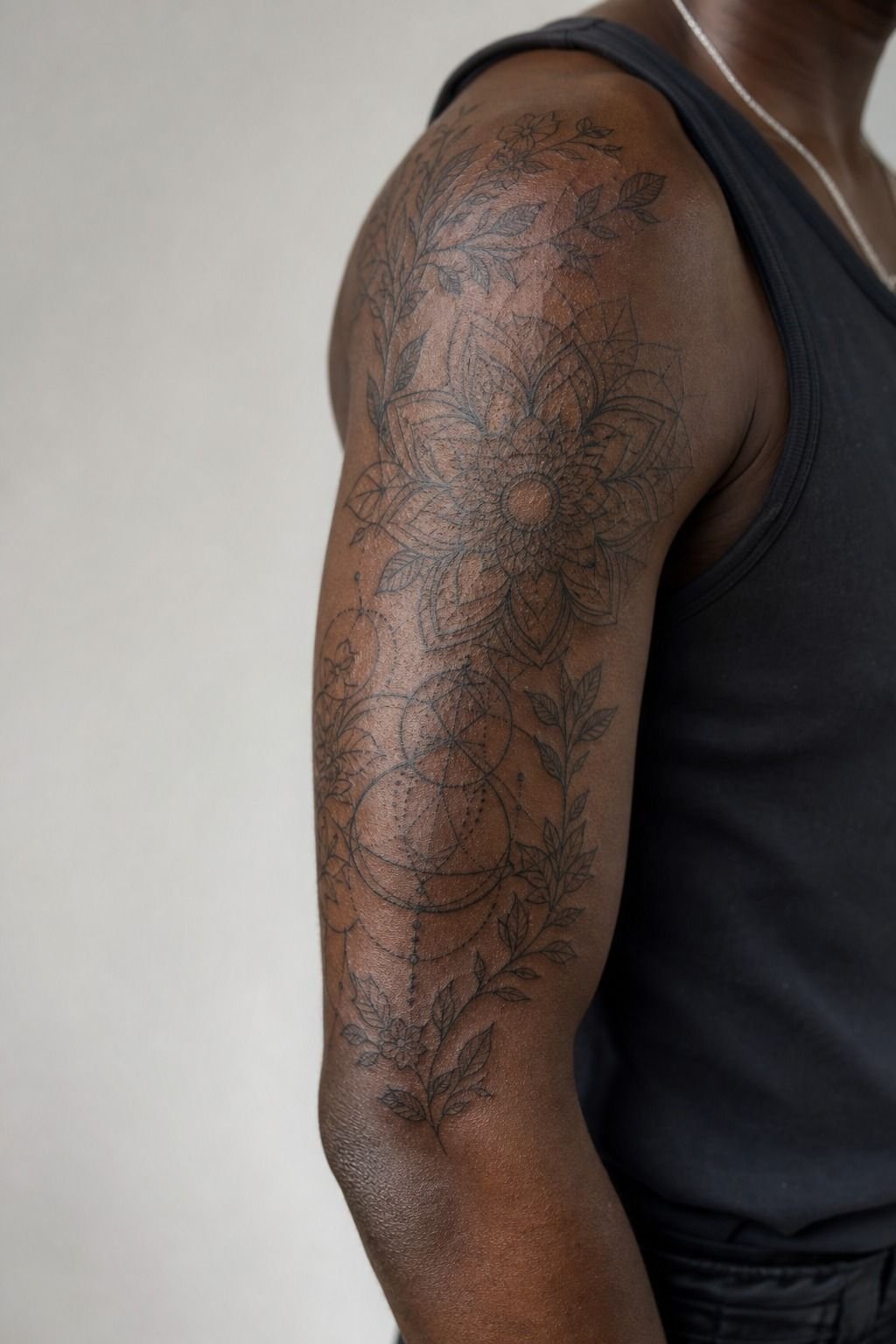
Botanical elements can make a geometric mandala feel less rigid. A peony, olive branch, fern, or fine-line vine works best when it breaks one side of the circle rather than hiding the entire pattern.
Use botanical black-and-grey linework with a little grey wash so the leaves sit behind the bold geometry. Your upper arm has enough space for the mandala to stay the focal point while the plant details soften the edge.
I love this pairing for people who want something modern but not cold. Still, skip hyper-realistic flowers beside tiny geometric marks. The styles can fight.
Keep the botanical work illustrative and let the line language match.
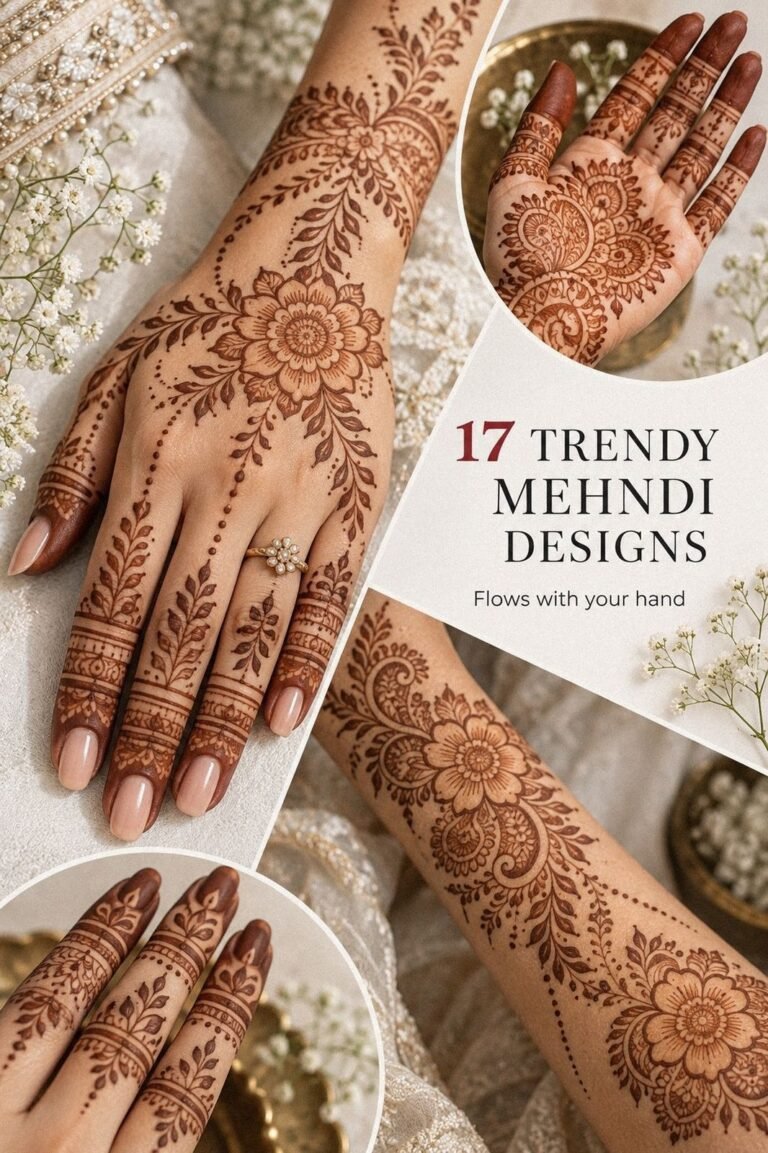
You might like the softer reference flow in modern mehndi designs or mandala mehndi designs.
19Budget custom modern mandala tattoo sessions
Budget for the design you want, not the cheapest appointment you can find.
Why I’m Firm About Mandala Breathing Room
I’ve tattooed and watched a lot of geometric work heal, and the piece that keeps winning isn’t the one with the most detail. It’s the one that knew when to stop.
People bring me references where every petal contains another petal, every border has dots, and every blank section feels “unfinished” to them. I get it.
You want your tattoo to feel special.
But skin isn’t a tablet screen. Ink spreads a little over time, skin stretches, and the tiny details that looked sharp on day one can start talking over each other years later. That’s not failure.
It’s physics. Your body is alive, and that’s why I plan a mandala around movement and aging instead of treating it like a logo.
I made this mistake early on with a fine-line floral mandala. I pushed too many small dots into the middle because the stencil had looked almost empty.
It healed okay, but the cleanest version would have left more skin. I learned from it.
Now I want you to see the geometry from across the room, then find the small detail when you’re close.
That’s why I’ll tell you to size up, remove a ring, or move a wrist design onto your forearm. It isn’t me killing your idea. It’s me protecting it.
A bold black center with calm negative space looks modern now and still makes sense years from now. Your tattoo doesn’t need to prove how much pain or detail you could tolerate.
It needs to live well on you.
A Few Things Worth Answering
How much does a Modern Mandala Art usually cost?
A small modern mandala tattoo usually costs about $100 to $300, while shop minimums are often $50 to $100 and hourly work runs about $100 to $250. Clean custom linework is worth budgeting for.
– Small wrist motif – Forearm center piece – Custom redraw time
Are Modern Mandala Art a good idea for a first tattoo?
Yes, if you choose a forgiving placement and a simple pattern. A clear, readable design gives you a strong first tattoo without committing to a huge area of skin.
– Outer arm placement – Calf placement – Thigh placement
How do I choose a tattoo artist for Modern Mandala Art?
Choose an artist whose healed portfolio shows crispy lines, even circles, and solid black fills. Healed work matters more than fresh tattoos under bright lights.
– Healed blackwork photos – Clean stencil alignment – Licensed, hygienic studio
How much do Modern Mandala Art hurt?
Forearm, calf, outer arm, and thigh are usually more tolerable. Sternum, ribs, hands, feet, and knees are spicier because bone and thin skin change the sensation. Placement controls the experience more than the design does.
How long does a Modern Mandala Art take to heal?
The surface usually heals in about 2 to 3 weeks, while full settling can take 2 to 3 months. Gentle aftercare protects contrast while your tattoo peels and settles.
– Unscented soap – Thin ointment layer – No pools or sun
What’s the best placement for Modern Mandala Art?
Outer forearm and thigh are my favorite picks because they give your linework room and tend to age well. Low-wear skin protects detail better than fingers, feet, or constantly rubbing areas.
For more visual planning, compare modern henna designs with healed tattoo references.
Where I’d Start First
If I had to pick one step, I’d start with sizing up the center mandala. Tiny detail can’t fight skin forever. Give the blackwork room, let the negative space stay open, and your design will still read clean after years of wear.