
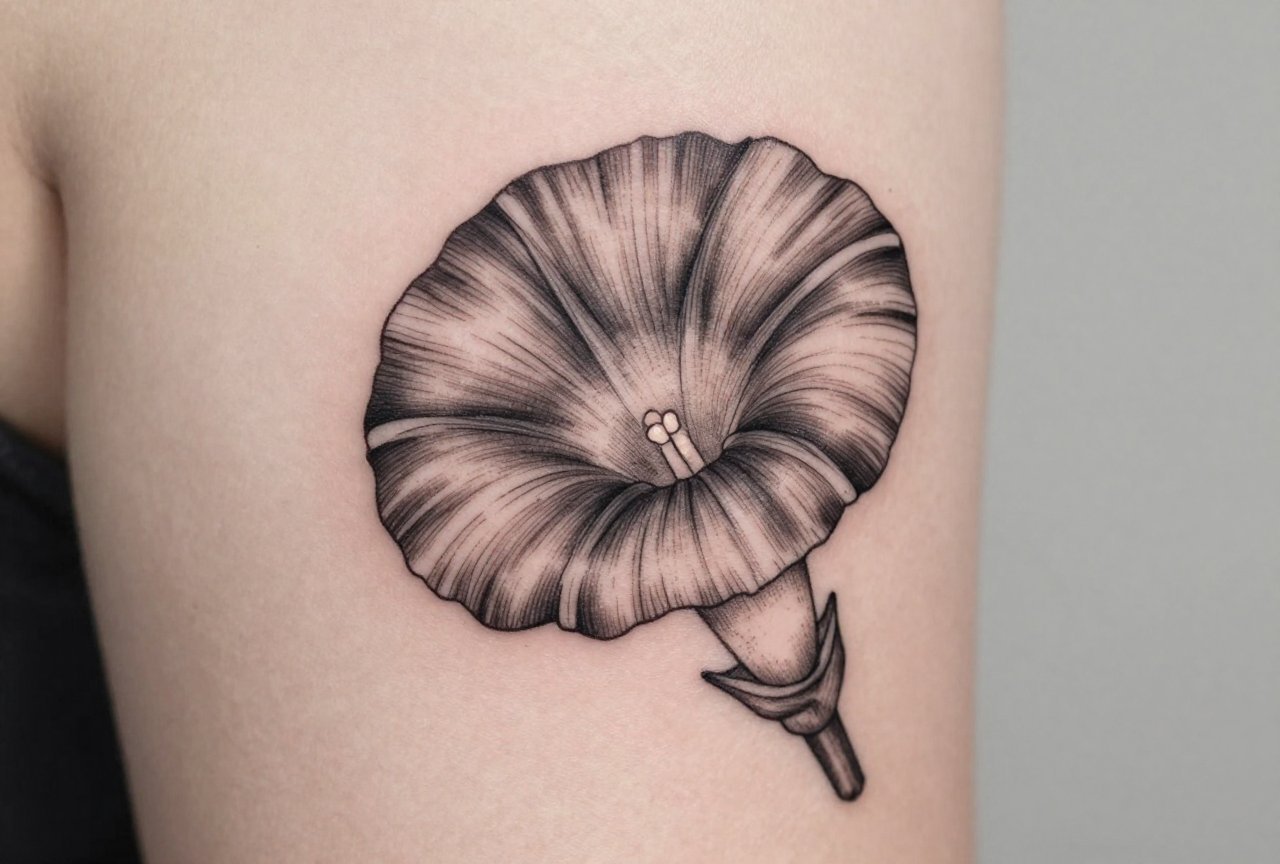
Morning Glory Tattoo Meaning: Love, Loss & New Beginnings
The morning glory unfurls at dawn, wilts by afternoon, and reopens the next day with quiet persistence. This fleeting rhythm has made it one of the most emotionally layered flowers in tattoo art. Whether climbing a vine up a forearm or rendered as a single bloom behind an ear, the morning glory carries meanings that resonate across cultures and personal histories. Understanding these layers helps you choose a design that genuinely reflects your intention rather than following a passing trend.
Cost Factors
Size and Placement
A small morning glory, roughly two to three inches, typically ranges from $150 to $350 at reputable studios. Larger compositions, such as a vine wrapping around the upper arm or climbing the ribcage, often require multiple sessions and can reach $800 to $2,000 depending on geographic location and artist stature. The flower’s natural curling tendrils and overlapping petals demand precision; rushing this work rarely yields satisfactory results.
Color Complexity
Full-color morning glories with their characteristic purple-to-blue gradients, white throats, and pink edges require more ink changes and blending time than simplified versions. Each color transition adds roughly fifteen to thirty minutes per session. Artists working in cities with higher overhead, such as New York, Los Angeles, or London, generally charge 30 to 50 percent more than those in smaller markets.
- Simple black outline: $150, $250
- Single-color shaded piece: $250, $500
- Full-color realistic bloom: $400, $800
- Large-scale vine or sleeve integration: $1,200, $3,000
Color vs Black and Grey
The morning glory’s natural color range, deep purples, sky blues, magentas, and pure whites, makes it exceptionally suited to color work. These pigments capture the flower’s most distinctive quality: the striking contrast between its saturated petals and pale throat. A well-executed color morning glory glows against skin in a way that black and grey cannot replicate.
Yet black and grey interpretations hold their own merit. Without color, the focus shifts to form, the spiral of the unfurling bloom, the tension in the curling vine, the delicate tracery of leaf veins. This approach suits those drawn to the flower’s structural elegance or seeking integration with existing monochrome work. Some artists achieve remarkable depth through whip shading and fine-line techniques that suggest color without explicitly using it.
Healed color morning glories tend to settle into softer, more muted versions of their original brightness. Blues and purples generally age well; pinks and reds may fade faster depending on sun exposure and skin chemistry. Black and grey pieces maintain their contrast longer but can appear flat if the original shading lacked sufficient range.
Who Chooses This Tattoo
The morning glory attracts individuals navigating transitional periods. Its daily cycle, death and rebirth compressed into twenty-four hours, mirrors experiences of recovery, relocation, or reinvention after relationship endings. People marking anniversaries of significant change often select this flower for its implicit acknowledgment that beauty persists through repetition and loss.
Botanical enthusiasts and gardeners frequently request morning glories, sometimes specific cultivars they have grown themselves. The ‘Heavenly Blue’ variety appears most often in tattoo form, recognizable by its large, cerulean trumpets. Those with connections to September birthdays also gravitate here, as the morning glory serves as the birth flower for that month alongside aster.
The tattoo crosses gender lines comfortably. Men sometimes pair morning glories with hourglasses, pocket watches, or nautical elements to emphasize themes of time and impermanence. Women more commonly request standalone blooms or vines with butterflies and hummingbirds. These patterns are shifting, however, as floral tattooing becomes increasingly gender-neutral in contemporary practice.
How It Ages on Skin
Line Integrity
The morning glory’s thin petals and delicate tendrils challenge long-term clarity. Lines narrower than a millimeter may blur or disappear entirely within five to eight years, particularly on high-movement areas like wrists, ankles, and necks. Experienced artists compensate by building subtle weight into critical edges, ensuring the flower’s silhouette remains readable even as fine details soften.
Color Retention
The pale throat of the morning glory, often rendered in white or very light yellow, presents particular aging challenges. These pigments can disappear into lighter skin tones or yellow unpredictably on darker complexions. Strategic use of surrounding contrast, deeper blues and purples framing the center, helps preserve the flower’s characteristic eye even as the lightest tones fade.
Sun exposure remains the primary accelerator of aging for this design. Morning glories placed on frequently exposed areas, forearms, shoulders, lower legs, benefit significantly from consistent SPF application. Touch-ups every seven to ten years maintain vibrancy, with many artists offering reduced rates for returning clients.
History & Cultural Roots
The morning glory’s symbolic history stretches across continents with considerable variation. In Victorian floriography, the language of flowers, it represented love in vain or affection that had been rebuffed. This association with unrequited feeling stemmed partly from the bloom’s brief lifespan, suggesting beauty that could not be held or possessed.
Japanese culture offers a more auspicious reading. The asagao, or morning face, has been cultivated since the Heian period and often linked to summer’s arrival and the renewal of each day. Edo-period woodblock prints frequently depicted the flower, and this visual tradition influences contemporary Japanese tattooing. Some practitioners still incorporate morning glories into larger compositions referencing ukiyo-e aesthetics.
Aztec spiritual practices often linked the morning glory, specifically Ipomoea tricolor, to divinatory and ritual use. The seeds contain psychoactive compounds that played roles in religious ceremonies. Modern tattoo wearers rarely reference this aspect explicitly, though the flower’s continued presence in Mexican folk art preserves some of this ancestral weight.
In Chinese folklore, the flower sometimes symbolizes the bond between lovers who meet briefly, as the morning glory and the moonflower, which opens at dusk, never share the same hours. This narrative of temporal separation resonates with those processing relationships constrained by distance, timing, or circumstance.
Choosing the Right Artist
Specialization Matters
Botanical tattooing requires specific competencies distinct from portraiture, lettering, or traditional Americana. Review portfolios for evidence of plant-specific work: accurate petal overlap, believable leaf veining, naturalistic growth direction rather than flat, decorative arrangement. Artists who regularly execute flowers understand how to build dimensional form through color saturation rather than relying solely on black outlines.
Consultation Quality
During consultation, observe whether the artist asks about your specific morning glory variety or growing experience. Genuine botanical interest typically produces more authentic results. Request to see healed photographs from previous floral clients; fresh tattoos mislead by hiding how colors will settle. The best practitioners maintain records of their work at six months and two years post-application.
Discuss placement honestly regarding your lifestyle and pain tolerance. Ribcage and sternum placements, while visually striking for climbing vine designs, involve significant discomfort and extended sessions. Outer forearms and calves offer more manageable experiences with comparable visibility. A skilled artist will help you balance aesthetic impact with practical sustainability.
Final Thoughts
The morning glory tattoo occupies a rare space in botanical art: emotionally accessible without being simplistic, visually striking without demanding attention, culturally rooted without requiring specific heritage. Its meanings of love, loss, and renewal operate as invitation rather than prescription. You need not have experienced tragedy to wear this flower, nor must you be optimistic to find value in its daily return.
What distinguishes meaningful morning glory tattoos from generic floral work is the specificity of intention. A cultivar you have grown, a color observed at particular light, a moment of noticing the bloom’s persistence through adverse weather. These anchors transform decoration into personal vocabulary. The flower becomes yours not through possession but through attention.
Before committing, spend time with living morning glories if possible. Note how the buds torque open, how the spent flowers cling to the vine even as new ones replace them. This observation will inform your design more than any Pinterest board. The best morning glory tattoos carry something of this witnessed quality, the slight irregularity of organic growth that no template can replicate.
Choose an artist who respects this observational foundation. Expect to pay fairly for expertise that honors the flower’s complexity. Anticipate aging with reasonable care and periodic maintenance. The result, like the bloom itself, will not last forever in its initial form. But with proper attention, it will continue to reopen, revealing new aspects of its meaning across the years you carry it.
Frequently Asked Questions
What does a morning glory tattoo symbolize?
The morning glory most commonly represents love, loss, and new beginnings. Its brief daily blooming cycle, opening at dawn and fading by afternoon, mirrors themes of impermanence, renewal, and persistence through repetition. Victorian floriography associated it with unrequited love, while Japanese tradition emphasizes daily rebirth and summer’s arrival.
How much does a morning glory tattoo typically cost?
Small designs range from $150 to $350, while medium full-color pieces generally fall between $400 and $800. Large vine compositions or sleeve integrations can reach $1,200 to $3,000. Factors include size, color complexity, artist experience, and geographic location, with major cities commanding 30 to 50 percent higher rates.
Do morning glory tattoos age well over time?
They require thoughtful design to age gracefully. Very fine lines may blur within five to eight years, particularly on high-movement areas. Blues and purples typically retain vibrancy better than pale throat colors like white and light yellow. Strategic contrast and slightly heavier critical lines help maintain readability. Sun protection and periodic touch-ups significantly extend visual quality.
What should I look for in an artist for a morning glory tattoo?
Seek artists with demonstrated botanical specialization, evidenced by accurate petal structures, naturalistic growth patterns, and dimensional color work in their portfolios. Request healed photographs to assess how their colors settle over time. During consultation, evaluate whether they inquire about specific varieties or your personal connection to the flower. These indicators suggest the observational foundation necessary for authentic results.









