
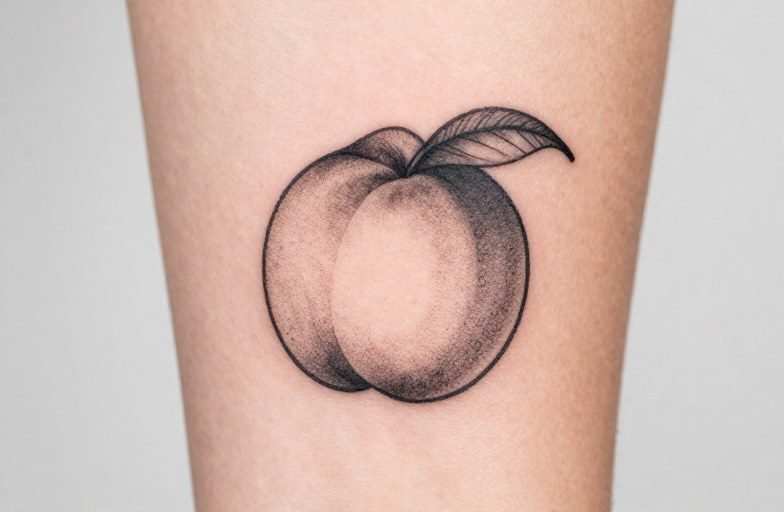
A peach tattoo most commonly represents longevity, prosperity, and good fortune rooted in East Asian traditions. The fruit also carries associations with sensuality, femininity, and Southern regional identity in American contexts. Its soft curves and gradient color make it technically demanding but visually rewarding across multiple tattoo styles.
Symbolism & History
The peach’s symbolic weight varies dramatically by cultural context, which matters if you’re choosing this image for personal reasons rather than pure aesthetics.
East Asian Roots
In Chinese tradition, the peach is often linked to immortality and long life, think of the peaches of immortality in Daoist mythology, said to ripen only once every three thousand years. The fruit appears frequently in birthday celebrations and elder gifts. Japanese practice commonly associates peaches with protection from evil spirits, stemming from the Momotaro folk tale. Korean tradition similarly ties the fruit to longevity and spring renewal.
This matters for tattoo choice because a peach with specific companion imagery, crane, pine tree, lingzhi mushroom, reads as explicitly longevity-focused. A standalone peach leaves more interpretive room.
Western & Contemporary Meanings
- Femininity and body positivity: the peach emoji’s cultural adoption since 2010 has cemented this association
- Southern United States identity: Georgia pride, agrarian heritage, regional belonging
- Harvest and abundance: agricultural communities, farm family heritage
- Virginity and purity: some Christian iconography, though less common in tattoo application
The emoji association is particularly relevant for younger clients. A peach tattoo done in 2024 carries that secondary meaning whether you intend it or not, something to consider for placement visibility.
Common Variations & Styles
The peach’s form demands specific technical decisions. Its soft, irregular shape and distinctive color gradient separate successful pieces from muddy failures.
Neo-Traditional & American Traditional
American traditional peach tattoos work best with bold black outlines, limited color palette (pink, orange, yellow, green leaf), and simplified form. The fruit’s natural softness fights against this style’s hard edges, so experienced artists typically exaggerate the cleft and tighten the silhouette. Neo-traditional allows more color blending and ornamental framing, snake wraps, ribbon banners, decorative leaves.
Japanese (Irezumi)
Within Japanese tattooing, peaches typically appear as secondary elements in larger compositions rather than standalone pieces. They pair with monkeys (the “peach and monkey” motif from Momotaro), tigers, or spiritual figures. The rendering uses tebori or machine work with specific color sequences: pale pink base, deeper red blush, yellow-green highlights. Background elements like wind bars or waves contextualize the fruit.
Realistic & Botanical
Photorealistic peach tattoos require substantial skin real estate to execute the color transitions. Small realistic peaches often heal into indistinct pink blobs as the ink settles and spreads slightly. For botanical accuracy, artists need reference of specific varieties, clingstone vs. freestone, yellow-flesh vs. white-flesh, which affects the blush pattern and overall tone.
Minimalist & Line Work
Single-needle or fine-line peaches trend heavily for small placements. The challenge: conveying three-dimensional roundness without shading. Successful designs emphasize the cleft line and asymmetric leaf placement. These age faster than bolder work, fine lines blur, and the peach’s subtle form becomes harder to read.
Best Placements
The peach’s curved form suits certain body contours better than others. Consider how the design will sit, not just how it photographs fresh.
- Outer upper arm: Classic canvas, good for medium-sized traditional or neo-traditional pieces. The cylindrical shape complements the peach’s roundness without distorting it.
- Ribcage/side: The peach’s natural curve follows the body’s contour here. Popular for slightly larger, more realistic renderings with leaf or branch extensions.
- Thigh: Ample space for color work, less sun exposure than arms or hands. The peach’s association with hips/thighs (emoji culture, body shape metaphors) makes this placement thematically resonant for some.
- Behind the ear / neck: Small, simple peaches work here. High visibility means the emoji association activates immediately, know your audience.
- Hand or fingers: Generally discouraged for fruit tattoos this detailed. Small peaches lose definition rapidly with hand’s high movement and sun exposure.
Color longevity varies by placement. Peach tones, pinks, pale oranges, yellows, fade faster than black or deep blue. Areas with frequent sun exposure (hands, forearms, calves in summer) will require more frequent touch-ups to maintain the color distinction that makes a peach readable as a peach.
Who Chooses This Tattoo / Personal Meanings
While you can’t predict individual motivation, certain patterns emerge in peach tattoo requests.
Heritage & Cultural Connections
Clients with East Asian family backgrounds sometimes choose peaches to honor grandparents or mark significant birthdays. The longevity symbolism carries concrete weight in these contexts, not abstract, but directed toward specific relationships. Companion imagery (Chinese characters for long life, specific floral pairings) usually clarifies this intent.
Regional & Agricultural Identity
Georgia natives, South Carolina orchard families, California Central Valley agricultural workers, peach tattoos mark place and labor heritage here. These often incorporate specific varietal details, farm names, or harvest dates in banners or accompanying script. The fruit becomes less generic symbol and more specific family marker.
Body Positivity & Reclamation
The peach emoji’s adoption as slang for buttocks and its broader association with curvy body types has generated a distinct tattoo subcategory. These pieces often emphasize the fruit’s fullness, place near hips or thighs, and sometimes incorporate playful elements (small bites, dripping juice). The tone ranges from celebratory to explicitly sexual depending on execution.
Similar Symbols
If the peach appeals but doesn’t quite fit, related fruits carry overlapping meanings with different emphases.
- Plum: Shares longevity associations in East Asian contexts, more winter/ endurance focused
- Cherry: Similar feminine/ sensual connotations, Japanese tattoo tradition more established, shorter seasonal symbolism
- Pomegranate: Fertility and abundance across Mediterranean and Middle Eastern traditions, more visually complex with seed interior
- Apple: Western knowledge, temptation, teacher appreciation, broader symbolic range, less specific regional identity
- Persimmon: East Asian good fortune, less common in tattooing so more visually distinctive
The peach occupies a middle ground: softer than apple’s crisp moral associations, more culturally specific than generic “fruit = health” imagery, technically more forgiving than pomegranate’s interior detail.
Final Thoughts
A peach tattoo succeeds or fails on color execution and placement logic. The symbolism is accessible enough that most viewers will read some meaning into it, longevity, sensuality, regional pride, or contemporary emoji reference, so clarity of personal intent matters less than technical soundness. Choose an artist with demonstrated color work in similar palettes, budget for touch-ups given the light tones involved, and size the piece appropriately for the detail level you want. Small peaches blur; large peaches demand commitment. The fruit’s natural beauty is undeniable, but skin is not canvas, and ink ages differently than paint. Plan for the ten-year version, not just the fresh photo.
Frequently Asked Questions
Does a peach tattoo always have sexual meaning because of the emoji?
Not necessarily, but the association exists now regardless of your intent. In visible placements, some viewers will read it that way. If you want to avoid this, traditional styling with leaves and branches reads more botanical than emoji reference.
How well do peach tattoos hold up over time?
The light pinks and yellows fade faster than black or deep blue ink. Expect noticeable softening within 5-8 years without touch-ups, especially on sun-exposed skin. Bold-outline traditional versions age more gracefully than soft-shaded realistic pieces.
Can a peach tattoo work in all black ink?
Technically yes, but you lose the color distinction that makes a peach immediately recognizable. Black and grey peaches tend to read as generic fruit or apple-like shapes unless the cleft and leaf are strongly emphasized.
What’s the typical price range for a good peach tattoo?
Small simple designs run $150-300, palm-sized color work $300-600, and larger realistic or Japanese-influenced pieces $800-1500+. The color blending requires more time than equivalent-sized black work, so expect to pay for that technical demand.
Related Tattoo Meanings
- Lemon Tattoo Meaning: Symbolism, Styles Placement Guide
- Pomegranate Tattoo Meaning
- Cherry Blossom Tattoo Meaning: Beauty, Impermanence and Japanese-Inspi
- Explore more









