
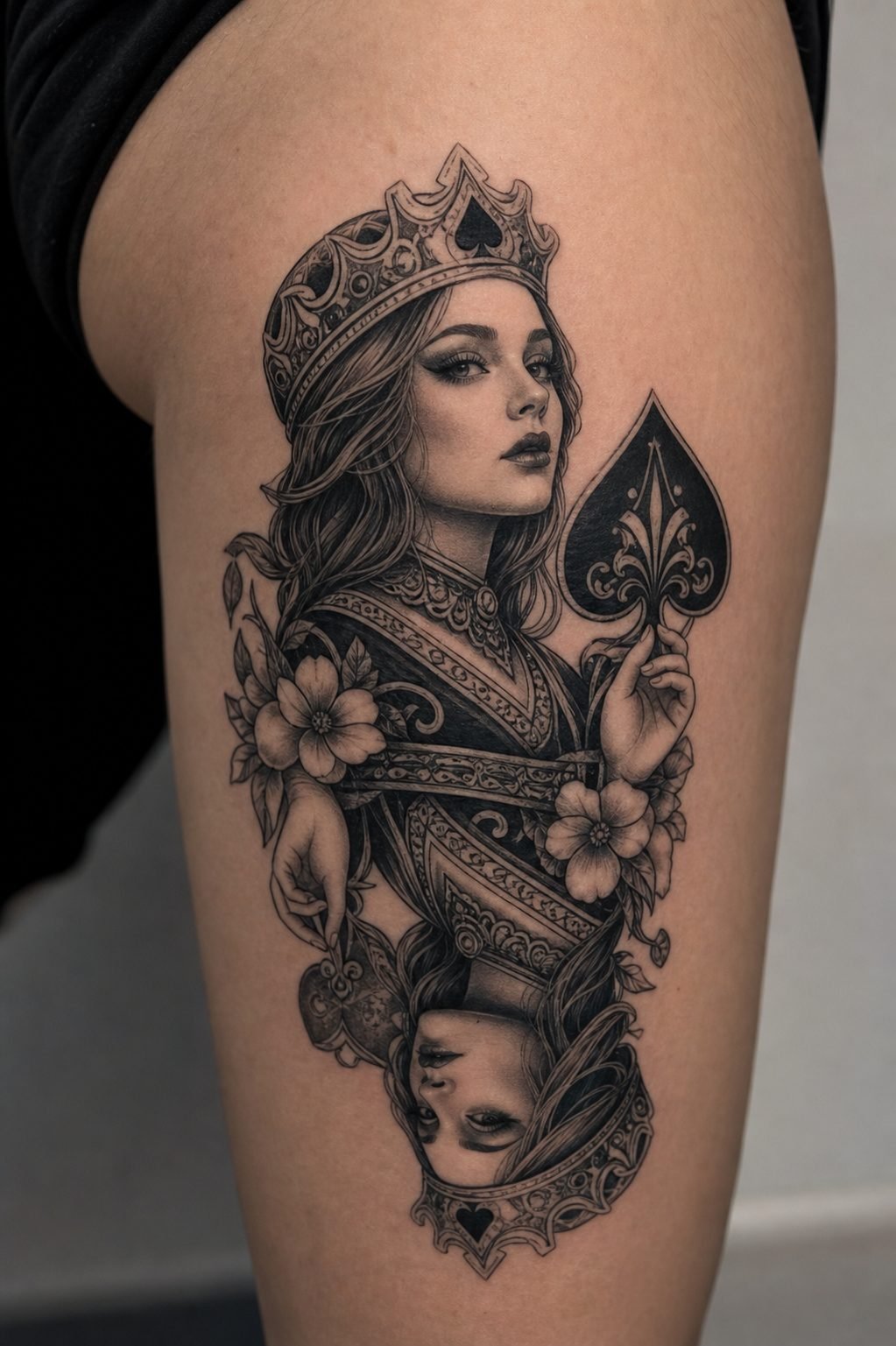
The queen of spades tattoo is a complex symbol that carries multiple layers of meaning depending on context, personal intent, and cultural interpretation. At its most basic, it represents feminine power, independence, and strategic intelligence drawn from the playing card itself. However, the tattoo has also acquired specific connotations within certain subcultures that have shaped how it is perceived in contemporary tattoo culture.
Symbolism & History
The queen of spades originates from the standard 52-card deck, where each suit carries traditional associations. Spades historically connect to the military, wisdom, and the element of air in cartomancy traditions. The queen herself represents mature feminine authority, calculated decision-making, and self-possession.
Playing card tattoos gained popularity among sailors and soldiers as early as the 19th century, often serving as talismans or identifiers. The queen of spades specifically became associated with good fortune in some gambling circles, while others viewed it as a darker omen. This duality, light and shadow, has followed the symbol into modern tattooing.
More recently, the symbol has developed specific associations within certain alternative lifestyle communities, particularly around themes of racial dynamics and sexual identity. These subcultural meanings emerged primarily in the late 20th and early 21st centuries through online communities and remain largely underground. The tattoo’s visibility in mainstream culture has increased awareness of these coded meanings, though many wearers remain unaware of such associations.
- Traditional cartomancy: wisdom, transformation, intellectual power
- Military and naval history: luck, identity, superstition
- Contemporary subcultural: specific lifestyle signaling (context-dependent)
- Feminist reclamation: sovereign female authority, self-determination
Common Variations & Styles
Artistic interpretation of the queen of spades tattoo varies dramatically, from faithful reproductions of playing card art to highly stylized custom pieces. The classic Bicycle card rendering remains popular for its immediate recognizability and vintage aesthetic appeal.
Many artists incorporate additional symbolic elements that shift or amplify meaning. Crowns, swords, or roses can emphasize regal power or romantic danger. Some designs integrate the spade symbol with portrait work, creating original female figures that embody personal interpretations of the queen archetype.
- Traditional American: bold lines, limited color palette, classic card imagery
- Realistic portraiture: detailed feminine faces with spade elements
- Minimalist/linework: simple spade outline or small card reproduction
- Neo-traditional: bold colors, decorative elements, stylized figures
- Blackwork/dotwork: intricate patterns within the spade shape
- Combined imagery: integration with skulls, snakes, or other symbolic elements
Best Placements
The queen of spades tattoo adapts to various body locations depending on desired visibility, size, and personal significance. Smaller designs work well as subtle identifiers, while larger pieces allow for detailed artistic development.
- Wrist or forearm: highly visible, easily displayed or concealed
- Behind the ear: discreet, intimate placement
- Ankle or foot: traditional feminine placement, easily hidden
- Upper arm or shoulder: medium visibility, good for medium-sized designs
- Back or thigh: larger canvas for detailed artistic work
- Chest or sternum: bold statement placement, increasingly popular
Who Chooses This Tattoo / Personal Meanings
Individuals select the queen of spades tattoo for genuinely diverse reasons that often have no connection to subcultural signaling. Many are drawn to the aesthetic of playing card art or the archetypal power of the queen figure.
Card players and gambling enthusiasts may choose the symbol for personal luck or as commemoration of significant wins. Fans of literature and film, particularly works featuring card symbolism, sometimes adopt the tattoo as fandom expression. The queen of spades appears memorably in Pushkin’s short story and Tchaikovsky’s opera, adding literary resonance for some wearers.
Women identifying with themes of self-sovereignty, strategic thinking, and emotional control often gravitate toward queen imagery generally. The spades suit specifically, with its associations of intellect and determination, appeals to those who value mental acuity over emotional display.
Some couples and partners select matching or complementary card tattoos, with the queen of spades paired against a king of matching or contrasting suit. This practice connects to broader traditions of couples’ tattoo symbolism without necessarily invoking specialized subcultural meanings.
- Card game enthusiasts and professional players
- Individuals identifying with queen archetype and feminine power
- Literature and opera aficionados
- Those seeking aesthetically distinctive playing card imagery
- Partners in couples’ tattoo traditions
Similar Symbols
Tattoo seekers drawn to the queen of spades often explore related imagery that carries comparable thematic weight. Understanding these alternatives can help clarify personal motivation and ensure satisfying final selection.
- Queen of hearts: emotional intensity, romantic power, passionate femininity
- Queen of swords (tarot): intellectual clarity, boundary-setting, direct communication
- Joker card: chaos, unpredictability, outsider identity
- Ace of spades: death, ultimate power, military association (Vietnam era specifically)
- Skull queen imagery: mortality combined with feminine authority
- Chess queen piece: strategic dominance, board control, protective power
Final Thoughts
The queen of spades tattoo occupies complicated territory in contemporary tattoo culture, carrying both accessible mainstream symbolism and specialized subcultural associations. Prospective wearers should research thoroughly, consult with experienced artists, and clarify personal intentions before committing. The most successful queen of spades tattoos emerge from genuine personal connection to the symbol’s layered meanings, whether that connection centers on aesthetic appreciation, archetypal identification, or specific community affiliation. Like all meaningful tattoos, this design ultimately derives its power from the wearer’s authentic relationship to the imagery.









