Religious tattoos are tricky. I’ve seen people walk in with a photocopied cross from their grandma’s funeral program and walk out with something that genuinely centers them. I’ve also watched folks get massive scripture sleeves because they thought it looked cool, then cover them five years later. The difference isn’t piety, it’s intention. If you’re marking a loss, a conversion, a recovery, or just something bigger than yourself, here’s what actually matters when the needle starts buzzing.
Popular Styles That Hold Up
Black and Gray Realism
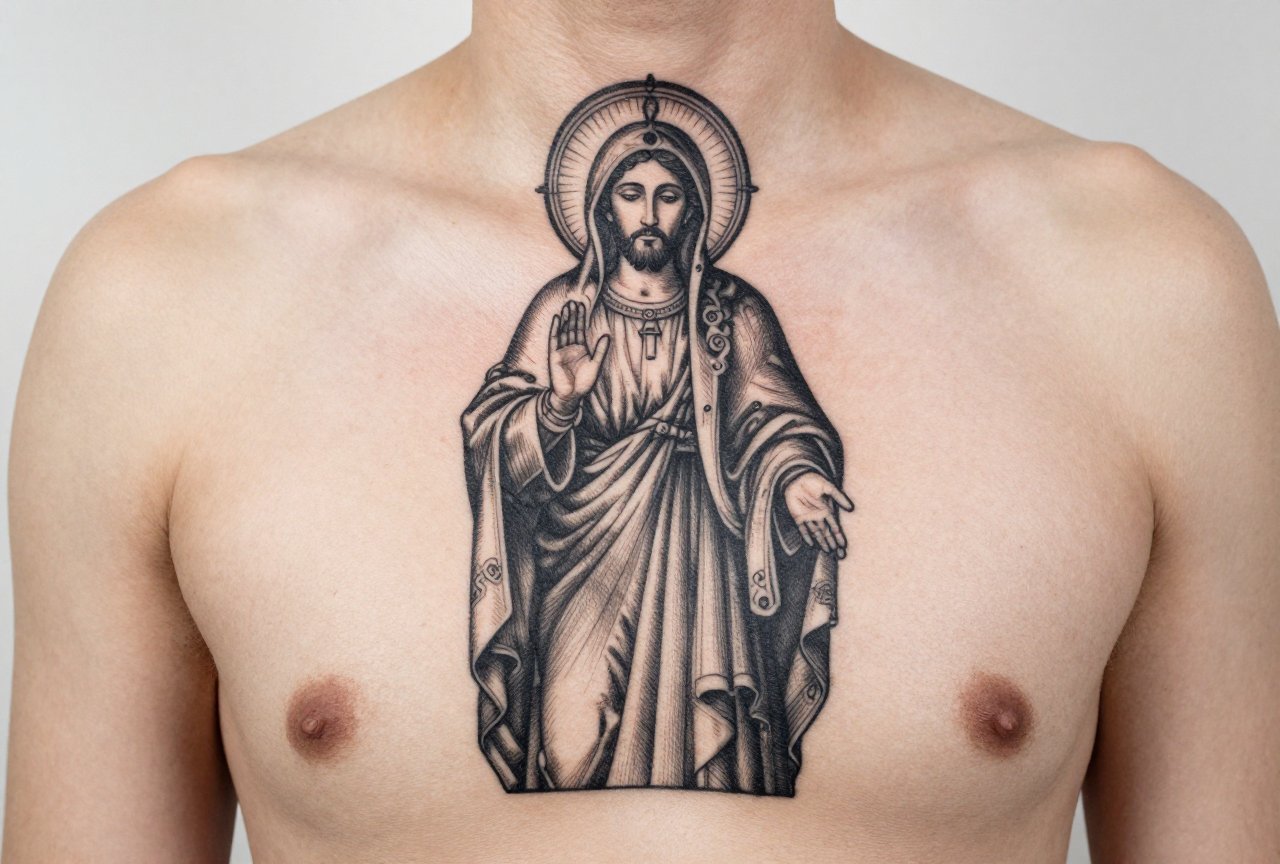
This is what most people picture when they think religious ink: weeping Virgins, thorn-crowned Christs, hands clasped in prayer. Done well, it’s stunning. Done poorly, it looks like a velvet painting on your arm. The key is contrast. You need deep blacks in the shadows and bright skin-tone highlights where the light hits. Without that range, everything goes muddy in three years. I’ve watched too many sacred hearts turn into fuzzy red blobs because someone cheaped out on the black fill.
Realism works best at palm-size or larger. Tiny realistic faces blur. Period. If you want something discreet, don’t force realism into a two-inch space. Your artist will agree, or they should.
Traditional and Neo-Traditional
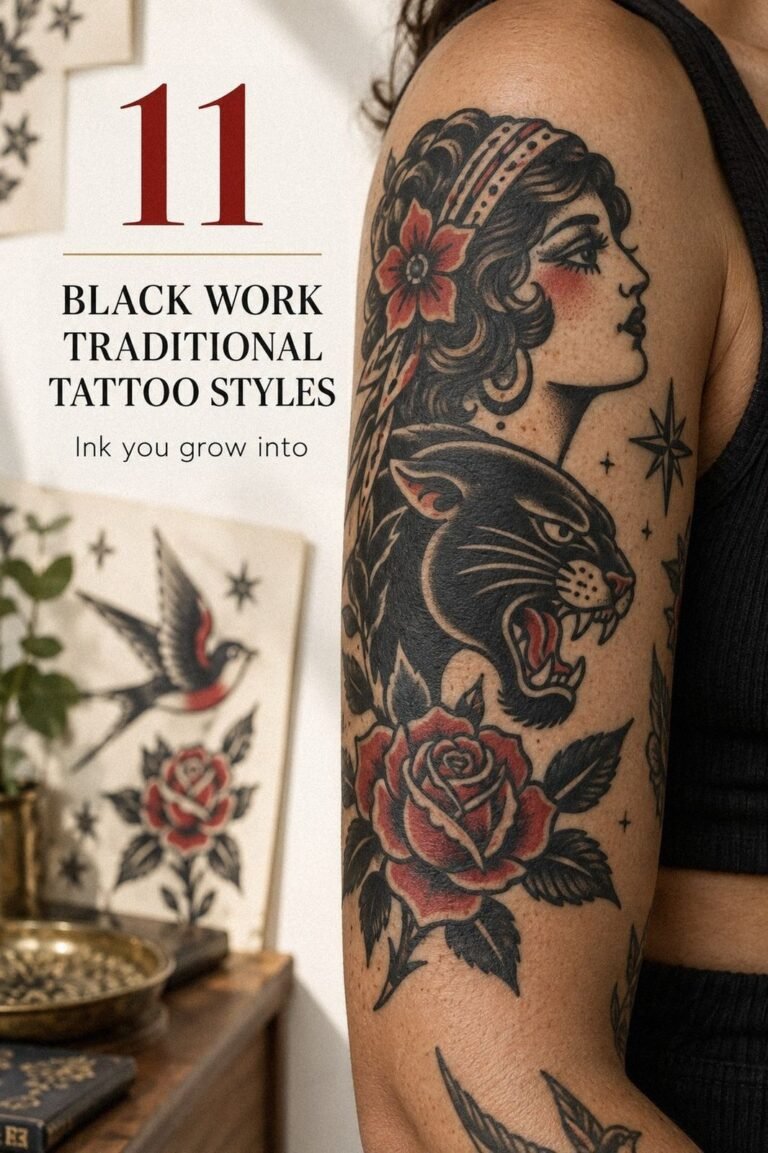
Thick black outlines. Limited color palette. Bold enough to read from across a room. Old-school religious imagery, crosses with banners, Mary with a halo, the classic praying hands, was basically born for this style. Sailor Jerry and his contemporaries were doing crosses and angels back in the 40s because the imagery carried weight with guys who thought they might die at sea.
Neo-traditional gives you more flexibility: jewel tones, ornamental details, slightly looser compositions. The outlines still save you when colors fade. A traditional cross with a solid black line will look recognizable in twenty years. A watercolor cross with no outline? Good luck.
- Traditional: bold lines, flat color, high contrast, ages like a tank
- Neo-traditional: richer colors, decorative elements, still anchored by black
- Realism: needs space, needs a specialist, needs patience and money
Design Ideas With Real Weight
Script and Lettering
“Philippians 4:13” in cursive on ribs. I’ve done dozens. The thing about scripture tattoos is that the words matter less than the placement and the font. Flowy script looks elegant day one, but thin lines spread. I’ve seen “I can do all things” become “I can do all thugs” because the ‘n’ and ‘i’ bled together. Seriously. Go bolder than you think. Block letters, old English, something with structure.
Also: check your verse. I’ve had clients quote scripture from memory and get the wording wrong. One guy wanted “The Lord is my Shepard.” Shepard. Not a great look for a permanent theological statement.
Symbolic Imagery
Not everyone wants a face on them. Symbols carry weight without the baggage of portraiture. Ichthys fish. The Hamsa. Om. The Buddha’s unalome. A simple cross. The crescent and star. These work small, they work hidden, they work when you’re not sure how your future employer or future self might feel about visible religious expression.
I did a tiny ichthys behind a woman’s ear last year. She’d left a church that hurt her, but the symbol still meant something she couldn’t fully explain. That’s valid. Tattoos don’t need to be sermons.
- Cross variants: Latin, Greek, Celtic knotwork, Coptic, crucifix with corpus
- Marian imagery: roses, Immaculate Heart, Our Lady of Guadalupe silhouette
- Eastern traditions: lotus with Om, Dharma wheel, unalome path
- Protective symbols: Hamsa, evil eye integrated with prayer, St. Benedict medal
Best Placements for the Long Haul
Religious tattoos often carry private significance, so placement choices get personal fast. Here’s the practical side.
Forearms and calves: Great for visibility, easy to show or cover. The skin is relatively stable, doesn’t stretch as dramatically as belly or thighs. I’ve done full sleeve Stations of the Cross on forearms that aged clean because the client moisturized and didn’t tan like a leather bag.
Ribs and sternum: Popular for script and sacred hearts. Hurts like hell. The skin here moves with every breath, so healing is finicky. Also, weight fluctuation changes the canvas. I warn people: that rib piece might look different after pregnancy, or after you finally start hitting the gym.
Upper back and shoulders: Classic for larger pieces. Winged angels, crucifixion scenes, full back pieces of the Last Supper. The skin holds detail well. You can cover it for work. Downside: you can’t see it without mirrors, which matters more than you’d think.
Hands, fingers, neck: I try to talk people out of these unless they’re already heavily tattooed. Religious hand tattoos especially, I’ve seen “faith” finger tats that look like “fart” after two years of washing dishes. The skin here sheds fast. Lines blow out. It’s not a reflection on your devotion; it’s biology.
Color Choices: What Stays, What Goes
Red is the color of sacred hearts, of Christ’s blood, of Pentecostal flame. It’s also the fastest color to fade to pink. I’ve seen sacred hearts that looked arterial fresh become bubblegum in five years. If you want red that lasts, you need saturation, deep, packed red, not wispy watercolor washes.
Blue holds better. Mary’s mantle, the divine. Cobalt and navy age into softer versions of themselves. Gold? Almost impossible to get right. Metallic pigments don’t exist; we fake it with yellow ochre and brown shading. Looks great fresh, looks like mustard eventually.
Black and gray is the honest choice for longevity. Not boring, honest. A black and gray Virgin of Guadalupe with proper white highlights can be more striking than a full-color piece because the contrast does the work.
- Black: your anchor, your outline, your insurance policy
- Red: needs density, expect maintenance or fading
- Blue: stable, spiritual associations across traditions
- White: used for highlights, not standalone; yellows on most skin tones
- Gold/metallic: skip it, or accept it won’t look metallic for long
Tips for Choosing: What Artists Actually Think
Do Your Homework on Imagery
That cool saint you found on Pinterest? Make sure it’s actually that saint. I’ve had clients request St. Michael with a sword, then show me a Renaissance painting of St. George. Different guy. Different story. If the theology matters to you, verify it. Your artist probably isn’t your theologian; we’re visual people, not seminary grads.
Same for Eastern imagery. Putting a Buddha head on your foot? In some Buddhist traditions, that’s deeply disrespectful. The lowest point of the body, the head of the enlightened one. I’ve had to explain this gently. Do the reading.
Find the Right Artist, Not Just the Right Shop
Every artist has a lane. The guy who does killer biomechanical sleeves might not have the touch for a soft, devotional Mary. Look at portfolios. Ask specifically: “Have you done religious work?” Look for healed photos, not just fresh ones. Instagram shows you day-one glory. Healed photos show you what you’ll actually live with.
Budget for quality. Religious tattoos are often the ones people regret going cheap on, not because the art failed but because the meaning deserved better. I’ve touched up too many home-job crosses done with guitar string and India ink. Your body and your belief deserve a sterile shop and someone who knows how deep the needle goes.
- Research the iconography, don’t assume the internet got it right
- Ask for healed photos, not just fresh portfolio shots
- Respect the traditions you’re borrowing from
- Budget for the long term, not just the appointment
- Be honest with yourself about why you’re getting it
Final Thoughts
Religious tattoos occupy weird space. They’re deeply personal, often public, sometimes performative, sometimes genuinely sacred. I’ve watched people weep in my chair while getting memorial crosses for parents. I’ve watched others get identical pieces to their friends because it was trending. The needle doesn’t know the difference. But you will, eventually.
Get something that holds meaning when your faith shifts, when your life changes, when you’re not the same person who walked into the shop. Because you won’t be. The tattoo stays. Make sure it’s built to carry whatever comes next.
More Tattoo Ideas
- Chicano Tattoos: Style Guide
- Sacred Heart Tattoo Meaning: Divine Love, Sacrifice and Old-School Dev
- Dove Tattoo Meaning: Peace, Faith, Love, Memory and New Beginnings
- Explore more
Frequently Asked Questions
Is it disrespectful to get a religious tattoo if I’m not very devout?
Many artists and religious scholars agree that intention matters most. A tattoo rooted in genuine respect, personal curiosity, or spiritual exploration is generally viewed differently than one chosen purely for aesthetics. Still, researching the symbol’s significance and perhaps consulting someone within that tradition shows thoughtful consideration.
Which religious symbols are most commonly misunderstood in tattoos?
The Om, Hamsa, and various depictions of Buddha are frequently worn without grasping their deeper contexts. The Om represents the entirety of consciousness in Hindu and Buddhist traditions, while Buddhist teachings often discourage bodily attachment including elaborate Buddha imagery. Understanding these layers prevents unintentional trivialization.
Can a religious tattoo serve as a genuine spiritual practice rather than just decoration?
Absolutely. Many traditions including Coptic Christianity and certain Buddhist practices have historically used tattoos as protective blessings, devotional markers, or pilgrimage commemorations. When chosen with prayer, meditation, or ritual intention, the tattoo becomes an embodied reminder of commitment rather than mere ornamentation.
How do I choose a religious tattoo that will remain meaningful throughout my life?
Select imagery that connects to a specific lived experience, question, or transformation rather than trending designs. Consider symbols from your own heritage or spiritual path that you have studied sufficiently to explain their significance. The most enduring religious tattoos typically represent a relationship or journey rather than a static belief.