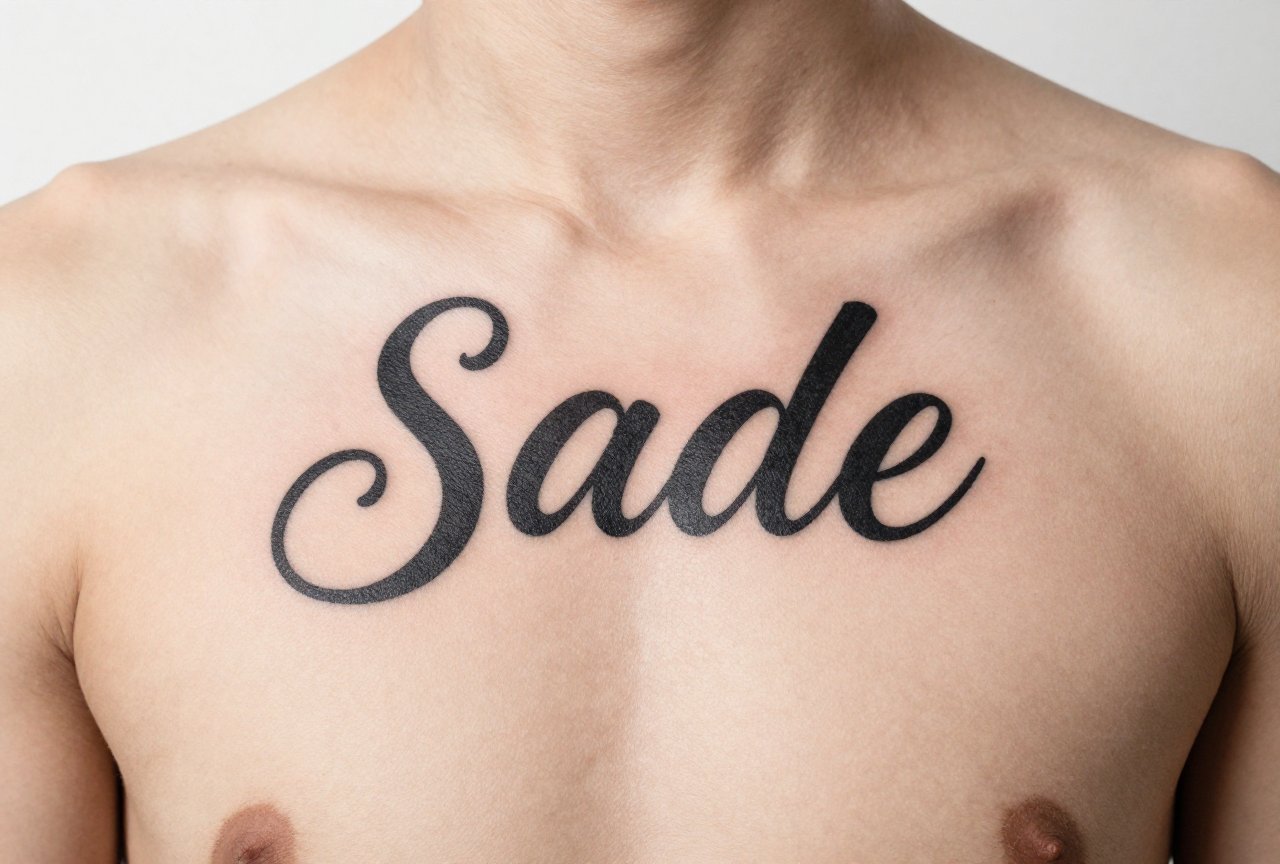
Sade Like a Tattoo Song Meaning: Inked Devotion, Lasting Love
Sade’s “Like a Tattoo” occupies a rare space in music: a ballad that treats the tattoo not as rebellion or fashion, but as permanent evidence of devotion. Released on her 2000 album Lovers Rock, the song uses inked skin as its central metaphor for love that cannot be washed away, forgotten, or outgrown. For anyone drawn to tattoo culture, the track offers something deeper than typical pop references. It grapples with what permanence actually means when carved into living tissue.
Reading the Lyrics as Tattoo Narrative
The song opens with a memory of childhood violence witnessed in the street, then pivots to the narrator’s own wound: a love that has marked her indelibly. “You’ve left a mark on me,” Sade sings, and the metaphor extends naturally. The tattoo becomes something she did not choose yet cannot remove, a design that has become part of her physical self.
This framing differs from how tattoos are often portrayed in popular music. Rather than the voluntary acquisition of body art, the song emphasizes the involuntary nature of deep emotional imprinting. The lover’s mark exists whether she wills it or not. For tattoo artists and collectors, this resonates with a particular truth: some pieces you select carefully, others you grow into without planning.
The Violence Beneath the Beauty
What distinguishes “Like a Tattoo” from simpler love songs is its acknowledgment of pain as inseparable from the mark. The opening street scene establishes that witnessing violence leaves its own tattoo, one that precedes romantic love. Sade often linked her songwriting to personal experience, and here the layering suggests that all permanent marks carry complex origins.
- The childhood memory of blood on pavement creates a visual echo with the later metaphor of ink under skin
- Both forms of marking happen to the observer, not by her choice
- The tattoo thus becomes a bridge between trauma and devotion, two experiences that similarly resist erasure
The Permanence Problem in Tattoo Culture
Contemporary tattooing has developed sophisticated removal technologies, yet the cultural understanding of tattoos remains rooted in irreversibility. Sade’s song predates the widespread availability of laser removal, and its power partly derives from an era when the metaphor carried more absolute weight. Even now, removal is expensive, imperfect, and itself a form of scarring.
The song’s central tension asks whether permanence is prison or proof. The narrator seems ambivalent, unable to celebrate her marking yet unable to deny its reality. This mirrors how many collectors feel about pieces acquired during different life phases. The tattoo does not update; the person around it does.
Living with Unwanted Designs
Cover-up work represents one of the most technically demanding areas of tattoo practice. Artists must work within existing constraints, using limited palettes and compromised skin. Sade’s lyric “I wear it like a tattoo” suggests a similar accommodation: not pride, exactly, but integration. The mark has become part of how she recognizes herself.
Professional artists encounter this psychology regularly. Clients arrive with pieces from relationships ended, beliefs revised, aesthetics outgrown. The consultation often involves negotiating between removal, coverage, and acceptance. The song captures that third option with unusual precision.
Visual Imagery and Musical Texture
Stuart Matthewman’s production on Lovers Rock employs sparse instrumentation that leaves space for Sade’s voice to carry the weight of the metaphor. The guitar work suggests acoustic warmth without folk cliché; the rhythm section maintains the album’s characteristic blend of reggae influence and quiet storm intimacy.
This sonic restraint matters for the tattoo metaphor. The song does not dramatize or decorate its central image. It presents the mark as fact, allowing the listener’s own associations with permanence and pain to activate. For tattoo practitioners, this understated approach mirrors how experienced collectors often discuss their work: matter-of-fact, avoiding the theatrical language that surrounds tattooing in mainstream media.
The Color Palette of Memory
Sade’s lyrics mention specific visual details: the red of blood, the grey of street, the darkness of the tattoo itself. This limited palette creates a cinematic quality that tattoo artists recognize from their own design processes. Effective black and grey work depends on similar restraint, using contrast rather than color variety to create depth and emotion.
- The song’s visual economy reflects principles of strong tattoo design: clarity over clutter, single focal points, negative space as active element
- The narrator’s memory operates like healed tattoo pigment: settled, stable, slightly muted from original intensity
- Both song and skin mark gain power through what they omit as much as what they include
Gender and the Marked Body
Women’s relationships to permanent body marking have historically carried different social weight than men’s. “Like a Tattoo” enters this territory without explicit commentary, yet its perspective is unmistakably gendered. The narrator receives the mark; she does not administer it. Her body is the canvas, not the instrument.
This passivity complicates easy feminist readings. The song does not celebrate the mark as chosen self-expression, nor does it reject it as violation. Instead, it occupies the difficult middle where many women actually live with their tattoos: as negotiations between self-determination and circumstance, between aesthetic choice and social pressure, between present desire and future uncertainty.
Collecting and Being Collected
The tattoo collector’s identity involves active selection: researching artists, saving for appointments, enduring sessions. Sade’s narrator experiences something closer to being collected, marked by another’s presence. This distinction matters for understanding how tattoo culture has evolved. Contemporary practice increasingly emphasizes collaboration and client agency, yet the historical reality of tattooing includes plenty of involuntary marking, from penal codes to colonial imposition to coerced relationship tattoos.
The song’s power partly derives from refusing to resolve this tension. It does not become a celebration of tattoo culture or its rejection. It simply presents the marked body as condition, not choice.
Legacy and Interpretation
“Like a Tattoo” has accumulated interpretive layers across two decades of listener engagement. Some hear it as straightforward romantic devotion; others emphasize the trauma framework established in the opening verse. Both readings are sustainable because the song’s metaphorical structure permits them without demanding either.
For tattoo practitioners, the track offers something rare: a mainstream musical reference that takes the physical reality of tattooing seriously. It does not use the tattoo as mere signifier of edginess or authenticity. It considers what permanence feels like from inside the marked skin, with all the ambivalence that entails.
The Album’s Broader Context
Lovers Rock as a whole explores commitment, endurance, and the costs of deep attachment. “Like a Tattoo” fits this architecture precisely. The album title references a reggae subgenre associated with romantic devotion, yet Sade’s treatment is always more melancholic than celebratory. The tattoo becomes one of several metaphors for bonds that persist beyond their welcome or utility, yet persist nonetheless.
This thematic consistency gives the song additional weight. It is not an isolated image but part of a sustained meditation on what lasts and why, on the difference between wanting something to endure and having no choice about its endurance.
Final Thoughts
Sade’s “Like a Tattoo” rewards attention from tattoo culture participants because it understands something fundamental about permanent marking: the most significant designs are not necessarily the most beautiful or the most chosen. They are the ones that become inseparable from the self that carries them, for better and for worse.
The song does not romanticize this condition. It presents it with the quiet authority of someone who has lived inside the metaphor long enough to know its full cost. For collectors and artists alike, that honesty matters more than celebration. The tattoo industry has developed abundant language for acquisition and display. Sade offers something rarer: language for living with what cannot be returned or removed.
Whether you approach the song as a listener, a collector, or a practitioner, its value lies in this refusal of easy resolution. The mark remains. The body changes around it. The song ends without answering whether this constitutes tragedy or testament, leaving that determination to the skin that carries it.
Frequently Asked Questions
What album is “Like a Tattoo” by Sade on?
The song appears on Sade’s fifth studio album, Lovers Rock, released in 2000. The album marked a return after an eight-year hiatus and explored themes of romantic devotion and endurance throughout its tracks.
Is “Like a Tattoo” actually about getting a real tattoo?
The song uses the tattoo as metaphor rather than describing literal body art. The central image represents emotional imprinting that cannot be removed, paralleling how actual tattoos become permanent parts of the physical self.
What does the opening verse about childhood violence mean?
The street scene establishes that witnessing trauma leaves its own permanent mark, creating a framework for understanding the later romantic metaphor. The song suggests that all deep impressions, whether from violence or love, share qualities of permanence and involuntary acquisition.
Why do tattoo artists and collectors find this song resonant?
Unlike most pop references to tattoos, the song takes permanence seriously as a lived condition rather than a fashion choice. It captures the ambivalence of living with marks that outlast their original context, a common experience for long-term collectors.