Saws make unexpectedly compelling tattoo subjects. The geometry of teeth, the curve of a handle, the industrial weight of a circular blade, these elements translate into bold, readable designs that hold up over time. If you’re drawn to woodworking heritage, horror iconography, or the abstract potential of mechanical forms, saw tattoos offer more visual territory than first glance suggests.
Popular Styles
Not every style suits every subject. Saws, with their hard edges and functional purpose, demand approaches that respect their inherent structure while allowing artistic interpretation.
American Traditional
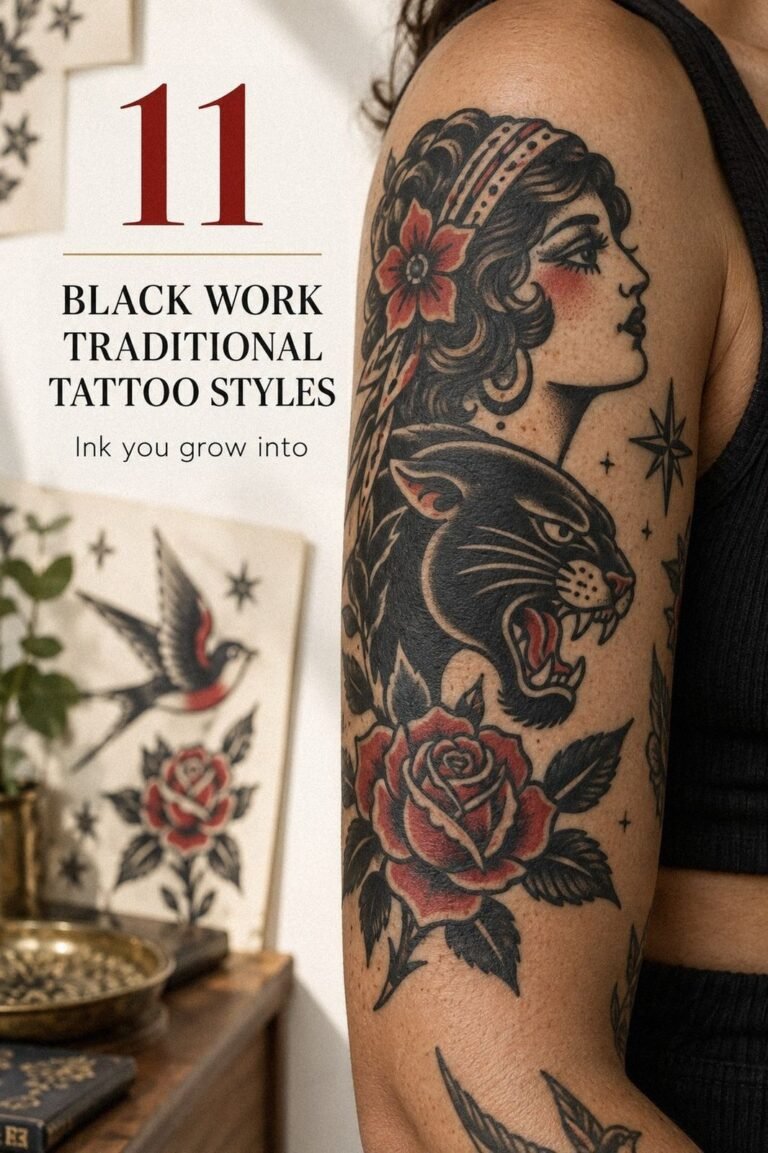
The classic bold-line approach works exceptionally well for hand saws and crosscuts. Thick black outlines, limited color palette of red, yellow, green, and black, and stylized proportions give these tools a vintage trade-sign quality. Teeth get simplified into rhythmic patterns rather than individually rendered. This style ages predictably, the heavy lines stay readable even as color softens slightly over decades.
Blackwork and Dotwork
Mechanical subjects thrive in high-contrast black ink. A circular saw blade rendered in dense blackwork becomes almost abstract, the teeth dissolving into pattern near the center. Dotwork adds texture to wooden handles or creates the illusion of spinning motion in circular blades. These approaches suit larger pieces where the density of ink won’t overwhelm small areas.
Realism and Neo-Traditional
For clients wanting recognizable specific tools, perhaps a grandfather’s actual handsaw, realism captures rust patina, worn wood grain, and the particular geometry of vintage manufacturers. Neo-traditional bridges the gap: the structure and boldness of traditional with expanded color range and more detailed rendering. A well-executed realistic saw tattoo requires an artist comfortable with metal reflection and wood texture.
Design Ideas
Moving beyond the obvious single-tool image opens genuine creative territory.
- Anatomical integration: A saw blade replacing a forearm bone, teeth emerging from skin, or the tool as prosthetic extension. These designs demand careful anatomical placement to read correctly.
- Tool compositions: Saws paired with matching planes, chisels, or squares in a carpenter’s arrangement. The visual rhythm of handles and blades creates cohesive larger pieces.
- Horror references: The circular saw carries unavoidable association with certain film franchises. Subtle incorporation, stylized blade, blood spatter handled with restraint, or the tool as background element rather than centerpiece, avoids costume-party obviousness.
- Negative space blades: The saw shape carved from surrounding blackwork, the skin itself forming the metal surface. Technically demanding but visually striking.
- Deconstructed mechanics: Exploded views showing tension screws, blade mounts, and handle construction as technical illustration.
Scale Considerations
Small saw tattoos (under three inches) sacrifice detail. Teeth merge into vague serration. The handle dominates. At larger scales, blade etchings, manufacturer stamps, and wood grain become possible. A full back piece allows a saw at actual size or larger, becoming architectural rather than decorative.
Best Placements
Saw shapes suggest certain locations through their own proportions.
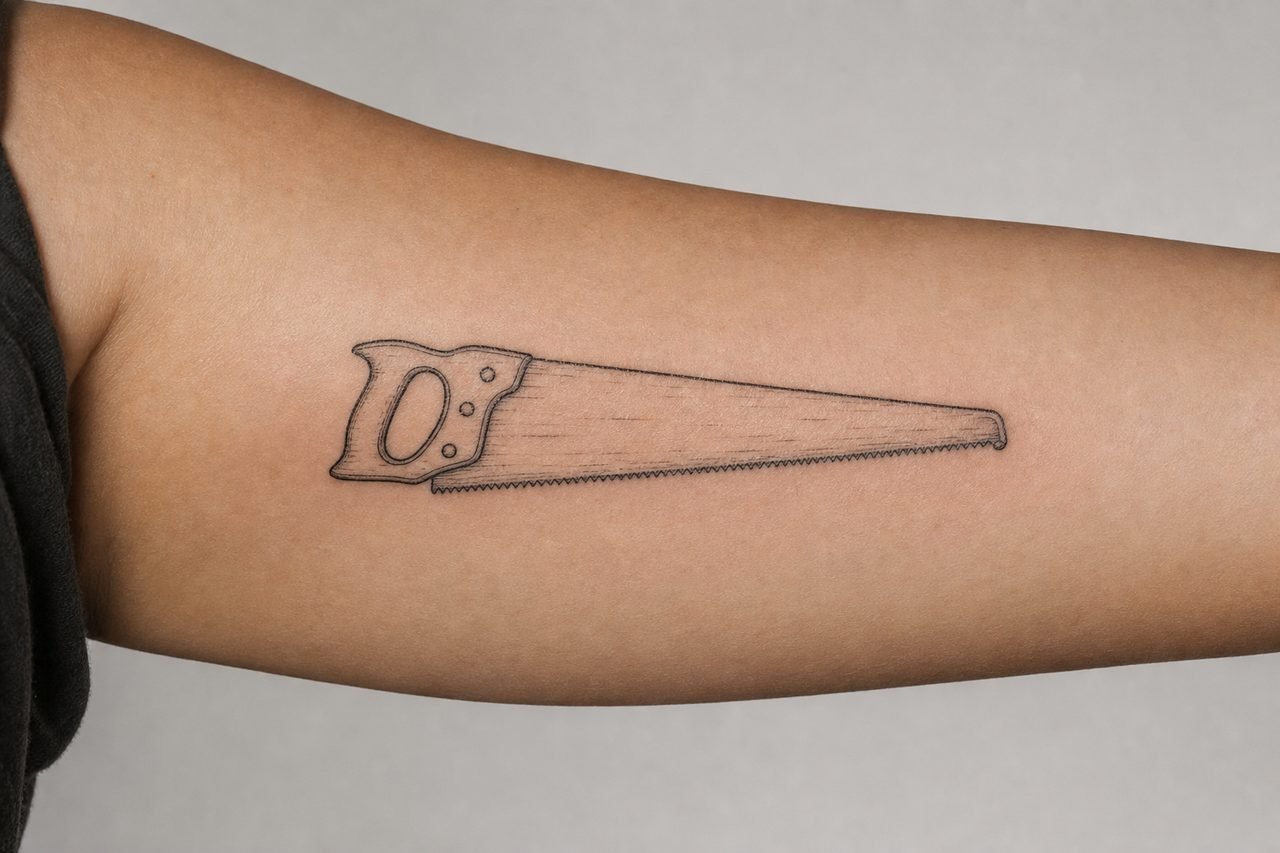
The elongated rectangle of a handsaw maps naturally to the outer forearm, the calf’s long axis, or the side of the torso. Circular saw blades suit rounded surfaces: shoulders, knees, or the center of the chest where their geometry echoes the body’s own curves. The compact mass of a coping saw or jigsaw fits smaller areas, wrists, ankles, behind the ear.
Consider movement. A saw tattoo on a frequently flexing area (inner elbow, wrist) will distort when the body moves. The rigid form of a saw makes this distortion more noticeable than organic subjects. Placement on more stable surfaces preserves the design’s integrity.
For larger compositions, the thigh offers substantial flat canvas. The back provides uninterrupted space for technical, detailed renderings. Hands and fingers, while popular for small tool tattoos, present significant aging challenges, fine lines blur faster here than almost anywhere else on the body.
Color Choices
Saw tattoos gravitate toward limited palettes for good reason. The subject itself suggests them.
- Black and grey: The default for mechanical subjects. Reads immediately as metal, shadow, weight. Ages most predictably.
- Traditional limited color: Red handle, silver blade, black outlines. Immediate recognition, strong graphic impact.
- Wood tones: Actual saw handles use specific hardwoods, beech, apple, cherry. Warm browns and ambers against cool grey metal create natural contrast without rainbow complexity.
- Rust and patina: Orange-brown oxidation, blue-black temper colors on heated steel. These palettes suggest age and use, narrative without literal storytelling.
Full color realism on metal surfaces requires exceptional technical skill. Unskilled color packing on supposed steel reads as plastic or ceramic. The reflective quality of metal is harder to achieve than most subjects. When in doubt, restraint serves the design.
Tips for Choosing
Specificity separates memorable saw tattoos from generic clip-art versions.
Reference Material
Bring actual photographs of specific tools, not Google image search results. Vintage Disston saws carry different proportions than modern Stanley models. Japanese pull saws reverse the tooth direction entirely. European frame saws look nothing like American carpenter’s saws. Your artist needs accurate reference to honor the subject.
Artist Selection
Mechanical subjects require different strengths than portraits or flowers. Look for portfolios showing metal rendering, wood texture, or tool/weapon subjects. An artist strong in soft organic work may struggle with the hard edges and precise geometry saws demand. Ask directly about experience with mechanical or industrial subjects.
Long-term Thinking
Teeth are fine detail. In a small tattoo, they become the first element to lose definition as ink spreads slightly over years. Plan for this: either scale large enough to preserve tooth individuality, or design with the understanding that serration will soften into general texture. The handle, with its broader shapes, remains readable much longer.
Consider the tattoo’s context in your broader collection if you have one. A single realistic saw among traditional tattoos creates visual discord. A blackwork saw among other mechanical pieces strengthens a coherent overall aesthetic.
Final Thoughts
Saw tattoos reward the specific over the generic. The difference between a memorable piece and a forgettable one often lies in whether the artist understood what makes this particular tool distinctive, the taper of a blade, the horn shape of a handle, the spacing of teeth set for rip cuts versus crosscuts. Bring knowledge to the consultation. Know whether you want a backsaw or a panel saw, a Skilsaw blade or a table saw riving knife. This precision doesn’t limit the art; it grounds it in something real enough to support genuine creative interpretation. The best saw tattoos cut both ways, immediately readable as what they are, yet clearly transformed by the artist’s vision into something that belongs permanently on skin.
Frequently Asked Questions
Do saw tattoos hurt more than other designs?
Pain depends on placement and your personal sensitivity, not the image itself. Saws often suit meatier areas like outer forearms or thighs where discomfort is moderate. Fine detail work near bones or thin skin increases sensation regardless of subject.
How much should I expect to pay for a quality saw tattoo?
A palm-sized blackwork piece typically runs $200-400 at reputable shops. Detailed realism or larger compositions reach $500-1,000+. Highly technical artists in major cities charge more. Price reflects time and skill, not just size.
Will a circular saw tattoo look too much like a horror movie reference?
Only if you design it that way. Avoid blood spatter, specific character imagery, or obvious film color schemes. Focus on the tool’s actual mechanical form, blade geometry, motor housing, safety features, and it reads as industrial, not cinematic.
Can saw tattoos be easily covered up later?
Dense blackwork and solid metal areas limit coverup options. If you’re uncertain, choose lighter shading, leave more skin visible, or place on areas where larger future pieces are possible. A skilled coverup artist can work with most existing tattoos, but planning ahead saves trouble.
More Tattoo Ideas
- Create Your Own Tattoo Design Free
- Miami Tattoo Ideas: Ink That Matches the City
- North Carolina Tattoo Ideas That Actually Work
- Explore more