The shamrock is one of those tattoos that looks simple but carries real weight. Three leaves, clean lines, instantly recognizable. People have been putting this symbol on their skin for generations, and the reasons run deeper than just St. Patrick’s Day vibes.
If you’re Irish by blood, Catholic by faith, or just someone who respects a symbol with centuries of meaning behind it, the shamrock earns its place. Here’s what it actually means and what you need to know before you sit down for it.
Core Meaning: Luck, Faith, and Irish Identity
The shamrock’s most widely recognized meaning is good luck. That reading comes from the three-leaf clover being associated with fortune in Irish folk tradition. You’ll hear it tied to finding love, health, and prosperity. It’s not superstition for a lot of people. It’s genuine belief in a symbol that’s traveled through family lines for generations.
The second big meaning is Irish identity. For the Irish diaspora especially, the shamrock is a badge of heritage. It says where you come from without a single word. Pair that with the luck angle and you’ve got a tattoo that’s both personal and public, something that reads from across the room and holds meaning every time you look down at your own arm.
The Religious Layer: St. Patrick and the Trinity
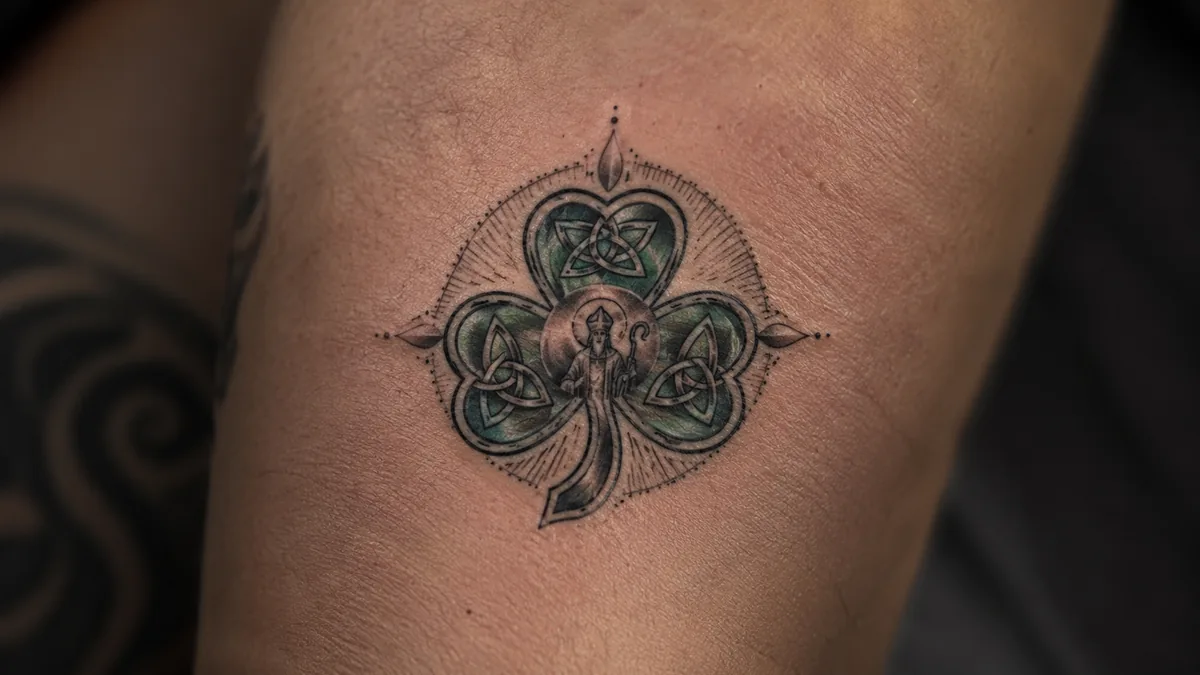
Three leaves, one story: faith, luck, and where you come from.
St. Patrick, the patron saint of Ireland, reportedly used the shamrock to explain the Christian Holy Trinity to the Irish people in the 5th century. Three leaves on one stem: Father, Son, Holy Spirit. One plant, three distinct parts. It was a teaching tool that stuck. Because of this, the shamrock carries strong Catholic symbolism that’s separate from the luck angle entirely.
For people with a Catholic background, a shamrock tattoo can be a quiet statement of faith. It’s not as overt as a cross or a rosary, but the meaning is there for those who know it. Some clients combine the shamrock with a cross or religious script to make that layer explicit. Others leave it simple and let the symbol do the work on its own.
Historical Background: How the Symbol Got Here
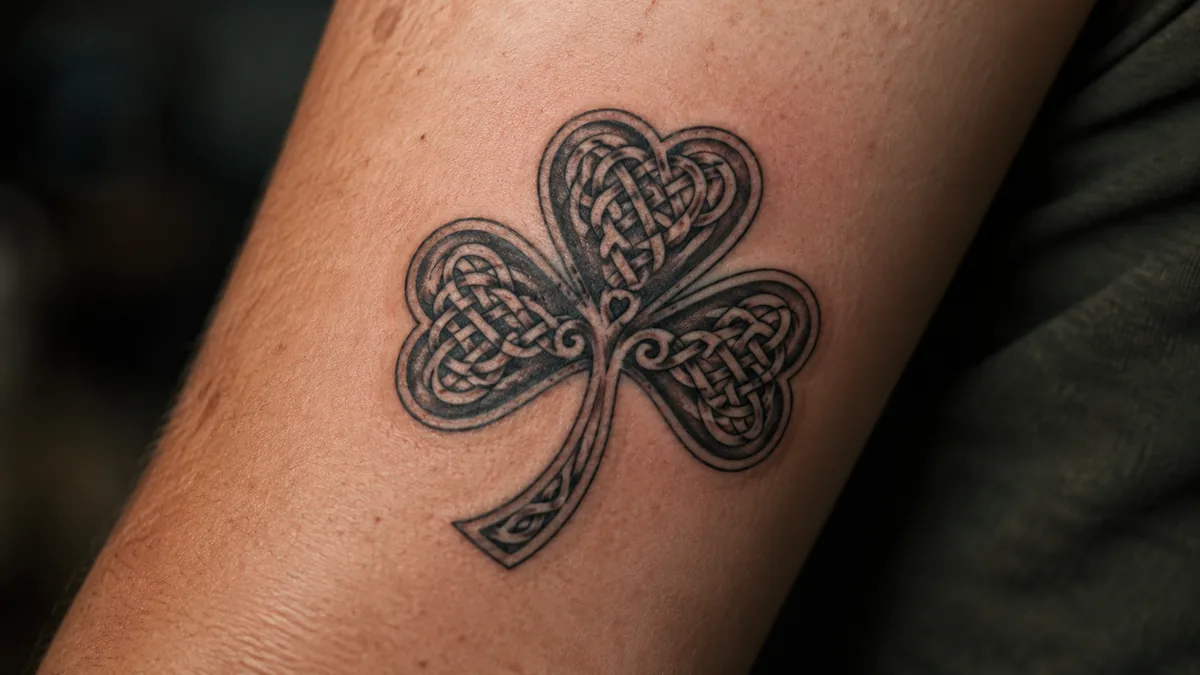
The word shamrock comes from the Irish seamrog, meaning young clover. It was already tied to Irish identity well before St. Patrick entered the picture. Ancient Celts considered the number three sacred, connected to land, sea, and sky. The three-leaf plant fit naturally into that framework. By the time Christianity arrived in Ireland, the shamrock had centuries of symbolic weight behind it.
During the 18th and 19th centuries, the shamrock became a political symbol of Irish resistance under British rule. Wearing one was, at certain points in history, an act of defiance. That context matters. When someone gets a shamrock tattooed today, they may be tapping into that lineage of resilience, even if they don’t spell it out. The symbol has earned its toughness.
Four-Leaf Clover vs. Shamrock: Know the Difference
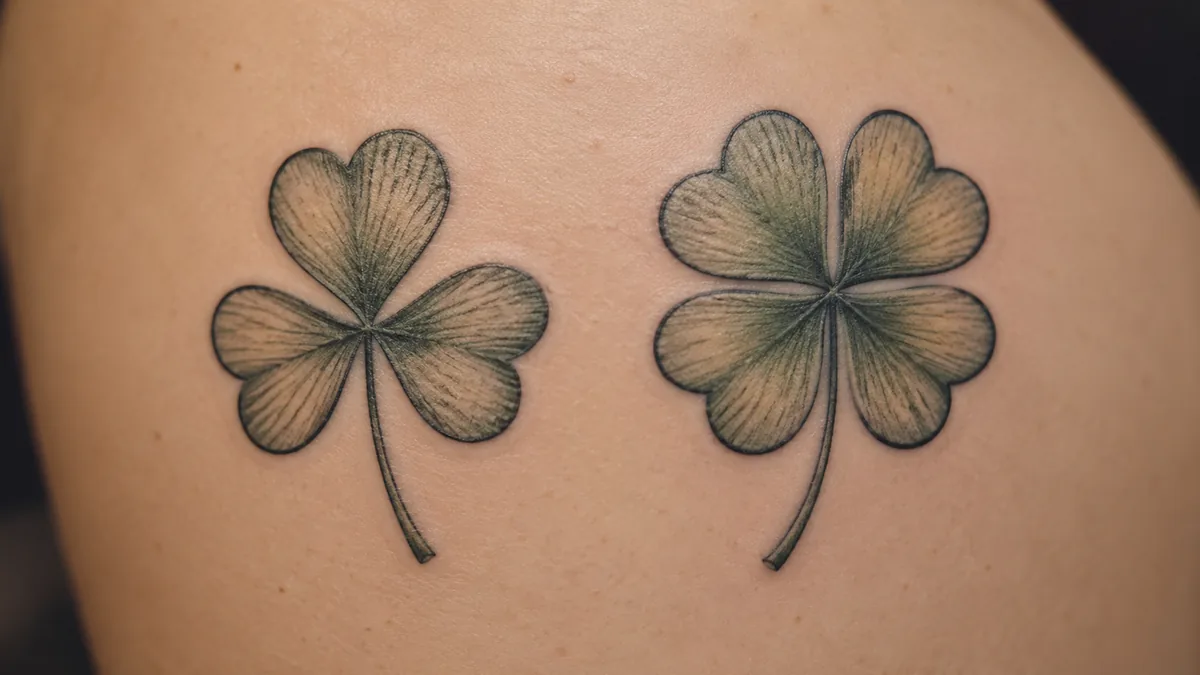
A lot of people use shamrock and four-leaf clover interchangeably. They’re not the same. The shamrock is specifically three leaves. The four-leaf clover is a genetic mutation, rare in nature, and its meaning leans purely on luck without the religious or Irish nationalist layers. If you want the Trinity connection or the St. Patrick angle, you want three leaves. Full stop.
That said, some people intentionally get a four-leaf clover for the luck meaning alone, and that’s a solid choice. Others mix it up by incorporating both. Either way, be clear with your artist about what you want. Three leaves versus four is a design call that changes the meaning, and a good artist will ask you to confirm before they start drawing.
Design Styles and What Works on Skin
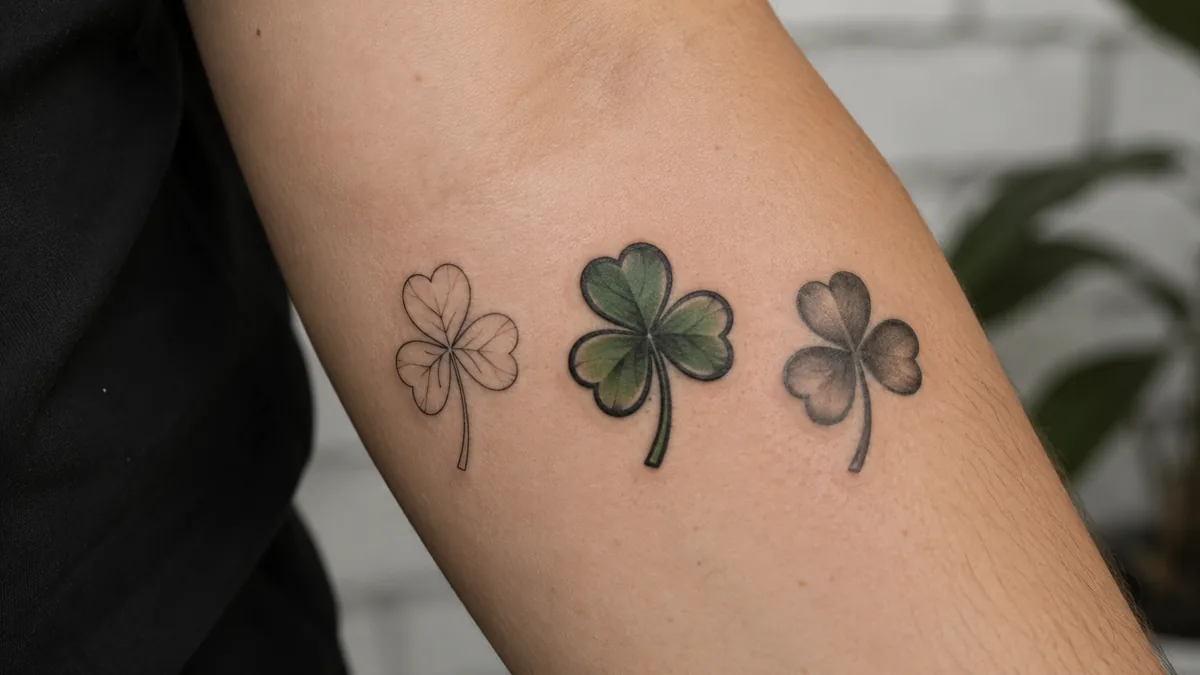
Traditional American style works beautifully for shamrocks. Bold outlines, solid green fill, maybe a banner with a name or phrase wrapped around it. That design reads from across the room, heals clean, and holds up over decades. Black and grey shamrocks read more subtle and tend to have a delicate, old-school feel when done with smooth whip shading. Both approaches age well if your artist does solid, confident linework.
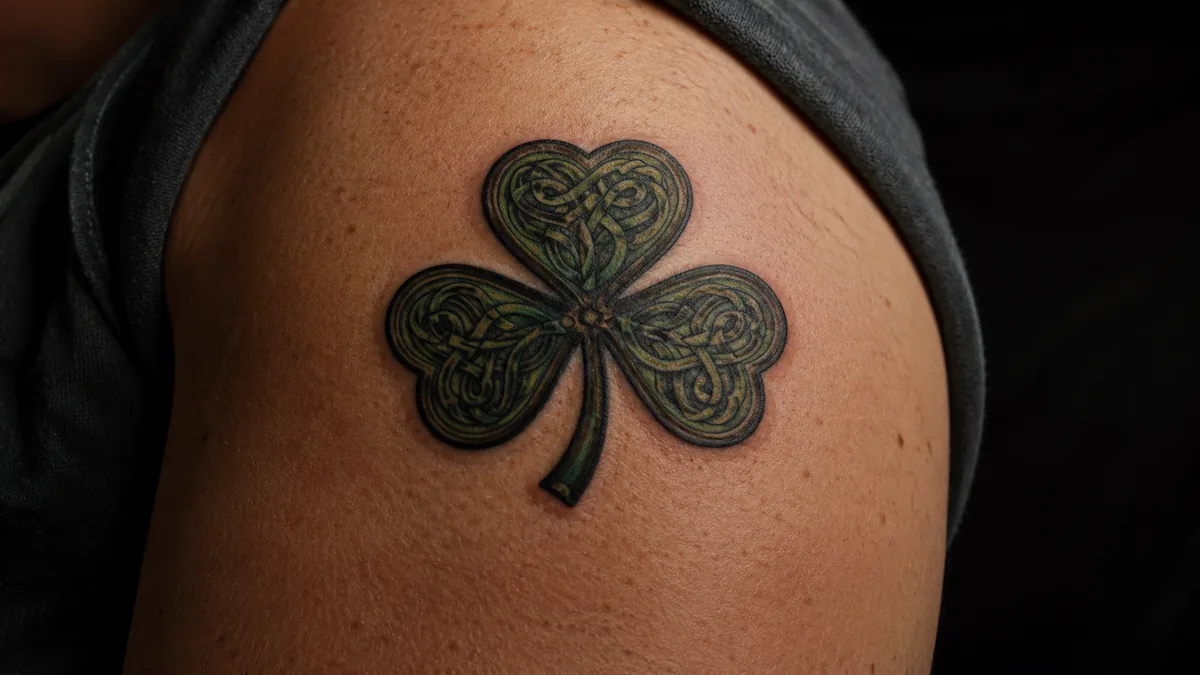
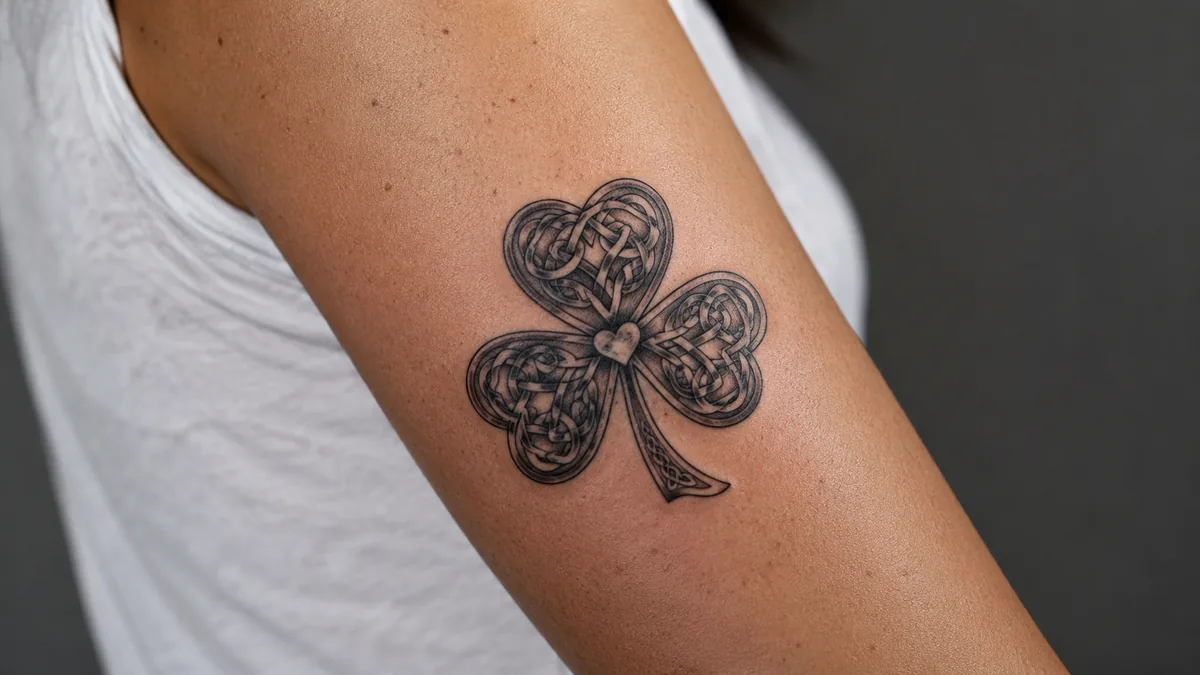
Fine line shamrocks are popular right now, especially smaller pieces on wrists, behind the ear, or on the ankle. They look crispy fresh out of the shop but require more maintenance over time since thin lines can spread in high-wear zones. If you’re going fine line, choose a lower-wear placement and be ready for a touch-up down the road. Geometric versions and Celtic knotwork borders are all options, but traditional bold work simply holds the best long-term.
Color vs. Black and Grey

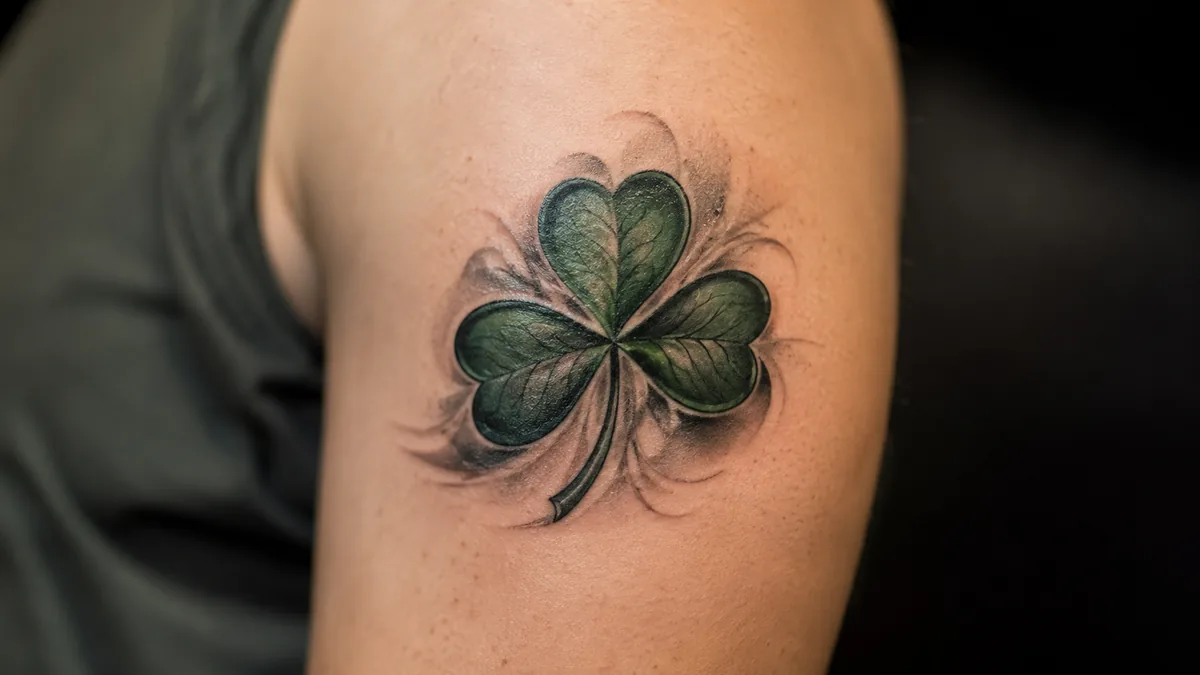
Green is the obvious call for a shamrock, and a saturated, rich green done right looks clean and bold for years. The key is your artist using high-quality pigment and packing it solid. Patchy color or thin coverage will fade unevenly and look washed out within a few years. A skilled artist will build up layers and make sure that green is fully saturated before they’re done.
Black and grey shamrocks have a different energy entirely. They feel more timeless, more versatile. A black outline with grey wash shading lets the shape carry the meaning without relying on color. This approach also ages more predictably and pairs cleanly with other tattoo work if you’re building a sleeve or a larger piece. Both are valid. Ask your artist which approach fits their strengths, because a great black and grey beats a mediocre color every time.
Placement, Pain, and How It Ages
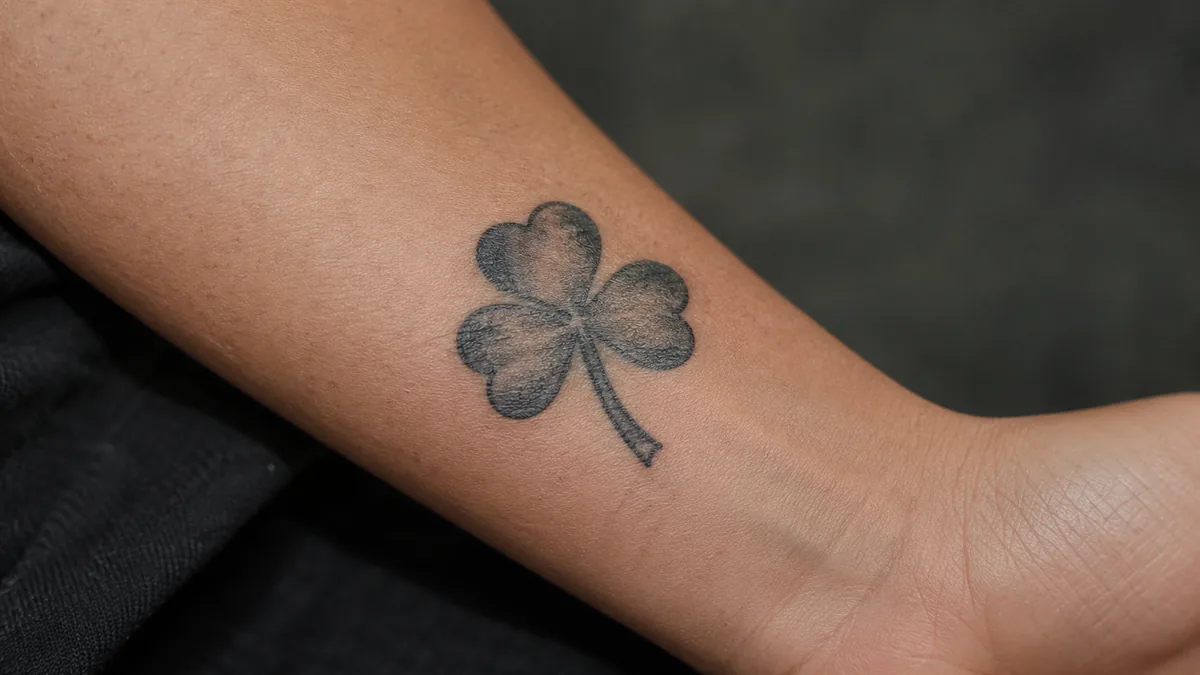
Common placements for shamrocks include the upper arm, forearm, calf, chest, and shoulder blade. These are all solid choices. The skin in these areas is relatively stable, the tattoo heals predictably, and the lines stay tight over years. The upper arm and calf are especially forgiving for detail work. If you’re going small and fine line, the inner wrist or behind the ear can work but expect those placements to be a bit spicy and to need refreshing sooner.
Avoid putting detailed shamrock work on high-wear zones like palms, fingers, or sides of feet if you want it to last. Those areas blow out fast and the ink migrates. For pain level: the forearm and outer calf are manageable for most people. The ribs, ditch of the elbow, and back of the knee are genuinely rough. Be honest with yourself about your tolerance before you commit to a placement that’s going to be a full session of white-knuckling it.
Who Gets Shamrock Tattoos and How to Make It Personal
Irish-Americans are the core audience, but shamrock tattoos cross a lot of demographics. People get them for luck before major life events, to honor a family member, to mark a connection to Ireland through ancestry or travel, or simply because they connect with the symbol’s deep roots. Military and first responder communities sometimes incorporate shamrocks into memorial pieces or unit insignia tattoos. The symbol travels well across contexts.
To make a shamrock tattoo feel personal rather than generic, build in a detail that means something specifically to you. A birth date in the banner, a family name, a specific county’s colors, a Celtic knotwork border, or a portrait element nearby. You can also scale it. A small, simple shamrock on the inner wrist says something different than a large traditional piece on a full forearm. Think about what you actually want people to see, and what you want to remember every time you look at it yourself.