
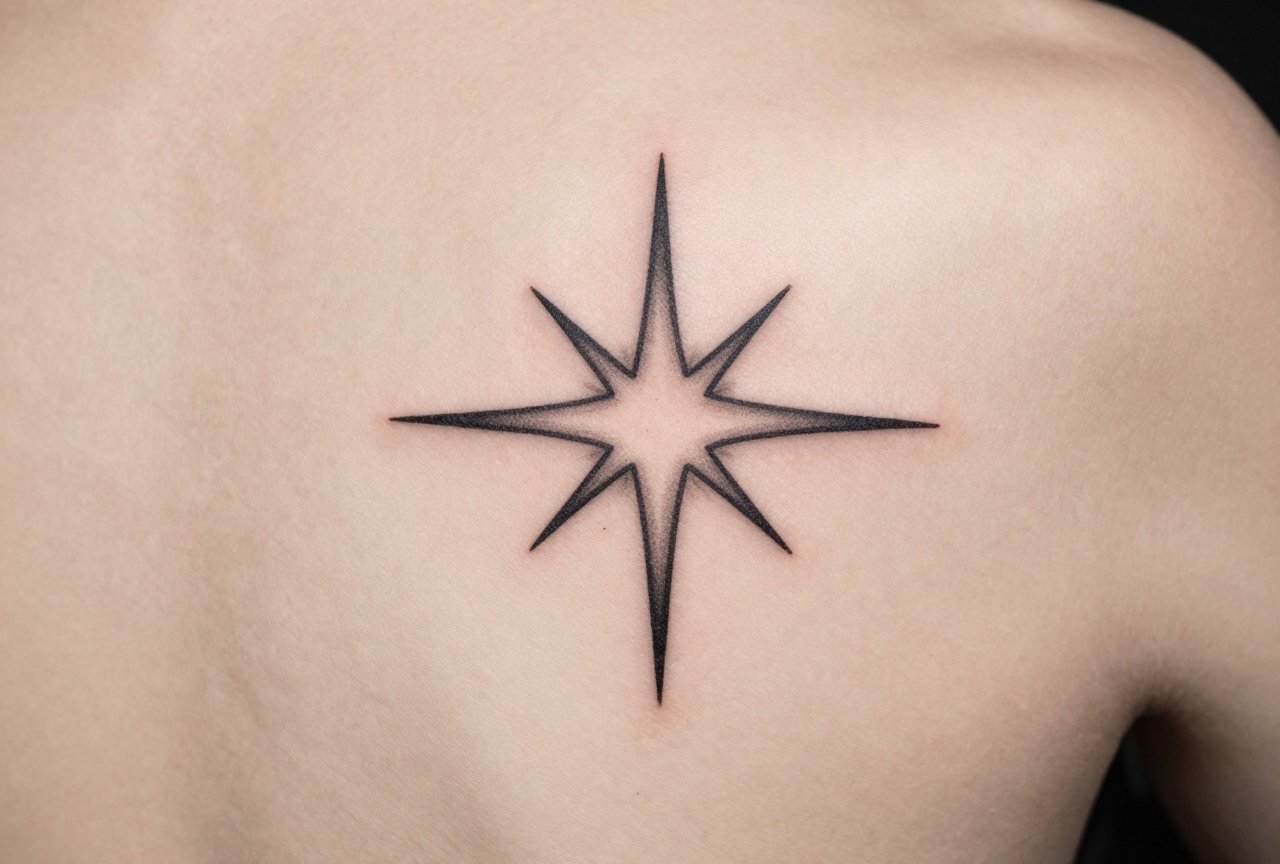
A shooting star tattoo most commonly represents a wish, a fleeting moment of beauty, or a major life change that blazed bright and passed. I’ve had clients cry in my chair getting these after losing someone, graduating sober, or finally leaving a bad town. The meaning shifts with the person, but the core stays the same: something rare, fast, and worth catching.
Symbolism & History
People have been making wishes on falling stars since at least Ptolemy’s Greece, where the belief was that gods peered through the gaps between spheres and stars slipped through. That ancient impulse, to see something brief and holy and immediately want something from it, still lives in the skin.
The Wishing Bone of the Sky
In my experience, about half the shooting stars I tattoo are wish-fulfillment pieces. Client wants something tangible after the wish comes true, or sometimes after it doesn’t. I’ve done them for lottery wins that changed nothing and miscarriages that changed everything. The star becomes a bookmark. The lines are usually simple: a thin tail, maybe some dots for stardust. Clean. Easy to read from across a room.
Transience & Impermanence
The other half lean into the Japanese concept of mono no aware, the pathos of things passing. Cherry blossoms get more press, but shooting stars hit the same note without the cultural baggage. One client, a hospice nurse, got a single falling star behind her ear. “Everything I love leaves fast,” she said. We didn’t talk much after that. The needle filled the silence.
- Wishing and hope across cultures
- Fleeting beauty, moments that can’t be held
- Guidance, some sailors still call them “falling stars” for navigation luck
- Loss memorialized as light rather than darkness
Common Variations & Styles
The style changes the meaning more than people expect. A traditional American shooting star with bold outlines and saturated red-yellow gradients reads nostalgic, almost carnival. A single-needle fine line version with a long wisp tail feels ethereal, melancholy. I’ve watched clients pivot their entire concept after seeing flash on the wall.
Classic Trail Designs
The most common version: a small star with a sweeping tail of smaller stars or dots. The tail direction matters. Downward toward the ground reads gravity, finality. Upward or diagonal suggests momentum, escape. I usually sketch three directions on transfer paper and let the client feel it on their body before we commit.
Clustered & Constellation Work
Multiple shooting stars together, sometimes with names worked into the tails, are popular for family pieces. One for each child, each year sober, each attempt at something that mattered. The spacing has to breathe. Crowded star clusters age into grey blobs faster than almost anything except tribal armbands. I tell clients: “Give them room to fall.”
- Single star with minimal tail: subtle, personal, ages well
- Traditional bold style: vintage energy, holds color
- Fine line with stippled tail: delicate, needs touch-ups sooner
- Wrapped around another image: roses, moons, eyes, script
Best Placements
Shooting stars have natural motion, so placement should follow that energy. Behind the ear, the tail can sweep down the neck. On the wrist, it shoots toward the hand or heart. I’ve tattooed them on hip bones where underwear elastic catches, on ribs where breathing moves the tail, on ankles where socks rub the stardust away.
High-motion areas blur faster. The wrist side of a shooting star, where the tail thins to nothing, often needs a refresh in five years. Behind the ear holds better but hurts more, that skin’s thin and the vibration travels straight to bone. Collarbone placements look stunning in Instagram photos and fade unevenly from sun and seatbelt friction. I always say: “Pick where you want to live with it, not where you want to photograph it.”
- Behind the ear: hidden, intimate, painful
- Wrist/forearm: visible, directional, higher maintenance
- Ribcage: private, expands with breath, substantial commitment
- Ankle/foot: popular, but heals rough and fades fast
- Upper arm/shoulder: classic canvas, good longevity
Who Chooses This Tattoo / Personal Meanings
After fifteen years, I can almost guess the story by the body language. The ones who want it small and hidden are usually marking something they don’t discuss. The ones who want it big, bright, obvious are celebrating. The ones who bring reference photos of their child’s drawing, those are the hardest to get through dry-eyed.
Life Transitions
Graduations, divorces, relocations, gender transitions. The shooting star marks the moment everything changed direction. One guy got his after walking away from a startup that would’ve made him rich but miserable. “I caught it and let it go,” he said. We put it on his left shoulder, where he could see it in the mirror but others mostly couldn’t.
Memorial & Grief Work
“This is for my mom who died last year. She loved astronomy.” I hear some version of this monthly. Sometimes we add birth dates, sometimes not. Sometimes the star is falling, sometimes it’s already landed. The direction matters less than the doing. The ritual of pain and permanence helps something unfixable feel briefly held.
- People marking achieved wishes or abandoned ones
- Those processing loss through beauty rather than darkness
- Travelers, dreamers, anyone who feels they “caught” something rare
- Clients who want celestial imagery without full zodiac commitment
Similar Symbols
Clients often browse between shooting stars and related imagery. North stars offer permanence instead of transience, good for stability, bad for representing change. Full moons carry feminine, cyclical energy. Comets return, shooting stars don’t; that distinction matters to some people. I’ve talked clients out of shooting stars when they actually wanted comets, and vice versa.
Fireflies get compared a lot lately, especially with the Studio Ghibli resurgence. But fireflies are earthly, catchable, collective. Shooting stars are cosmic, unreachable, solitary. The loneliness is the point for some. For others, it’s the exact problem.
- North star: fixed guidance, consistency, home
- Comet: returning cycles, heraldic, ominous or magnificent
- Fireflies: memory, summer, human-scale magic
- Meteor shower: abundance, shared experience, multiple blessings or losses
Final Thoughts
A shooting star tattoo works because it’s legible. You don’t need to explain it. The image does the work that words fail at, especially for experiences that resist language, grief, hope, the strange gratitude of having witnessed something beautiful that you couldn’t keep.
I’ve tattooed hundreds. The ones I remember aren’t the best drawn or most original. They’re the ones where the person in my chair found a way to carry light without pretending darkness doesn’t exist. The star falls. That’s the whole point. You don’t get to hold it. You get to have seen it, and to still be here, marked by the seeing.
Frequently Asked Questions
Does a shooting star tattoo always mean someone died?
Not at all. I probably do more for graduations, new beginnings, and wishes-come-true than memorials. The meaning is personal. Ask the wearer, or if it’s you, trust what it meant when you wanted it.
Will the tail blur into a smudge over time?
Thin lines and heavy black both spread eventually. I keep tails simple with intentional spacing so aging reads as softer, not muddy. Avoid tiny intricate details if you want it clean in ten years.
Is it bad luck to get a falling star instead of a rising one?
Some clients worry about “downward” energy. I’ve never heard an artist refuse based on direction. The motion that feels right on your body is the right one. Superstition varies by person, not by rule.
Can I add color to a shooting star or should it stay black?
Color works beautifully, traditional yellow-orange cores, blue-white tails, even full rainbow gradients. Just know that lighter colors fade faster and need more maintenance. Black and grey ages most forgivingly.
Related Tattoo Meanings
- Asterisk Tattoo Meaning: Symbolism, Styles Personal Stories
- Star Tattoo Meaning: Symbolism, Styles Personal Significance
- Pyramid Eye Tattoo Meaning
- Explore more









