I‘ve been on stretch marks, post-baby skin, and a hip that flexes every single time someone laughs. That’s the side tattoo reality nobody puts in the inspiration post. Most fine line ribs I see two years later look like someone drew over a bruise with a Sharpie. The pieces that hold? They’re not lucky. They follow rules about needle size, line weight, and where the skin stays stable. This is the side tattoo playbook I give clients who want clean lines in five years, not five months.
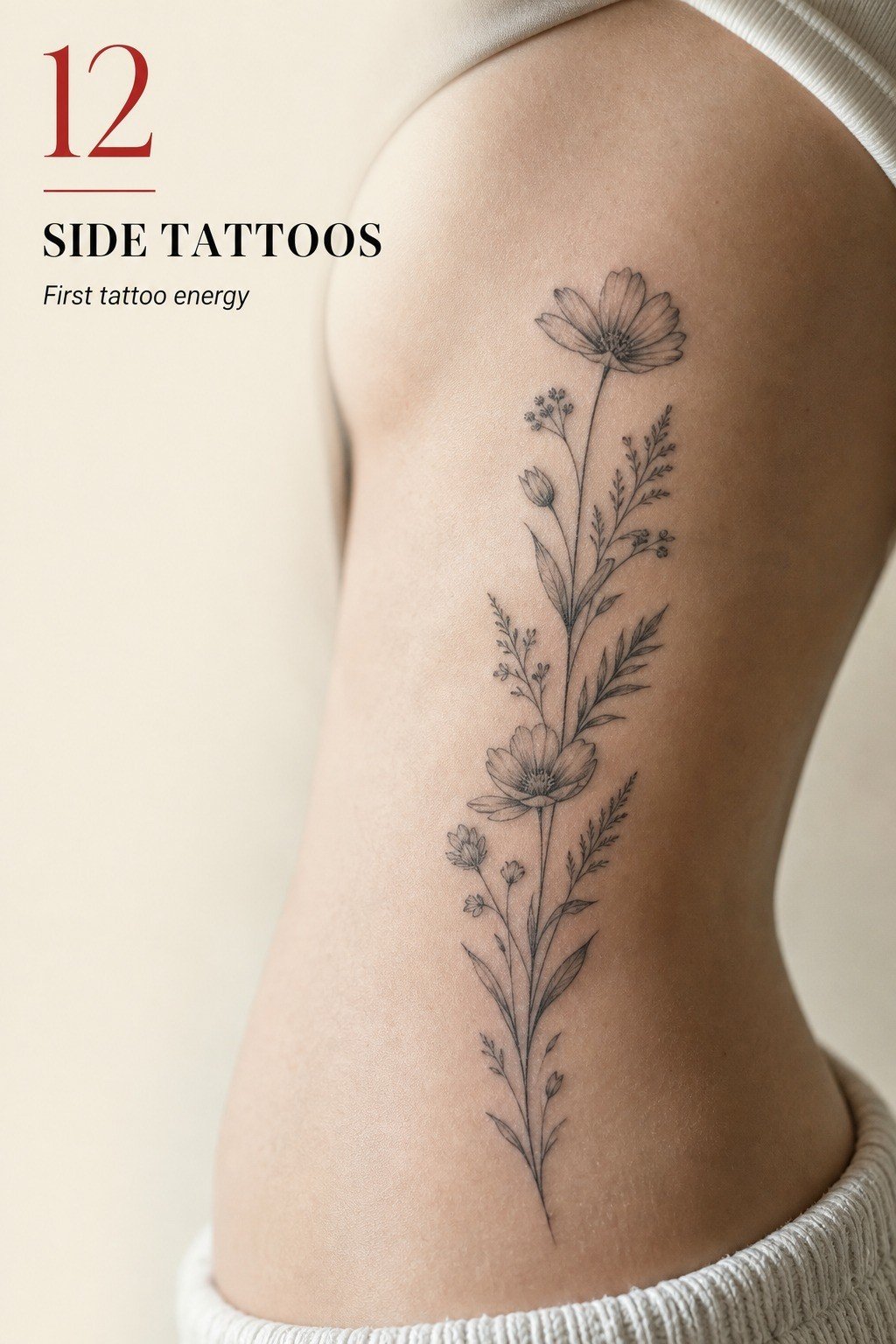
- Run a Fine Line Wildflower Down the Side Ribcage
- Tuck a Script Spine Tattoo Into the Waist
- Float a Tiny Butterfly on the Side Tummy
- Wrap a Blackwork Snake Around the Hip
- Anchor a Japanese Dragon Across the Side Torso
- Wrap a Peony Around the Shoulder Cap
- Drop a Moon Phase Line Down the Ribs
- Letter an Angel Number on the Side Waist
I’ve tattooed side ribs for almost a decade, and the after pic never tells you what the client did during healing. Side skin stretches when you breathe, twist, and sit.
A single-needle rib piece on a 22-year-old looks nothing like the same piece on a 38-year-old who runs. Both can age well, but only if the artist respected the skin in the first place.
If you’re planning your first side tattoo, save this. If you’re a collector planning your next session, save it harder.
- Run a Fine Line Wildflower Down the Side Ribcage
- Tuck a Script Spine Tattoo Into the Waist
- Float a Tiny Butterfly on the Side Tummy
- Wrap a Blackwork Snake Around the Hip
- Anchor a Japanese Dragon Across the Side Torso
- Wrap a Peony Around the Shoulder Cap
- Drop a Moon Phase Line Down the Ribs
- Letter an Angel Number on the Side Waist
- Stack Botanical Linework Down the Spine
- Why Underboob Ornamentals Need to Go Bold or Go Home
- Drop a Minimal Wave on the Hip
- Phoenix Realism Over a Smaller Symbolic Piece: When to Go Big
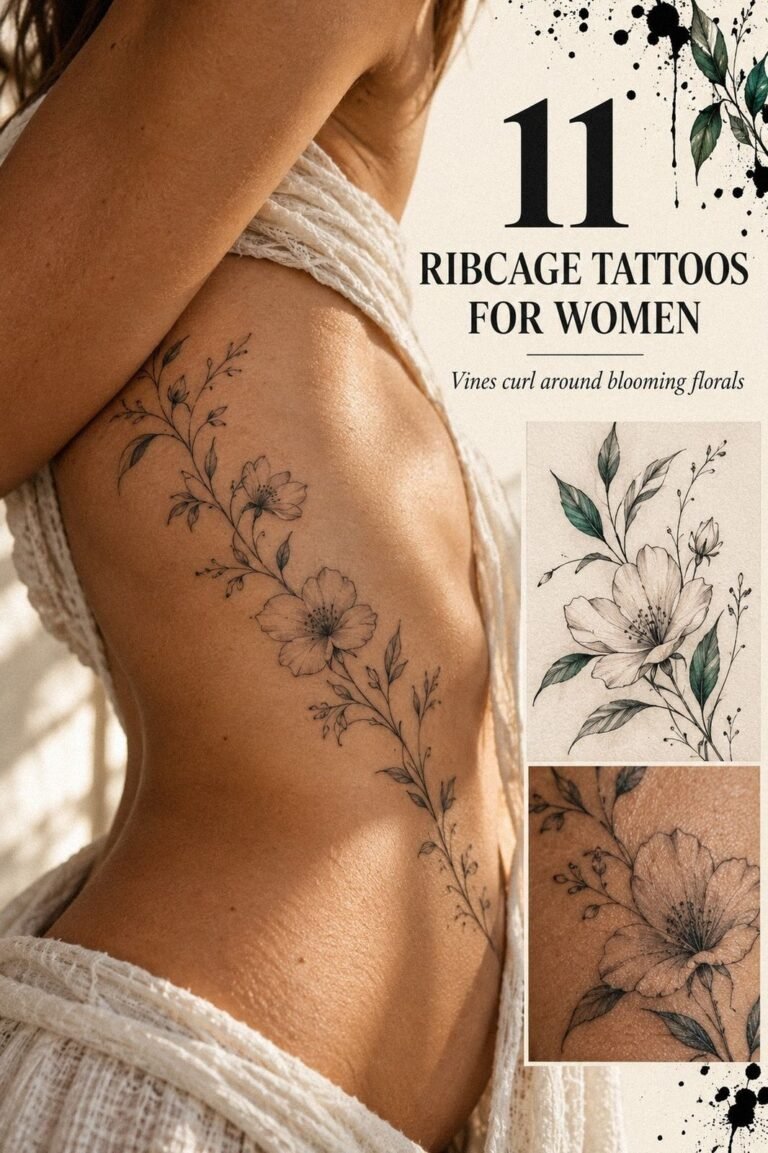
1Run a Fine Line Wildflower Down the Side Ribcage
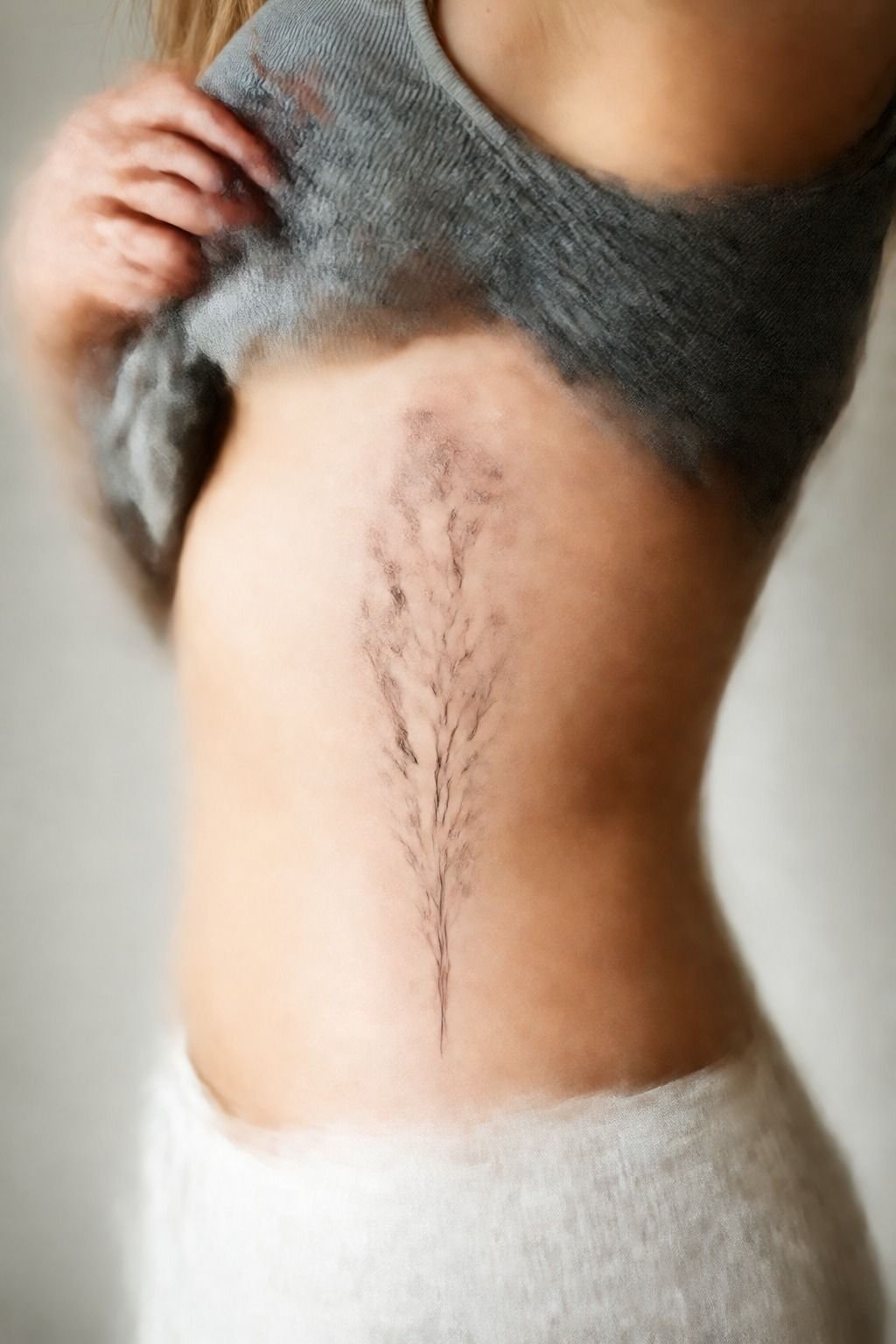
[IMAGE: Healed side tattoo reference for idea 1, run a fine line wildflower down the side ribcage, photographed on real skin in clean natural light]
Wildflowers along the ribcage look like a watercolor painting until they don’t. The skin here stretches every single time you reach for a coffee cup, so the artist has to commit to one clean pull instead of ten fuzzy ones.
I size these around 4 to 6 inches so each stem has clearance to breathe and the petals don’t melt together at five years. A 3RL single-needle config keeps the lines crisp; anything wider mushes out fast.
Color works too, but black ink is your best friend for longevity on ribs. Save wildflowers for low-wear skin if you want them to read clearly at a glance at year three.
Style: fine line botanical. Healing: 2 to 3 weeks surface, full settle around 2 to 3 months.
A small daisy cluster on the floating rib will fade faster than a wild rose climbing toward the bra line, so anchor the design toward your sternum where the skin moves less. Plan for a touch-up at 8 to 12 months if you want it crispy forever.
That upkeep is worth it if fine detail is the whole point. If you’re still deciding between sizes, our side tattoos for women guide breaks down the placement math.
2Tuck a Script Spine Tattoo Into the Waist
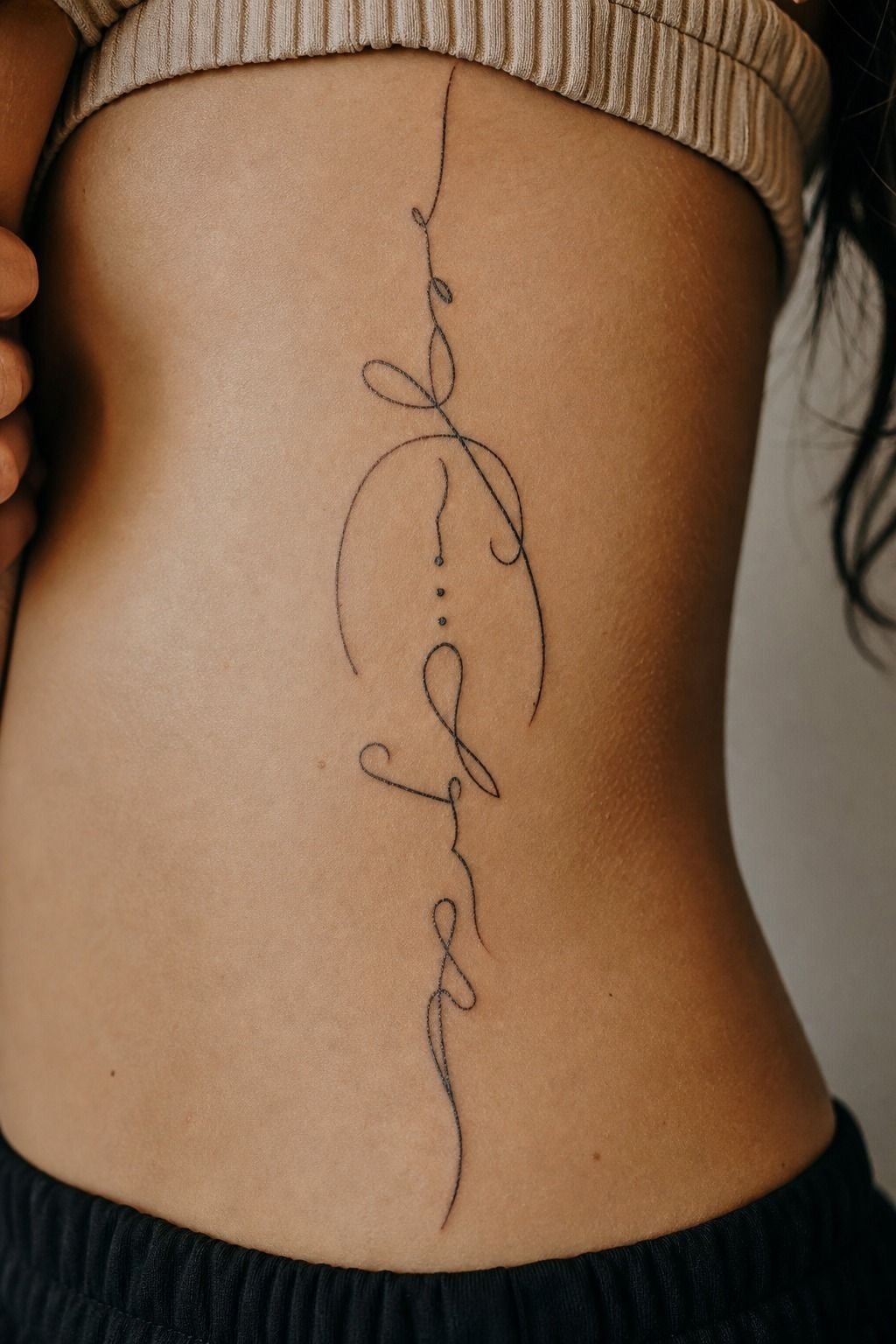
[IMAGE: Healed side tattoo reference for idea 2, tuck a script spine tattoo into the waist, photographed on real skin in clean natural light]
Spine script is one of those tattoos that looks “simple” until you wear a fitted dress and everyone asks. The move is to keep the font hand-lettered with consistent line weight, not a script font that fattens and thins.
A single-needle black outline with whip shading under each letter gives depth without heavy saturation. Spine skin is tight and doesn’t stretch much, so lines actually hold here, even at fine gauge.
The pain is real though, expect a dull burn down the whole back. Pack snacks.
Compare the curve and scale against these feminine back tattoo placements before you lock the stencil.
Pick a phrase that’s three to six words. Anything longer and the spine curve turns your message into a roller coaster.
Most clients ask for Romanian cursive or modern calligraphy, but I’d skip anything too flourished; thin tails disappear first. Healing is the same 2 to 3 weeks surface, longer for full saturation.
If you’re worried about lines going soft on you, our why tattoos blur over time piece shows what actually causes the fade.
3Float a Tiny Butterfly on the Side Tummy
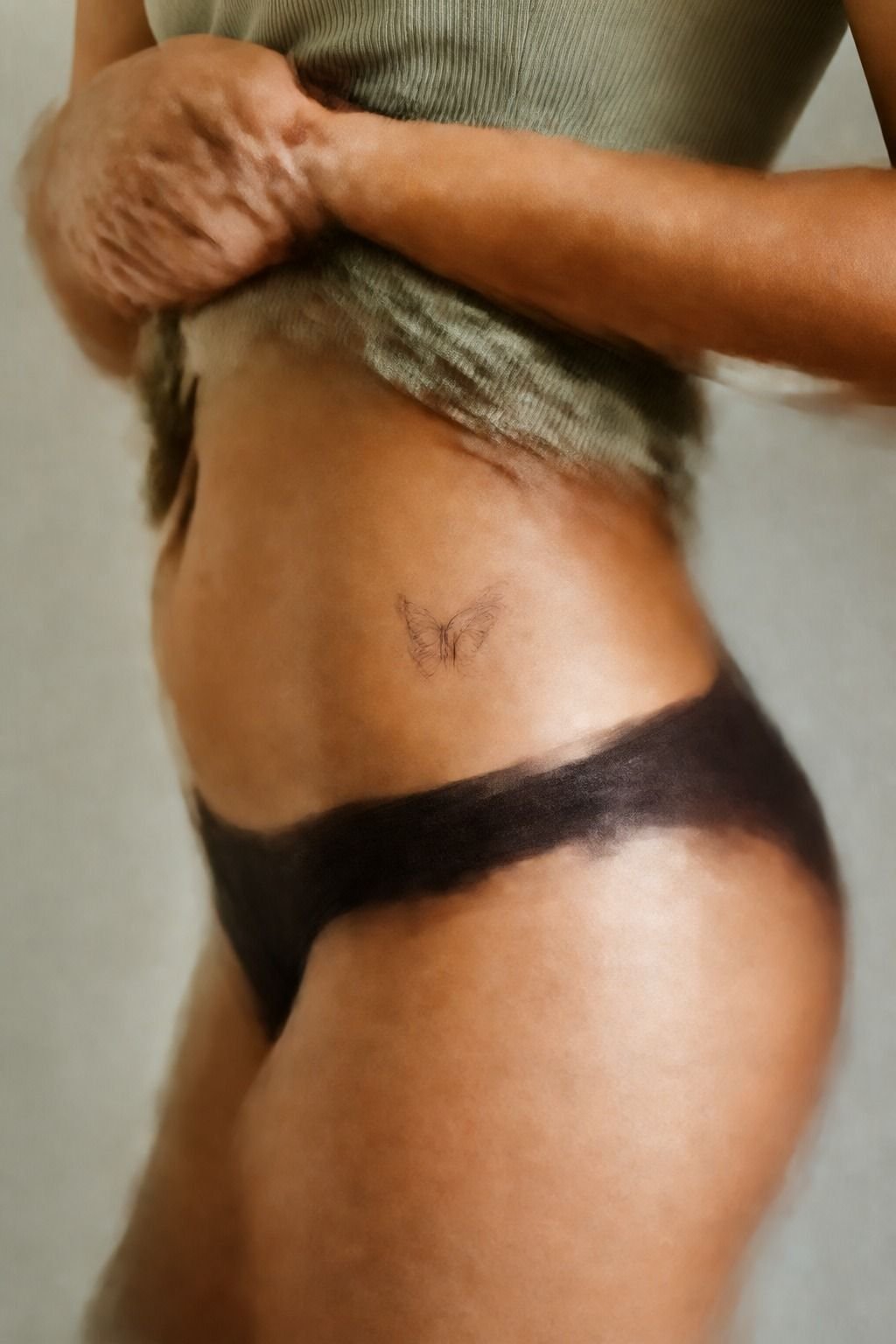
[IMAGE: Healed side tattoo reference for idea 3, float a tiny butterfly on the side tummy, photographed on real skin in clean natural light]
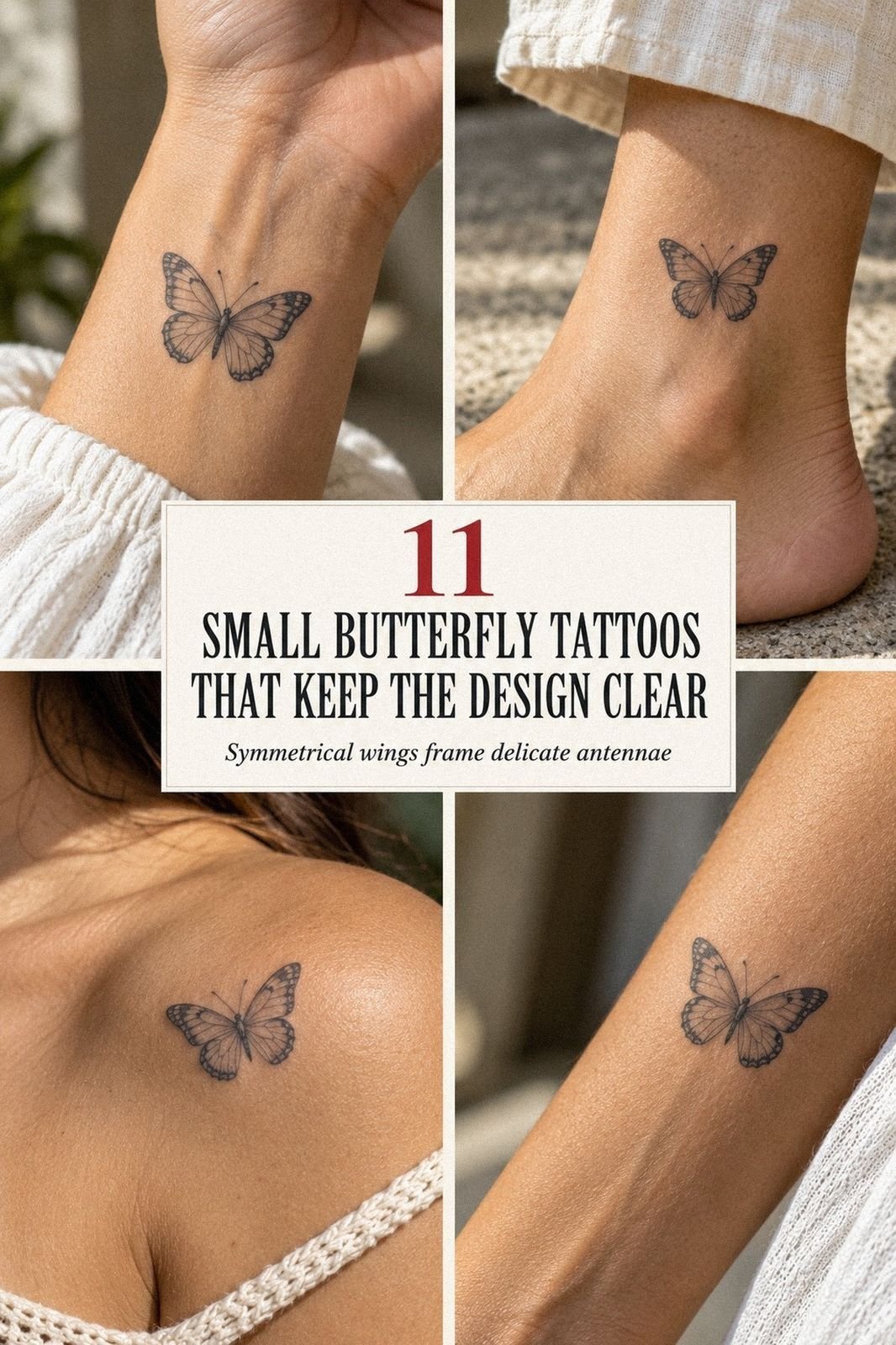
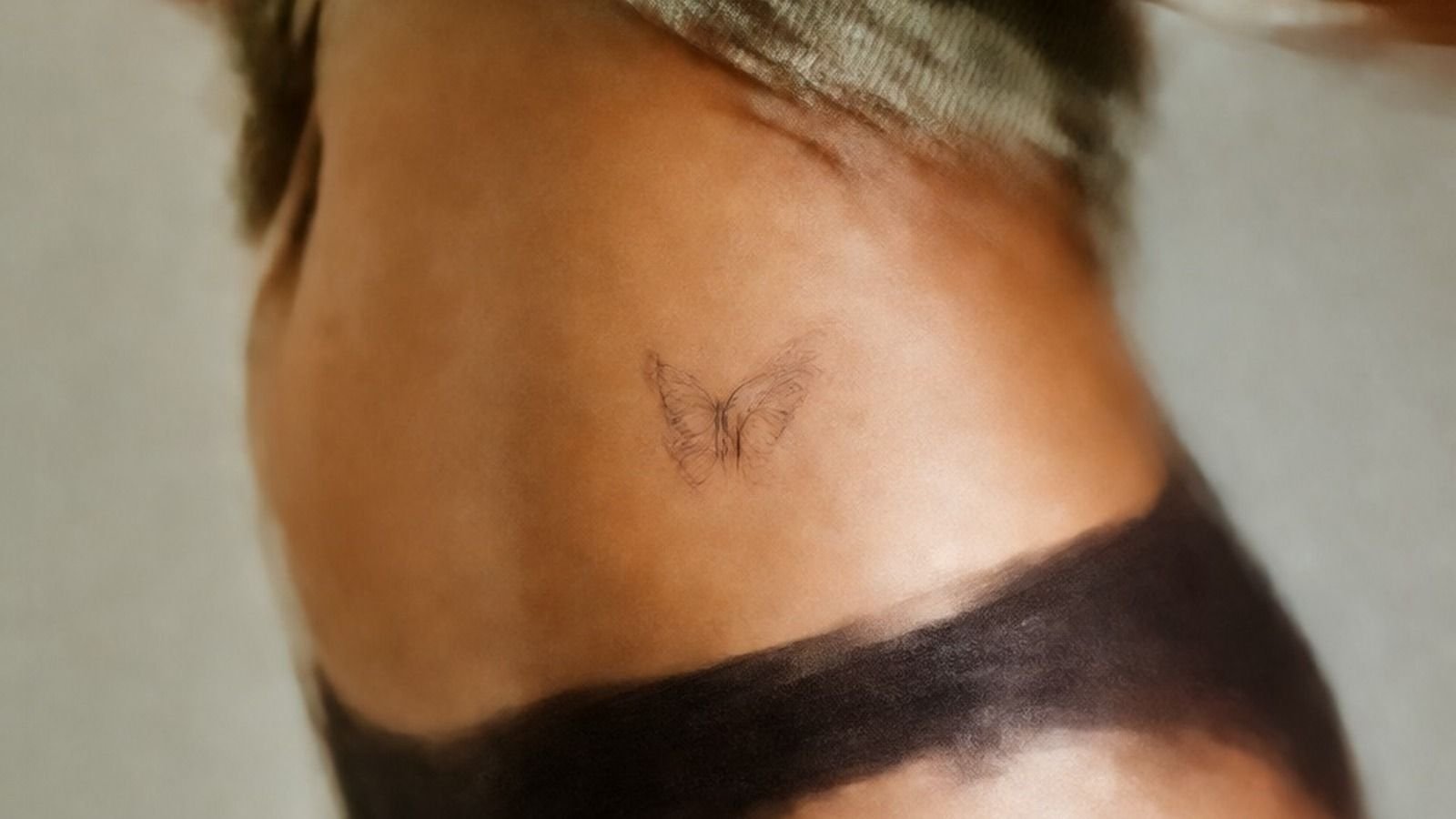
Tiny butterflies are the most-mistreated tattoos in the industry, and it makes me a little sad. On the side tummy, a fragile one-inch butterfly with six inner wing lines is going to turn to soup.
I’d bump it to 2.5 to 3 inches, use a clean 3RL outline, and leave open skin between the wing marks. The result feels delicate without being flimsy. It’ll flex when you sit, so place it slightly above the deepest fold and ask for one clean pull, not ten fuzzy ones.
This is an accessible choice when you want meaningful ink without paying for a long session. A typical studio quote is $200 to $450 at US rates, and the extra size is worth it because the tattoo keeps its crisp, charming silhouette.
If you’re comparing tiny symbols, the meaningful tattoo guide gives you stronger shape references. Keep the wings simple and the contrast punchy!
4Wrap a Blackwork Snake Around the Hip
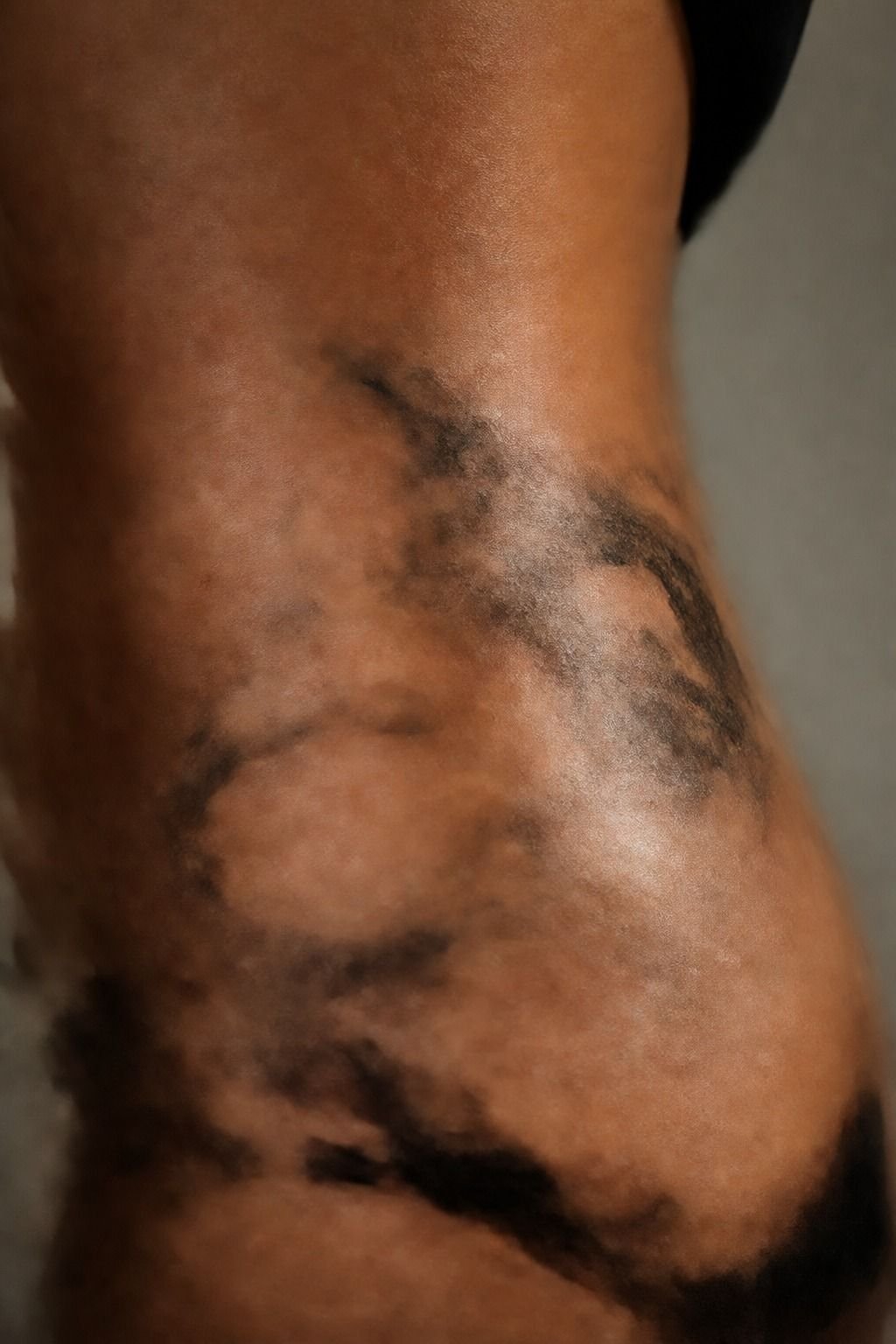
[IMAGE: Healed side tattoo reference for idea 4, wrap a blackwork snake around the hip, photographed on real skin in clean natural light]
Blackwork is bold will hold, and the hip is one of the smartest places to let it breathe. A snake wrapping the hip bone reads clearly at a glance in ten years because there’s no fade to lose, just ink that lives in the skin.
The rule is to follow the iliac crest curve so the snake looks like it’s moving with you, not pasted on. I size these around 5 to 8 inches depending on how far the client wants it to wrap, and I always push the contrast so it doesn’t heal flat.
Solid black fill, sharp edges, no grey wash softening.
Style: blackwork with solid fill. The hip is medium-wear; tight waistbands can fade the top edge of the snake over years, so plan the head to land below the belt line.
Healing’s the same 2 to 3 weeks surface, and you can sit normally after day three if you baby the area. If you’re thinking about adding color, save it for a different piece; blackwork hips age like a chalk sketch on denim, meaning better than you’d expect.
The tattoo blur guide explains why those broad black shapes keep their powerful edge.
5Anchor a Japanese Dragon Across the Side Torso
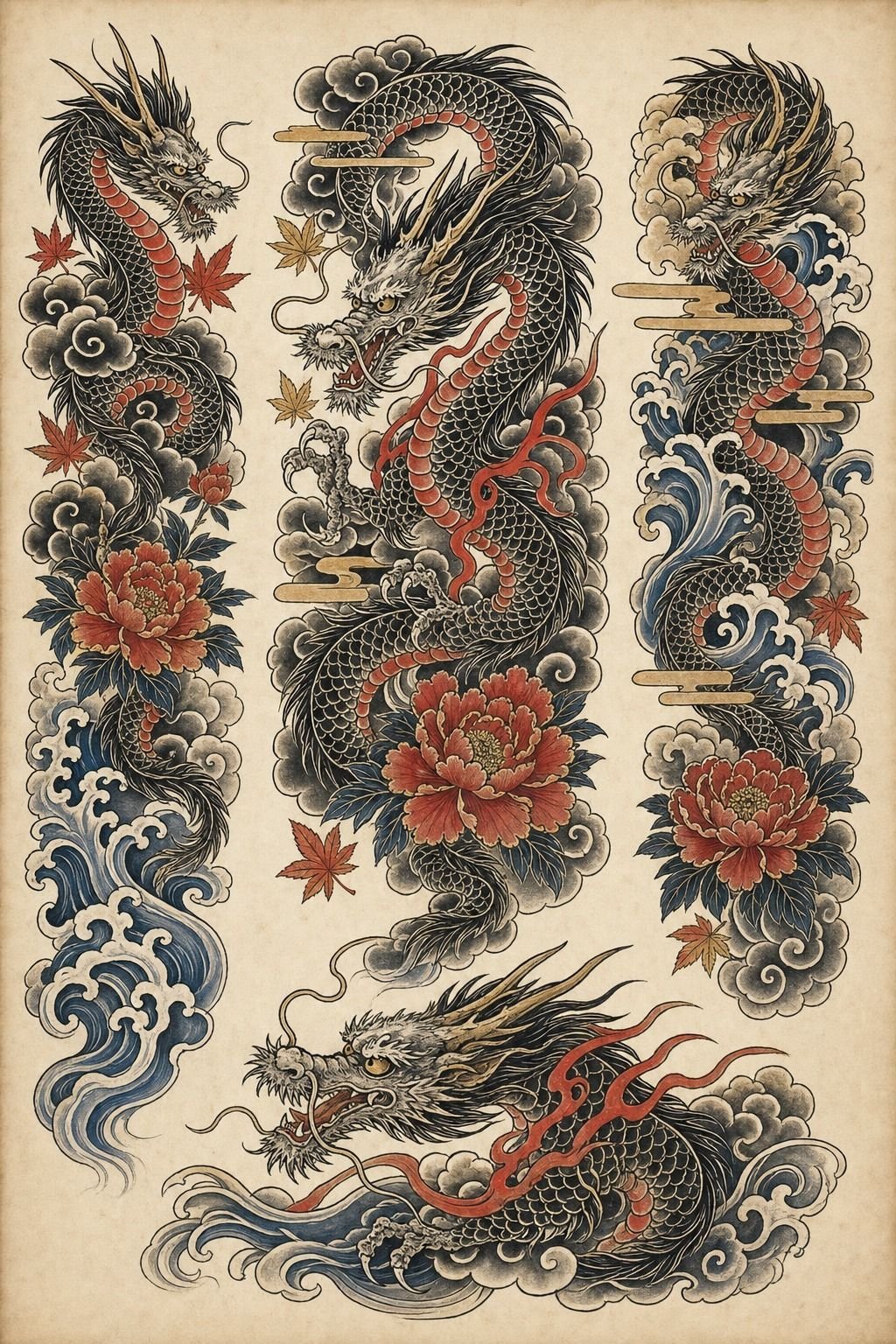
[IMAGE: Healed side tattoo reference for idea 5, anchor a japanese dragon across the side torso, photographed on real skin in clean natural light]
This one’s for the collector who wants dramatic ink, not a first-timer weekend project. A Japanese dragon needs enough body length for the scales, claws, wind bars, and face to stay readable.
I’d plan 12 to 20 inches from the lower ribs toward the hip, with solid black foundations and saturated red or ochre as spice. The side torso is brutal and spicy, but the flowing composition can look fierce for decades when the artist builds around your breathing and twist.
Expect 8 to 15 hours over several sessions, often more for dense color packing. The honest cost usually lands between $1,500 and $4,000 at $100 to $250 per hour, so decide whether that fee fits your finances before booking.
Cheap scales get chewed up fast. A healed Japanese portfolio is non-negotiable, and the rib tattoo pain guide will help you plan those long sits. Big, bold, unforgettable!
6Wrap a Peony Around the Shoulder Cap
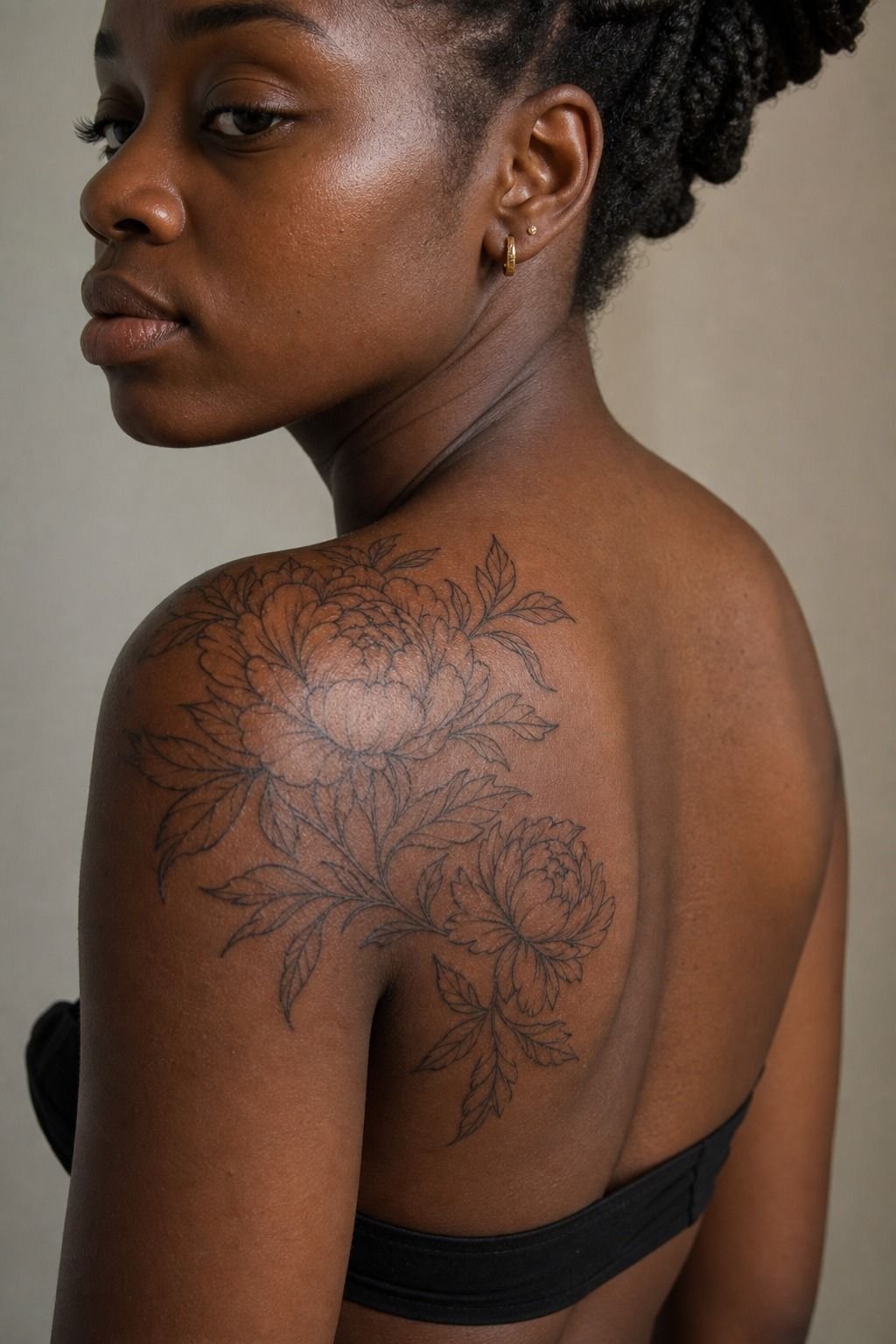
[IMAGE: Healed side tattoo reference for idea 6, wrap a peony around the shoulder cap, photographed on real skin in clean natural light]
The shoulder cap is the friendliest spot on the body for a tattoo. Low-wear, decent padding, and it does not stretch when you sit.
A peony wrap here is one of those designs that “ages cute on you” because the ink sits in skin that does not move much. I run these as fine line botanical with a wash background for a soft, watercolor feel, anchored with solid black linework so it does not look smudged at year three.
The peony blooms outward from the shoulder cap and trails down the upper arm, following the deltoid curve. Color looks vivid here (dusty pink, sage leaves), but if you want max longevity, ask the artist for black ink with grey wash and call it done.
Style: fine line botanical with optional color. Size around 5 to 7 inches for a wrap that frames the shoulder without crowding the chest. Healing is a breeze compared to ribs, two weeks and you’re back to lifting.
If you’ve been holding off on shoulder ink because you’re worried about gym wear, you can train through healing as long as you keep the wrap clean and dry. Our where tattoos hurt less guide ranks the spots worth picking for a first piece. For a different collector angle, our traditional pirate tattoos guide walks through the same big-shape-and-contrast logic.
7Drop a Moon Phase Line Down the Ribs
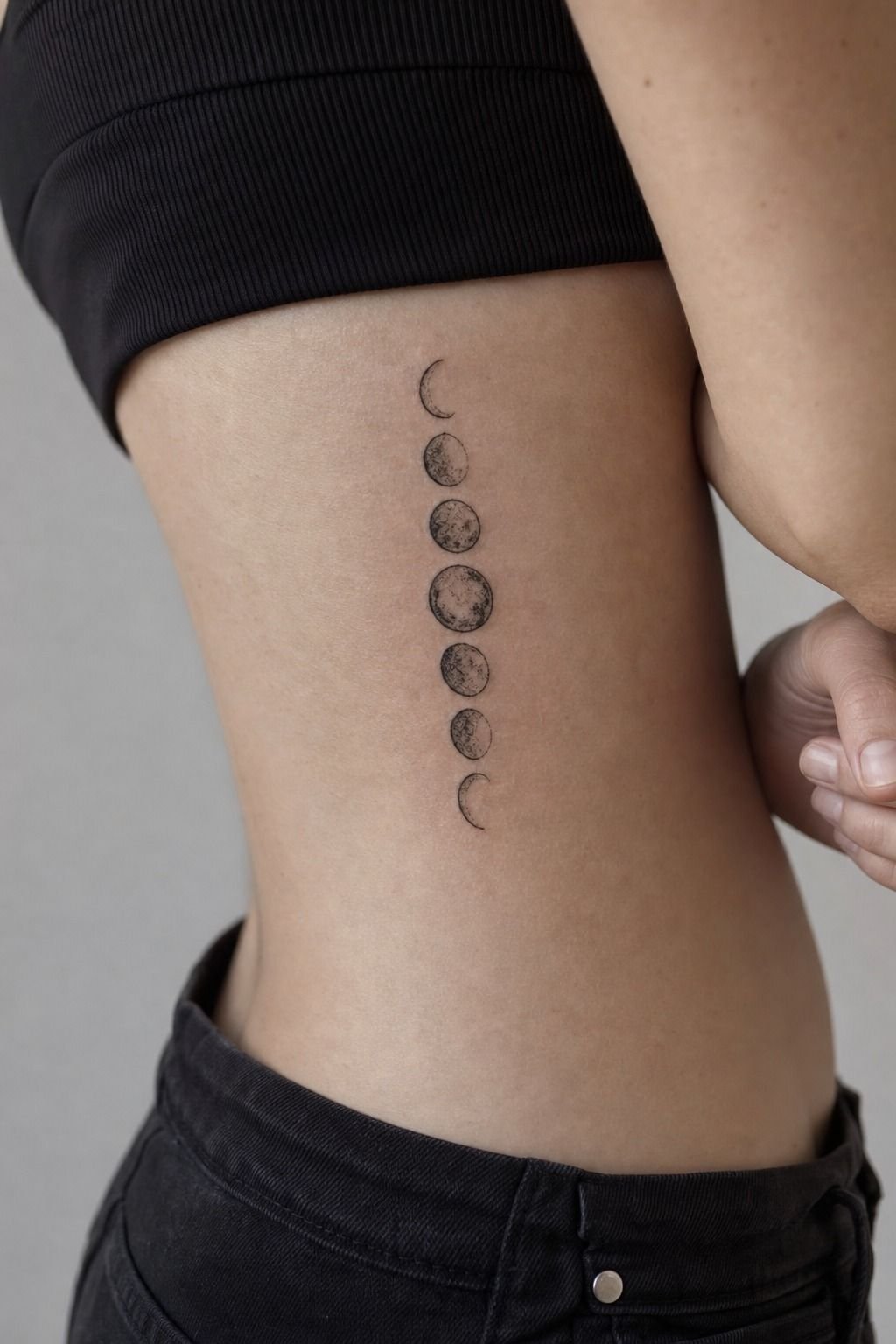
[IMAGE: Healed side tattoo reference for idea 7, drop a moon phase line down the ribs, photographed on real skin in clean natural light]
Moon phases are everywhere on Pinterest right now, and most of them are going to look like a sad string of dots by year three. The fix is line weight and spacing. Each moon needs at least half an inch of vertical clearance so the crescents do not bleed into full circles as the ink softens.
I run these at single-needle with hand-dotted shading for the full moons and clean crescent outlines for the others. A small cluster of six to eight phases lands nicely along the ribcage, finishing near the bra line where the skin holds ink better.
Black ink only. Color on tiny shapes is asking for fade.
Use the side tattoo placement guide to compare rib and waist flow before booking.
Style: fine line with dotwork. Ribs hurt, no way around it, expect a dull burn that climbs with every crescent. The good news: healing is fast, and a touch-up at six months brings the lines back to crispy.
If you want a more feminine take, our feminine back tattoos gallery has moon phase placements that sit on lower-wear skin.
8Letter an Angel Number on the Side Waist
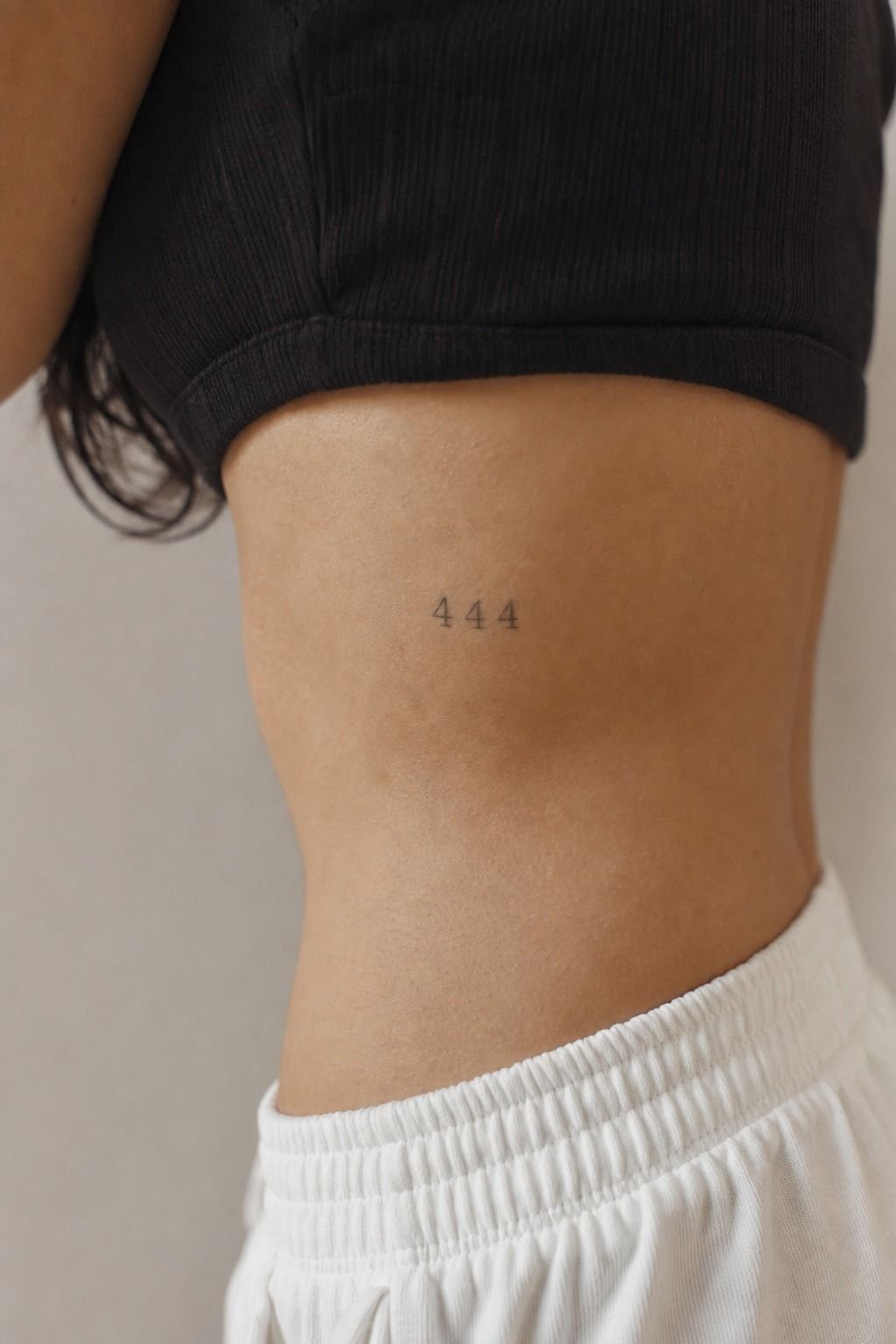
[IMAGE: Healed side tattoo reference for idea 8, letter an angel number on the side waist, photographed on real skin in clean natural light]
Angel numbers look like nothing in a flash sheet and everything on the right person. The waist is a sneaky good spot: it’s low-wear, the skin doesn’t stretch much, and you can hide the piece or show it off depending on the outfit.
I size these at 2 to 3 inches with modern calligraphy or simple block numerals, depending on the client’s vibe. Skip the underline flourish. It always looks dated by year two.
A single line of numbers reads cleaner and ages better than a stacked design. Black ink with optional tiny dot accents, no color. Browse the meaningful tattoo roundup if you want the number paired with another strong symbol.
Style: lettering, fine line. Pain is moderate, around a 5 out of 10.
The waist has some padding, which helps. Healing’s the standard 2 to 3 weeks surface, and you can wear high-waisted pants after the first week if you’re careful.
If you want something bigger than a single number, our meaningful tattoos roundup shows how collectors layer multiple small pieces along the side.
9Stack Botanical Linework Down the Spine
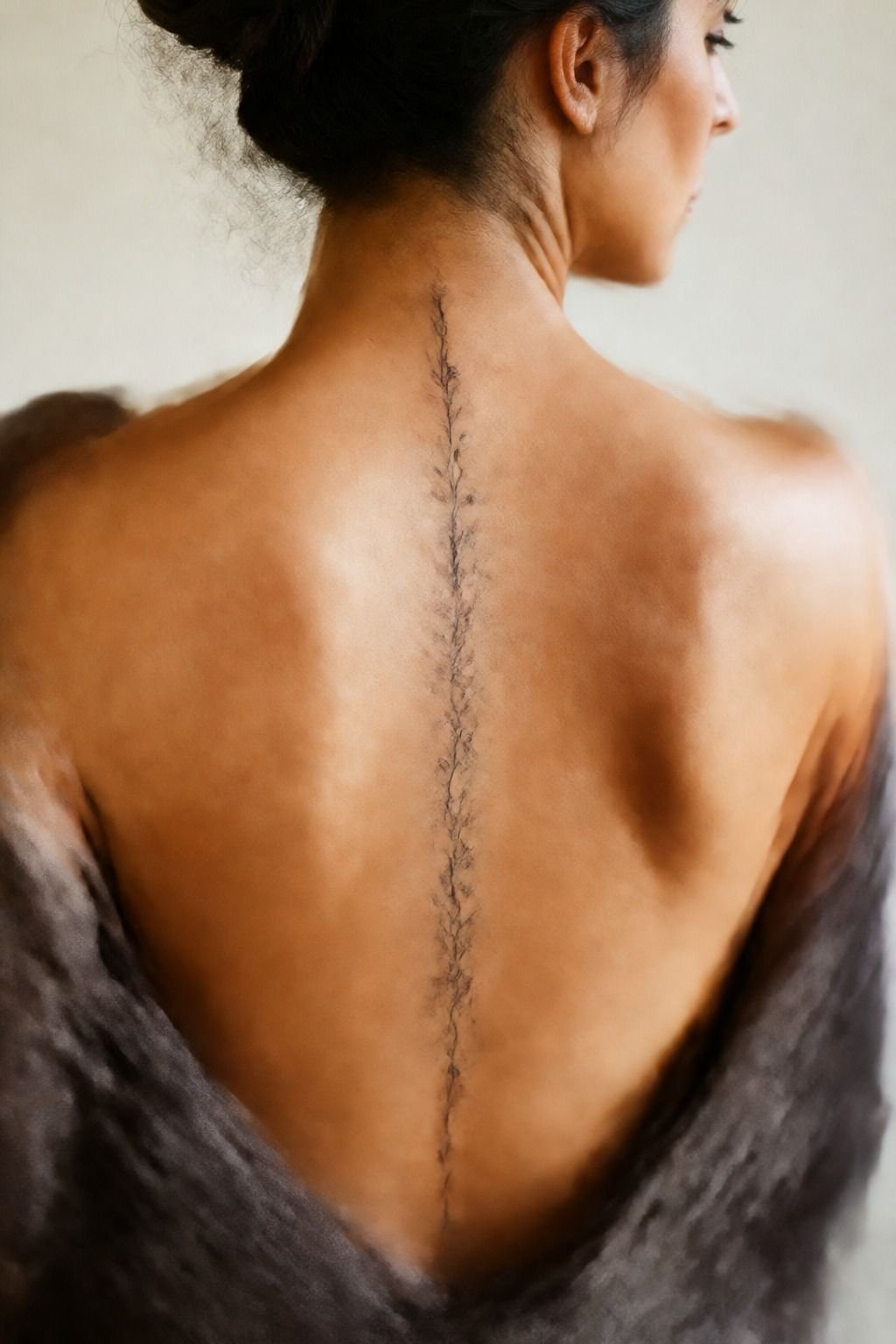
[IMAGE: Healed side tattoo reference for idea 9, stack botanical linework down the spine, photographed on real skin in clean natural light]
Spine botanical is one of my favorite requests because the spine gives the design a naturally graceful axis. Ferns, olive stems, and long eucalyptus leaves work better than crowded bouquets because each leaf gets clearance. I’d use 3RL linework with soft pepper shading, then push a few dark leaf tips so the whole piece doesn’t heal flat.
At 7 to 11 inches, it looks elegant from a few feet away and won’t collapse into a scratchy green-grey blur.
The spine is bony and sharp, so lines feel hotter than the shading. A medium piece may take 3 to 5 hours, with a typical studio quote of $400 to $1,000.
That’s a solid choice if your artist can show healed botanical work. For another low-wear vertical layout, compare the feminine back tattoo placements before you commit. Clean leaves win every time!
10Why Underboob Ornamentals Need to Go Bold or Go Home
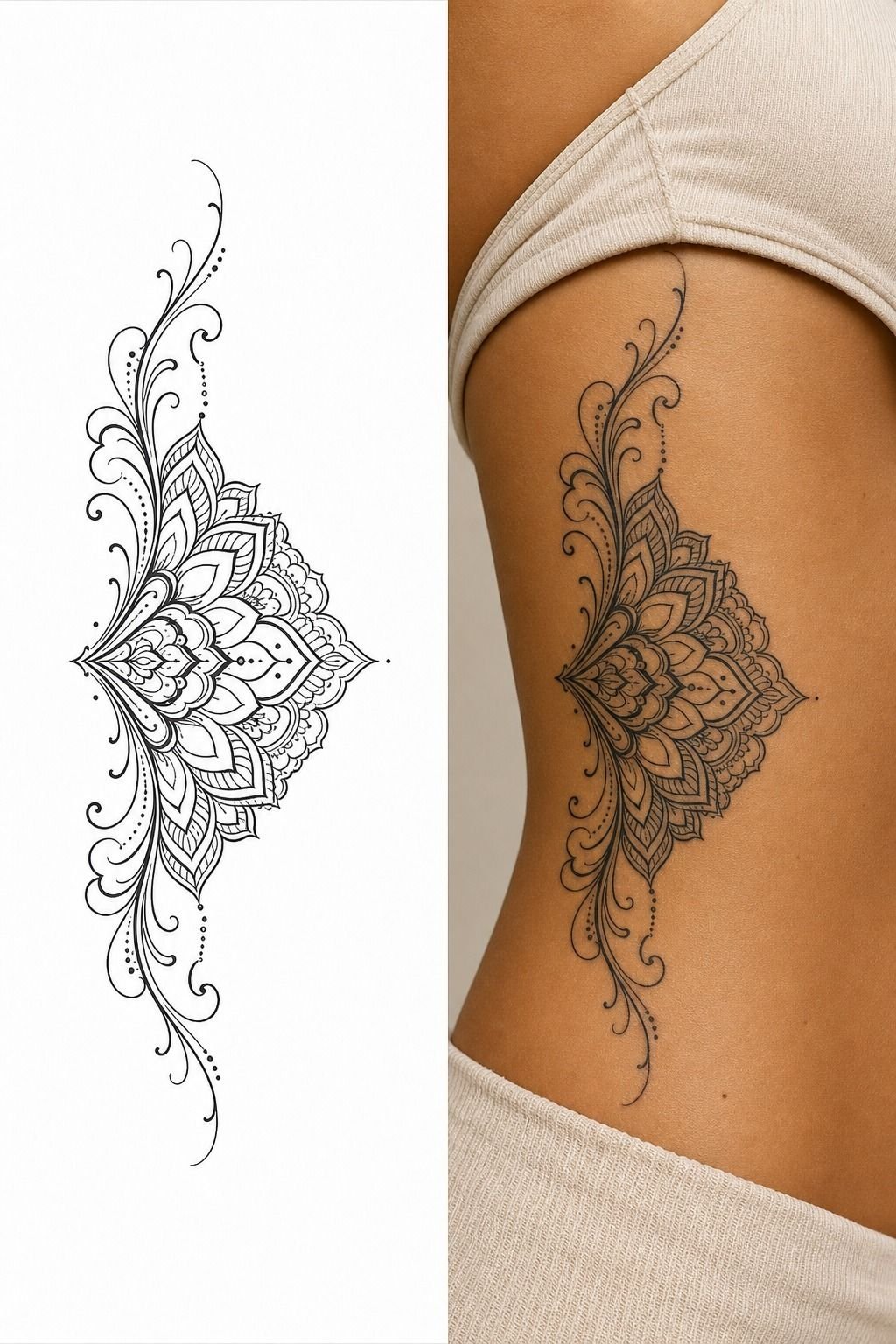
[IMAGE: Healed side tattoo reference for idea 10, why underboob ornamentals need to go bold or go home, photographed on real skin in clean natural light]
Underboob ornamentals got a reputation for being “trendy” and then half of them aged into a wrinkled mess. The move is going bold and graphic so the design reads clearly at a glance even when the skin folds.
I run these as mandala or geometric repeats with solid black fill, no grey wash softening, and definitely no tiny details. Bold will hold.
Ornamentals work because they’re designed to scale with the body; a design with too much detail turns to soup as the skin moves. Aim for a piece that’s at least 5 to 7 inches wide so the repeats have clearance to breathe.
Style: ornamental blackwork. The underboob area is medium-wear and high-stretch, so expect touch-ups every 2 to 3 years if you want the lines crispy.
Worth it if you love the look. Check the rib tattoo pain breakdown before you commit to the stencil.
Skip this placement if you’re not committed to bra-line maintenance; the top edge fades fastest. If you’re weighing ornamentals against florals, our why tattoos blur over time breakdown explains which styles age best on curved skin.
11Drop a Minimal Wave on the Hip
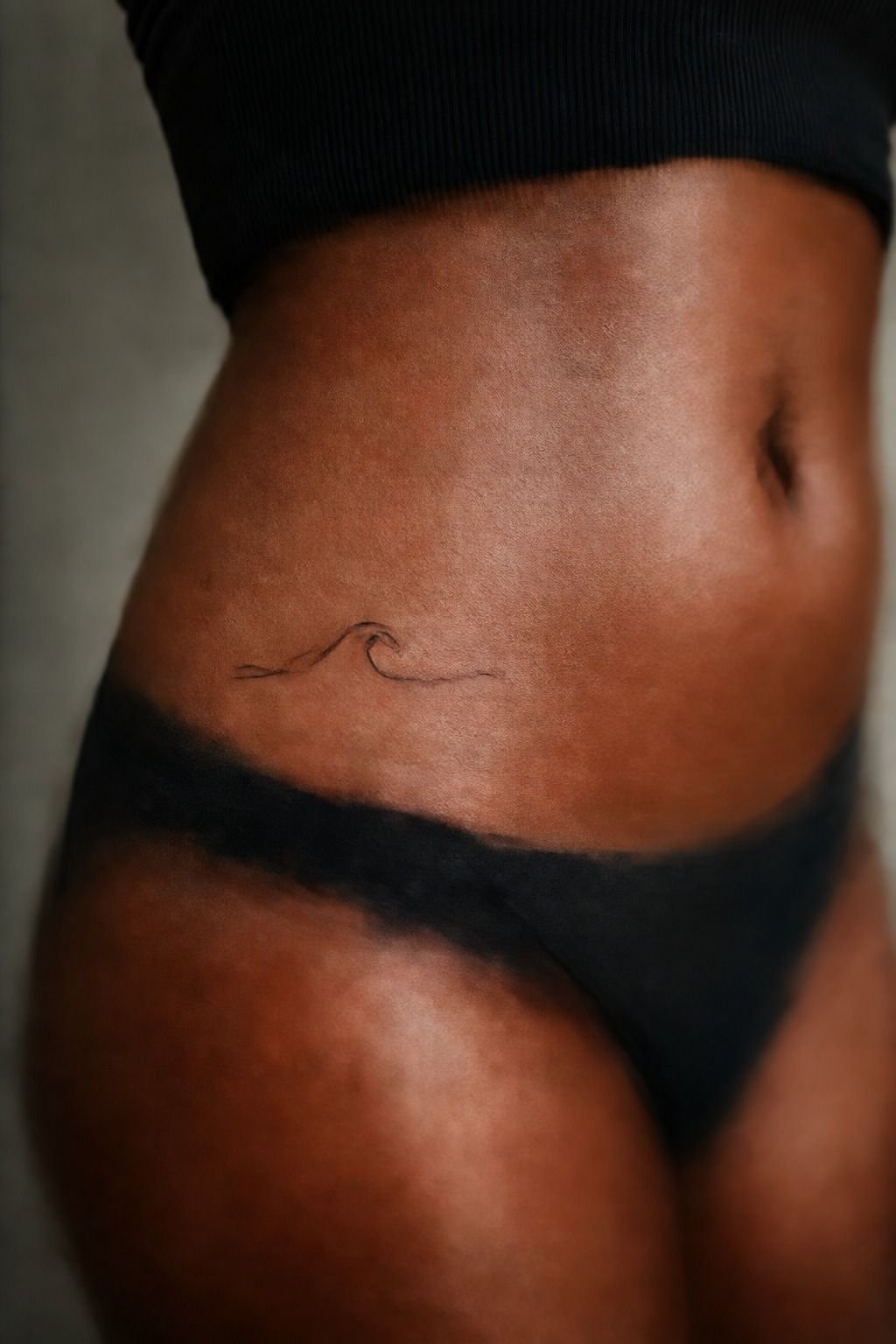
[IMAGE: Healed side tattoo reference for idea 11, drop a minimal wave on the hip, photographed on real skin in clean natural light]
Minimal waves are having a moment, but most are drawn too tiny. A one-inch wave on a moving hip can lose its bright crest and become a comma.
Make it 2.5 to 4 inches, keep the curl open, and use a confident 3RL or 5RL line. Blue can look fresh, but a black foundation gives the best longevity and keeps the design readable after sun exposure.
Pain is manageable, usually around 5 out of 10, and the session can stay under two hours. The usual rate is $200 to $500, depending on custom drawing time and shop minimums. It’s worth it when the artist follows the hip rather than stamping a flat symbol beside it.
If longevity is your priority, read why tattoos blur over time before choosing micro detail.
12Phoenix Realism Over a Smaller Symbolic Piece: When to Go Big
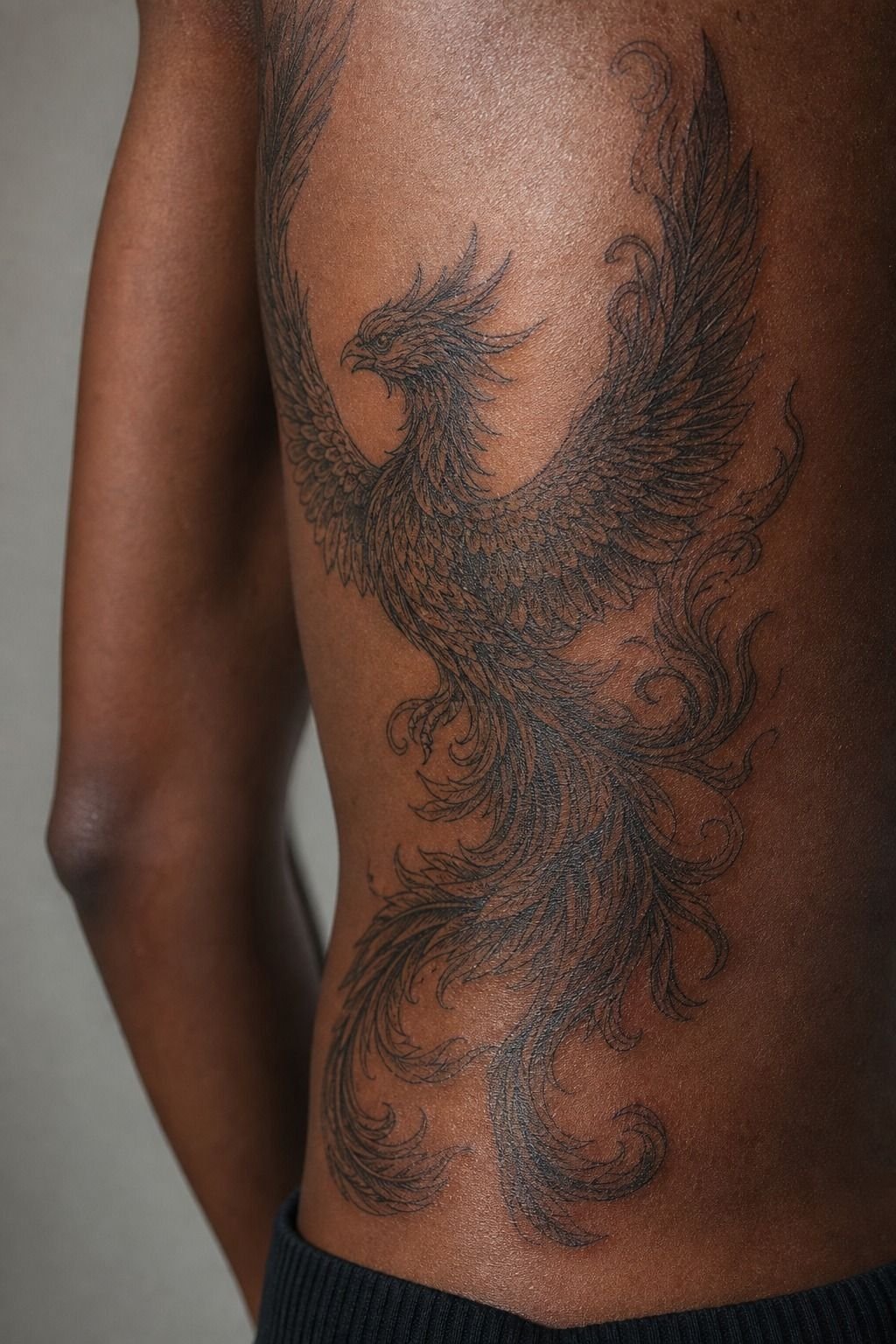
[IMAGE: Healed side tattoo reference for idea 12, phoenix realism over a smaller symbolic piece: when to go big, photographed on real skin in clean natural light]
Phoenix realism is the most ambitious piece on this list, and the most striking when it is done right. A full side torso phoenix needs 10 to 20 hours of work across three to five sessions, and you are looking at $2,000 to $5,000 depending on the artist. This is collector ink with serious visual impact, and the price should be part of your planning.
The phoenix wraps from shoulder blade to hip, wing feathers fanning across the ribs, head rising near the sternum. Bold black linework with smooth grey wash shading and small color punches (red eye, gold beak) is the winning combo. Tiny feathers turn to noise by year three.
Big shapes and contrast, every time.
Style: realism with traditional roots. Pain is high; ribs are spicy, and you are sitting for hours. The good news: realism pieces are designed to be touched up, and most artists build in a final session at six months to push the contrast.
If you want realism, find an artist whose healed portfolio looks like the work, not just their fresh Instagram. Our where tattoos hurt less page is a good companion if you are planning your first long session.
If black-and-grey realism is more your speed than color, our virgin mary drawing chicano tattoos piece shows the same bold-line approach.
The Real Talk: What Holds Up on Stretchy Skin
Side skin is a different canvas than arm or thigh skin. It stretches when you breathe, twist, sit, and reach.
Most of the “fine line” fails I see at touch-ups are not artist fails; they are placement fails on skin that was not given clearance to age. After almost a decade of tattooing ribs, hips, spines, and torsos, here is what I tell every client who walks in asking for a side piece.
First, size up if you are going fine line. A 2-inch rib tattoo will look like a bruise by year three; a 5-inch version with bolder line weight will look intentional at year ten.
The ink is not disappearing; it is spreading because the lines were too close together to begin with. Give each line its own lane.
Second, go bold or go home for high-wear zones. Hips, ribs, and the underboob area all stretch and rub.
Black ink with solid fill holds. Color in those zones is asking for a touch-up every two years.
Save colorful side pieces for the upper back or outer thigh where the skin is stable.
Third, plan around your real life. Belt wear, side sleeping, and running all change how a piece ages. The right placement is not the prettiest Pinterest pin; it is the one that matches how you live.
Fourth, plan for touch-ups. Most clients do not need the free six-month touch-up I build in. The ones who do usually skipped SPF or wore tight waistbands during healing.
And fifth, find an artist whose healed work looks like the fresh version. Instagram is filtered.
My side tattoo guide for women shows placements you can bring as flow references. The real test is two-year-old work on a real body.
References for vibe only. If you want Pinterest-exact, you are not getting a real tattoo; you are getting a copy of one.
Our traditional ship flash tattoos guide shows what good flash work looks like in person.
Side Tattoos at a Glance: Placement, Pain, Healing
How Much Does a Side Tattoo Usually Cost?
Side tattoos in the US typically run $100 to $250 per hour at a reputable studio, with most boutique shops charging a $50 to $100 minimum for tiny pieces. A small side waist script lands around $150 to $300.
A fine line rib wildflower runs $300 to $600. A full side torso phoenix or Japanese dragon climbs $1,500 to $5,000 depending on the artist and city. Hourly rates vary wildly by region: NYC, LA, and Miami run higher than most mid-size cities.
If a quote feels too good to be true, it probably is. Bold will hold, but cheap work rarely does. The tattoo blur and aging guide shows why paying for cleaner execution carries better long-term value.
What People Always Want to Know
How much does a side tattoo usually cost?
Side tattoos typically run $100 to $250 per hour in the US, with most studios charging a $50 to $100 minimum. A small waist script lands around $150 to $300.
A fine line rib wildflower runs $300 to $600. Bigger pieces like phoenix realism or Japanese dragons climb $1,500 to $5,000 depending on the artist.
Hourly rates vary by region; coastal cities run higher. Budget for a touch-up at six months if you want crispy lines forever.
Are side tattoos a good idea for a first tattoo?
Yes, side tattoos work well as a first piece if you pick the right placement. Shoulder caps, side waists, and outer hips are forgiving spots with moderate pain and good healing.
Ribs and underboob are spicier; save those for tattoo two or three. The lines age well on side skin if the artist uses bold linework and you follow aftercare.
Start with a design that means something to you, not just a Pinterest pretty. These meaningful tattoo ideas can help you narrow the symbolism without copying a design.
How do I choose a tattoo artist for side tattoos?
Look at healed work, not fresh Instagram. Side skin stretches, and only a healed photo tells you how an artist’s linework holds after healing.
Check their portfolio for bold linework and clean solid fill. Ask about their needle config; single-needle fine line is great for florals, but ribs need a 3RL or larger to age well.
Hygiene matters: autoclave, single-use needles, fresh ink caps. If the studio smells off, walk out.
Use the traditional ship flash guide as a quick reference for clean, solid flash execution.
How much do side tattoos hurt?
Pain depends on the spot. Ribs, underboob, spine, and sternum are the spiciest (7–8 out of 10), expect a sharp burn on each pass.
Side waist, hip, and shoulder cap are more tolerable (3–5 out of 10), with some padding over bone. Outer thigh is the gentlest.
Lines feel sharper than shading, and color packing is the spiciest part. Tap out for five rather than pass out on me; most artists would rather you take a break than hit the floor.
How long does a side tattoo take to heal?
Surface healing takes 2 to 3 weeks; full ink settle takes 2 to 3 months. During the first week, treat it like an open wound.
Wash with gentle unscented soap, apply a thin layer of ointment, and don’t suffocate it with plastic wrap. After day three, switch to light moisturizer.
Avoid sun, pools, and gym friction for the first two weeks. It’ll peel like a sunburn around week two; don’t pick the flakes or you’ll pull color out.
SPF 50 forever after that!
What’s the best placement for side tattoos?
The best placement depends on your pain tolerance and lifestyle. Shoulder cap, outer hip, and side waist are forgiving, low-wear, and age well.
Ribs and underboob are statement placements with higher pain and faster fade. Spine is striking but painful. If you want your piece to read clearly at year five, avoid high-wear zones like inner bicep and waistbands.
Talk to your artist about your daily life; the right placement matches how you live, not just how the design looks on Pinterest. Compare your options in the side tattoo placement guide.
Where I’d Start First
If I had to pick one, I’d start with the fine line rib wildflower. It teaches you the most about your own skin, and it forces you to find an artist who respects stretchy tissue.
Save a few designs as references, but don’t bring a Pinterest screenshot to the chair. References for vibe only; the artist will redraw it for your body.
And bring snacks. Ribs take longer than you think!