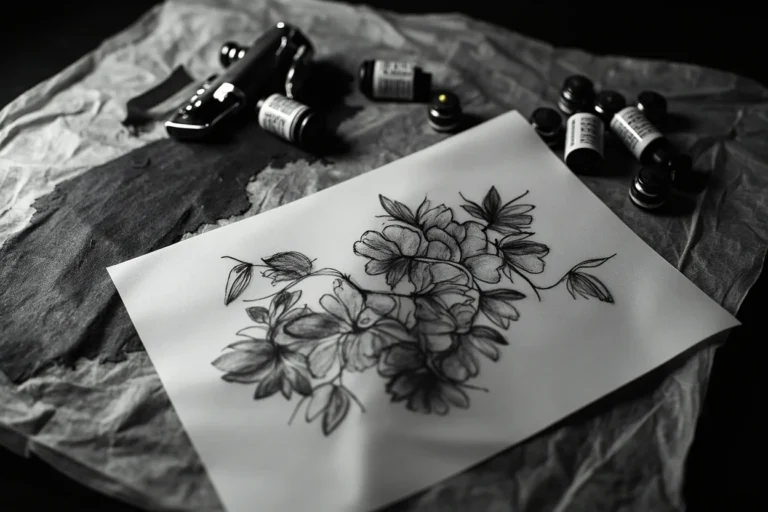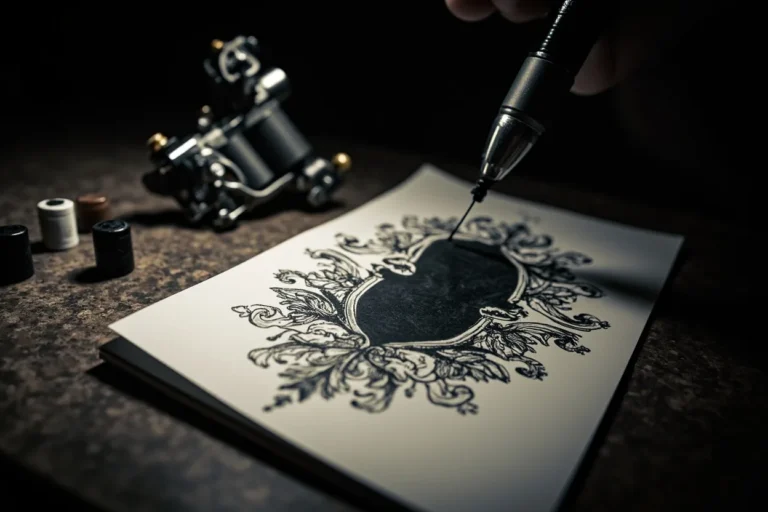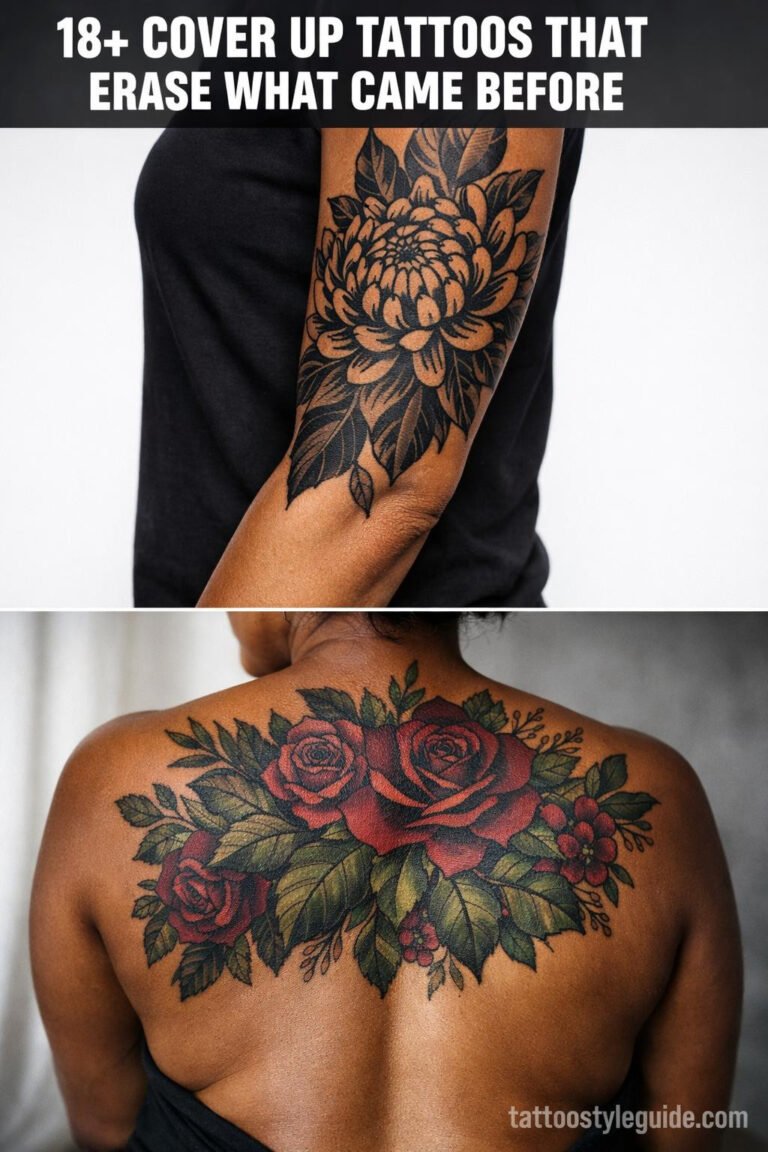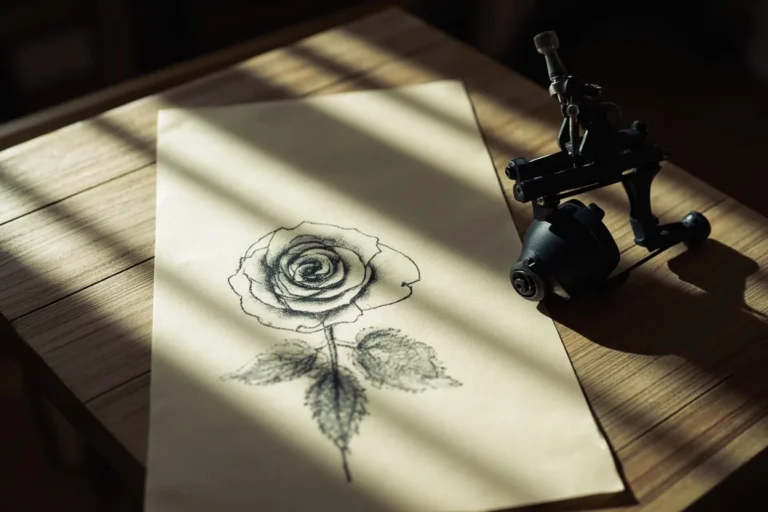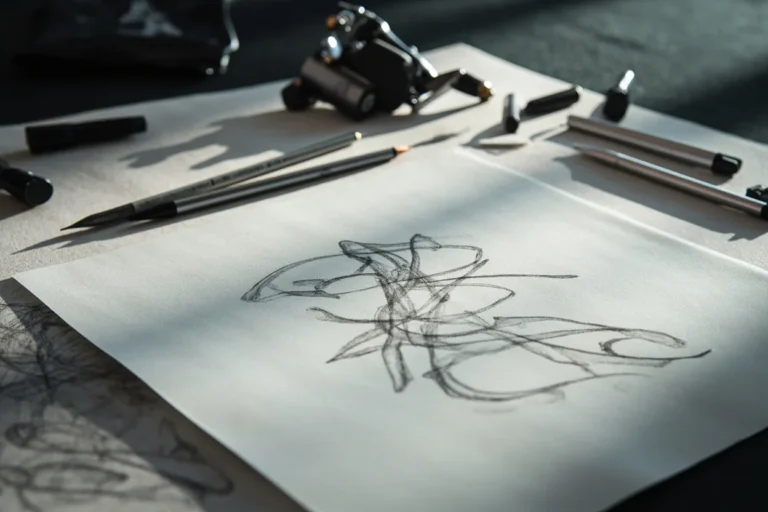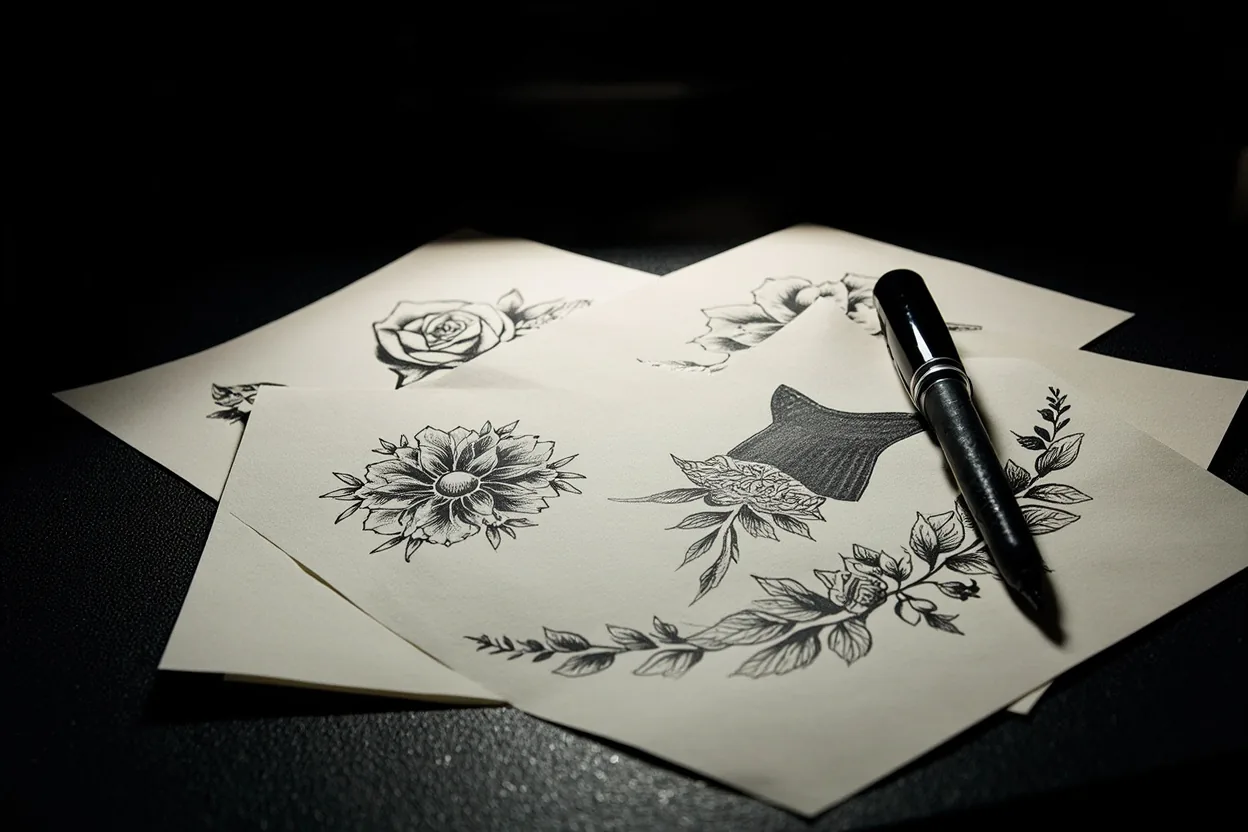
Bold tattoos for women do not have to feel harsh. A large blackwork flower, traditional rose, ornamental shoulder cap, or thigh piece can look more refined than a fragile tattoo that was made too small.
Quick answer: Strong bold tattoos for women include blackwork florals, traditional roses, ornamental spine pieces, shoulder caps, thigh tattoos, snakes, moths, geometric work, and large fine-line compositions with enough contrast.
Bold feminine tattoo directions
Bold can mean size, contrast, placement, or subject matter. It does not have to mean loud.
| Direction | Best fit | What to watch |
|---|---|---|
| Blackwork floral | Elegant dark statement | Needs negative space |
| Traditional rose | Classic bold feminine work | Line weight is key |
| Shoulder cap | Frames the body | Placement must curve |
| Thigh piece | Large private canvas | Scale can get expensive |
| Snake or moth | Dark feminine symbolism | Silhouette must read |
The boldest feminine tattoos right now lean into thick blackwork florals, neo-traditional botanicals, and Japanese-influenced motifs with clean line weight. These styles hold up on softer body curves because the artist is working with shape, not fighting it. A peony with a heavy outline and minimal fill reads elegant, not harsh. Same with a snake wrapped around a forearm in solid black and grey, no filler background noise, just confident negative space doing the work.
Geometric pieces with organic elements, like a mandala bleeding into wildflowers, land somewhere between structured and soft. That contrast is exactly what makes them feel elevated without being precious. Fine line alone fades and blurs faster than you think, especially on high-wear zones like fingers and wrists. Pairing fine detail with at least one bold anchor line keeps the piece readable five years out.
Scale can make the tattoo more elegant
Boldness is a line weight decision, not a personality statement.
A larger tattoo can give the artist room to simplify details properly. That often looks cleaner than forcing a big idea into a tiny placement.
If you want bold but wearable, focus on flow. The tattoo should sit with the shoulder, hip, thigh, rib, or back instead of feeling pasted on.
A small tattoo in a bold style can look muddy because the linework has nowhere to breathe. Going bigger, say a thigh piece instead of an ankle piece, lets an artist actually execute clean fills, crisp edges, and whip shading with enough room to control depth. A four-inch blackwork magnolia on the outer thigh will outlast and outperform a two-inch version on the inner wrist by a decade, especially on darker or warmer skin tones where saturation matters more.
Scale also changes pain math. The outer thigh and upper arm are low-wear, low-sensitivity zones. You can sit longer, which means the artist completes the piece in one session with consistent needle pressure throughout. Broken-up sessions sometimes show uneven healing lines where the work reconnects. If you’re worried a larger piece reads too aggressive, ask your artist to reduce background fill and lean on open skin as part of the design. That choice alone shifts the whole mood.
Artist checks
Bold tattoos demand confident execution.
- Ask for healed work at similar size.
- Ask how the design follows the body.
- Ask if the tattoo can be expanded later.
- Ask what detail should be simplified.
Pull up healed photos, not just fresh ones. Fresh ink is always going to look saturated and crispy. Healed work is where you see whether an artist’s blacks stay black or turn greenish, whether fills stay solid or go patchy, and whether fine detail holds or blows out into a blur. Ask specifically for healed photos of pieces similar in style and scale to what you want. If they don’t have them, that’s information.
Check that their line consistency holds across different body parts. Lines on a flat surface like the outer arm behave differently than on a curved zone like the ribcage or inner bicep. An artist who only posts forearm work may not have the muscle memory for placement on a hip or sternum. Ask them directly where they’ve done the most work and whether your chosen placement is somewhere they’re confident. A good artist will tell you straight if it’s outside their wheelhouse.
Bold tattoo mistakes
Do not make a bold idea small because you are nervous. Choose a smaller idea instead.
Avoid adding too many feminine symbols at once. One strong flower or snake can say more than a crowded collage.
Going too thin on the outline is the most common mistake on bold feminine tattoos. Artists sometimes lighten lines to make a piece feel more delicate, but thin lines in a design meant to carry weight will spread and lose definition within two to three years, especially on areas that see sun or friction. The ribcage and sternum are spicy placements and they also stretch and compress constantly, which accelerates blowout on lightweight linework.
Placement driven by hiding a tattoo often leads to worse aging and worse healing. The inner arm, behind the ear, and foot are high-sweat or high-movement zones that heal slower and fade faster. If you’re choosing placement for discretion, talk to your artist about which low-visibility spots also heal nice, like the upper outer arm or the nape of the neck below the hairline. Also, don’t negotiate an artist down on scale after they’ve quoted you. A rushed smaller version of a complex design cuts corners you won’t see until it’s healed.