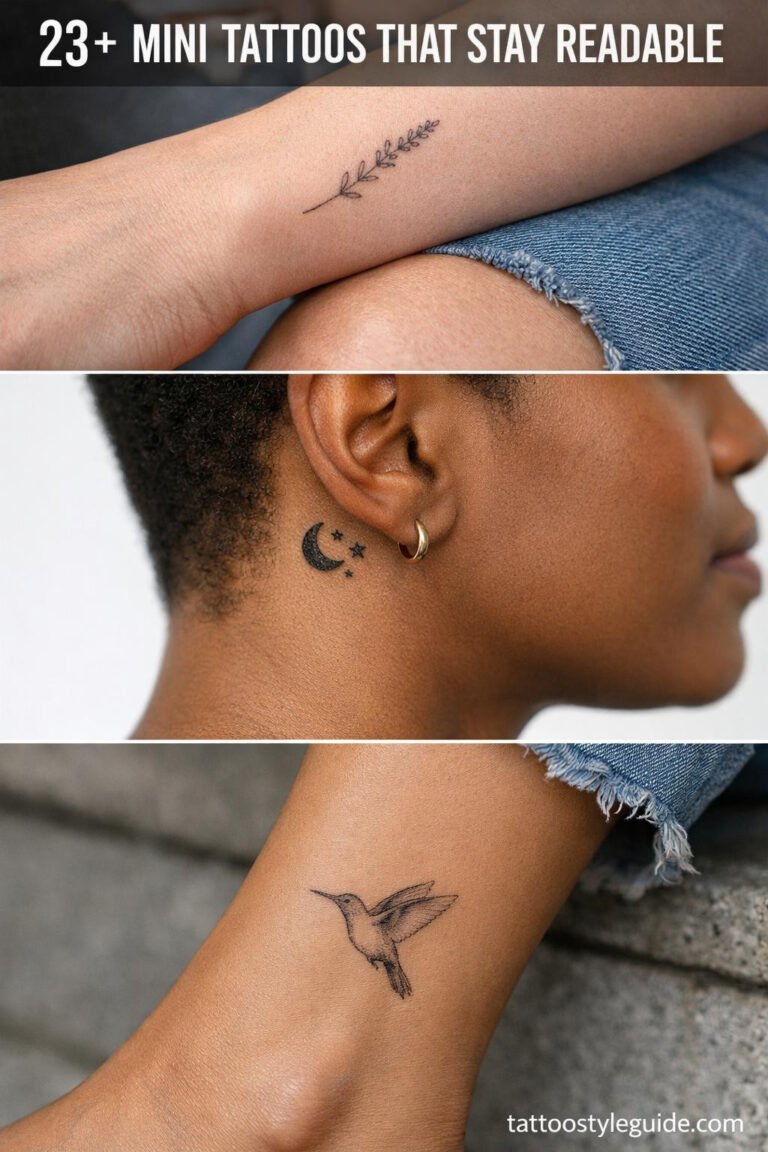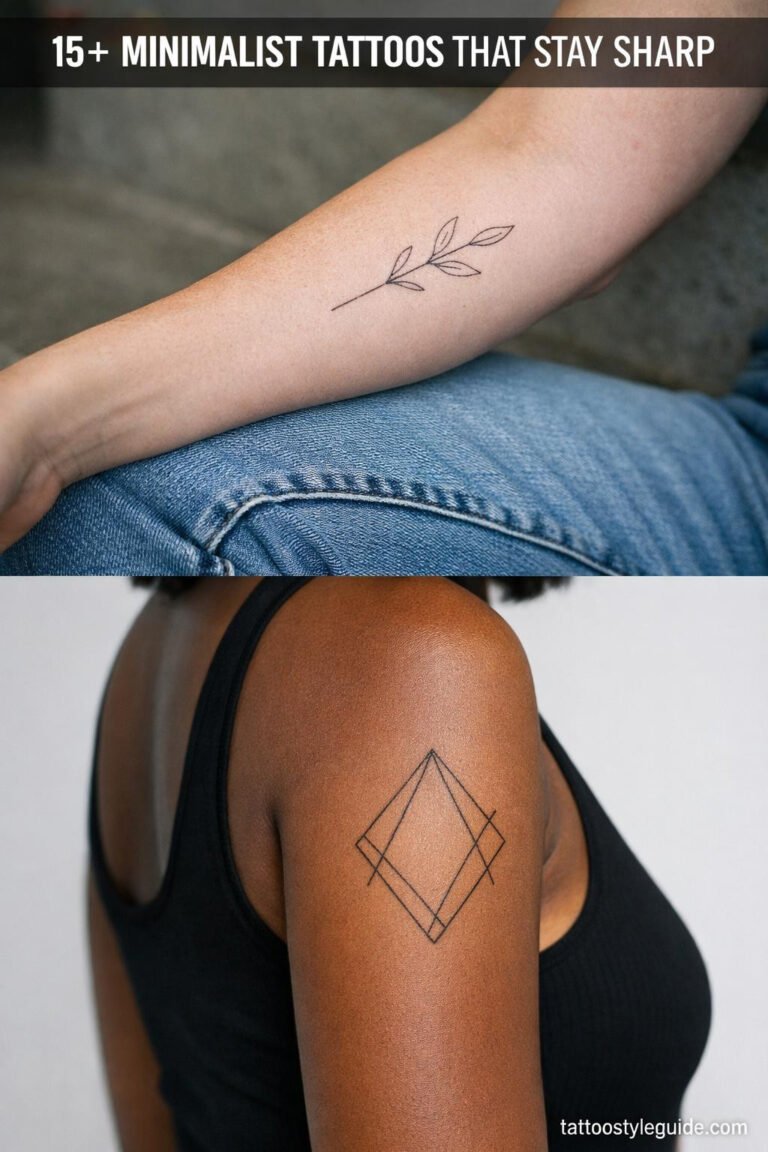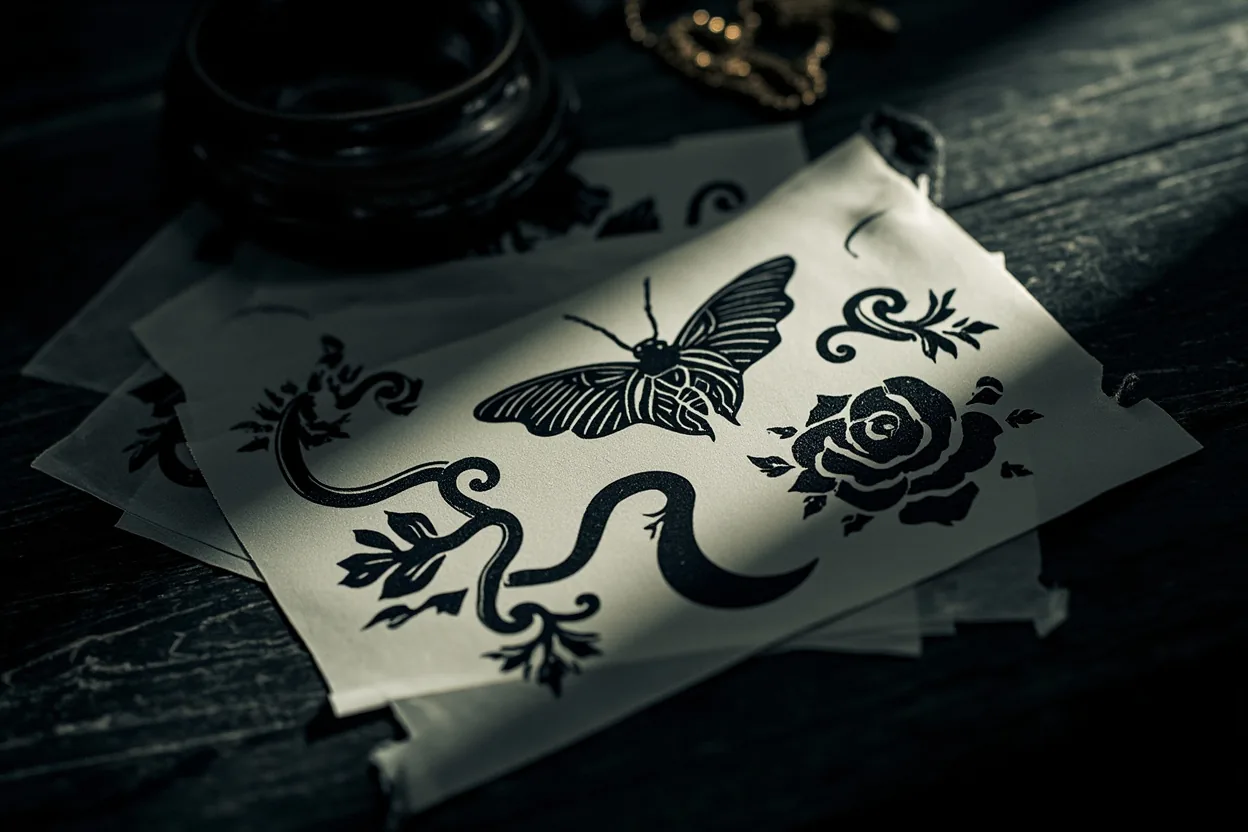
Dark feminine tattoo ideas work best when the darkness has shape. Black florals, moths, snakes, moons, daggers, ornamental marks, and gothic details need composition, not just mood.
Quick answer: Good dark feminine tattoo ideas include blackwork flowers, moths, snakes, crescent moons, daggers, ornamental spine pieces, gothic hearts, ravens, dark butterflies, and high-contrast designs placed on ribs, back, shoulder, thigh, or forearm.
Dark feminine directions
The style can be soft and sharp at the same time if the design is edited well.
| Direction | Best fit | What to watch |
|---|---|---|
| Black floral | Elegant dark contrast | Petals need negative space |
| Moth | Night, change, attraction | Wing detail needs size |
| Snake | Rebirth and danger | Body flow matters |
| Ornamental spine | Ritual-like symmetry | Pain and alignment |
| Gothic heart or dagger | Romantic darkness | Avoid clutter |
Dark feminine isn’t one style, it’s a spectrum. You’ve got black and grey realism with moody roses and skulls, fine line botanical with thorns and dead moths, neo-traditional with thick outlines and muted jewel tones, and full blackwork with geometric negative space. Each reads differently on skin and ages at its own rate. Fine line stays delicate but fades faster, especially on hands and fingers. Blackwork holds the longest and reads from across the room.
The placement drives the whole mood. A sternum piece with draping chains feels ritualistic. A forearm wrap with snakes and peonies feels earned, visible, wearable every day. Thighs give you real estate for big dramatic compositions. Think about how much skin you want showing the piece versus hiding it, then pick your zone. That decision shapes the design before you ever sit in the chair.
Use contrast, not clutter
Soft lines, dark symbols, the tension is the whole point.
Dark feminine tattoos can become muddy when every symbol is black, tiny, and packed together. Leave skin breaks so the design has shape.
The best versions often use one main dark symbol and one softer counterpoint: snake and flower, moth and moon, dagger and ribbon, black rose and open skin.
Dark feminine designs die when artists cram too many elements into one space. A raven, a moon, a dagger, roses, and script all in a four-inch patch? Nothing reads, nothing heals clean. Your artist should be pulling the composition apart, letting negative space breathe between elements. Solid blacks next to open skin create contrast that actually pops. Without that, the whole piece muds together after healing.
Whip shading is a go-to technique here, it builds soft gradients without overworking the skin. A skilled artist uses it to push backgrounds back and bring focal elements forward. That depth is what separates a flat design from one that looks like it’s moving. Ask your artist to show you healed examples specifically, not fresh-off-the-gun photos, because fresh ink always looks sharper than the final result.
Artist checks
Look for artists who handle blackwork and delicate detail together.
- Ask for healed dark floral or moth work.
- Check whether black areas stayed smooth.
- Ask what details should be removed for clarity.
- Ask how the tattoo will sit with the body line.
Look at their healed work, not just fresh pieces. Any artist can photograph something pretty right after a session. What you need to see is how their black and grey settles after six to eight weeks, whether fine lines stay crisp or blow out, and whether saturated blacks stay solid or turn patchy. Ask flat out: do you have healed photos of similar dark feminine work? A good artist will pull them up without hesitation.
Check their line confidence on delicate elements like thin floral stems, spider webs, or script. Shaky lines on fine work show up immediately and can’t be fixed without covering or reworking. Also ask where they recommend placing your specific design. If they’re not talking about skin behavior, high-wear zones, or how the piece will age on your particular body, they’re not thinking past the day of the appointment.
Dark feminine mistakes
Avoid using gothic styling as filler for an unclear idea. The mood should support the tattoo, not hide weak composition.
Do not shrink high-detail moths, lace, or ornamental designs too far. Darkness needs air around it.
The biggest mistake is going too small with complex dark feminine imagery. A detailed moth with textured wings, fine antennae, and shading needs room, minimum three to four inches, or the detail gets lost and blows out within a year. Hands, fingers, and inner wrists are high-wear zones with constant sun, friction, and movement. Fine line dark work there will fade fast and need touch-ups every one to two years, budget for that upfront.
Skipping the consultation to save time is another one that hurts. Dark feminine pieces with multiple elements need real layout planning, how the composition flows with your body’s curves, where the heaviest blacks sit, whether the scale is right for your frame. A rushed stencil drawn ten minutes before your session almost never gets that right. Pay for the consult, bring reference, and give your artist time to actually build the piece.