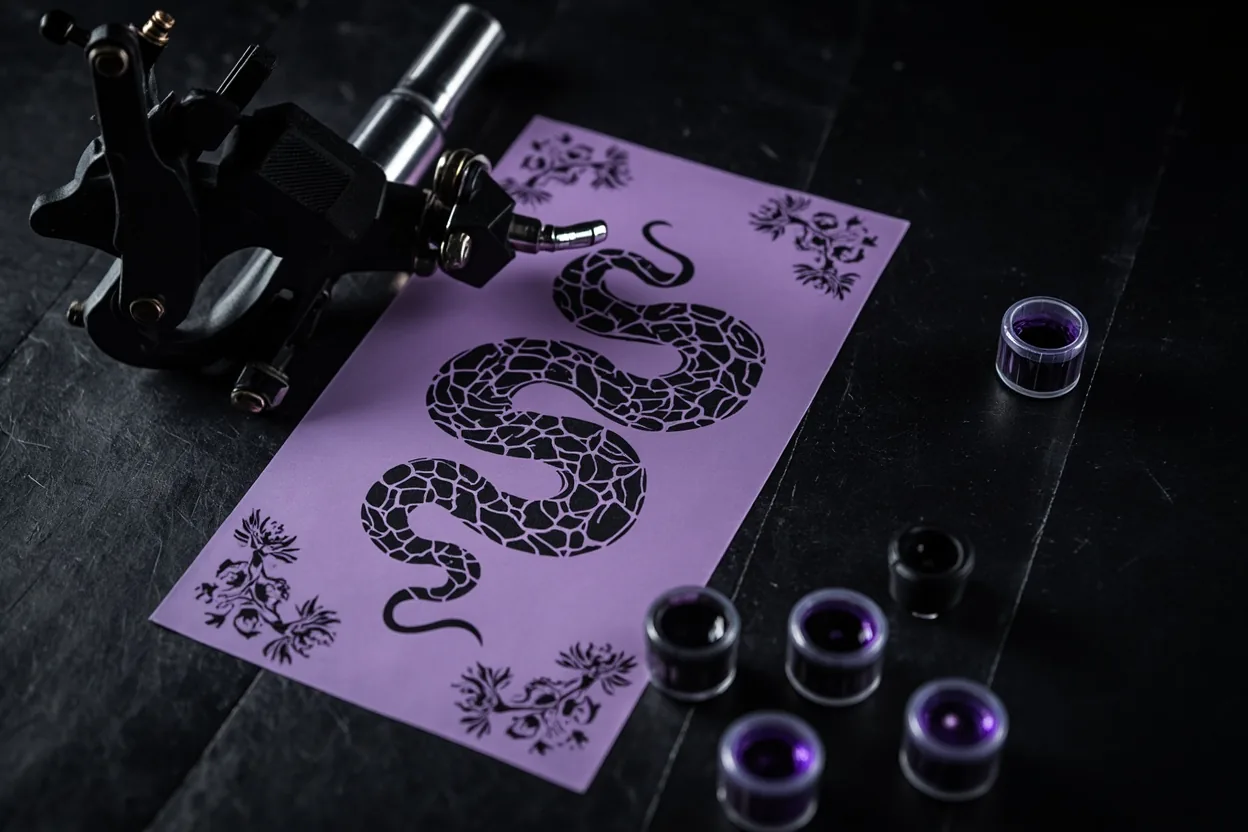
Snake tattoo meaning is never just one thing. A snake can suggest rebirth, protection, danger, temptation, healing, wisdom, fear, or control depending on how it is drawn.
Quick answer: A snake tattoo can mean rebirth, transformation, danger, protection, temptation, healing, wisdom, secrecy, or power. Coiled snakes, wrapped snakes, dagger snakes, floral snakes, and Japanese snake motifs all shift the meaning.
Snake tattoo meanings by design
The snake changes meaning through posture and pairing more than most animal tattoos.
| Idea | Best use | Watch-out |
|---|---|---|
| Coiled snake | Protection or tension | Can look cramped if small |
| Snake and flower | Danger and beauty | Needs style balance |
| Snake and dagger | Conflict or survival | Traditional style works well |
| Wrapped snake | Body flow and control | Placement must be custom |
| Japanese snake | Protection, luck, transformation | Cultural context matters |
A coiled snake reads as defense, a warning to back off. An ouroboros, the snake eating its own tail, leans hard into rebirth and the endless cycle of life. A shedding snake with split skin showing underneath is specifically about transformation, dropping the old version of yourself. These aren’t interchangeable. Pick the pose that matches what you’re actually trying to say, because clients ask, and “I just thought it looked cool” is a wasted opportunity on a permanent piece.
Color adds another layer of meaning. A black and grey snake feels ancient, timeless, a little ominous. A saturated green or red snake pushes more toward the danger and venom side of the symbolism. Japanese-style snake tattoos often carry a specific protective meaning rooted in folklore, different from a Western traditional snake wrapped around a dagger, which reads more as courage or defiance. Know the visual language of the style you’re choosing.
A snake should move with the body
The snake doesn't just symbolize change. It proves it, every time it sheds.
Snake tattoos work because the body gives them a path. Forearm, shoulder, ribs, thigh, back, and collarbone can all work when the snake follows the anatomy.
A flat snake copied from a reference can look stiff. A good artist redraws the curve for the exact placement.
A snake that fights the body’s contours looks stiff and dead on the skin. The best placements let the design follow natural curves: wrapped around the forearm, spiraling up the calf, draping across the ribs, or running along the spine. The body gives the snake direction and energy without you having to force it. A snake on a flat panel like the upper chest or thigh needs strong composition to create that same sense of movement, usually a tight coil or an S-curve.
Think about how the skin moves in that spot over time. The inner bicep and inner thigh are low-wear zones that hold detail well. The hand, finger, and outer elbow are high-wear and rough on fine lines. A snake winding across the knee ditch is spicy to sit through and the skin folds constantly, so expect some healing touch-ups. Back of the calf or the outer forearm are solid, reliable real estate for a longer snake design.
Style choices
Snake tattoos can be traditional, blackwork, Japanese, fine line, or realism. Pick the style before the details.
- Ask whether the snake should wrap or sit flat.
- Ask if scale detail will hold at the chosen size.
- Ask how added flowers or daggers change the composition.
- Ask about cultural references if using Japanese motifs.
Traditional and neo-traditional snakes hold up the best long term. Bold outlines, solid fills, limited fine detail means the piece still reads from across the room at fifteen years in. Japanese-style snakes are close behind, heavy black work with controlled whip shading in the scales. Fine line snakes look incredible fresh but the scales and texture can blur into grey mush by year five, especially on areas that see sun or friction. That’s not a deal-breaker, just manage your expectations and budget for potential touch-up work.
Black and grey is the most versatile for snake tattoos because the natural gradient mimics actual snake scale texture. Color work pops hard on lighter skin but needs more maintenance and UV protection to stay saturated. Geometric or dotwork snake styles are trending right now, but crispy linework is non-negotiable there since the whole design depends on precision. If your artist’s portfolio shows wobbly lines on geometric pieces, that’s your sign to walk.
Snake tattoo mistakes
The main mistake is shrinking the snake until the scales and head lose shape. A snake needs enough length to move.
Another mistake is mixing styles without purpose. Fine line flowers, realism scales, and traditional dagger shapes can fight each other.
The biggest mistake is going too small with too much detail. A snake with intricate scale texture crammed into a three-inch design will blowout and blob within a few years because the skin can’t hold that density. Scale back the complexity or scale up the size. Your artist should tell you this upfront. If they don’t, ask directly: “Will this hold in ten years?” A good artist will be honest about what the skin can support.
Placement mistakes are the other killer. Putting a long sinuous snake in a spot that doesn’t give it room to move, like a cramped wrist band or a short stretch of ankle, cuts off the energy of the design. Also, horizontal snake designs on vertical body parts almost never work. The snake needs to follow the limb’s direction or commit to a tight coil. Spending thirty minutes in consultation talking through placement will save you from years of hating the result.