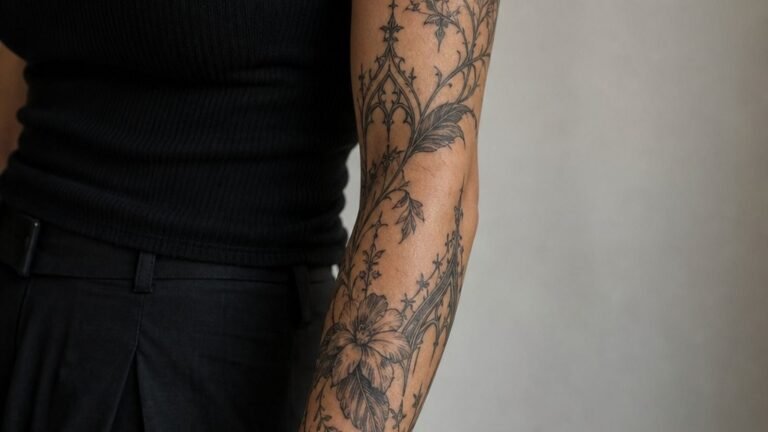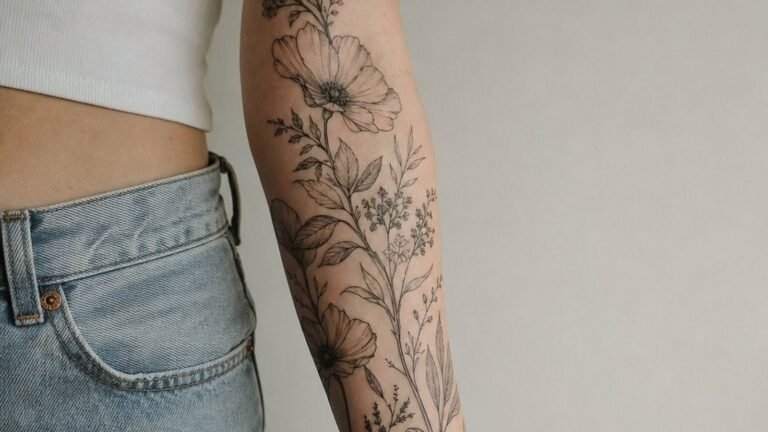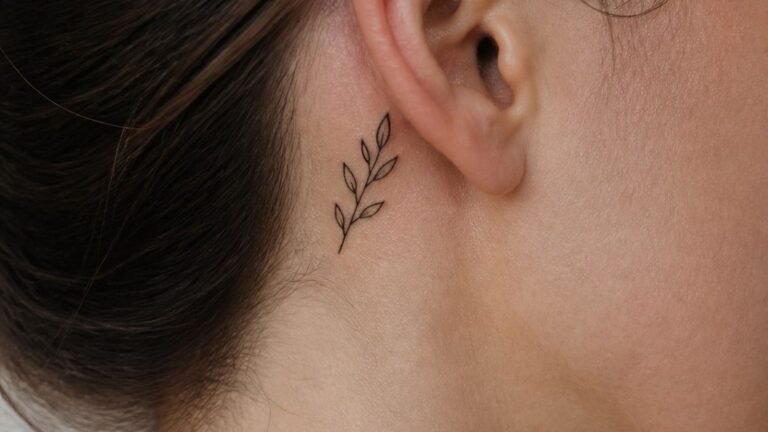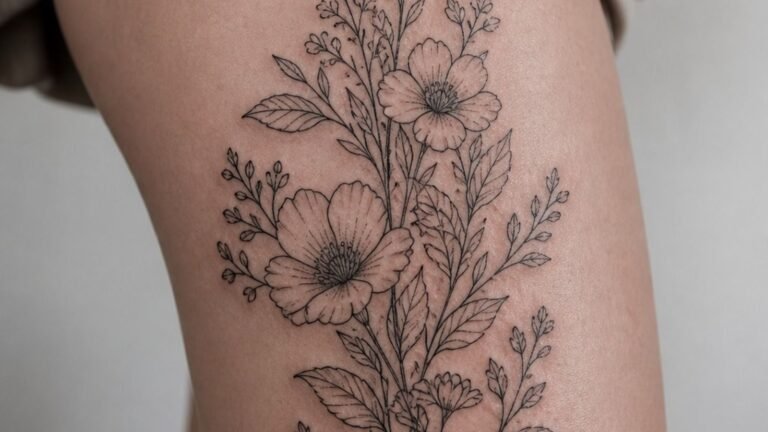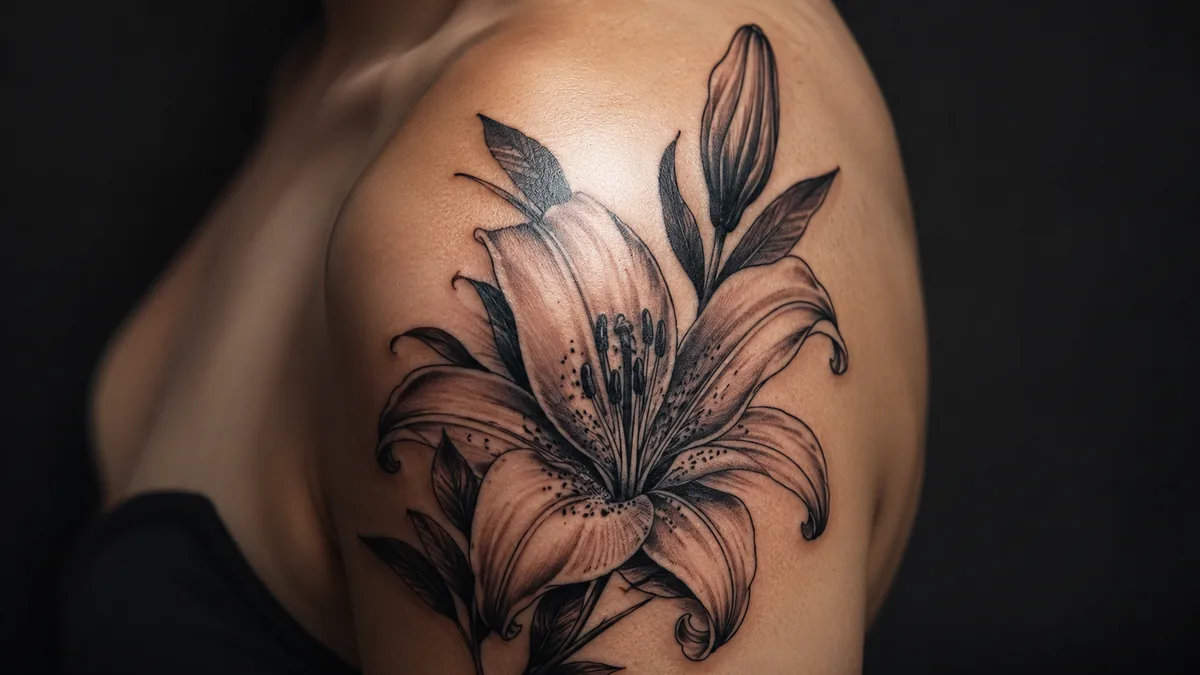
The lily is one of those flowers that carries serious weight. It’s not just pretty, it’s loaded with meaning across cultures, religions, and centuries. People get lily tattoos for deeply personal reasons, and that’s exactly what makes them work so well as permanent art.
If you’re drawn to the clean elegance of a fine-line lily or the bold drama of a neo-trad bloom, the symbolism behind it matters. Here’s the real breakdown of what a lily tattoo means, where it comes from, and how to make yours count.
Core Symbolism: What a Lily Tattoo Actually Means
The lily most commonly represents purity, beauty, and renewal. The white lily, in particular, has been tied to innocence and new beginnings for a long time. Across many traditions, it also carries themes of devotion and motherhood, which is why it shows up as a memorial tattoo as often as it does a celebratory one.
Beyond purity, lilies symbolize transformation. The flower rises from a bulb buried underground and blooms into something striking. A lot of people connect with that cycle. It reads as a metaphor for coming through hardship and re-emerging stronger. That dual meaning, beauty and resilience, is a big reason this tattoo holds up over time.
Cultural and Historical Roots
The lily doesn't whisper, it means exactly what you need it to mean.
In Christianity, the white lily is directly associated with the Virgin Mary, representing purity and grace. The Easter lily connects to resurrection and spiritual rebirth. In ancient Greece, lilies were linked to Hera and thought to have grown from her milk, tying them to femininity and divine power. Ancient Egyptians used lilies in funeral rites and associated them with fertility and the cycle of life.
In Chinese culture, the day lily is a symbol of good luck, abundance, and forgetting sorrow. In Japan, lilies appear in funeral contexts and carry associations with the soul of the departed. So depending on the cultural lens, a lily can mean new life or a farewell to it. That range is part of why it resonates so broadly as a tattoo choice.
Color Meaning: How the Hue Changes Everything
Color shifts the meaning significantly. White lilies lean into purity, spirituality, and remembrance. Pink lilies carry associations with admiration, femininity, and platonic love. Red or orange lilies, especially tiger lilies, signal passion, confidence, and bold energy. Yellow lilies point toward joy, friendship, and new beginnings.
Purple lilies, which are less common in nature but popular in tattooing, suggest royalty, mystery, and pride. Black lilies in tattoo form are often chosen for themes of loss, the shadow side of beauty, or a more gothic personal aesthetic. If you are going for a colored piece, talk to your artist about ink saturation and which pigments hold over time. Some bright oranges and pale pinks will fade faster than others.
Design Styles: From Fine Line to Bold Neo-Trad
Fine-line lilies are everywhere right now, and for good reason. A single-needle or fine-line lily reads as delicate and precise, perfect for wrist, collarbone, or behind-the-ear placements. The challenge is longevity. Fine lines can blur over years, especially in high-movement or sun-exposed areas. Talk to your artist about line weight so it still reads clean a decade out.
Neo-traditional lilies pop hard. Thick outlines, saturated color, graphic shading. They hold up better over time and read from across the room. Black and grey lilies with whip shading hit somewhere in the middle, soft but solid, with real depth. Botanical realism is another strong option if you want it to look almost photographic. Each style changes the feel completely, same flower, totally different energy.
Lily Variations: Tiger Lily, Calla Lily, Water Lily
Not all lilies carry the same meaning. The tiger lily, with its spotted orange petals and recurved shape, is tied to pride, confidence, and standing out. It has a wilder energy than the classic Easter lily. A lot of people choose it precisely because it pushes back against the gentler symbolism of the white lily.
The calla lily is elongated and architectural, strongly associated with funerals and sympathy in Western culture, but also with beauty and sophistication. It is a common memorial tattoo for that reason. The water lily, particularly the lotus, carries its own separate symbolism around enlightenment and spiritual growth, but a true water lily without the lotus context leans into peace and emotional calm. Know which variety you want before you book, because each has its own visual language.
Placement, Pain, and How It Ages
Placement matters for both meaning and durability. The forearm, upper arm, and thigh give your artist enough real estate to do justice to a lily with detail. Ribcage placements are spicy, one of the more uncomfortable spots, but the long vertical shape of certain lily varieties fits the ribcage naturally. Collarbone and sternum are high-wear areas where fine-line work can migrate faster.
For longevity, stick to areas with less sun exposure and less skin movement. Inner bicep, upper back, and calf all age well. High-friction zones like fingers, feet, and the inner wrist are rough on any tattoo. A lily with solid black outlines and well-packed color will outlast a thin scratchy version by years. Bold will hold is not just a saying. It is genuinely how flower tattoos survive on skin long-term.
Who Gets Lily Tattoos and How to Make Yours Personal
Lily tattoos cross every demographic. They are common memorial pieces for people honoring a lost mother, grandmother, or child. They show up as self-empowerment tattoos after a hard chapter closes. They are chosen for religious meaning, personal beauty, or pure aesthetic preference. That range is part of the appeal. A lily does not lock you into one story.
To make yours personal, think about which variety and color actually speaks to what you want to say. Add meaningful elements: a birth date, a name wrapped into the stem, companion flowers that represent other people in your life, or a specific background that grounds the imagery. Bring reference images. A good artist will take those and build something that fits your skin and your story. That is the difference between a lily tattoo and your lily tattoo.