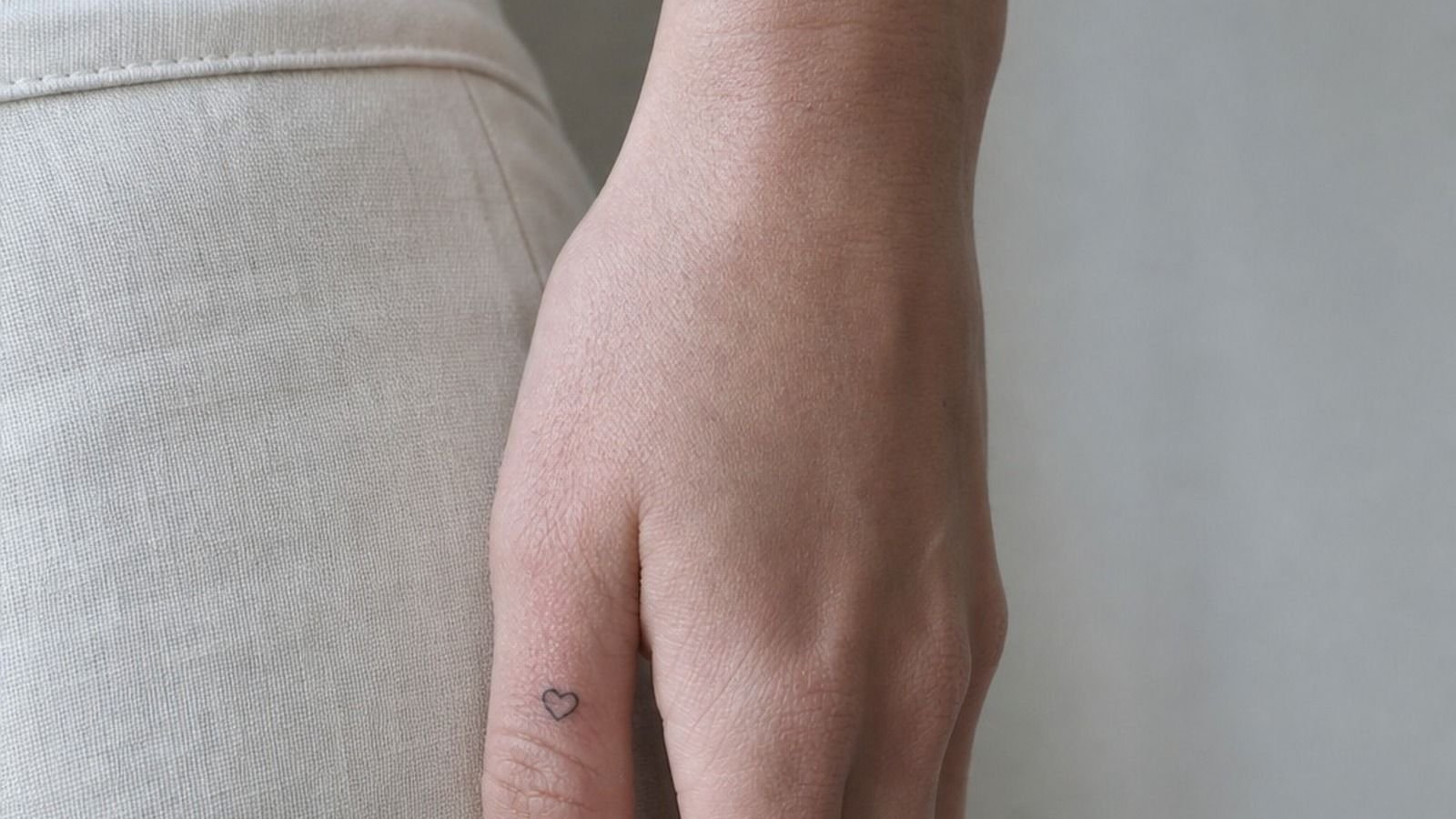
Cute hand tattoos are the designs clients beg for and the ones I make them earn. Hand skin is thin, high-wear, and brutally honest: a fine line that looks crispy on day one can turn to soup by year two if the design ignores how your hand moves. The short answer to designing one that lasts? Go smaller than your reference, go bolder than your Pinterest board, and plan the touch-up before you book. Sixteen steps, in order, from a woman who’s fixed more blown-out knuckle ink than she’d like to admit.
What you’ll need before you book
You don’t need much, but you need the right stuff. Bring two or three reference photos for vibe only (if you want Pinterest-exact, I’m not your artist), a realistic budget of $100 to $300 for something small, and your aftercare kit ready at home: Dial Gold soap, a thin ointment, and unscented lotion.
And clear your calendar for two weeks of babying your hand. No pools, no gym grips, no gardening. Hands touch everything, so healing one is a part-time job!
- Start with a tiny heart on the side of your finger
- Pick a fine-line bouquet that trails across your knuckles
- Place a single-word script where the thumb meets the palm
- Keep your ink crisp with a daily unscented moisturizer routine
- Plan around finger fade when designing a back-of-hand tattoo
- Match a mini butterfly to the natural curve of your hand
- Size your design to the gaps between tendons and bones
- Anchor a watercolor wash with strong black linework
- Budget for touch-ups since hand tattoos need yearly refresh
- Heal through two weeks of gloves and no sun exposure
- Pair a constellation cluster with existing wrist ink
- Frame the center of your hand with a small central motif
- Line up a string of dots along each finger pad
- Commit to a placement that your employer can see
- Find an artist who specializes in hand skin stretch
- Style a soft angel number beside your index finger
1Start with a tiny heart on the side of your finger
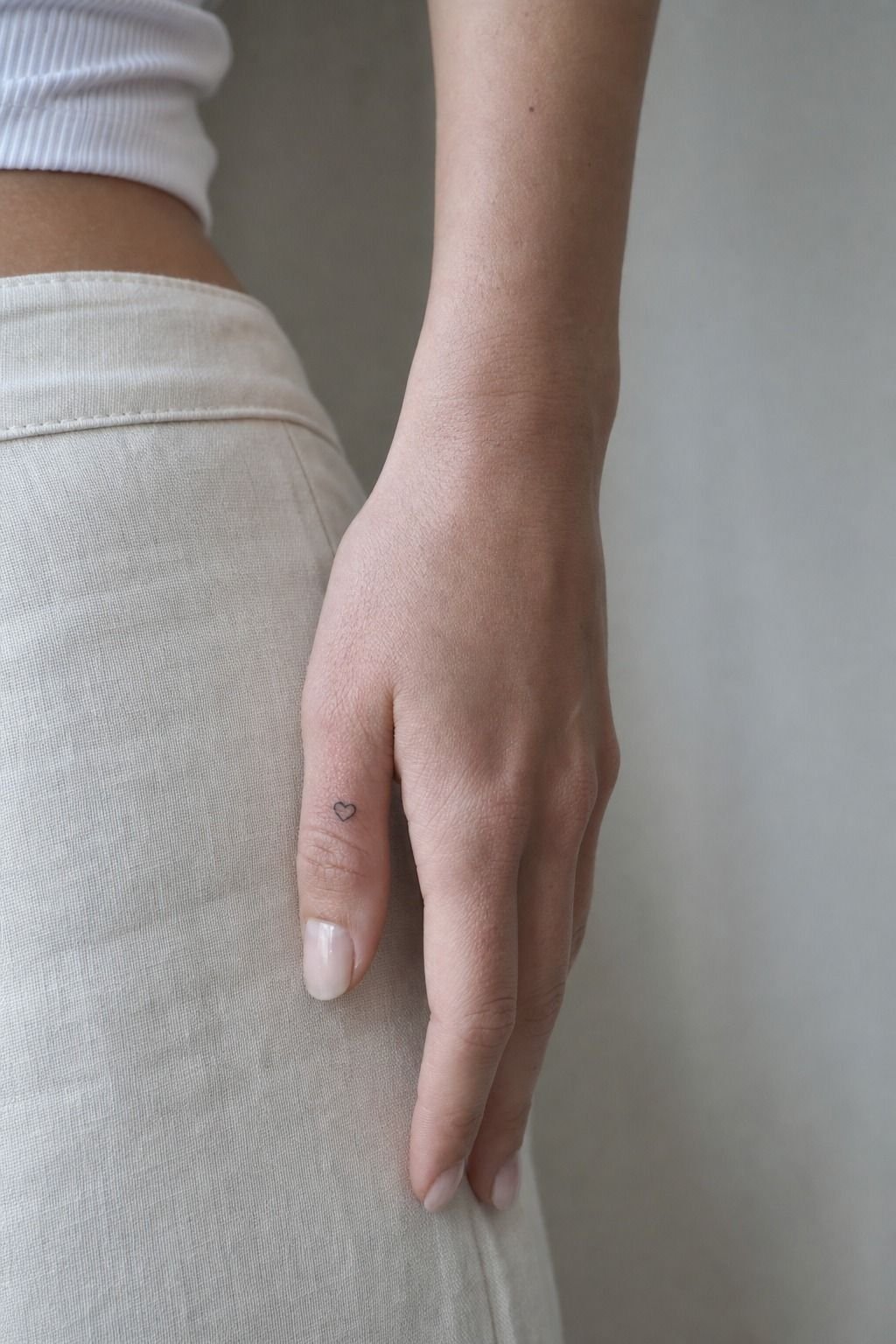
The side-of-finger heart is the gateway hand tattoo, and on fair cool-pink skin like the photo, a clean little outline reads sweet without screaming. Keep it around a quarter inch, no smaller. Anything tinier and the line weight has nowhere to go when the skin regenerates.
Here’s my honest take: the side of the finger is one of the highest-wear zones on your whole body, worse than the inner finger because it rubs against its neighbor all day. I’d steer you toward a single-pass 3RL single needle outline and skip any fill. Filled micro hearts on fingers mush out first, every single time.
If you love the look but hate the maintenance, the same heart bumped up onto the back of the hand ages twice as nice. More placement trade-offs in my hand tattoos guide.
2Pick a fine-line bouquet that trails across your knuckles
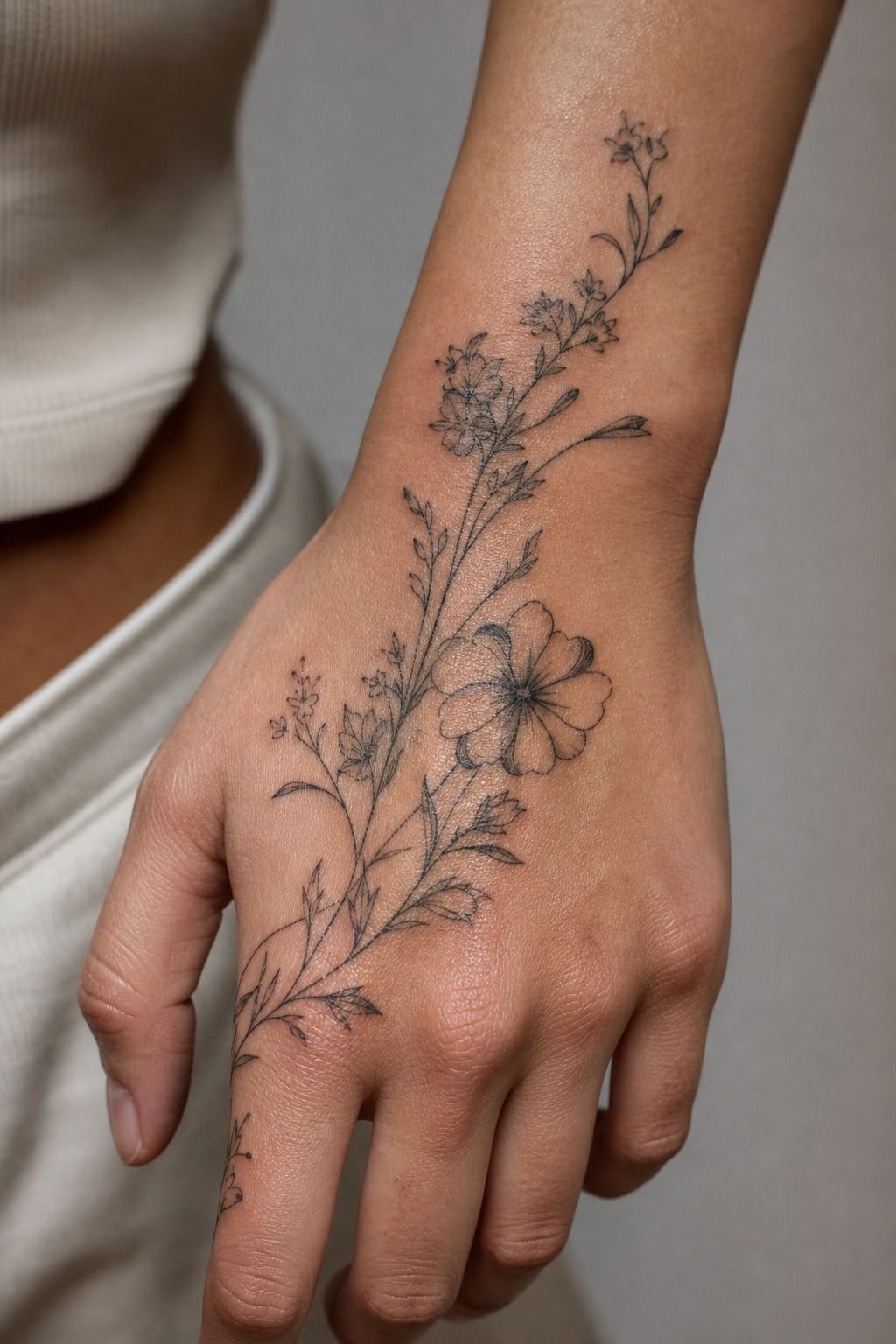
A floral trail over the knuckles works when the stems land between the knuckle creases, not across them. On medium warm ivory skin like this macro shot, the linework sits soft and readable because the artist mapped the flow first. That’s the whole job, honestly.
Ask your artist to stencil the bouquet on your hand while you make a fist, open and close, a few times. If a stem crosses a crease, it splits visually every time you bend. I call this the knuckle map, and I won’t tattoo a hand without doing it.
Keep the blooms simple: three to five elements, single needle, minimal shading. A tight rose bundle sounds cute and heals like soup. If botanicals are your thing, my orchid tattoo breakdown shows which flowers hold detail and which ones don’t.
3Place a single-word script where the thumb meets the palm
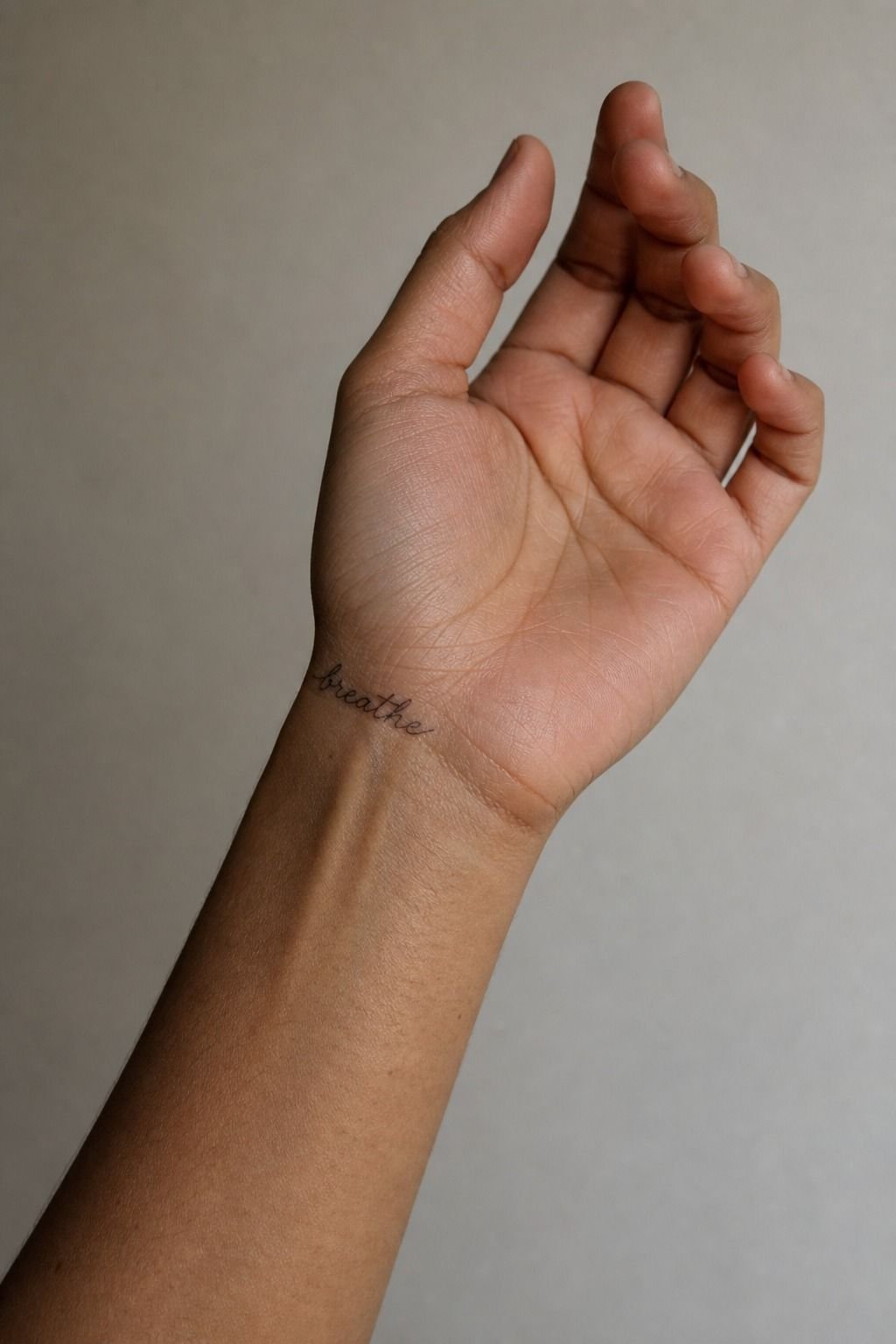
That soft web between your thumb and palm is an underrated spot for one word, and this healed photo on olive skin proves it: the letters stayed open, the spacing held, nothing blurred together. Healed photos are the only proof that matters.
Size rule I never break: each letter at least a quarter inch tall, with generous spacing between them. Script letters tighten as they age (the ink spreads microscopically for years), so “breathe” at 8pt becomes “brath” by year three. Bump the tracking out until it looks almost too airy on the stencil.
And keep it to one word, four to seven letters. A full sentence here is a paragraph your hand can’t fit. Lettering pairs well with other small work too, something like the pieces in my cute chest tattoos and meanings roundup.
4Keep your ink crisp with a daily unscented moisturizer routine
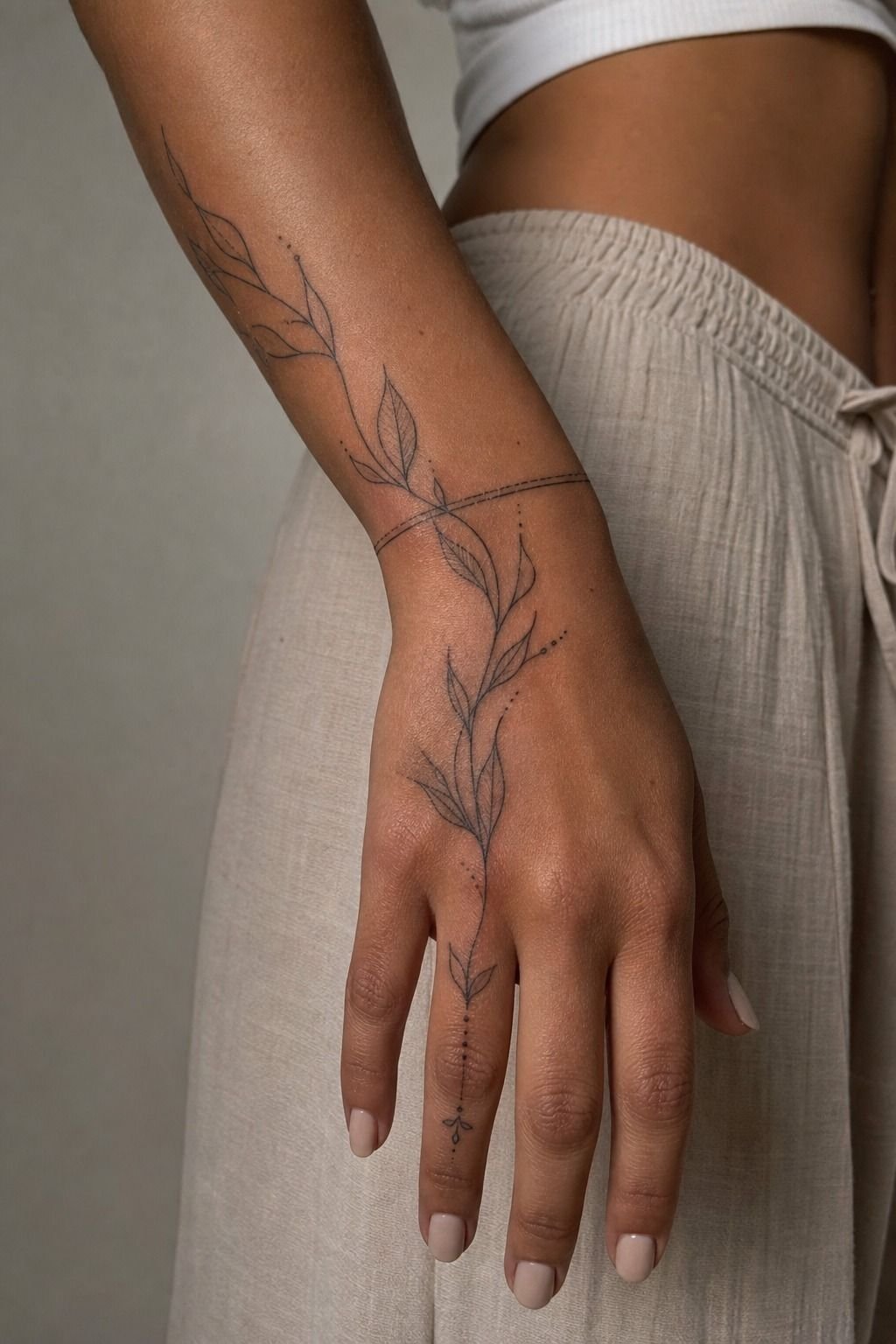
This photo shows a healed wrap on golden tan skin with an anatomical placement overlay, and the reason it still reads clean isn’t the tattooing, it’s the two years of lotion after.
5Plan around finger fade when designing a back-of-hand tattoo
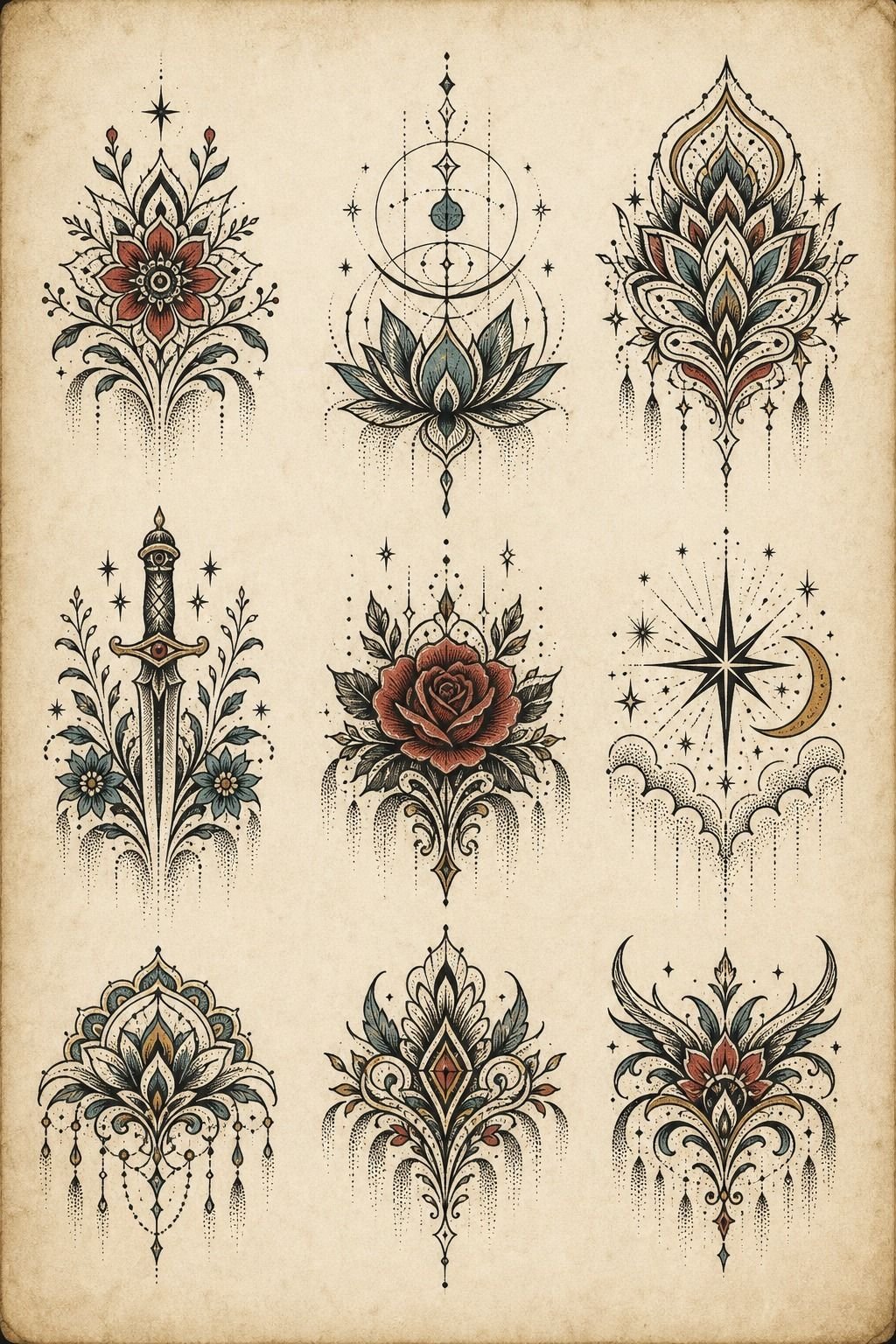
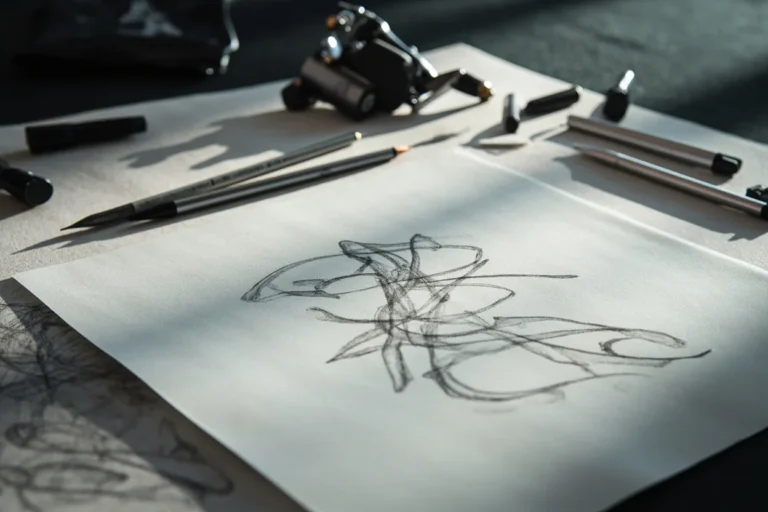
This flash sheet on aged off-white paper is exactly how I want you thinking: several small designs drawn at real size, compared side by side, before anything touches your skin. Flash thinking beats screenshot thinking. A screenshot has no scale.
Now the fade reality. The back of your hand holds ink decently, but anything that creeps onto the fingers drops 30 to 50 percent of its saturation in the first two years. So design the back-of-hand piece to be complete on its own, with finger elements as bonus, not backbone.
My rule: the design should still read from across the room if every finger detail vanished tomorrow. If it can’t, it’s not a hand design, it’s a finger design with ambition. The guys in my hand tattoos for men guide get the same lecture.
6Match a mini butterfly to the natural curve of your hand
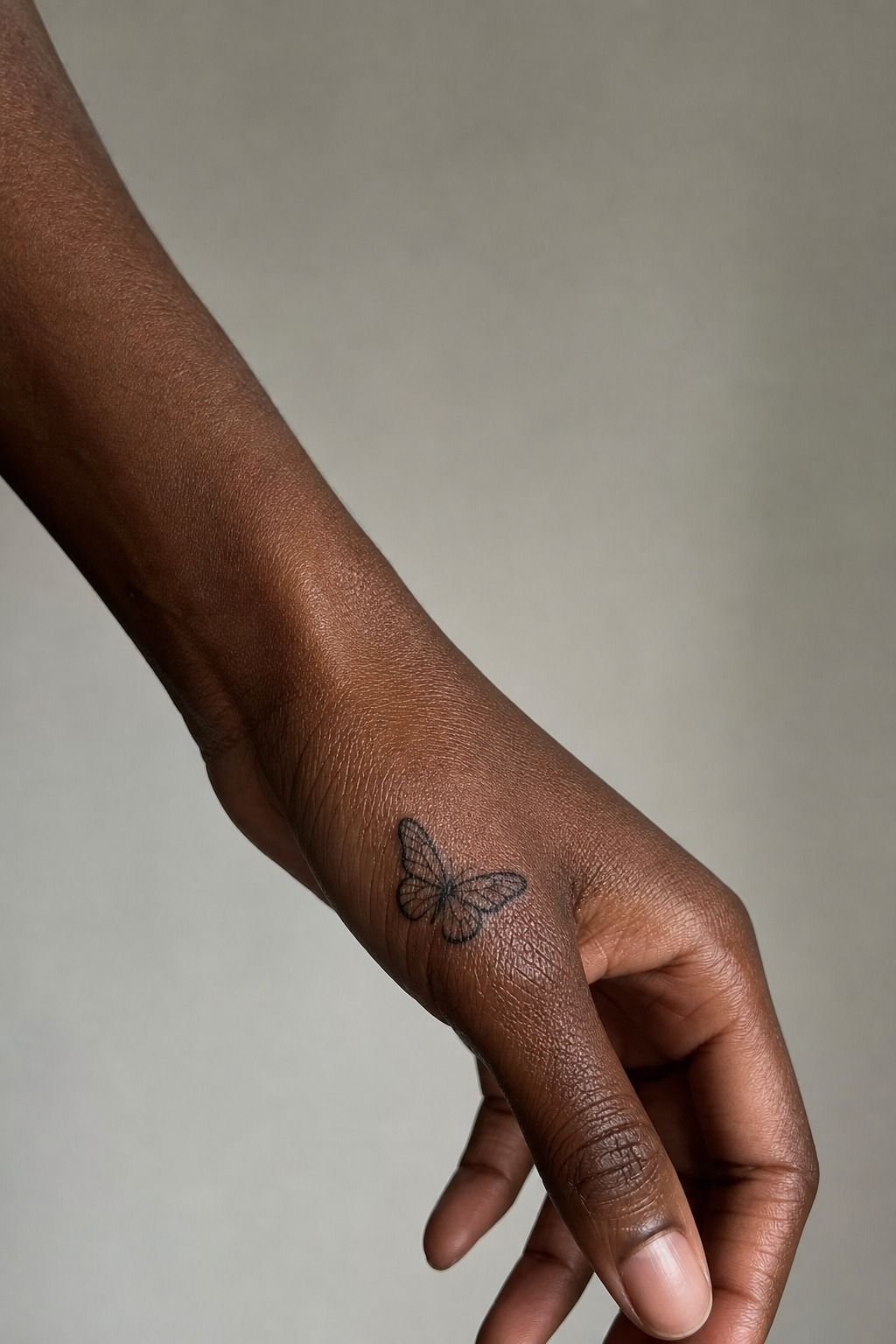
A butterfly that follows the hand’s curve looks like it landed there. One placed straight-on looks like a sticker. On deep ebony skin like this editorial crop, the wings use clean negative space inside a confident outline, and that’s exactly the right call.
Real talk about deep skin tones: contrast is your best friend. A bold 5RL liner with open wing panels will read beautifully, while soft grey wash shading gets subtle fast on richer skin. Color packing can work, but expect it to heal muted, more of a tint than a pop.
I’d skip micro-detailing inside the wings entirely. Little dots and veins inside a one-inch butterfly are the first thing to close up.
Let the silhouette do the work. It ages cute on you!
7Size your design to the gaps between tendons and bones
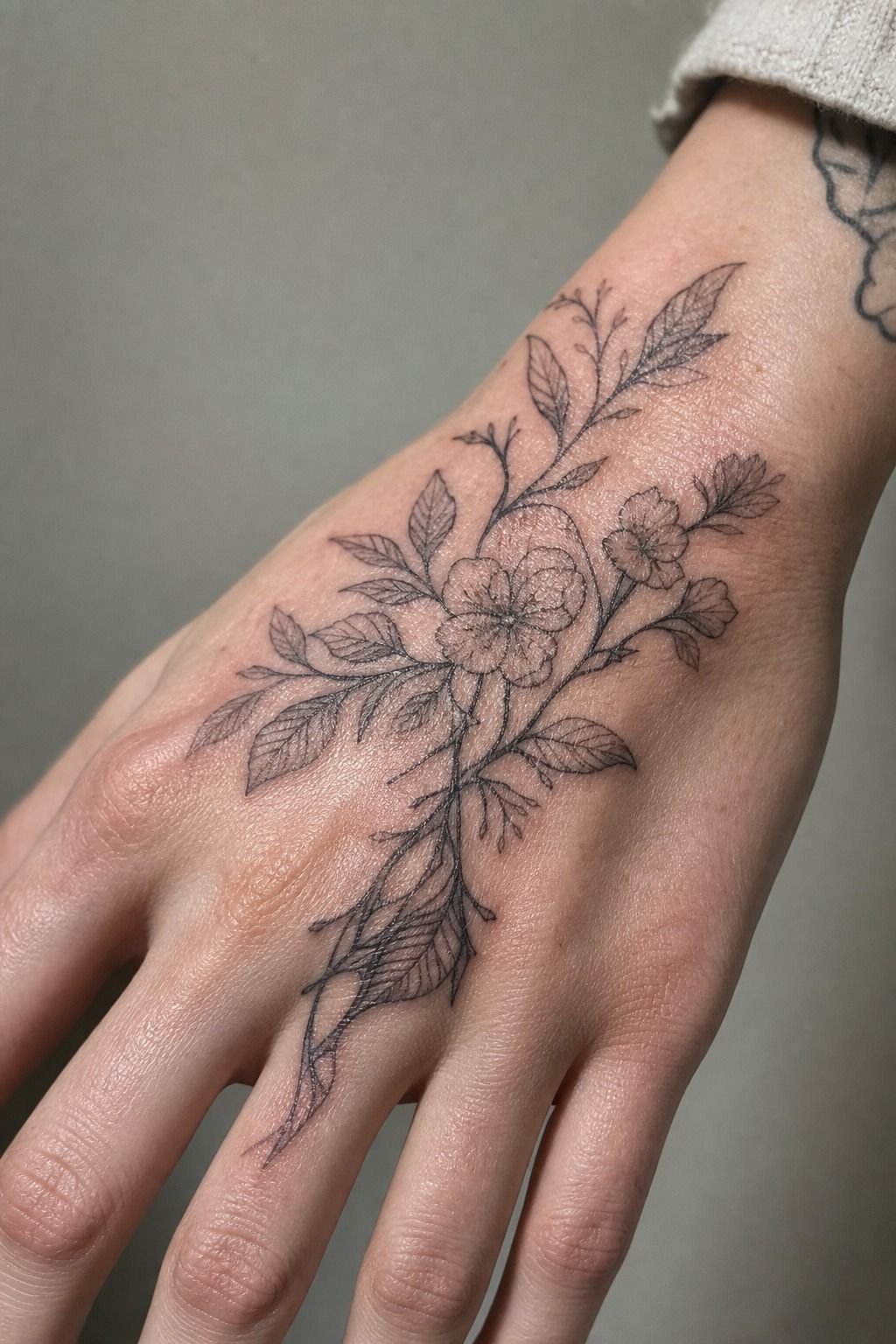
Look at this macro shot on fair cool-pink skin: the design sits in the flat plane between the tendons, filling 60 to 70 percent of the frame, and nothing crosses a raised line.
8Anchor a watercolor wash with strong black linework
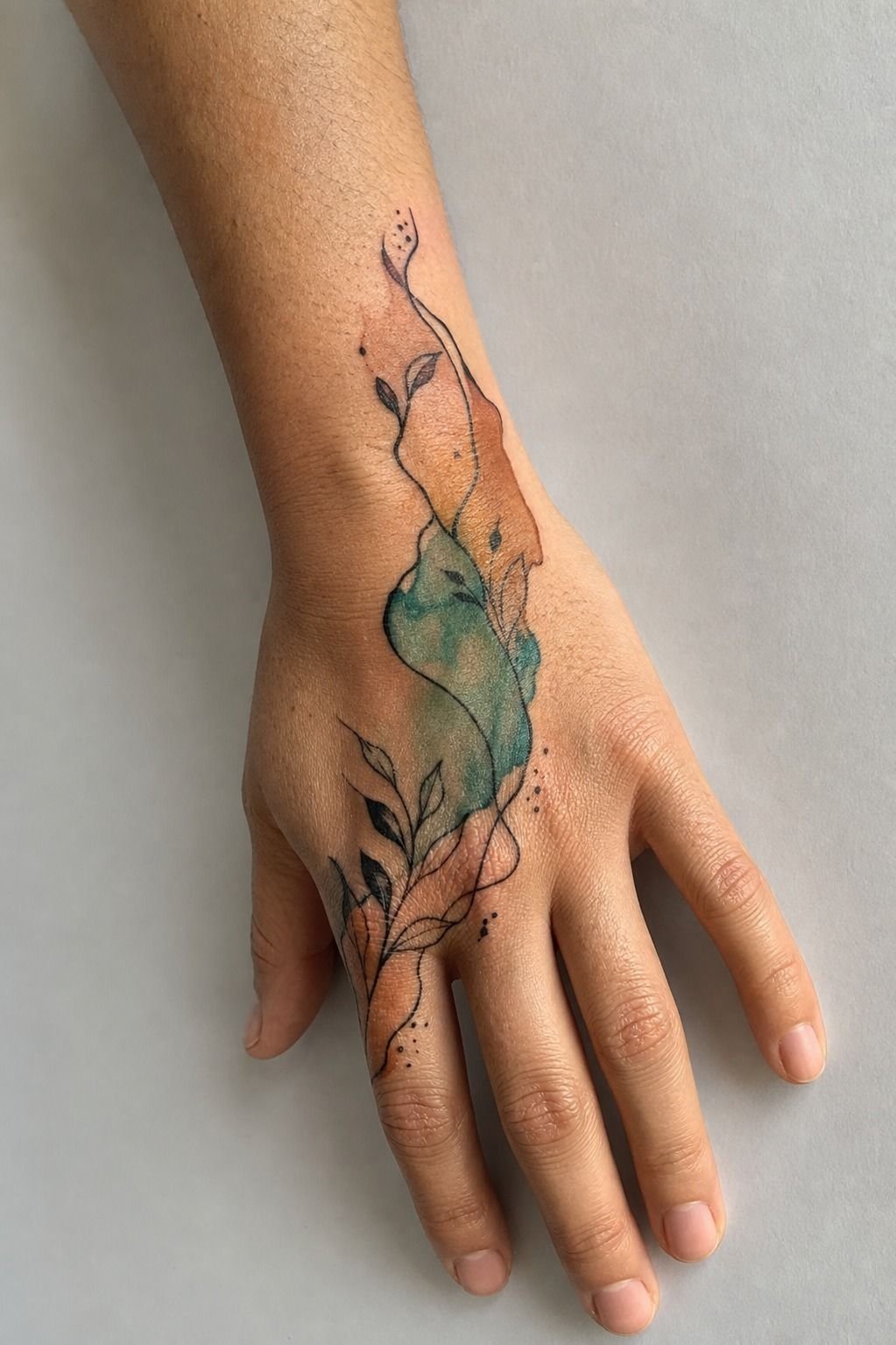
Watercolor on a hand scares most artists, and it should scare you a little too. But this healed piece on warm ivory skin shows the version that survives: a visible black skeleton under the wash, so when the color softens (and it will), the structure stays.
Watercolor without linework is a five-year countdown to a bruise-looking smudge. With an anchored outline, the fade reads intentional, like a painting that aged. That’s the whole bet you’re making.
Ask for the color laid in one solid pass, not scratched at fifty times. Overworked hand skin chews up fast, and chewed-up skin heals patchy.
I reach for Eternal Ink pastels for these because they stay true as they soften. Bold will hold, and the line is what holds.
9Budget for touch-ups since hand tattoos need yearly refresh
Here’s the part nobody puts on the Pinterest pin: a hand tattoo is a subscription, not a purchase. Most hand work wants a refresh every one to three years, and finger work sometimes annually. Budget for it now so it doesn’t sting later.
Typical US numbers, so you can plan:
Many artists include one free touch-up within the first year, so ask before you book. After that, expect $50 to $150 per refresh depending on the shop minimum. If you’re weighing whether the upkeep is worth it, the realism crowd deals with the same math, and my realistic hand tattoos guide breaks down session pricing for bigger work.
10Heal through two weeks of gloves and no sun exposure
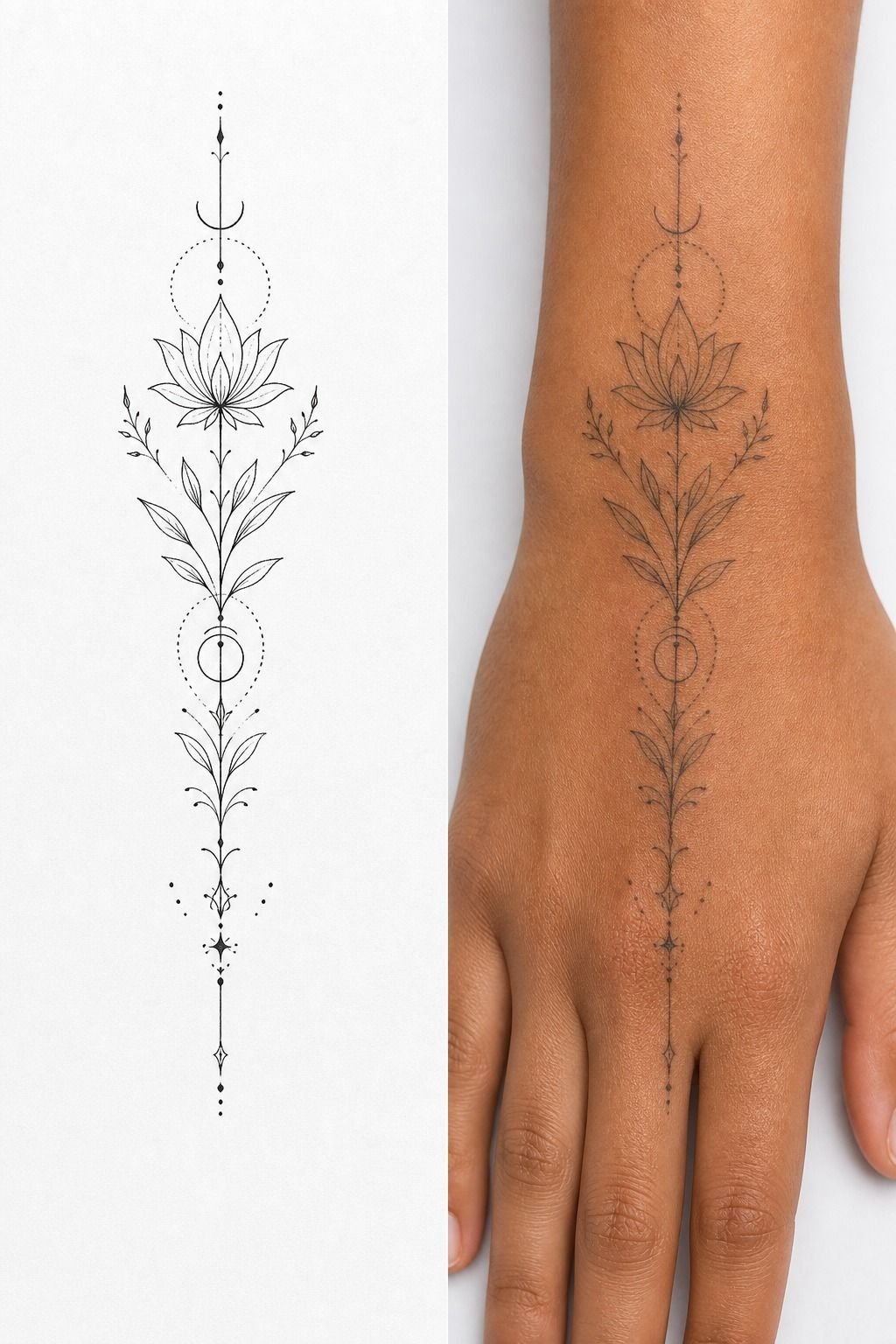
This split image is the truth of tattooing in one frame: the clean stencil on paper on the left, the healed result on skin on the right.
11Pair a constellation cluster with existing wrist ink
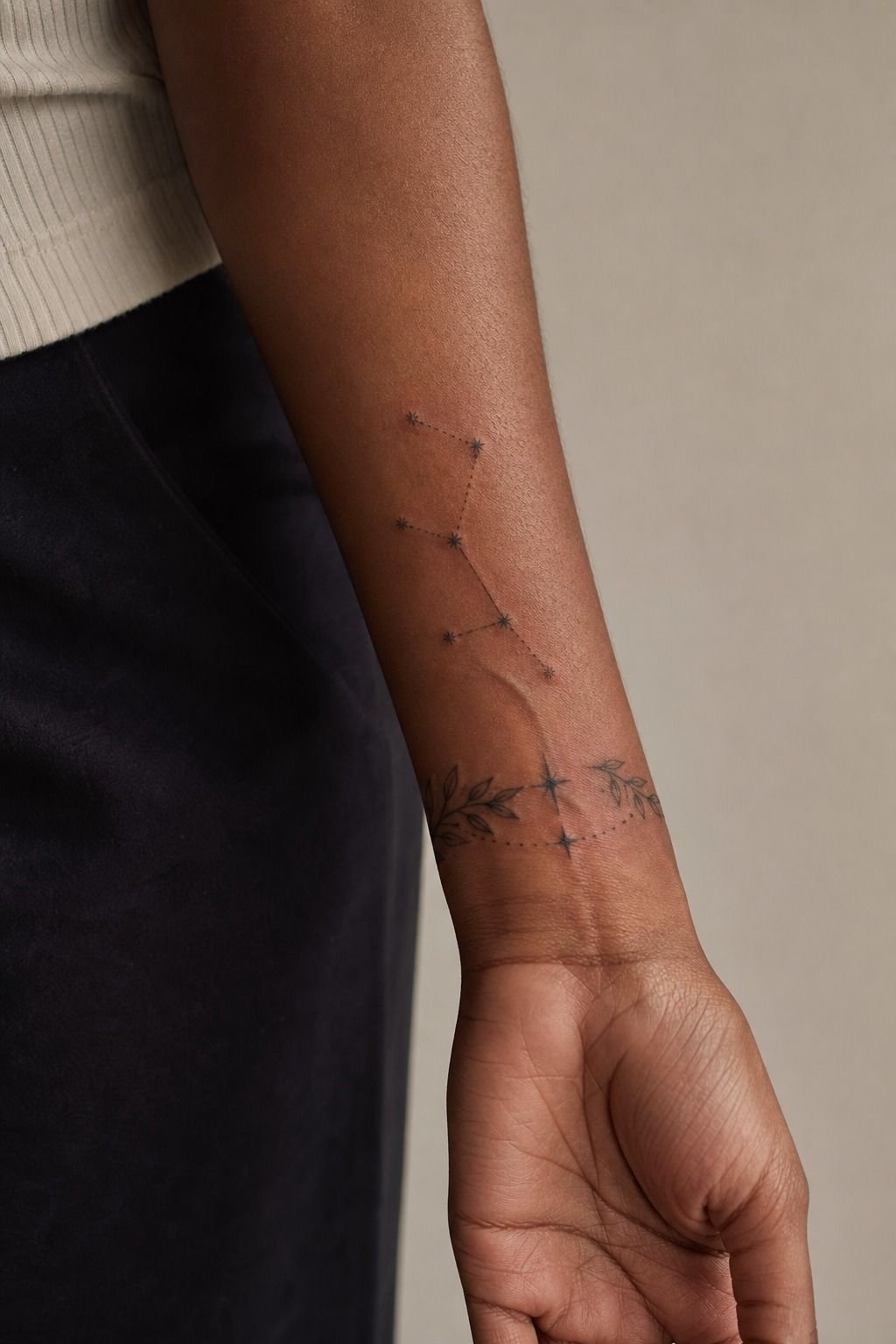
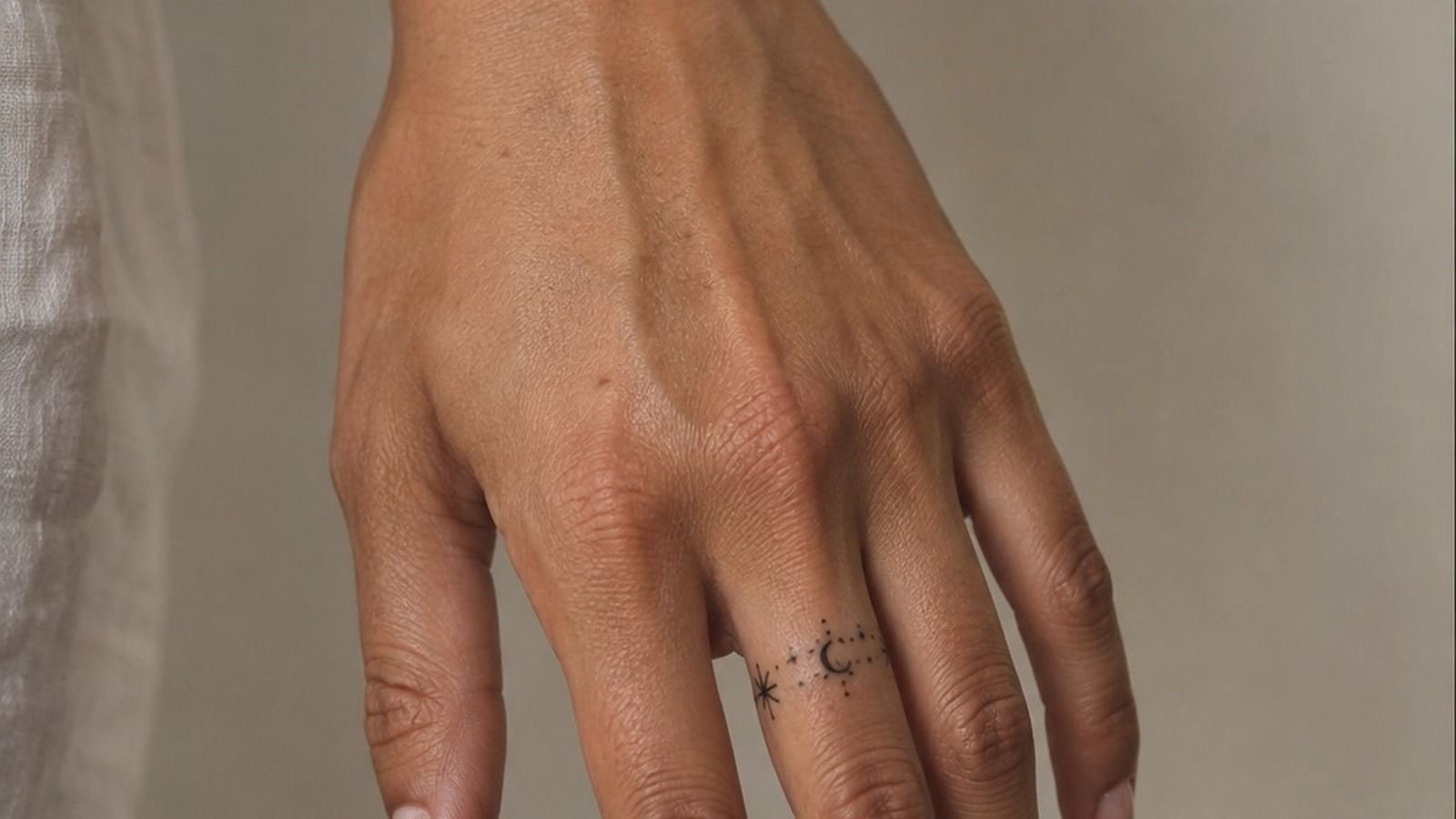
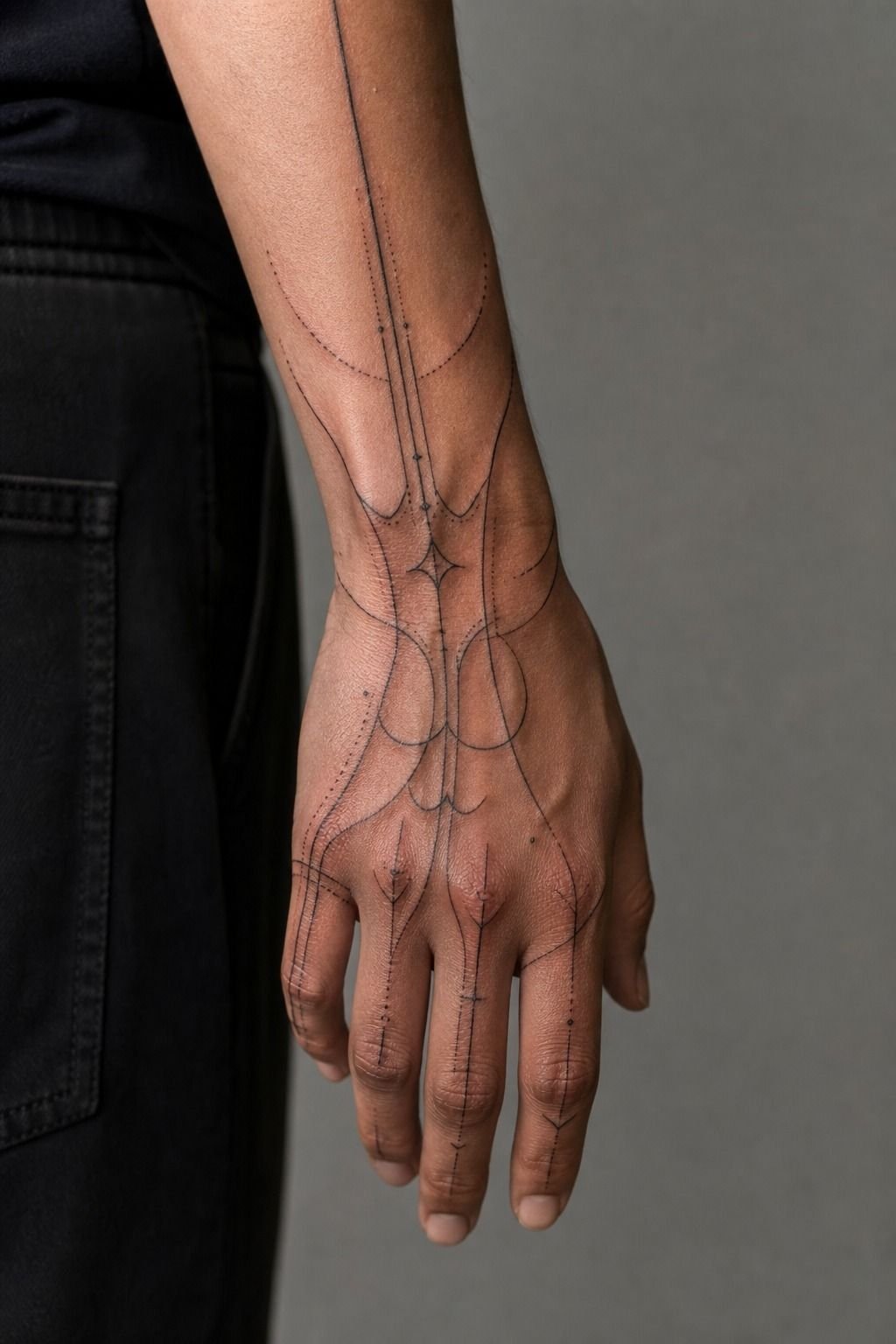
A constellation that starts at the wrist and drifts onto the hand, like this piece on deep brown skin with warm undertones, connects old and new ink into one story. The move is spacing: the stars need room to breathe, or the cluster reads as a smudge of freckles.
Dot sizing matters more than dot count. Three dot sizes, clear hierarchy, lines between stars at least an eighth inch apart.
On deeper skin, I’d skip white ink entirely for the stars. White heals faint and can yellow, so let your natural skin be the star and the ink be the connecting lines.
Bringing existing wrist work into the plan? Bring a healed photo of it to your consult so the new line weight matches the old. Mismatched weights between wrist and hand look like two different artists argued, and sometimes they did.
12Frame the center of your hand with a small central motif
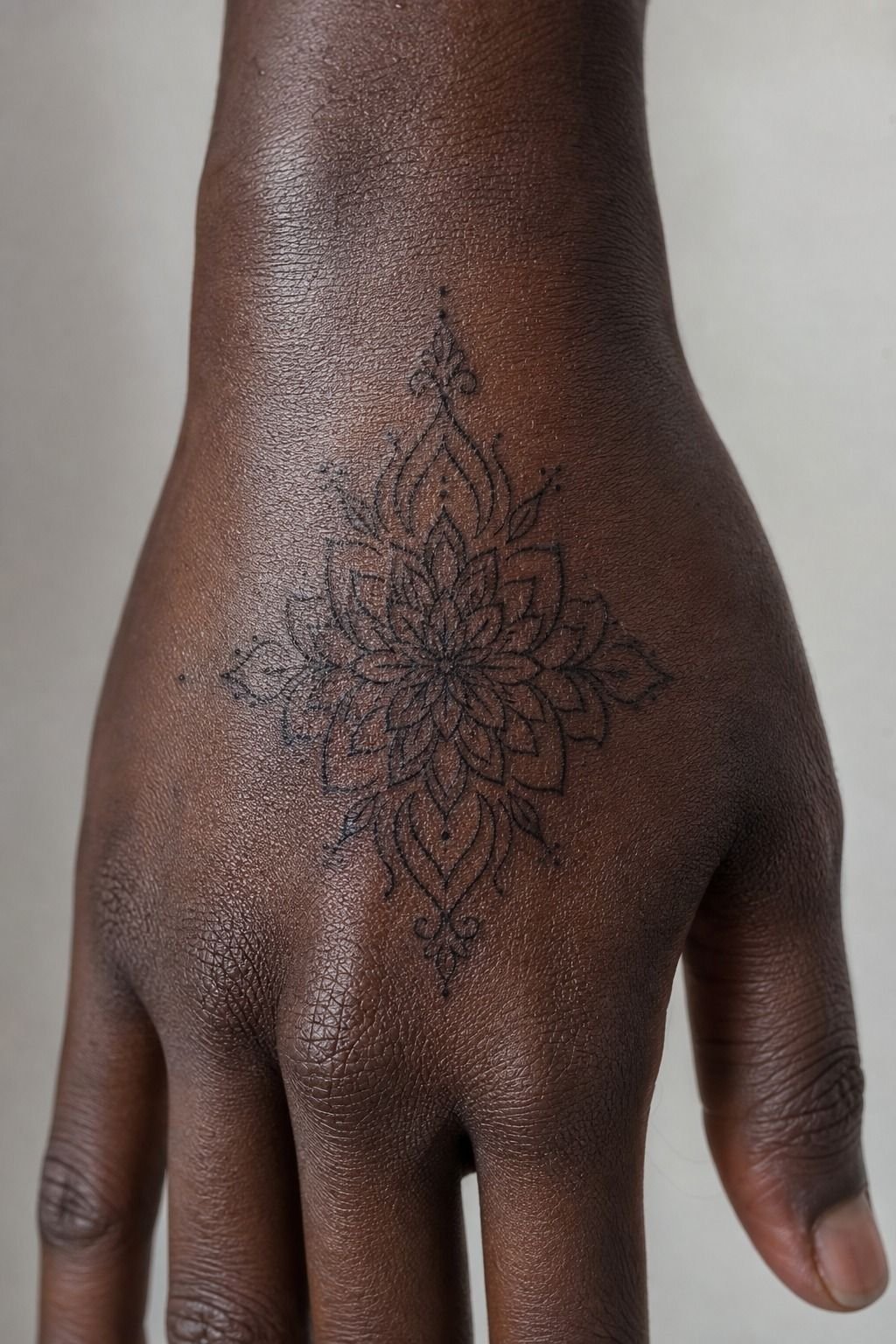
The center of the back of the hand is prime real estate, and this macro on deep ebony skin shows why: one small motif, dead center, with clean empty space around it, reads from across the room.
13Line up a string of dots along each finger pad
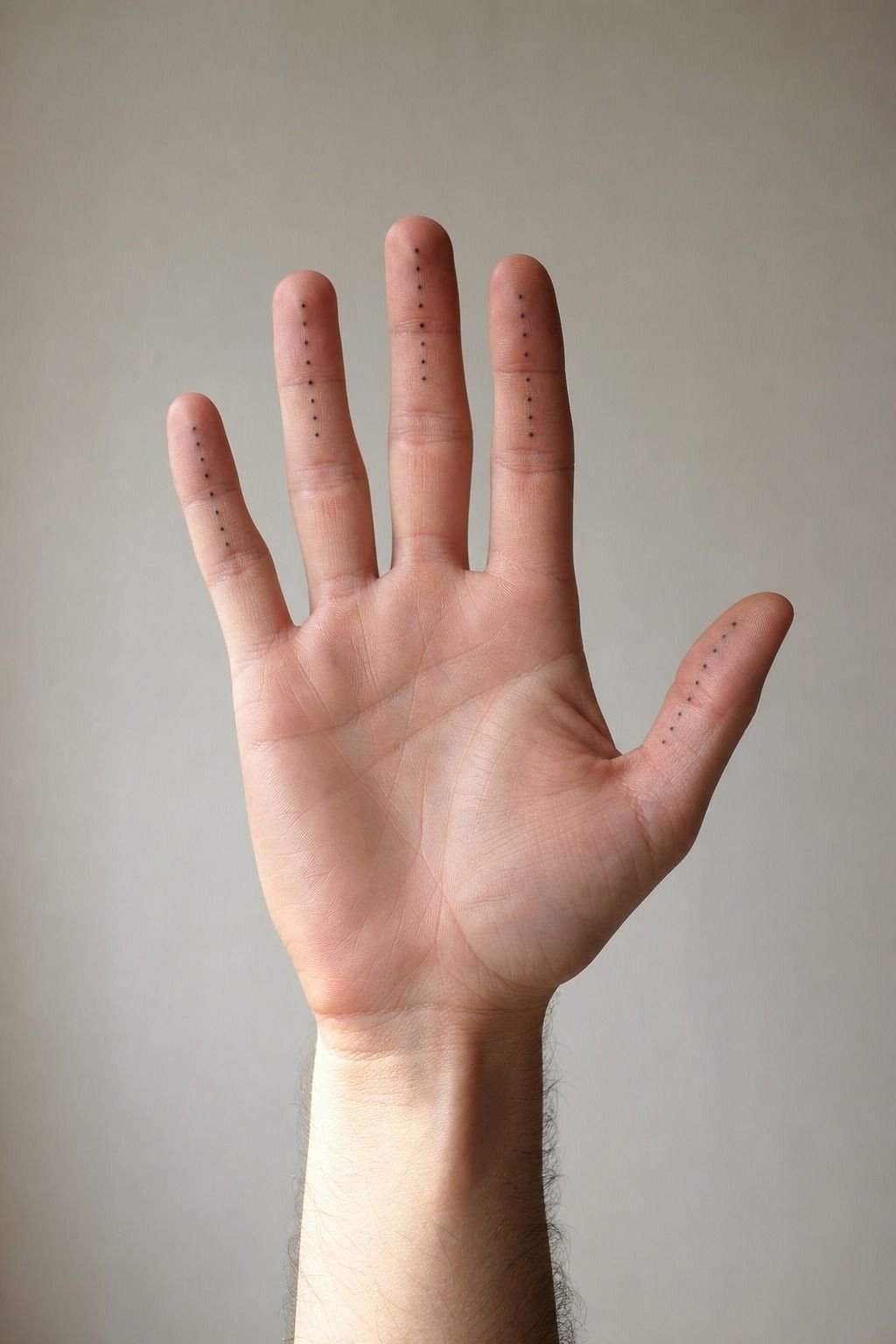
Dotwork along the finger pads, like this healed piece on fair cool-pink skin, is minimalist and genuinely pretty. It’s also the highest-maintenance choice on this entire list, and I won’t pretend otherwise.
Your pads regenerate skin faster than almost anywhere on your body because of friction: keyboards, steering wheels, pockets, everything. Expect meaningful fade within a year, sometimes months. The dots that survive longest sit slightly toward the side of the pad, not dead center where the friction lives.
If you commit anyway (and some clients do, happily), keep the dots a solid size, no pinpricks, and treat touch-ups as part of the design’s life. Pepper shading techniques hold better than single-pass tiny dots, so ask your artist which approach they use. Hand tattoos are for people who accept maintenance, and finger pads are for the truly committed.
14Commit to a placement that your employer can see
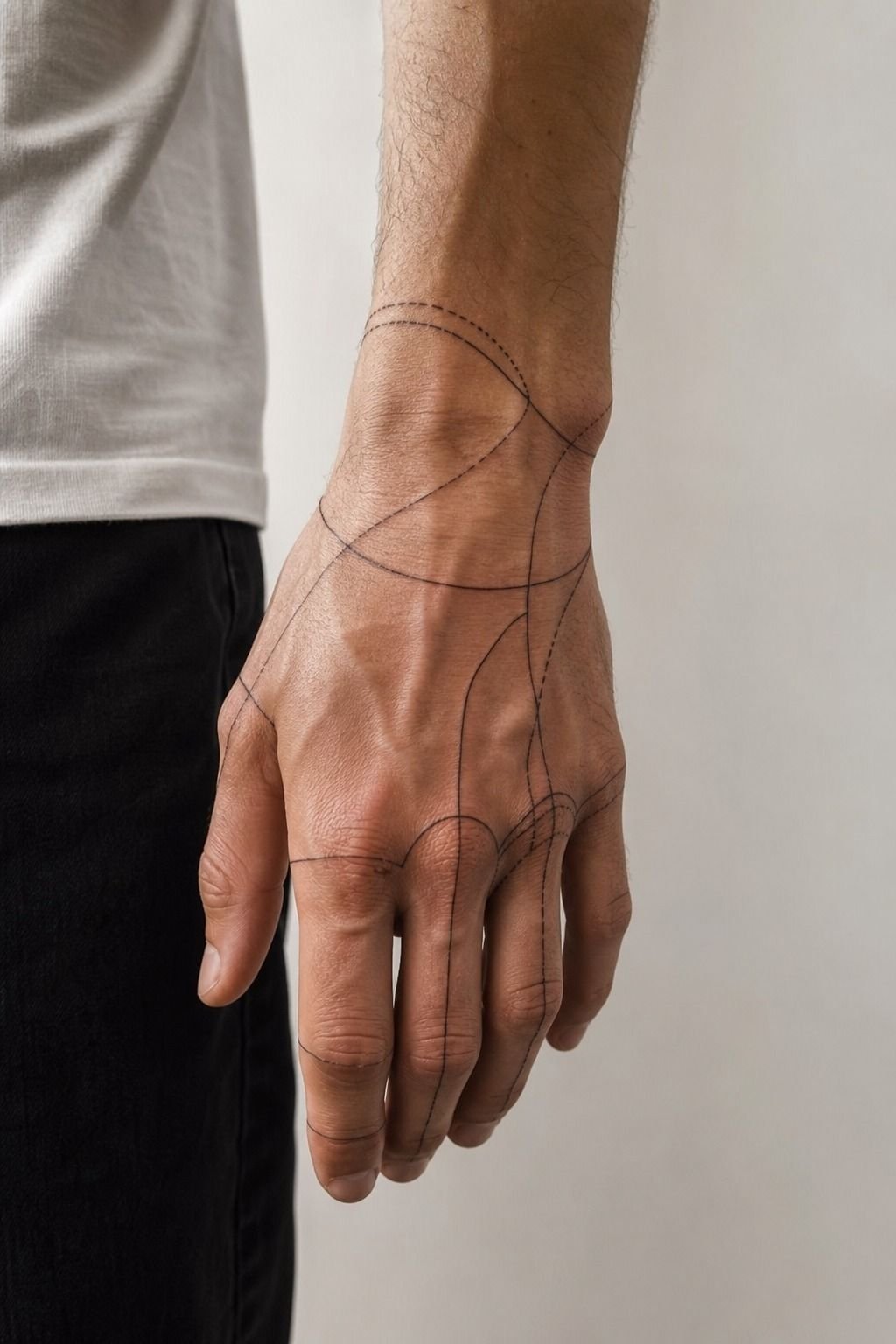
This anatomical overlay on warm ivory skin exists for a reason: before the stencil goes on, you need to know exactly where this sits in your life, not just on your hand.
15Find an artist who specializes in hand skin stretch
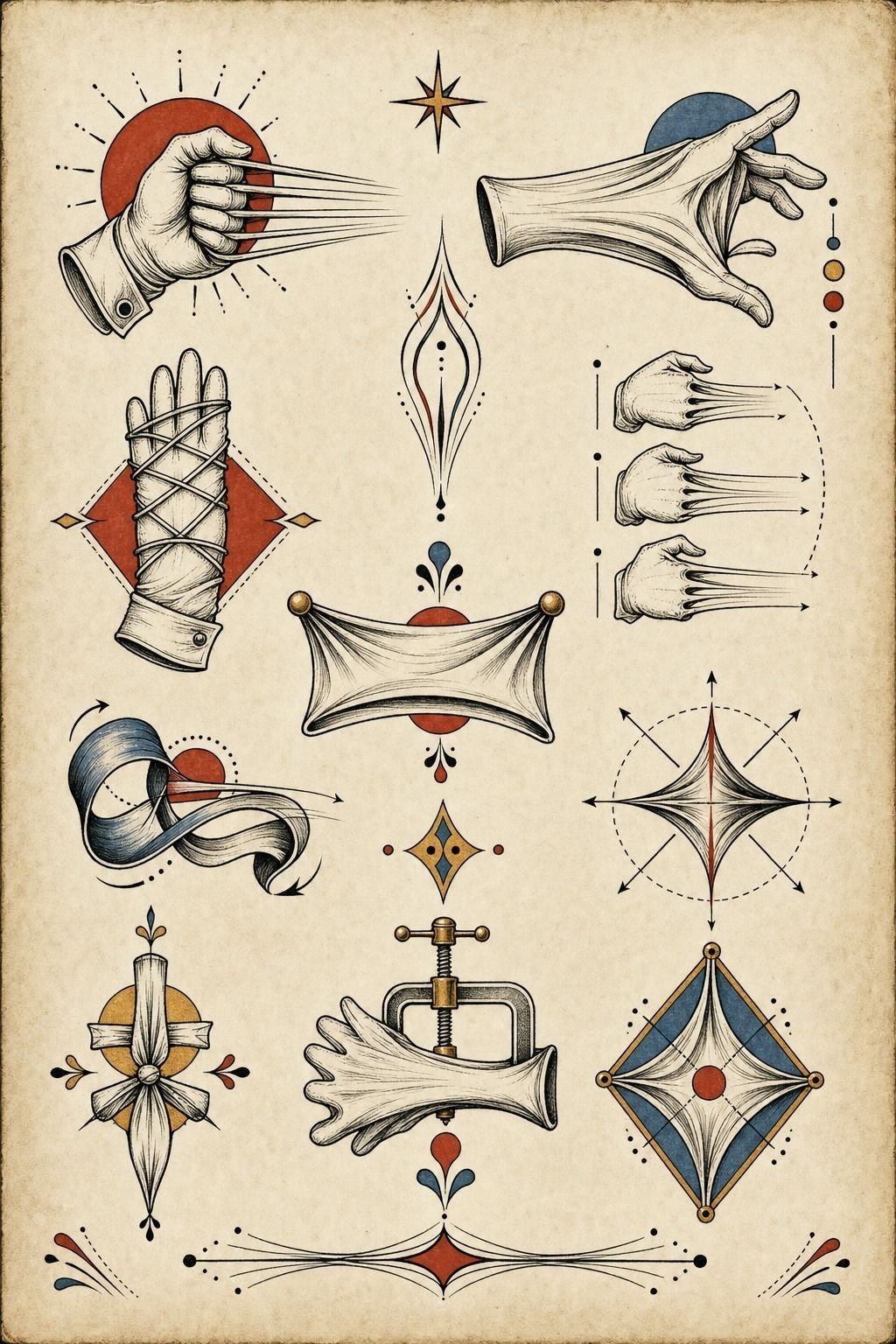
This flash sheet on aged paper is what you want to see in your artist’s portfolio: hand designs drawn at hand scale, with line weights chosen for skin that moves. Hand tattooing is a specialty, and plenty of great forearm artists are mediocre hand artists. The skin is that different.
Here’s your vetting checklist. Ask to see healed hand photos, not fresh ones.
Fresh hand tattoos all look great; healed ones tell the truth. Ask how they stretch the skin over the knuckles and tendons (there’s a specific technique, and they’ll light up explaining it if they know it).
Ask how many hand pieces they do a month. If the answer is “a few a year,” keep looking.
Red flags: a portfolio of only fresh work, any artist who agrees to micro-detail under an eighth inch without pushing back, and anyone whose lines look scratchy or blown out in close-ups. For the realism end of the spectrum, my realistic hand tattoos guide has a deeper portfolio-vetting section, and the fade-risk piece for guys asks the same hard questions.
16Style a soft angel number beside your index finger
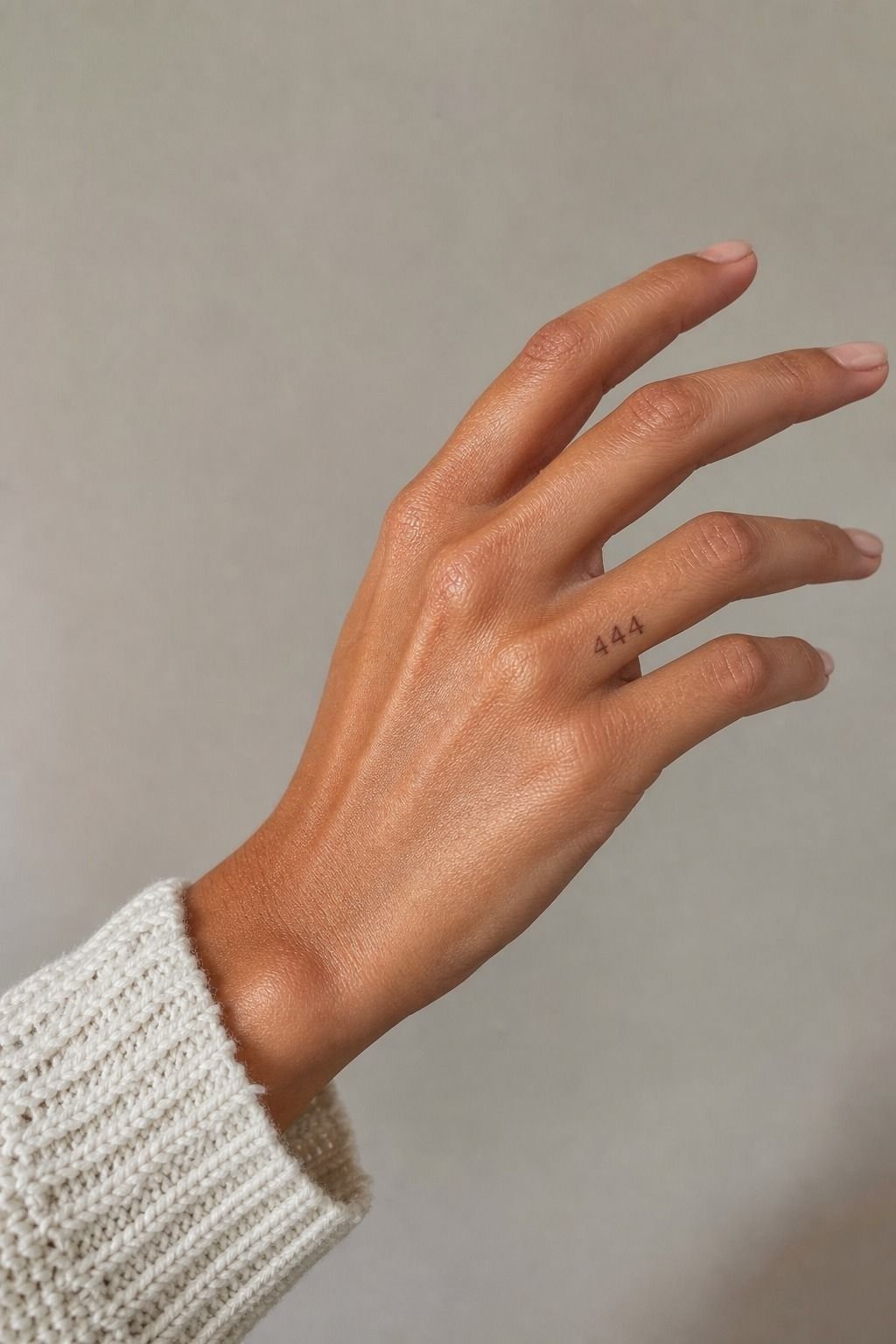
Angel numbers (111, 444, 777) beside the index finger are the most requested cute hand tattoo in my chair right now, and this lettering piece on golden tan skin shows the version that lasts: clean digits, single needle, spaced like they mean it.
Numbers are unforgiving. A letter can wobble and still read; a “4” that closes up becomes a blob. So each digit goes at least a quarter inch tall, spacing wide enough to slide a coin between them, placed along the bone line beside the index finger where the skin stays flattest.
Font choice: simple serif or clean typewriter style, nothing scripty at this size. Fine red ink is trendy for these and heals soft on tan skin, but know that red fades faster than black and wants more frequent touch-ups.
Black is your best friend for longevity. Color is spice.
What fixing other people’s hand tattoos taught me
I want to tell you about the clients who stick with me, because they taught me more than the easy ones did. A woman came in last spring with a knuckle bouquet from another shop, eight months old, and the stems had merged into greenish smudges.
The design was gorgeous on paper. It just ignored the creases, and the creases won.
We reworked it with fewer, bolder elements and it finally reads the way she wanted. That appointment is why step two of this list exists.
Here’s the pattern I’ve noticed after years of fixing hand work: the failures almost never come from bad luck. They come from three skipped decisions.
The design was too small for the detail it carried. The placement ignored how the hand moves. Or the artist didn’t specialize in hands and treated the skin like a forearm.
Every blown-out knuckle I’ve repaired traces back to one of those three.
The other thing I’ve learned is about honesty at the consult. When a client shows me a Pinterest board of micro-detailed finger tattoos, the kind thing isn’t saying yes.
The kind thing is saying “that size on a wrist is gonna mush out, so let’s move it up the forearm or simplify it until it survives.” Some clients leave. The ones who stay send me healed photos two years later, and those photos are my whole reputation.
So when you plan your cute hand tattoo, plan it like someone who’ll see it healed, not just fresh. Assume the fade, respect the creases, pay for the specialist.
The hand is the most honest canvas you’ll ever tattoo. Treat it that way, and it’ll reward you every single day you look down at it!
The Questions Worth Answering First
How much does a cute hand tattoo usually cost?
Small hand work runs about $100 to $300 depending on size and detail, with most US shop minimums landing between $80 and $100 and hourly rates around $100 to $250 for experienced artists. Budget an extra $50 to $150 per future touch-up. Hands are a subscription, not a one-time purchase.
Are cute hand tattoos a good idea for a first tattoo?
Honestly, I’d say no for most people. Hands are spicy to sit through, slow to heal, and impossible to hide while you learn how your skin takes ink.
A wrist or forearm piece first teaches you everything with lower stakes. If your heart is set on the hand anyway, start tiny and pick a specialist.
How do I choose a tattoo artist for cute hand tattoos?
Judge healed photos only, never fresh ones. Ask about their hand-skin stretch technique, how many hands they do monthly, and whether their fine lines stay crispy after a year.
A great forearm artist isn’t automatically a great hand artist. The healed portfolio is the whole interview. My realistic hand tattoos guide has the full vetting checklist.
How much do cute hand tattoos hurt?
Hands rank high on the pain scale because the skin is thin and the bones sit close. Lines feel sharper, shading is a dull burn, and finger pads are the spiciest part of all. The good news: small designs finish fast, often under an hour.
Tap out for five minutes if you need it, don’t tough it out and get shaky.
How long does a cute hand tattoo take to heal?
Surface healing takes two to three weeks, and the ink fully settles over two to three months. Wash gently with unscented soap, moisturize thin, skip pools and sun the whole time, and never pick the peeling flakes. Sun is what kills hand tattoos long-term, so SPF 50 becomes a forever habit.
What’s the best placement for a cute hand tattoo?
The back of the hand ages best: flatter skin, less friction, better ink retention than fingers. The thumb web and the bone line beside the index finger are solid runner-ups.
Finger pads fade fastest and want yearly touch-ups. If you want low maintenance, stay off the fingers entirely and browse my hand tattoos guide for the full visibility-and-aging ladder.
Where I’d Start First
If I had to pick one step, I’d start with finding the hand specialist. A great hand artist fixes half these problems in the consult, before the needle ever touches you.
Everything else on this list is easier with the right person holding the machine. Pin this for your appointment day.