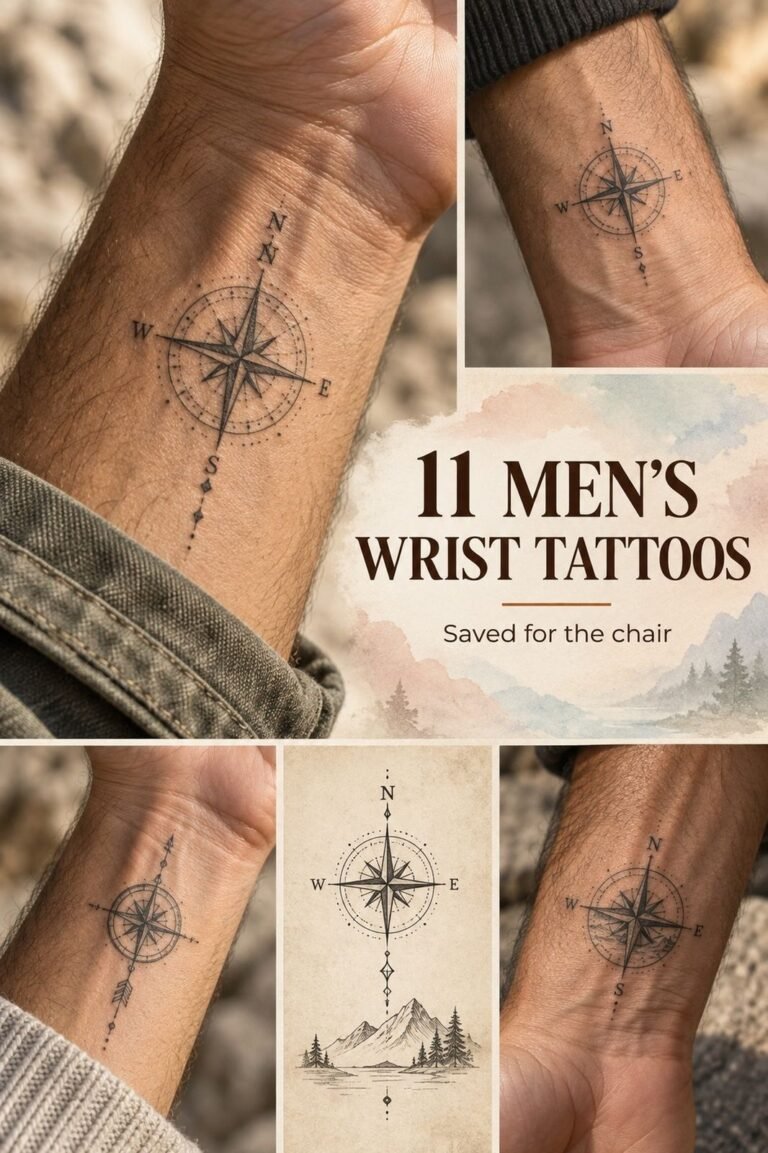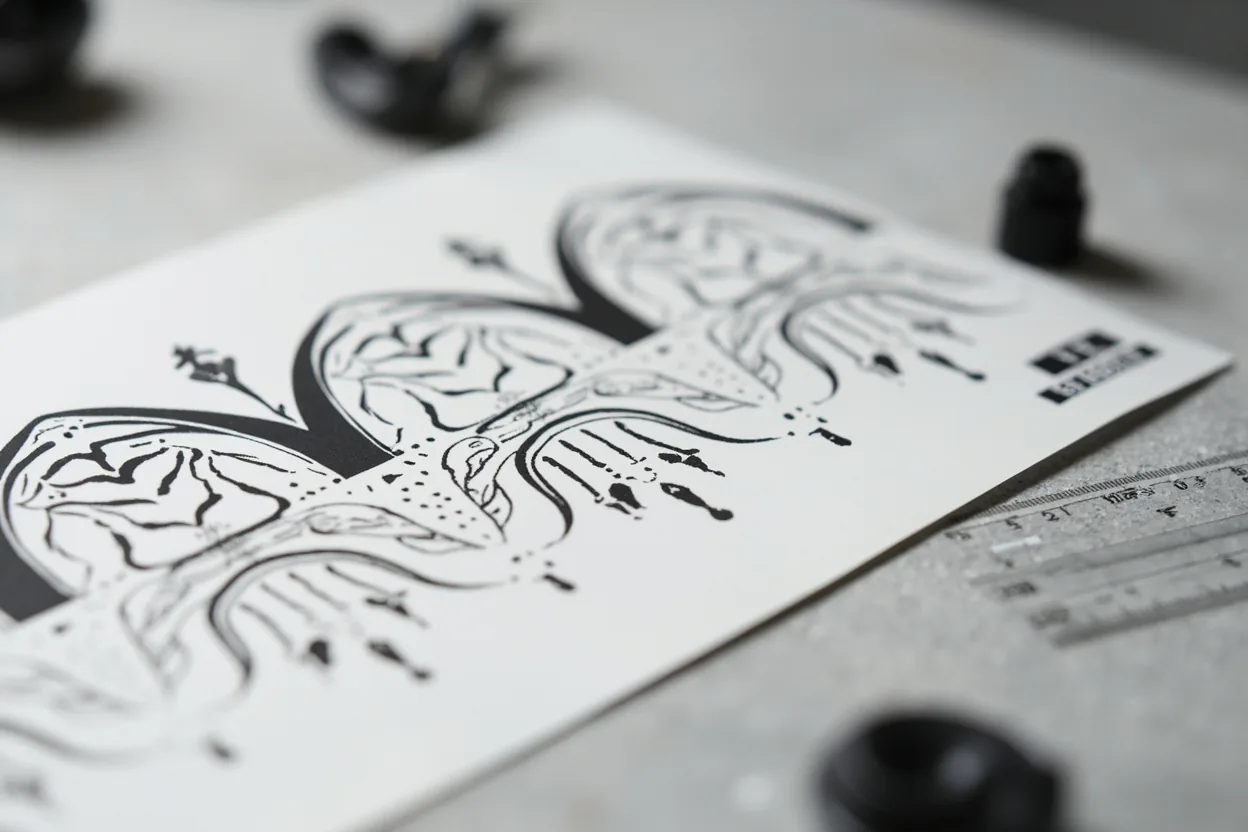
Geometric tattoo ideas are unforgiving. A flower can hide a tiny wobble. A straight line, circle, mandala, or repeating pattern usually cannot.
Quick answer: Good geometric tattoo ideas include mandalas, dotwork patterns, sacred-geometry-inspired marks, ornamental bands, minimalist shapes, blackwork geometry, sleeve fillers, and symmetrical back, sternum, forearm, or shoulder pieces.
Geometric tattoo directions
Choose the geometry based on body part, not only the pattern.
| Direction | Best fit | What to watch |
|---|---|---|
| Mandala | Shoulder, elbow, sternum, back | Symmetry must be exact |
| Dotwork pattern | Soft shading and texture | Dots need even density |
| Minimal shape | Small clean tattoos | Every line shows |
| Geometric band | Forearm, ankle, wrist | Wrap must be planned |
| Blackwork geometry | Bold graphic effect | Negative space matters |
Geometric tattooing breaks into a few distinct lanes. You’ve got clean sacred geometry, which is all precise linework, no shading, just crispy black lines that either hold or they don’t. Then there’s dotwork, where every tonal shift is built from individual dots, and a skilled artist can get it looking almost airbrushed. Mandala work sits in its own category too, heavy symmetry with repeating radial patterns, usually done in black and grey or with selective color pops.
Neo-geo mixes geometric shapes with organic elements, a wolf’s head breaking into triangles, a floral bleeding into a hexagon grid. Fine line geometric is trending hard right now, but it fades faster than bold blackwork, especially on high-wear zones like fingers or wrists. If you want your piece reading from across the room in ten years, push your artist toward thicker outlines and solid fills.
Placement can make or break symmetry
Geometry on skin has no room for almost-straight.
Geometric tattoos should be tested with the body relaxed and moving. A perfect stencil on flat skin can warp when the arm bends or the shoulder rotates.
That does not mean symmetry is impossible. It means the artist has to map the design for the body instead of forcing a perfect diagram onto skin.
Flat body parts hold symmetry best. The upper back, chest, and sternum are ideal because the artist has a stable canvas. The forearm is solid too, especially for sleeve work where you can wrap geometry around the arm without the lines warping. Ribs and the side torso are spicy pain-wise and they flex constantly, which stresses fine linework during healing.
Joints are the enemy of geometric precision. Knees, elbows, and ankles distort the skin when you move, so tight geometric grids can pull and gap as they heal. The upper thigh and calf are underrated placements because they’re relatively flat, the skin heals well with good moisture, and the piece reads clean. Curved surfaces like the shoulder cap require an artist who knows how to draw with the body’s topography, not against it.
Portfolio checks
Look closely at healed geometric work before booking.
- Zoom in on line intersections.
- Check whether circles stay clean on curved placements.
- Ask for healed dotwork examples.
- Ask how the stencil will be aligned.
Look for healed work, not fresh photos. Every tattoo looks perfect right out of the session, still swollen, ink sitting on top of the skin. A good geometric artist will post healed shots because they’re confident the work holds. If an artist’s portfolio is all fresh-only photos, that’s a red flag. Geometric tattoos with thin lines or tight dot grids will show every inconsistency once healed.
Check the circles and the straight lines specifically. Freehand geometry is a legitimate technique, but the output still needs to be tight. Wobbly linework in a portfolio means wobbly linework on your skin. For mandala work, look at the radial symmetry, every petal should mirror cleanly. Blowouts on fine line geometric work are brutal because the blown lines spread and the whole grid reads muddy.
Geometric tattoo mistakes
Avoid tiny complex geometry. The smaller the pattern, the faster the spacing disappears after healing.
Do not ask for perfect sacred-geometry precision from an artist whose portfolio is mostly loose illustrative work.
Going too small is the number one mistake. Geometric tattoos rely on precision, and tiny pieces with intricate detail will blur within a few years as the ink migrates slightly. A pattern that looks stunning at two inches might turn into a grey smudge by the time you’re forty. Talk to your artist about minimum line weight and minimum negative space between elements so the piece ages well.
Skipping the stencil check is another costly error. Before the needle touches your skin, look hard at the stencil placement with a mirror. Check the axis lines, make sure a mandala centered on your chest is actually centered, not riding two inches to your left because you were standing crooked. Also budget for multiple sessions on complex geometry, rushing fills or shading leads to uneven saturation and patchy areas that need touch-up work.