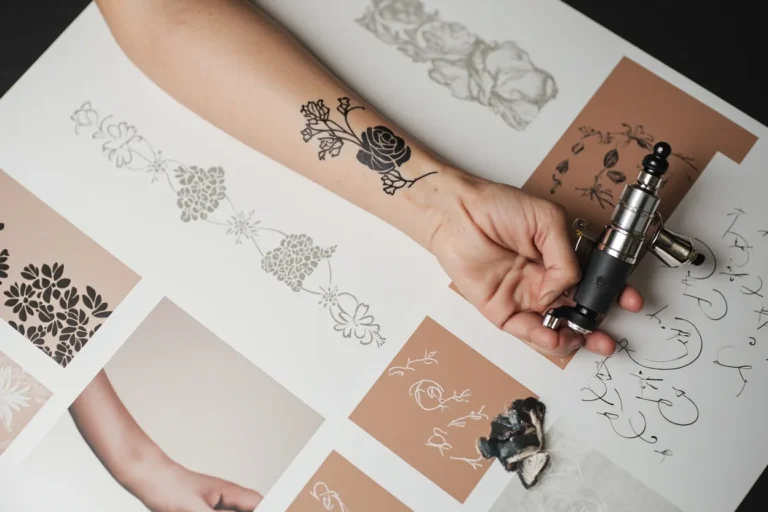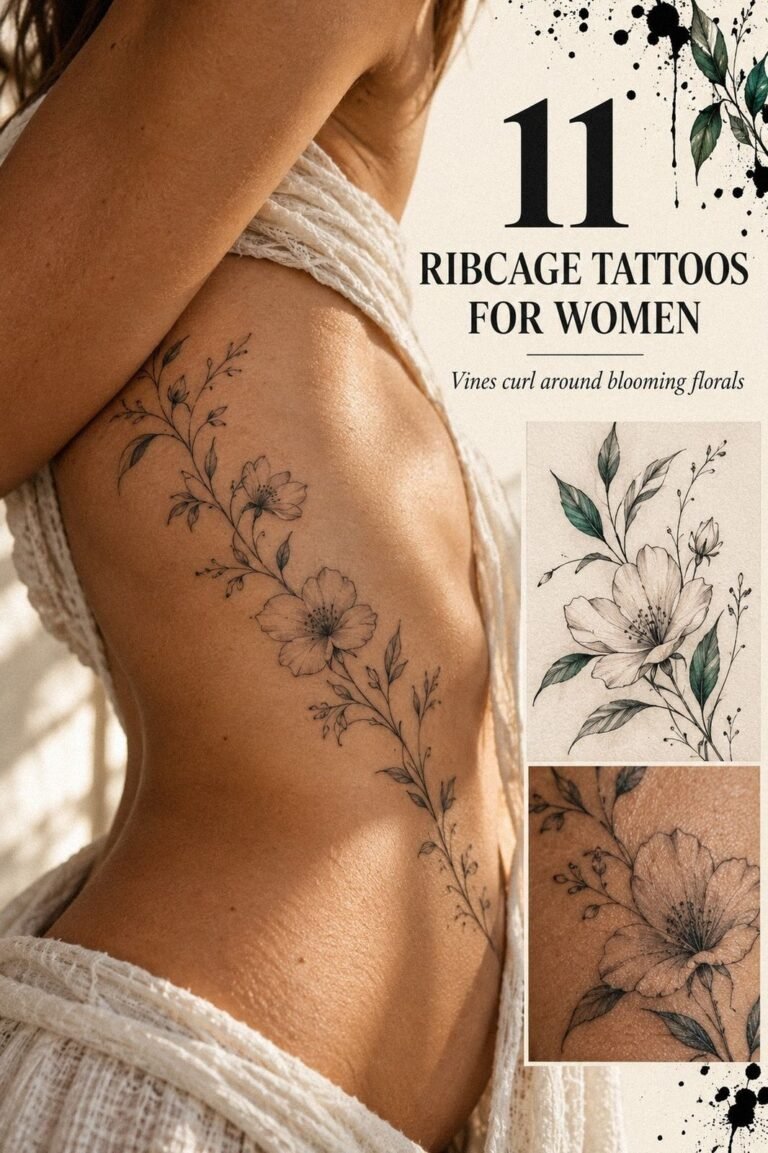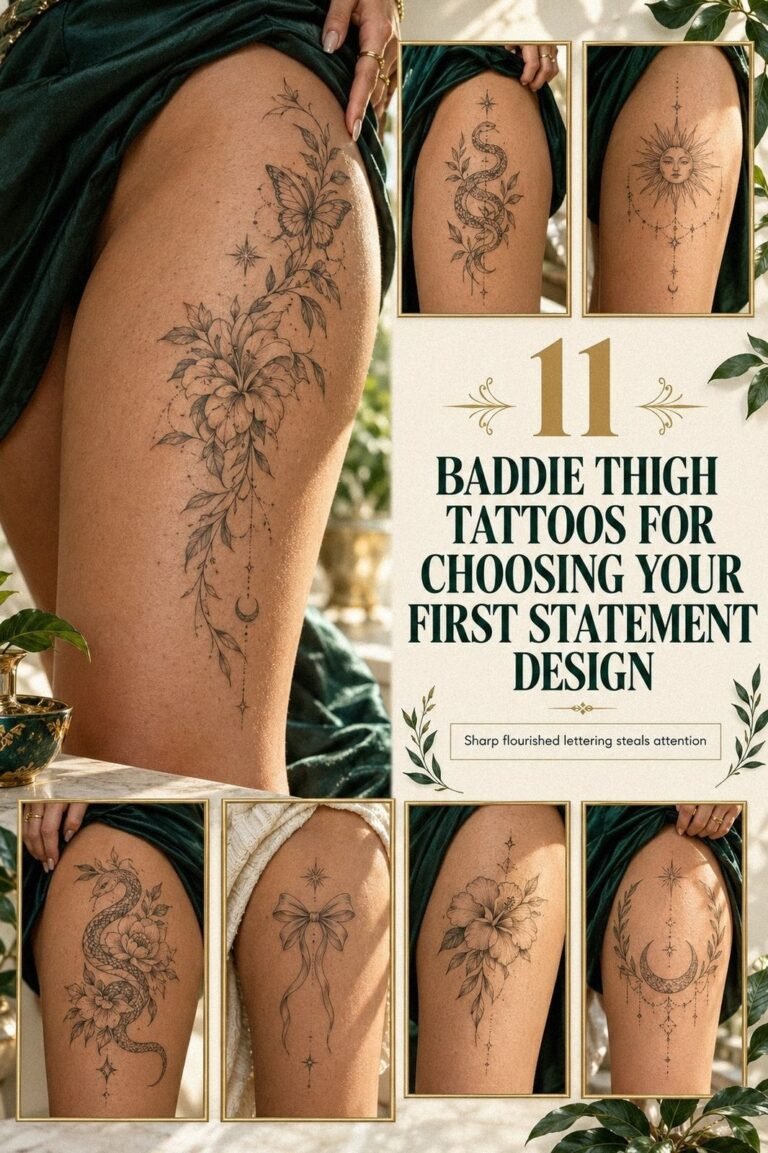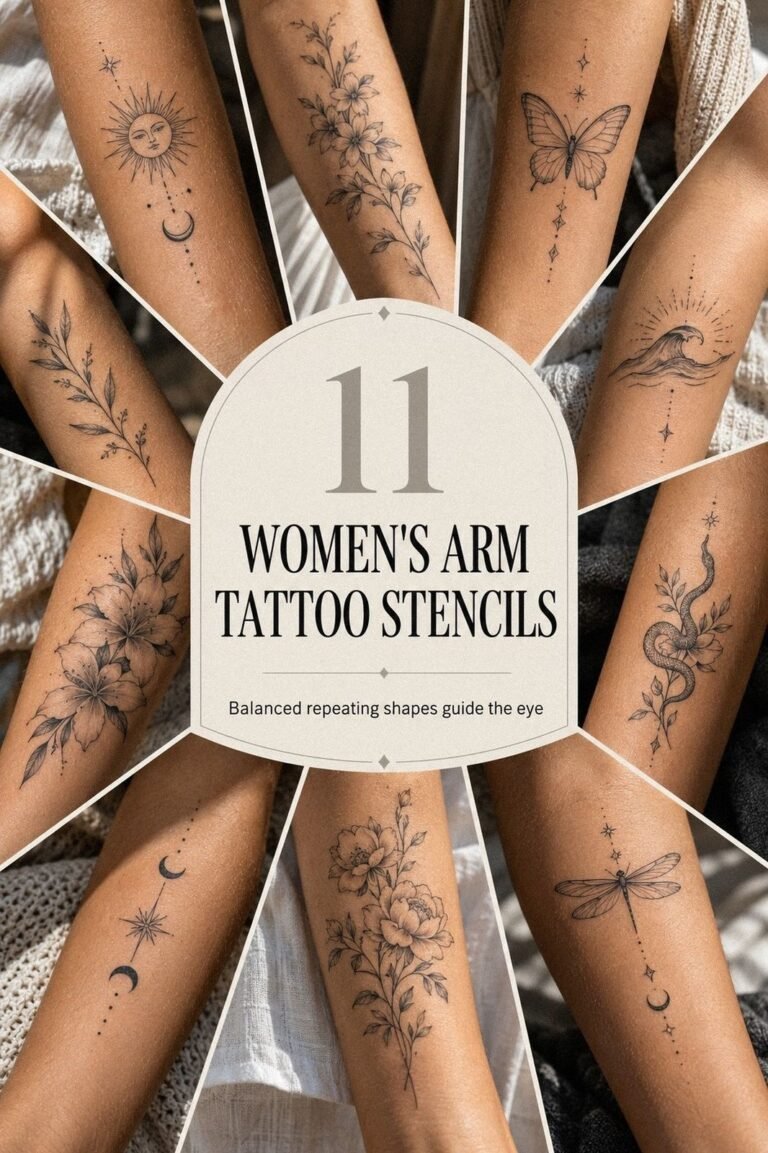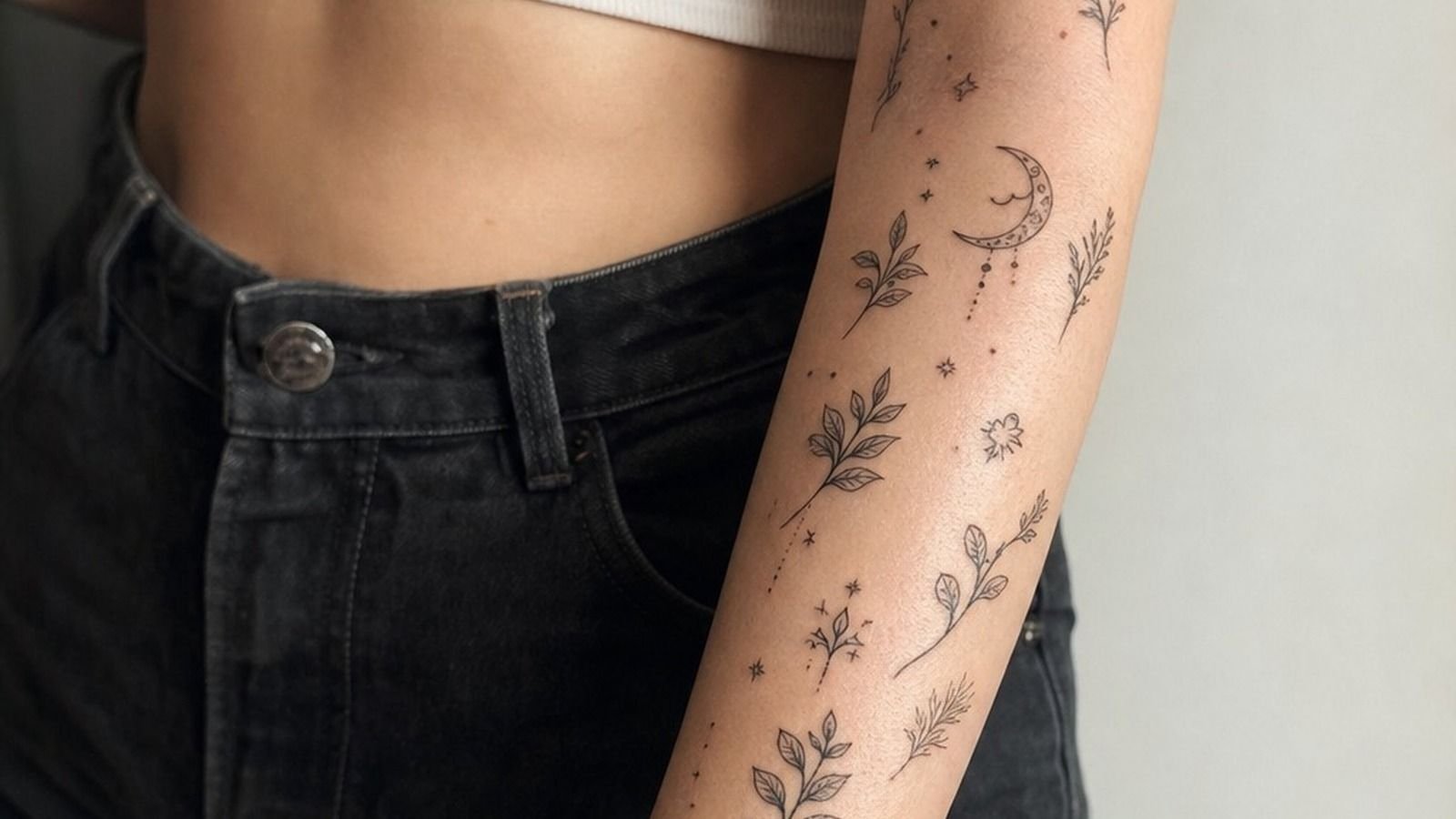
My sticker sleeve tattoo started with a forearm I’d been saving for the right idea. I got the first piece the week I turned 30, then added it in small sessions instead of forcing a full sleeve overnight. Years later, the black lines still read clean because I gave every tiny tattoo room to breathe.
Here’s what it looked like before
Before the ink, my forearm was just bare skin with one tiny scar near the wrist and a lot of indecision. I’d saved screenshots for months: tiny botanicals, a match flame, a little star, numbers that meant something only to me. None of them belonged together yet.
I didn’t want a rigid full sleeve. I wanted a patchwork sleeve that looked collected, like each piece had earned its spot.
The blank skin mattered as much as the ink. That was the whole starting point.
- I Chose a Cohesive Sticker Sleeve Theme
- I Mapped Tiny Tattoos Around My Forearm
- I Mixed Botanical Stickers With Fine Line Symbols
- I Tested Sticker Sizes Before Booking My Session
- I Placed My First Sticker Near The Wrist
- I Balanced Negative Skin Between Each Tattoo
- I Matched Black Ink With Fine Red Accents
- I Added Meaningful Symbols Without Crowding The Sleeve
- I Planned A Dainty Arm Sleeve In Stages
- I Checked How Each Sticker Followed My Arm
- I Used Tiny Tattoos To Fill Awkward Gaps
- I Built A Patchwork Sleeve From Personal References
- I Prepared For Wrist And Elbow Discomfort
- I Protected Fresh Sticker Tattoos During Healing
- I Reviewed My Finished Sticker Sleeve In Photos
1I Chose a Cohesive Sticker Sleeve Theme
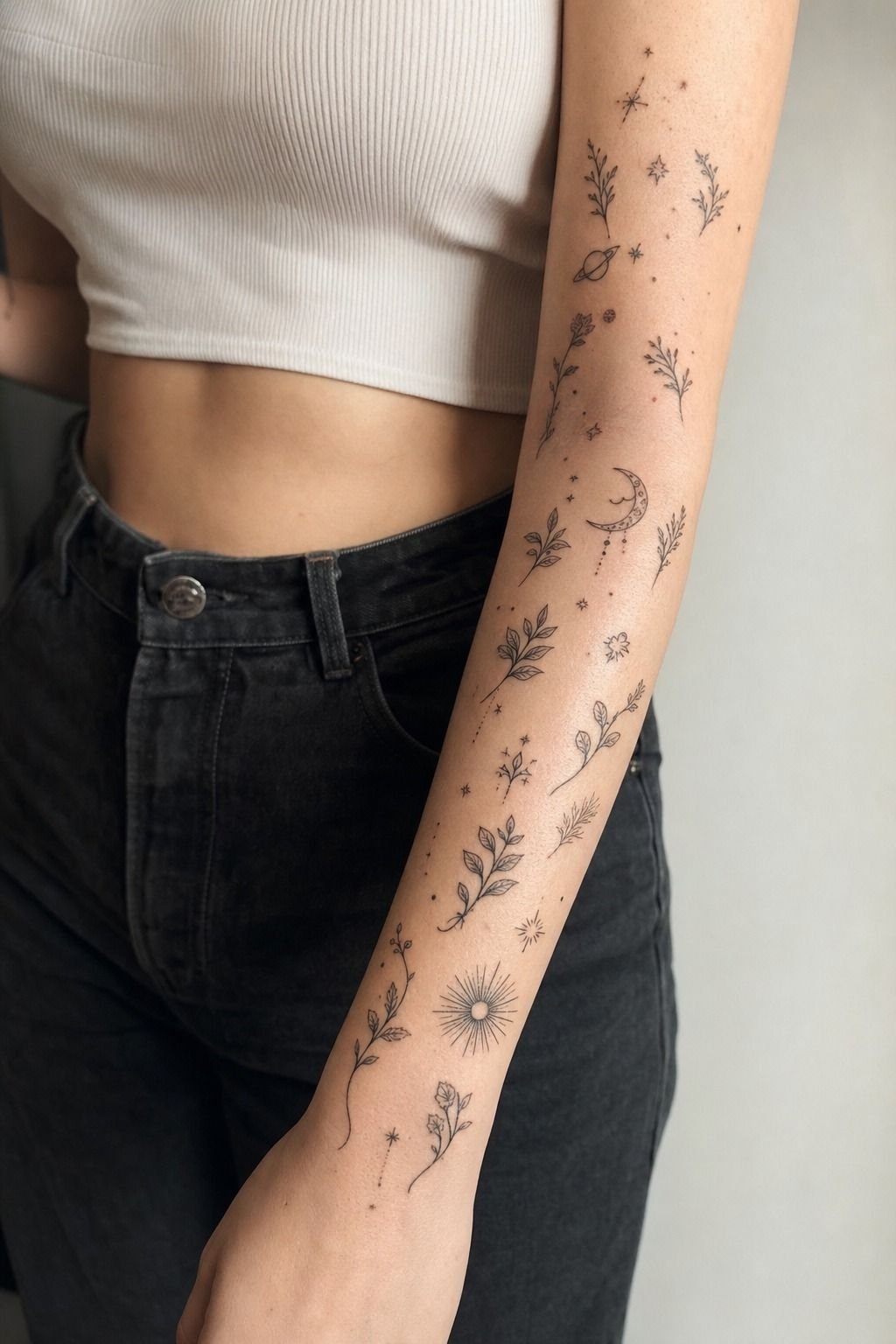
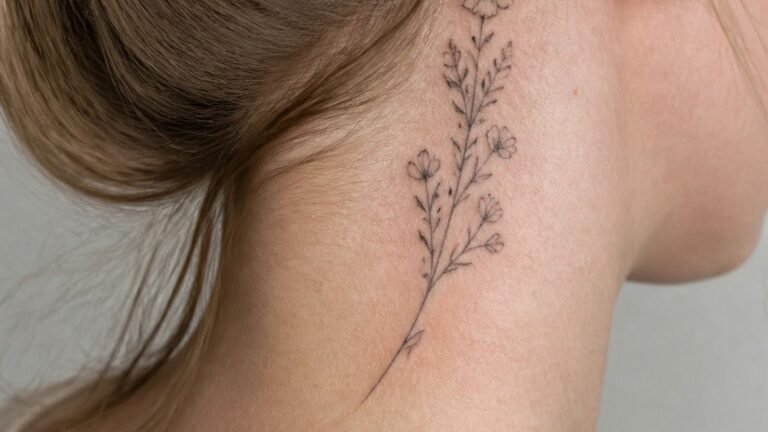
I picked a fine line botanical theme first, then let the smaller symbols orbit it. You don’t need every piece to match exactly, but your sticker-tattoo-ideas need one visual rule. Mine was black single-needle linework, soft curves, and no heavy shading.
A wildflower stem, a tiny moth, and a crescent moon gave me three repeat shapes: petals, wings, and curves. That kept the sleeve airy instead of looking like a random page of flash.
I’d skip mixing delicate flowers with thick American traditional bombs on the same forearm. Both are solid styles, but the line weight will fight.
Your artist should draw the full layout before the needle touches skin. Bring references for mood, not a Pinterest-exact copy. If you want more layouts that build this way, browse these patchwork tattoo sleeve ideas.
2I Mapped Tiny Tattoos Around My Forearm
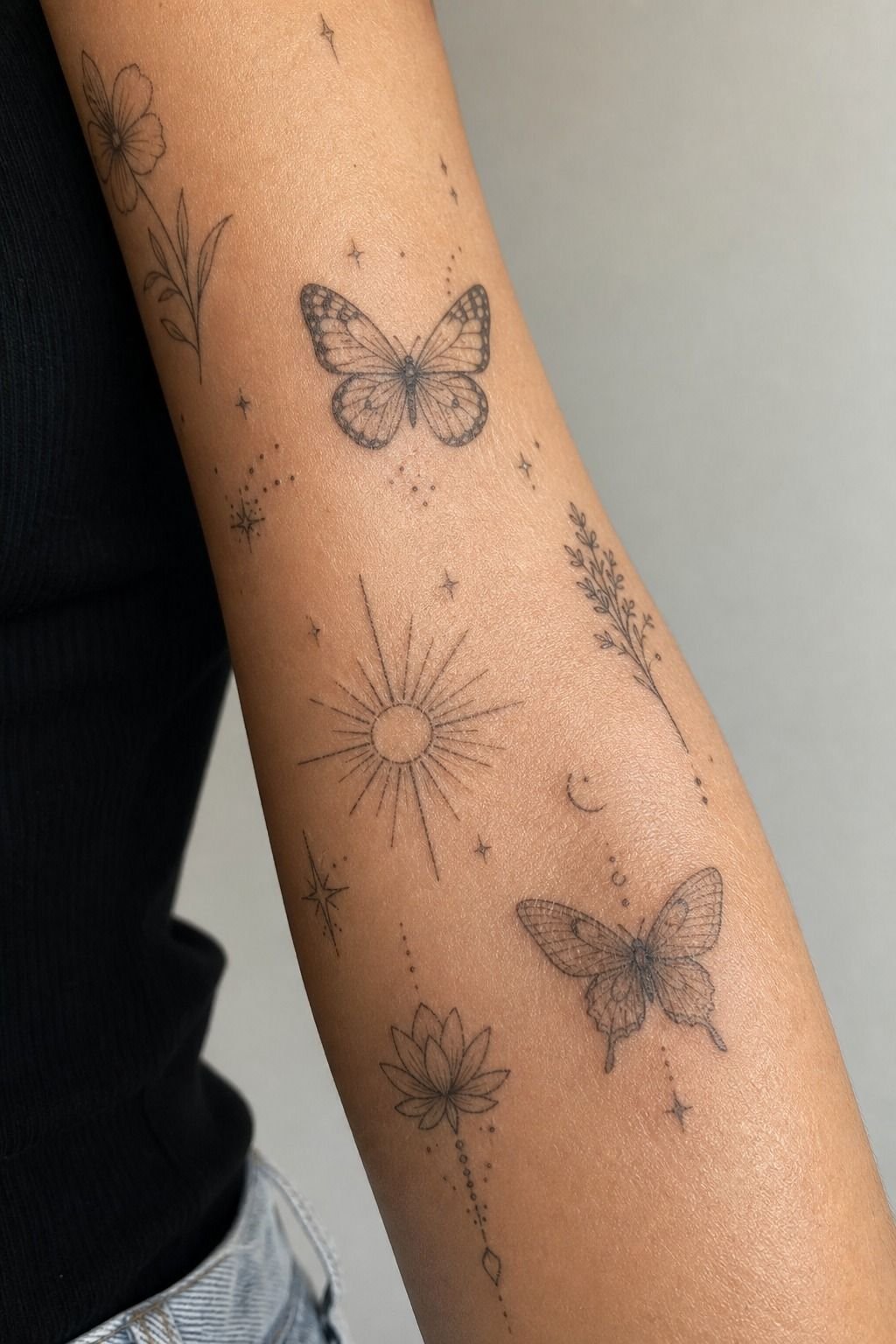
Mapping was the part that saved my sleeve from turning into soup. I marked the broad outer forearm, the flatter inner forearm, and the narrow strip near my wrist, then gave each zone a different job. Big botanical pieces got the flatter skin.
The tiny symbols filled the turns.
My artist used a purple skin marker and a thermal stencil to test the rhythm before we started. You should stand up, twist your arm, and look in a mirror. A design that looks balanced on a flat stencil can bunch up when your wrist turns.
But don’t pack every inch. I left about a finger-width of visible skin between most pieces, with wider breaks around the elbow ditch. That negative skin keeps the lines crispy and lets your eye land somewhere.
Tiny tattoos need air, period.
3I Mixed Botanical Stickers With Fine Line Symbols
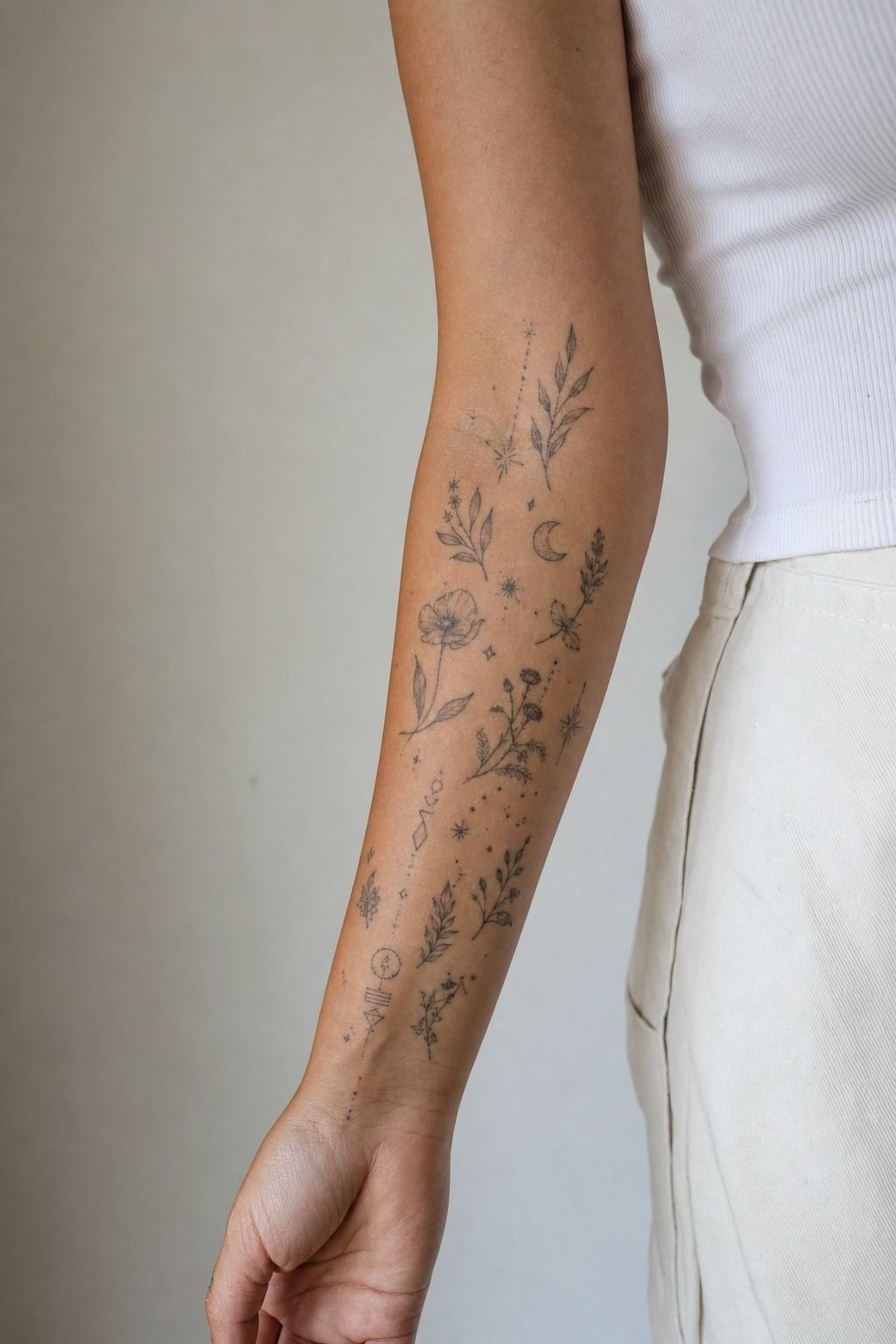
The flowers made the sleeve feel soft, but the symbols gave it a pulse. I mixed a lavender sprig, a small key, and a single-line heart because they shared the same delicate line weight. The result looked personal without becoming a diary page on my arm.
You can pair botanical stickers with initials, angel numbers, dates, or tiny animals. Just make sure your artist uses a consistent black pigment and similar needle groupings. A 3RL line beside a thick 9RL outline can look accidental, especially after healing.
I like meaningful symbols best when they aren’t screaming for attention. A little star tucked beside a leaf reads charming up close, then disappears into the overall flow from across the room.
That’s good design on skin. Your sleeve should reward a closer look.
For another body-map approach, these girly sleeve tattoo ideas can help you sort delicate motifs from filler.
4I Tested Sticker Sizes Before Booking My Session
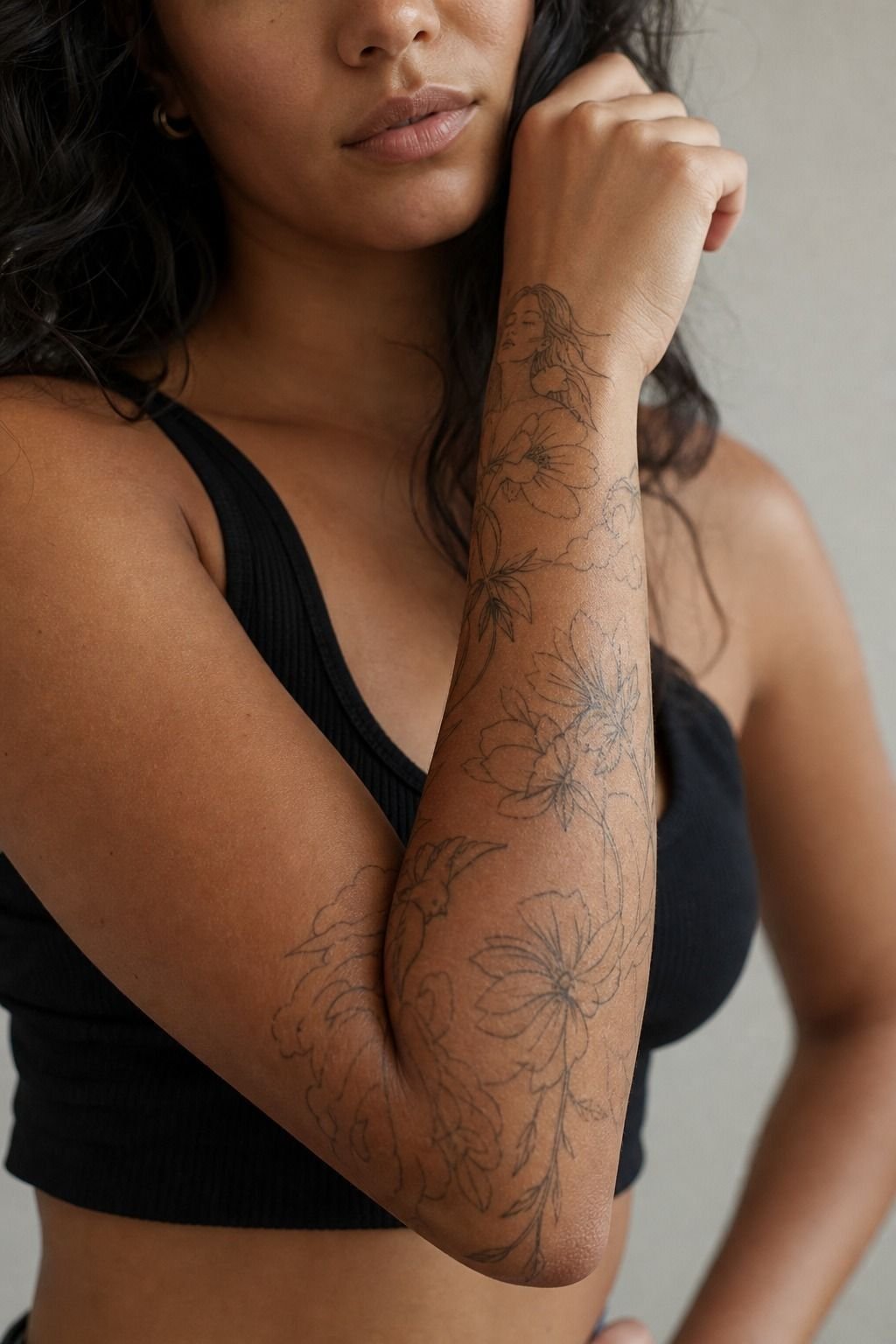
I tested every small design at its intended size, not at the size it looked cute on my phone. That’s where people get burned. A detailed one-inch tattoo can heal fuzzy if it has too many interior lines, and you’ll be paying for a touch-up before it’s had time to settle.
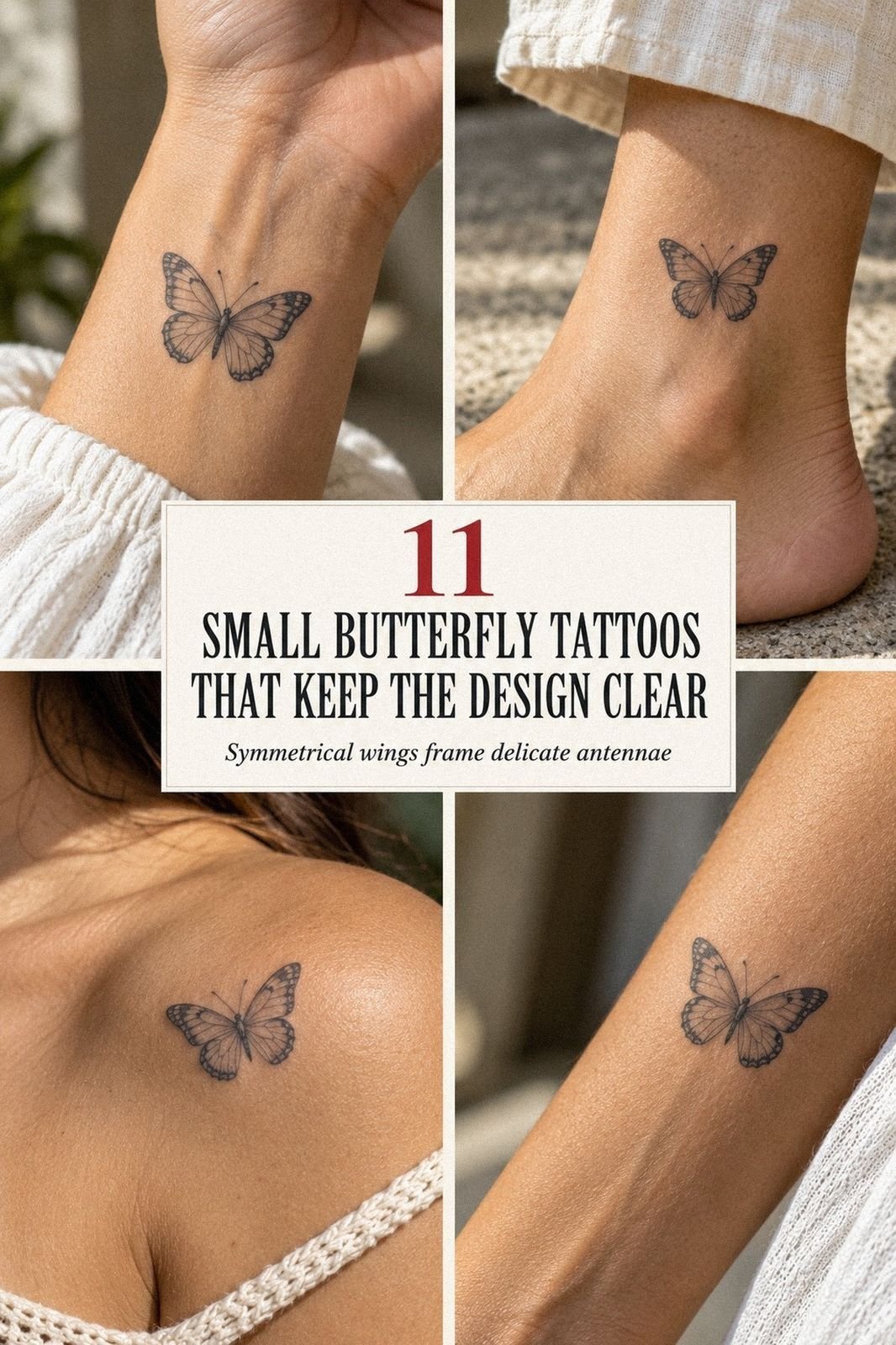
My rule was simple: most individual pieces needed at least 1 to 2 inches of breathing room, depending on detail. A fine line butterfly could stay small because its silhouette was clear. A miniature tarot card needed more room, or its details would blur together.
Ask your artist to print the designs at scale. Put them on your arm. Live with them for a day.
And if they tell you that size on a wrist is gonna mush out, listen and bump it up the forearm so it ages nicer.
5I Placed My First Sticker Near The Wrist
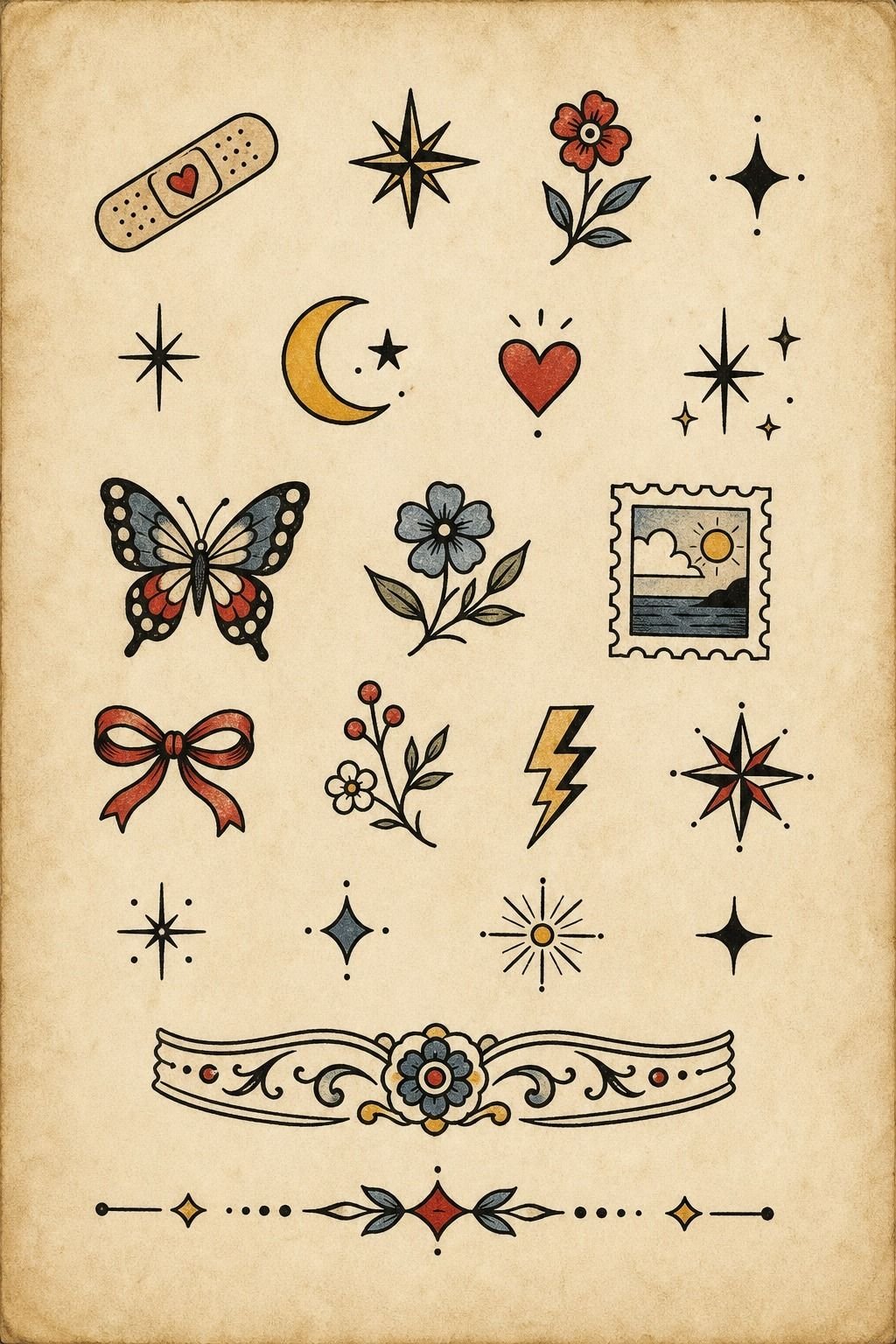
I started near the wrist because I wanted an anchor, not because it was the easiest spot. The first tattoo was a small botanical flash design on my outer wrist, placed high enough that it didn’t sit directly on the bend. That gave the rest of the sleeve somewhere to grow.
Wrist tattoos are visible, charming, and a little spicy. The skin moves constantly, and sun exposure is rough on fine lines. You should leave enough distance from the crease that the tattoo doesn’t warp every time you flex your hand.
I’d choose outer wrist over the side of the hand for a first sticker. Hands are high-wear zones, full stop. They fade faster, need maintenance, and can blow out if the work is too tiny.
My wrist piece still looks refined because it lives on steadier skin.
6I Balanced Negative Skin Between Each Tattoo
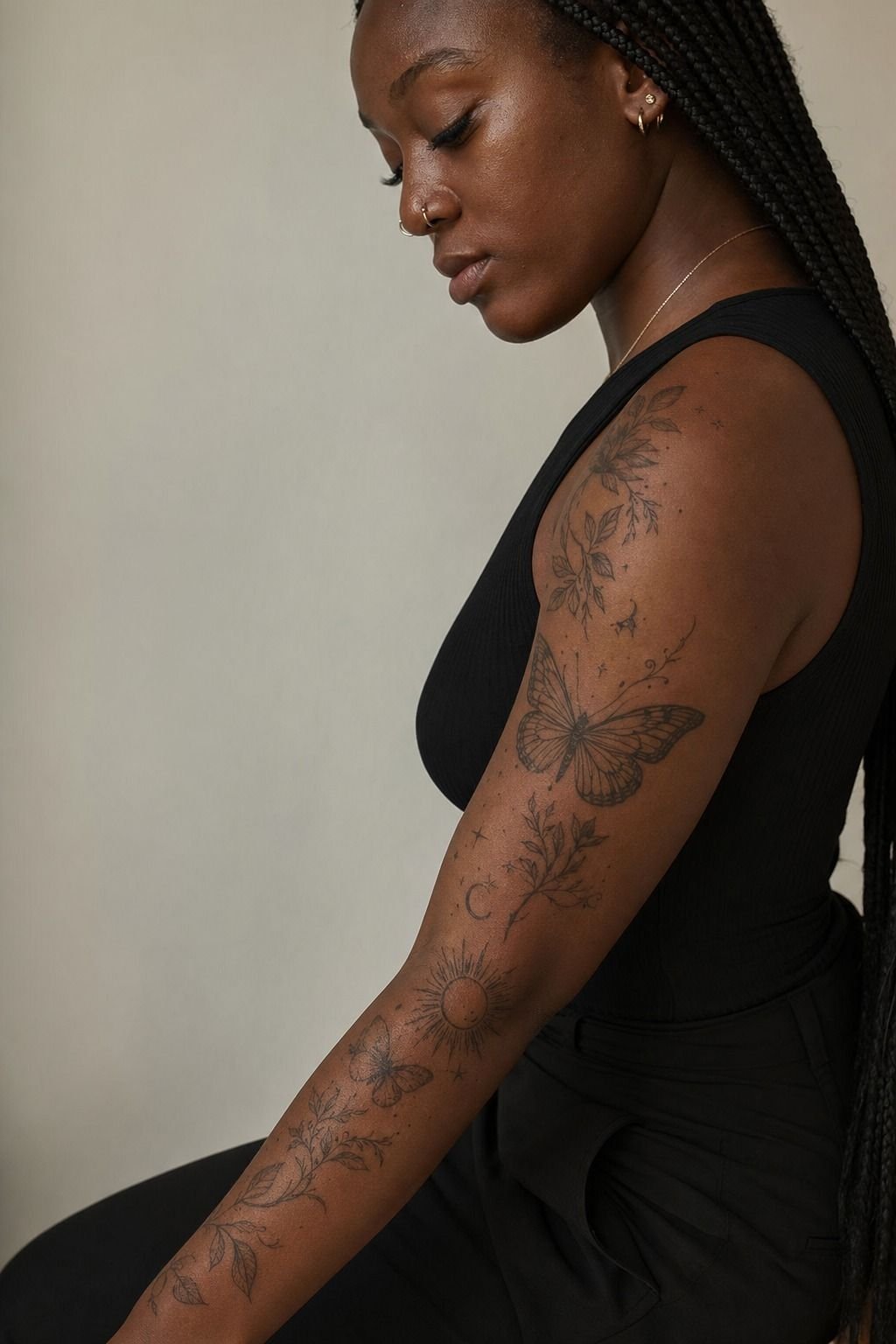
The Two-Finger Gap Rule was my best call.
7I Matched Black Ink With Fine Red Accents
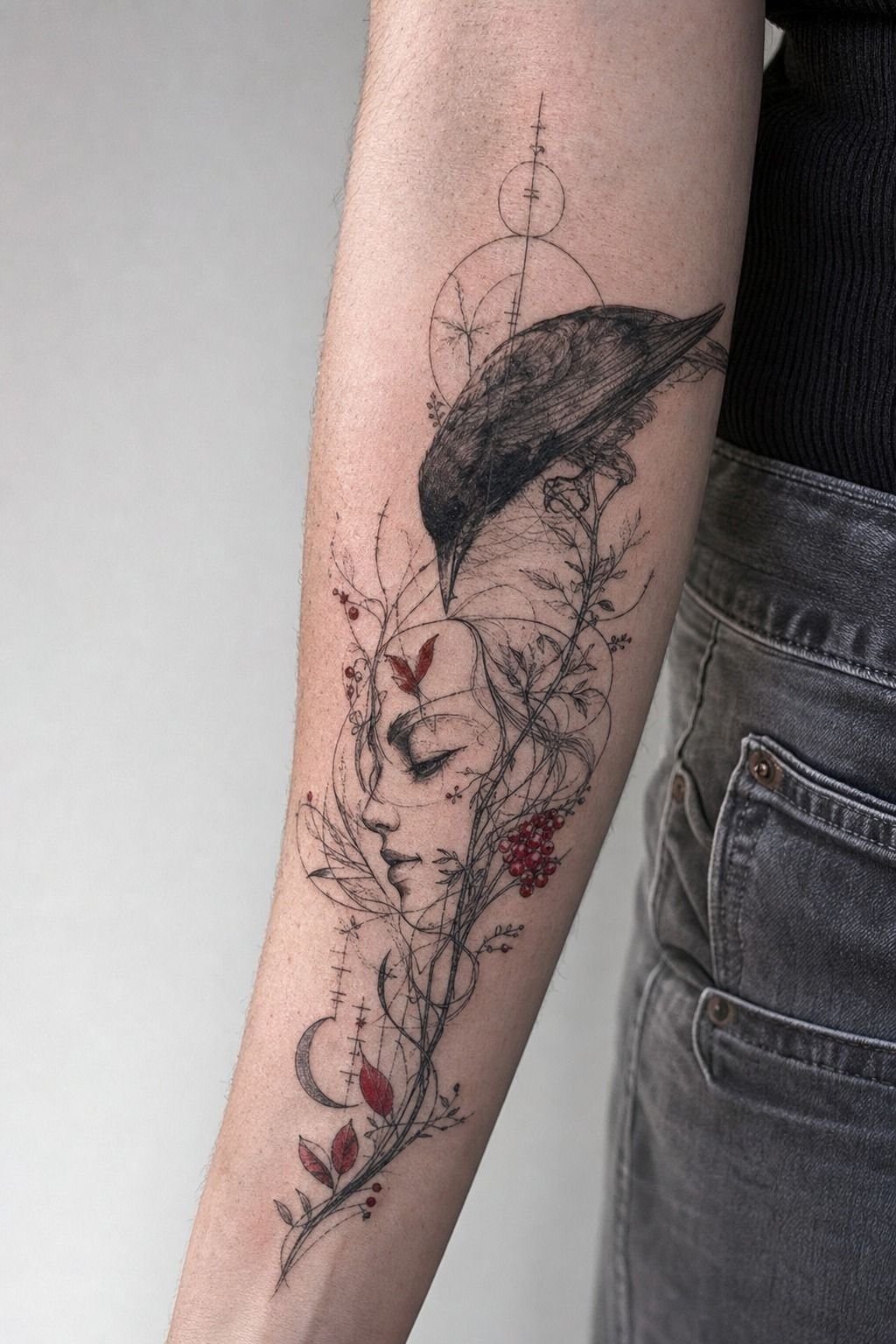
Black was the foundation. The red was spice.
I used a few fine red accents in a vermilion red ink detail around a match flame and one tiny heart, keeping everything else black. It gave the sleeve a warm flicker without making the whole thing look like a color project.
Red ink can heal beautifully, but it needs a careful artist and a clean plan. You should ask about their healed red work, not just fresh portfolio photos. Fresh red always looks bright.
Healed red tells you whether the line stayed clear and whether the tone works with skin.
I’d skip red on every tattoo. Too many red pieces flatten the hierarchy, and you lose the little surprise.
Mine works because you notice it second. That’s the point. Small, subtle, and intentional.
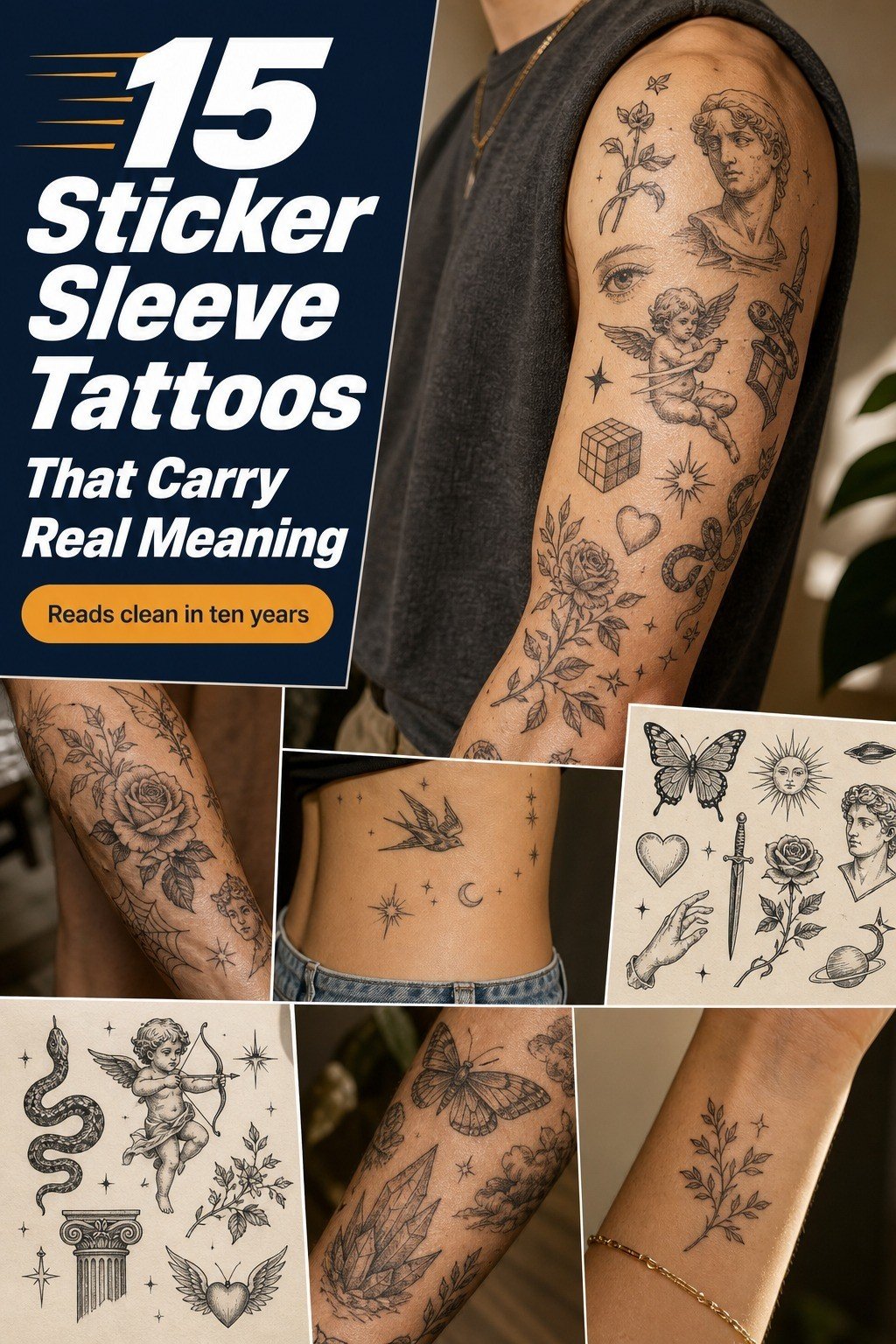
8I Added Meaningful Symbols Without Crowding The Sleeve
I added meaning after the layout was already solid.
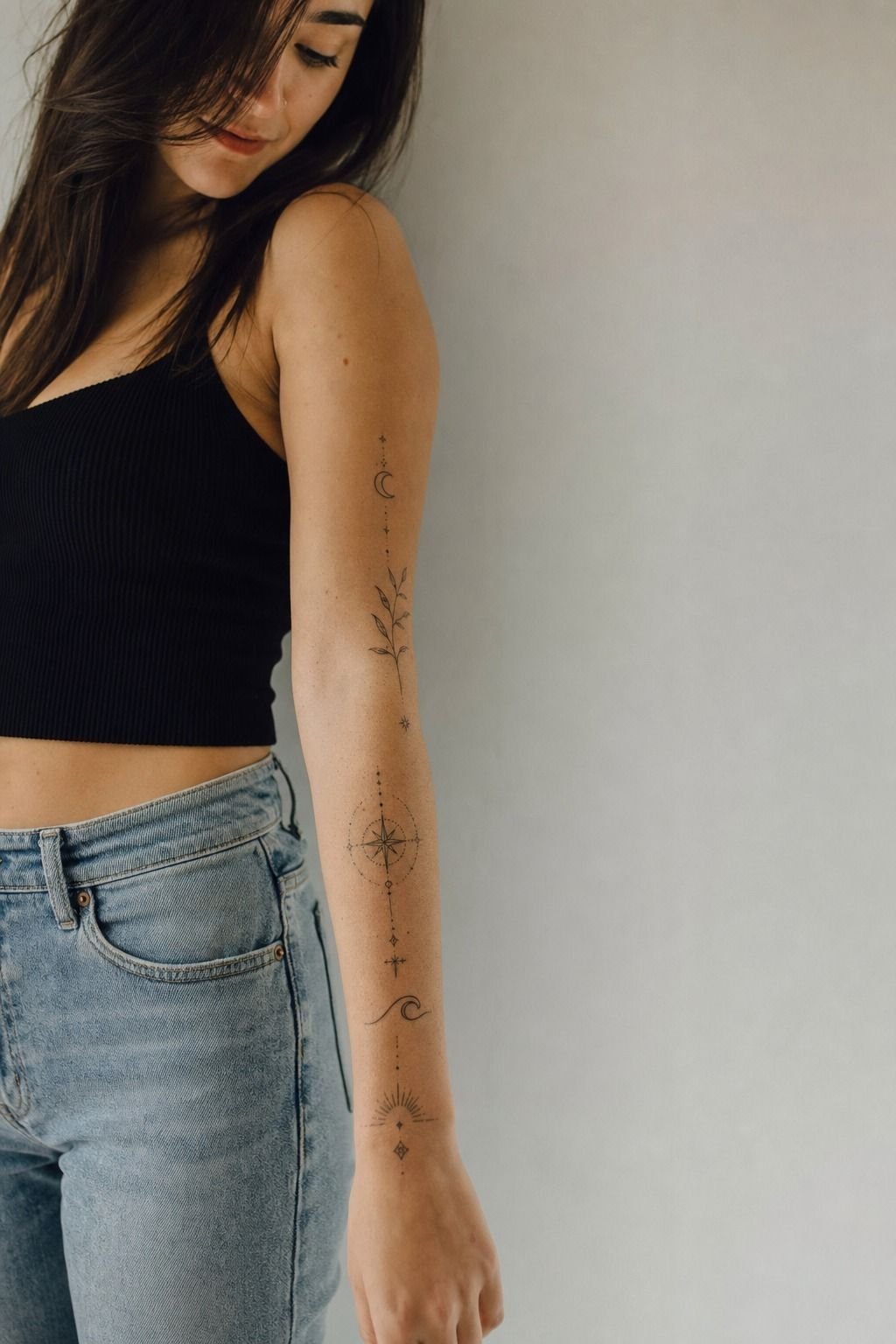
9I Planned A Dainty Arm Sleeve In Stages
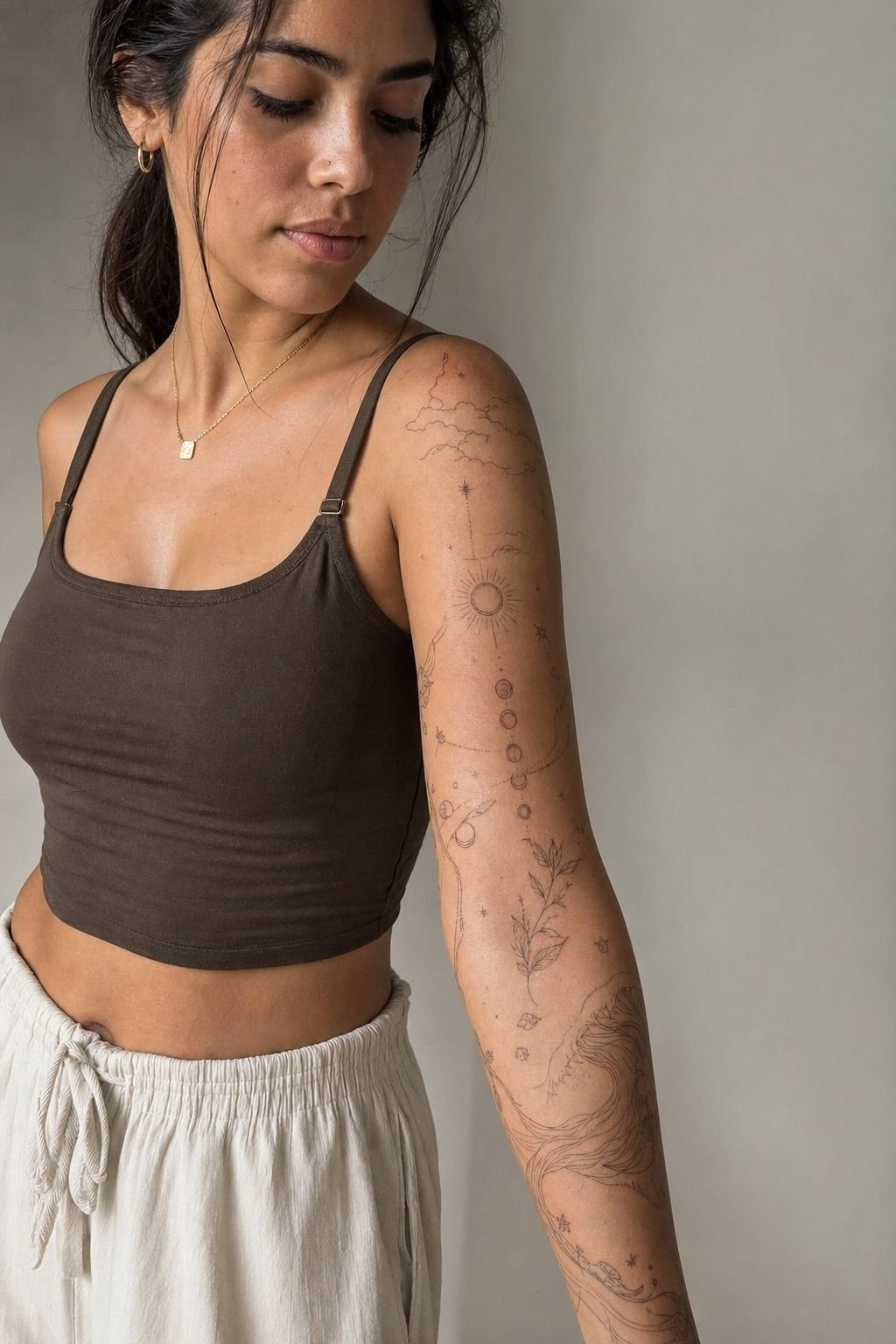
I built my dainty-arm-sleeve-tattoo in stages because I didn’t trust a one-day decision with a whole forearm. My first session covered the anchor flower and two small symbols. A few months later, once the surface had healed and I could see the spacing clearly, I added the next cluster.
That approach costs more time, but it gives you control. Typical U.S. shop minimums run about $50 to $100, while many artists charge around $100 to $250 per hour. My sessions were short because fine line work rewards a steady pace, not a marathon where your skin gets chewed up.
You don’t need to finish the sleeve in one push. In fact, I’d avoid it if you’re new to tattooing.
Let the first pieces settle. Take photos. See what your arm wants next.
A patchwork sleeve should feel gathered, not rushed.
10I Checked How Each Sticker Followed My Arm
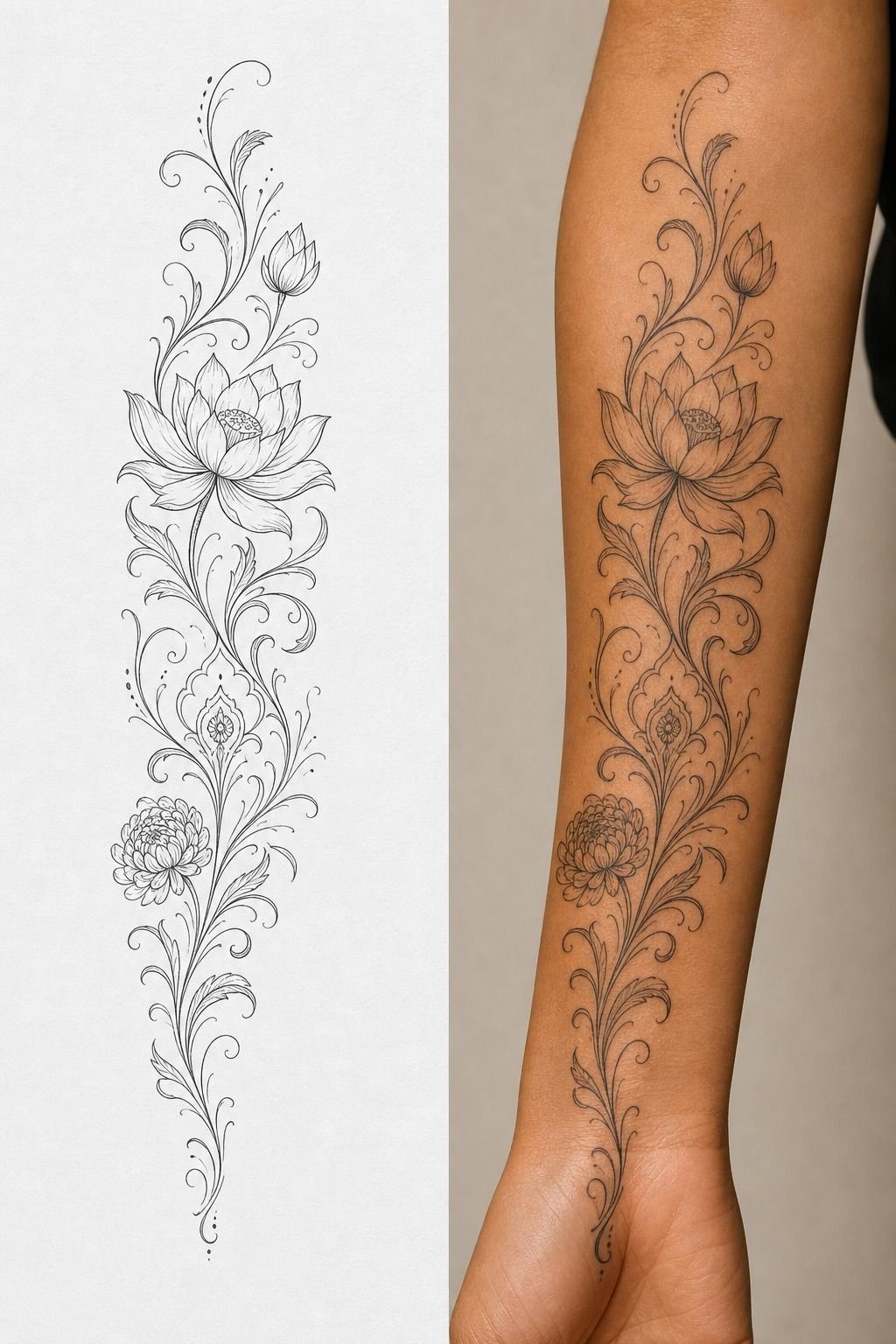
The Flow-Check Method is boring, but it works. I looked at each stencil with my palm up, palm down, elbow bent, and arm hanging by my side.
A tattoo that follows the arm’s natural direction will look graceful in motion. One placed flat against the wrong curve can look crooked forever.
My fine line fern ran slightly diagonal along the outer forearm, while the tiny moon sat closer to the inner arm where it could stay small. You should let stems, snakes, ribbons, and branches move with the body. Straight horizontal pieces near a curve can get weird fast.
And don’t judge placement only from the chair. Ask for a photo of the stencil from three angles.
Your forearm is not a sheet of paper. It twists, flexes, catches light, and changes every time you reach for something.
If you’re planning more coverage later, the timing details in this how long a sleeve tattoo takes guide are worth reading before you book.
11I Used Tiny Tattoos To Fill Awkward Gaps
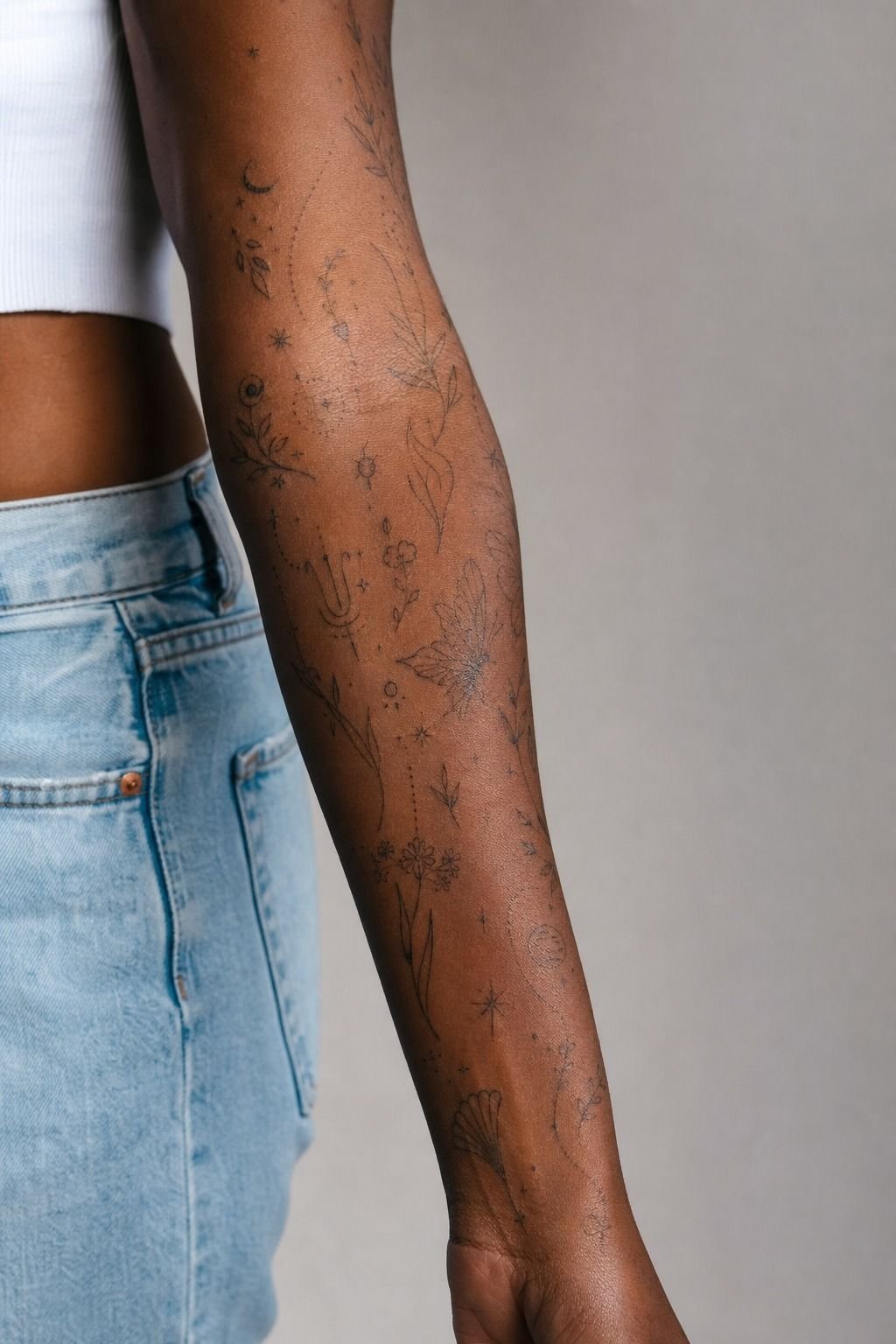
I used tiny tattoos as punctuation, not wallpaper.
12I Built A Patchwork Sleeve From Personal References
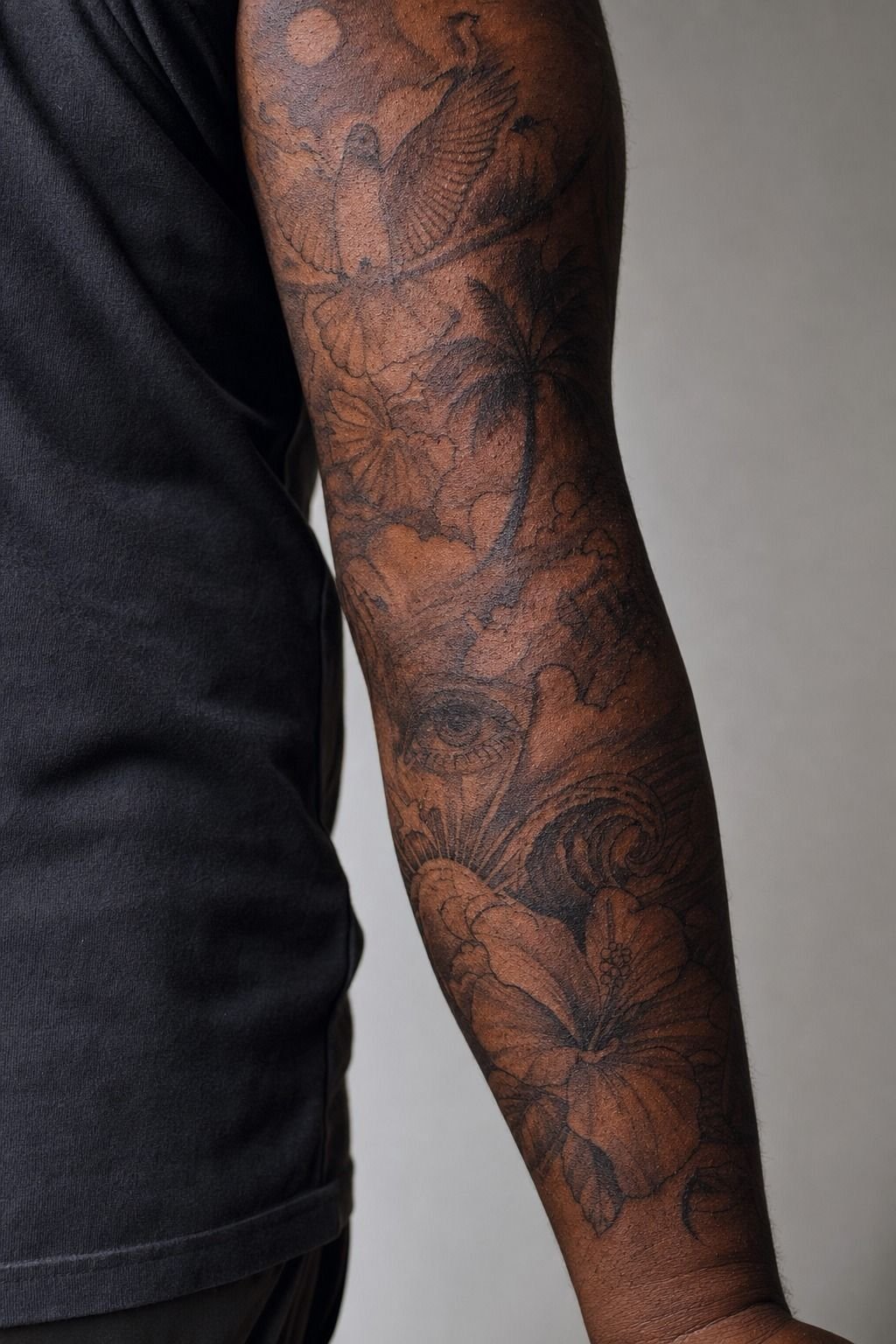
My patch-work-tattoo-ideas came from a folder of personal references, not a single copied sleeve. I had an old pressed flower, a song lyric written in my mom’s handwriting, and a photo of a moth from a camping trip. My artist turned the feeling of those things into new designs.
That’s the right relationship with references. You can show an artist a moth photograph, a handwriting sample, and a vintage botanical illustration, then let them draw something that belongs on your arm.
If you need Pinterest-exact, I’m not your artist. References are for vibe, scale, and direction.
But give them usable material. Blurry screenshots and thirty unrelated pins make it harder, not easier.
I narrowed mine to six images and one sentence about the mood: refined, soft, a little moody. The final sleeve had my fingerprints all over it without looking copied.
For larger-scale inspiration, look through this leg sleeve tattoo guide and notice how placement changes the rhythm.
13I Prepared For Wrist And Elbow Discomfort

I prepared for the wrist and elbow before I got there, and I’m glad I did.
14I Protected Fresh Sticker Tattoos During Healing
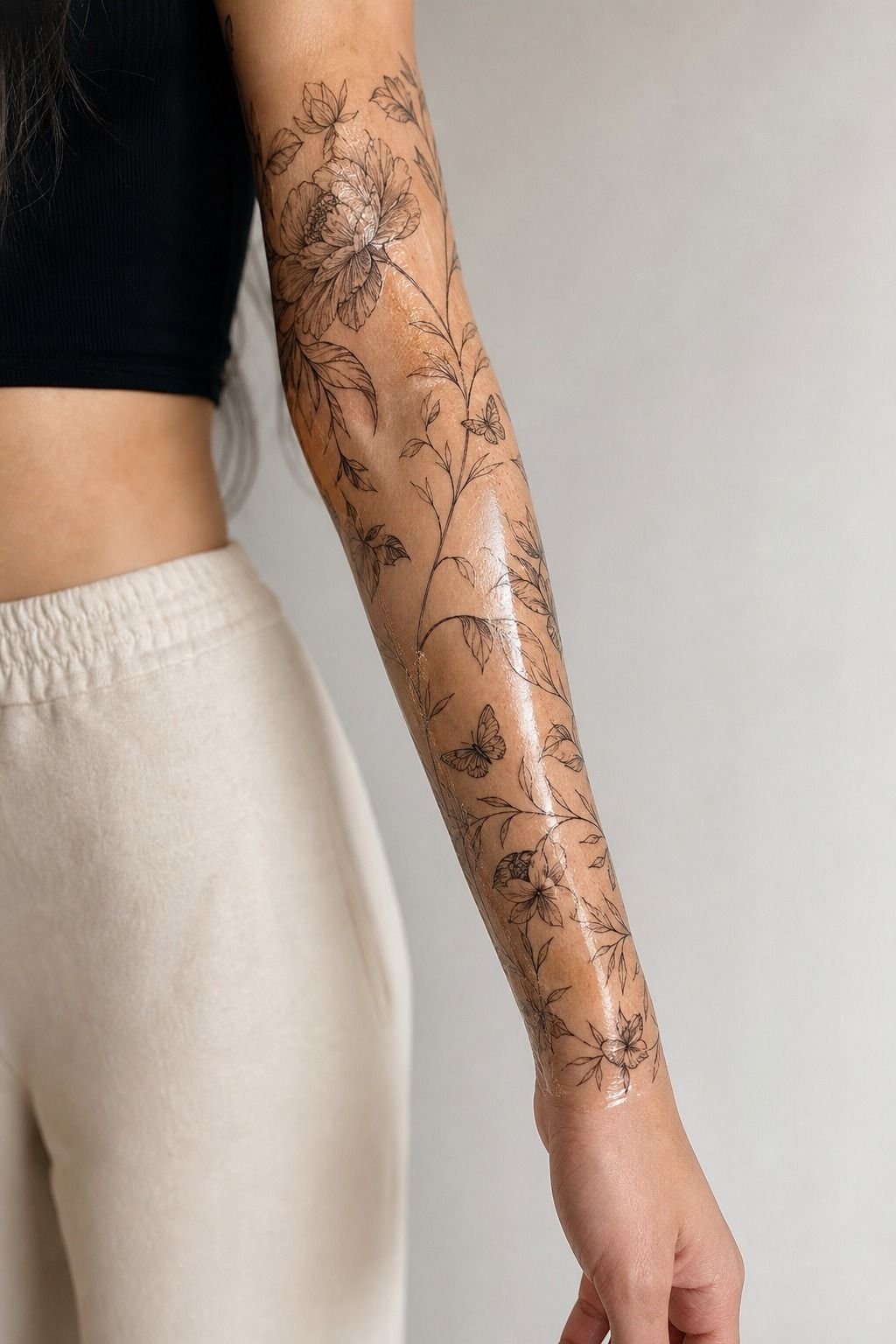
Fresh sticker tattoos need boring care, and boring care is good. For the first few days, it’s an open wound. I washed mine with unscented gentle soap, patted it dry with a clean paper towel, then used a thin layer of fragrance-free ointment so it wasn’t shiny and suffocated.
You should expect the surface to heal in about 2 to 3 weeks, while deeper settling can take 2 to 3 months. It’ll peel like a sunburn. Don’t pick flakes, don’t soak in pools, and don’t let gym friction grind against a fresh forearm tattoo.
But sunscreen becomes the long game once it’s fully healed. UV is ruthless on fine line work and red accents. I use broad-spectrum SPF whenever the sleeve is exposed because black is your best friend for longevity, but even good black deserves protection.
15I Reviewed My Finished Sticker Sleeve In Photos
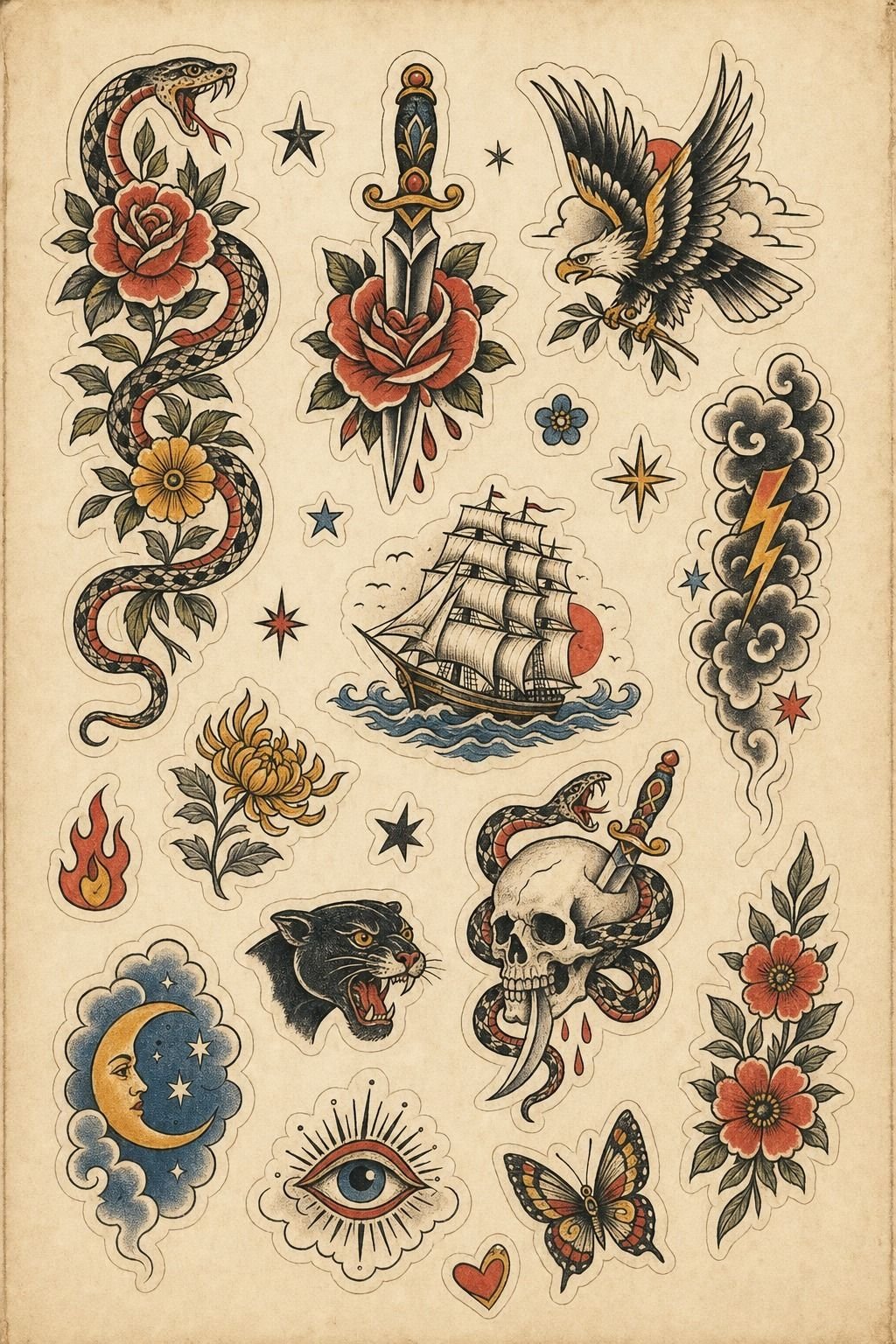
Photos made me see the sleeve differently. In the mirror, I focused on each individual tattoo. In pictures, I could finally see whether the full patchy-sleeve-tattoo looked balanced, whether the negative skin stayed inviting, and whether one side was too heavy.
I took photos in window light with my arm relaxed, bent, and turned outward. You should do the same before booking another filler session. Camera distance reveals whether a tiny tattoo reads as a clear silhouette or disappears into visual noise.
The finished sleeve looked more harmonious than I expected. Not because every tattoo matched, but because the black line weight and open skin repeated all the way through.
That’s why it still feels timeless years later. It looks like one story told in little chapters.
How much it cost
A sticker sleeve can cost anywhere from a few shop minimums to several longer appointments, depending on the artist, region, size, and how much custom drawing you need. Mine was built in stages, so I paid for short sessions instead of one long day. That was easier on my skin and my budget.
I’d budget for artist time, not a magical fixed total. A clean custom sleeve is worth more than rushing toward the cheapest quote. Cheap linework can look scratchy, and fixing it later costs more than getting a solid artist from the start.
Why I Think Sticker Sleeves Age Better Than People Expect
I’ve watched people dismiss fine line tattoos as fragile, and sometimes they’re right. Tiny details packed too close will blur.
Super-thin lettering on a high-wear wrist can fade. A sticker sleeve full of miniature realism is a gamble because all those tiny tonal shifts eventually soften into grey noise.
But that isn’t the same as saying fine line never lasts. Mine has held because the choices were practical: black ink as the base, simple shapes, low-to-medium wear placement, and visible skin between each design. The forearm is forgiving compared with fingers or feet.
My moth still reads as a moth. My flowers still look like flowers. No fuzzy blob situation.
I also didn’t chase every empty gap. That restraint is what I’d tell you to copy.
People see open skin and think unfinished. I see future options. Your taste changes, your life changes, and a sleeve with some breathing room lets you add a new chapter without covering old work.
That’s a comforting thought.
And the truth is, I like that it doesn’t look brand-new anymore. The ink has softened just enough to look lived-in, while the outlines remain clean.
It feels less like an accessory and more like part of me. That’s the version of a sticker sleeve I’d always choose: personal, spacious, and built to heal nice.
The Questions Worth Answering First
How much does a Sticker Sleeve Tattoo usually cost?
A sticker sleeve tattoo usually costs about $100 to $250 per hour, with many studios setting a $50 to $100 minimum. Staging the work lets you spread costs across appointments instead of forcing one expensive day. Custom drawing, detail, and your region change the final number.
Are Sticker Sleeve Tattoo a good idea for a first tattoo?
Yes, a sticker sleeve can be a good first tattoo if you begin with one solid piece. Forearm placement is usually more tolerable than ribs or feet, and you can build slowly after seeing how you heal. Start with a symbol you’ll still like without the whole sleeve.
How do I choose a tattoo artist for Sticker Sleeve Tattoo?
Choose an artist with healed photos of fine line tattoos, not only fresh work under bright studio lights. You should look for crispy lines, readable small designs, consistent black saturation, and a clean studio. Their portfolio should show the exact style you want, not just a little of everything.
How much do Sticker Sleeve Tattoo hurt?
Forearm sticker tattoos are usually manageable, while wrists, elbows, hands, ribs, feet, and sternum feel spicier. Outer forearm skin is a friendlier starting zone because it has more padding and less constant friction. Lines feel sharp; shading feels more like a dull burn.
How long does a Sticker Sleeve Tattoo take to heal?
The surface usually heals in about 2 to 3 weeks, though full settling can take 2 to 3 months. Gentle aftercare helps the lines stay clear: unscented soap, a thin moisturizer layer, no picking, no pools, and no direct sun while it’s fresh.
What’s the best placement for Sticker Sleeve Tattoo?
The outer forearm and upper forearm are strong choices because your tattoo stays visible, readable, and relatively low-wear. Forearm flow also gives you room to add pieces later. If you want to compare coverage plans, see this sleeve tattoo cost guide.
Where I’d Start First
If I had to pick one, I’d start with a black fine line botanical on the outer forearm. It gives every future sticker a direction without crowding your skin. Pin that first anchor piece for later, then let the sleeve grow at your pace.