
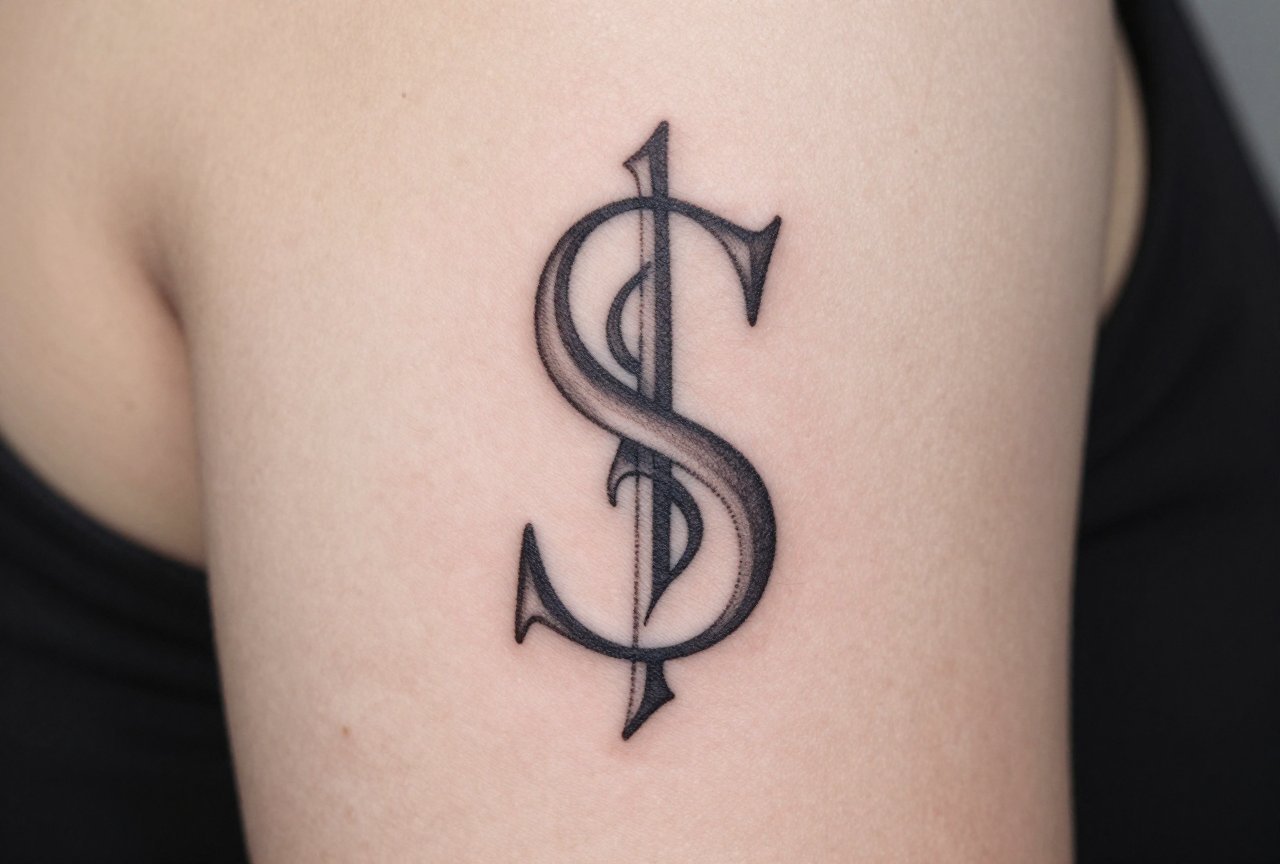
Symbol tattoos with secret meanings are designs that communicate something deeply personal without spelling it out literally. These tattoos use visual shorthand, ancient iconography, coded alphabets, or culturally specific motifs to encode messages that only the wearer, or those initiated into the symbol’s meaning, can fully decode. They serve as private declarations, protective talismans, or quiet rebellions against the expectation that everything must be explained.
Symbolism & History
Humans have used secret symbols for millennia. The practice spans from the ichthys fish drawn by early Christians to identify safe meeting places to the tramp stamps of hobo code marking trustworthy households during the Great Depression. Tattooing adopted these traditions early, with sailors using specific nautical stars to indicate miles sailed, and prisoners developing elaborate visual lexicons to communicate rank, crimes, and affiliations without words.
Modern secret symbol tattoos draw from this deep well of human ingenuity. They allow wearers to:
- Honor heritage without cultural appropriation or overt display
- Memorialize loss without triggering public grief
- Mark survival, transformation, or identity shifts privately
- Maintain professional ambiguity while preserving personal truth
The power lies in the asymmetry of knowledge: the wearer knows; the casual observer does not.
Common Variations & Styles
Secret symbol tattoos manifest in diverse visual languages. Some rely on established systems; others invent personal codes.
- Ogham and runic alphabets: Ancient Celtic and Norse linear scripts that appear decorative to the untrained eye but spell names, dates, or words
- Alchemical and astrological symbols: Planetary glyphs, elemental signs, or transmutation marks that encode birth charts, significant celestial events, or personal philosophies
- Semicolon variations: While widely recognized now, customized semicolons with hidden initials, dates, or companion symbols maintain semi-private meaning
- Coordinate tattoos: Latitude and longitude numbers that map to locations of birth, death, transformation, or promise
- Morse code and binary: Dots and dashes or 0s and 1s spelling names, dates, or short phrases
- Floriography (flower language): Victorian-era coded bouquets where specific blooms convey complex sentiments; a sprig of yellow acacia for secret love, or rue for repentance
- Geometric abstractions: Personal sigils created through chaos magic techniques, combining letterforms into unique, unrecognizable symbols
Style choices matter significantly. Fine-line minimalist execution keeps symbols subtle; bold blackwork demands attention while remaining cryptic. Watercolor backgrounds can obscure and reveal simultaneously.
Best Placements
Placement reinforces the secret nature of these tattoos. Visibility becomes a deliberate choice about who receives access to the encoded message.
- Behind the ear or hairline: Hidden except during intimate moments or specific hairstyles
- Ribcage or sternum: Protected by clothing, revealed only through deliberate choice
- Inner bicep or upper thigh: Private but accessible to the wearer for personal contemplation
- Side of the finger: Visible to the wearer constantly, rarely noticed by others
- Arch of the foot: Truly concealed, shared only in most vulnerable states
Some wearers choose paradoxically visible placements, encoding secrets in plain sight, trusting that the symbol’s meaning remains locked without the key.
Who Chooses This Tattoo / Personal Meanings
The demographic for secret symbol tattoos resists easy categorization. They attract:
- Queer individuals in unsafe environments, using historical codes like violets, green carnations, or specific color combinations
- Survivors of trauma who need permanent acknowledgment without public explanation
- People in stigmatized professions requiring visible neutrality
- Parents encoding children’s names, birth times, or personal nicknames
- Spiritual practitioners carrying protective symbols from traditions they cannot publicly claim
- Writers and linguists drawn to the puzzle and poetry of visual language
Common personal meanings include memorial dates disguised as mathematical constants, partner names in phonetic alphabets, recovery anniversaries in Roman numerals, or affirmations in fictional languages from beloved literature.
Similar Symbols
Secret symbol tattoos often cluster with related visual strategies that balance revelation and concealment.
- Ambigrams: Words readable from multiple angles or directions, sometimes encoding dual names or meanings
- Negative space designs: Images hidden within larger compositions, like faces in tree branches or animals in tribal patterns
- UV and white ink tattoos: Visible only under blacklight or upon close inspection, though white ink carries higher fading risks
- Cover-up integrations: New symbols that incorporate and transform older tattoos, encoding the history of the skin itself
- Puzzle and lock imagery: Keys, padlocks, and labyrinths that metaphorically represent the secret-keeping function
These approaches can be combined: a white ink Ogham inscription, a negative space animal containing coordinate numbers, or an ambigram that reads as a name one direction and a date inverted.
Final Thoughts
Symbol tattoos with secret meanings honor the legitimate human need for privacy in an era of radical exposure. They prove that permanence and secrecy can coexist, that the body can be both billboard and locked diary. The best designs reward the wearer’s daily knowledge while remaining beautiful mysteries to the outside world. In tattoo culture’s long history, these coded pieces continue one of the tradition’s oldest functions: making the invisible, if not visible, at least present.
Related Tattoo Meanings
- Navy Tattoo Meaning: Service, Honor The Deep Bond
- Eye of Horus Tattoo Meaning: Protection Ancient Power
- Crown of Thorns Tattoo Meaning: Faith, Suffering Strength
- Explore all tattoo symbol meanings









