
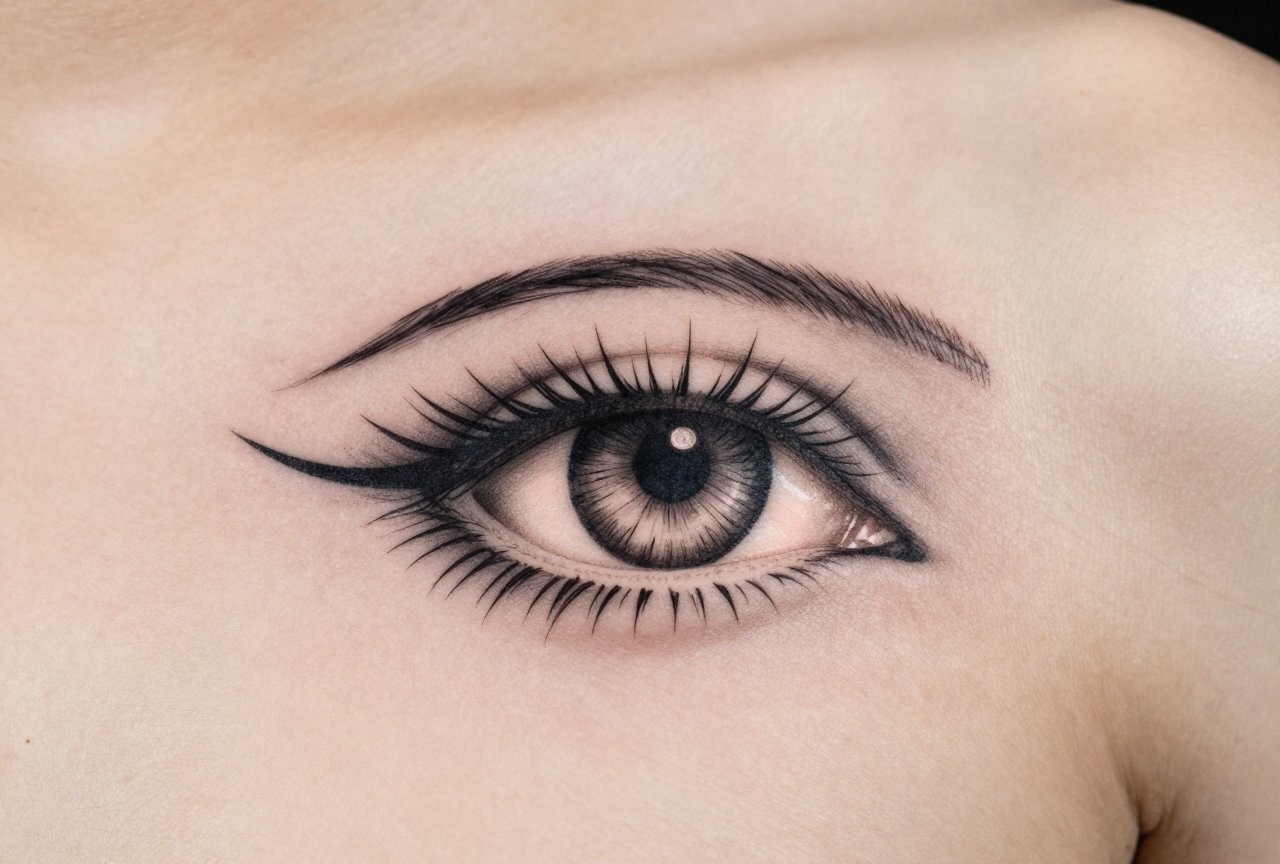
The Eye of Horus tattoo carries deep meaning rooted in ancient Egyptian mythology, primarily representing protection, healing, and royal authority. This powerful symbol, also known as the Wedjat eye, was believed to offer spiritual safeguarding and enhanced perception to those who wore it. Today, people choose this design to channel inner strength, honor their heritage, or connect with timeless wisdom that transcends thousands of years of human history.
Symbolism & History
The Eye of Horus originates from one of Egypt’s most enduring myths. According to legend, the god Horus lost his left eye during a battle with Set, the god of chaos, who murdered Horus’s father Osiris. The eye was later restored by the god Thoth, transforming it into a potent symbol of restoration, wholeness, and triumph over adversity. Ancient Egyptians incorporated this emblem into amulets, tomb paintings, and ceremonial objects, believing it could ward off evil and bring prosperity.
The symbol’s distinctive design holds mathematical significance as well. Each of the six parts of the eye corresponded to fractional units used in ancient Egyptian measurement, representing the completeness of the whole. This connection to cosmic order reinforced its association with balance and harmony. The right eye of Horus was linked to the sun and Ra, while the left eye connected to the moon and Horus himself, creating a duality that resonates with seekers of equilibrium in their lives.
Common Variations & Styles
Modern tattoo artists have expanded the Eye of Horus into numerous artistic interpretations while preserving its core symbolism. Consider these popular approaches when planning your design:
- Traditional Egyptian style: Bold black lines with gold accents, often paired with hieroglyphics or lotus flowers for authentic cultural resonance
- Realistic eye integration: A human eye rendered within the stylized outline, adding personal identity and depth to the ancient form
- Geometric and dotwork: Clean lines and stippled shading that emphasize the symbol’s mathematical precision and sacred geometry
- Watercolor fusion: Bold splashes of blue, gold, and purple surrounding the traditional outline for contemporary artistic expression
- Combined with Ankh or Scarab: Pairing with other Egyptian symbols to create layered narratives of life, death, and rebirth
Best Placements
The Eye of Horus adapts well to various body locations depending on your intended visibility and personal significance. The forearm and wrist remain popular choices for those who view the tattoo as a daily protective talisman they can see and touch. The upper back and shoulder blade provide excellent canvas space for larger, more detailed compositions incorporating additional Egyptian elements. Behind the ear or on the nape of the neck offers subtle placement with intimate personal meaning. For bold statement pieces, the chest over the heart or the center of the back creates powerful focal points that emphasize the symbol’s guardian qualities.
Who Chooses This Tattoo / Personal Meanings
People drawn to the Eye of Horus represent diverse backgrounds and motivations, yet share common threads of seeking meaning beyond surface aesthetics. You might choose this symbol if you:
- Have Egyptian ancestry or deep fascination with ancient civilizations and their enduring wisdom
- Have overcome significant hardship and want to mark your personal restoration and resilience
- Work in healing professions or spiritual practices where protection and insight hold practical value
- Seek a meaningful alternative to more common spiritual symbols like the cross or Om
- Value the concept of the “evil eye” protection but prefer historical authenticity over Mediterranean variants
- Appreciate the mathematical and astronomical sophistication embedded in ancient Egyptian culture
Many wearers report feeling a sense of grounded confidence and connection to something larger than themselves, whether or not they follow any specific spiritual path.
Similar Symbols
Understanding related symbols helps distinguish the Eye of Horus and appreciate its unique place in iconography. The Eye of Ra, often confused with Horus’s eye, represents the sun god’s aggressive, fiery power and protective wrath rather than restoration and healing. The Hamsa hand from Middle Eastern traditions offers comparable protective functions but originates from different cultural and religious contexts. The Nazar boncugu, or Turkish evil eye amulet, serves purely protective purposes without the royal and restorative dimensions. The Third Eye chakra symbol from Hindu and Buddhist traditions shares themes of spiritual perception but lacks the specific mythological narrative and Egyptian cultural grounding. Knowing these distinctions helps ensure your tattoo communicates precisely what you intend.
Final Thoughts
The Eye of Horus endures because it speaks to fundamental human needs: protection from harm, recovery from loss, and clarity of vision in uncertain times. Whether you choose a minimalist outline or an elaborate composition, this ancient symbol carries weight that transcends trends. Take time to research artists experienced in Egyptian-inspired work, discuss placement and scale thoroughly, and connect personally with the mythology before committing. A well-crafted Eye of Horus tattoo becomes more than decoration; it becomes a permanent reminder of your own capacity to heal, see clearly, and stand protected.
Related Tattoo Meanings
- All Seeing Eye Tattoo Meaning: Symbolism Styles
- Meaningful Symbols Tattoo Meaning: Personal Significance in Ink
- Symbols Family Tattoo Meaning: Heritage, Love Ink
- Explore all tattoo symbol meanings









