I almost talked myself out of my first ornamental blackwork tattoo because I thought bold ink had to feel severe. It doesn’t. The right balance of negative space, crisp linework, and personal symbolism can look striking without shouting. That’s the point!
These 11 ideas show how placement changes meaning. Your skin deserves a design with staying power, whether your taste leans delicate, fierce, or quietly expressive.
- Start With a Gothic Thorn Halo on the Forearm
- Why Sacred Geometry Works at the Sternum
- Filigree Handpiece: Fine Linework With a Personal Pulse
- Choose the Gothic Moth Shoulder Composition
- The Serpent That Keeps Its Edges Sharp
- Blackwork Botanical Motifs, Not a Busy Bouquet
- Can an Ornate Neck Mandala Stay Legible?
- Let the Dotwork Crescent Follow the Knee
- Bold Gothic Back Panel or Smaller Symbols?
- A Delicate Wrist Rosette With Room to Breathe
- The Collarbone Ornament I’d Make Personal
1Start With a Gothic Thorn Halo on the Forearm
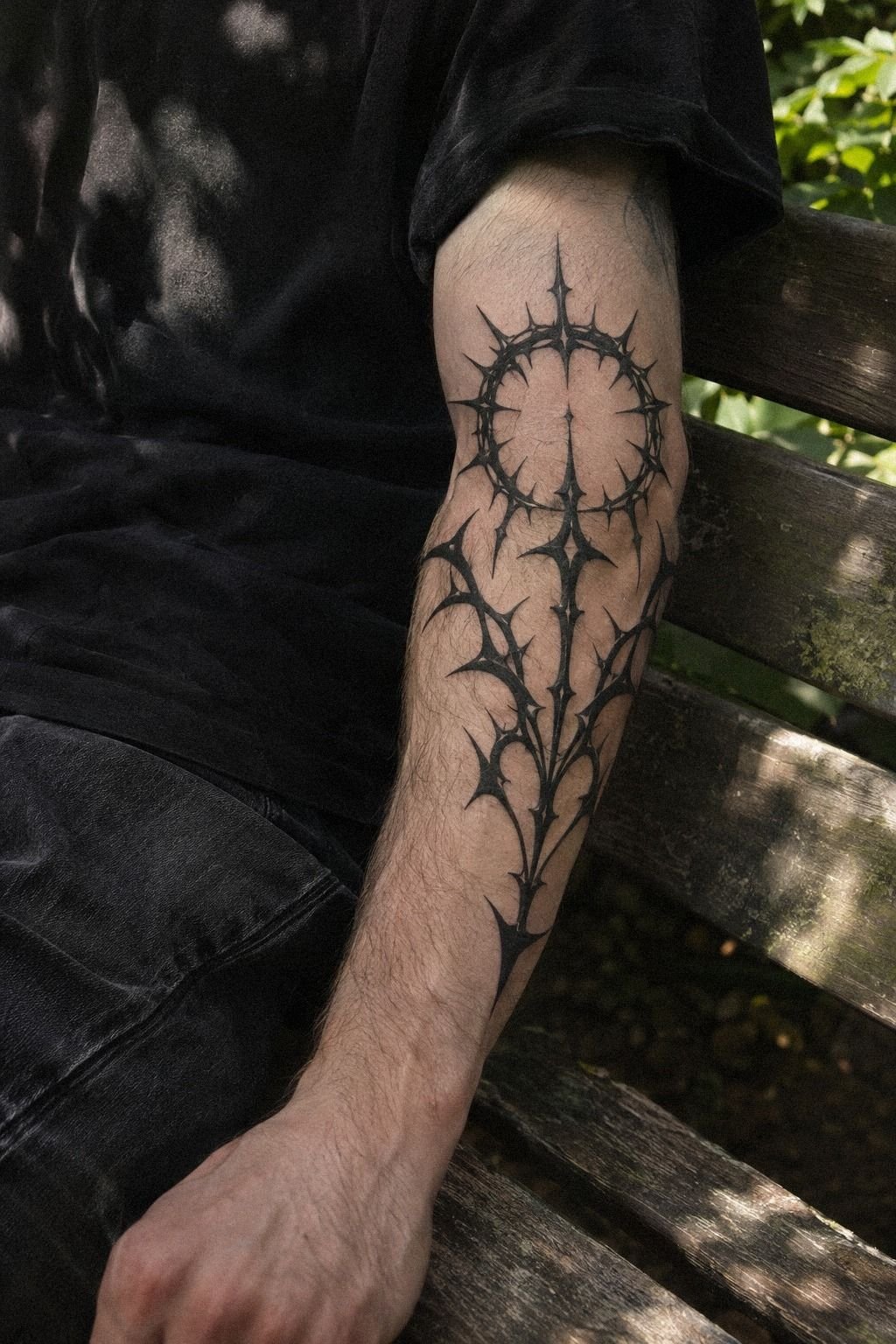
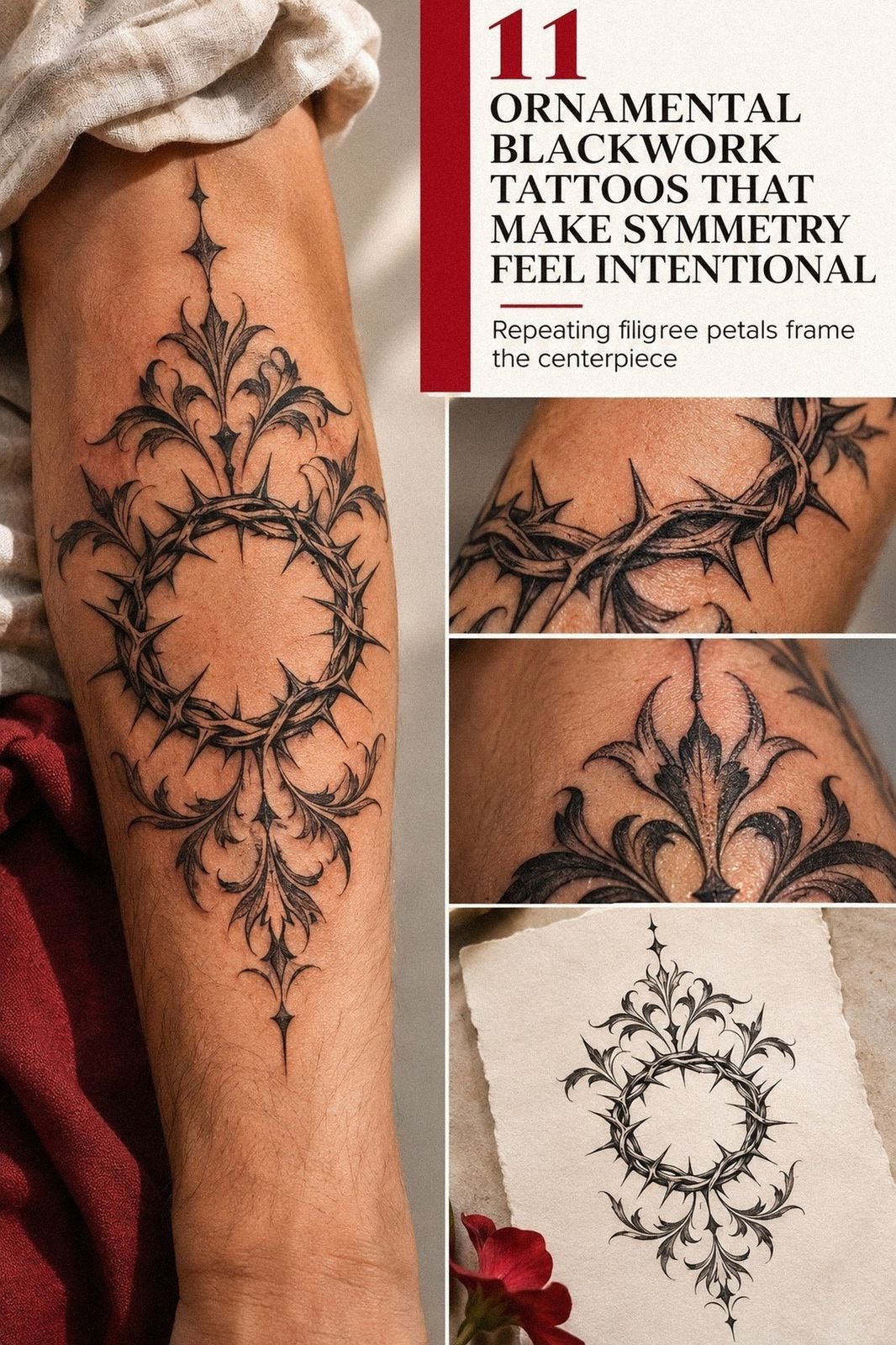
A gothic thorn halo gives the forearm a fierce vertical shape. The composition follows the arm instead of fighting it. Pointed thorns circle a central ornamental form, creating a raw, symbolic mood.
I’d keep the outer points sharp and the center slightly quieter. Your eye needs somewhere to rest. That contrast makes the design feel personal rather than crowded.
Ask your artist to build the halo around solid black saturation with narrow areas of untouched skin between the thorn sections. Those gaps protect the delicate rhythm. Fill every opening, and the tattoo may become one heavy block.
A forearm placement also lets you check the design with your arm relaxed, turned, and extended. That small stencil check can save you from an expensive correction later.
I’d choose this over a tiny gothic symbol if you want the meaning to stay visible. A compact version may look elegant at first, but it won’t give the halo enough breathing space. Compare similar ornamental tattoo ideas before you ask for a quote.
The strongest version feels haunting but controlled. It suits someone who wants protection, endurance, or a private chapter made visible. The value comes from the vertical silhouette, not from adding every possible detail.
2Why Sacred Geometry Works at the Sternum
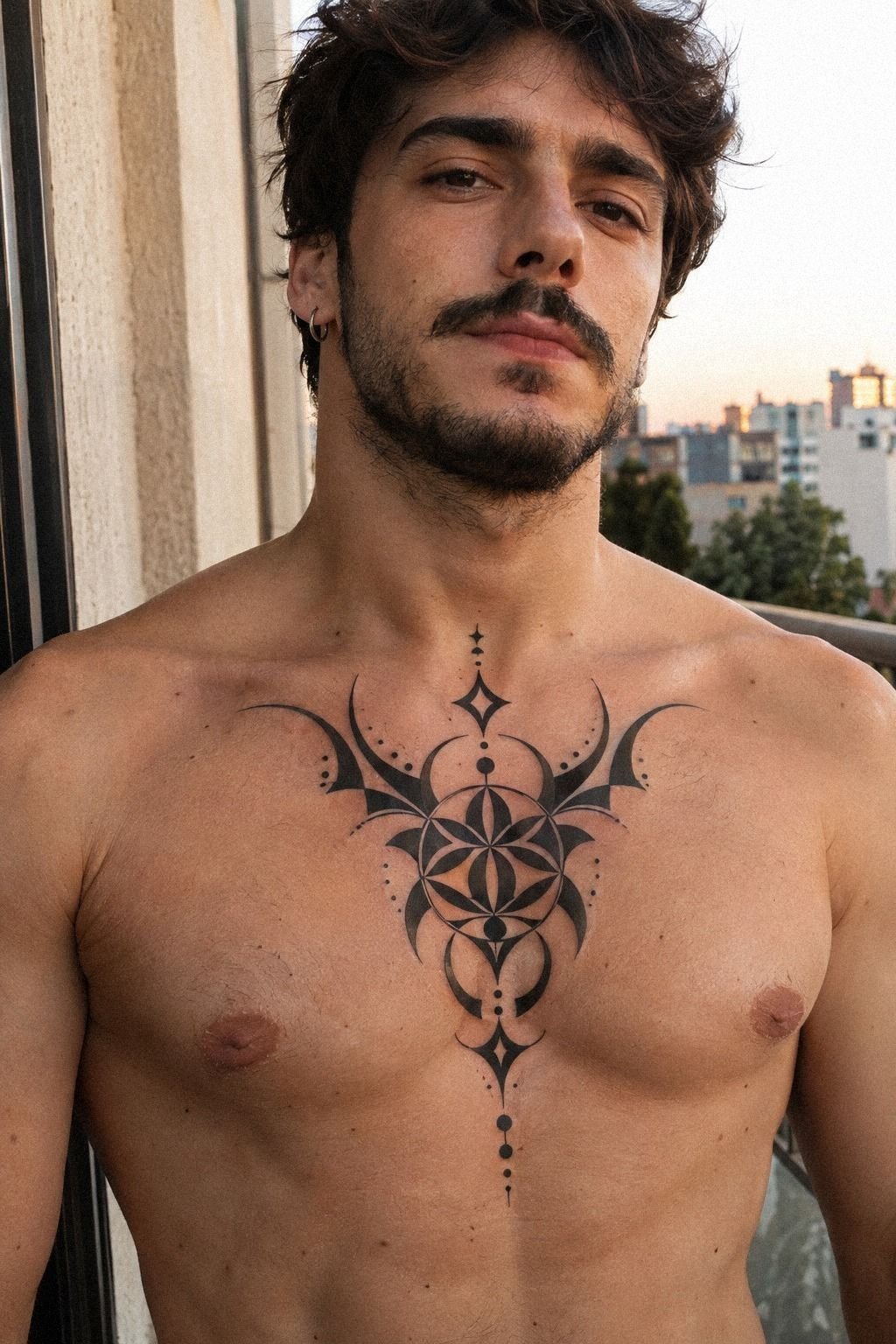
A sacred geometry sternum tattoo turns the center of your chest into a symmetrical focal point.
I’d begin with one sternum design and let the geometry grow from its center. Repeated circles, triangles, and radiating marks can feel sacred without becoming visually crowded.
The sternum rewards careful spacing. A narrow central symbol may look dainty, while wider geometry creates a more powerful statement. Your artist should follow the body’s natural center rather than forcing perfect symmetry where the anatomy shifts.
I’d protect the negative space around the main shape. Dense blackwork can look bold, but untouched skin gives the pattern room to breathe and keeps the details crisp.
A sternum piece can feel intimate, meaningful, and quietly daring. You don’t need to explain every symbol for the design to carry personal weight.
Ask to see healed examples of sternum blackwork at a similar scale. Fresh lines may look sharp, while healed work shows whether the spacing and contrast remain readable.
If you want a sacred rather than decorative feeling, keep the symbols intentional. One crescent, eye, or geometric mark can say more than a crowded collection of references.
3Filigree Handpiece: Fine Linework With a Personal Pulse
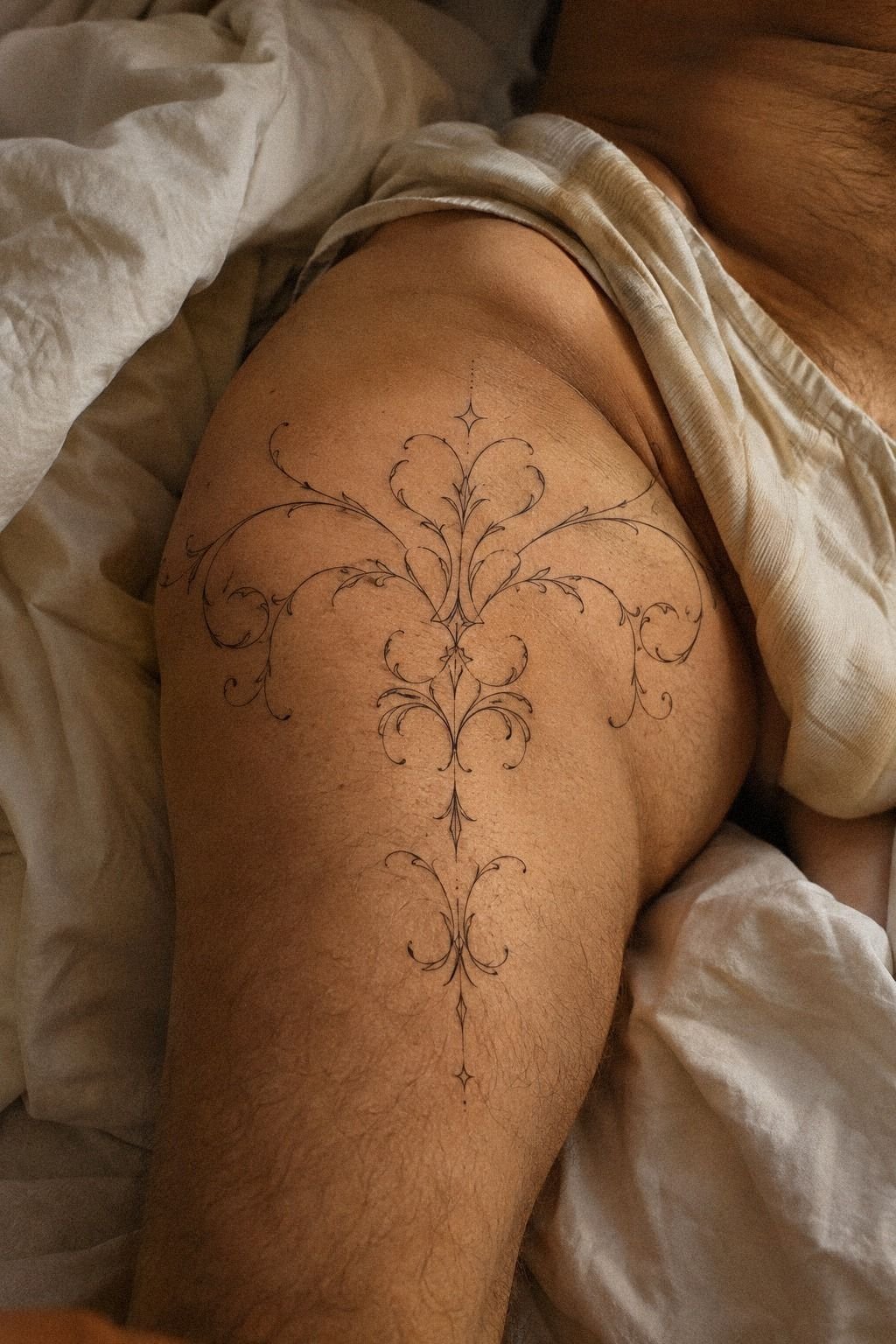
A filigree handpiece uses flowing curves and narrow ornamental bands. It creates a delicate design without losing definition. This is a sleek option when you want something refined but still expressive.
The best version has one clear center. That might be a small pendant shape, a personal initial, or a symbolic flower. Fine filigree linework should support that mark instead of competing with it.
I’d keep the outer edges slightly bolder than the interior lines. That contrast helps the design remain crisp as the skin changes. It also gives the handpiece a polished outline from a distance.
A handpiece can be feminine, masculine, or entirely neutral depending on the curves and central symbol. Don’t let a trend decide that for you. Your own meaning should set the direction.
Hands experience frequent movement, washing, and sun exposure. You’ll want to discuss how the hand placement may affect touch-ups before booking. A graceful design still needs practical planning.
If you’re unsure whether fine linework will suit your skin or placement, compare this abstract blackwork tattoo guide with blackwork tattoo sketch references. Save only the designs that still feel meaningful after several days.
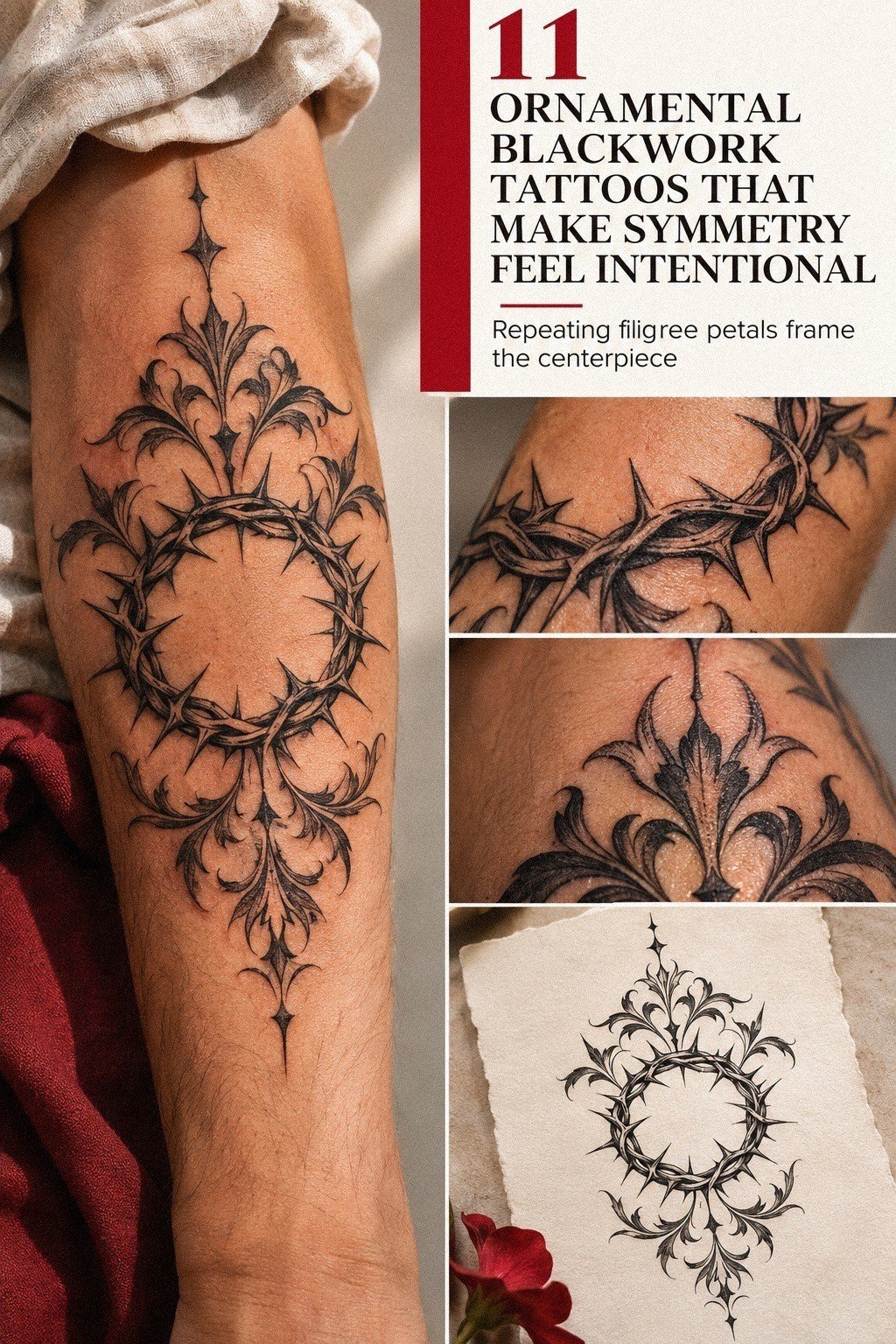
4Choose the Gothic Moth Shoulder Composition
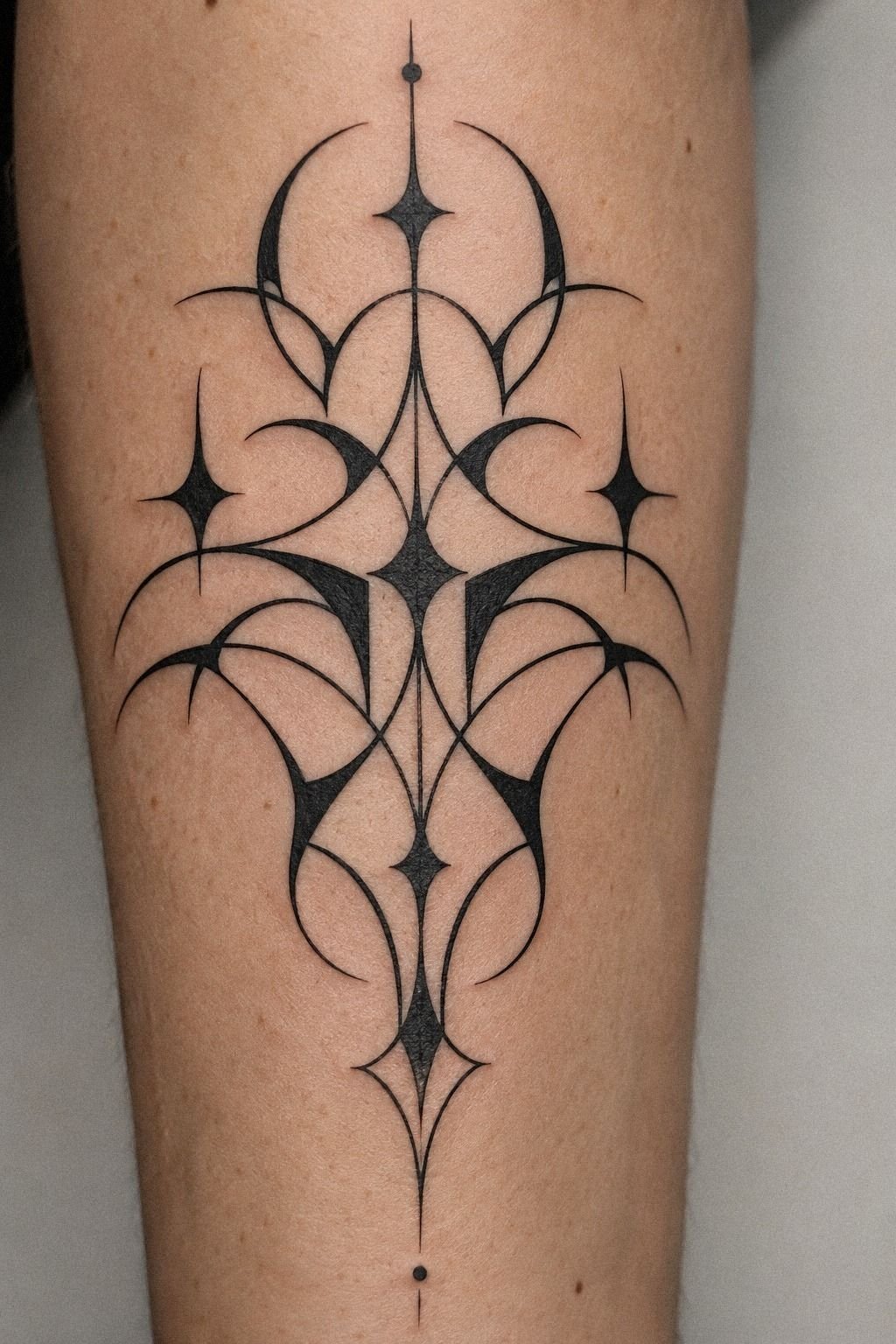
A gothic moth gives the shoulder an instantly recognizable silhouette. Spread wings create an edgy, bold shape, while smaller ornamental cuts can keep the design ethereal rather than heavy.
The key choice is the relationship between the moth’s body and the shoulder curve. Ask your artist to place the body near the natural center. Let the wings follow the muscle instead of forcing a flat outline.
Black moth wings can hold strong saturation. Tiny areas of untouched skin can preserve a crisp pattern inside the shape. That balance makes the design striking without turning every section into solid black.
I’d choose a moth over a crowded floral composition if you want one clear symbol to carry the tattoo. Flowers can be meaningful, but too many petals may soften the fierce quality you’re after.
Before your appointment, study healed blackwork in the artist’s portfolio. Fresh blackwork often looks dramatic.
Healed photos tell you whether the fine details remain readable. That evidence is worth more than a stylish flash sheet.
If you like the darker direction, compare these blackwork tattoo ideas with this dark ornamental tattoo design guide. Look for similar scale, contrast, and shoulder placement before requesting a quote.
The shoulder is forgiving, but the top curve can still feel sensitive. A bold moth there can look iconic without becoming overly ornate. That makes it a strong choice for someone who wants impact without a huge appointment length.
5The Serpent That Keeps Its Edges Sharp
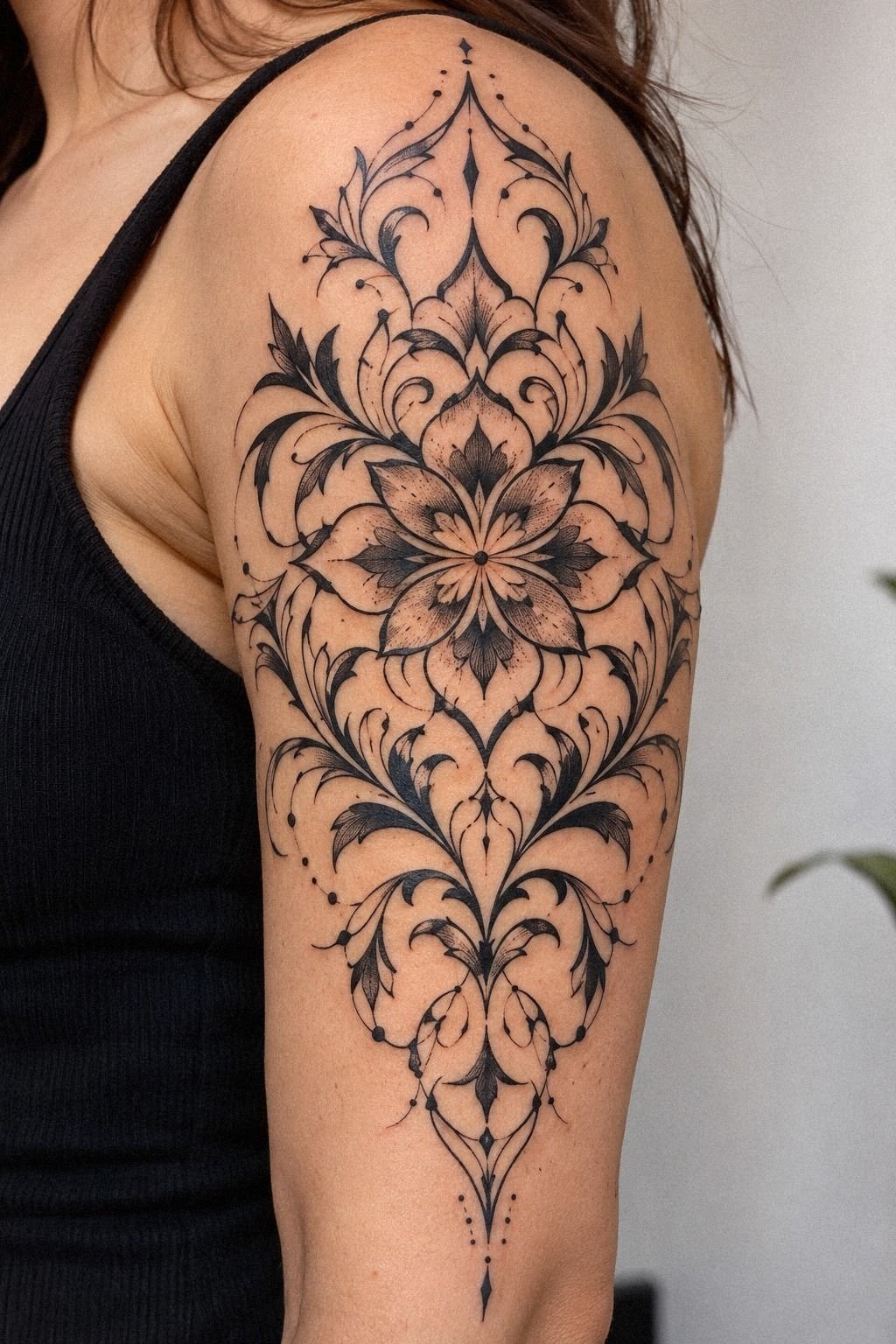
An illustrative serpent feels like a collected emblem rather than a passing trend.
I’d give the serpent one expressive curve and one clear focal mark. A small eye, ornamental scale pattern, or pointed head can make the design feel symbolic without overloading the body.
A serpent works especially well when the linework follows the chosen placement. Along the ribs, a longer curve can feel flowing and daring. On the arm, a tighter shape may look more controlled.
Keep the interior details selective. Too many scales can blur into visual noise, while a few crisp marks create a sharper, more timeless result.
I’d decide whether the serpent should feel fierce, sacred, or playful before choosing the final posture. That emotional direction will guide the head, tail, and surrounding ornament.
Ask your artist about serpent linework at the size you want. A graceful design can lose its character if the smallest marks have nowhere to settle.
The best version feels personal without looking literal. A serpent can represent renewal, protection, knowledge, or a chapter you’ve outgrown.
6Blackwork Botanical Motifs, Not a Busy Bouquet
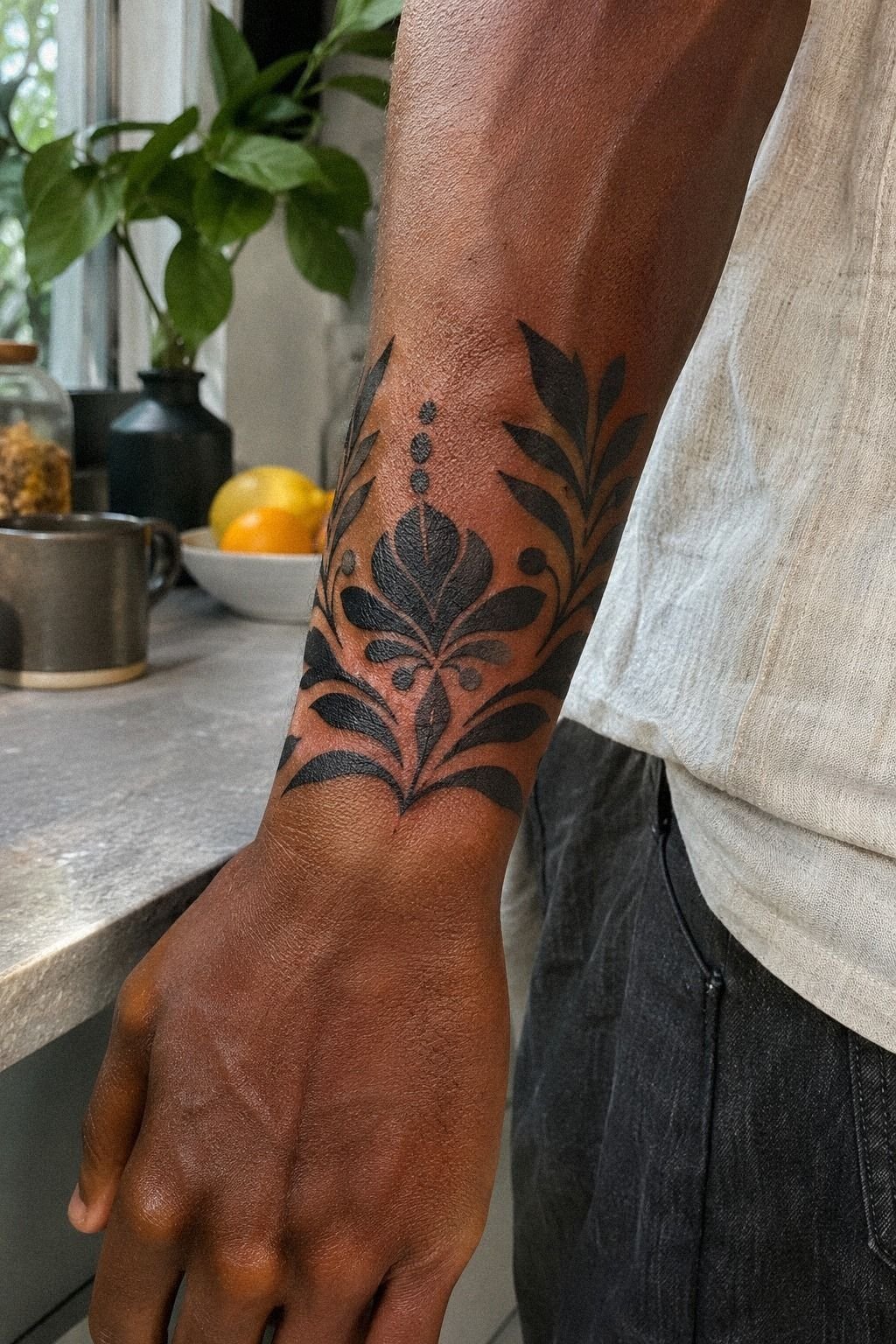
Botanical blackwork can look vibrant even when the ink stays entirely black. Leaves, stems, and seed shapes can create a romantic design without relying on color.
I’d begin with one dominant plant. A thorned stem, fern, poppy, or wildflower gives the tattoo a clear identity. Botanical blackwork leaves should support the main shape, not create a wall of repeated marks.
Minimal leaves can look more stylish than a dense cluster. Open skin between stems keeps the design readable. It also gives your artist space to adjust the composition to your body.
Think about whether you want the tattoo to feel delicate or gritty. A thin stem creates a graceful effect. Heavier leaves and darker roots give it a more grounded character.
A strong leaf silhouette matters more than the number of petals or veins. If the design only works from very close, it may need editing before you book.
You can compare botanical directions with these ornamental tattoo ideas and blackwork tattoo sketch references. Save the examples that have a strong silhouette, not just attractive details.
A focused botanical tattoo often offers better value than a crowded design. You’re paying for clear design decisions that remain legible, not for filler.
7Can an Ornate Neck Mandala Stay Legible?
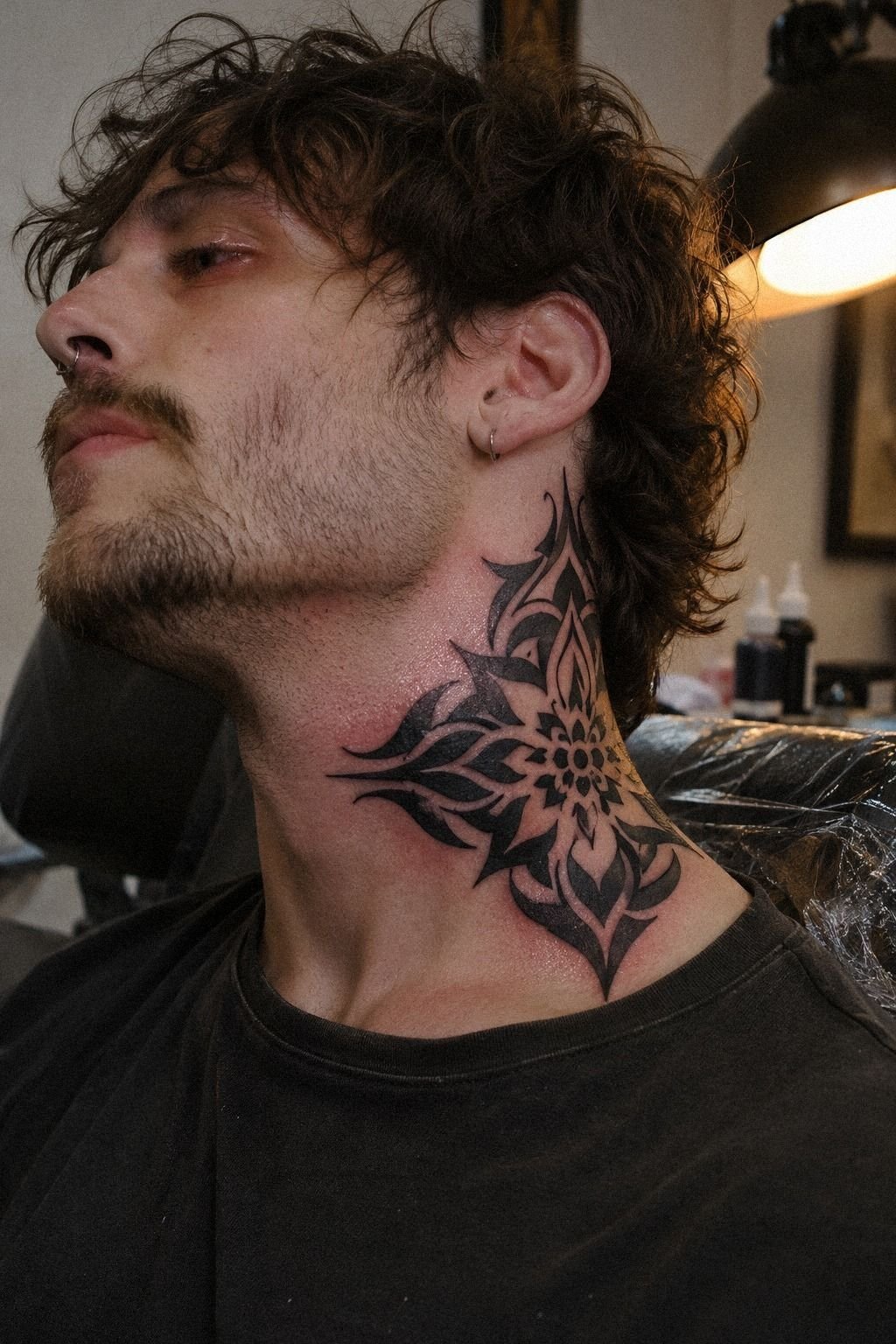
An ornate neck mandala creates a sharp border beneath the hairline or along the side of the neck. It’s a daring placement, but the right scale can keep the result polished rather than overwhelming.
Start with one neck mandala structure and let the details follow it. A central eye, flower, or geometric mark can make the design feel symbolic before the smaller flourishes are added.
The center should remain readable from a normal distance. Ask your artist to protect the mandala center with open skin and slightly heavier outer lines.
Hairline placement can change the mood completely. A design tucked beneath the hair may feel private, while a side-neck piece reads as more visible and expressive. Your choice should match how often you want to explain it.
A small dotwork ring or pointed border can add a sacred quality without forcing the whole piece into dense saturation. The goal is an intricate outline with enough visual pause.
Check the neck stencil while your head is upright and turned naturally. Skin shifts when you look down, and a graceful design can lose its balance if the stencil is checked in only one position.
I’d keep the mandala scale moderate unless you’re committed to a larger neck composition. The most stylish version usually has one clear idea instead of every possible ornamental detail.
8Let the Dotwork Crescent Follow the Knee
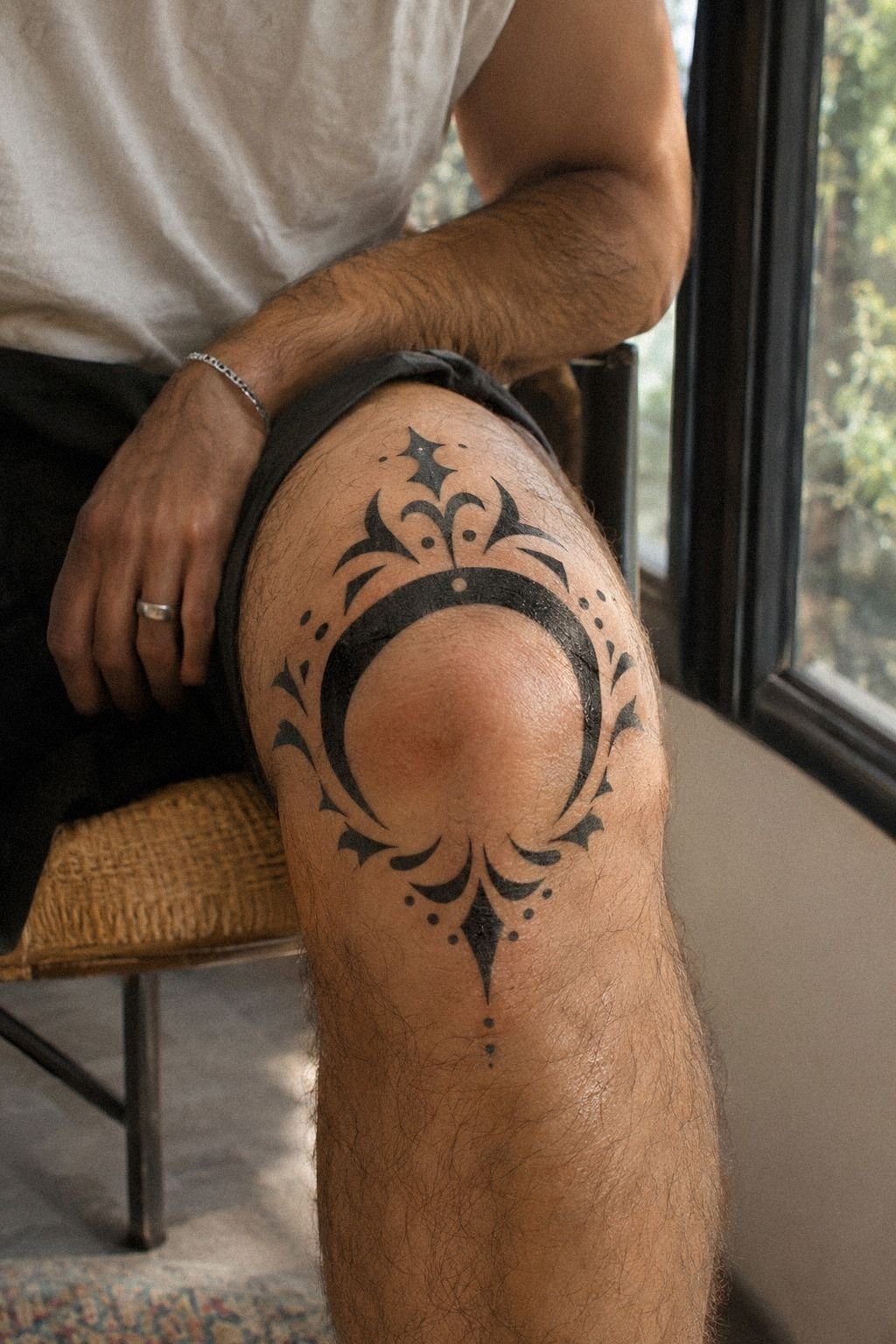
A dotwork crescent makes the knee feel like the center of a small celestial emblem. The curved shape can follow the joint while keeping the meaning understated and personal.
I’d place the crescent so its open side supports the natural bend. Dotwork crescent shading should stay lighter near the center and grow more defined toward the tips.
The knee moves constantly, so the stencil needs to work while standing and bending. Ask your artist to check both positions before the session begins. A graceful curve can become awkward if it ignores the joint.
A crescent may feel symbolic, sacred, or quietly romantic. You can pair it with stars, thorns, or small ornamental marks, but don’t add symbols just to fill space.
For comparisons, browse blackwork tattoo ideas and the abstract blackwork tattoo guide. I’d choose the simpler design if the quote rises because of detail that won’t read from a normal distance.
9Bold Gothic Back Panel or Smaller Symbols?
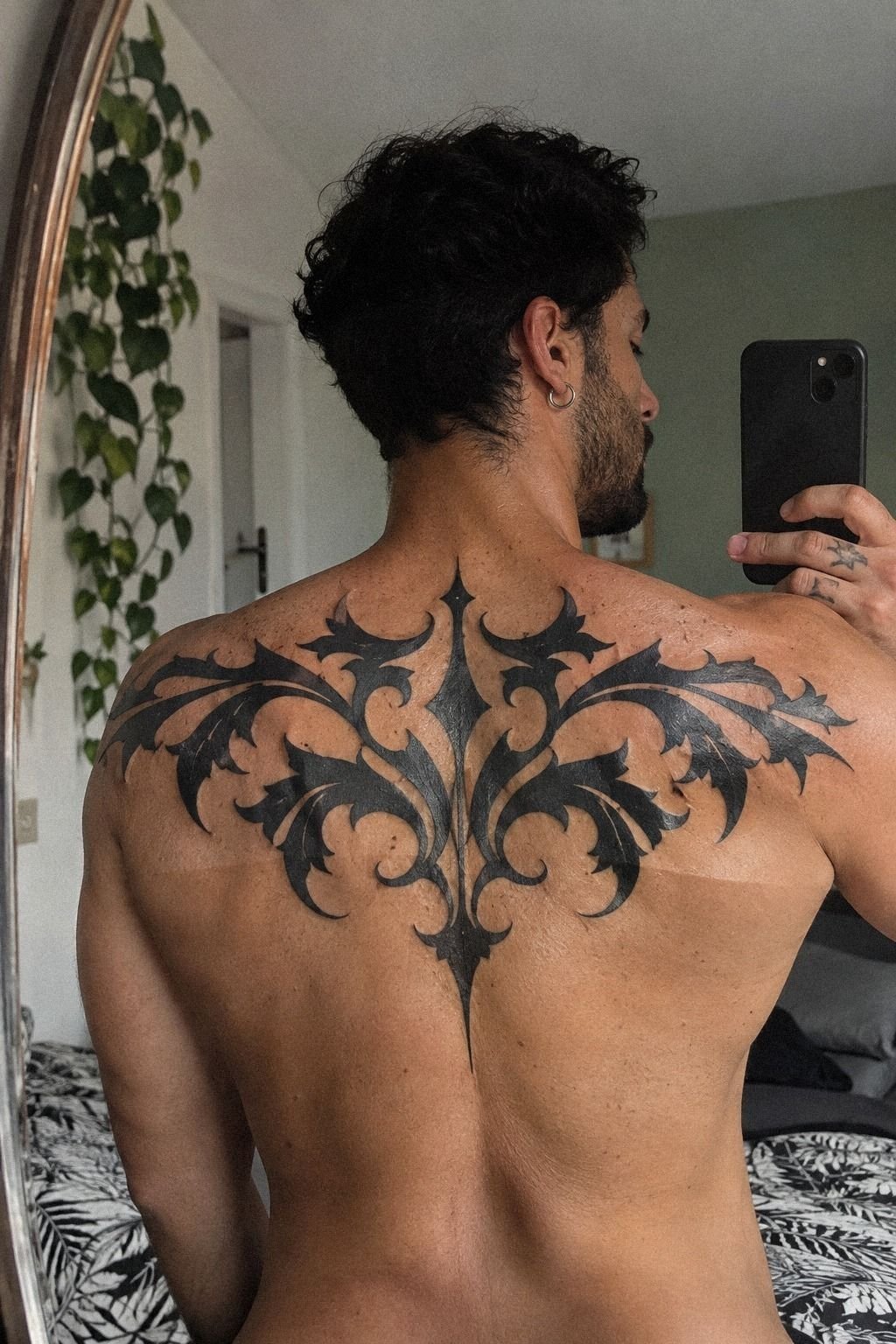
A gothic back panel gives you space for a bold, immersive composition. Pointed arches, ornamental wings, and layered filigree can create a powerful statement without forcing every detail into a small area.
Start with one central anchor, such as a pointed medallion or dark crest. Large-scale blackwork designs work best when the outer border supports the center.
I’d keep the middle bold and let the edges become more delicate near the shoulder blades. That shift creates a polished transition. It also stops the panel from feeling like one flat mass.
Your artist should check the stencil while you stand, twist, and lift your arms. The back changes shape through movement. You’ll want the design to stay balanced in each natural position.
Ask for a clear session plan if the panel will take more than one appointment. A serious budget should include deposits, multiple visits, aftercare, and possible touch-ups.
I’d choose a back panel over unrelated small tattoos if you want one powerful statement. Separate motifs can be meaningful, but they may not create the same visual impact.
This dark ornamental tattoo design guide can help you compare border styles and central motifs. Look for references with similar scale and contrast before asking for a final quote.
A large panel is a serious commitment, but it can become an iconic part of your collection. The finished work feels fierce, polished, and unmistakably yours.
10A Delicate Wrist Rosette With Room to Breathe
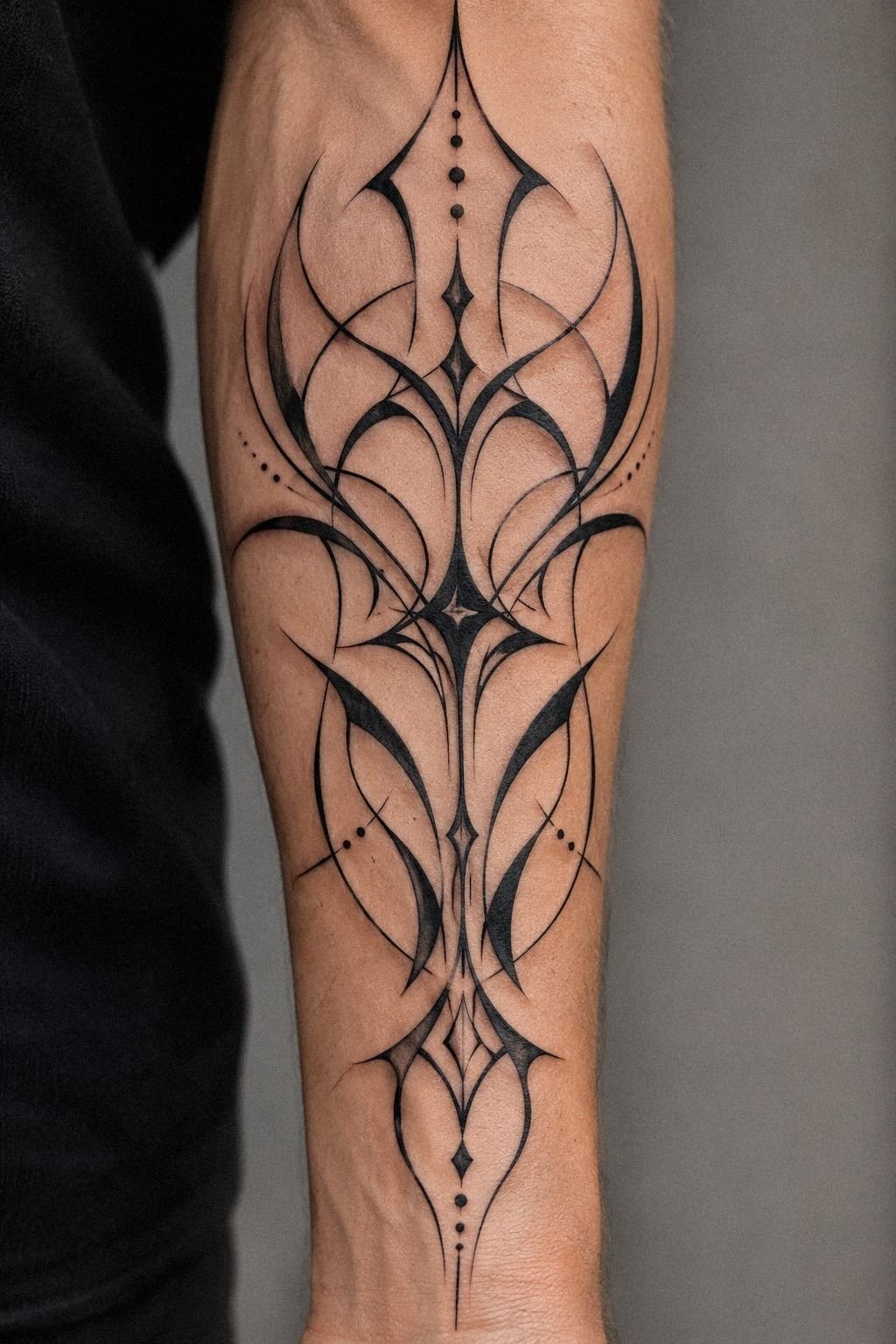
A delicate wrist rosette works when you want a smaller ornamental tattoo with a clear center. It can feel feminine, masculine, or completely individual depending on the shape and surrounding marks.
The rosette center should remain simple enough to read at a glance. Petals, points, or a small symbol can radiate outward without making the design feel crowded.
Wrist movement deserves attention. Ask your artist to check the wrist placement with your hand relaxed, bent, and turned. A rosette that looks balanced in one position may shift in another.
I’d protect the small-scale blackwork with open skin and a confident outline. Tiny details may look polished at first but blur if they’re packed too closely together.
The wrist is visible every day, so consider whether you want the design to function as a personal reminder or a frequent conversation starter. That visibility can feel empowering when you’ve chosen it intentionally.
11The Collarbone Ornament I’d Make Personal
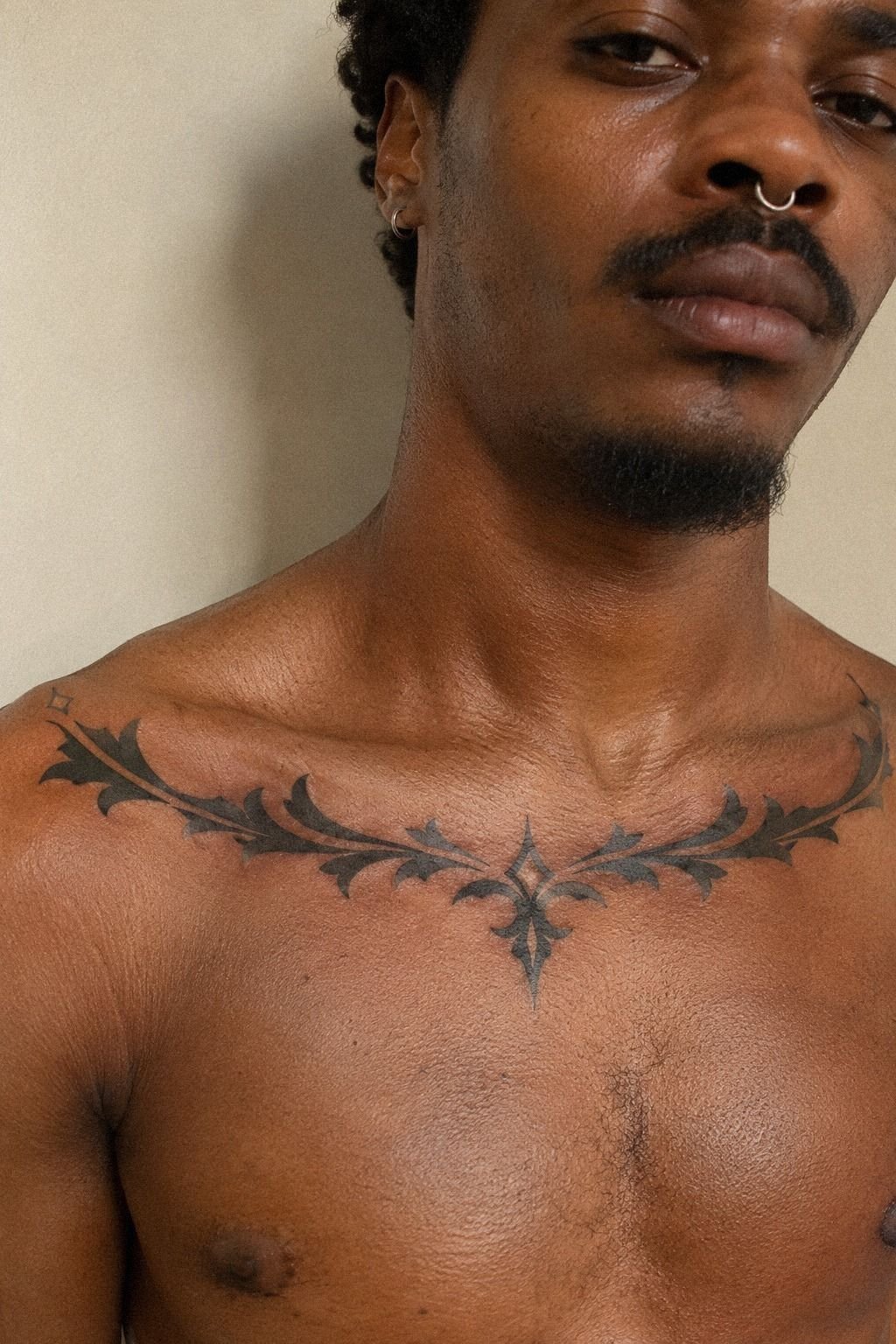
A symbolic collarbone ornament can follow the body’s natural horizontal line while keeping the center slightly asymmetric. Strong shapes and open spacing can create a meaningful, elegant result.
Your artist should place the stencil while your shoulders are relaxed. Collarbone ornamental placement can shift if you lift your arms, so check it standing naturally and with your posture at rest.
I’d rather see a simpler motif that follows the collarbone than a detailed piece that pulls toward the throat. A crescent, eye, sunburst, or sacred mark can hold the meaning.
Consider using two different side flourishes if you want the tattoo to feel personal rather than mechanically mirrored. The design can stay balanced without looking perfectly identical on both sides.
The collarbone can be sensitive because the skin sits close to bone. Shorter sessions may make the experience easier, especially if the ornament includes dense black sections.
If you’re choosing between symbolic and abstract work, compare these abstract blackwork tattoo references. Save the examples that make you feel something before you can name why.
This design is expressive without being loud. It’s an elegant choice for a tattoo that carries meaning close to the heart. Ask whether the added detail offers enough value for the cost.
The Decision I’d Make Before Booking
I’ve learned that ornamental blackwork succeeds or fails before the appointment begins. The strongest designs aren’t simply intricate. They have a readable silhouette, sensible scale, and enough open skin for the eye to understand the pattern.
When I look at a portfolio, I’m checking healed work first. Fresh black can make almost any design look sharper than it will later. Healed blackwork results tell me much more about the artist’s value.
I’d also decide whether I want the tattoo to be private, visible, or flexible. A thigh or upper back gives you space for a more expressive composition. A wrist or neck makes the design part of your daily presentation.
Neither choice is more meaningful. They simply ask different things from you. Your placement choice should match how often you want to explain yourself.
Before you book, compare this ornamental tattoo ideas guide with portfolios from artists who work at your preferred scale. A clear comparison can protect your budget.
The Meaning Comes Before the Ornament
Ornamental details can look impressive, but they shouldn’t hide the reason you want the tattoo. Start with the feeling, memory, belief, or person you want the design to carry.
A personal symbol doesn’t need to be obvious. Meaningful tattoo symbolism can stay private. A thorn, crescent, moth, or serpent may matter to you without needing a caption.
I like tattoos that offer a quiet second reading. The first impression might be striking. The deeper meaning appears only when you choose to share it.
That balance feels empowering. It lets the design stand on its own while keeping your story yours.
What I Check Before Approving Placement
I check the stencil while standing, sitting, turning, and relaxing. Skin shifts. Shoulders drop.
Knees bend. Placement stencil checks catch problems before ink makes them permanent.
I also ask how the tattoo will look with normal clothing. That matters for wrists, necks, collarbones, and hands. A visible design may be worth it, but you should choose that visibility intentionally.
Sun exposure matters too. Areas that see more sun may need more care over time. Your artist can explain how placement affects aging and touch-up needs.
If the tattoo includes a long vertical shape, I check its vertical alignment from both sides. If it follows a joint, I check it while moving. These small decisions often matter more than one extra ornamental detail.
How I Think About Cost, Budget, and Value
The cost depends on the artist, region, size, placement, and session length. Typical US reference points look like this:
I wouldn’t choose the cheapest artist for a detailed sternum or back panel. A polished portfolio, clean studio practices, and healed portfolio quality matter more than a bargain.
The lowest quote isn’t always the best value. A rushed design may lead to touch-up costs, regret, or a difficult cover-up later. Ask what the price includes before you compare artists.
A small tattoo can still cost more than expected if the artist has a high minimum or the placement needs extra care. That’s normal. The useful question is whether the result feels worth it to you.
If you’re comparing symbolic directions, browse blackwork tattoo ideas before requesting a quote. Clear references help an artist give you a more honest estimate.
What I’d Bring to the Consultation
I’d bring three to five references, not a folder of fifty. Too many examples can blur the idea. Consultation reference images should show line weight, scale, placement, and the mood you want.
I’d also bring one sentence about the meaning. It doesn’t need to be poetic. “I want this to represent endurance” gives your artist useful direction.
Tell the artist what you don’t want, too. Maybe you dislike dense shading, perfect symmetry, tiny details, or a trendy symbol. Clear design limits can improve the result.
Ask how the tattoo may change as it heals. A good artist should explain saturation, negative space, line weight, and likely touch-ups in plain language.
That conversation is part of the value. You’re not only buying ink.
You’re buying artist judgment, preparation, and a design adapted to your body. That matters!
The Final Check Before I Commit
Before I commit, I ask whether the silhouette test works without explanation. If the tattoo only looks interesting when every detail is described, the design may need editing.
I check whether the darkest areas have a purpose. Black saturation planning can make a tattoo bold, but random dark patches can flatten the composition.
I check whether the smallest details deserve their space. If they won’t remain readable, I’d remove them. A crisp, understated tattoo can age better than a crowded one.
I check the budget one more time. The quote should feel manageable without forcing you to cut corners on the artist or aftercare.
Then I wait. If I still want the design after a few weeks, it’s more likely to feel personal than impulsive. That patience can be surprisingly valuable!
The Questions I Get Asked Most
How much does an Ornamental Blackwork Tattoo usually cost?
A typical US ornamental blackwork tattoo may cost about $100 to $300 for a small or medium piece. Shop minimums often sit around $50-$100, with hourly rates around $100-$250. The final tattoo price depends on size, placement, artist, and region, so request a quote after sharing your reference.
Are Ornamental Blackwork Tattoos a good idea for a first tattoo?
Yes, especially when you choose a tolerable placement and a design with clear spacing. An understated forearm, thigh, or shoulder piece can feel manageable, while a sternum or rib design may feel more intense. A meaningful symbol keeps the choice personal, even when the tattoo is small.
How do I choose a tattoo artist for Ornamental Blackwork Tattoo?
Review healed portfolio photos, consistent linework, clean studio practices, and examples close to your desired scale. You’ll want an artist who understands black saturation, negative space, and ornamental symmetry. Specialized artist experience matters more than a trendy flash sheet, so ask how the artist approaches your placement.
How much do Ornamental Blackwork Tattoos hurt?
Pain varies by person and placement. Ribs, feet, hands, and sternum are often more sensitive because they sit near bone or experience frequent movement.
Forearms, thighs, and shoulders are usually more tolerable. Session comfort may change over bone, but breaks and shorter passes can help.
How long does an Ornamental Blackwork Tattoo take to heal?
The surface usually heals in about 2-3 weeks, while complete healing can take about 2-3 months. Follow your artist’s instructions, wash gently, moisturize as directed, and avoid swimming and strong sun during early healing. Good aftercare protects crisp lines while the skin settles.
What’s the best placement for Ornamental Blackwork Tattoo?
Forearms, thighs, and shoulders are practical choices because they offer visibility, workable skin, and generally more tolerable sessions. A back or upper arm gives you more space for a larger composition. Placement and aging are connected, so consider sun exposure and movement.
Where I’d Start First
If I had to pick one, I’d start with the gothic moth shoulder composition. Its silhouette stays readable, the shoulder gives the wings natural movement, and the blackwork can remain bold without becoming a solid block.
I’d save the moth idea alongside these blackwork tattoo ideas and compare the scale after a few weeks. If the symbol still feels right, request a quote from an artist with healed ornamental work.
The best choice isn’t always the largest or most ornate. It’s the one that still feels meaningful when the trend cycle moves on.
Your tattoo can be stylish, personal, and unmistakably yours. Worth waiting for!