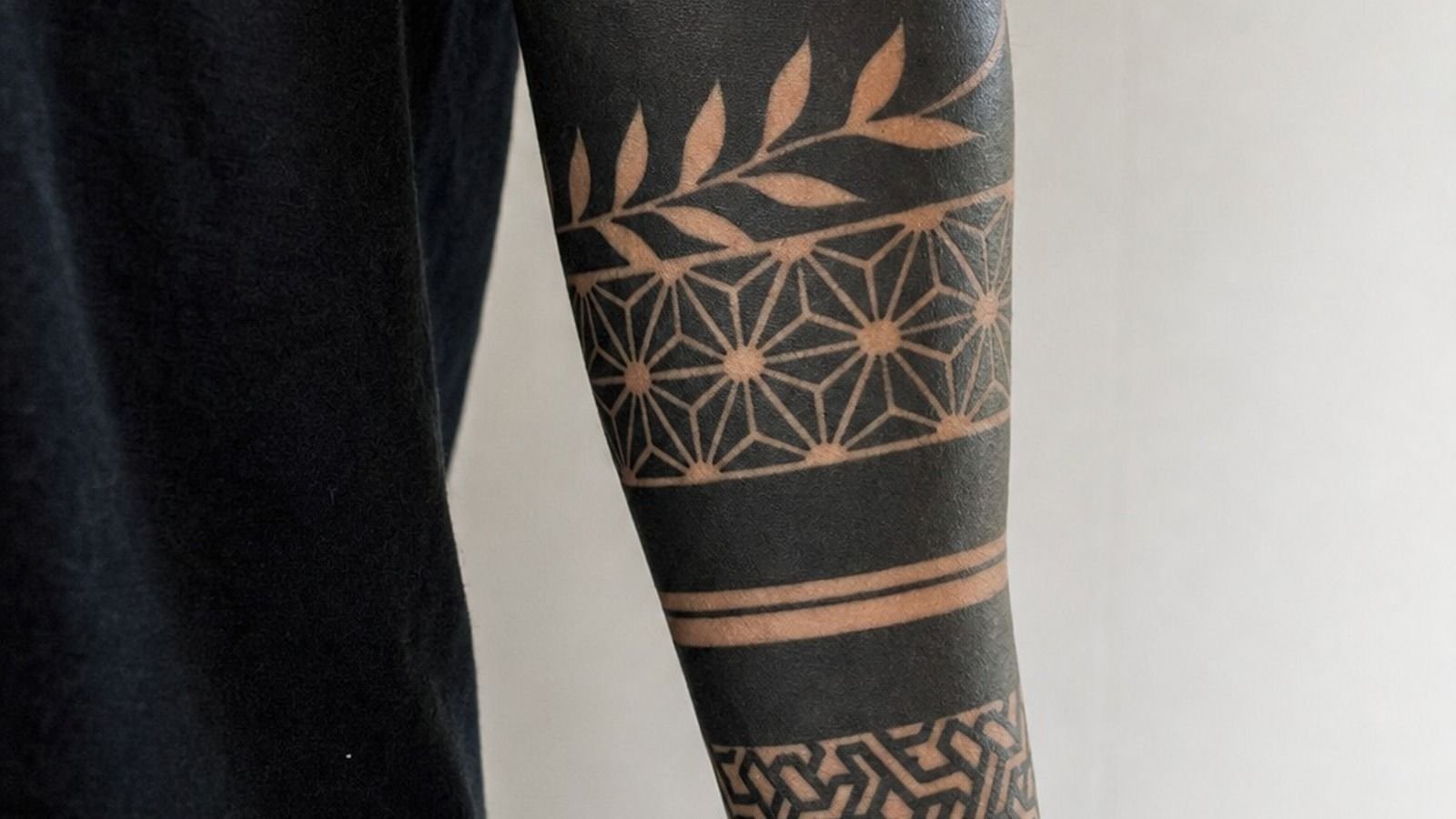
I talked my first blackwork client out of a bigger piece eight years ago because I didn’t trust solid black to age. Then I watched a ten-year-old blackwork sleeve walk back into my shop looking crispier than half the fresh fine-line work on my feed. Bold will hold. That’s the whole story, and these 19 ideas are how I learned it.
Here’s what it looked like before
My early portfolio was timid. Thin outlines, scratchy grey shading, little ornamental pieces that looked great on Instagram day one and turned to soup by year two.
I was packing black like I was apologizing for it. No saturation plan, no flow with the body, no thought for what the piece would read like from across the room in a decade.
If you’re staring at a blank forearm right now wondering whether blackwork is “too much,” I was the artist version of you.
- How I design ornamental blackwork around body curves
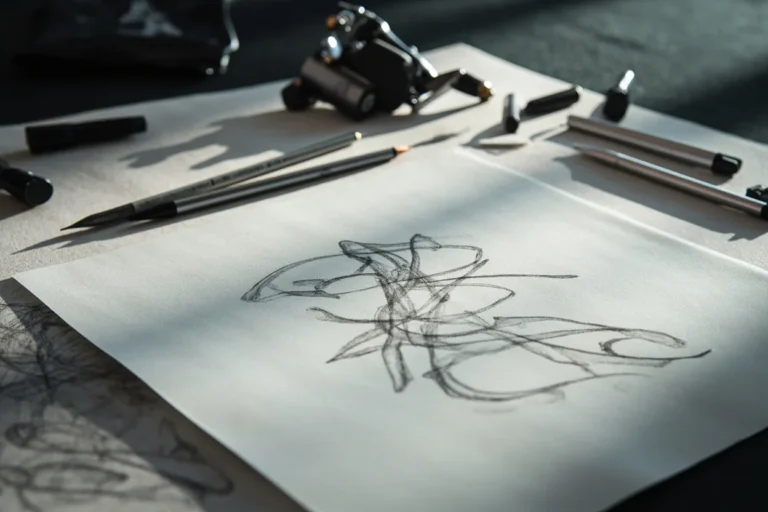
- Why I sketch geometric blackwork stencils directly on skin
- The first full blackwork sleeve I mapped in sections
- How I use negative space to save a blackwork design
- Why I choose thick mag needles for solid black saturation
- The blackwork cover-up that hid a faded tribal band
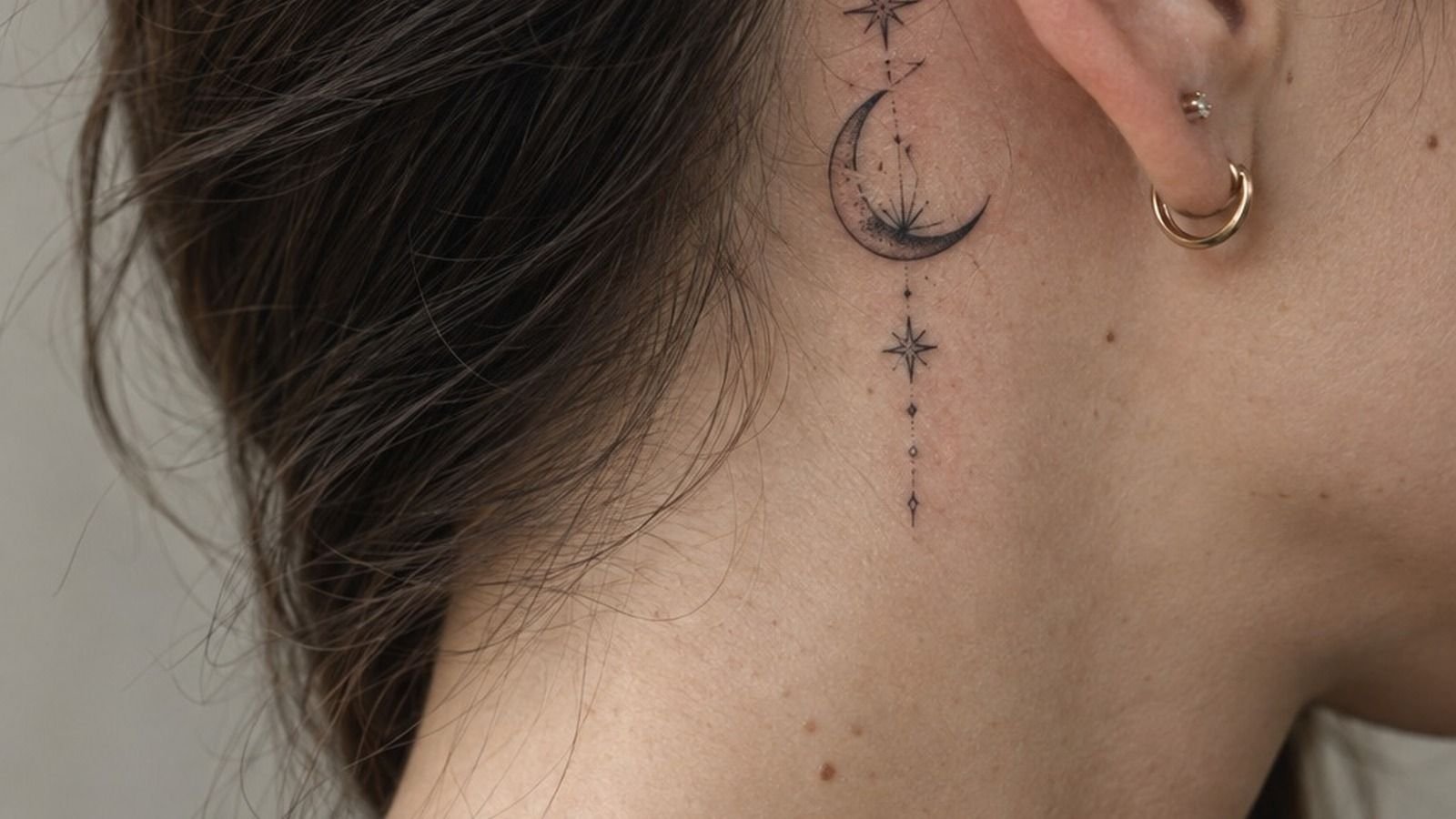
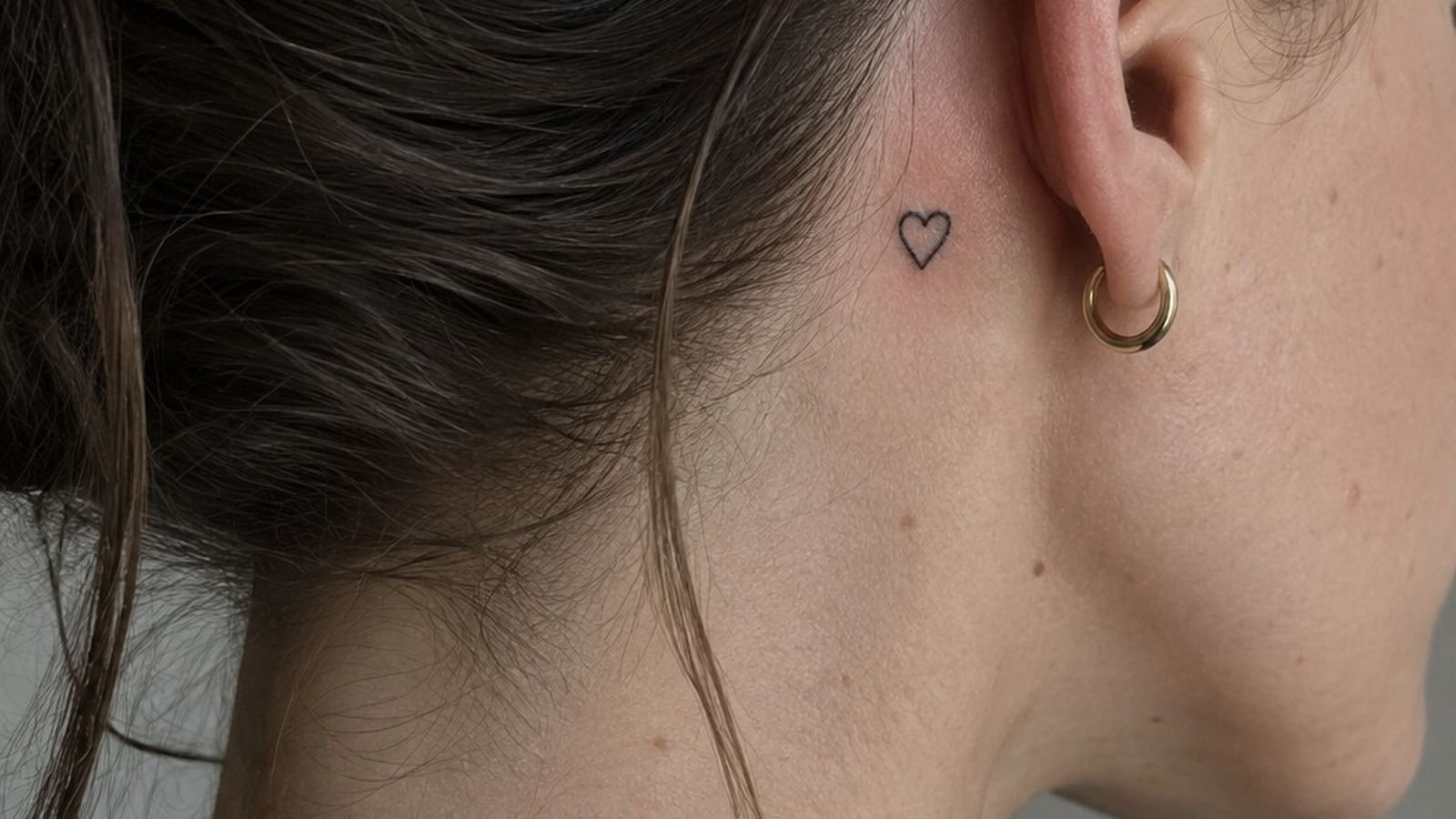
- How I place small blackwork symbols for aging clients
- Why I refuse blackout work over raised scar tissue
- The brushstroke blackwork rose I adapted from ink painting
- How I balance dotwork texture inside heavy black shapes
- The sacred geometry chest panel that took three sessions
- Why I photograph blackwork healed before adding it online
- How I price a full blackwork sleeve against patchwork pieces
- The animal blackwork portrait that used white ink highlights
- Why I advise against hand blackwork for first tattoos
- How I adapt Japanese koi into modern blackwork sleeves
- The rib blackwork placement I warn nervous clients about
- What solid black healing taught me about aftercare timing
- How I match clients with blackwork artists whose blacks last
1How I design ornamental blackwork around body curves
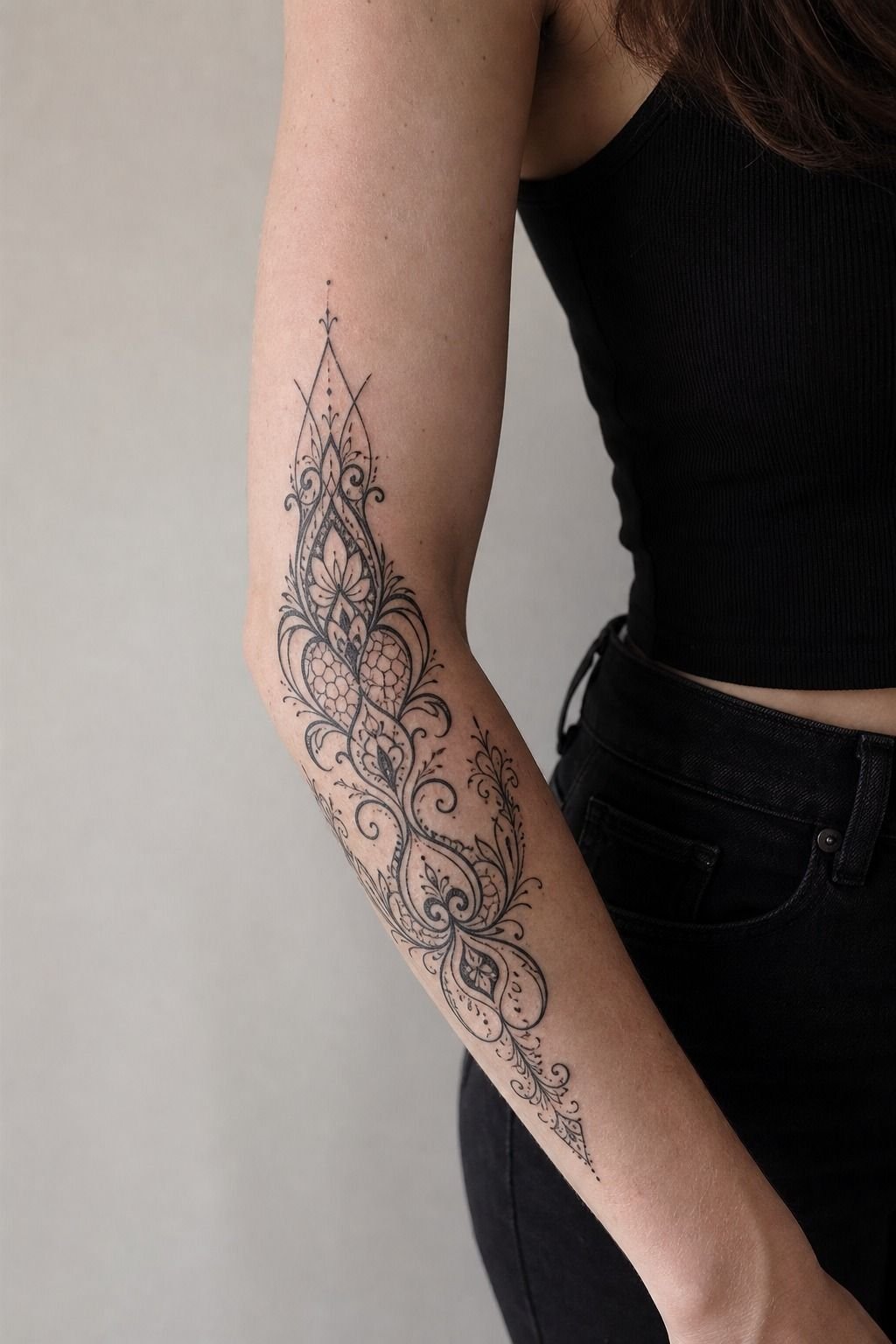
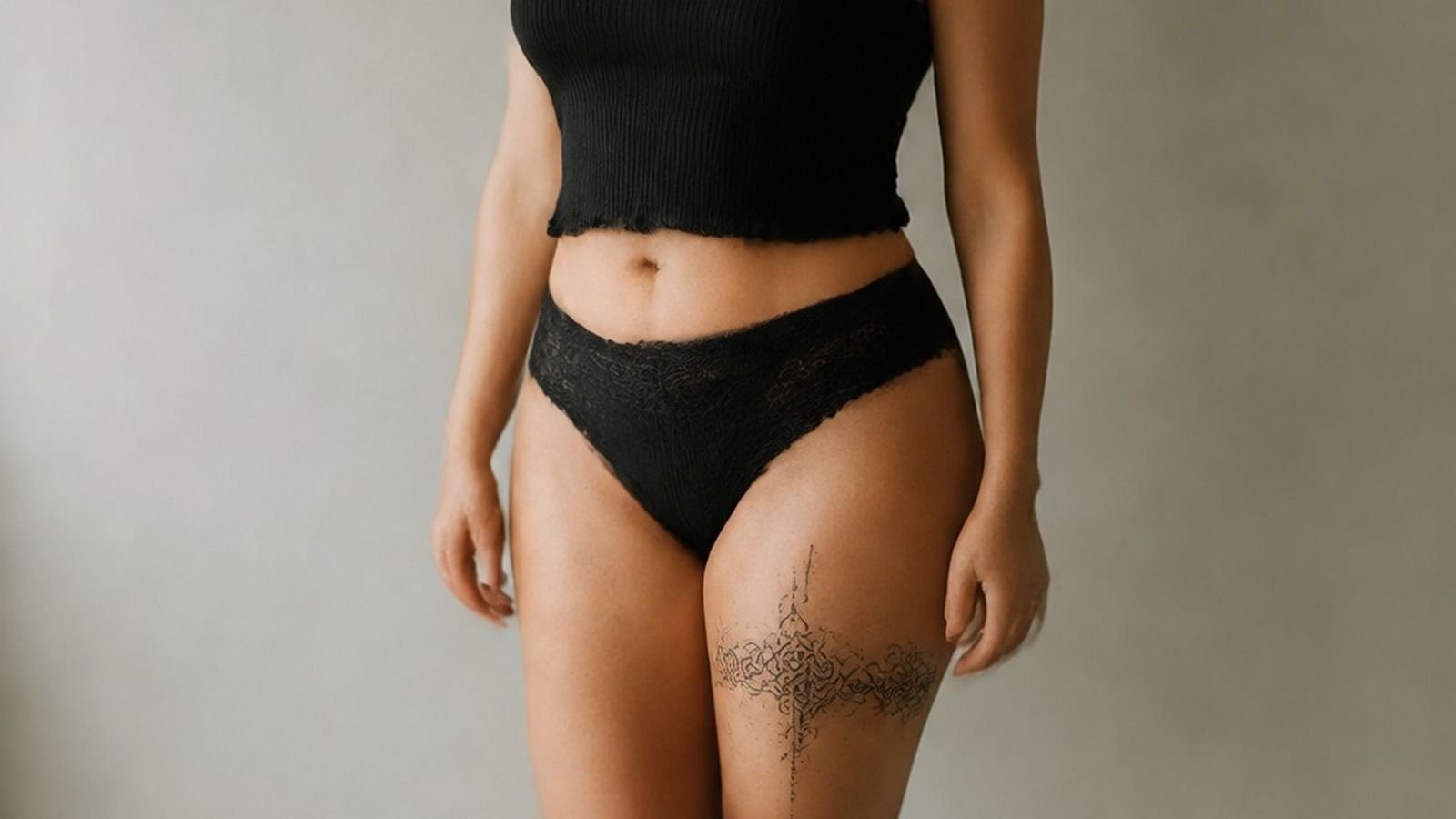
Ornamental blackwork lives or dies on flow. A mandala that looks perfect on flat paper goes warped and sad the second it wraps a forearm, because your arm isn’t a canvas, it’s a cylinder with a bend in it.
So I design on the body, not for it. I’ll sit with a client, marker in hand, and draw the ornamental pattern directly around their forearm curve, letting the lines follow the muscle.
What you’ll notice in a good ornamental piece is that the pattern stretches where the arm twists. That’s not a flaw, that’s the design breathing.
My rule, and I call it The Flow-First Rule, is simple: the body picks the geometry, I just ink it. If your artist only works from flat printouts, ask why.
2Why I sketch geometric blackwork stencils directly on skin
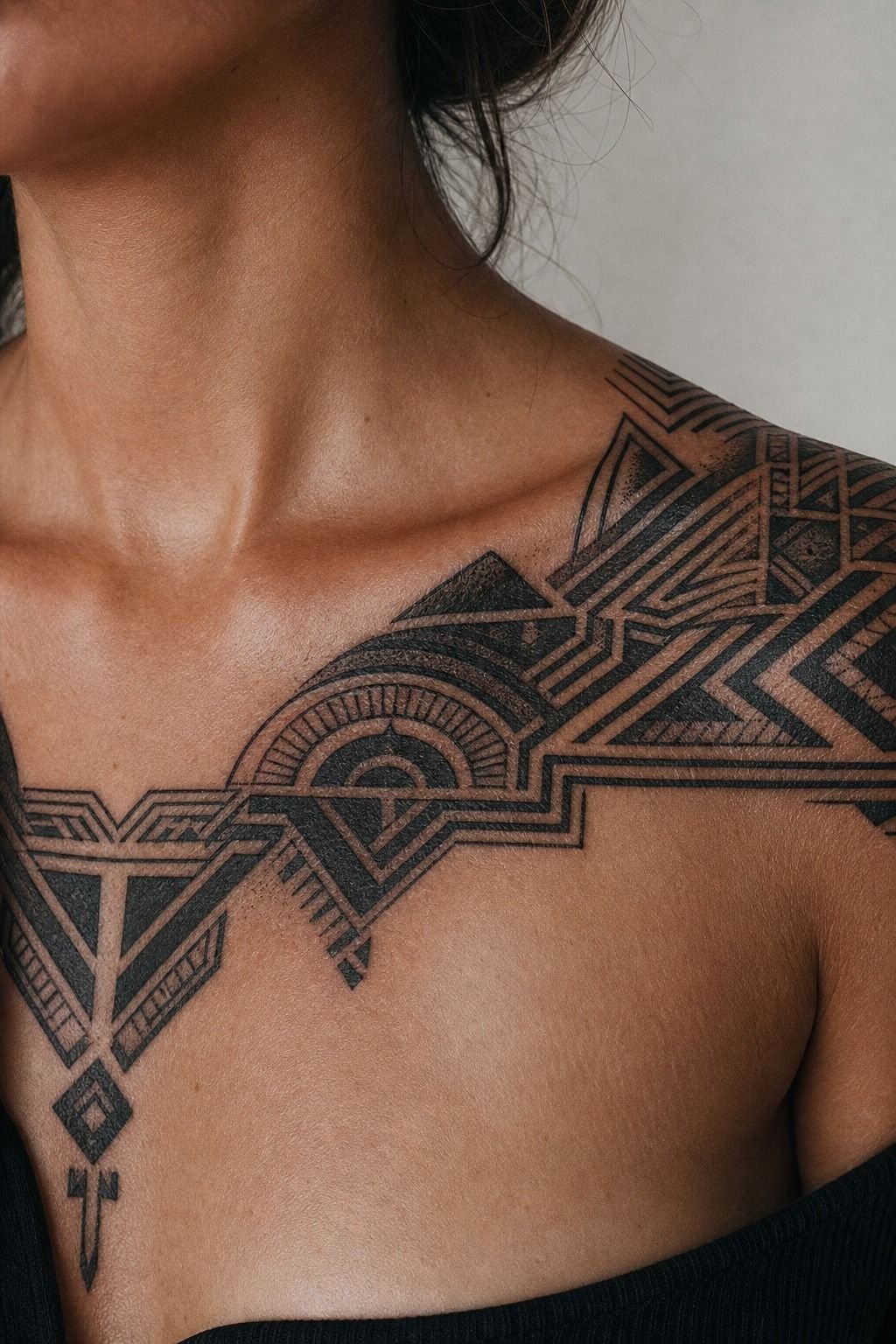
Geometric work is unforgiving. A hexagon off by two millimeters reads wrong forever, and collarbone skin shifts between standing and sitting more than you’d think.
That’s why I draw geometric stencils straight on the skin with surgical markers before committing to a transfer. You’ll catch the distortion while it’s still erasable.
I learned this after redoing a sacred geometry piece for free because the paper stencil pulled the pattern off-axis on the client’s collarbone. My mistake, my afternoon gone. If you’re planning geometric blackwork, budget an extra 30 minutes for the skin sketch.
Any artist who won’t do that step is gambling with your body.
3The first full blackwork sleeve I mapped in sections
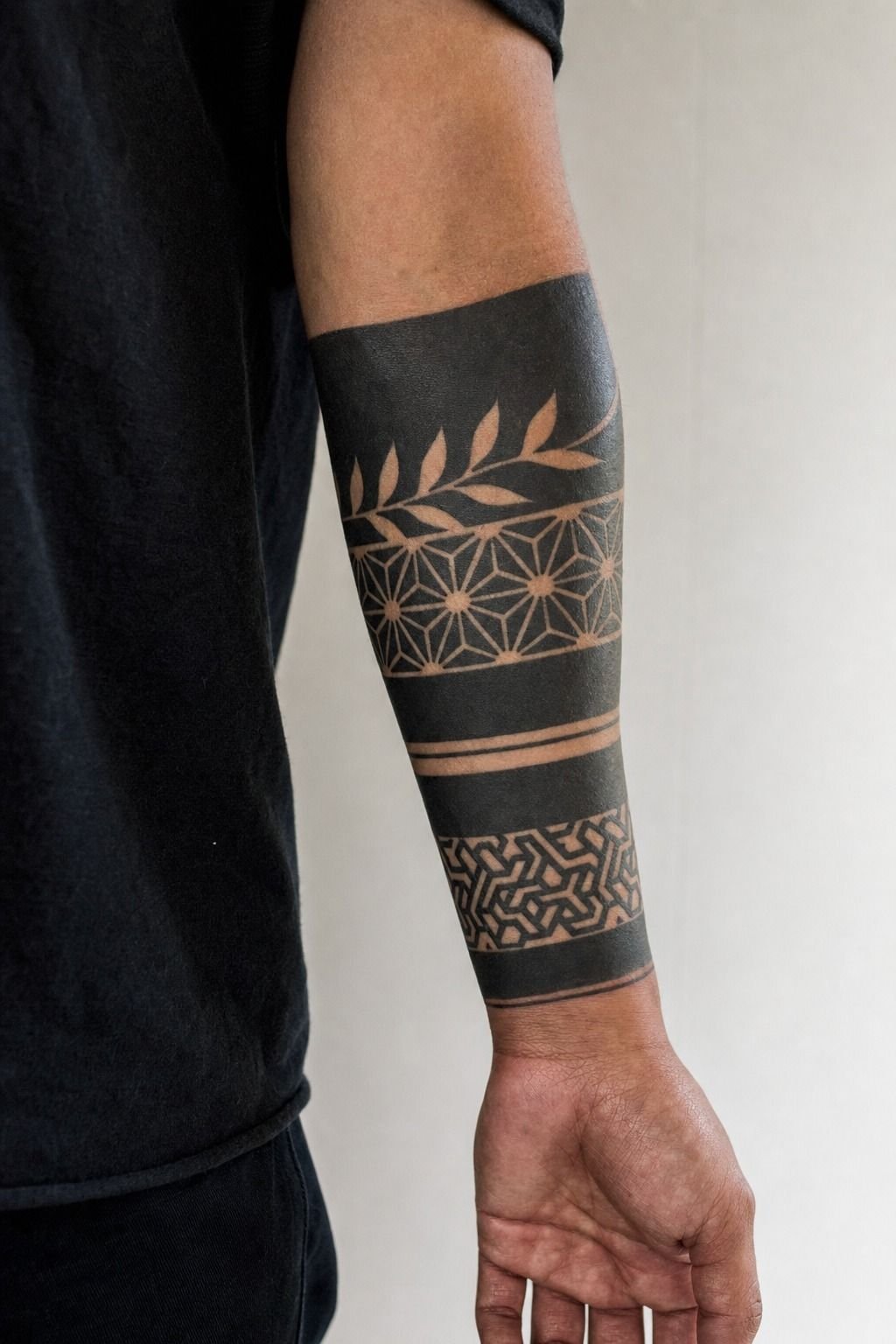
A full sleeve isn’t one tattoo, it’s five or six that have to shake hands. My first full blackwork sleeve, I mapped the whole arm in zones on tracing paper first: shoulder cap, outer bicep, inner bicep, elbow ditch, forearm, wrist. Each zone got its own session, roughly 3 to 4 hours each, and the elbow ditch was as spicy as everyone says.
The client’s arm, medium olive skin, healed beautifully because we never overworked any single area. If you’re pricing a sleeve, think in sessions, not in one scary total.
Our custom tattoo design process walks through exactly how that mapping conversation should go with your artist.
4How I use negative space to save a blackwork design
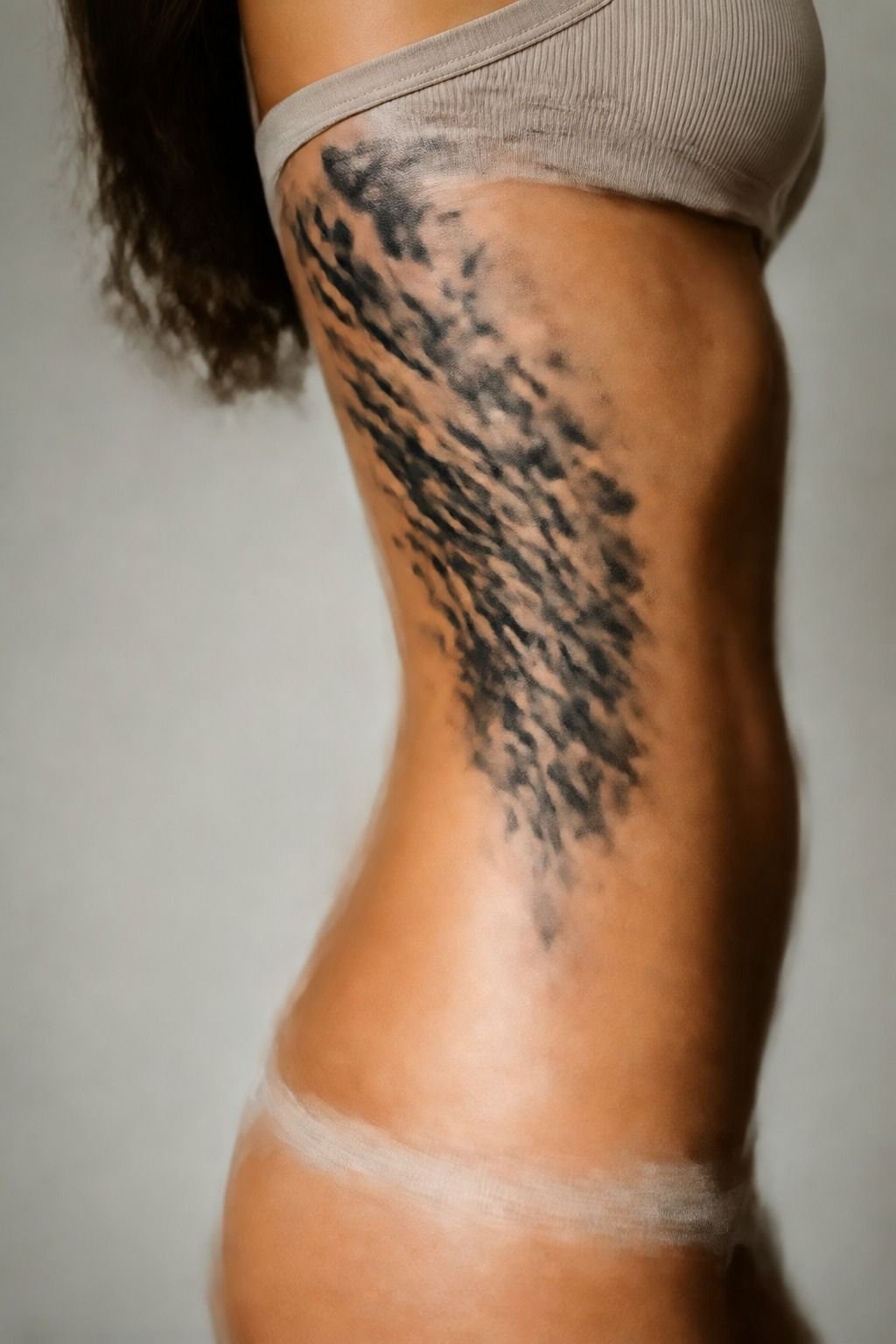
Heavy black without breathing room heals into a dark blob.
5Why I choose thick mag needles for solid black saturation
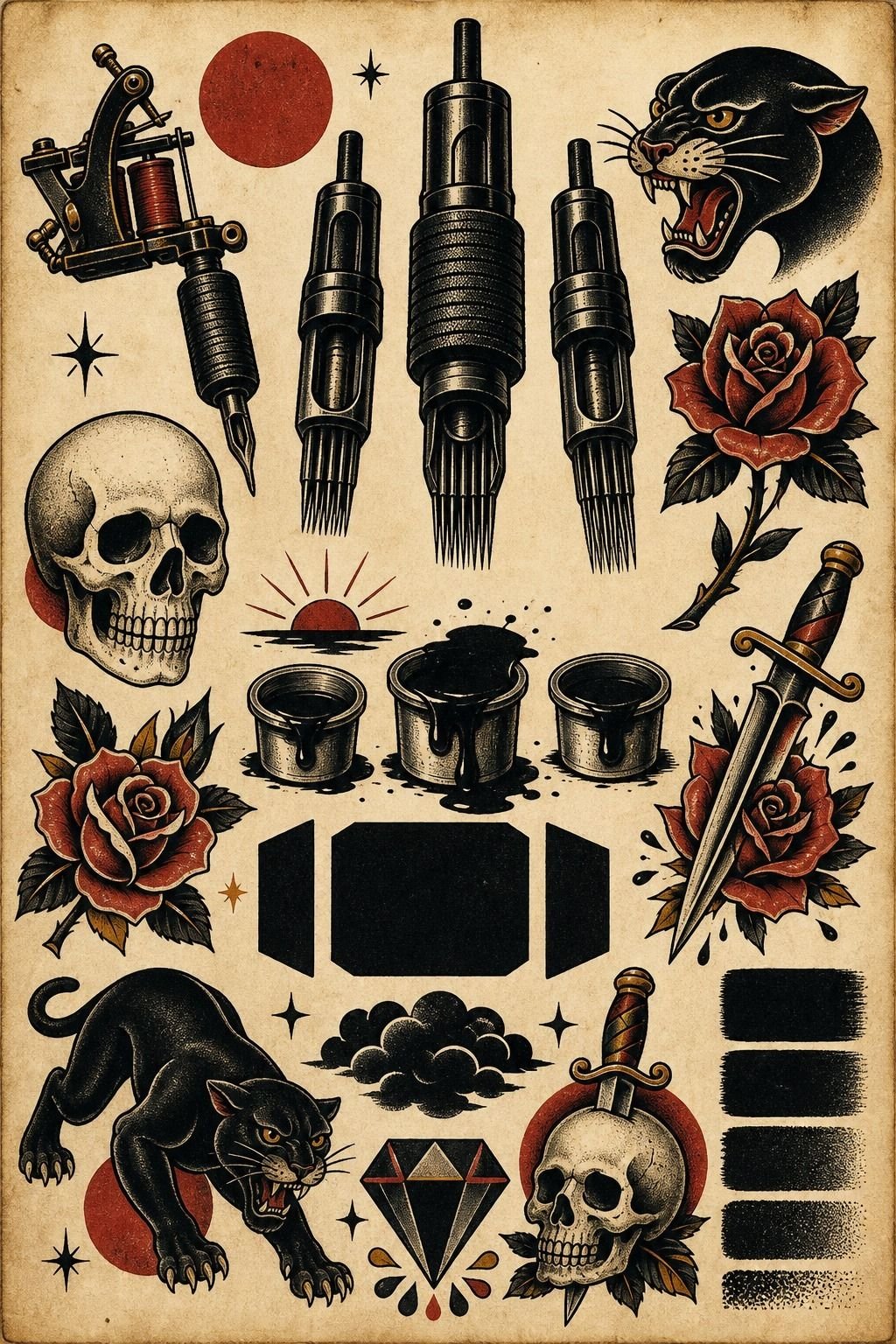
Solid black saturation comes from needle choice, not from going over the same spot fifty times. I run curved magnum needles, usually a 15 or 23 mag, for big black fills because they push ink in one solid pass instead of scratching at it.
Scratch at black and you overwork the skin, and overworked skin heals patchy and scarred. The flash sheet approach matters here too: good blackwork flash is designed around what a mag can fill cleanly.
If you’re comparing artists, ask what they pack black with. An artist who answers instantly with a needle grouping has done this a thousand times.
One who hesitates, keep shopping.
6The blackwork cover-up that hid a faded tribal band
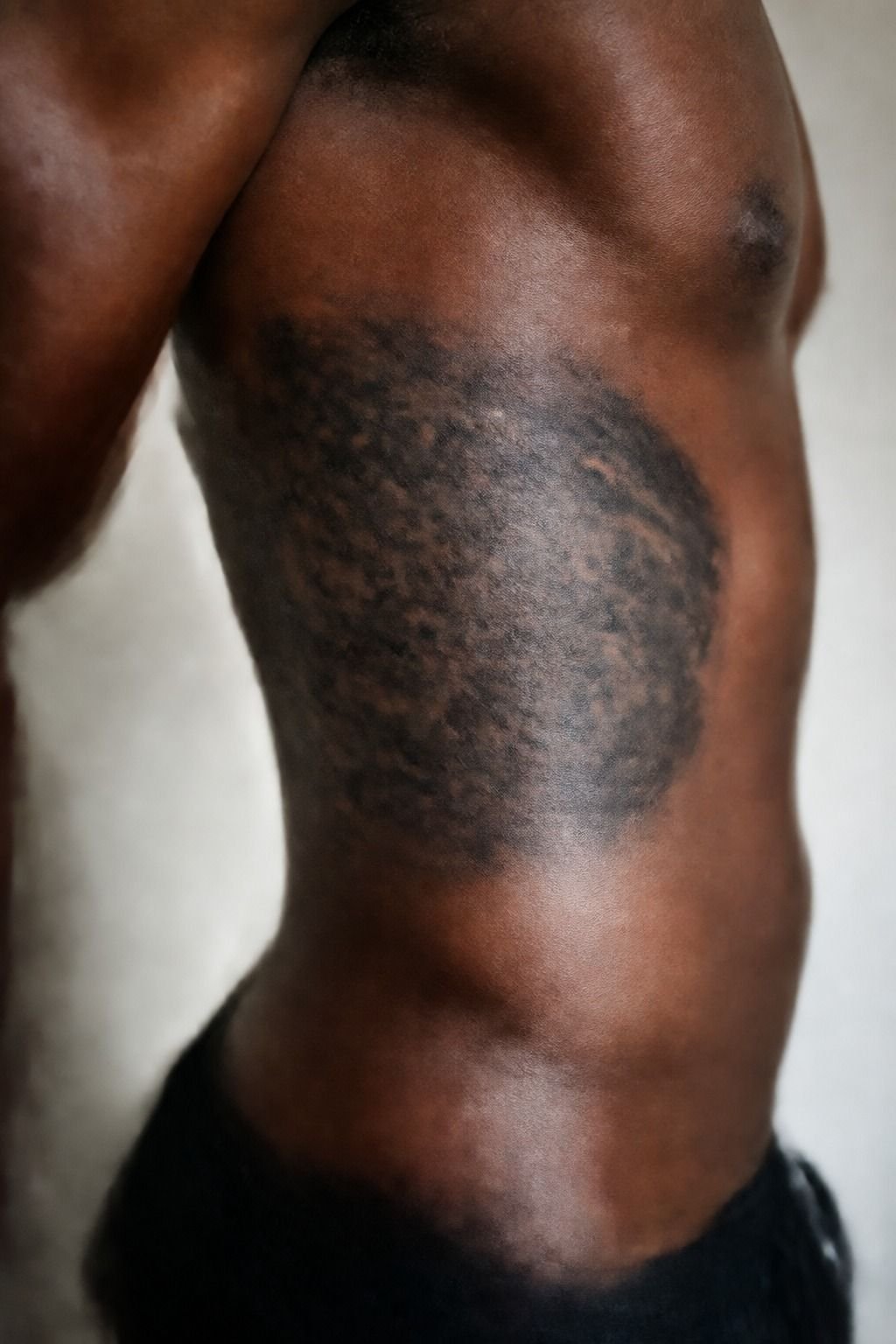
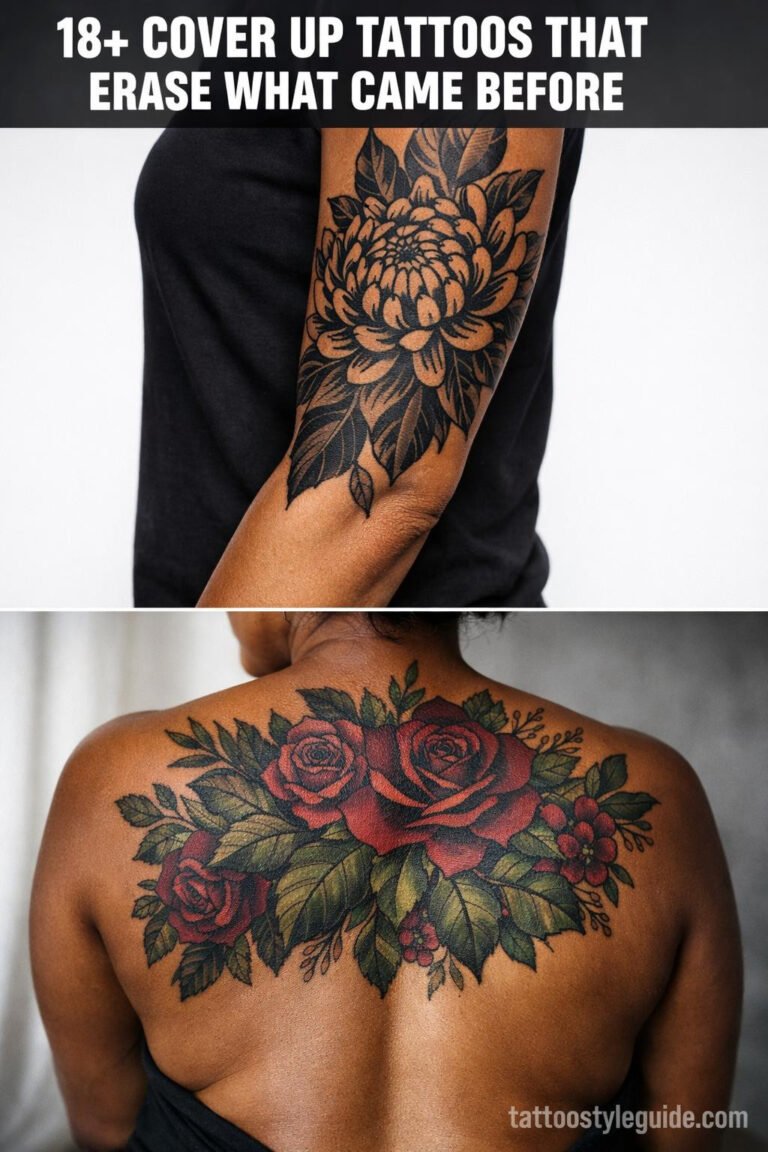
Cover-ups are where blackwork earns its reputation. A client came in with a faded 90s tribal armband, grey-green and blotchy, and wanted it gone without laser.
We designed a dense ornamental blackwork piece over it, and the old ink disappeared under fresh saturated black. One thing to know: on deep ebony skin like this client’s, fresh black reads softer at first and settles richer as it heals, which is normal, not a problem.
Cover-ups run bigger than the original by about 30 to 50 percent, so you’ll need the real estate. Check our tato design tattoo ideas page if you’re hunting cover-up-friendly styles.
7How I place small blackwork symbols for aging clients
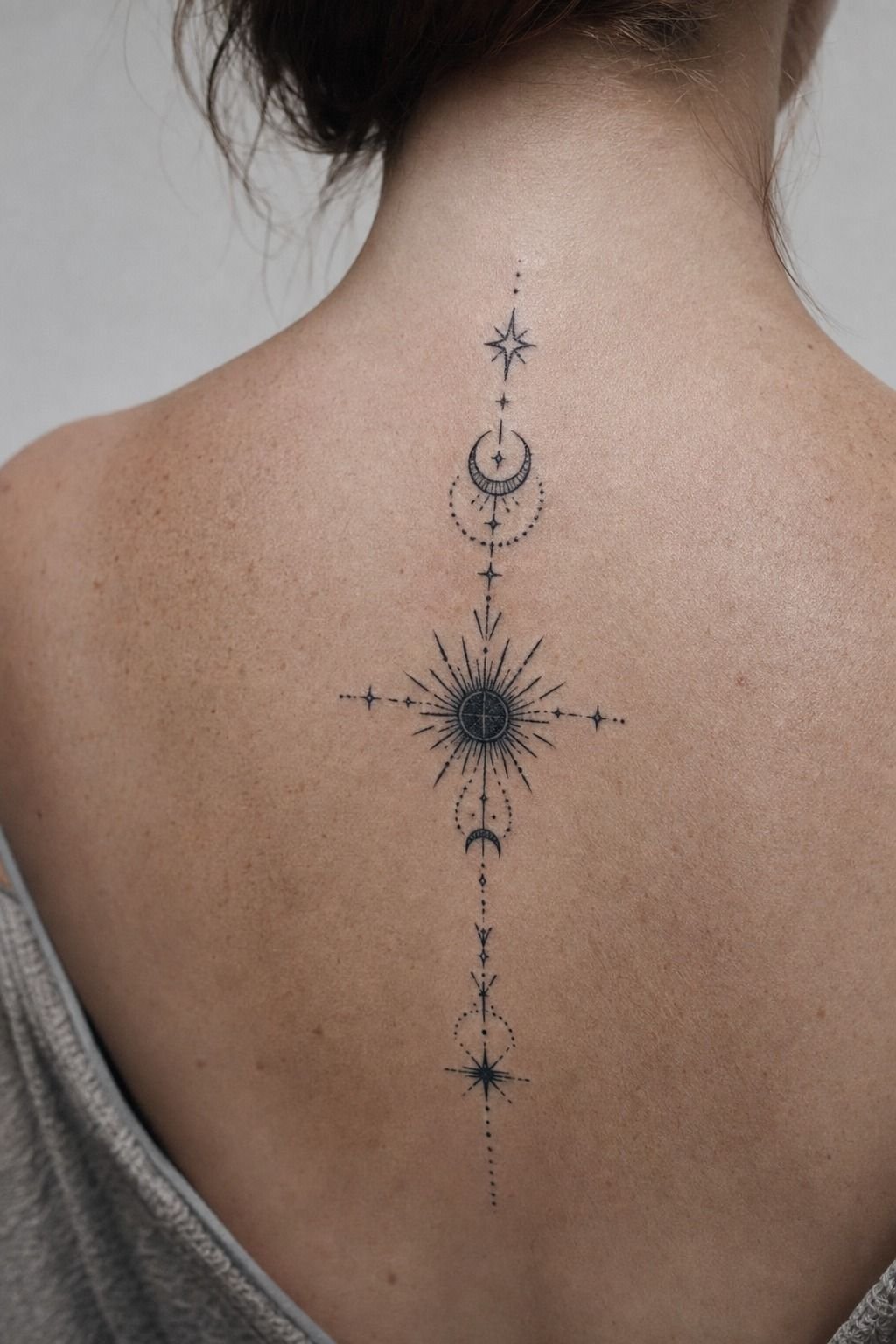
Small blackwork for older clients is a different game.
8Why I refuse blackout work over raised scar tissue
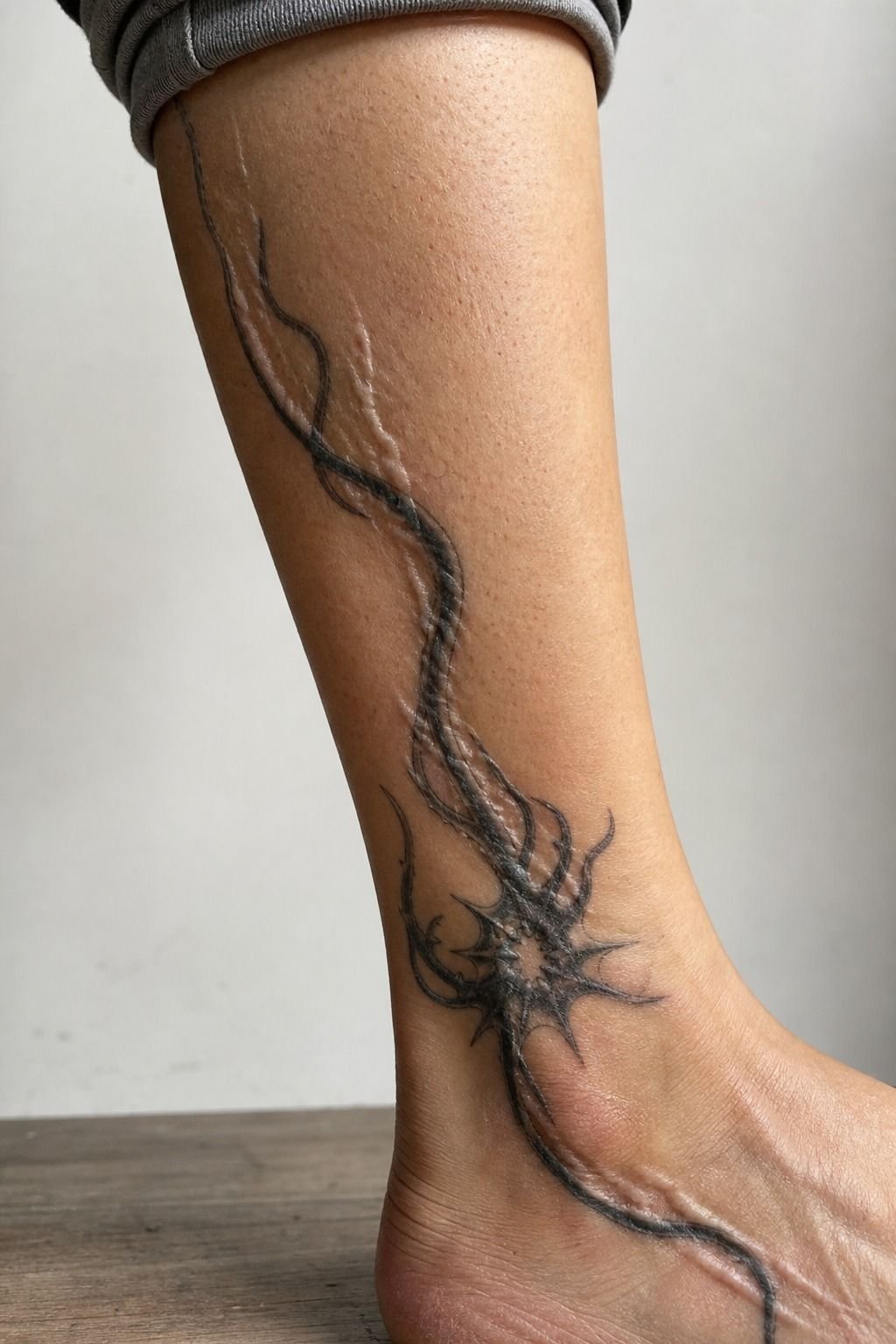
I’ll say it plainly: I won’t run heavy black over raised scars, and neither should anyone else. Scar tissue takes ink unpredictably, it can reject pigment or grab too much and blow out, and a blackout panel over keloid-prone skin is a healing nightmare. This ankle piece sits next to old scarring, and we designed around it instead of over it.
Flat, fully healed scars, at least a year or two old, are a maybe after an in-person consult. Raised or fresh scars are a no from me, every time.
If an artist shrugs and says they’ll “just pack it,” walk out. Your skin isn’t a test surface.

9The brushstroke blackwork rose I adapted from ink painting
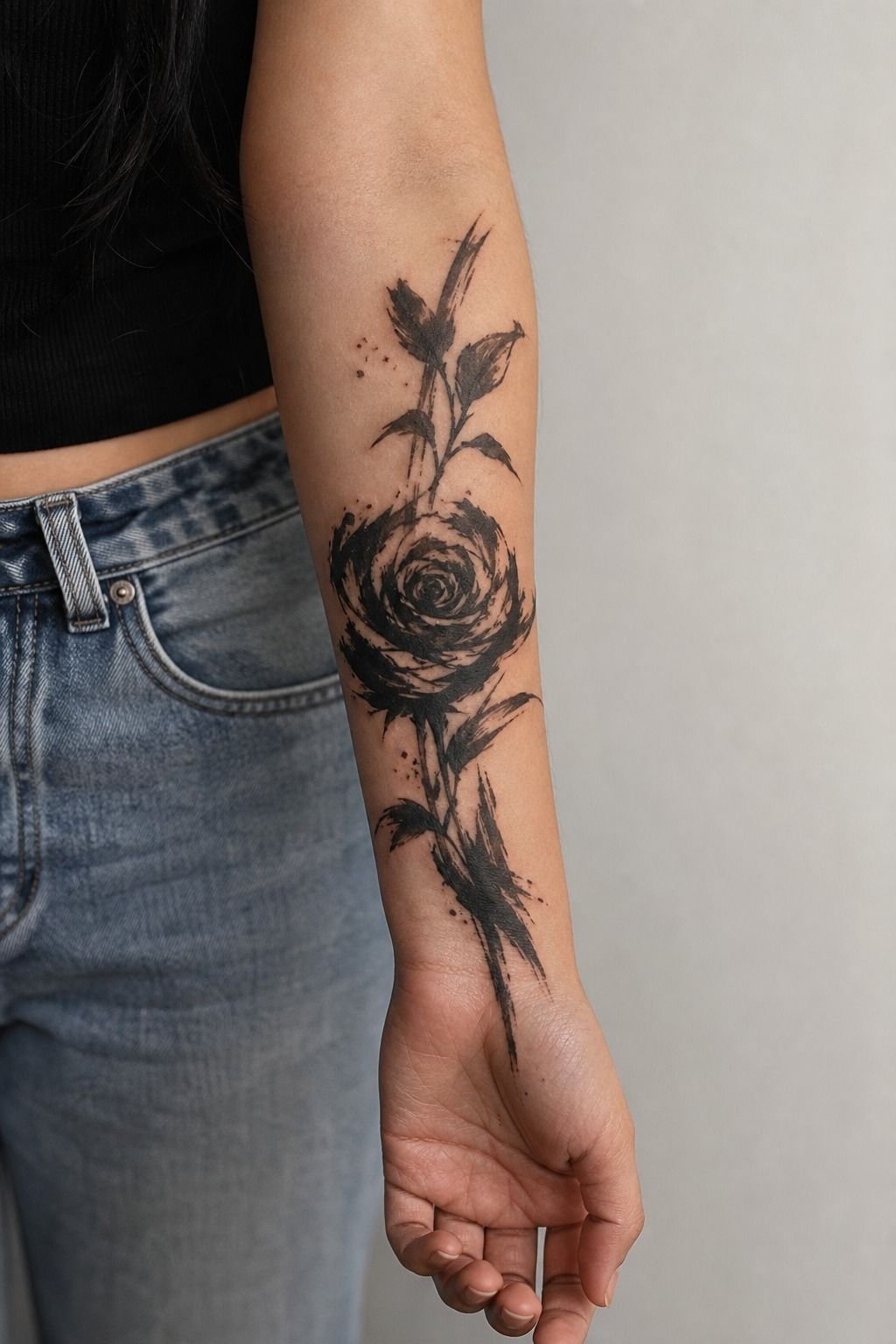
Brushstroke blackwork borrows from sumi-e ink painting: dry-brush texture, tapered strokes, ink that looks like it was laid down in one confident gesture. The move is that tattooing isn’t painting, so I fake the dry-brush effect with tight stipple fades at the stroke edges. This inner forearm rose flows with the arm because we angled the main stroke along the muscle line.
The emotional trigger for this client was her grandfather’s ink paintings, and she teared up at the stencil reveal, which never gets old. One warning: brushstroke edges need room.
Shrink this style too small and the texture heals flat and muddy.
10How I balance dotwork texture inside heavy black shapes
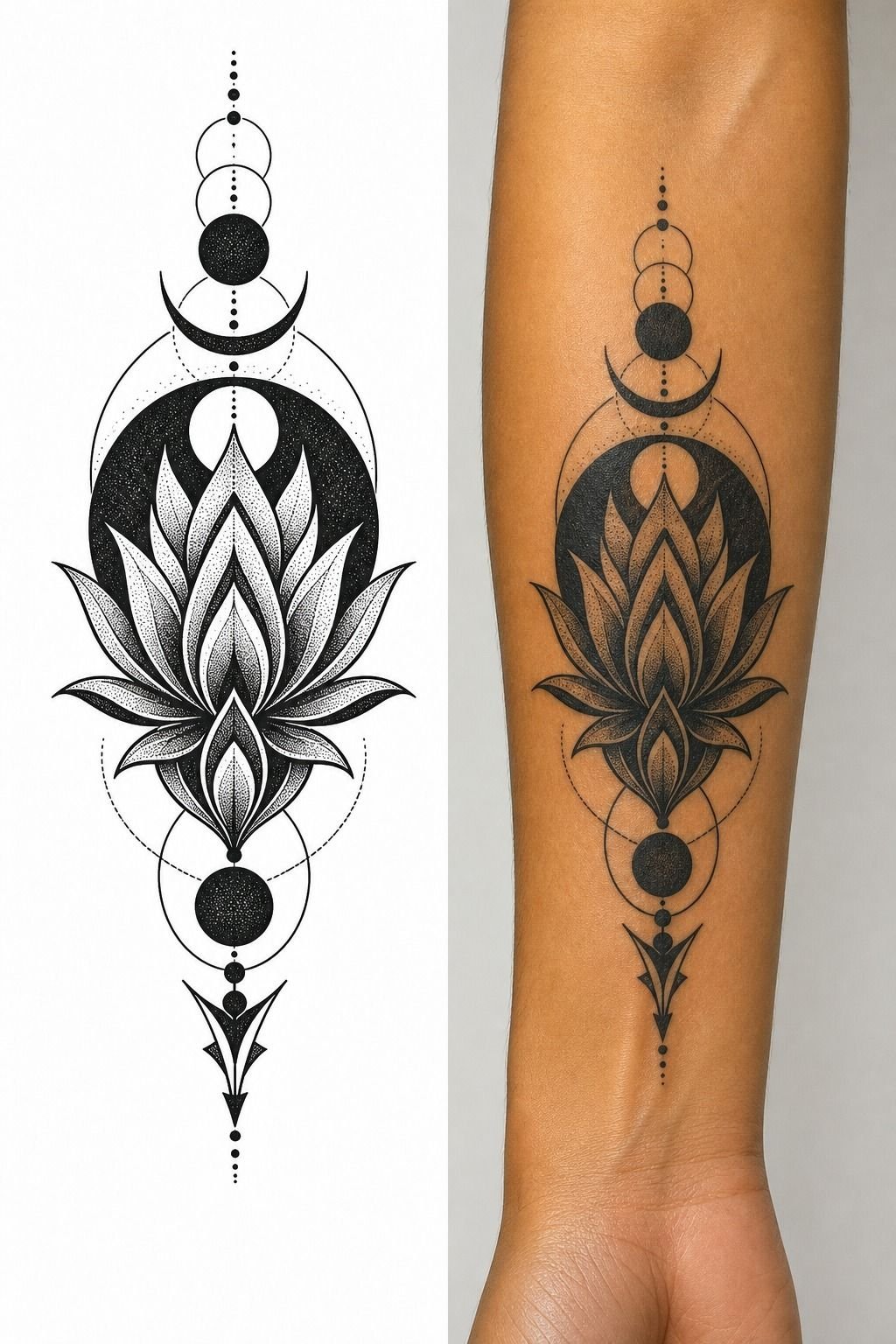
Dotwork next to solid black is a contrast problem. If your stipple is too light, it disappears against the fill; too dense, and the whole piece reads as one grey slab. I test the balance at stencil stage, exactly like this split image shows: paper version on the left, healed skin version on the right.
On skin, dots spread slightly, so I space them wider than feels right on paper. My working ratio is roughly 60 percent solid, 40 percent texture inside any large shape.
Pepper shading with a tight 3-round liner gives me the control I want. It’s slow. Budget the extra hour, it’s worth it.
11The sacred geometry chest panel that took three sessions
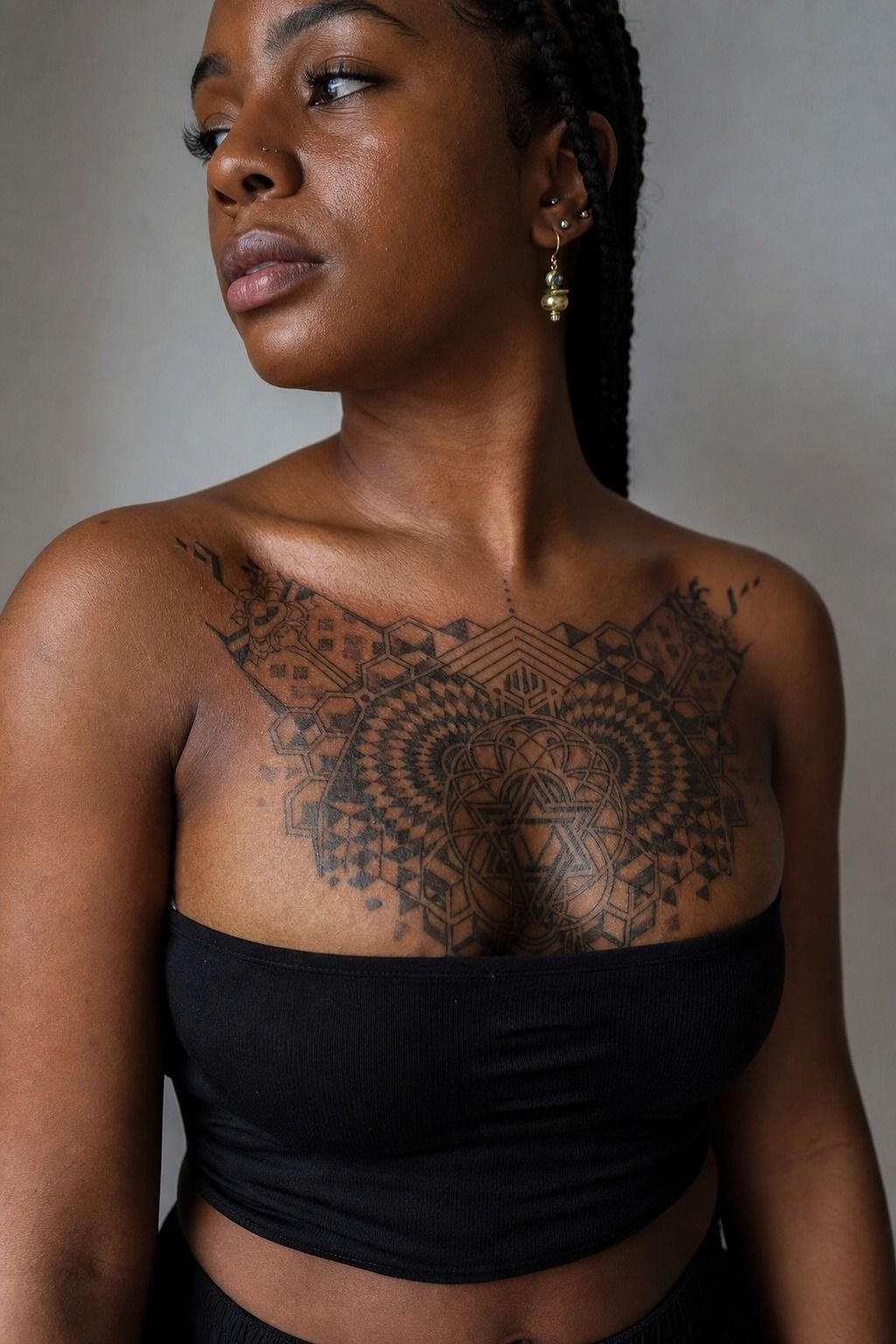
Chest panels are marathons. This sacred geometry piece ran three sessions, about 4 hours each, because the sternum and collarbones are bony and the client needed breaks.
Deep brown skin with warm undertones holds black beautifully, by the way, and the contrast on this healed piece is honestly some of my favorite work. We did linework first session, heavy fills second, dotwork and detail third. Spacing sessions 3 to 4 weeks apart lets each layer settle before you add stress to the area.
If your artist wants to do a full chest panel in one sitting, that’s not toughness, that’s bad planning. Tap out for five rather than pass out on the table.
12Why I photograph blackwork healed before adding it online
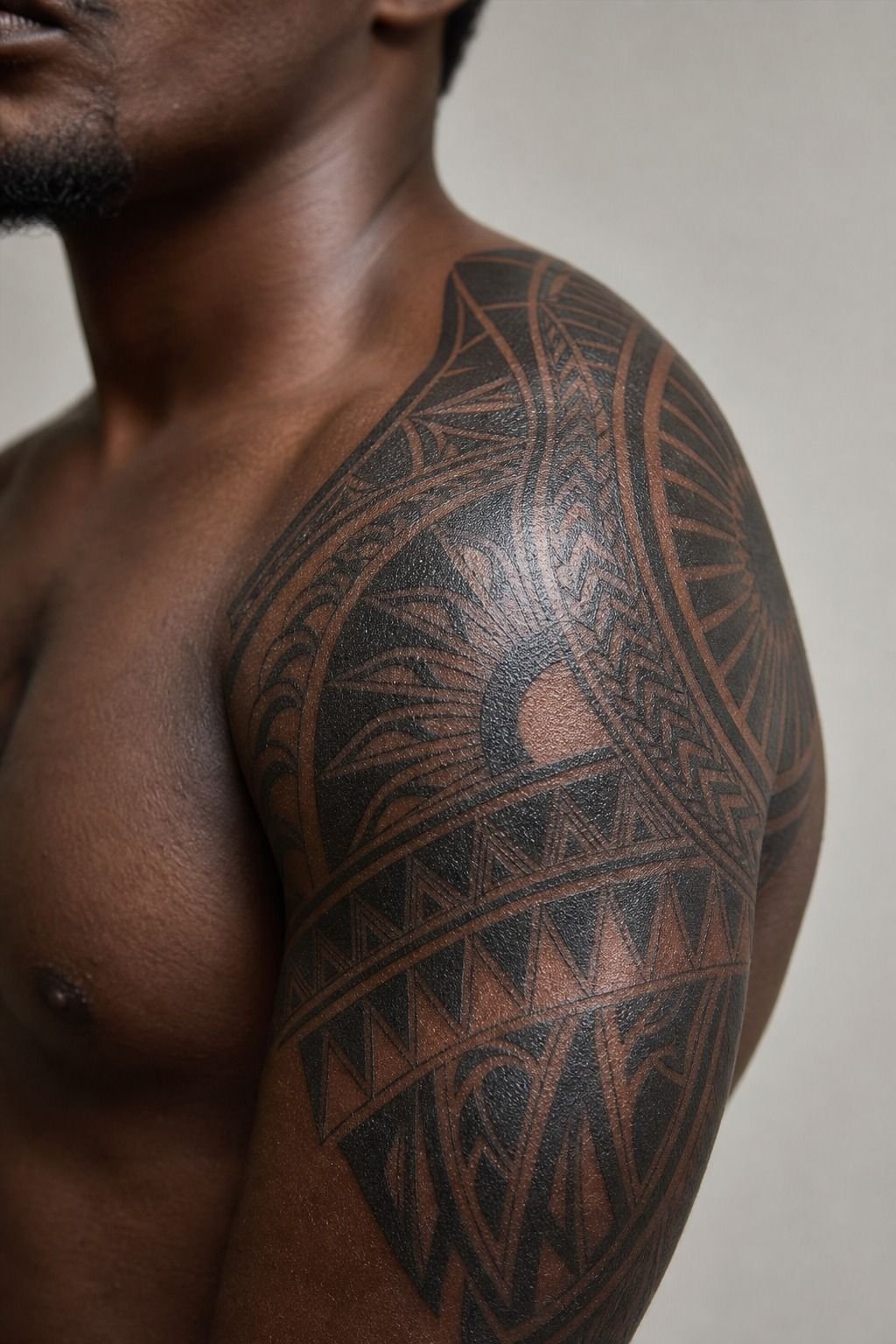
Fresh blackwork photographs like a dream: glossy, dark, dramatic. Healed blackwork tells the truth. That’s why nothing goes in my portfolio until I’ve shot it healed, at least 4 to 6 weeks out. This shoulder macro on deep ebony skin is a healed shot, and the saturated fill still reads velvety, not patchy.
Fresh photos hide sins: light spots, overworked patches, blown edges. Healed photos expose all of it.
My rule for clients shopping artists: scroll their feed and count healed photos versus fresh ones. If it’s all day-one glamour shots, you don’t know what their work actually looks like.
You’re buying the healed version.
13How I price a full blackwork sleeve against patchwork pieces
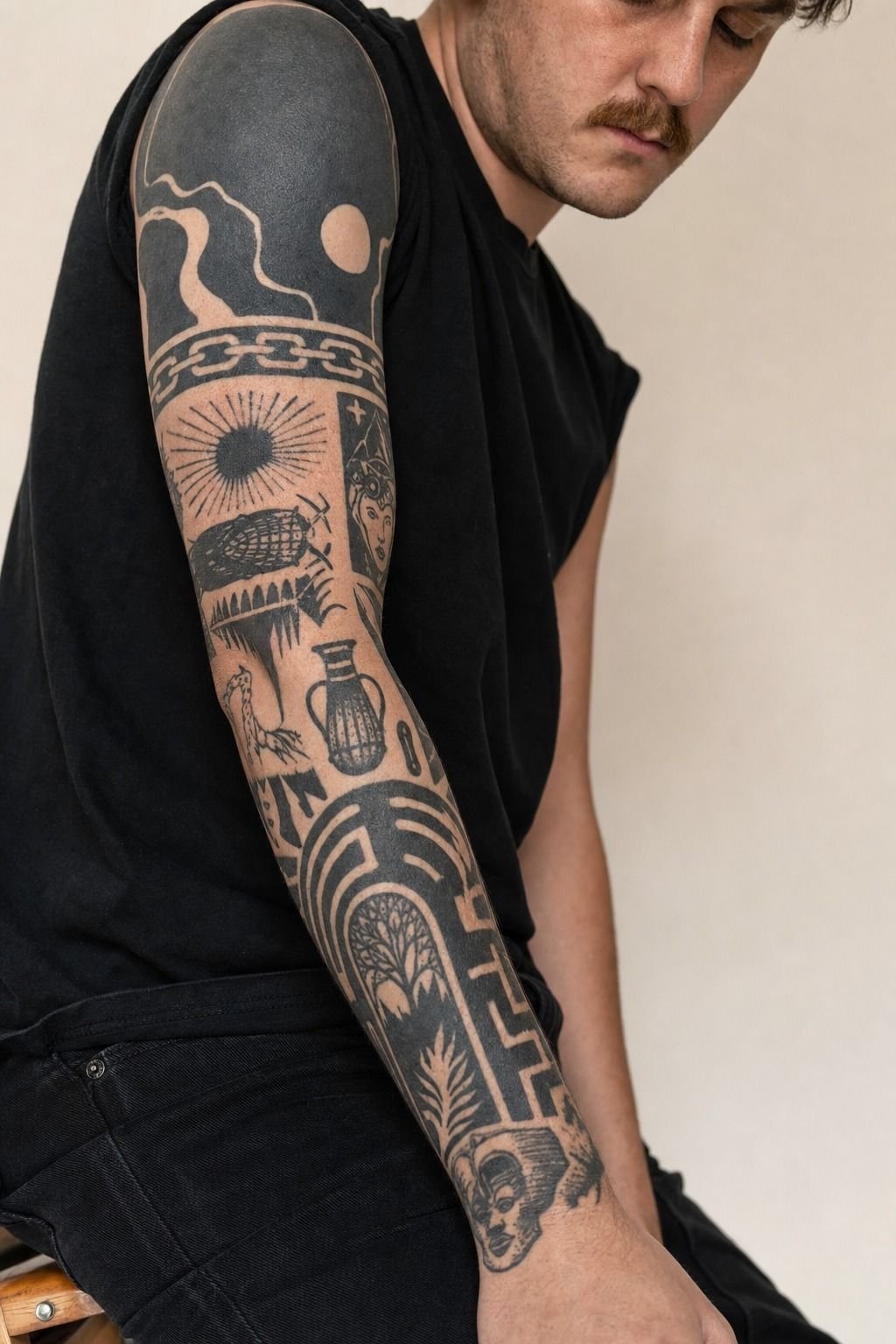
Pricing blackwork is honest math. A full sleeve mapped as one project runs cheaper per hour than building the same coverage from random patchwork pieces over years, because I design once, set up once, and keep flow. Patchwork means a new design fee every session and awkward gaps you’ll pay to connect later.
Typical US rates sit around $100 to $250 per hour, and a full blackwork sleeve usually lands between 20 and 40 hours total. Our breakdown on how much to charge for tattoo design covers the design-fee side.
If budget’s tight, do fewer, bigger sessions instead of many small ones.
14The animal blackwork portrait that used white ink highlights
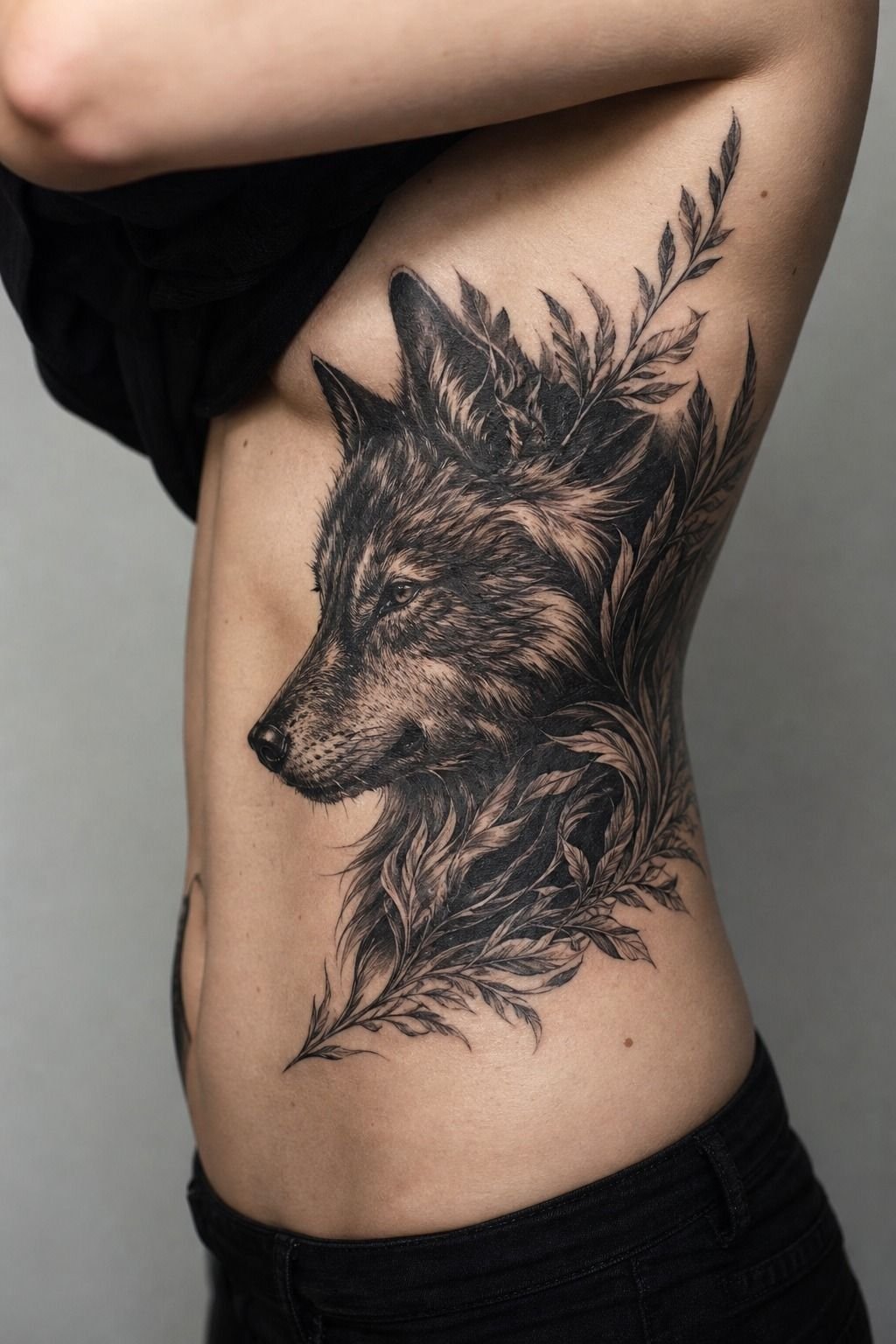
White ink in blackwork is seasoning, not a meal. This wolf portrait on the ribs uses small white ink highlights in the eyes and fur edges, placed only where the black around them is saturated enough to frame them. Here’s the honest part: white ink fades and yellows faster than any other pigment, especially on sun-exposed skin.
In five years those highlights will soften to a pale grey, and the piece was designed to still read perfectly without them. That’s the test.
If your design dies when the white disappears, it was never solid. Ask your artist to show you the design with the highlights removed before you commit.
15Why I advise against hand blackwork for first tattoos
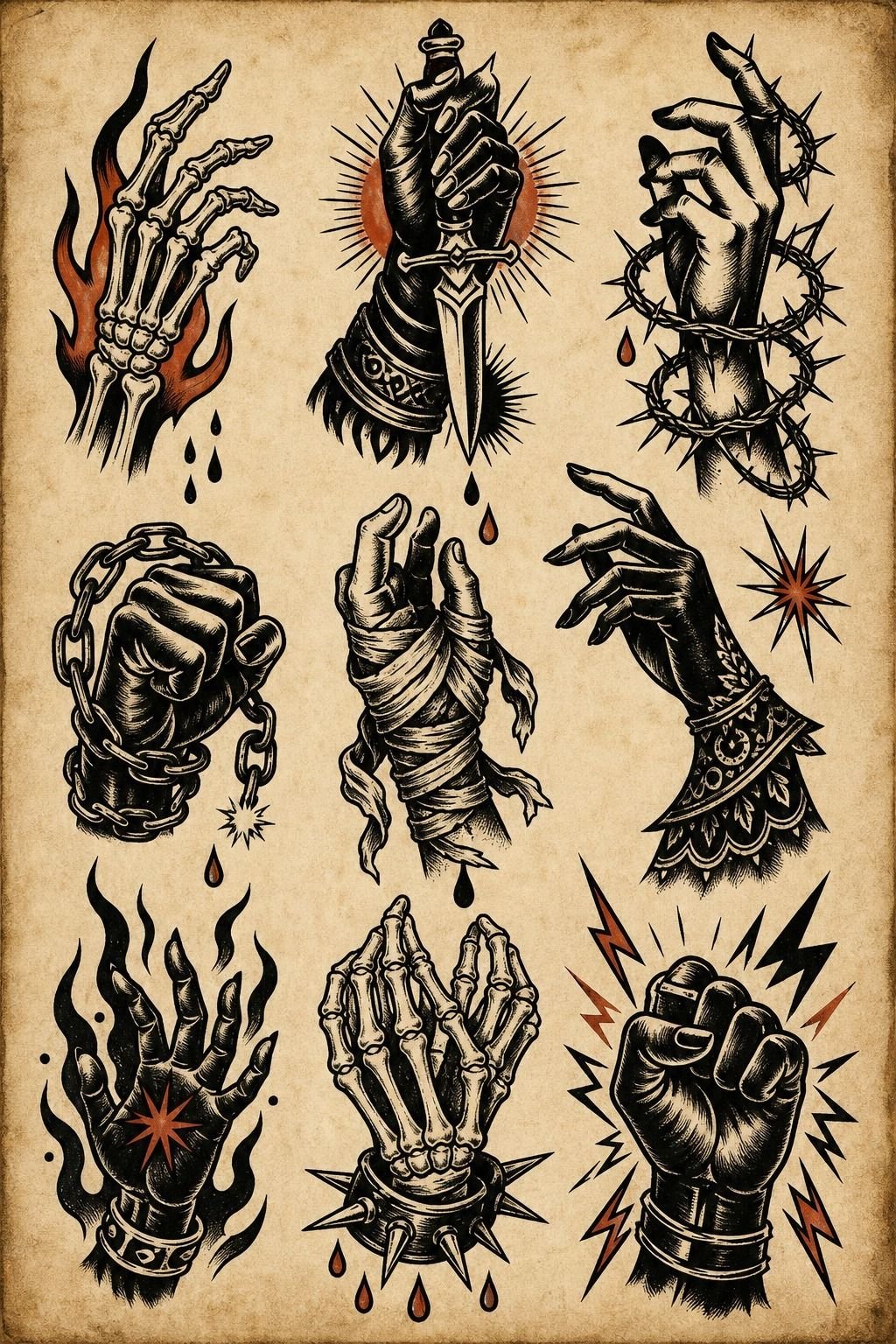
Hands are the worst first tattoo, full stop. They’re a high-wear zone: constant washing, sun exposure, thin skin over bone, and blackwork on fingers fades and blows out faster than almost anywhere else.
I keep flash sheets of hand designs in the shop, and I still talk first-timers out of them weekly. Hand tattoos are for collectors who already accept touch-ups every few years. Your first piece should go somewhere it can heal undisturbed and age well, like the forearm or upper arm.
Get that, learn how your skin holds ink, then we talk hands. If you want to browse first-timer-friendly ideas first, our tattoo design website ideas roundup is a good starting scroll.
16How I adapt Japanese koi into modern blackwork sleeves
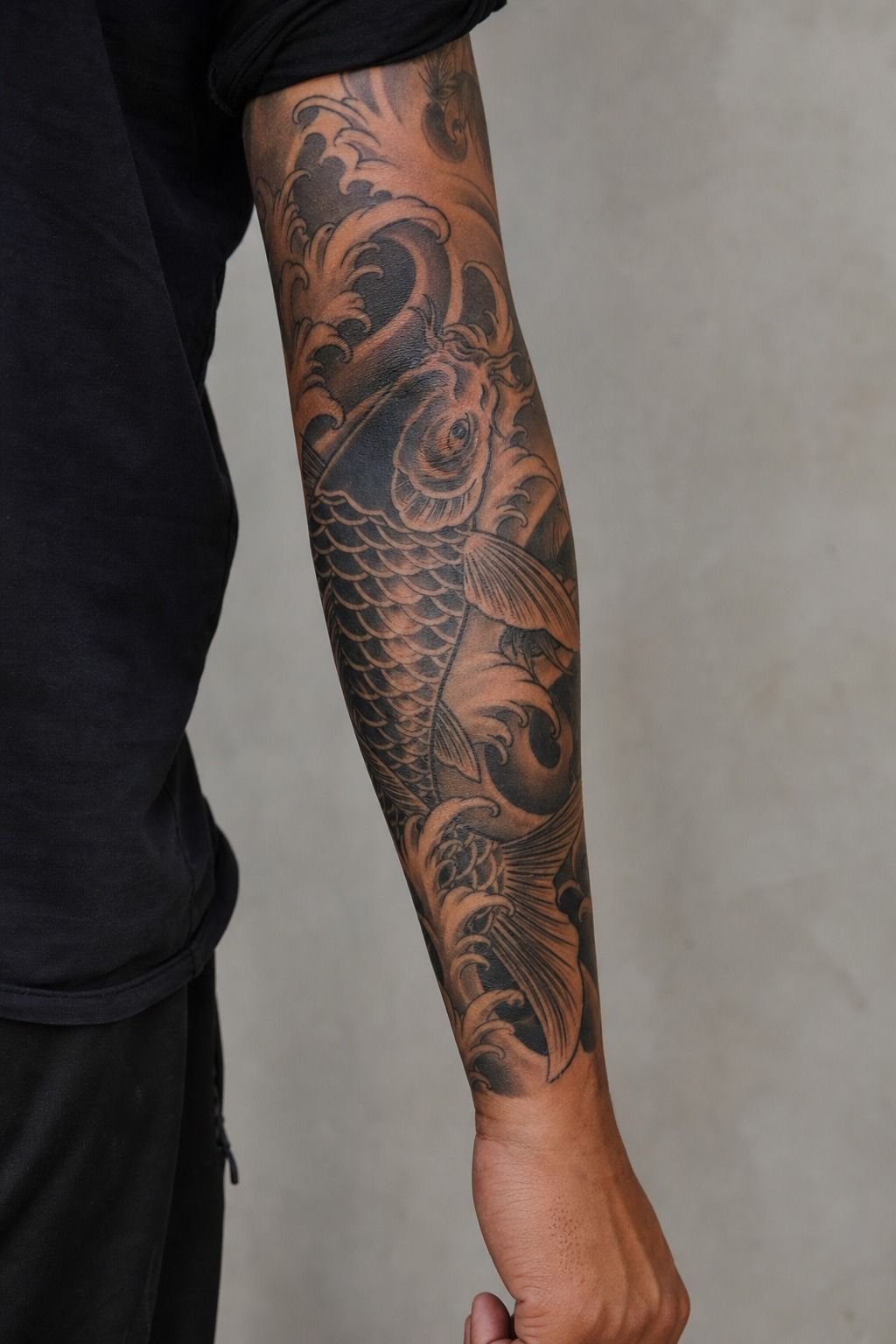
I trained in traditional irezumi, so koi are personal.
17The rib blackwork placement I warn nervous clients about
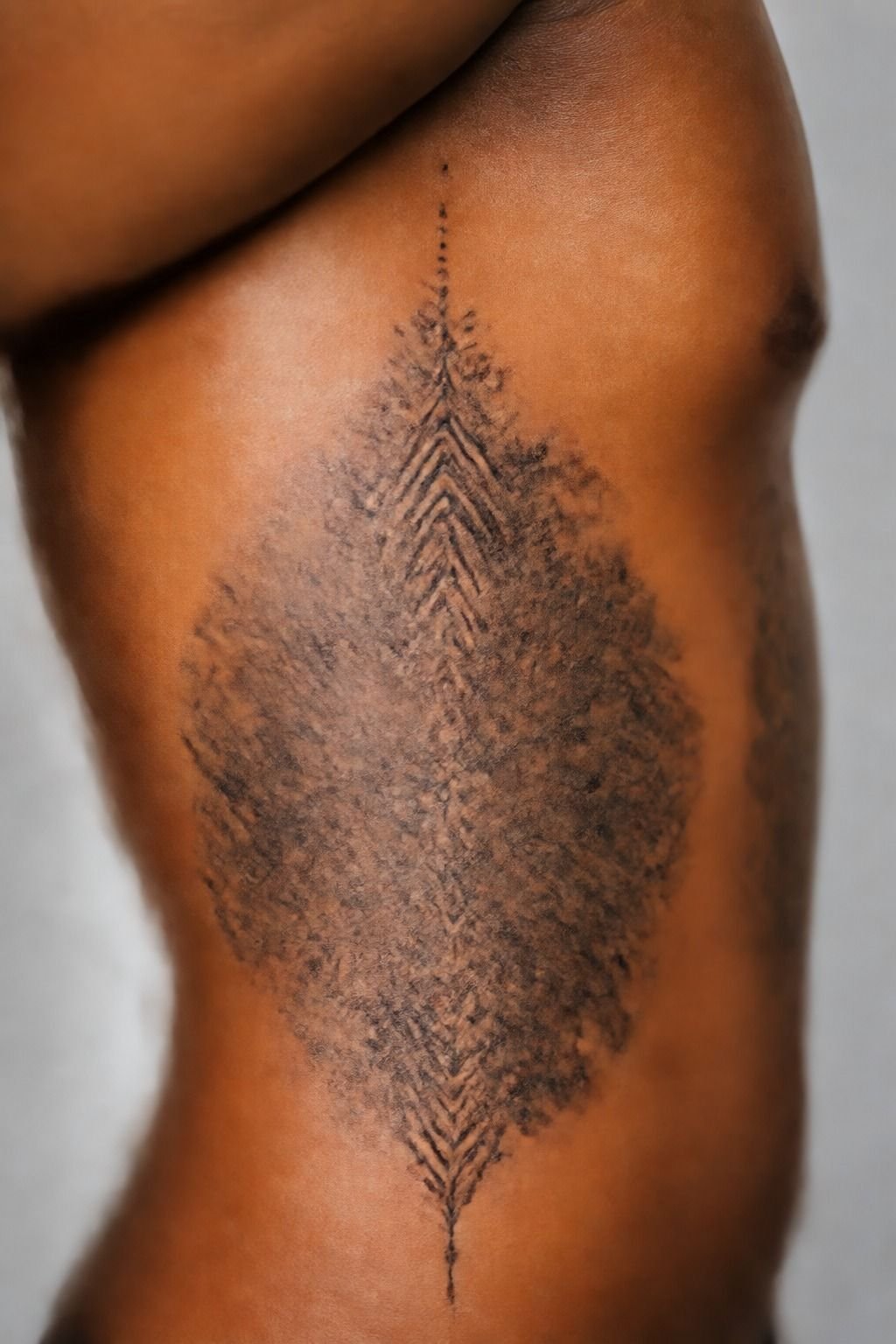
Ribs are the placement everyone wants and nobody enjoys. Bone right under thin skin, constant breathing movement, and with heavy black packing it’s the spiciest session I offer.
I tell nervous clients the truth up front: lines feel sharp, shading is a dull burn, and black packing on ribs is the part where you’ll grip the chair. This macro shot shows why people do it anyway, because a healed rib piece in solid black is striking in a way nothing on a forearm matches.
Sessions stay short, 2 to 3 hours max. Eat beforehand, skip the coffee, breathe with the needle.
And if you need a break, say it.
18What solid black healing taught me about aftercare timing
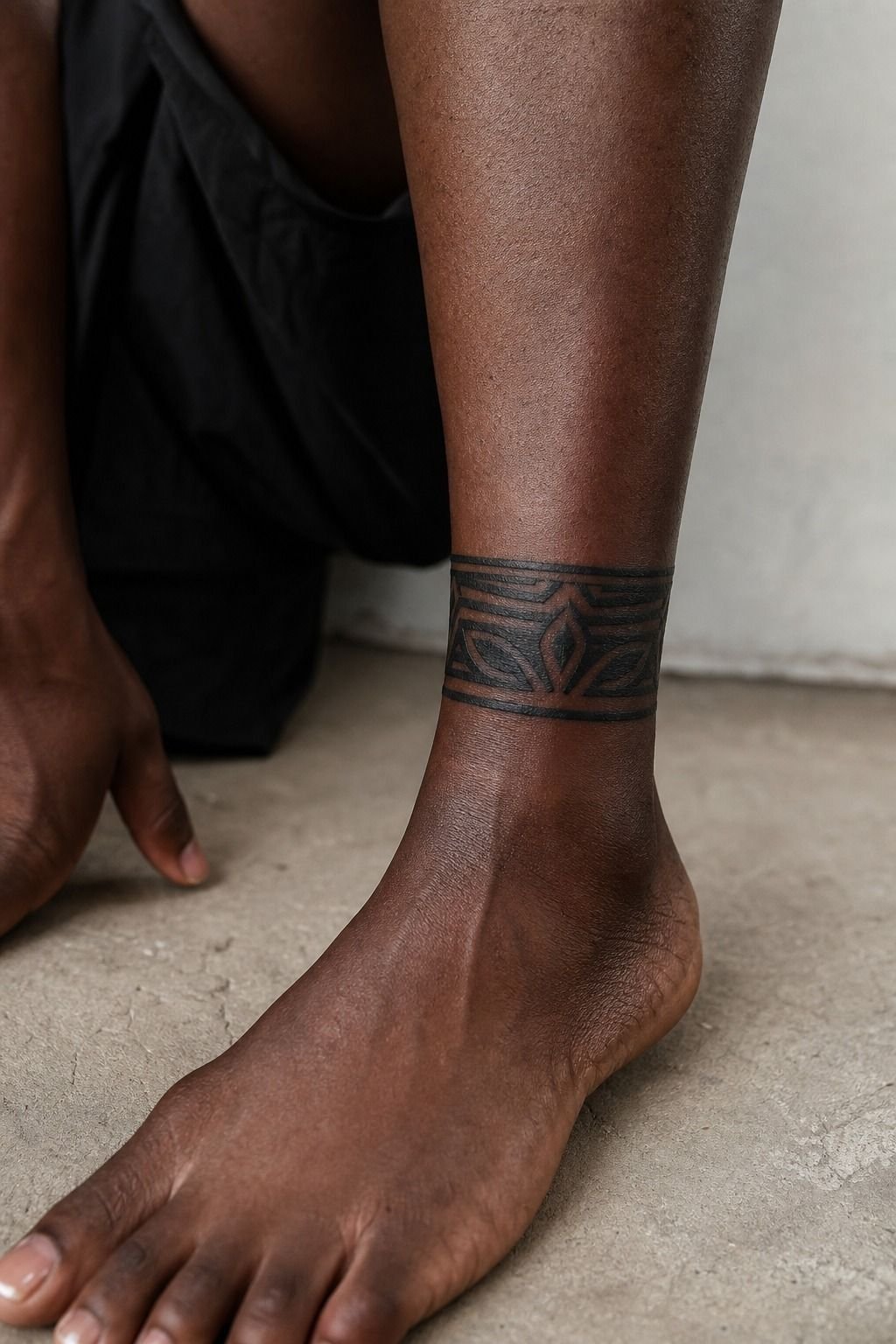
Solid black heals differently than linework, and aftercare timing matters more. Big saturated areas weep more plasma in the first 48 hours, scab heavier, and peel like a bad sunburn around day 4 to 7.
This ankle piece healed clean because the client followed the boring routine: gentle unscented soap twice a day, thin layer of ointment, never suffocating it under thick globs. Surface healing runs 2 to 3 weeks, full healing 2 to 3 months.
What kills fresh blackwork: sun, pools, picking the flakes (you’ll pull color out, I promise), and gym friction. Treat it like the open wound it is for the first week!
19How I match clients with blackwork artists whose blacks last
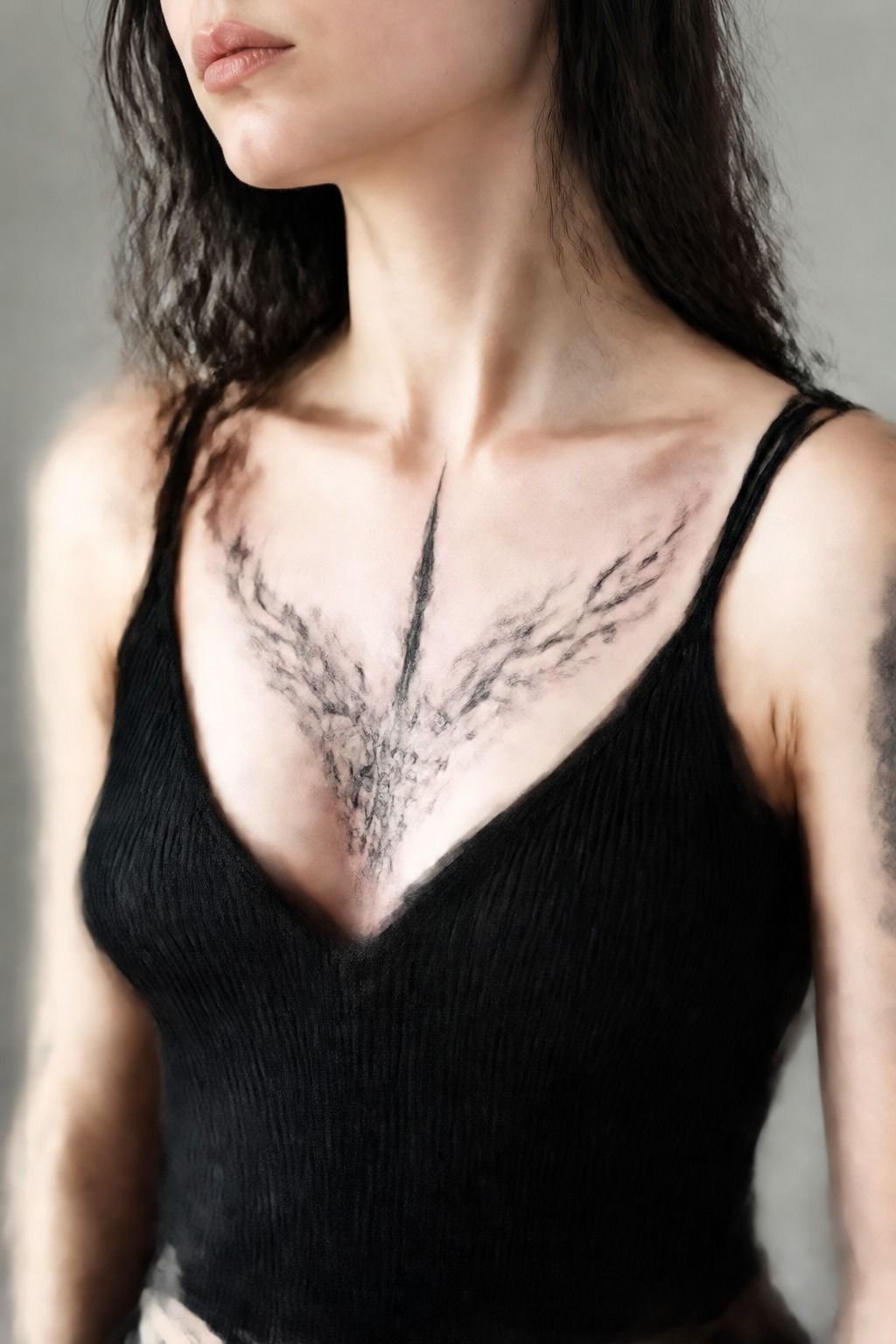
When a client’s design isn’t my lane, I send them to someone better suited, and I use the same checklist I’d want used on me. One, the portfolio shows healed work, not just fresh.
Two, their blacks look velvety and even in healed photos, not patchy or grey-green. Three, they specialize, because blackwork is a discipline, not a default.
Four, the studio is clean and they’re licensed, non-negotiable. This sternum piece came from exactly that kind of referral.
If you’re starting the search, our guide on how to design your own tattoo helps you bring a reference an artist can actually work from. References for vibe, not for copying!
How much it cost
Real numbers from my own chair and shops I trust. Shop minimums in the US typically run $50 to $100, hourly rates $100 to $250 depending on artist and city. Big solid black costs more in time than in linework, because saturation is slow and you can’t rush it.
My own sleeve math: design fee included, six sessions, right in that mid-range. Worth every dollar, and I’d rather you save an extra three months than bargain-shop saturated black!
What ten years of black ink taught me about skin
Here’s the thing nobody put in a caption when blackwork blew up: black ink is the most honest medium in tattooing. Color forgives.
Black doesn’t. Every light spot in your saturation, every line you wobbled, every patch you overworked, blackwork keeps the receipt and shows it healed.
That’s exactly why I trust it, and it’s why the title of this piece isn’t a joke. I genuinely believed solid black would blur into bruise-looking smudges within a few years, because I’d only seen bad blackwork, scratchers packing cheap ink with wrong needles and calling it bold.
What changed my mind was watching good work age. A mentor’s sleeve, twelve years old, blacks still reading from across the room.
The difference was never the ink brand or some guarded technique. It was boring discipline: proper needle groupings, single confident passes, designs built with negative space so the black had edges to sit against, and placements chosen for how skin actually ages instead of how the photo would look on day one.
The lesson I’d hand you is this. Blackwork isn’t a style you pick from a flash wall, it’s a commitment to doing fewer things better.
You pick simpler shapes than the Pinterest board wants. You go bigger than your first instinct.
You pay for saturation time instead of shopping for the cheapest hour. And you choose the artist on healed photos, always.
Do those four things and black doesn’t just hold, it gets better. The slight softening over the years gives the piece a settled, lived-in quality that fresh ink can’t fake.
My earliest blackwork clients stop by the shop sometimes, and their pieces look more like them now than the day I finished. That’s the whole argument.
If you’re still shaping your idea, playing with layouts on a design tattoo online free tool is a fine way to arrive at your consult with something concrete.
What People Always Want to Know
How much does blackwork tattoo design usually cost?
Typical US range is $100 to $250 per hour, with shop minimums around $50 to $100. Small symbols run $100 to $300, sleeves $2,500 to $6,000 across multiple sessions. Artist, city, and solid-fill time all move the number.
Is blackwork a good idea for a first tattoo?
Yes, with one condition: pick the right placement. Forearm, upper arm, thigh, or calf heal easily and age well.
Skip hands, fingers, and ribs for your first. Solid black also forgives slightly imperfect healing better than fine line.
How do I choose a tattoo artist for blackwork?
Judge healed photos only. You want velvety, even blacks at 6+ weeks out, a portfolio heavy on blackwork specifically, and a clean licensed studio.
All-fresh-photo feeds tell you nothing. Our custom tattoo design process page covers the consult.
How much do blackwork tattoos hurt?
Depends on real estate. Ribs, sternum, feet, and hands are the spicy zones; forearm, calf, and outer shoulder are chill.
Solid black packing burns more than linework because of the coverage time. Short sessions help more than toughness.
How long does a blackwork tattoo take to heal?
Surface healing takes 2 to 3 weeks, full healing 2 to 3 months. Solid black peels heavier around day 4 to 7. Wash gentle, moisturize thin, no sun, no pools, no picking flakes or you’ll pull pigment out.
What’s the best placement for blackwork?
Forearm and upper arm win for first pieces: low-wear, stable skin, easy healing, and the design reads clean for decades. Ribs and chest give the most drama but cost you in pain. Match the placement to your pain tolerance and sun exposure.
Where I’d Start First
If I had to pick one, I’d start with a small forearm ornamental piece. Low pain, low-wear skin, and it teaches you exactly how your body holds solid black before you commit to a sleeve. Pin this for later, then book the consult.