A teddy bear tattoo usually means comfort, innocence, and emotional connection. People get them to honor childhood, remember lost loved ones, or mark personal survival. I’ve tattooed dozens over the years, and every single one carries a story that runs deeper than the cute exterior.
Symbolism & History
The teddy bear itself is barely older than tattooing as we know it. Named after Theodore Roosevelt in 1902, it became the universal symbol of childhood comfort across the West. In my chair, I’ve watched grown adults tear up explaining why they need this particular image. That weight isn’t accidental.
Comfort and Security
We see this a lot: someone who slept with the same stuffed bear until they were fourteen, or who still has it in a closet somewhere. The tattoo becomes a permanent version of that feeling. Lines matter here. Soft, rounded outlines read cuddly and safe. Sharp edges kill the whole mood. I tell clients who want that comfort vibe to avoid heavy black shading in the face, keep it open, almost sketch-like, so it stays approachable.
Loss and Memorial
Maybe the most common reason I tattoo teddy bears. A child’s name stitched across the belly. A birth and death date on a ribbon. Sometimes the bear is holding a real object, a tiny heart, a pair of baby shoes. The placement often shifts for memorial pieces: over the heart, on the inner arm where you can see it while holding your other arm, like you’re hugging yourself. I’ve had parents sit through three-hour sessions barely talking, just needing it done. The bear does work that words can’t.
Resilience and Survival
This one surprises people. Survivors of abuse, addiction, illness, sometimes they want a teddy bear with visible repairs. Stitched seams, a patch, one button eye missing. It says: I was loved, I was damaged, I’m still here. That contrast between soft toy and hard experience hits harder than any aggressive imagery. I’ve done a bear with a prosthetic leg for a veteran. A bear with chemo port scars for a cancer survivor. The cute container makes the heavy content land without being performative.
Common Variations & Styles
Not all teddy bear tattoos look like nursery decor. Style choices completely change the meaning.
- Traditional/Americana: Bold lines, limited color palette, often with a banner or dagger. Reads tough-nostalgic, not sweet. Good for bikers and service members who want the sentiment without softness.
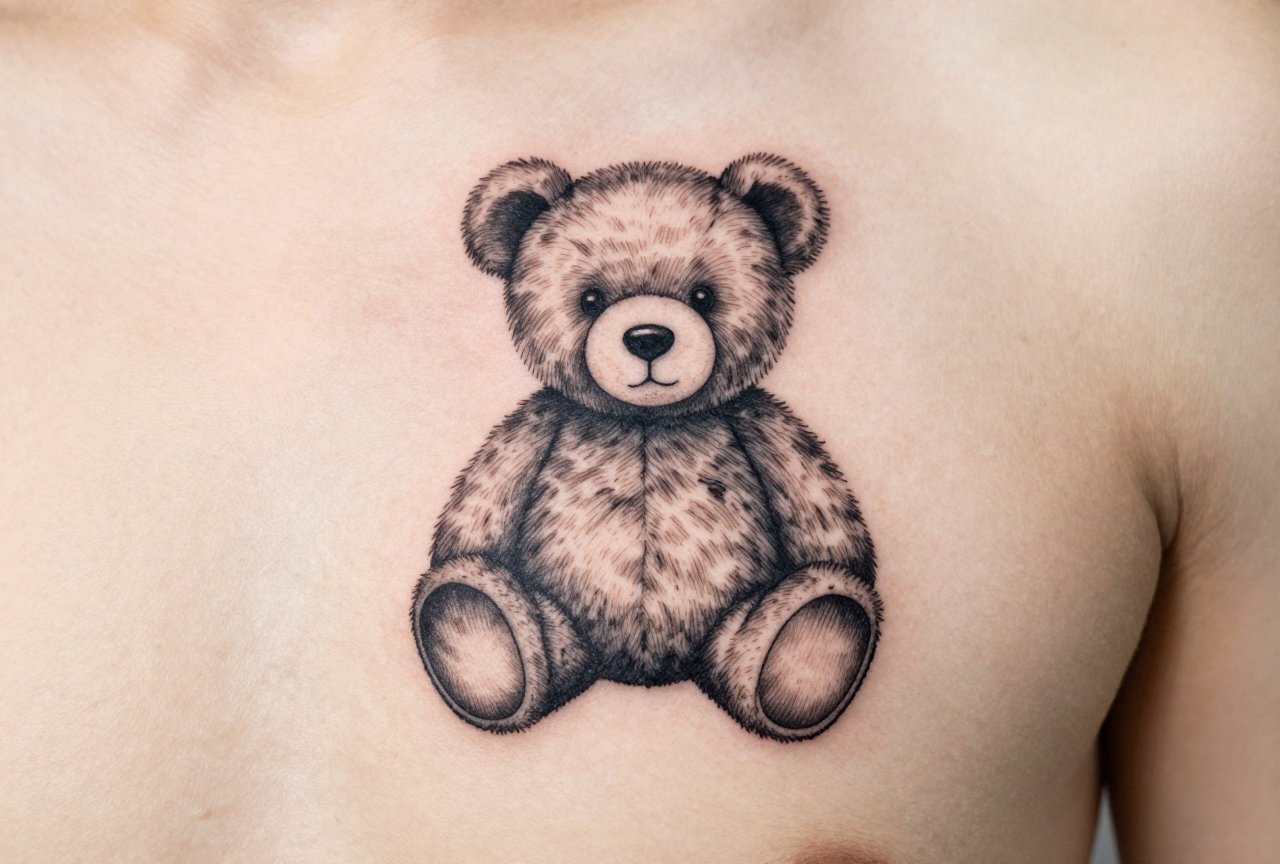
- Black and grey realism: Looks like an actual photograph of a worn plush toy. Incredible for memorial pieces. The texture of matted fur, the compression of stuffing, I’ve seen artists nail this so hard it looks like you could pick it up. Ages well if the contrast stays moderate.
- Neo-traditional: Saturated colors, decorative elements, maybe the bear wearing a crown or holding a rose. Feminine but not fragile. Holds up better than watercolor over time.
- Minimalist/line work: Single needle, no fill, just the suggestion of form. Popular on wrists and behind ears. I warn clients: thin lines spread. Five years in, your delicate bear might look like a bear-shaped cloud. Plan for touch-ups.
- Distressed or horror twists: Torn seams, exposed stuffing, maybe a eye hanging by a thread. Appeals to the goth and punk crowd. The meaning flips from comfort to lost innocence, or to finding beauty in damage.
Adding Personal Elements
The best teddy bear tattoos aren’t generic. I always ask: what was your bear? Red bow tie? Missing ear? A specific outfit? One client brought in a Polaroid of her 1980s Care Bear, literally that exact bear, not a generic heart symbol. We replicated the faded color, the slightly crooked smile. That’s the piece she still sends me photos of, ten years later.
Best Placements
Where you put it changes how the meaning reads.
- Forearm: Visible, conversational. People ask. If you want to share the story, this works. If you don’t, consider elsewhere.
- Chest/over heart: Almost always memorial. The proximity matters. I’ve done several where the bear clutches a small portrait or name, positioned so the heartbeat would literally vibrate against it.
- Thigh: Larger canvas, more detail possible. Also easier to conceal. A lot of clients choose here for personal comfort pieces they don’t need to explain at work.
- Shoulder blade: Classic for “someone watching your back.” I’ve done matching bear tattoos on siblings here, each with half of a shared object, so together they complete the image.
- Ribs: Painful. The people who choose this know that and want it anyway. Usually the most emotionally urgent pieces. The physical discomfort becomes part of the ritual.
Size reality: small teddy bears lose detail fast. A one-inch bear with a name banner? In five years, that name is a blur. I push for at least palm-sized if there’s text or fine texture.
Who Chooses This Tattoo / Personal Meanings
There’s no single demographic. I’ve tattooed teddy bears on:
- A sixty-year-old man whose mother gave him a bear before she died when he was four. He finally felt ready at retirement.
- A twenty-two-year-old woman marking five years clean from heroin. Her bear had track marks stitched up with gold thread.
- A couple who met at a Build-A-Bear workshop on their first date. Matching bears, each with the other’s heartbeat sound recorded inside. They got the bears tattooed holding hands.
- A father whose daughter called him “Bear” until she died at nine. He’d never had a tattoo before. Sat like a stone.
What unites them: the bear represents something they can’t access anymore, or something they’re trying to keep. Childhood. A person. A version of themselves. The tattoo doesn’t replace the real thing. It makes the loss visible, which is its own kind of holding on.
Gender and Stigma
I want to address this directly. Men sometimes hesitate, worried a teddy bear reads as childish or unmasculine. I tell them: sentiment isn’t gendered. The bear is a vessel. What you put inside it, grief, love, survival, that’s what people see. Some of the most emotionally heavy sessions I’ve done have been with male clients choosing this image. The ones who push through the hesitation usually end up most satisfied.
Similar Symbols
Clients sometimes arrive unsure between a few options. Here’s how I break it down:
- Stuffed animal vs. real bear: Real bears mean strength, wilderness, independence. Stuffed bears mean comfort, memory, human connection. Completely different tattoos.
- Teddy bear vs. heart: Hearts are generic. A teddy bear is specific. If you have a particular story, the bear carries it better.
- Teddy bear vs. angel/baby: Memorial pieces often waver between these. Angels read religious. Babies read tragic. Bears read loving. Secular clients usually land on bear.
- Teddy bear vs. toy soldier/other toy: Less common. The bear’s advantage is universal recognition. Everyone had one or knew someone who did. A toy car or doll might need explanation.
Some people combine: bear plus angel wings, bear holding a real heart, bear with a child’s face incorporated. I’ve done a bear where the belly was a clock face, stopped at a time of death. The mashups work when the elements genuinely connect to the story, not when they’re piled on for effect.
Final Thoughts
Teddy bear tattoos endure because the object itself endures. Almost everyone has held one. The meaning is instantly accessible without being empty. In my shop, we joke that we’ll never stop doing them because humans will never stop needing comfort, and they’ll never stop losing people they loved.
If you’re considering one, bring the real thing if you still have it. Or a photo. Or a detailed description of what you remember. The best artists don’t need you to have a Pinterest board of “teddy bear tattoo ideas.” They need you to know what yours felt like. The rest is just translation.
And if you’re worried about it reading too sweet, too sad, too anything, don’t. The right artist will find the line weight, the expression, the detail level that makes it yours. I’ve seen teddy bear tattoos that made me laugh, that made me need to step out for air, that made me call my own mother. That’s the job. That’s the point.
Frequently Asked Questions
Will a teddy bear tattoo look too childish as I get older?
Not if the style matches your intent. A realistic or neo-traditional bear ages with you, while a cartoonish one might feel stuck in time. I usually suggest clients imagine themselves at fifty seeing it in the mirror, if it still feels true, you’re good.
Can I get a teddy bear tattoo if I never actually had one as a child?
Absolutely. The symbol works for anyone who connects to what it represents, comfort, safety, lost innocence. I’ve tattooed bears on clients who grew up without toys but found the image later and made it their own.
How do I make sure the name or date I add stays readable over time?
Go bigger than you think you need, and choose a font with clear separation between letters. I recommend at least 1/4 inch tall for any text. Script looks elegant fresh but blurs fastest; block letters or simple serif hold better.
Is color or black and grey better for a memorial teddy bear?
Black and grey ages more predictably and suits the somber tone of many memorials. But if your actual bear was vividly colored and that authenticity matters, a limited color palette with strong outlines can work. Avoid watercolor-style fades, they’re beautiful for two years, then muddy.
Related Tattoo Meanings
- Three Swords Tattoo Meaning: Symbolism, Styles What Artists Know
- Vegvisir Tattoo Meaning: The Norse Compass Explained
- Duck Symbolize Tattoo Meaning: Adaptability, Loyalty Playful Spirit
- Explore more