
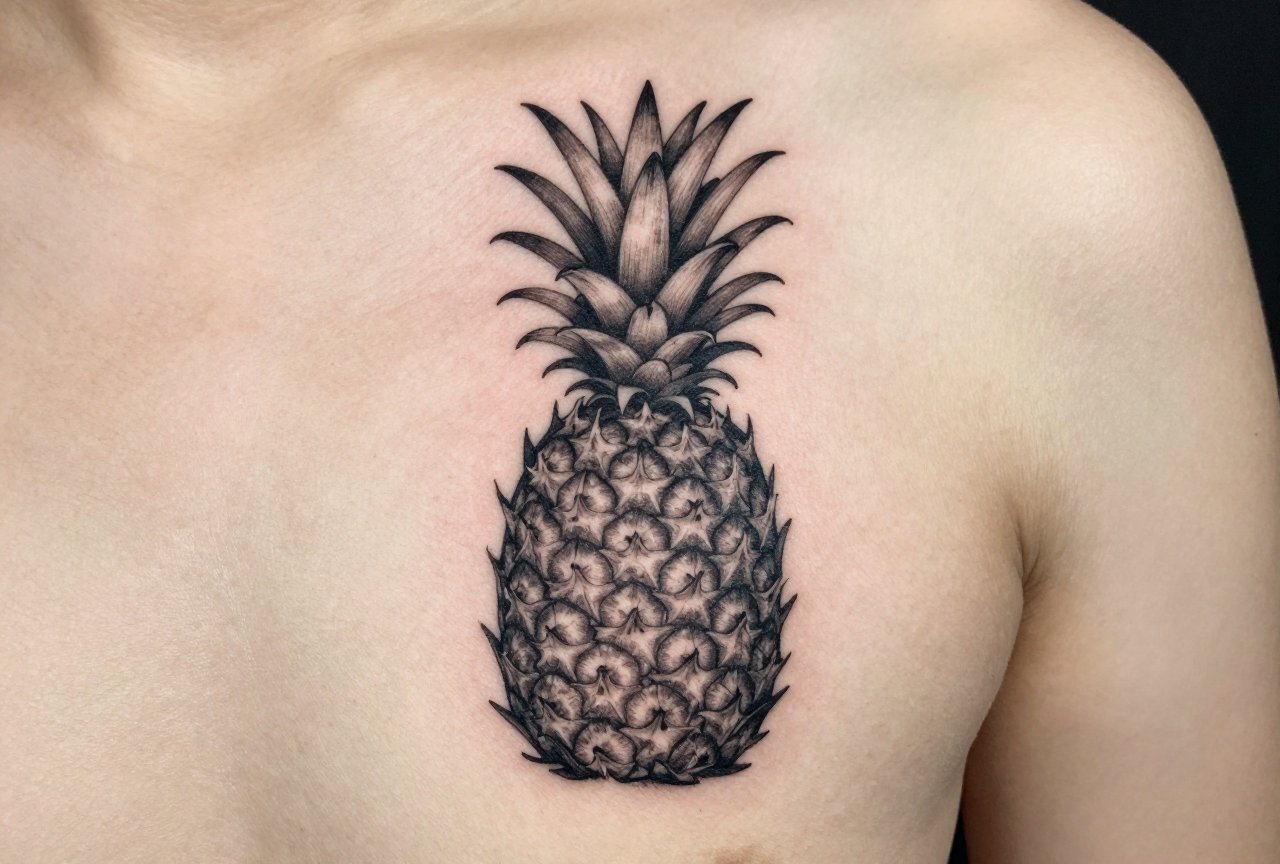
An upside down pineapple tattoo most commonly signals participation in the swing lifestyle, where the inverted fruit serves as a discreet identifier for couples who engage in consensual non-monogamy. Beyond this subcultural meaning, the design also carries themes of hospitality gone playful, rebellious individuality, and ironic twists on traditional warmth and welcome. The tattoo’s meaning shifts dramatically depending on context, placement, and the wearer’s personal intent.
Symbolism & History
The pineapple has symbolized hospitality since colonial American times, when sea captains would spear the fruit on their fence posts to announce their safe return and welcome visitors. Turning this symbol upside down subverts that tradition entirely.
The swing lifestyle adopted the upside down pineapple as a covert signal in the late 20th century, particularly in suburban and travel contexts. A pineapple placed upside down in a shopping cart, on a porch, or worn as jewelry became a coded message: “we’re open to connecting with like-minded couples.” The tattoo version emerged as a more permanent, personal declaration of this identity.
Other symbolic threads include:
- Rebellion against convention: Inverting a traditionally wholesome symbol challenges societal norms around relationships and sexuality
- Privacy and discretion: The tattoo allows wearers to signal identity without explicit verbal disclosure
- Playful subversion: Some choose the design purely for its ironic, cheeky energy without lifestyle affiliation
Common Variations & Styles
Tattoo artists execute this design across numerous aesthetic approaches, each carrying slightly different tones:
- Traditional American: Bold outlines, limited color palette, often paired with banners or nautical elements
- Neo-traditional: More elaborate shading, decorative flourishes, richer color saturation
- Minimalist line work: Simple black outline, sometimes geometric or abstracted, emphasizing secrecy
- Watercolor: Splashes of yellow, green, and pink without hard outlines, softer and more decorative
- Paired designs: Matching or complementary tattoos for couples, sometimes with additional coded imagery
Some incorporate text elements like “be our guest” or other hospitality phrases that carry double meaning. Others add flames, chains, or bondage-inspired elements to emphasize the alternative lifestyle connection.
Best Placements
Placement choices often reflect the wearer’s desired level of visibility and their relationship to the tattoo’s meaning:
- Hidden locations (ankle, hip, ribcage, upper thigh): Maintain discretion, revealed only in intimate or beach contexts
- Semi-visible (forearm, shoulder, calf): Allow subtle signaling to those “in the know” while appearing as quirky fruit art to others
- Visible (wrist, hand, neck): Rare for this specific meaning, typically chosen by those embracing the symbol’s broader rebellious or ironic qualities
The ankle and foot remain particularly popular for women, echoing the tradition of pineapple-themed accessories and anklets in lifestyle communities.
Who Chooses This Tattoo / Personal Meanings
Wearers of upside down pineapple tattoos represent diverse motivations and backgrounds:
- Lifestyle participants: Couples and individuals in open or swinging relationships seeking community recognition
- Former participants: Those who have moved on from active lifestyle participation but retain the tattoo as identity marker
- Allies and community members: People connected to the scene through friendship or support without direct participation
- Ironic adopters: Individuals who appreciate the subversive humor without lifestyle affiliation, sometimes unaware of the coded meaning
- Reclaimed narratives: Survivors of controlling relationships who choose the design to celebrate sexual autonomy
Many report that the tattoo sparks unexpected conversations, sometimes educational, sometimes awkward, occasionally leading to meaningful community connections.
Similar Symbols
Several related tattoos and symbols operate in adjacent cultural spaces:
- Standard pineapple tattoos: The upright version maintains its classic hospitality meaning, popular among Southerners, hospitality industry workers, and those celebrating home and welcome
- Flamingos: Pink lawn flamingos, particularly in pairs, carry similar lifestyle coding in some regions
- Pampas grass: Home decor choice that has been adopted as a subtle lifestyle signal
- Hotwife anklets: Specific jewelry codes with overlapping communities
- Triskelion and BDSM symbols: Related alternative lifestyle identifiers with different specific meanings
The key distinction remains that the upside down orientation transforms the pineapple’s meaning entirely, making it one of tattoo culture’s most recognizable examples of positional symbolism.
Final Thoughts
The upside down pineapple tattoo occupies a fascinating space in body art, functioning simultaneously as secret handshake, subversive statement, and sometimes simple aesthetic choice. Its layered meaning rewards those who understand the code while remaining innocuous to the uninitiated. As with any symbol carrying subcultural significance, context matters enormously, and assumptions should be avoided. Whether chosen for lifestyle identification, ironic humor, or appreciation of its rebellious energy, this tattoo exemplifies how a simple rotation can transform meaning entirely. For those considering the design, understanding its primary associations ensures informed, intentional placement in your personal narrative.
Related Tattoo Meanings
Frequently Asked Questions
What does an upside down pineapple tattoo mean in the swinger community?
An upside down pineapple has become a discreet symbol used by swingers to identify each other in public settings. The inverted fruit signals that the person or couple is open to non-monogamous relationships, though many people get the tattoo unaware of this association.
Is an upside down pineapple tattoo always related to swinging?
No, many people choose this design purely for its aesthetic appeal or personal symbolism unrelated to swinging. Some view it as a representation of hospitality gone awry, tropical rebellion, or simply an artistic twist on a classic fruit image.
Where is the best placement for an upside down pineapple tattoo to maintain discretion?
Those aware of the swinger connotation often choose easily concealable locations like the ankle, hip, or upper thigh to control who sees it. Others seeking to avoid misinterpretation may opt for more visible placement or incorporate additional design elements that clarify their intended meaning.
What are alternative meanings for an upside down pineapple tattoo besides swinging?
Some wearers intend it as a symbol of Southern hospitality with a rebellious twist, a reference to the SpongeBob SquarePants pineapple under the sea, or a representation of turning one’s life around. In certain contexts, it can also signify feeling out of place or being a tropical soul in a non-tropical environment.









