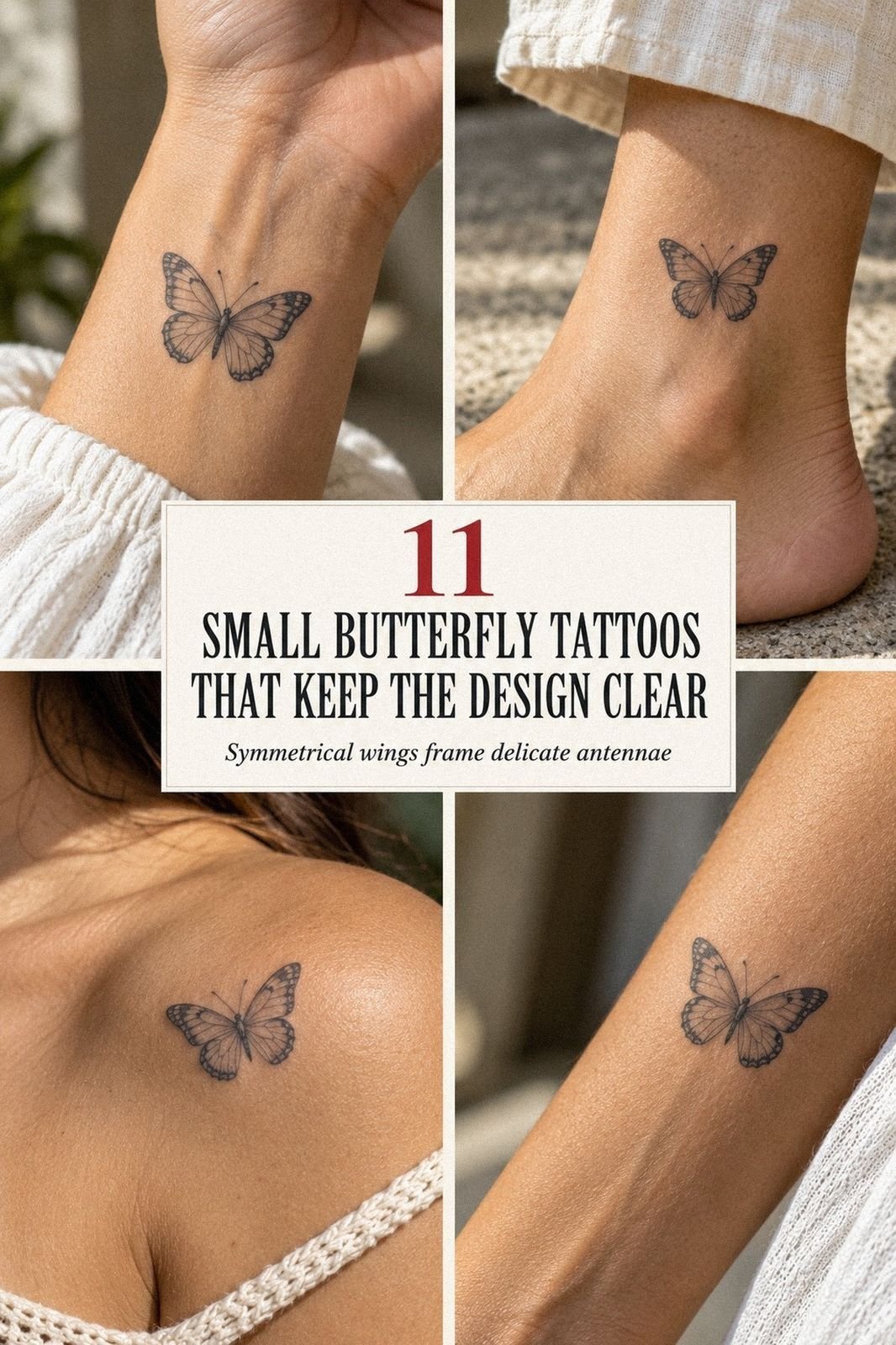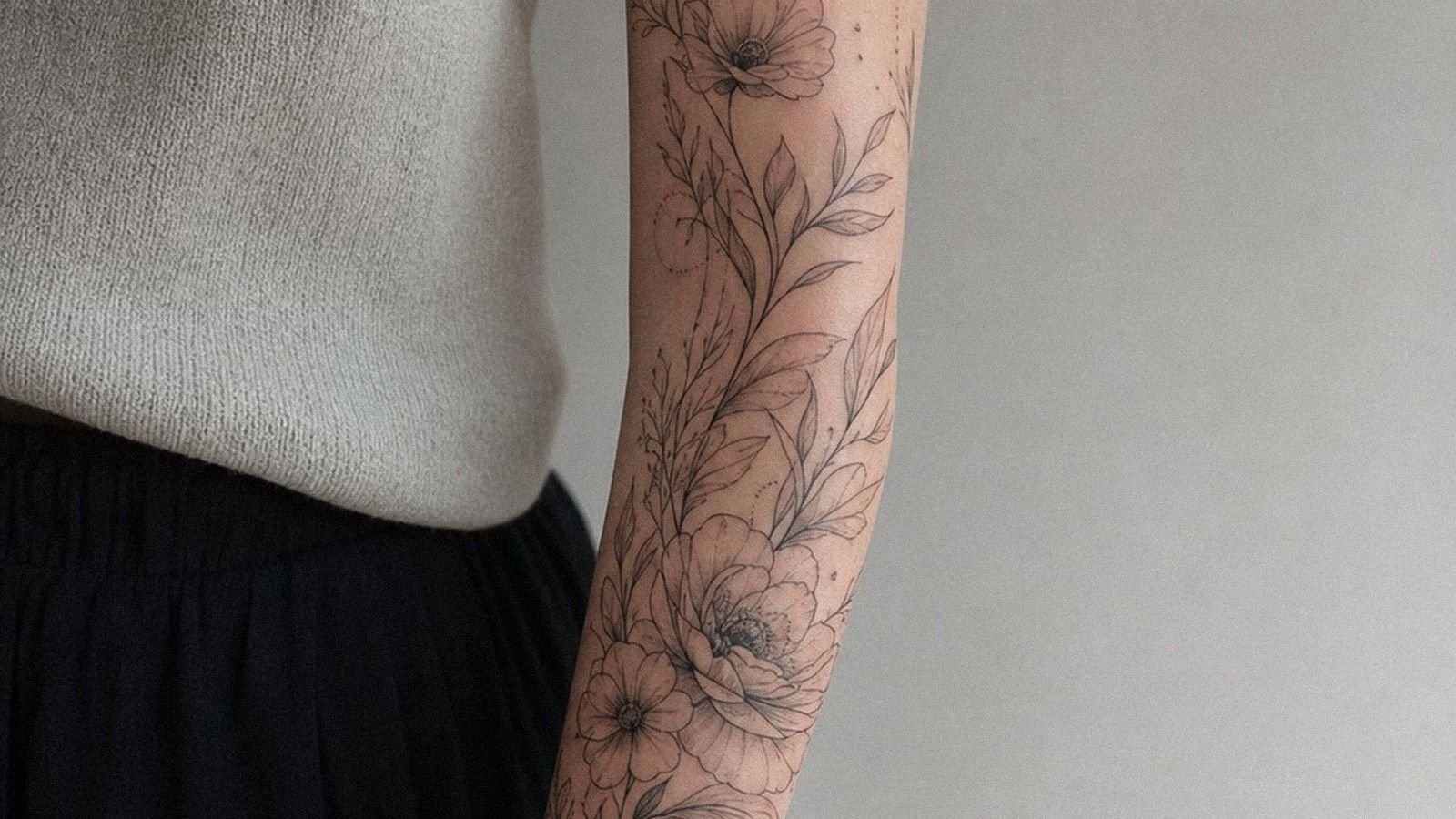
Feminine tattoo sleeves got real for me the week I turned 30. I had a clean forearm, too many screenshots, and zero flow. Then I stopped chasing single pretty pieces, mapped the arm like one story, and the whole sleeve started reading clean in motion.
Here’s what it looked like before: The Blank-Skin Map
Before I drew a single flower, my arm looked like a collection of maybe-laters. One tiny healed fine line moon near the wrist, one empty upper arm I had been saving, and a lot of blank skin that made every new idea feel louder than it was.
If you’re planning a women’s arm sleeve, this is the point where most people rush. I did not want that.
I printed references, held them against my forearm, bent my elbow, and checked what disappeared when my arm turned inward. That part matters more than Pinterest admits.
A sleeve isn’t a sticker wall. It has to wrap, breathe, and still read when you’re holding a coffee, typing, or pulling your hair up. I also marked the high-wear zones with a Skin Scribe pen, because your wrist crease, elbow ditch, and inner arm will age different from the outer forearm.
- I Saved Feminine Sleeve References First
- I Chose A Soft Upper Arm Sleeve Start
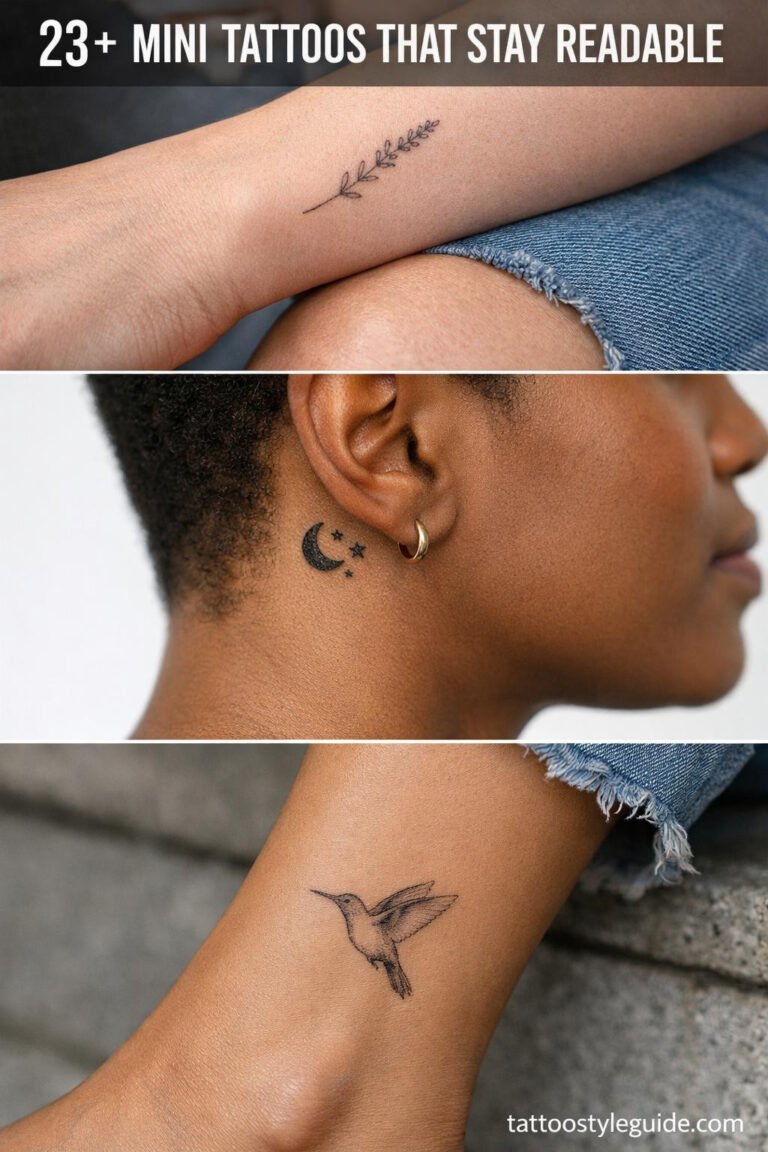
- I Picked Fine Line Florals For Flow
- What Made The Butterfly Near My Elbow Work?
- I Wrapped Vines Around My Forearm
- I Placed Birth Flowers On Inner Arm
- I Kept The Wrist Area Delicate
- I Asked For Soft Shading Between Roses
- Why Did Negative Skin Save My Peonies?
- I Tested Sleeve Stencils With Bent Elbow
- Could Script Live On My Inner Bicep?
- I Matched Petals To My Arm Curves
- I Chose Tiny Stars For Shoulder Fill
- I Balanced Blackwork Leaves With Fine Lines
- I Planned Pain Breaks Around Elbow Ditch
- I Checked Healed Feminine Sleeve Photos
- I Booked Touchups For Fine Line Gaps
- I Protected My Sleeve During Healing
1I Saved Feminine Sleeve References First
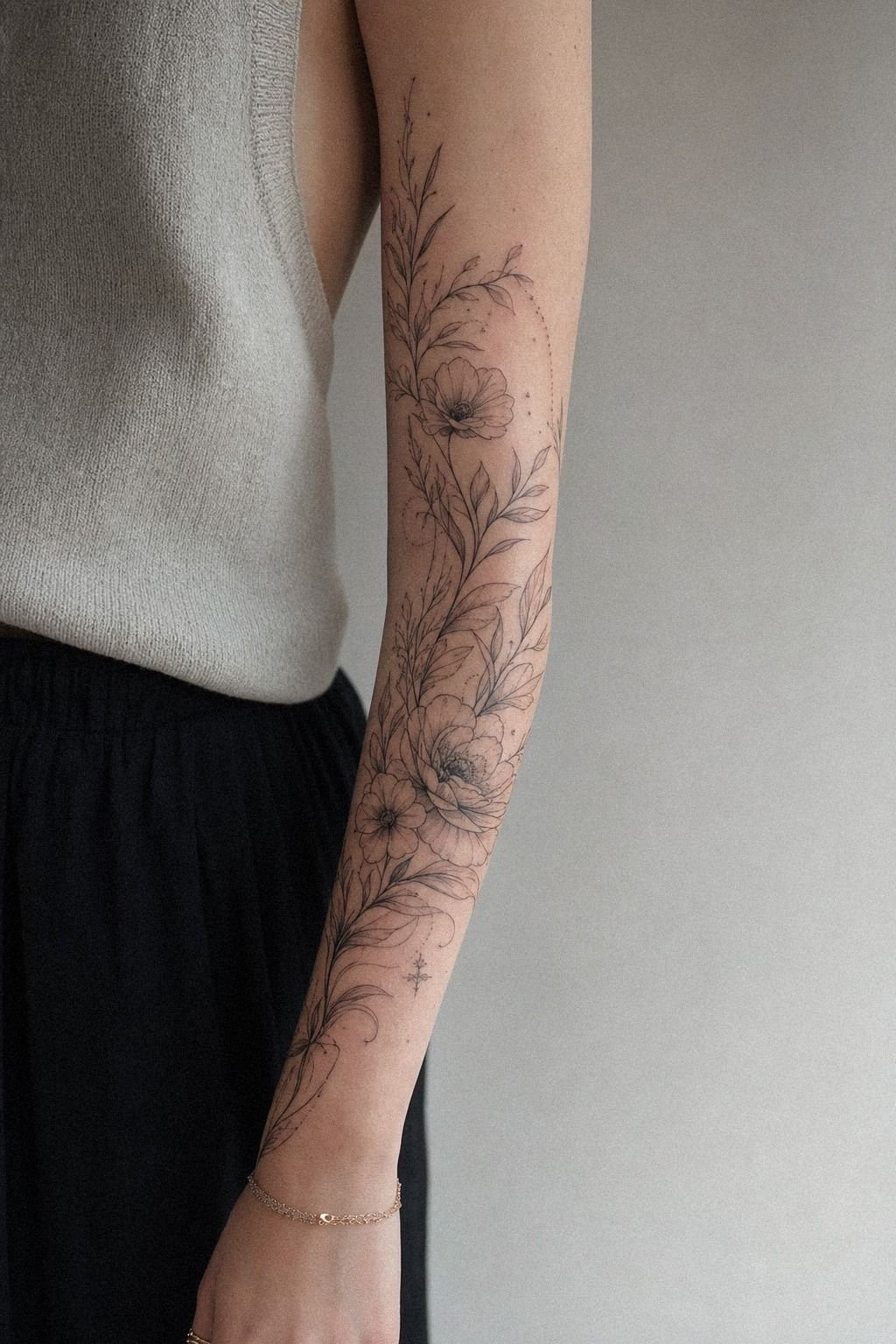
First, I saved references in tight batches instead of dumping everything into one folder. If you do that, you start seeing your own taste fast.
Mine kept leaning toward fine line botanicals, soft black, and sleeves with quiet gaps between motifs. That told me more than any trend roundup ever could.
I split my saves into three groups: flow, flower shape, and filler. Then I deleted anything that looked good flat but would turn to soup once it wrapped around a real forearm. A lot of feminine arm tattoos fail right here because the reference is too busy for a 2 to 3 inch lane.
I also cross-checked a few healed examples from feminine tattoo ideas so I was not only staring at fresh ink.
2I Chose A Soft Upper Arm Sleeve Start
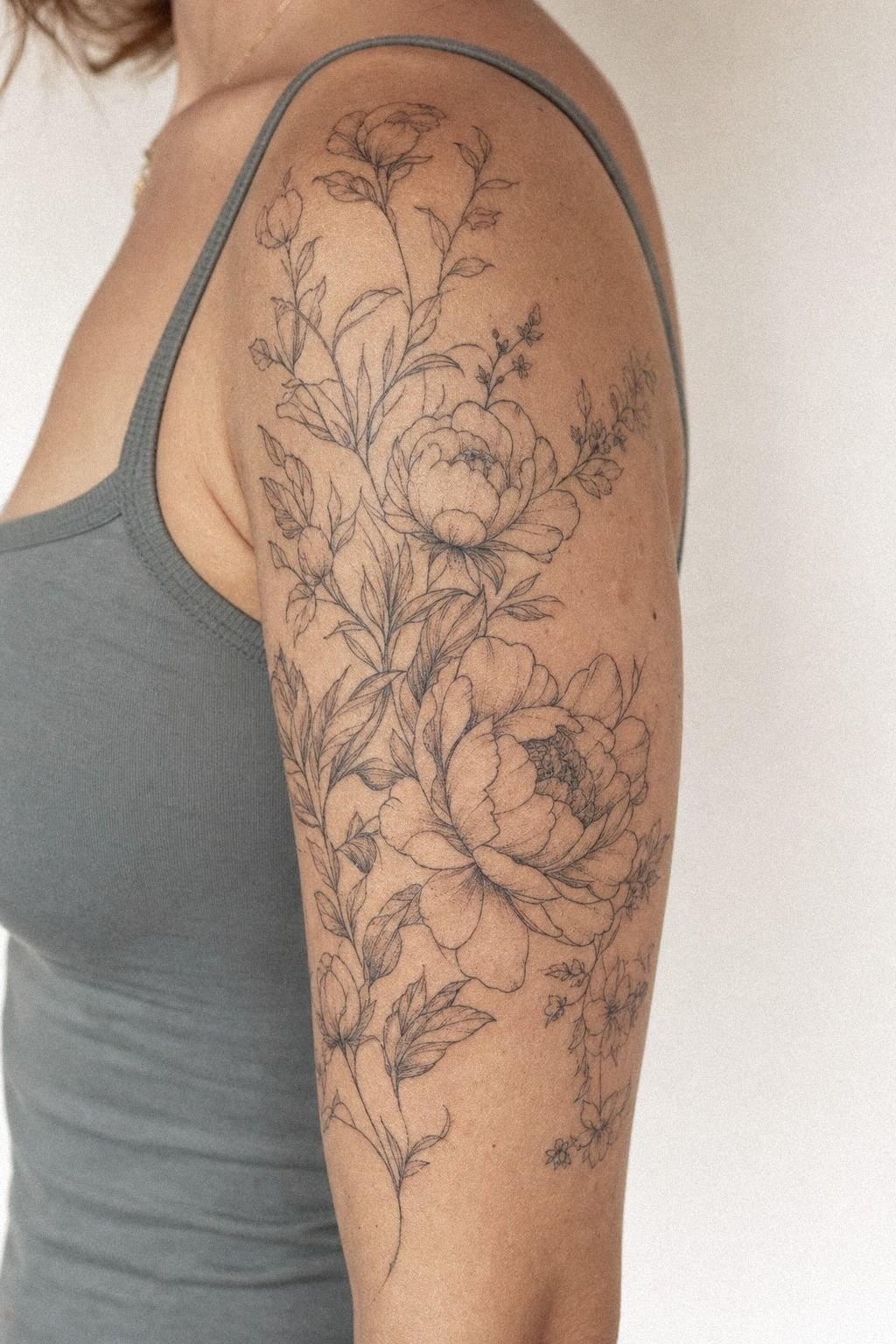
Starting at the upper arm changed the whole mood for me. The shoulder cap and outer bicep give you a low-wear zone, which means delicate linework has a better shot at aging nice there. If you’re building sleeve tattoos for women unique enough to feel custom, that soft start keeps the piece from looking cut off at the top and gives you better long-term payoff.
I asked my artist to begin with a loose floral arc instead of one hard medallion. Smart call.
A big centered stamp can make the rest of the sleeve feel forced, while a softer crown lets you keep building down without fighting the first move. We placed the stencil, stepped back 6 feet, then checked it again with my arm relaxed.
But the real test was whether the top still looked airy once the forearm details came later, which is why I kept revisiting feminine tattoo ideas with placement in mind instead of just mood.
3I Picked Fine Line Florals For Flow
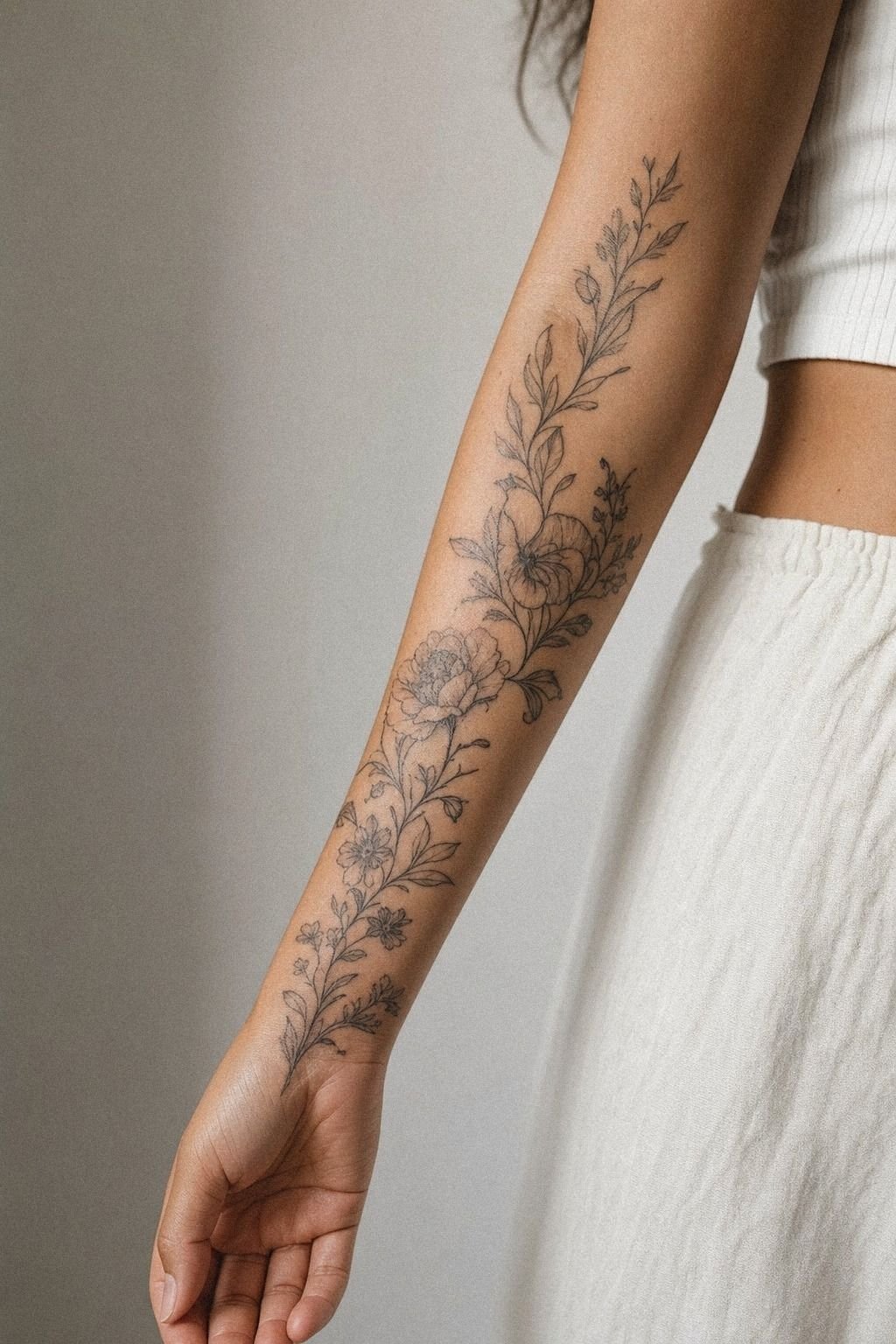
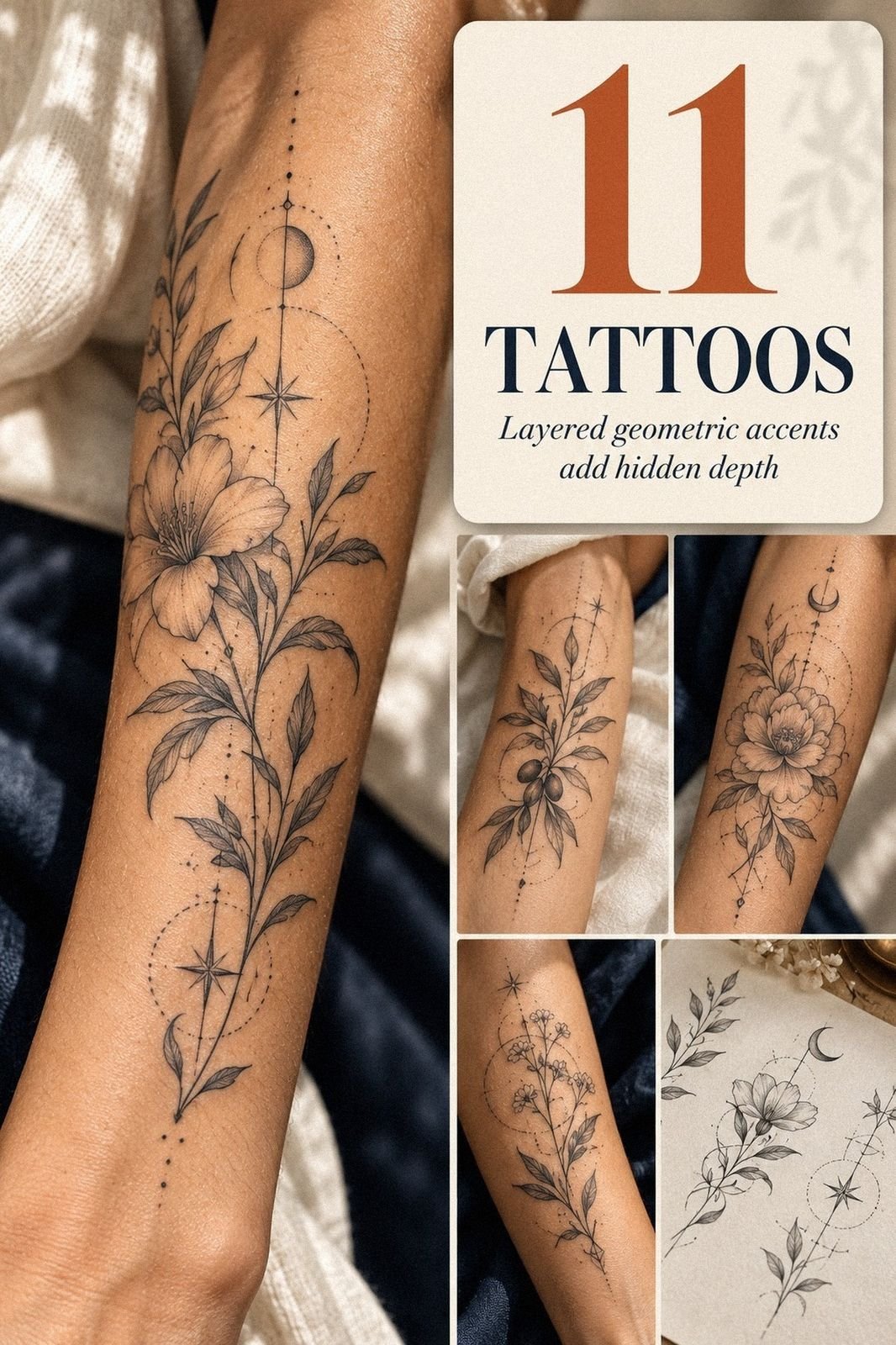
Florals gave me the cleanest path for flow because stems, petals, and leaf direction naturally pull the eye. That’s why fine line sleeve tattoo women posts keep reappearing. The shape language is forgiving, but only if the artist keeps the line weight crispy and the petal count under control with 3RL linework.
I leaned into garden rose forms, slimmer cosmos stems, and open leaves with enough skin showing between them. You want shapes that can overlap without chewing up the skin or making the sleeve read muddy from a few feet away. My artist used a 3RL for the main structure and kept the secondary lines lighter, which made the whole thing feel soft without turning fuzzy.
If you like symbolic florals, yellow rose tattoo meaning is worth checking before you lock in a bloom just because it photographs well.
4What Made The Butterfly Near My Elbow Work?
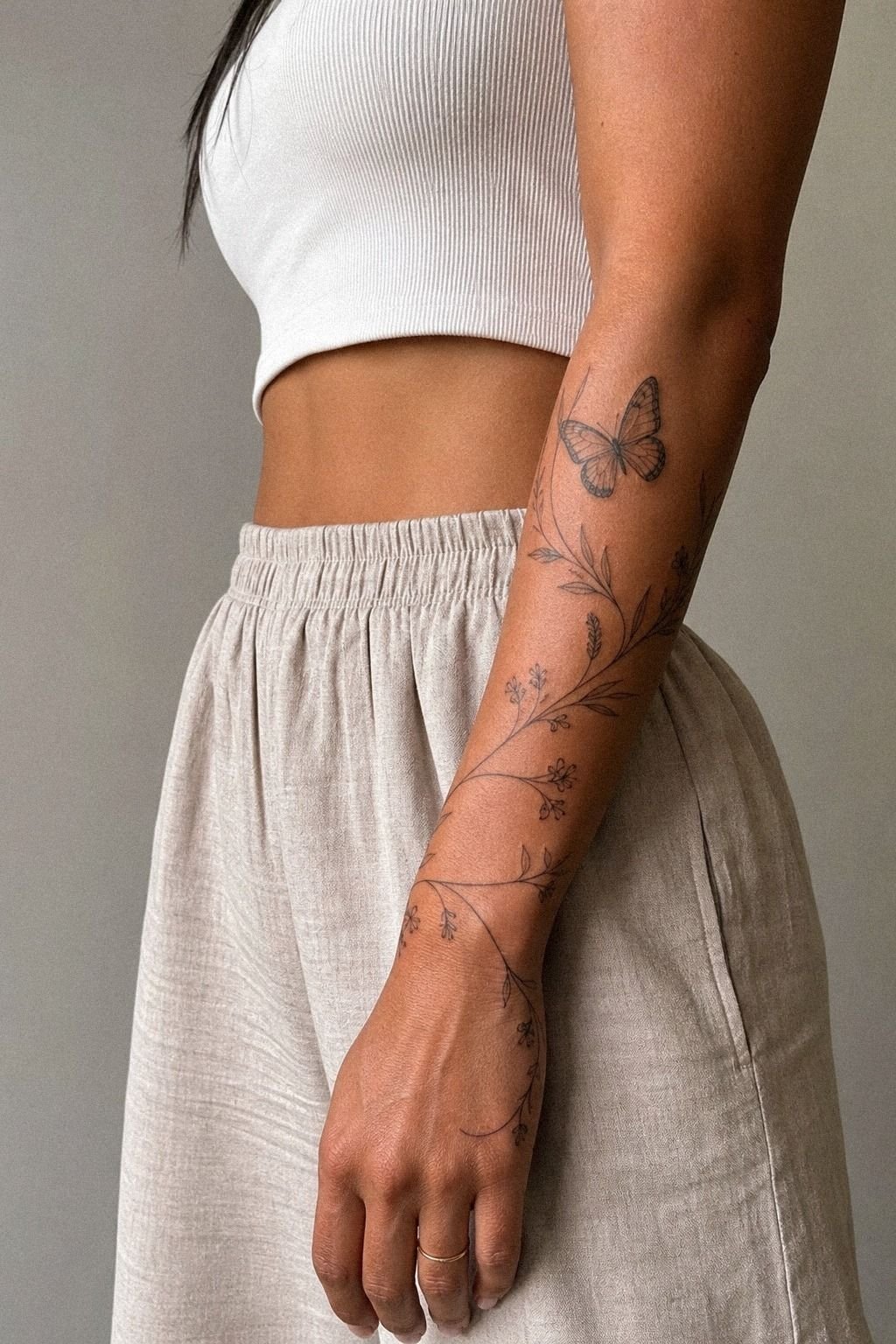
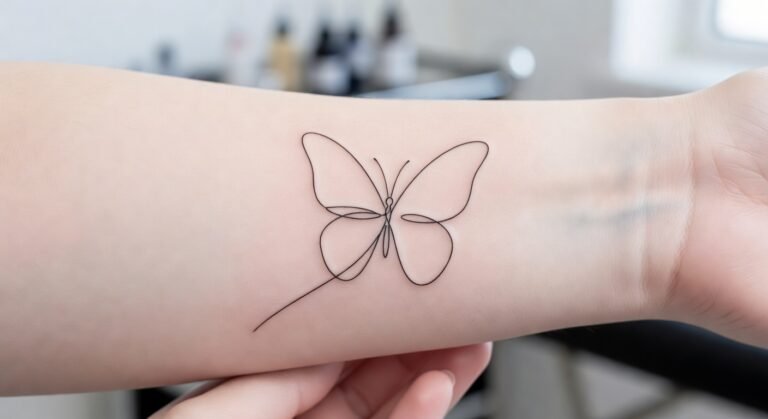
A butterfly near the elbow gave the sleeve a hinge point, but the real win was proportion.
5I Wrapped Vines Around My Forearm
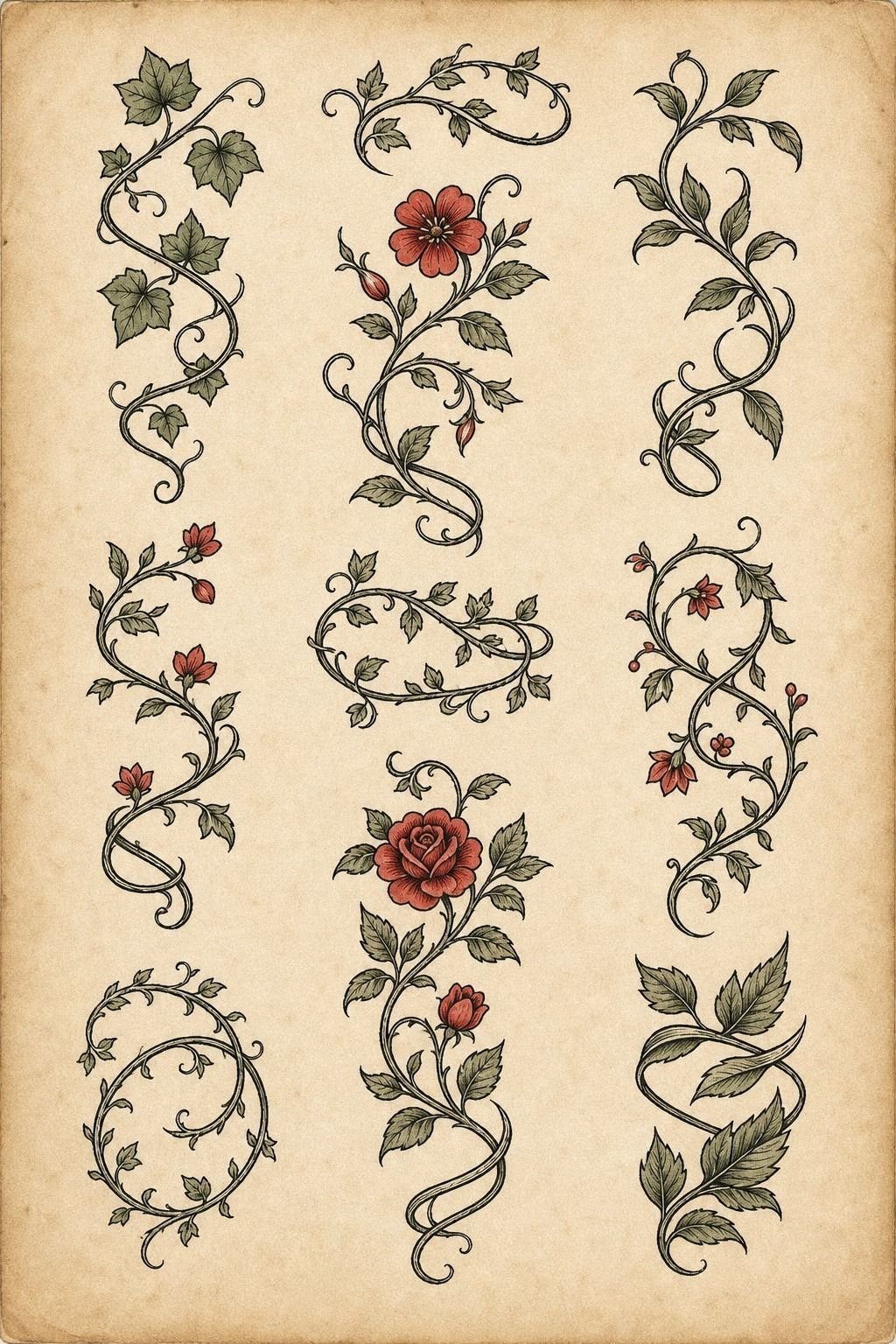
Vines were the move that made my lower sleeve tattoos for women references finally click. Flat bouquets looked pretty on paper, but they didn’t connect the upper arm to the wrist. Once I started drawing a vine that wrapped instead of sitting front-and-center, the sleeve stopped looking like separate tattoos that happened to share a zip code.
I used a flash-sheet mindset here and asked what shape could repeat without getting boring. Thin olive vine loops won over thicker ivy because the line stayed cleaner and the negative skin stayed open.
If your artist can freehand, great. If not, ask for several stencil versions so you can compare a tighter wrap against a looser spiral. I also kept one side of the forearm quieter, which gave the heavier floral cluster somewhere to land later.
For symbol-heavy flow, I also studied yggdrasil tattoo meaning because vertical motifs teach you a lot about direction.
6I Placed Birth Flowers On Inner Arm
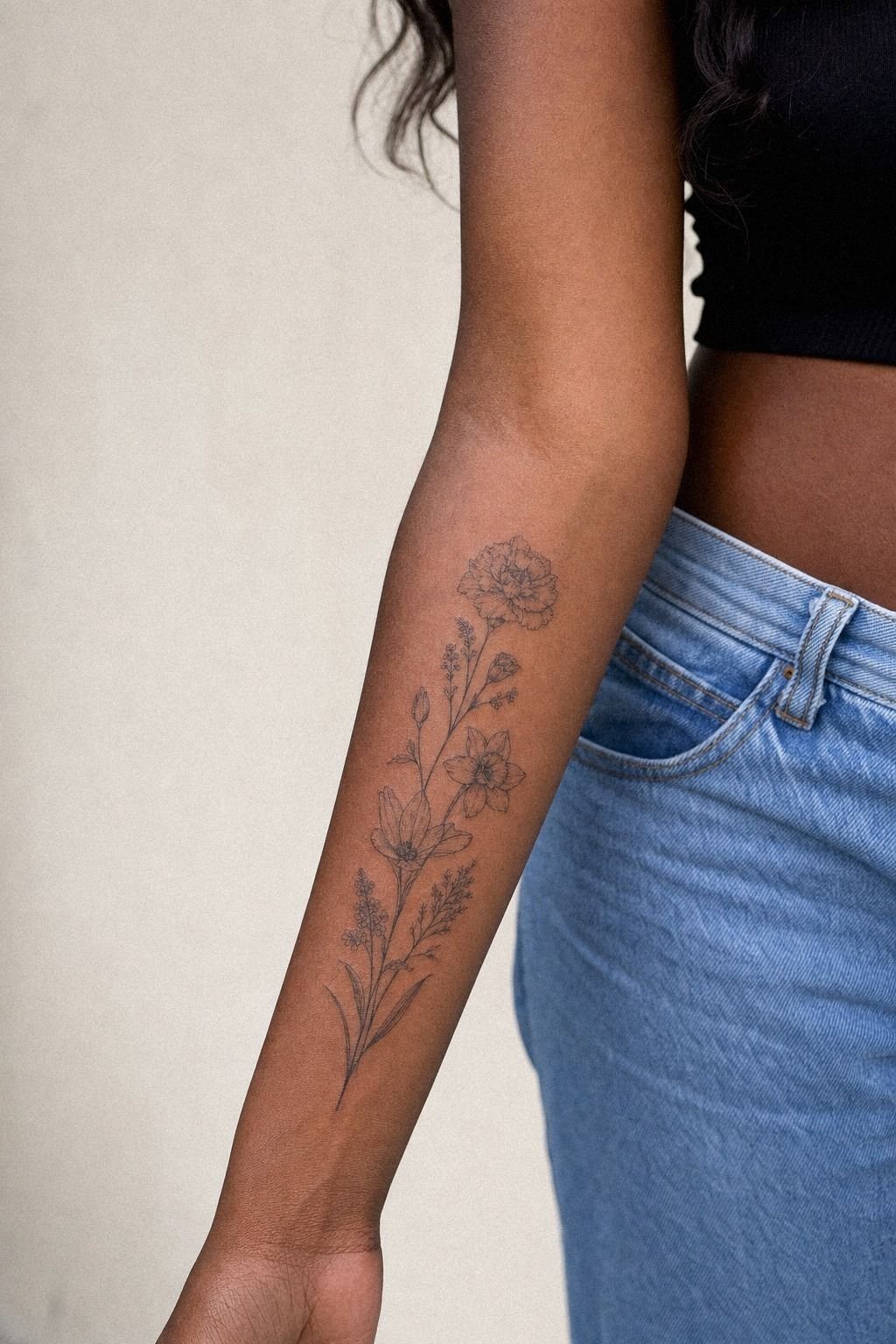
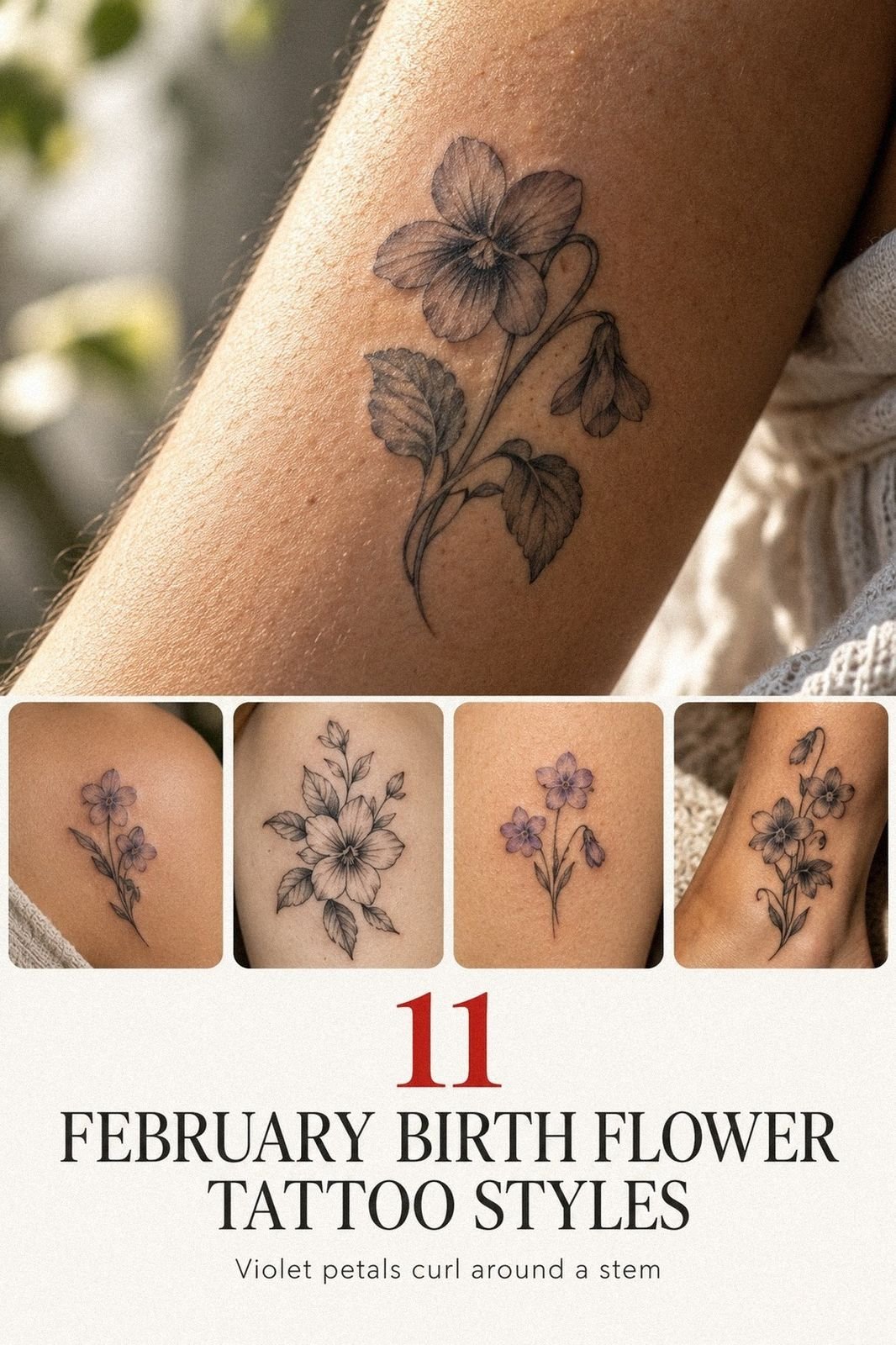
Putting birth flowers on the inner arm made the sleeve feel personal without shouting. That panel sits close, and it reads like a detail you catch when the arm turns instead of the first thing everybody sees. For a women’s arm sleeve, I love that placement because it keeps sentimental content intimate and gives you strong emotional weight.
I chose one larkspur stem and one daisy cluster rather than stacking every family flower I could think of. More meaning is not always better tattooing. The inner arm skin is softer, and tiny packed details there can spread faster than people expect.
My artist opened the petals a little, left more breathing clearance around the stems, and made the names stay in my notes instead of in the tattoo. If you want more soft-reference options, dark feminine tattoo ideas shows how mood can shift without losing femininity.
7I Kept The Wrist Area Delicate
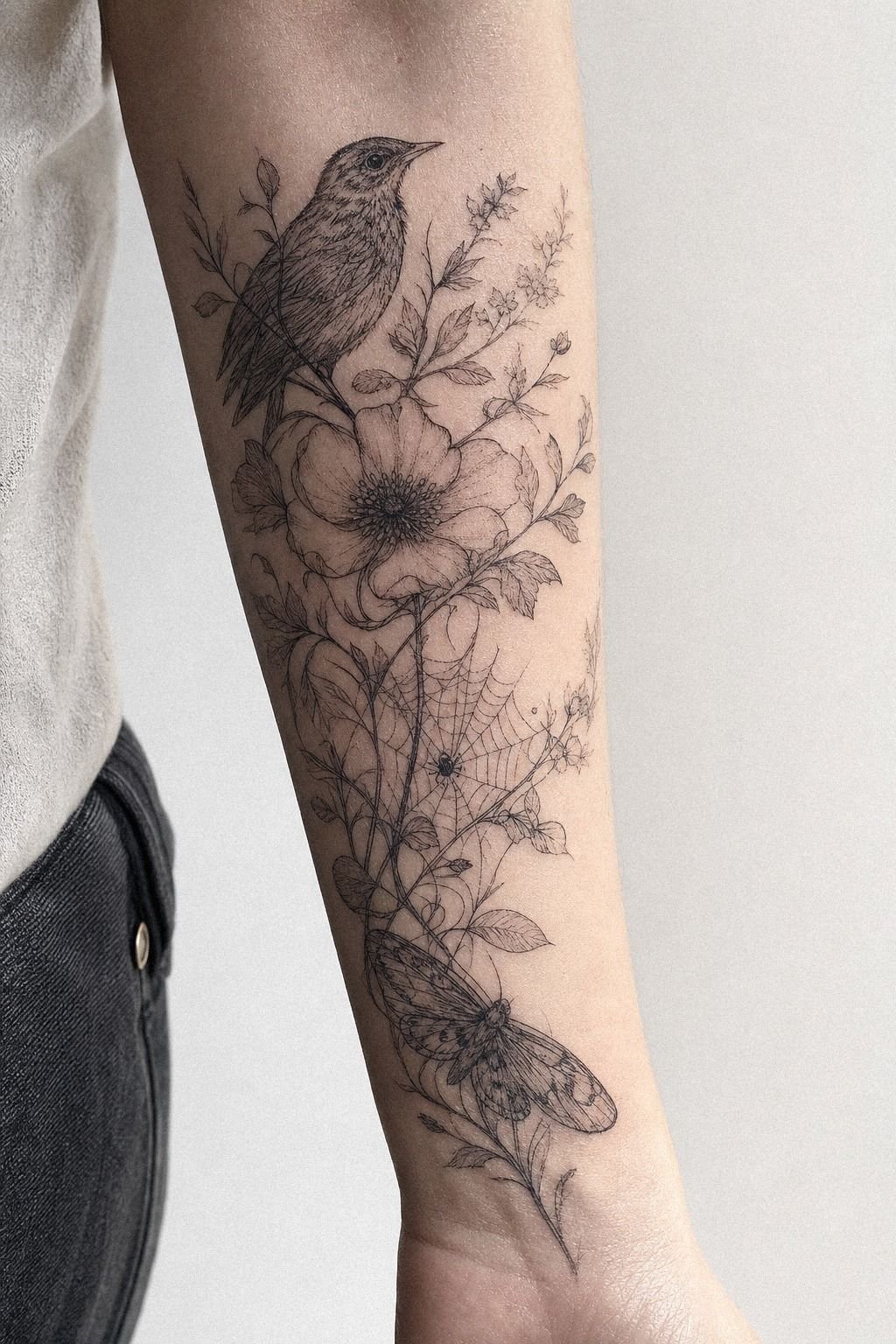
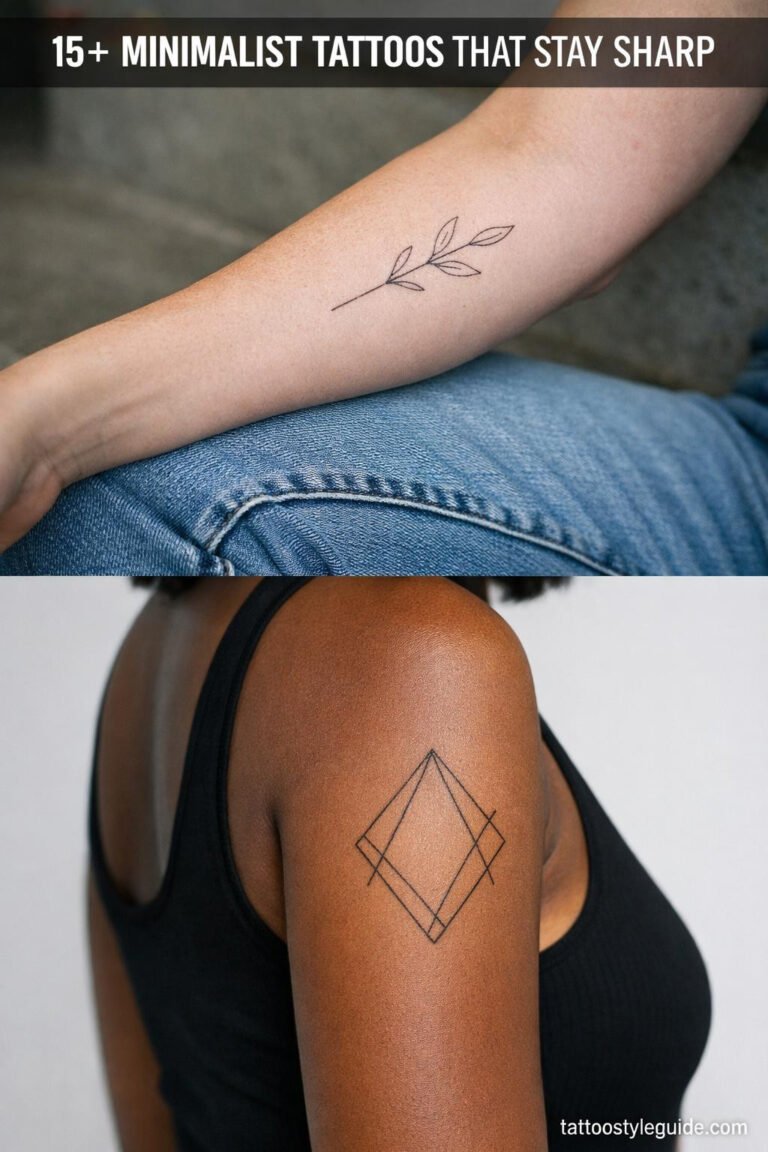
The wrist needed restraint. I know the temptation is to finish strong with a lot of little detail, but that high-wear zone gets friction from sleeves, watches, gym straps, and daily movement. If you want feminine tattoo sleeves that still look clean later, keep the wrist light and let the eye taper out instead of slamming into a dense wrist sprig.
I used one single needle sprig and a short curve of leaves that stopped before the crease. That’s the part nobody tells you: the crease itself is not where your prettiest micro-detail belongs.
Ink there can fade, blur, or need touch-ups sooner. But a delicate exit just above it ages cuter and keeps the whole sleeve from looking heavy-handed. When I compared fresh and healed examples, the lighter endings always won, especially next to softer dark feminine tattoo ideas that still left some skin open.
8I Asked For Soft Shading Between Roses
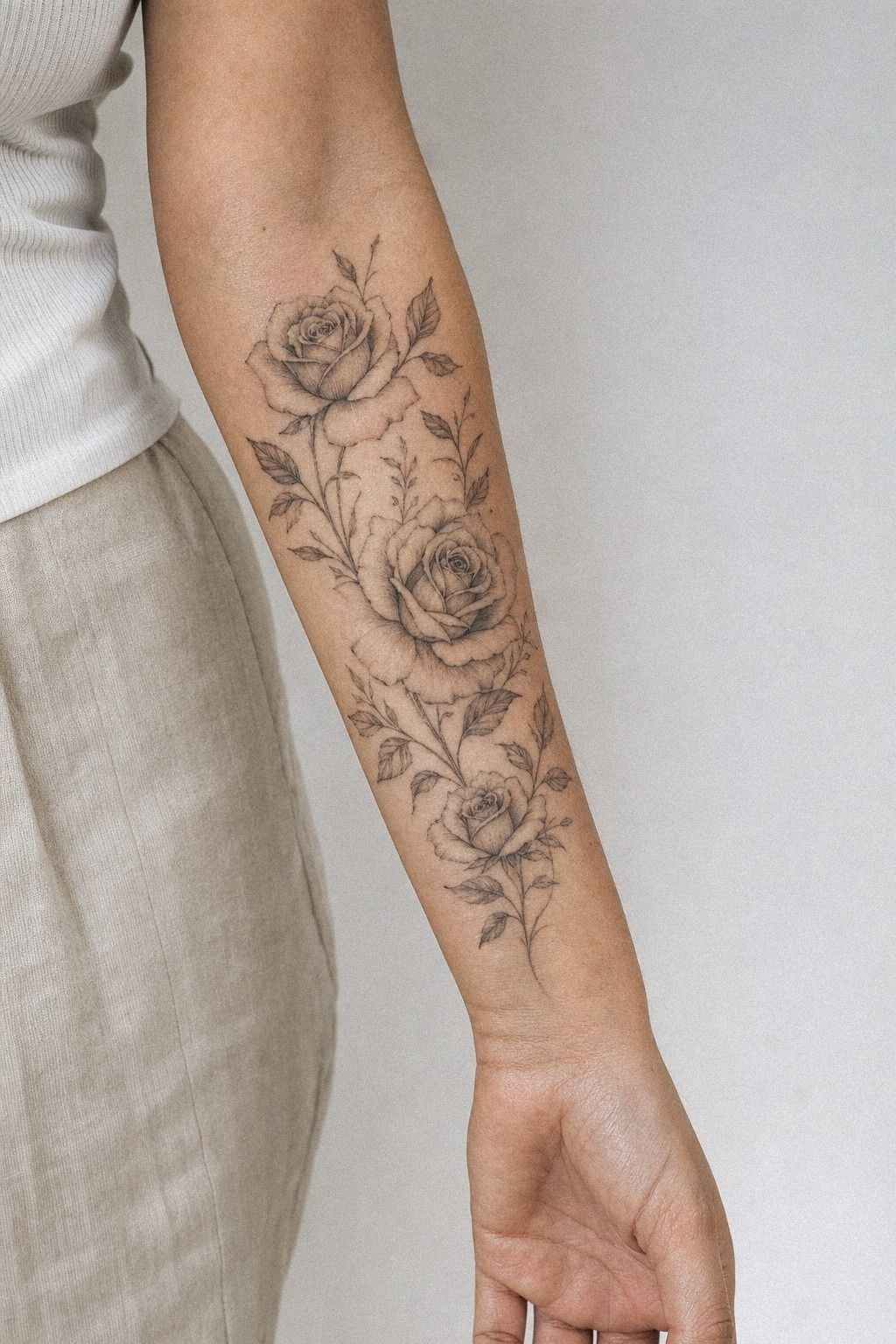
Soft shading was what kept my roses from looking like stickers dropped onto skin. Linework gives you structure, sure, but a little grey wash between petals can push depth without making a feminine sleeve feel dark. The key is keeping it velvety, not patchy.
I asked for soft passes only in the deeper folds and under the petal overlaps. No smoky cloud behind everything.
Too much filler turns a fine line piece muddy fast, especially on a medium-depth skin tone where every extra pass shows. My artist whip shaded with restraint and stopped as soon as the petals separated cleanly.
If your artist keeps going back over the same patch ten times, that’s how skin gets chewed up. You want one clean pull, then done.
9Why Did Negative Skin Save My Peonies?
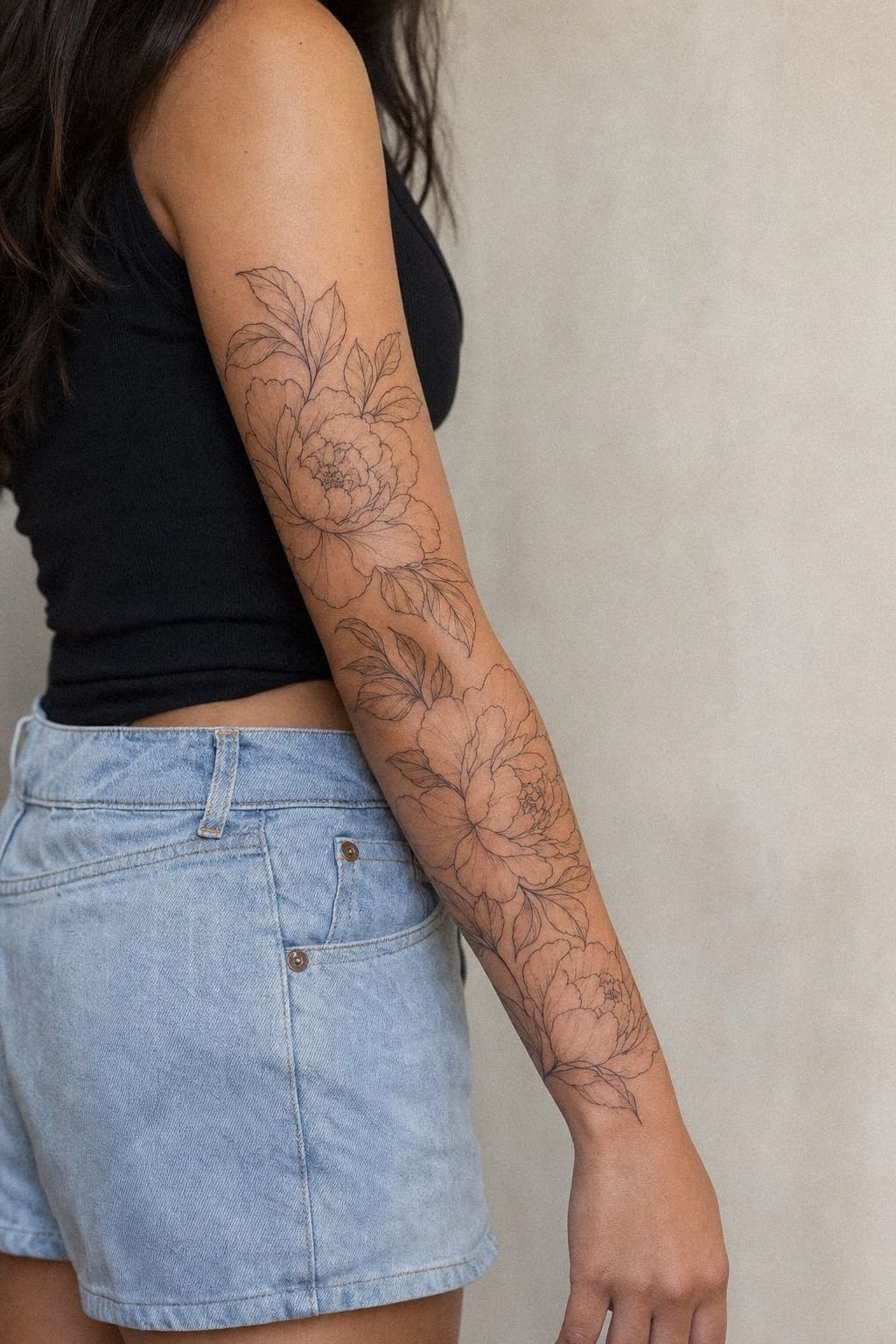
Leaving negative skin around the peonies saved the sleeve from feeling crowded.
10I Tested Sleeve Stencils With Bent Elbow
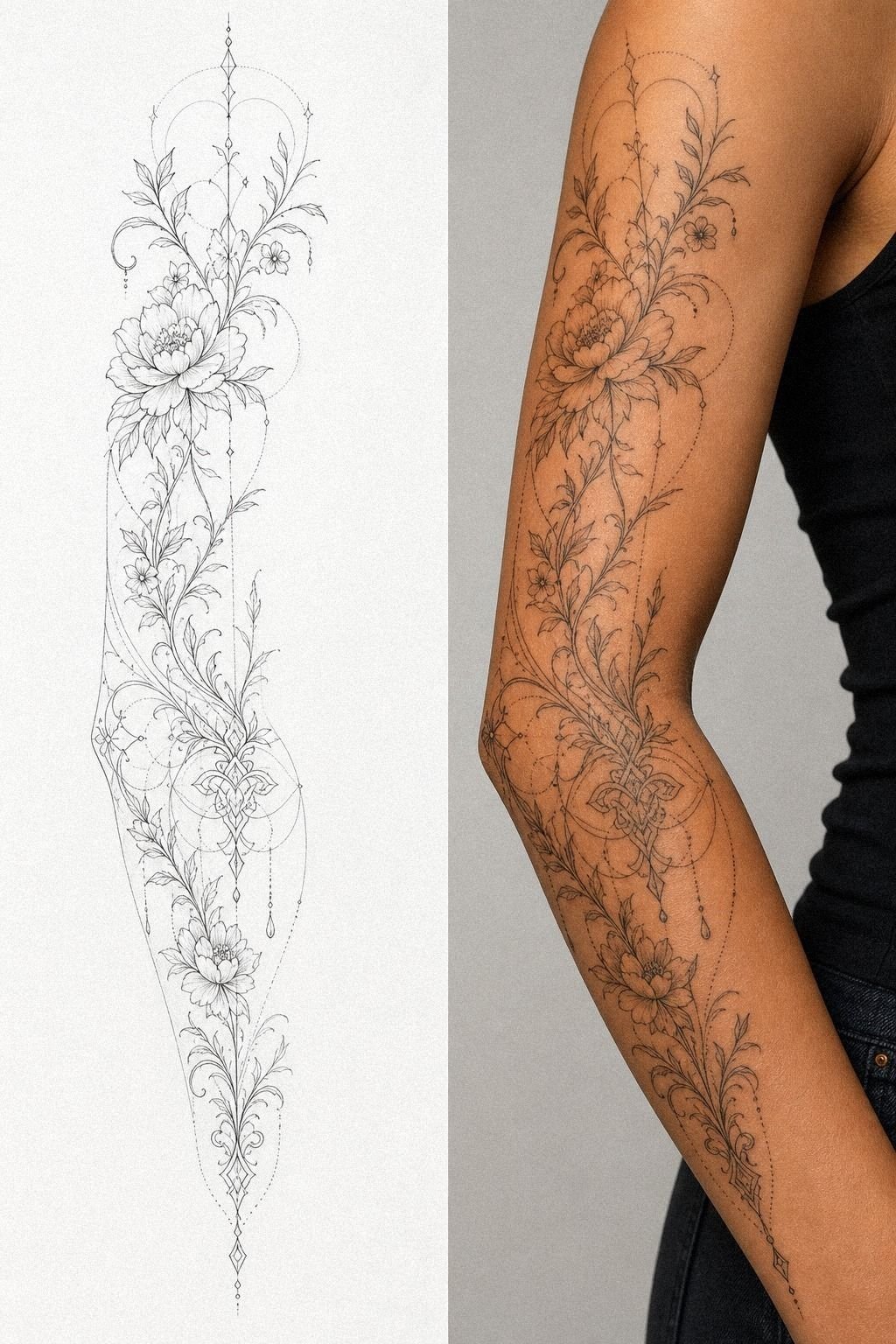
Testing stencils with a bent elbow was non-negotiable. Straight-arm stencils lie to you.
They can look balanced on the table and then bunch up the second you flex, drive, scroll, or rest your hand on your face. Why would you approve a sleeve without checking the pose you’ll use every day?
I had my artist place the full run, then I bent the arm, rotated the wrist, and looked in a side mirror. That’s when I caught one rose pulling too hard toward the inner elbow. We trimmed a leaf, shifted a stem, and suddenly the whole flow relaxed.
That one correction saved me from a future touch-up cost and from years of side-eyeing the side mirror result. If you’re planning feminine tattoo ideas on a curve-heavy body part, test the movement first and save yourself the regret.
Feminine tattoo ideas can get you inspired, but the mirror test is what keeps the sleeve honest.
11Could Script Live On My Inner Bicep?
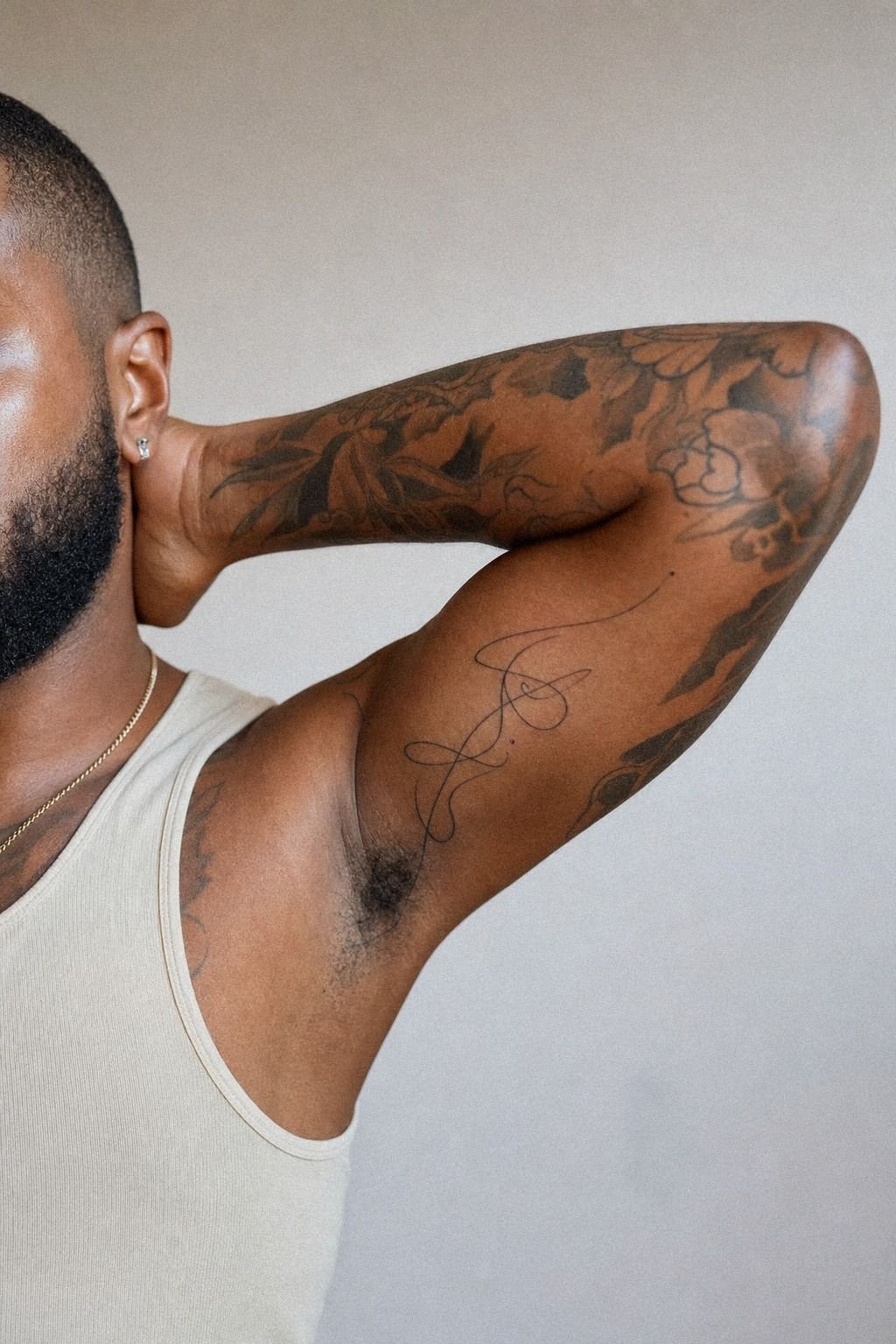
Script along the inner bicep gave the sleeve a quieter voice, but only after I cut it down hard.
12I Matched Petals To My Arm Curves
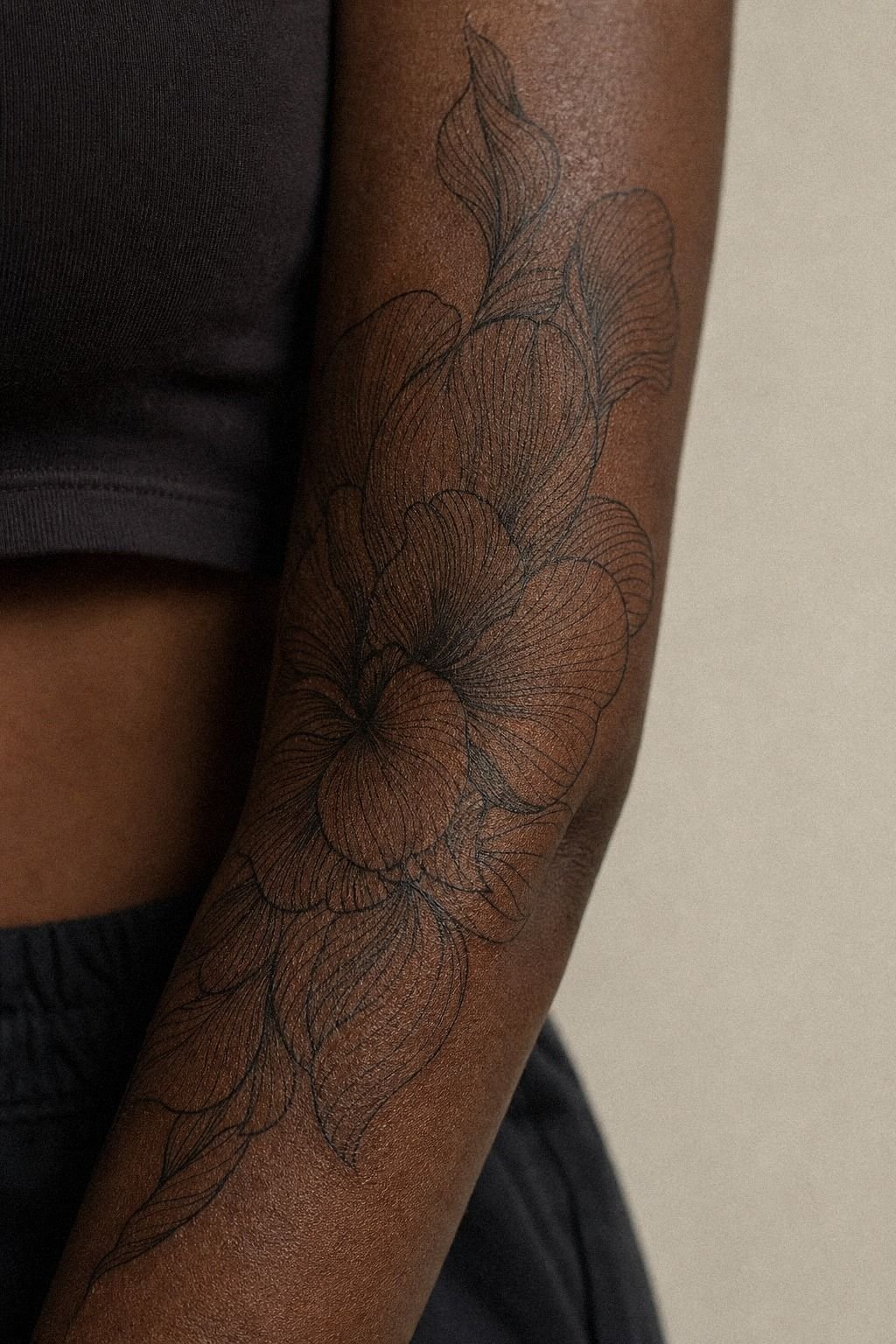
Matching petals to my arm curves made the sleeve feel built, not applied. Petal direction sounds like a tiny thing until you see one flower fighting the natural line of the forearm.
Then you can’t unsee it. If your artist ignores body flow, even clean linework will feel stiff against forearm anatomy.
I asked for the larger outer petals to open toward the wider outside forearm and for the smaller side petals to tuck inward where the arm narrows. That gave the whole sleeve a softer sweep.
The macro view mattered too, because healed black ink on deep skin needs contrast built through shape, not through over-shading. My artist pushed separation with petal size and clean outlines instead of trying to force drama with extra grey.
Smart and solid.
13I Chose Tiny Stars For Shoulder Fill
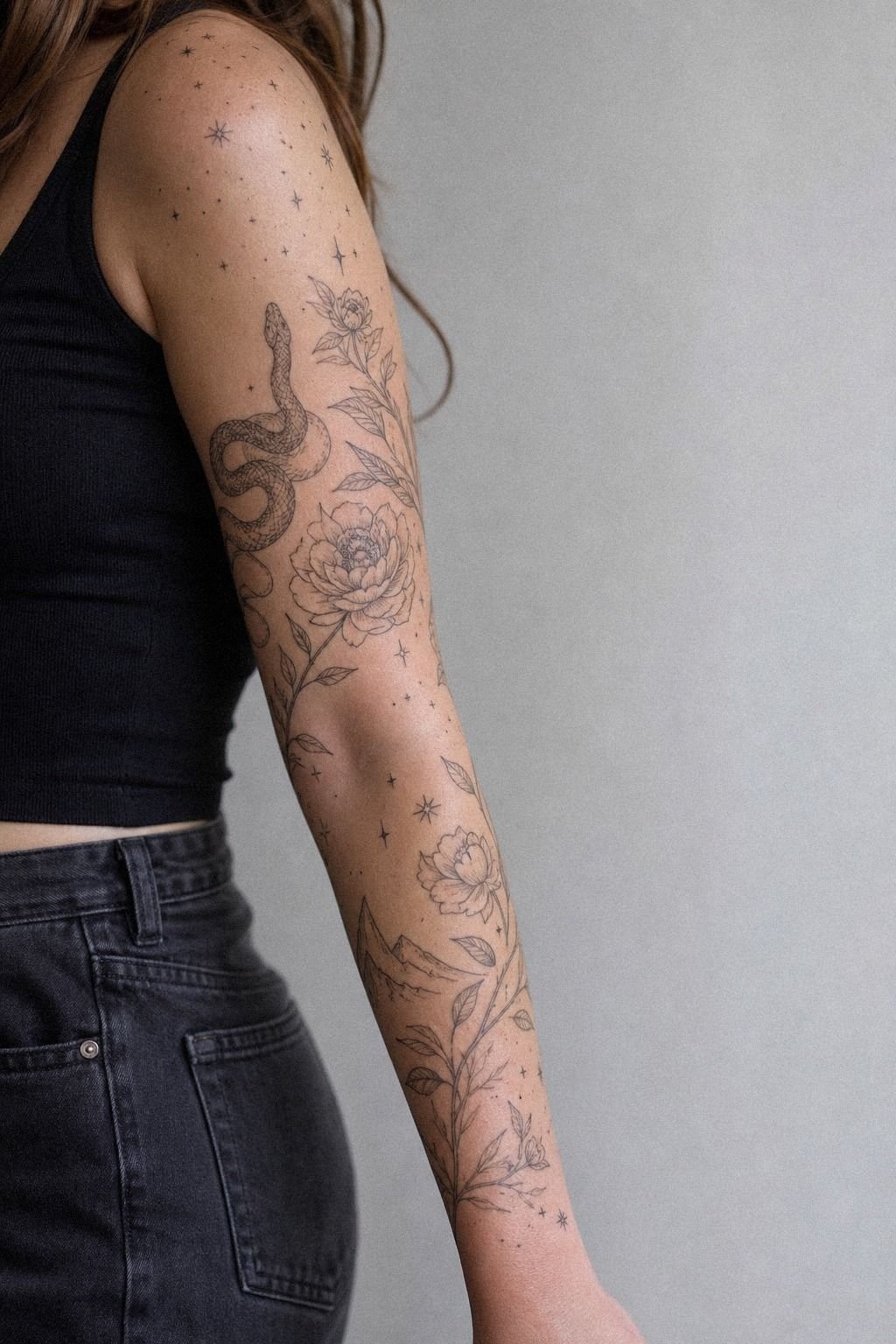
Tiny stars were my shoulder fill, but only after I tried leaves there and hated the result. The leaves made the top feel too earthy compared with the cleaner forearm. A few micro stars gave me lift without stealing focus from the florals, which is why they worked for feminine tattoo sleeves instead of reading random.
I kept them sparse and varied the size slightly, closer to 1/8 to 1/4 inch, so they looked placed rather than stamped. This is where people go wrong and overfill every gap like empty skin is a mistake.
It isn’t. The stars were just enough to connect the shoulder start to the upper-arm flowers and keep the panel from dropping flat. For other soft-fill ideas, I browsed feminine tattoo ideas again and ruled out anything with too many tiny dots.
14I Balanced Blackwork Leaves With Fine Lines
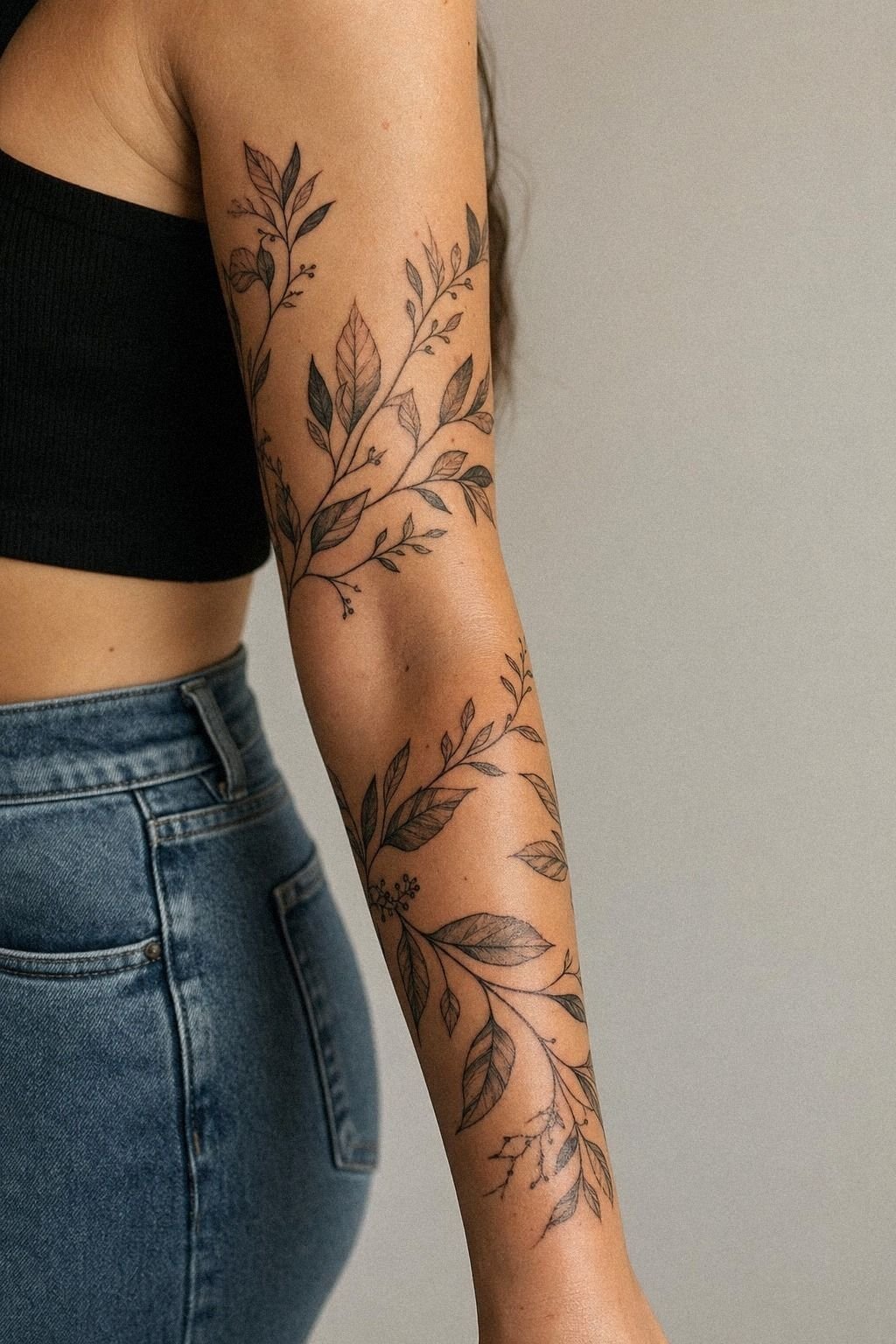
Adding a touch of blackwork made the sleeve hold together. Not full blackwork, not chunky trad leaves, just a few darker leaf anchors that gave the eye somewhere to rest. That’s the difference between a sleeve that looks soft and one that looks faint with blackwork contrast.
We built what I call the Anchor-Leaf Rule. Every major floral cluster got one darker blackwork leaf or bud nearby, then the finer stems radiated out from it. That contrast kept the sleeve readable even when the arm turned away from direct light.
But I kept the dark shapes broad and simple, because tiny filled leaves can heal uneven if your artist scratches at them. Black is your best friend for longevity!
Used sparingly, it’s also your best friend for flow. If you want to see how more contrast changes the mood, dark feminine tattoo ideas is a useful side reference.
15I Planned Pain Breaks Around Elbow Ditch
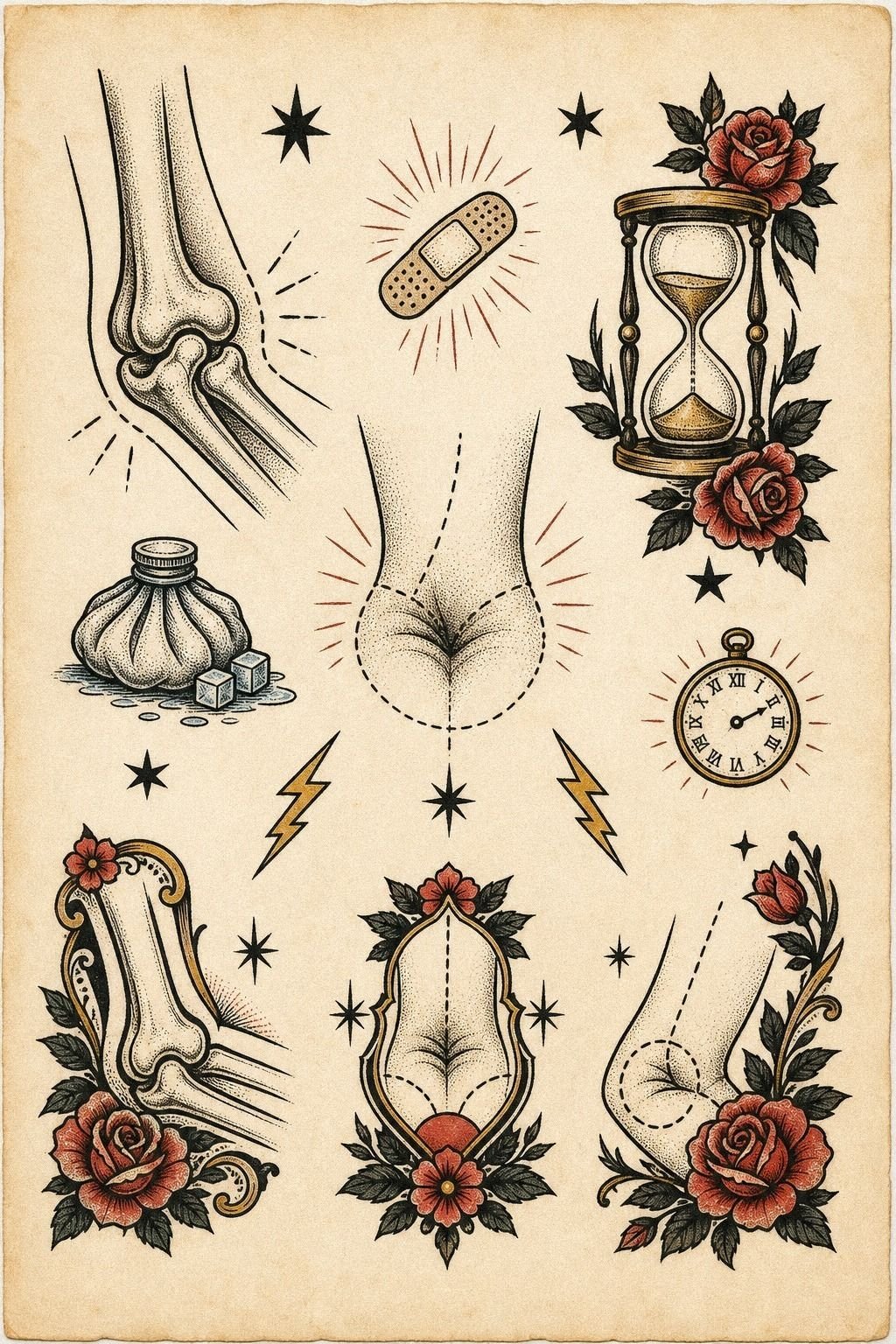
Planning pain breaks around the elbow ditch kept me from getting stubborn and wrecking the session. That area is spicy.
Lines feel sharper there, and shading has that hot dull burn that makes you want to levitate off the chair. If you’re mapping a women’s arm sleeve, respect the ditch and schedule like an adult with a real session pacing.
I broke the appointment into cleaner zones: outer forearm first, upper arm second, ditch and inner arm in shorter passes. My artist also avoided packing too many tight details right in the fold, which meant less swelling and calmer healing after.
But the big lesson was simple: tap out for five rather than pass out on your artist. I brought water, candy, and a zip hoodie so my body wasn’t arguing with me before the hard part even started.
16I Checked Healed Feminine Sleeve Photos
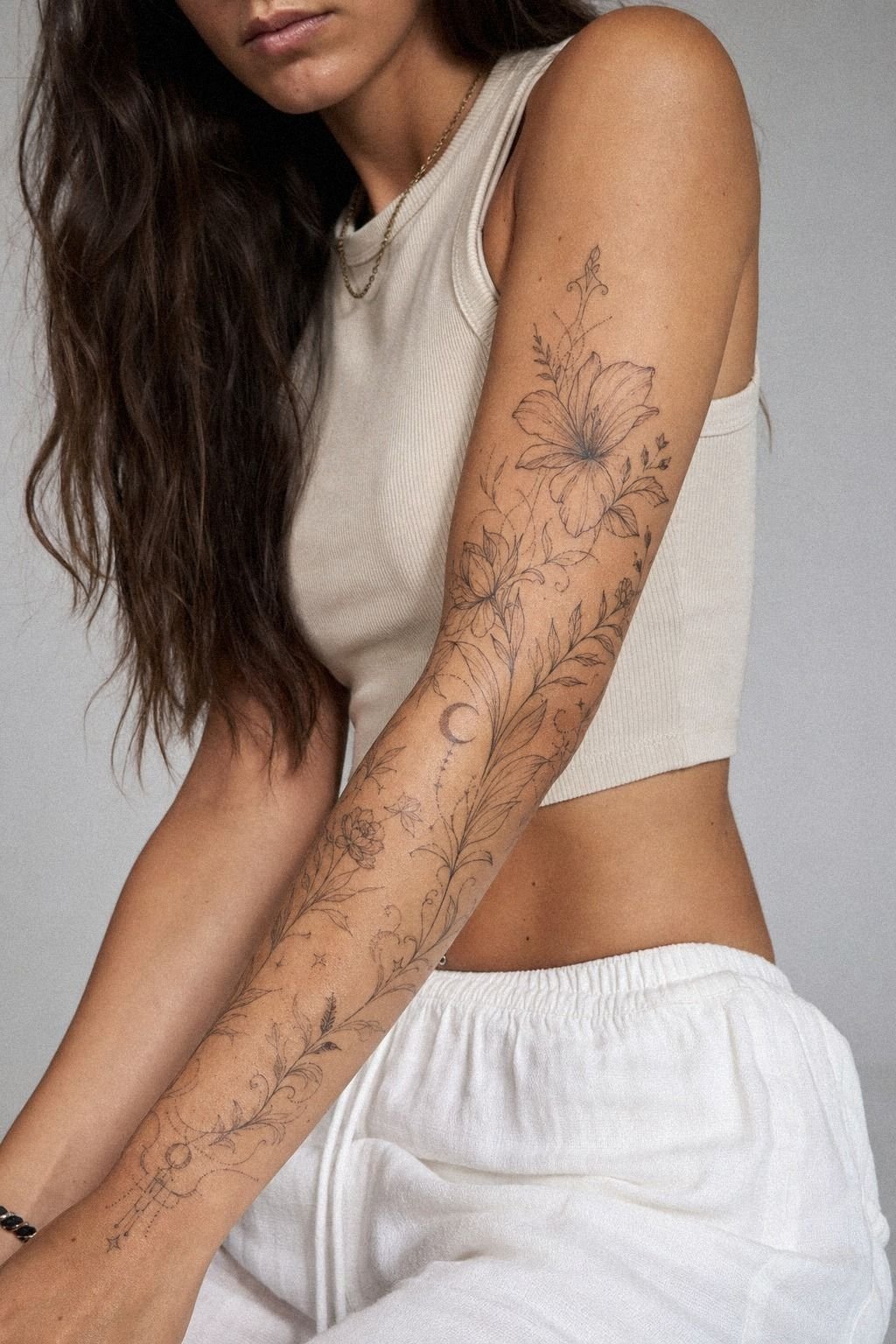
Healed photos changed my plan more than fresh ones did. Fresh tattoos are shiny, punchy, and flattering.
Healed tattoos tell you whether the lines stayed clean, whether the black settled smooth, and whether the fine details still read after the silver-skin phase passed. If you’re serious about feminine arm tattoos, healed work is the portfolio section that counts, especially if you care about healed results.
I looked for sleeves photographed at least a few months out, in daylight, with the arm relaxed. No heavy filters.
No oily studio shine. That’s where you catch whether the artist’s florals stay crisp or start looking fuzzy at the edges.
I also noticed that the sleeves I loved most had stronger contrast than I’d first wanted. Dark feminine tattoo ideas helped me accept a little more black where it was needed.
17I Booked Touchups For Fine Line Gaps
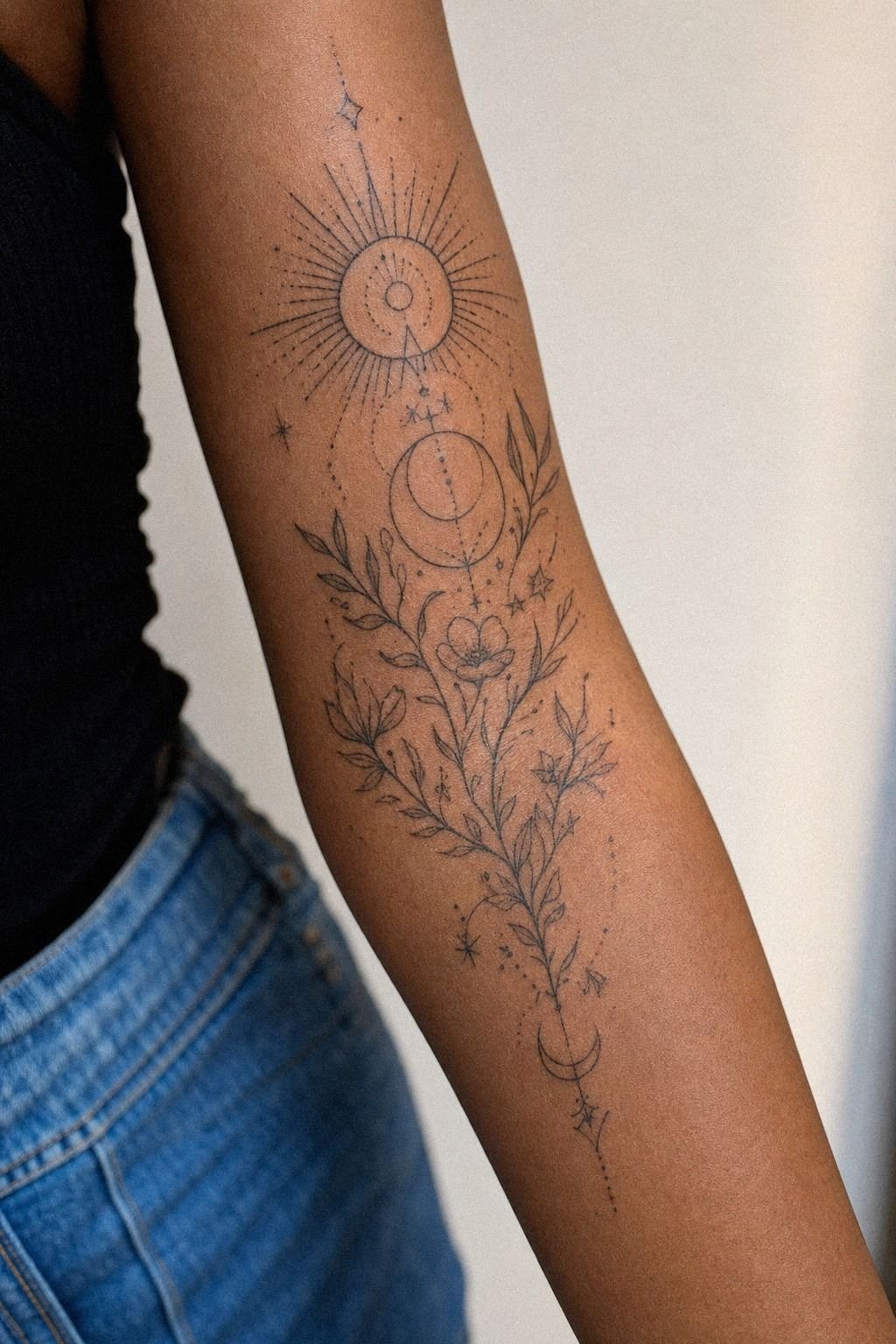
Booking a touch-up from the start took the pressure off the first pass. Fine line sleeves can heal beautifully, but tiny breaks happen, especially near high-movement areas or on spots that got rubbed during healing. That doesn’t mean the tattoo failed.
It means your sleeve is real skin, not a digital mockup, and touch-up timing should be part of your plan.
I waited until the surface looked settled, then checked the lines in bright natural light. A couple of fine line gaps near the wrist and one light section in a leaf got flagged for touch-up. Nothing dramatic.
Most artists want you to wait until the skin is fully calm, usually after that 2 to 3 week surface heal and closer to the longer full-settle window. If you want a symbol tucked into a sleeve later, yggdrasil tattoo meaning is one of the stronger vertical motifs I’ve seen.
18I Protected My Sleeve During Healing
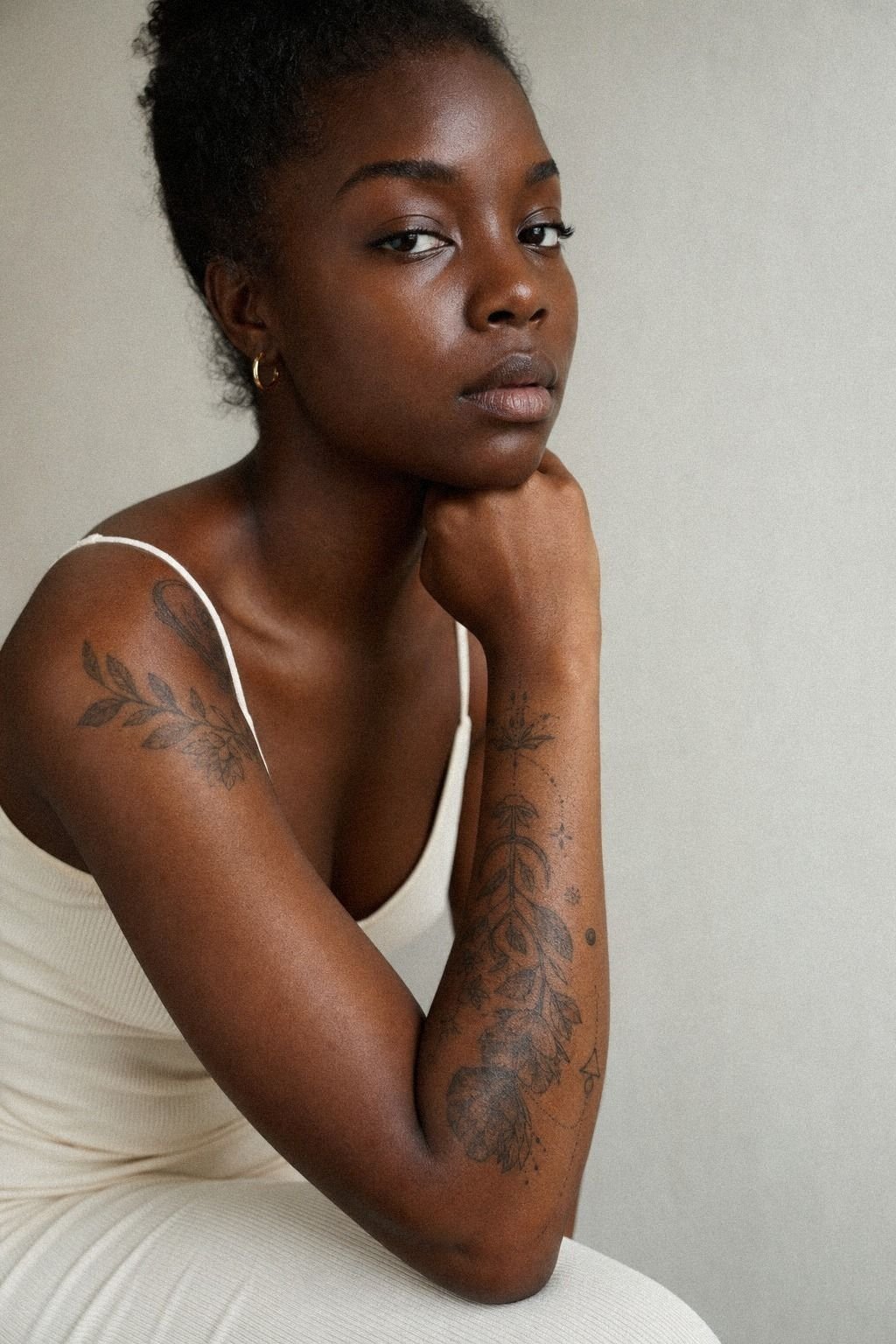
Healing was where the sleeve either stayed clean or got sabotaged. The first few days, it’s an open wound, so I treated it like one.
Gentle wash, lukewarm water, and a thin layer of unscented ointment only where the skin looked thirsty. Not glossy.
Not suffocated.
I also avoided pool water, direct sun, and rough gym friction while the surface was still closing. That part is boring, but it’s the whole game.
Once the flaking started, I let it peel on its own and moved into a lighter fragrance-free lotion. If you pick, scrub, or blast UV at a healing sleeve, don’t act shocked when the lines heal dull. Healed nice is not luck.
It’s aftercare plus good application.
The Three-Pass Flow Rule I Learned
What surprised me most was how little of this came down to finding the prettiest individual tattoo. The sleeve only started working once I stopped judging each piece as its own poster and started reading the whole arm in motion. That’s the part a lot of first-timers miss.
You aren’t buying 18 separate moments. You’re building one rhythm that has to stay clean from the shoulder down to the wrist, and that makes the design more worth it.
My artist and I ended up using what I think of as a three-pass check. First pass was silhouette. Could you still tell where the major blooms, butterfly, and vine run sat when the arm was relaxed at my side?
Second pass was contrast. Did the darker anchors, softer grey wash, and open skin give the design enough push that it wouldn’t heal flat on real skin?
Third pass was wear. Would the delicate bits still make sense after daily friction, a summer of sun exposure, and the normal widening fine lines get over time?
That last pass saved me from several bad ideas.
I also learned not to confuse femininity with fragility. Soft doesn’t mean faint.
Some of the strongest sleeve tattoos for women unique enough to feel custom are the ones that use cleaner black, simpler shapes, and more restraint. A sleeve can feel gentle and still have backbone.
In fact, it needs backbone if you want it to read well after the fresh-photo stage is over with clean contrast.
And here is the honest part: I had to let go of a couple of Pinterest-exact references. They were cute on a flat screenshot and wrong for my arm. One had too much script.
One packed tiny petal detail right into the wrist crease. One tried to force symmetry where my arm shape wanted movement instead. Once I stopped chasing exact copies, the design got better fast.
If you want Pinterest-exact, I would tell you the same thing I would tell any client: references for vibe only.
But when the flow clicked, it really clicked. The upper arm looked soft, the forearm had direction, and the open skin kept the whole thing from suffocating itself.
That’s when I knew the plan had matured from a folder of pretty ideas into a sleeve that would age cute on me. Not louder.
Smarter!
US Studio Rates and Real Sleeve Numbers
I couldn’t responsibly map a full feminine sleeve to one exact number because artists, regions, and complexity vary too much. What I did was budget from real US shop patterns: most studios have a minimum around $50 to $100, and custom work is often $100 to $250 per hour.
Fine line can look light, but hours add up fast when your artist is moving carefully and preserving skin. If you’re asking whether a soft floral sleeve is worth it, this is where the answer starts.
For timing, my planning notes assumed multiple sittings instead of one marathon. A softer fine line sleeve can still take several hours across separate appointments, especially if you have inner-arm script, elbow detail, and shading breaks. Real talk: a clean sleeve usually costs more than a rushed one, but the better application gives you better heal.
And if you’re comparing concepts, feminine tattoo ideas and dark feminine tattoo ideas can help you decide whether you want lighter botanical flow or stronger contrast before you spend the money. That kind of direction matters because a sharper plan protects your planning before the stencil ever hits skin.
A Few Things Worth Answering
How much does a Feminine Tattoo Sleeves usually cost?
About $100 to $250 per hour is a common US custom range, with many studios setting a $50 to $100 minimum. Your total depends on size, detail, and how many sessions your sleeve needs. Bigger flow, more shading, and more redraw time all push the cost up.
Are Feminine Tattoo Sleeves a good idea for a first tattoo?
Yes, if you keep the plan clean and pick a low-wear start like the outer forearm or upper arm. Better flow.
More readable healing. Easier decisions than trying to cram every meaning into one tiny first tattoo. For the right person, that makes the sleeve feel more worth it from day one.
How do I choose a tattoo artist for Feminine Tattoo Sleeves?
Look for healed fine line work, not just fresh tattoos, and check whether their florals, script, and leaf shapes stay crispy. I also want clear studio hygiene and strong placement sense. Start with feminine tattoo ideas if you need style language first, then ask how they handle redraws, touch-ups, and pricing policy.
How much do Feminine Tattoo Sleeves hurt?
Forearm, outer shoulder, and upper arm are usually more tolerable, while the elbow ditch wrist, hand, ribs, and sternum run spicier. Lines hit sharper.
Shading is a dull burn. Plan breaks before the hard zones, not after.
It is rough, yes, but good pacing keeps the whole thing manageable!
How long does a Feminine Tattoo Sleeves take to heal?
Surface healing is usually about 2 to 3 weeks, while the tattoo can keep settling for 2 to 3 months. Gentle wash.
Thin moisturizer. No pools, heavy sun, or picking while the skin is still closing.
Protecting the finish is part of the overall finish.
What’s the best placement for Feminine Tattoo Sleeves?
The outer forearm and upper arm are strong starting points because they show well, hurt less than bony zones, and hold delicate lines better. If you want a more private detail lane, inner arm works too, but keep the design simpler there.
Feminine tattoo ideas and dark feminine tattoo ideas can help you decide how soft or contrast-heavy that placement should feel. Better placement also protects your inner arm from extra touch-up cycles.
Start With Flow, Not Filler
If I had to pick one, I’d start with the soft upper arm floral arc. It gives you low-wear real estate, cleaner healing, and better long-term readability. Get that anchor right first, and the rest of the sleeve gets a lot easier to price, plan, and love!