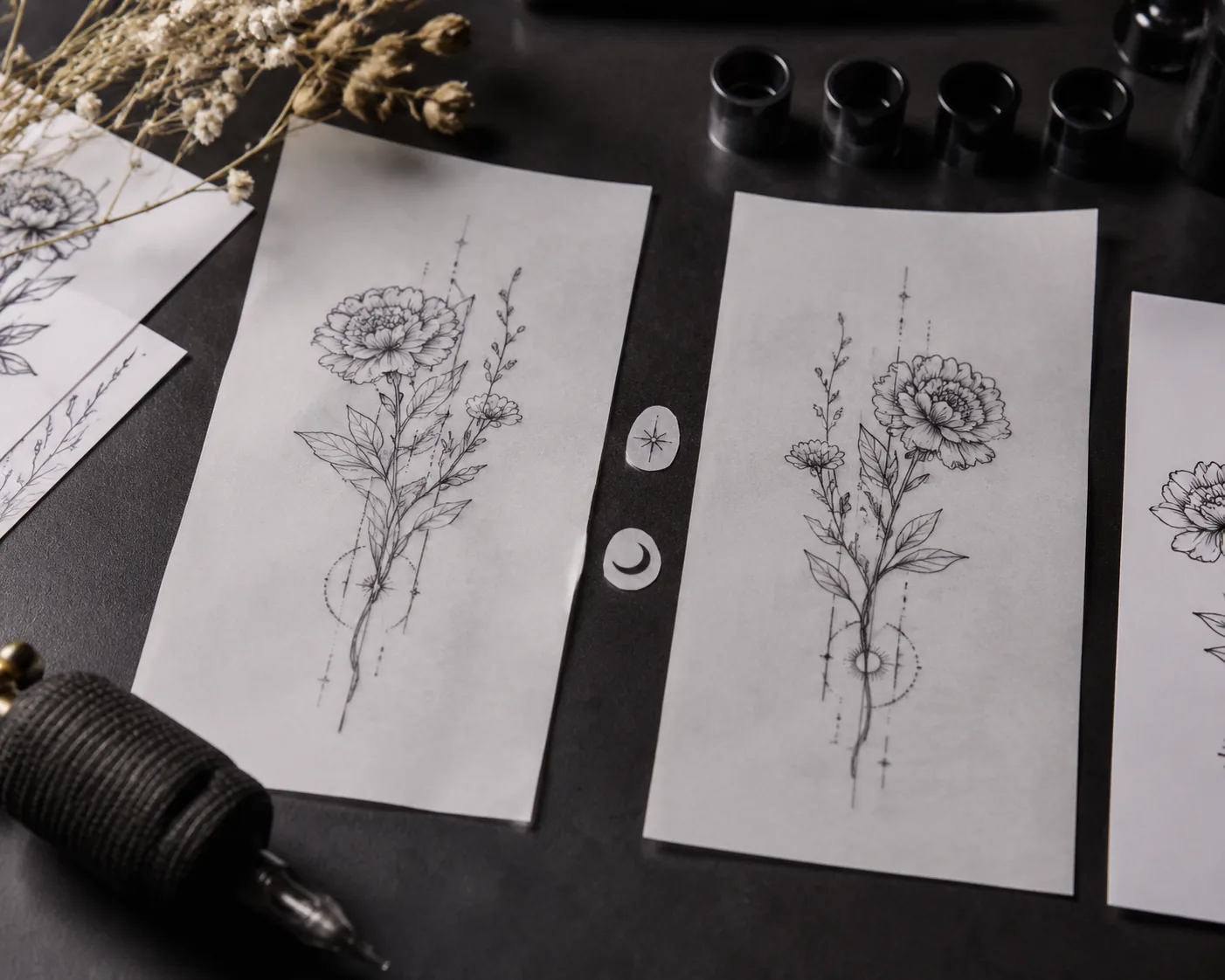
Matching tattoo ideas work best when the shared meaning is clear and the design still makes sense on each person alone. The mistake is making the tattoo too literal, too tiny, or too dependent on a relationship staying exactly the same.
Quick answer: The best matching tattoo ideas are simple symbols, split motifs, dates, birth flowers, coordinates, small objects, or mirrored placements that can stand alone. Keep the design readable, let each person adjust scale, and avoid locking everyone into identical skin and style.
Matching tattoo ideas that age better
A shared tattoo does not have to be identical. In real studios, the best matching designs usually share a concept while giving each person a version that fits their body.
| Idea | Best use | Watch-out |
|---|---|---|
| Birth flower pair | Siblings, parents, close friends | Petal detail needs space |
| Tiny object | A private memory or place | Do not overexplain it with text |
| Split symbol | Couples or best friends | Each half should still look complete |
| Shared date | Family milestones | Choose readable numerals |
| Same motif, different style | Groups with different aesthetics | Use one artist to keep cohesion |
Bold black designs hold up decades better than fine line work on matching sets. A solid black outline with minimal shading reads clearly from across the room at age 50, while ultra-thin single-needle lines can spread and blur into a gray smudge within five to ten years, especially on high-wear zones like fingers, wrists, and feet. If you and your person want something delicate, go black and grey with slightly thicker strokes, not hairline.
Simple geometric shapes, traditional anchor fills, and small solid icons age cleaner than detailed illustrative pieces. A fully saturated black shape will hold. A tiny watercolor splash with no outline will bleed. Placement matters too. Inner arms and ribcage stay crisp longer than hands or neck, which see constant sun and friction. Pick a design with enough weight that it still reads clearly 20 years out.
Make the match fit each body
The best matching tattoo still tells your story even if you're standing alone.
The same one-inch design can look clean on one wrist and cramped on another. Skin tone, body part, scars, hair, sun exposure, and movement all change how a tattoo reads. Matching should mean shared intent, not forced sameness.
For groups, pick the concept together and let the artist adjust size and placement person by person. That keeps the set connected without making the weakest placement drag the whole idea down.
Matching doesn’t mean identical placement or scale. A design that sits perfectly on your friend’s forearm might look awkward on your upper arm because the muscle mass and skin texture differ. Your artist should sketch the piece on each person separately, adjusting proportions to fit the actual body part. A crescent moon that’s 2 inches on a slender wrist might need to be 2.5 inches on a broader forearm to carry the same visual weight.
Skin tone affects how color and shading read, so two people getting the same piece in the same ink can end up with noticeably different results. Darker skin tones need bolder, more saturated work for the design to pop. Fine line grey on deep skin often disappears. Talk to your artist about adjusting ink density or going slightly heavier on the outline so both pieces look balanced next to each other, not just identical on paper.
What to ask before booking
Matching tattoos need more coordination than a solo small tattoo. Ask practical questions before the deposit.
- Ask about minimum size: the smallest version must still have open spacing.
- Ask about placement changes: each person may need a slightly different body part.
- Ask about healed examples: especially for fine line matching tattoos.
- Ask about session flow: groups take longer than the tattoo size suggests.
Ask your artist to show healed photos of the same style, not just fresh-off-the-machine shots. Fresh tattoos always look crisp and saturated. What you need to see is how their fine line work or color saturation holds at six months to a year. Ask specifically about blowout risk for your chosen placement. Fingers and inner wrists are spicy zones with thin skin that blows out easily, meaning the ink spreads under the skin and lines get fuzzy.
Confirm both people are booking with the same artist, or at least artists in the same shop who can compare references side by side. Two artists working from the same reference photo in different studios will produce two different tattoos. Also ask about touch-up policy before you commit. Matching sets almost always need a touch-up pass at six to eight weeks once the skin is fully healed, and you want that included or clearly priced upfront.
The matching tattoo mistakes to avoid
Avoid designs that only make sense when two people stand side by side. A split heart, quote, or puzzle piece can feel clever for one photo and awkward for daily wear.
Also avoid matching tattoos as pressure. If one person wants a visible forearm mark and another wants a hidden rib tattoo, forcing the same placement is how resentment starts.
The biggest mistake is booking the same placement without thinking about how the two bodies actually move and age together. Inner wrists sound romantic but they fade fast, they’re spicy to sit through, and they blow out on people with thinner skin. Finger tattoos lose definition within a year on most people. If longevity matters, shoulder blades, upper arms, and calves are low-wear zones that stay cleaner much longer.
Don’t rush the design because you’re both excited. A lot of couples walk in with a Pinterest screenshot and book same-day. Give your artist at least one real consultation to size the piece, check the reference, and talk about how it heals on different skin types. A matching set done right takes an extra week of planning. A matching set done wrong is two people paying for cover-up work in three years, and cover-ups cost two to three times more than the original.