
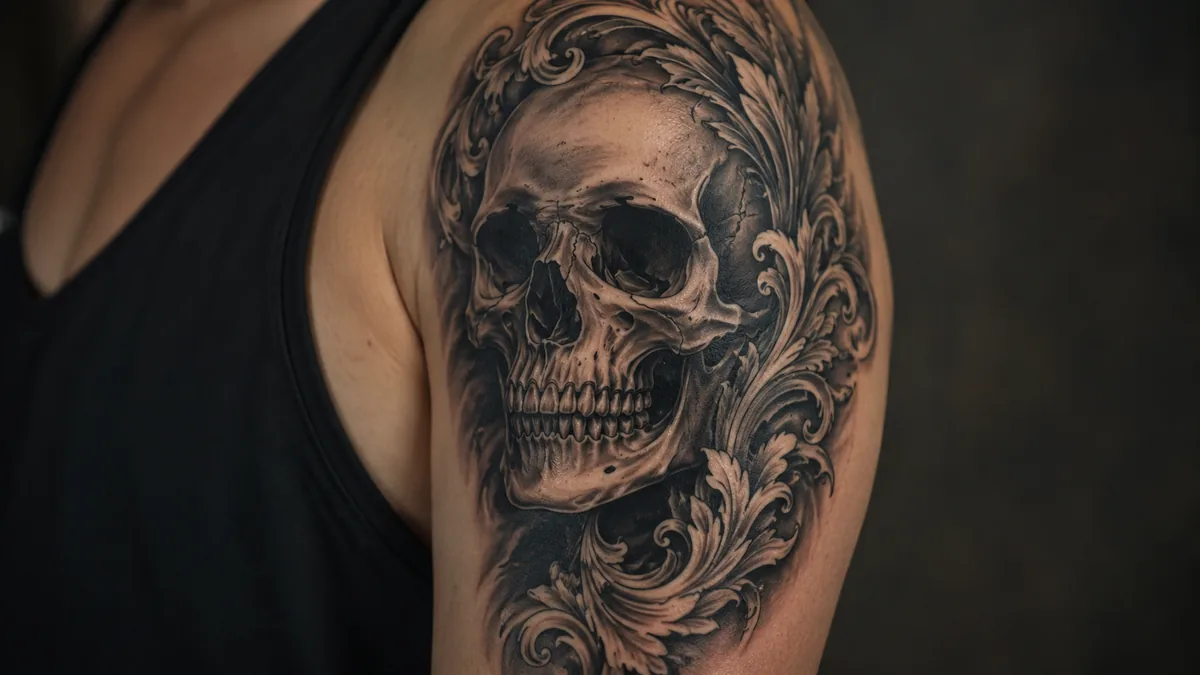
The skull is one of the oldest tattoo images on the planet, and it still hits hard. Most people assume it’s about death, and yeah, that’s part of it. But the full picture is richer than that. A skull tattoo can mean defiance, survival, respect for the dead, or a flat-out reminder that your time here is finite. Context matters.
The design, the style, the extras you add around it, all of that shifts the read. A sugar skull with marigolds means something different from a bare, cracked skull wrapped in a snake. This breakdown covers what skulls actually represent, where that symbolism comes from, how styles and placements change the message, and how to make yours personal.
Core Meaning: Mortality and the Reminder to Live
The most fundamental skull tattoo meaning is memento mori, Latin for ‘remember you will die.’ That sounds dark, but the real intent is the opposite of morbid. It’s a daily reminder to stop wasting time, to live deliberately. Skull tattoos in this tradition aren’t a death wish; they’re a life statement. A lot of people who get them have survived something serious, a bad accident, a health scare, a period of real rock bottom, and the skull marks that threshold.
Alongside mortality, the skull signals strength. You stared death in the face and kept going. That reading is everywhere in military and biker culture, where skull tattoos have always meant toughness, not goth aesthetics. The two meanings coexist cleanly: death is real, you know it, and you’re not afraid of it. That combination of awareness and fearlessness is the core message most skull collectors are after.
Cultural and Historical Background
A skull on your skin says you looked death in the face and kept moving.
Skull imagery has shown up in human art for thousands of years across cultures that never talked to each other. The Aztecs used skulls in ritual and ceremony, honoring ancestors through the Dias de Muertos tradition, which long predates the Spanish conquest. In medieval European art, the skull appeared in vanitas paintings as a symbol of humility and the passing of earthly things. Pirates flew the Jolly Roger partly as psychological warfare. None of these traditions treated the skull as purely evil.
In Western tattooing specifically, the skull became a staple in American traditional flash starting in the early 20th century, picked up by sailors and later by biker clubs. It carried weight as a mark of someone who lived outside polite society and owned that. Japanese tattooing also incorporates skulls, often paired with flowers to emphasize the cycle of life and death, beauty existing right alongside decay. Every culture found its own meaning, but most circle back to the same truth: the skull is universal.
Popular Design Variations and What They Signal
A bare skull, clean and symmetric, reads as classic and direct. No frills, pure statement. Add flames and it shifts toward danger and intensity. Pair it with roses and you’re playing up the life-death duality. A skull with a crown signals power and respect, or sometimes a memorial for someone who passed. Skulls with clocks or hourglasses bring the memento mori angle into sharp focus. Snakes wrapped around or through the eye sockets are a nod to transformation and hidden wisdom, a popular combo in neo-traditional and illustrative styles.
Sugar skulls, pulled from Dias de Muertos tradition, are specifically memorial. They’re decorated, colorful, and meant to honor a specific person who has died. Using a sugar skull design without that intent isn’t wrong, but if you want the imagery to stay authentic, give it a name or a date. Crystal or gemstone skulls exist too, leaning into a more mystical or spiritual angle. Animal skulls, especially longhorn, ram, or wolf skulls, carry their own energy, wild and primal rather than human and personal.
Style Choices: Black and Grey vs. Color, Fine Line vs. Bold Traditional
Black and grey is the most versatile approach for skulls. A good black and grey skull with solid whip shading reads from across the room, ages predictably, and works on almost any skin tone. The contrast stays intact over decades. Fine line skulls are having a moment, and they can look incredibly crisp fresh out of the machine, but be honest with yourself: fine line work on high-wear zones blows out faster, and a detailed fine line skull on a hand or finger will lose its crispness within a few years.
Color opens up the palette dramatically, especially for sugar skulls or neo-traditional pieces. Saturated reds, purples, and magentas hold well when the artist lays them in correctly with clean layering. Traditional American bold lines and flat saturated fills age the best out of any style, full stop. Bold will hold. If you’re putting a skull somewhere exposed, like a forearm or hand, leaning into bold outlines rather than delicate detail is the smart long-game call. The image stays readable as the skin changes.
Placement and How Skulls Age by Zone
The skull is one of the most placement-flexible designs in tattooing. Large, detailed pieces do best on flat, low-wear real estate: the outer thigh, the back, the chest, the upper arm. These zones don’t see much sun, don’t flex constantly, and give the design room to breathe. A skull with complex background work on the back or thigh can stay clean for decades with basic aftercare and occasional touch-ups.
High-wear zones tell a different story. Hands, fingers, elbows, knees, and feet are spicy to sit through and the ink takes a beating from friction and sun exposure. A skull on the hand can look killer, but expect fading and potential blowout in the finer areas. Skull knuckle tattoos are iconic but demand bold, simple designs. Ribs are high pain and the skin moves a lot over time. Placement on the neck or skull itself reads strong but carries social visibility you can not easily walk back. Pick your spot knowing what it costs.
Color vs. Black and Grey: What Changes Beyond Aesthetics
Choosing color or black and grey is partly aesthetic and partly practical. Black and grey skulls tend to integrate into larger sleeves and body suits more easily. They work as anchor pieces without competing with surrounding color work. They also tend to photograph well in natural light, which matters if you’re building a body of work you want to document. For memorial pieces, many people default to black and grey specifically because it feels more solemn, more weighted.
Color skulls, particularly in neo-traditional or illustrative styles, carry a different energy, louder, more graphic, more eye-catching from a distance. A color sugar skull with real saturated jewel tones is a statement piece on its own. The tradeoff is that color requires more maintenance over time, especially lighter colors like yellows and whites, which can fade and muddy. A skilled artist who knows how to pack color will make it last longer. Always look at healed photos of an artist’s color work before you commit.
Who Gets Skull Tattoos and How to Make It Personal
Skull tattoos cut across every demographic. Bikers, veterans, nurses, teachers, parents who lost children, people who survived cancer, people who just love the look, all of them get skull tattoos. The image is broad enough to carry a hundred different stories. The key to making it personal is specificity. Adding elements that mean something to you, a birth flower, a date, a name, an object associated with someone you lost, gives the skull an anchor beyond the general.
Work with your artist on the composition. A skull isn’t just a skull when it’s done right. The eye sockets can be filled with symbols, flowers, fire, galaxies. The brow ridge and jaw shape can be pulled from real anatomy or stylized toward a particular aesthetic. Bring reference images, but also tell your artist the story. The best skull tattoos come out of a real conversation between the collector and the person putting it in the skin. Give your artist something real to work with and the piece will carry it.









