Trash polka tattoos heal bold when you build them for contrast, motion, and skin from day one. I’m Marco Ferrer, and I’ve seen strong concepts go soft because the client went too small, cheaped out on placement, or ignored aftercare. You do not need that. You need a design that stays sharp, feels worth it, and still has bite after the peel.
Before You Start: The Black-Red Budget Rule
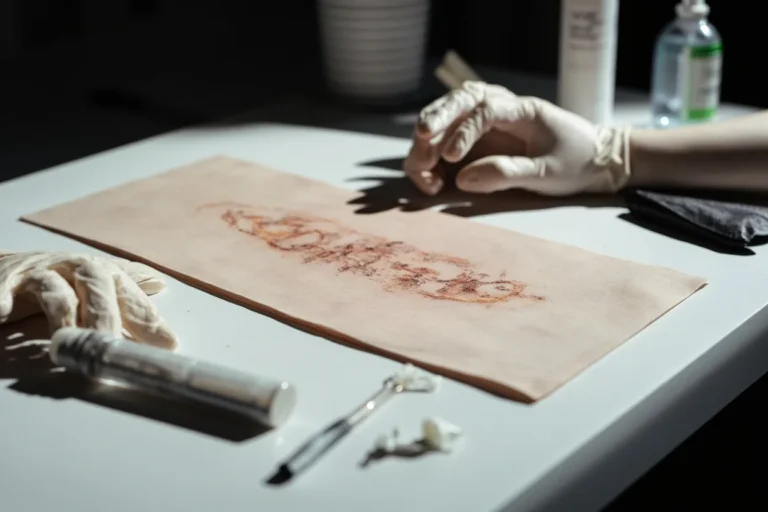
[IMAGE: trash polka setup sheet with black-red contrast notes, upper arm stencil sizing, and healed sample references on skin]
Before you book anything, get honest about your game plan and your healing week. Trash polka can look wild, but the planning should be boring, clean, and specific.
A lot of solid custom artists charge around $100 to $250 an hour, and some studios still keep a $50 to $100 minimum. That rate is not just needle time. You’re paying for drawing, stencil prep, black packing, red placement, and the judgment to know what should stay out of the design.
That part matters.
For a placement pain map before booking, the where tattoos hurt less guide helps line up body zone and session tolerance.
If you want the best long-term payoff, don’t chase the lowest price. Chase the artist whose healed work still looks aggressive, crisp, and balanced six months later. Cheap trash polka gets expensive fast when the fix-up session turns into a cover-up.
- Start With a Bold Trash Polka Tattoo Concept
- Pick Red-Black Trash Polka Contrast That’s Worth the Pain
- Choose a Trash Polka Tattoo Design Anchor
- Build a Trash Polka Tattoo Pattern Around Motion
- Place Your Trash Polka Tattoo for Maximum Impact
- Plan a Trash Polka Sleeve With Open Skin Breaks
- Mix Realism and Typography in Trash Polka Tattoo
- Keep Trash Polka Tattoo Linework Sharp and Legible
- Match Trash Polka Tattoo Scale to Pain Tolerance
- Book a Trash Polka Tattoo Artist With Healed Proof
- Heal Your Trash Polka Tattoo Without Blurring
- Let White Noise Stay Out of the Design
- What Does Healed Red Look Like After 6 Months?
- Why Do Some Trash Polka Tattoos Turn to Soup?
1Start With a Bold Trash Polka Tattoo Concept
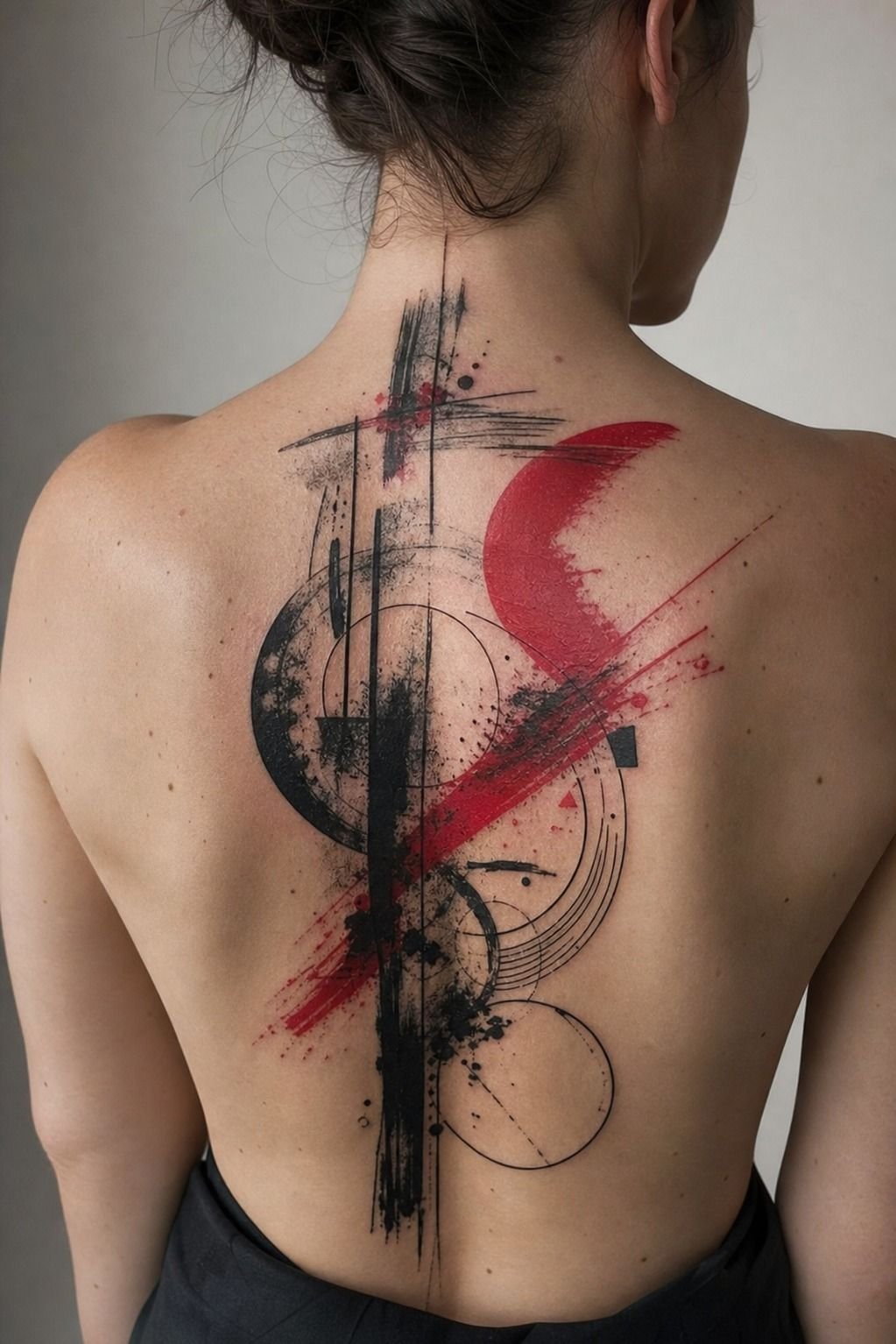
[IMAGE: upper back trash polka concept sketch with one dominant raven anchor and limited red accents]
Start with one idea that can carry the whole tattoo at a glance. A raven, a rose, a dagger, a portrait fragment, a clock.
One hero. Not five.
Trash polka works best when the hierarchy is obvious.
If you can’t explain the concept in one sentence, it’s too busy already. I’ve had clients bring ten references and no actual point. That is how a sharp design turns to soup.
And if meaning matters to you, build the symbolism first, then the noise around it. That order saves time, saves revisions, and usually saves headaches too. For another symbolism-first reference, yin yang tattoo meaning shows how a cleaner concept keeps the final read stronger.
2Pick Red-Black Trash Polka Contrast That’s Worth the Pain
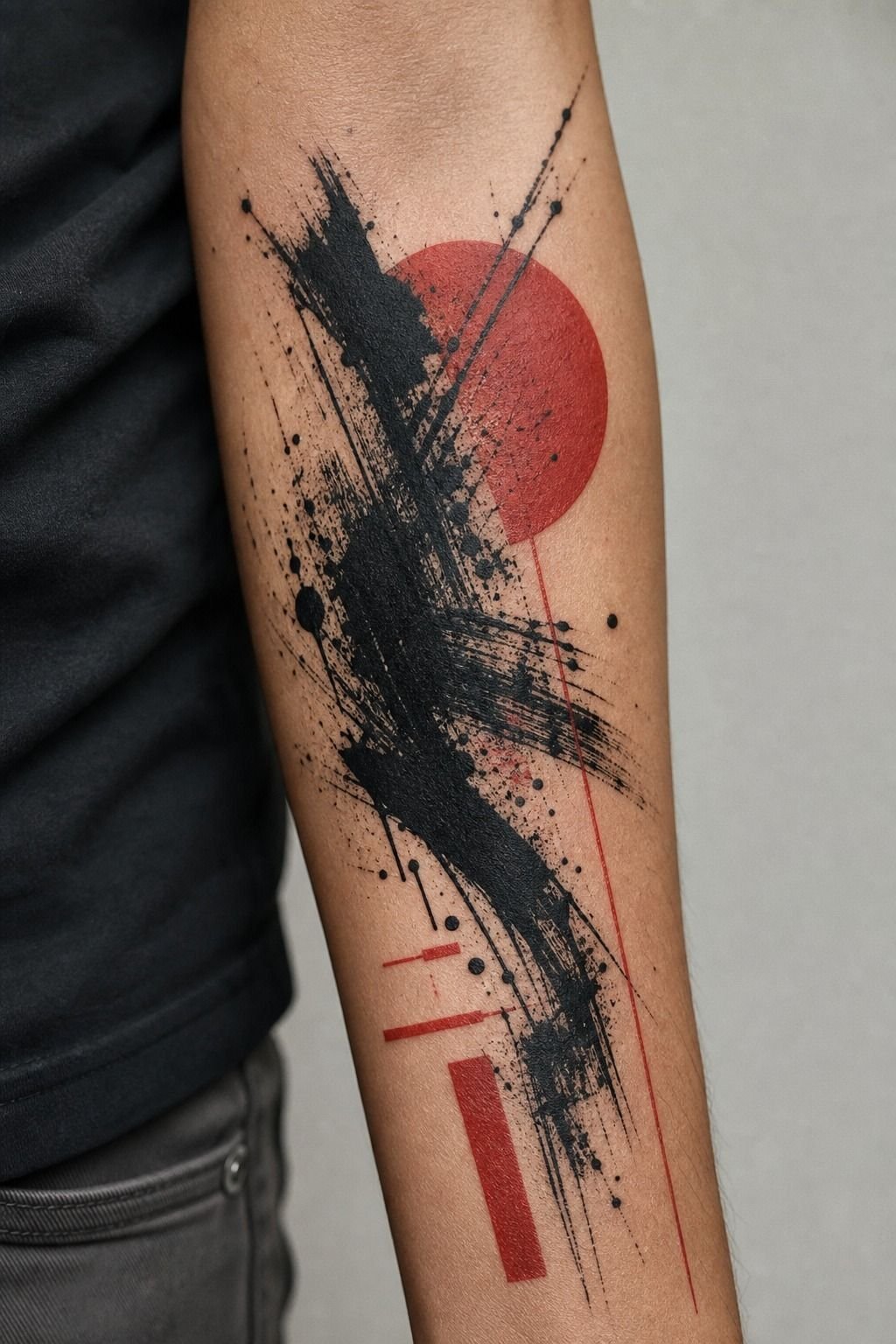
[IMAGE: close-up of saturated black fields with controlled red brush bars on medium warm skin]
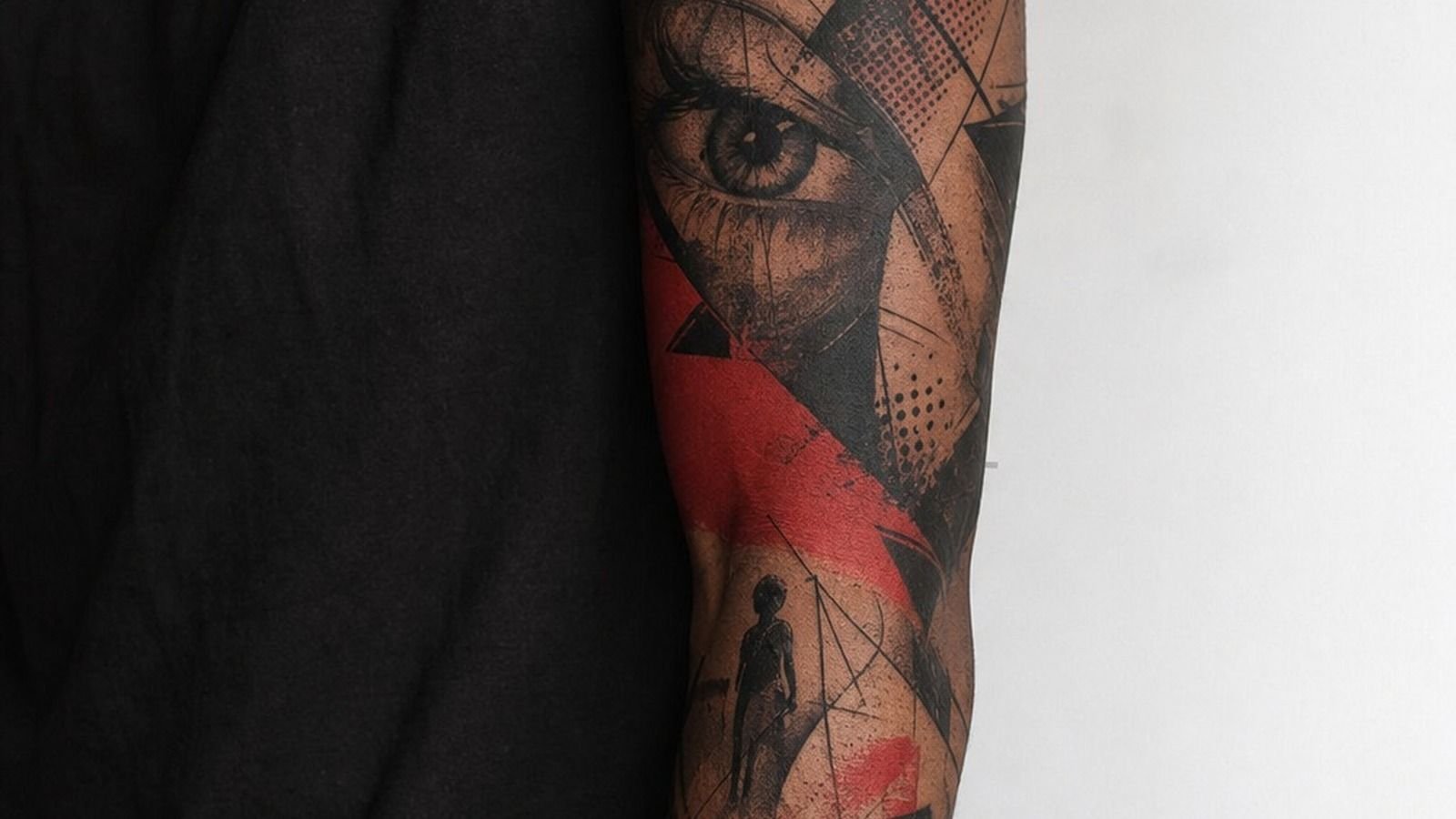
Trash polka lives or dies on contrast. The black should carry the structure. The red should push heat and tension, not do all the work by itself.
I’d skip any draft that leans too soft, too grey, or too cute. It may look dramatic fresh, but it will not hold the same punch once the gloss drops and the peel is over.
Lines feel sharper. Shading feels like a dull burn.
Color packing is the spicy part! If you are going to sit for that, make sure the contrast is bold enough to earn it.
For another heavy-black reference, japanese black gray tattoos is a solid contrast study.
3Choose a Trash Polka Tattoo Design Anchor
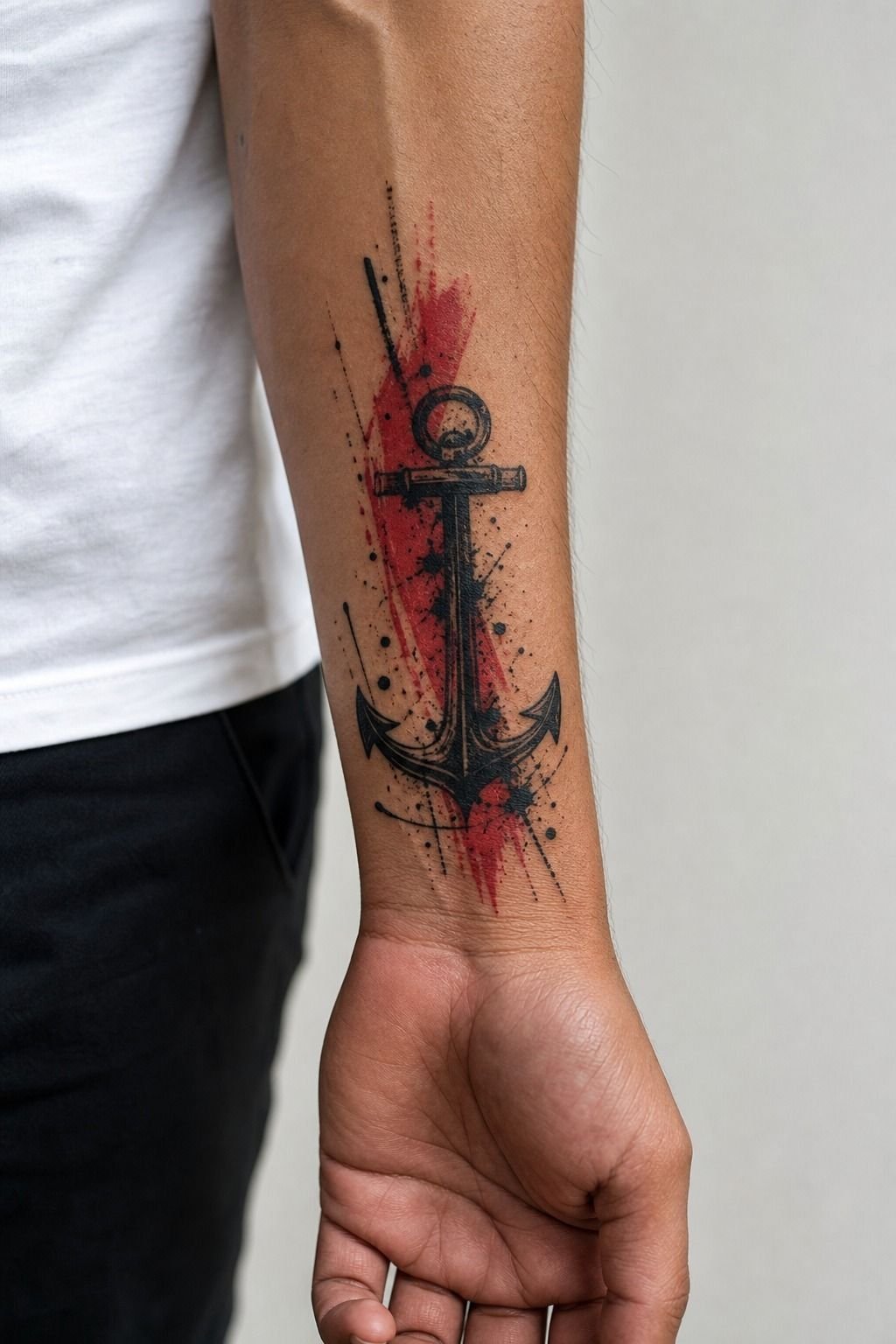
[IMAGE: healed wrist and forearm trash polka piece showing a single eye motif holding the whole composition together]
Every strong trash polka piece needs an anchor. On a smaller forearm or wrist, that anchor keeps the whole design from turning into random marks later.
Think single eye, bird skull, one clean text block, one rose head, one blade shape. Simple.
Brutal. Readable.
I’ve covered too many tiny tattoos where the first artist tried to cram a whole poster into three inches of skin. Do not do that to yourself!
If the center image is not clear on day one, it sure will not get clearer at year three. For another face-heavy subject with the same discipline problem, oni mask tattoo meaning is worth a read.
4Build a Trash Polka Tattoo Pattern Around Motion
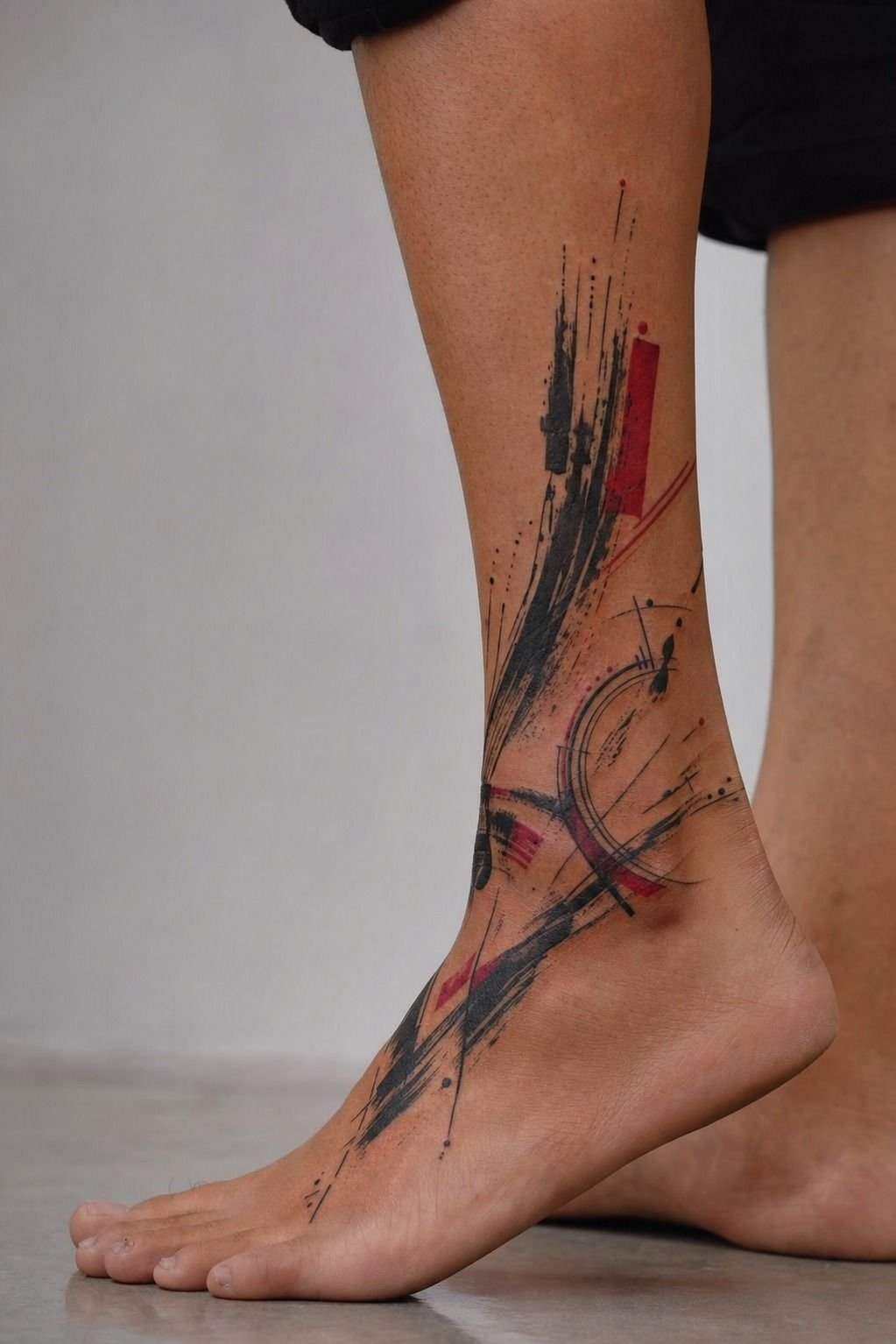
[IMAGE: side torso trash polka layout with diagonal motion, black smears, and red tension lines following muscle flow]
Motion is where a trash polka pattern stops looking pasted on and starts feeling built for the body. Good motion follows muscle direction, bone landmarks, and the natural sweep of the placement.
I want your eye to move on purpose. First the anchor.
Then the secondary hit. Then the rougher edges and distressed texture.
When every mark screams at the same volume, nothing wins. That is not energy. That is static.
The great japanese tattoos guide shows the same body-flow lesson: movement beats clutter every time.
5Place Your Trash Polka Tattoo for Maximum Impact
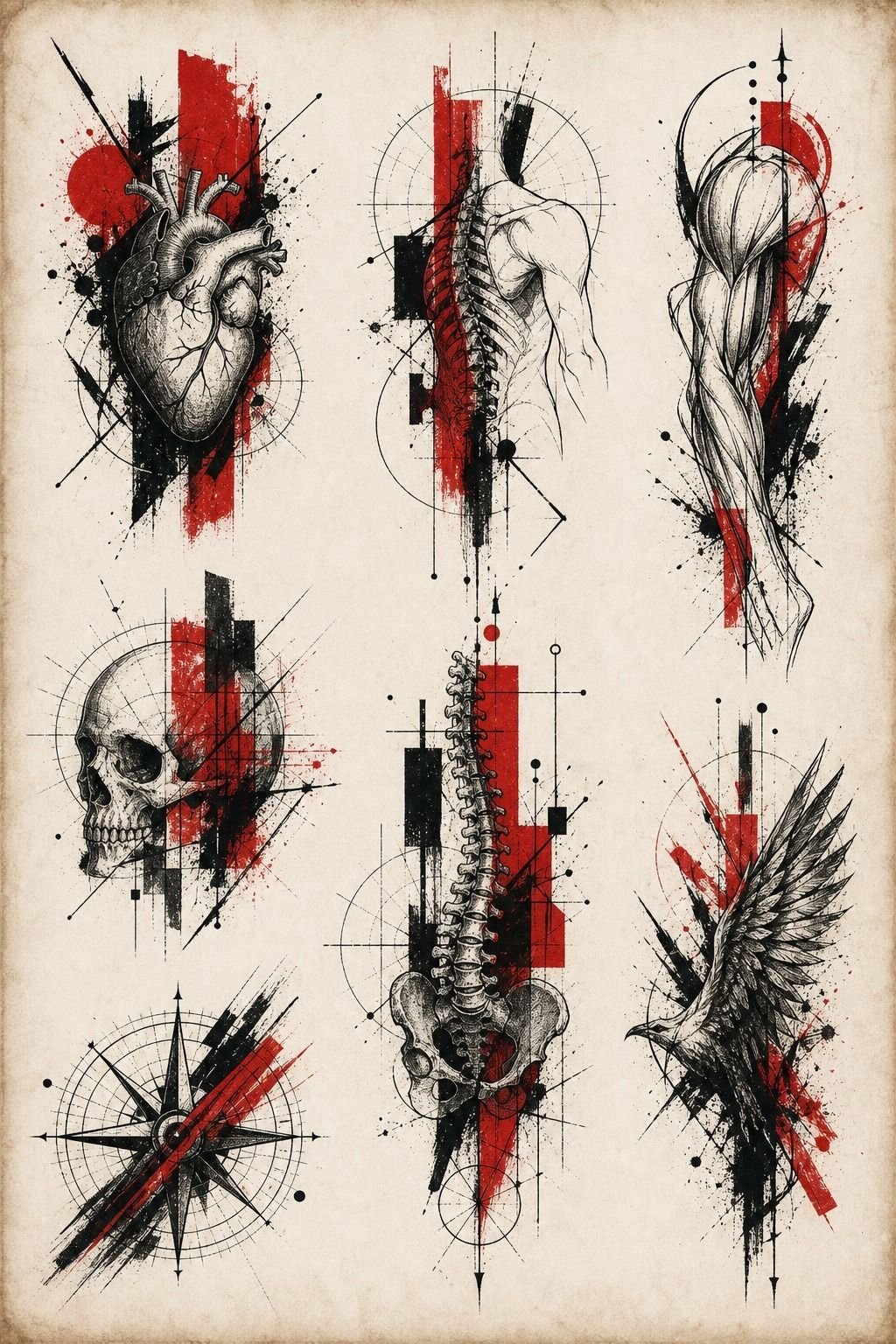
[IMAGE: comparison sheet of upper arm, calf, thigh, and hand placements for trash polka wear and fade]
Placement changes the whole long-term future of the tattoo. Upper arm, outer forearm, thigh, calf, and upper back are low-wear zones that usually heal cleaner and age nicer.
Hands, fingers, feet, elbows, knees, and the inner bicep are higher-wear. They can still look sick, but you should expect more maintenance, more touch-up talk, and a rougher cost-to-longevity ratio.
That is why I will bump a small wrist idea up the forearm if it needs more clearance. Better flow.
Better healing. Better payoff over time.
For a full pain map before booking, where tattoos hurt less lays out the trade-offs clearly.
6Plan a Trash Polka Sleeve With Open Skin Breaks
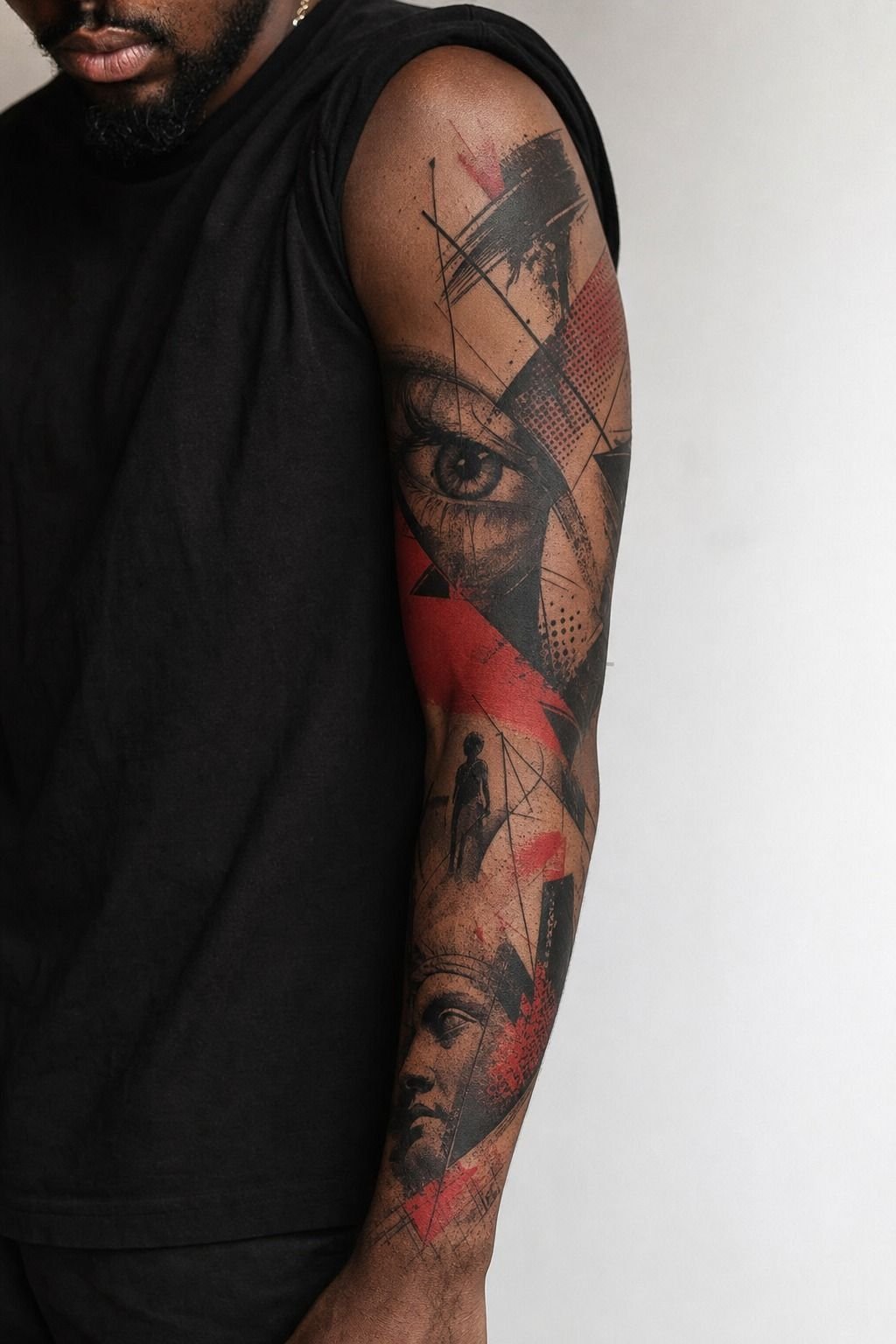
[IMAGE: half sleeve stencil showing anchor zones, quiet breaks, and red accents placed between black masses]
A trash polka sleeve needs open skin on purpose. Not empty filler.
Not timid gaps. Clean breaks.
Those breaks let the eye reset, and they keep the black fields from turning into one heavy blob. On darker skin, that discipline matters even more because contrast placement has to be deliberate.
I’d rather see a nasty half sleeve with hierarchy than a full sleeve that feels chewed up. More ink is not always more impact. For bigger-coverage planning, 16 japanese tattoos that demand full commitment is a good reminder that size only works when the structure does too.
7Mix Realism and Typography in Trash Polka Tattoo
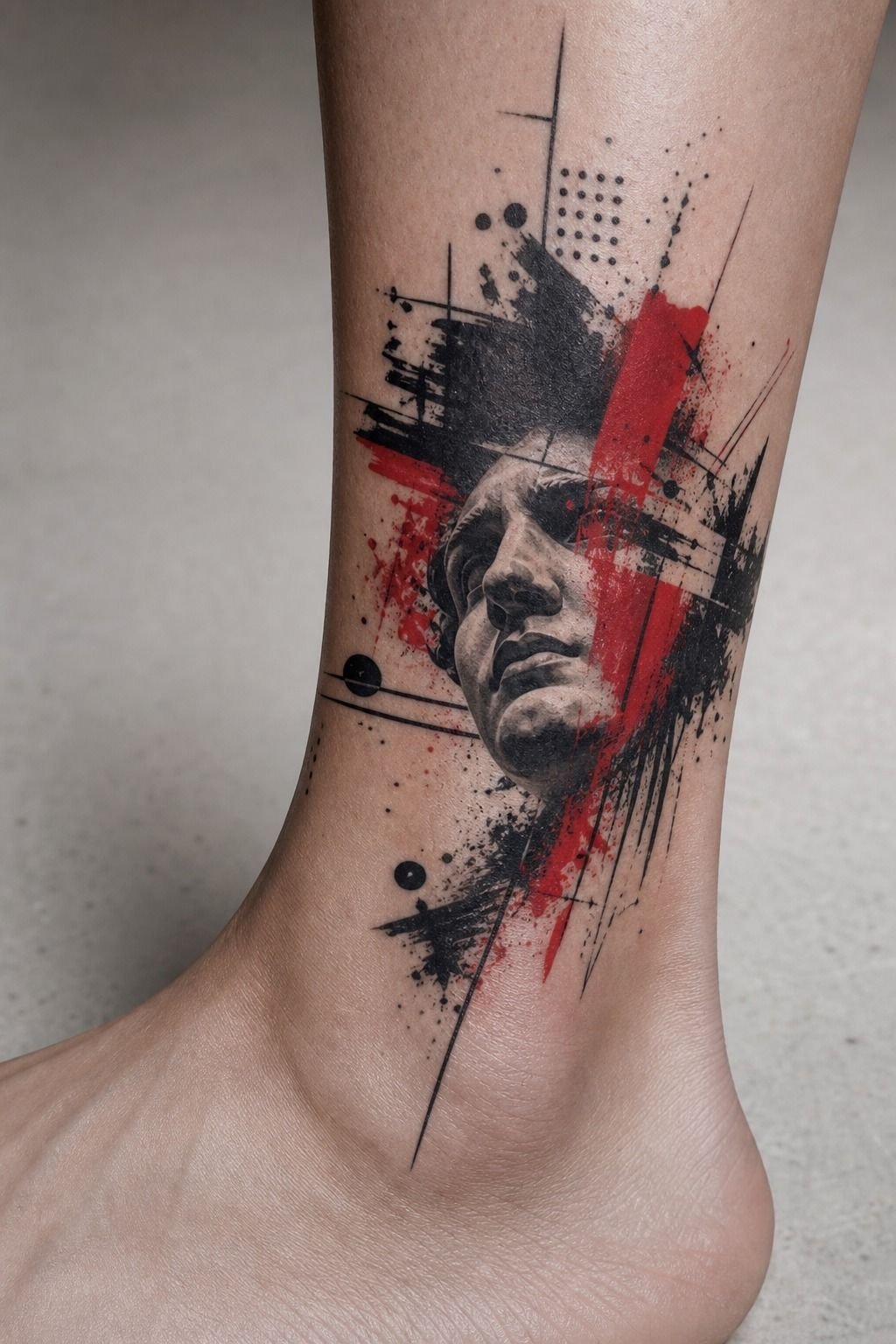
[IMAGE: trash polka forearm piece with portrait fragment, bold serif letters, and red slash accents]
Typography works when it supports the image instead of hijacking it. A serif text block, a typewriter fragment, or one hard date can hit. A paragraph usually won’t.
If you want text, keep it big enough for one clean pull and enough black around it to hold the rhythm. Tiny distressed lettering sounds cool until it heals fuzzy.
And yes, lettering adds time when it has to be drawn to fit the flow. It’s worth it when the words matter. Skip it when you are stuffing text in just because Pinterest made you nervous.
For symbolic face-heavy imagery instead of text, drama mask tattoo meaning gives another route.
8Keep Trash Polka Tattoo Linework Sharp and Legible
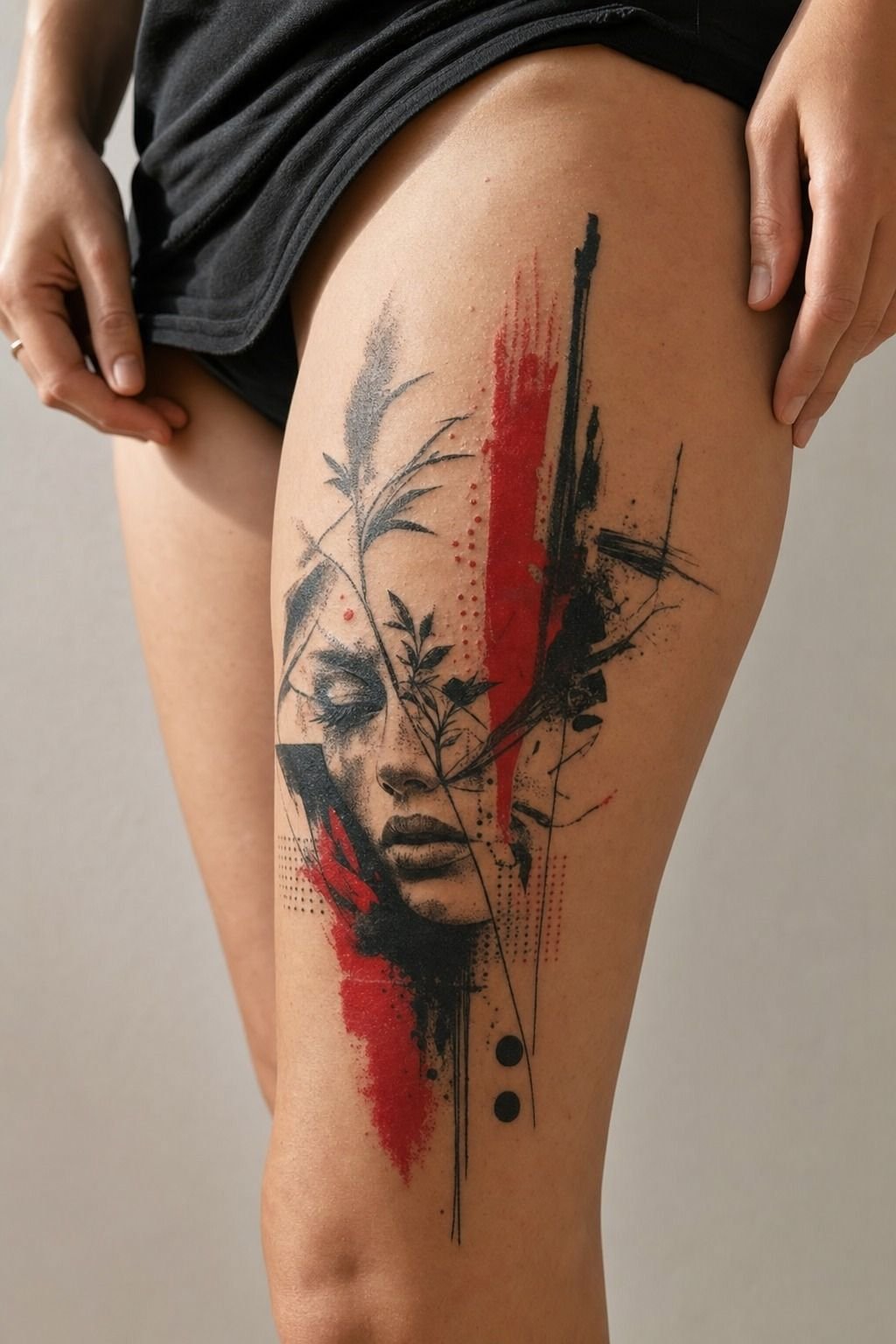
[IMAGE: healed thigh trash polka detail showing crisp black linework, controlled whip shading, and clean edges]
Sharp linework is what saves trash polka after the fresh photo stops doing the heavy lifting. You want crispy lines, not scratchy guesswork.
Ask how your artist builds those lines. Single pass where possible.
Right grouping for the job. Clean wipe habits.
Solid black, not timid black.
I’d rather remove three weak marks than keep them for false detail. Fine clutter might look intense online.
On skin, it often heals flat and wastes your session. If you want the long-game version of that warning, read why tattoos blur over time.
9Match Trash Polka Tattoo Scale to Pain Tolerance
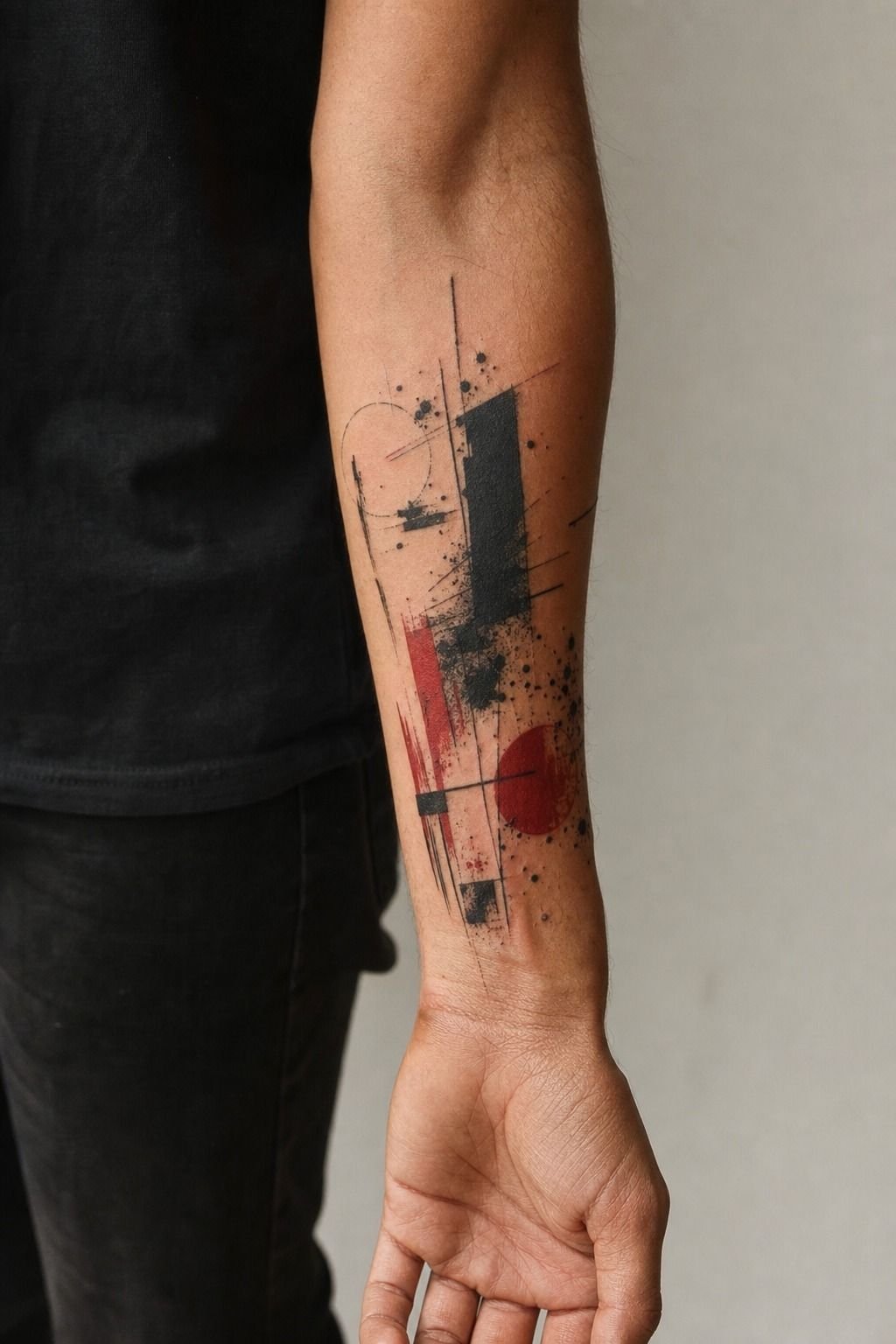
[IMAGE: size chart comparing palm-size, forearm-size, and half-sleeve trash polka compositions on skin]
Scale should match both the design and what you can realistically sit through. If you tap out early, your artist can work around that. If you insist on a full-day marathon you can’t handle, the skin gets angry and the result drops.
Outer arm and calf are usually chill. Ribs, stomach, sternum, and knee work are spicier.
Lines sting sharper. Shading burns.
Packing red is the rudest part.
Real talk: take the break. Drink water. Tap out for five rather than pass out on me.
If placement pain still feels fuzzy, where tattoos hurt less gives a cleaner baseline.
10Book a Trash Polka Tattoo Artist With Healed Proof
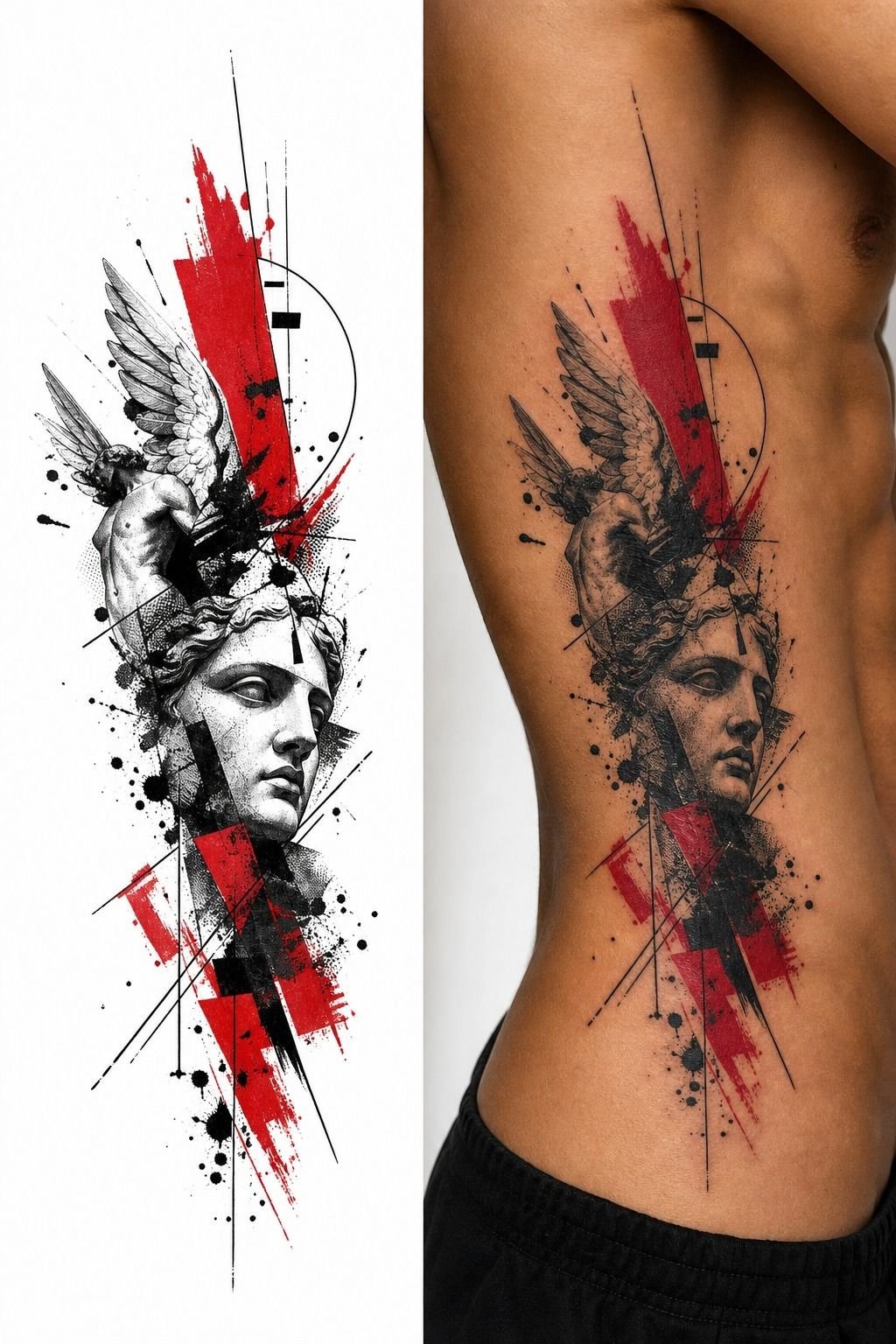
[IMAGE: portfolio review spread showing fresh versus healed trash polka work across different skin tones]
Don’t book off a pretty drawing alone. You need healed proof. Fresh work lies a little.
Healed work doesn’t.
I’m checking three things fast: solid black fill, clean red settlement, and consistent healed contrast on more than one skin tone. If an artist never shows healed work, that’s data.
A higher rate can be worth it if the artist has a real track record. Cheyenne cartridges still need a good hand behind them.
A lower rate is not a deal if the tattoo needs a rescue six months later. If you want to compare how a disciplined large-scale artist builds flow, start with the great japanese tattoos guide.
11Heal Your Trash Polka Tattoo Without Blurring
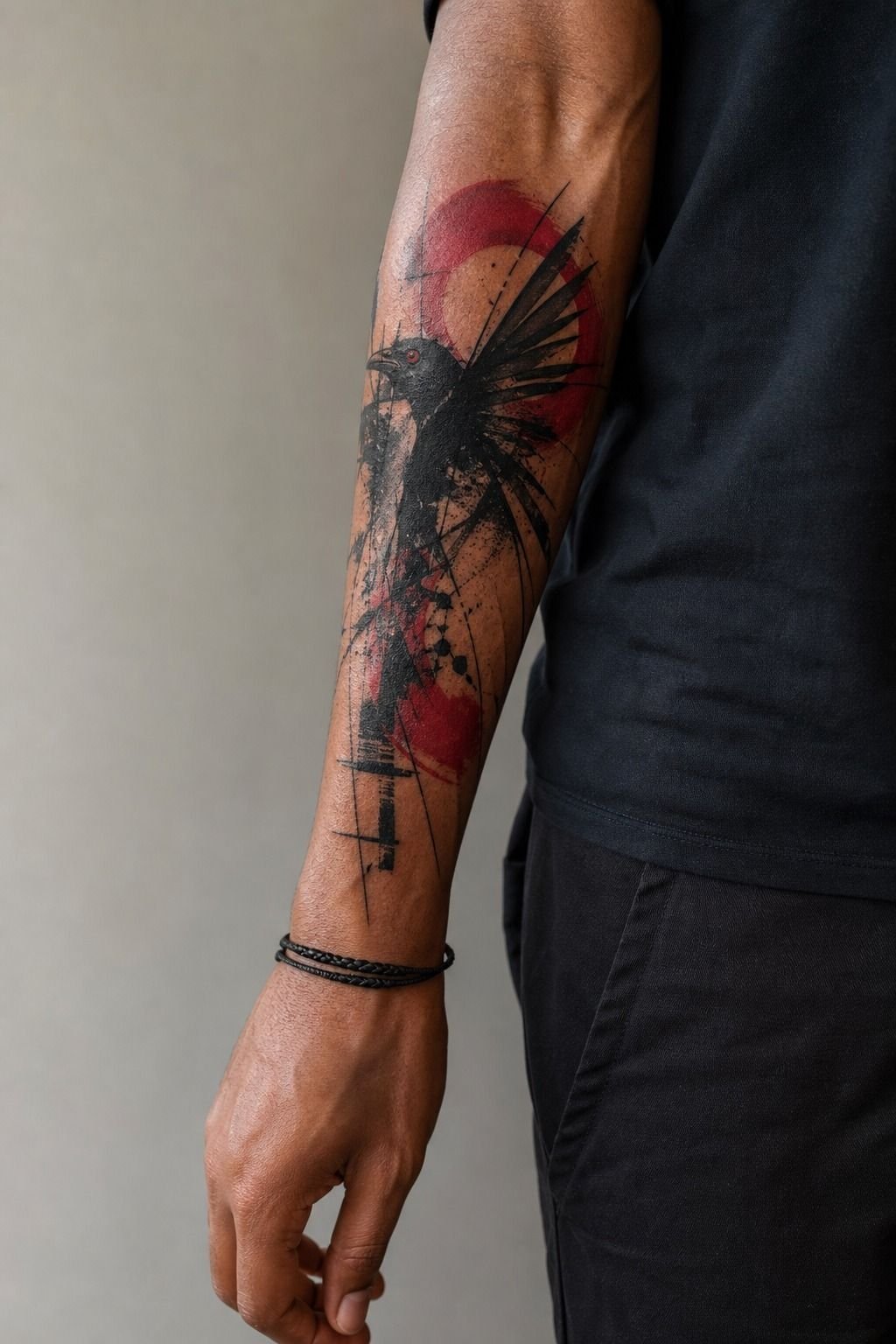
[IMAGE: aftercare sequence with unscented soap, thin ointment layer, and loose black shirt over a fresh forearm tattoo]
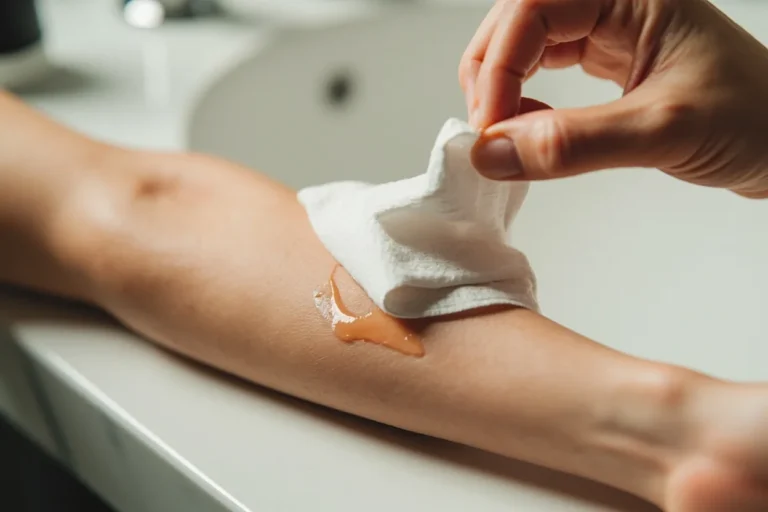
The first few days, your tattoo is an open wound. Treat it like that.
Wash with gentle unscented soap, pat it dry, use a thin layer of ointment or light lotion, and don’t suffocate it. Second Skin is fine if your artist gave you clear instructions for it. Pools, sun, gym friction, pet hair, and picking are the fast lane to dull color and patchy healing.
It’ll peel like a sunburn. Do not pick the flakes or you will pull color out!
Boring aftercare is what keeps a violent-looking tattoo clean. For the long view on softness and spread, why tattoos blur over time is the next read on the list.
12Let White Noise Stay Out of the Design
[IMAGE: design revision showing clutter removed from a trash polka chest piece to improve hierarchy]
The fastest way to ruin trash polka is adding fake intensity everywhere. More splatter. More texture.
More scraps of type. More rough edges.
None of that helps if the composition already works.
I cut white noise first because it usually adds session time without adding impact. That extra ten percent of detail is often the exact part that heals muddy.
Strong pieces feel intentional. Weak ones feel crowded. If you want a quick balance reference, yin yang tattoo meaning is a good example of how contrast works better when you leave a clear boss.
13What Does Healed Red Look Like After 6 Months?
[IMAGE: six-month healed trash polka comparison with settled red over black structure on upper arm skin]
Healed red almost always softens more than clients expect. That doesn’t mean it failed. It means fresh tattoos are louder than healed tattoos.
What you want at six months is clean red placement that still matters because the black structure is doing its job underneath. If the whole idea depended on screaming red, the foundation was shaky from the start.
This is why I design with healed outcome in mind, not fresh-photo drama. That mindset saves disappointment and saves money. For the same warning in blunt terms, why tattoos blur over time lays it out clearly.
Berlin Poster Energy vs Wearable Skin Flow
[IMAGE: side-by-side of graphic poster-inspired trash polka art and a simplified wearable arm layout]
I love the raw Berlin poster energy people bring into trash polka references. Big type.
Violent contrast. Torn-edge attitude.
But poster logic and skin logic aren’t the same.
Paper lets you stack chaos. Skin needs flow, breathing lanes, and marks that heal with dignity. If I copy a poster exactly, I’m making art for a flat surface, not for your body.
So I steal the mood and rebuild the structure. That’s the move that makes the tattoo hold up. If you want to compare that with another style that has to wrap a body cleanly, the great japanese tattoos guide is useful.
15Why Do Some Trash Polka Tattoos Turn to Soup?
[IMAGE: faded over-detailed trash polka wrist tattoo compared with a cleaner healed forearm version]
Usually it’s one of three things: the piece was too small, the contrast was too weak, or the artist chased detail that skin was never going to hold.
Sometimes the client picked a high-wear placement because it looked edgy. Sometimes the artist didn’t say no when they should’ve. Sometimes both happened.
If you want a better long-term result, spend more on scale, placement, and artist quality before you spend more on extra detail. That’s the honest long-game move. If you want the clearest version of that lesson, why tattoos blur over time should be next on your list.
The Three-Foot Read Test
[IMAGE: artist stepping back from a fresh trash polka stencil to judge hierarchy and long-range readability]
When I design trash polka, I don’t judge it nose-to-skin first. I step back a few feet and check the hierarchy. Can I find the anchor fast?
Does the black carry the weight? Is the red helping, or is it just making the whole thing louder?
That test changes everything. Clients often think more texture means more aggression, but aggression without structure ages badly. A tattoo like this should feel raw, sure, but it still needs discipline under the hood.
I want one focal hit, one secondary path, and rough edges that support the rhythm instead of swallowing it.
I’ve also learned that clients confuse bigger with better. Bigger can be better, but only when the design knows where to rest.
Open skin isn’t wasted skin. It’s what lets the heavy black stay readable and the red keep its bite.
If every inch is packed, the eye gets tired and the whole piece feels flatter than it should.
Healed proof changed the way I draw these pieces. Fresh red looks louder than healed red.
Fresh black looks glossier than what you’ll keep long term. So when we review references, I’m mentally aging the tattoo forward. Will this line still feel deliberate after the silver skin stage?
Will this patch of red still earn its place after six months? If the answer feels shaky, I cut it.
Trash polka should feel fearless. It still has to heal nice.
For large-project reality checking, 16 japanese tattoos that demand full commitment is a smart way to pressure-test commitment level.
What People Always Want to Know
[IMAGE: FAQ collage with healed forearm, upper arm, and thigh trash polka placements plus aftercare tools]
How much does a trash polka tattoo usually cost?
Most custom pieces land around $100 to $250 an hour, with shop minimums often around $50 to $100. A medium piece may cost $600 to $1,400, while sleeve work can climb much higher.
The best value usually comes from paying for solid healed work once, not paying twice. For price-shopping reality, why tattoos blur over time explains why cheap detail costs more later.
Are trash polka tattoos a good first tattoo?
Yes, if you keep the concept focused and the placement smart. A medium outer forearm or thigh piece is usually a better first move than a tiny wrist wrap or hand tattoo, because it heals cleaner and gives the design more clearance on skin.
How do I choose a trash polka tattoo artist?
Look for healed work first, not just flashy fresh photos. You want proof of longevity, clean black packing, red that settles well, and an artist who’ll tell you when your idea is too small.
That honesty matters. The great japanese tattoos guide also shows what disciplined body flow looks like in a portfolio.
How much do trash polka tattoos hurt?
They can get spicy. Outer arm, forearm, calf, and thigh are usually easier than ribs, sternum, hands, feet, and knees. Lines hit sharper, shading feels duller, and color packing is often the hottest pass.
How long does a trash polka tattoo take to heal?
Surface healing is usually 2 to 4 weeks, and full settling can take 2 to 3 months. Wash gently, keep the lotion thin, don’t pick, and stay out of pools and heavy sun while the skin is still touchy.
What’s the best placement for a trash polka tattoo?
For most people, upper arm, outer forearm, thigh, calf, and upper back give the cleanest balance of readability, healing, and long-term hold. Hands and feet can work, but they’re for people who accept touch-ups. For a pain comparison before placement choice, where tattoos hurt less is the practical next click.
If I Had to Pick One Step
[IMAGE: finished upper arm trash polka tattoo with one dominant anchor, controlled red, and clean open skin]
If I had to pick one step, I’d start with the anchor. Get that center image right, and the black, red, and motion all have a job.
Miss it, and even an expensive tattoo can feel noisy later. Save this, then book healed proof first and read why tattoos blur over time before the consult!