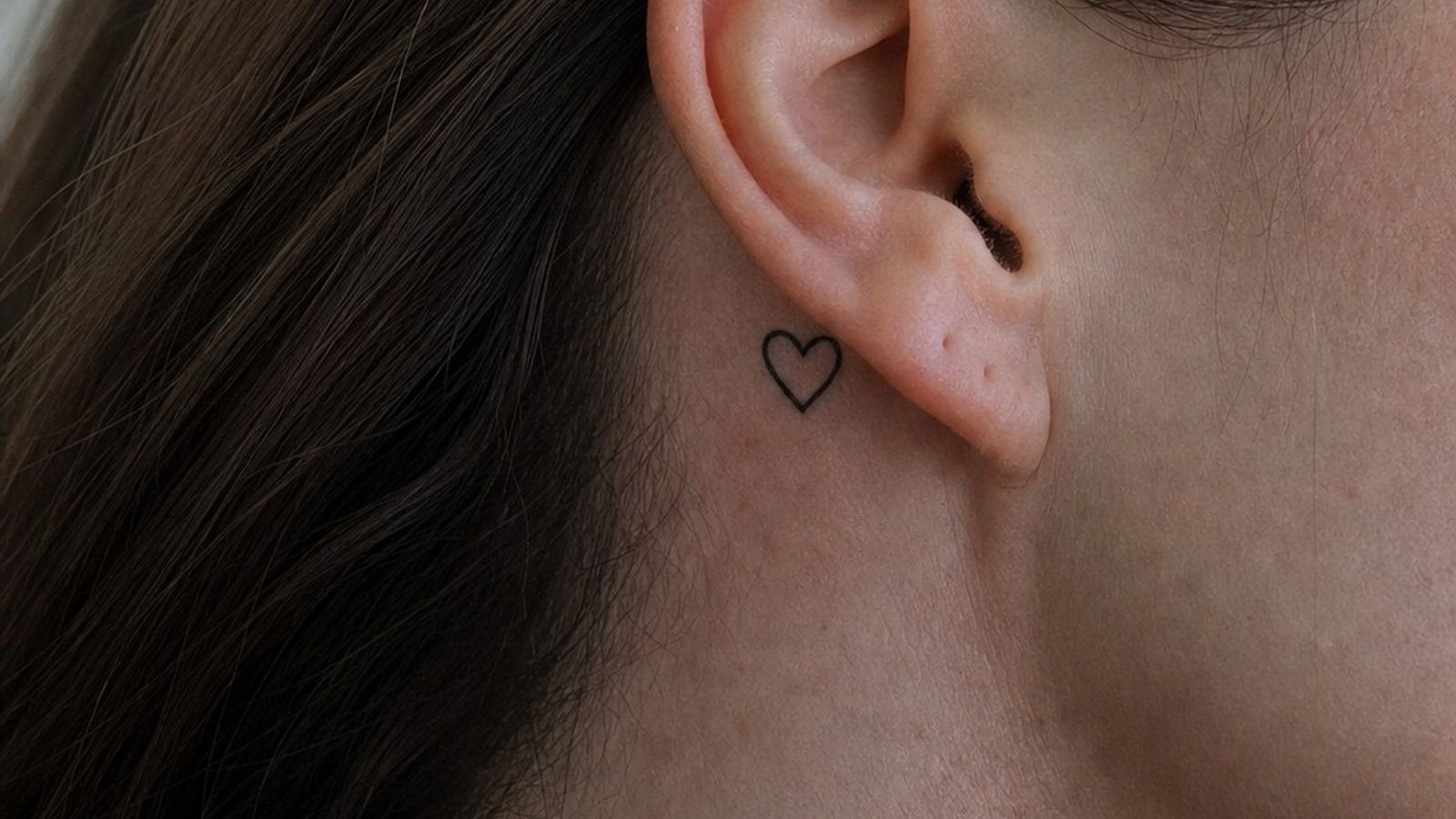
I almost talked myself out of my love heart tattoo the week I turned 30. I wanted something small, but I didn’t want tiny lines turning into soup in a few years. I slowed down, changed the placement, and got a clean little heart I still notice in the mirror.
Here’s what it looked like before
The patch behind my ear had been saved for the right idea, which sounds dramatic until you’ve spent months moving a stencil around your skin. I had screenshots of red hearts, initials, anatomical references, and little symbols that looked charming online but felt borrowed once I imagined them on me.
You might know that feeling. You want a tattoo that reads like yours, not a Pinterest-exact copy somebody else got first. I stopped trying to force one elaborate design into a tiny spot and gave the heart room to breathe.
I Chose My Love Heart Tattoo Meaning
Mine became a marker for a very ordinary, important kind of love: the people who kept showing up when life got loud. I didn’t need a paragraph tattooed on me. I needed a shape I could recognize fast, even when I was tired.
A single-needle heart outline gave me that without making the meaning feel sugary. If your heart is for grief, a relationship, self-respect, or family, write the meaning down before you book.
You’ll make cleaner choices once you know what you’re protecting. For symbolism with more religious weight, see this guide to sacred heart tattoo meaning.
I Saved Heart Tattoo Ideas With Initials
Initials can work, but I’d keep them subordinate to the heart. A crisp micro initial tucked into one curve reads intimate; a full script name crammed inside a one-inch heart usually heals chewed up.
I saved references for vibe, then crossed out every design that needed explaining. That helped.
You should ask yourself whether you’d still want the initial if nobody ever asked about it. If yes, good.
If not, let the heart stand alone. Small tattoos don’t need to carry your entire biography.
I Sketched A Tiny Anatomical Heart
The anatomical version nearly won. I love the odd, lived-in look of a tiny ventricle shape, especially with soft grey wash around it. But behind the ear, the little vessels were too ambitious at the size I wanted.
That size needs breathing room. I sketched it at roughly 1.25 inches, then looked at it from arm’s length.
The details disappeared fast. If you want a realistic design, move it to your forearm, calf, or upper arm, where you can give it more than a postage-stamp footprint.
This realistic heart tattoo guide explains why realism needs scale.
I Compared Fine Line And Red Ink
Fine line was my safer call for longevity, but red ink had more pull. A red pigment heart can look bright and intimate against warm or deep skin tones, especially once it settles into that soft silver-skin stage after healing.
Still, I wouldn’t choose red just because it photographs well on day one. Black is your best friend for long-term contrast.
Red is spice. If you choose it, ask your artist for healed photos on skin tones close to yours, then compare fresh work with work that’s at least several months old.
You want saturated color, not a weak pink outline.
I Tested The Love Heart Tattoo Size
I printed my heart at three sizes and taped each version behind my ear for a day. Annoying?
A little. Worth it? Completely.
The smallest one was under an inch and looked elegant up close, but it didn’t read from across the room. The middle size, around 1 to 1.5 inches, had enough open skin inside the shape to stay crispy. I chose that.
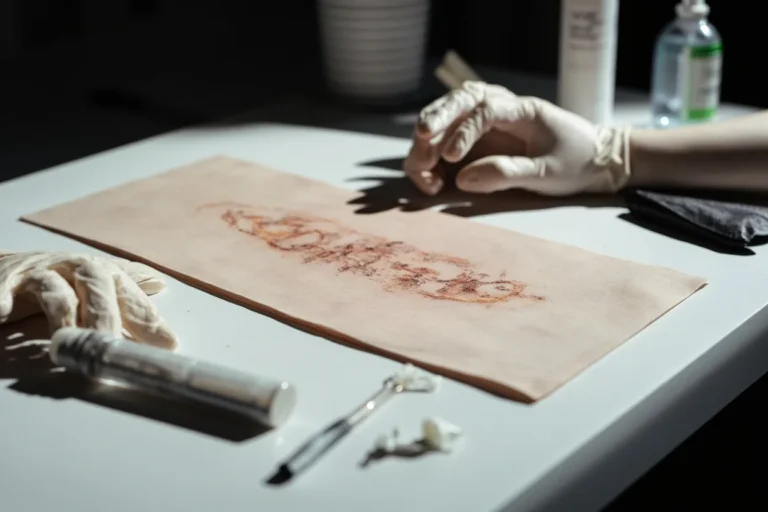
Your artist may bump it up or simplify it, and you should listen if they say the design is headed toward soup. Aged off-white flash paper is cute for a reference, but skin isn’t paper.
I Chose My Inner Wrist Placement
I also tested the inner wrist, because it’s visible to you without feeling like a billboard. A fine-line wrist heart is sweet and direct, but it’s a high-wear zone. Watches, sleeves, handwashing, sun, and constant movement all ask more of the linework.
If you want a tattoo that ages cute with less maintenance, outer forearm beats inner wrist. But if the wrist is the placement that makes your chest do that little flip, get it there and accept you might need a touch-up later. Your tattoo should fit your life, not just a placement chart.
I Matched The Design To My Skin
Skin tone changes how a design reads, and that’s not a problem to solve. It’s information. On fair cool-pink skin, a black-and-grey outline can look airy and delicate; on deep ebony skin, a bolder black line or saturated red may hold stronger from a distance.
I asked for references on varied skin tones instead of assuming one feed showed the full picture. You should too.
Good artists understand contrast, undertones, and healed texture. They won’t promise every ink color will behave the same on every person.
That’s not them being difficult. That’s them being solid.
I Booked A Fine Line Tattoo Artist
I booked an artist whose healed fine line looked calm, not scratchy. Fresh tattoos can fool you because everything looks sharp while the skin is swollen. Healed work tells you whether the artist makes one clean pull instead of ten fuzzy ones.
Bring your references, but don’t hand over a Pinterest screenshot and demand an exact clone. I tell clients that if they want Pinterest-exact, I’m not their artist.
References are for vibe only. Look for healed single-needle work, clean studio practices, and linework that still reads after time.
For another personal-symbol route, browse love yourz tattoo meaning.
I Approved The Final Love Heart Stencil
The stencil looked almost too simple. That was the point. My artist adjusted the angle so the heart followed the curve behind my ear instead of sitting flat against it like a sticker.
That little shift changed everything. Placement has flow, and you can feel when a design is fighting the body.
I checked it standing, sitting, and with my hair tucked back. You should move around before saying yes, because a stencil that looks refined in one frozen pose can look awkward the second you turn your head.
But once it follows the anatomy, it looks like it belongs there.
I Managed The Tattoo Session Pain
Behind the ear is spicy. Lines feel sharper there because you’re close to bone, and the buzzing can feel weirdly loud in your skull. Mine was short, under an hour, but I still ate beforehand, drank water, and told my artist when I needed a breath.
Don’t try to prove anything. Tap out for five rather than pass out on me. Outer arm, calf, thigh, and shoulder are usually more tolerable if you’re nervous; ribs, sternum, feet, hands, and fingers are less forgiving.
A clean stencil transfer and a calm artist do more for your comfort than bravado ever will.
I Watched Red Ink Build The Heart
Watching red go in made me glad I hadn’t made it too small. The artist used controlled color packing, not fifty scratchy passes that would overwork the skin. It looked bright, then a little angry, then settled.
That’s normal. Fresh red can look dramatic on day one, especially against deep brown skin with warm undertones, but healing changes the surface.
You should expect the tattoo to look softer before it looks finished. If red is your favorite, check red heart tattoo inspiration before choosing a shade and line weight.
I Followed My Love Heart Tattoo Aftercare
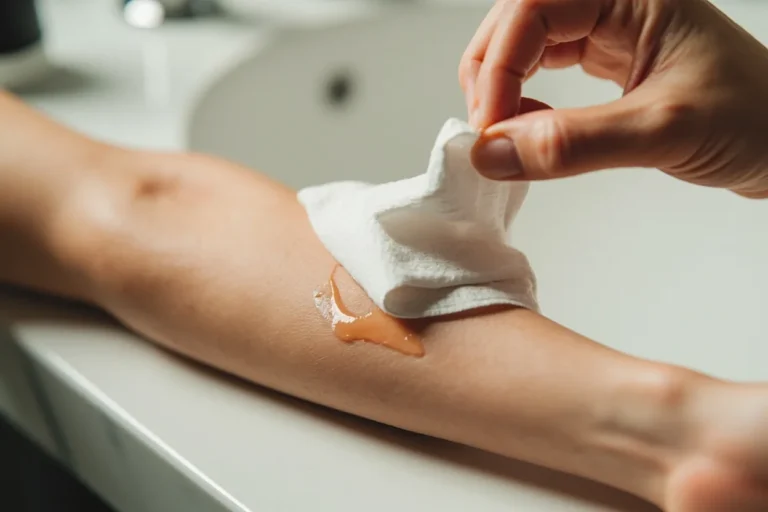
First few days, it’s an open wound. Treat it like that. I washed mine with gentle unscented soap, patted it dry with a clean paper towel, then used a thin layer of fragrance-free ointment.
Don’t suffocate it under a thick shiny layer. You want the skin comfortable, not slippery.
It’ll peel like a sunburn in about the surface-healing window, and you can’t pick the flakes without risking color loss or patchy spots. Gentle, boring, consistent care wins every time.
And yes, your pillowcase matters more than people think.
I Protected The Tattoo During Healing
I skipped pools, hot tubs, direct sun, and sweaty friction while it healed. Behind the ear also meant paying attention to hair products, headphones, and mask loops.
Tiny things. Still real.
You don’t need to become precious about your tattoo forever, but you do need to protect it while the skin is rebuilding. A broad-spectrum sunscreen once the surface is fully healed helps prevent black and red from going dull.
Sun is rough on tattoos. So is picking.
So is pretending a fresh tattoo can handle a beach weekend.
I Checked The Heart Tattoo Color Changes
At first, I kept checking the heart like it owed me a progress report. The red softened, the black looked a little cloudy during peeling, and then the lines came back with more definition.
That silver, slightly shiny healed stage can make people panic. Don’t.
A tattoo’s surface usually heals in about 2 to 3 weeks, while deeper healing can take 2 to 3 months. Your neo-traditional heart may stay bolder because it uses heavier outlines and solid fill; fine line needs more patience and gentler expectations. If you want a heartbeat element instead, this heart rate tattoo meaning guide can help you decide whether the symbol fits.
I Decided What My Finished Tattoo Means
Once it healed, the meaning got quieter. That surprised me. I thought I’d feel a big cinematic moment every time I saw it, but mostly it became a small, familiar sign that I made a choice for myself and didn’t rush it.
That’s why I like little heart tattoos. They can be romantic, but they don’t have to be.
Mine is subtle, warm, and mine alone. If you’re leaning more fiery than soft, compare your idea with flaming heart tattoo meaning before committing.
The Clean-Line Rule I’d Give Every First-Timer
I’ve tattooed enough fine-line designs to know the tiny-detail panic is real. People worry that simple means boring, so they add initials, dates, stars, vines, and three extra symbols until the design loses its whole point.
I get it. You want the tattoo to feel worth the appointment.
But a love heart tattoo isn’t weak because it’s simple. It’s strong when the shape is clear, the placement has flow, and the line weight matches the scale.
I’d rather tattoo one refined heart with a deliberate gap in the center than cram six meaningful details into a spot that can’t hold them. Bold will hold. That doesn’t mean every tattoo needs thick trad lines; it means your design needs contrast and room.
Here’s the part I want you to hear: your artist isn’t rejecting your idea when they simplify it. They’re protecting it.
A good artist will explain why a tiny loop may close, why an initial needs more space, or why the heart should sit 1 centimeter higher. Ask questions. Look at the stencil.
Make them move it if it feels off. It’s your skin, and you’re allowed to take five more minutes.
I also think people over-focus on pain. The session is short.
The healed tattoo is what you live with. Choose the version that reads clean on your body in ten years, not just the version that looks most delicate in a close-up photo.
That’s the whole rule.
How much it cost
My final design was small, so it fit a shop minimum rather than a long hourly booking. US pricing varies by city, artist, and demand, but these are useful real-world planning ranges. You should ask for the minimum and whether the artist charges by piece or by hour before you send a deposit.
I’d spend more on an artist with crisp healed work before I’d spend more on extra detail. A sterile single-use needle cartridge and a thoughtful stencil matter more than a complicated flourish. Your cheapest quote isn’t always your best value.
A Few Things Worth Answering
How much does a Love Heart Tattoo usually cost?
A love heart tattoo usually costs about $100 to $300 in the US. A simple design keeps the session short, though many studios have a $50 to $100 minimum and artists may charge $100 to $250 hourly. Placement and custom lettering can push the price higher.
Are Love Heart Tattoo a good idea for a first tattoo?
Yes, they can be a great first tattoo if you keep the design readable. A clean outline gives you longevity without a marathon session. Choose outer arm, forearm, thigh, or shoulder if you want a more tolerable placement than ribs, feet, or fingers.
How do I choose a tattoo artist for Love Heart Tattoo?
Choose an artist with healed fine-line photos, not only fresh close-ups. Crispy healed lines are the proof. Check their portfolio for similar scale, ask about their sanitation setup, and make sure they’ll adjust your reference instead of tracing somebody else’s tattoo.
How much do Love Heart Tattoo hurt?
Pain depends on placement, but a small heart is usually quick. Outer arm and forearm are chill for many people; ribs, sternum, hands, feet, and bony spots are spicier. Lines feel sharp, while color packing feels more like a dull burn.
How long does a Love Heart Tattoo take to heal?
Surface healing usually takes 2 to 3 weeks, while full healing can take 2 to 3 months. Gentle aftercare helps it settle cleanly. Unscented soap, a thin layer of moisturizer, no pools, no sun, and no peeling-flake picking.
What’s the best placement for Love Heart Tattoo?
Outer forearm is my favorite for a first love heart tattoo because it’s visible, low-wear, and gives your lines room. Behind the ear feels more intimate, but it needs a simple design and careful attention around hair products, headphones, and sun.
Where I’d Start First
If I had to pick one, I’d start with a 1 to 1.5-inch black fine-line heart. Tiny extra details blur first, while a clean open shape still reads from across the room. Pin your favorite reference, then let your artist redraw it for your skin.