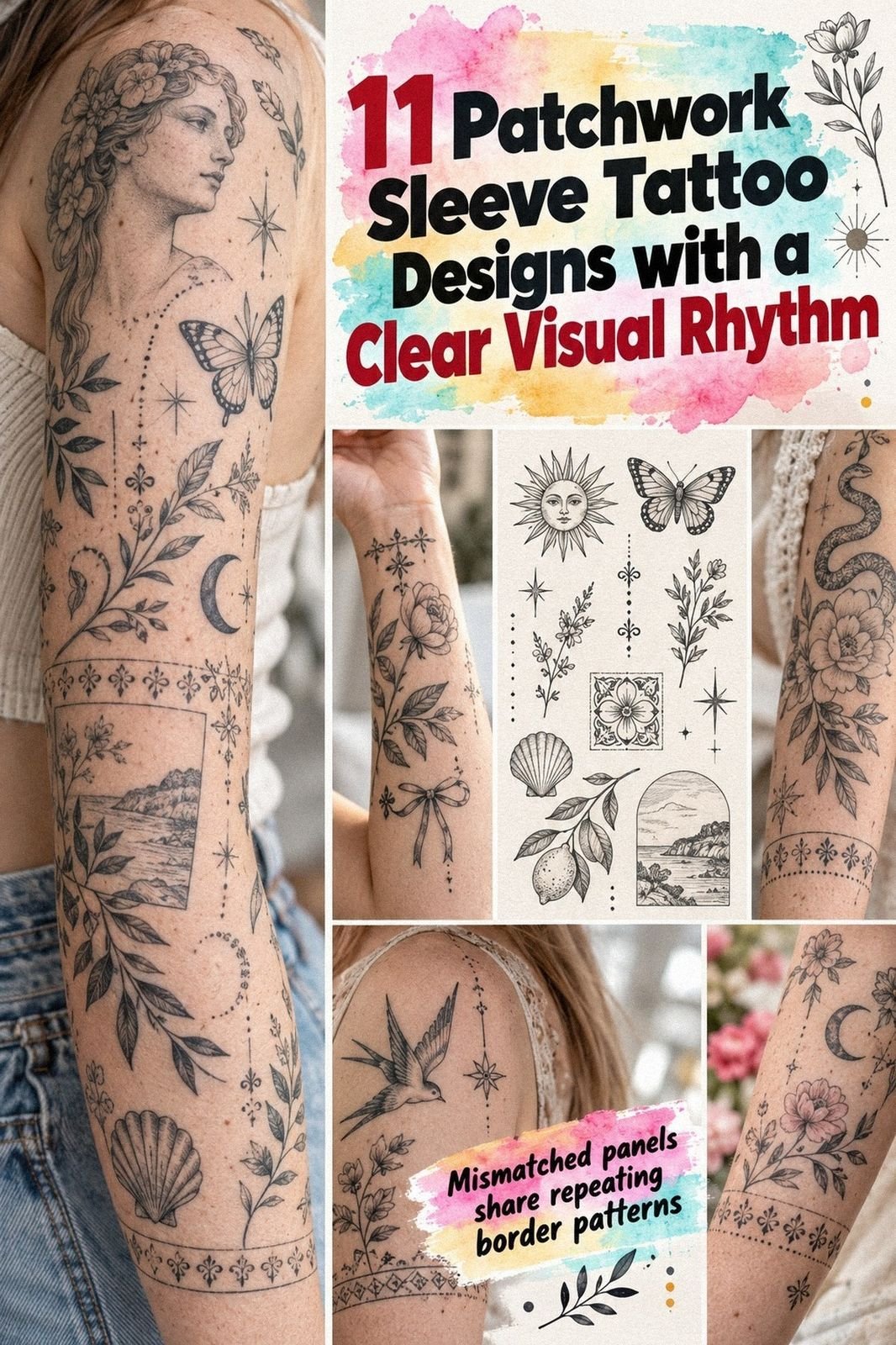
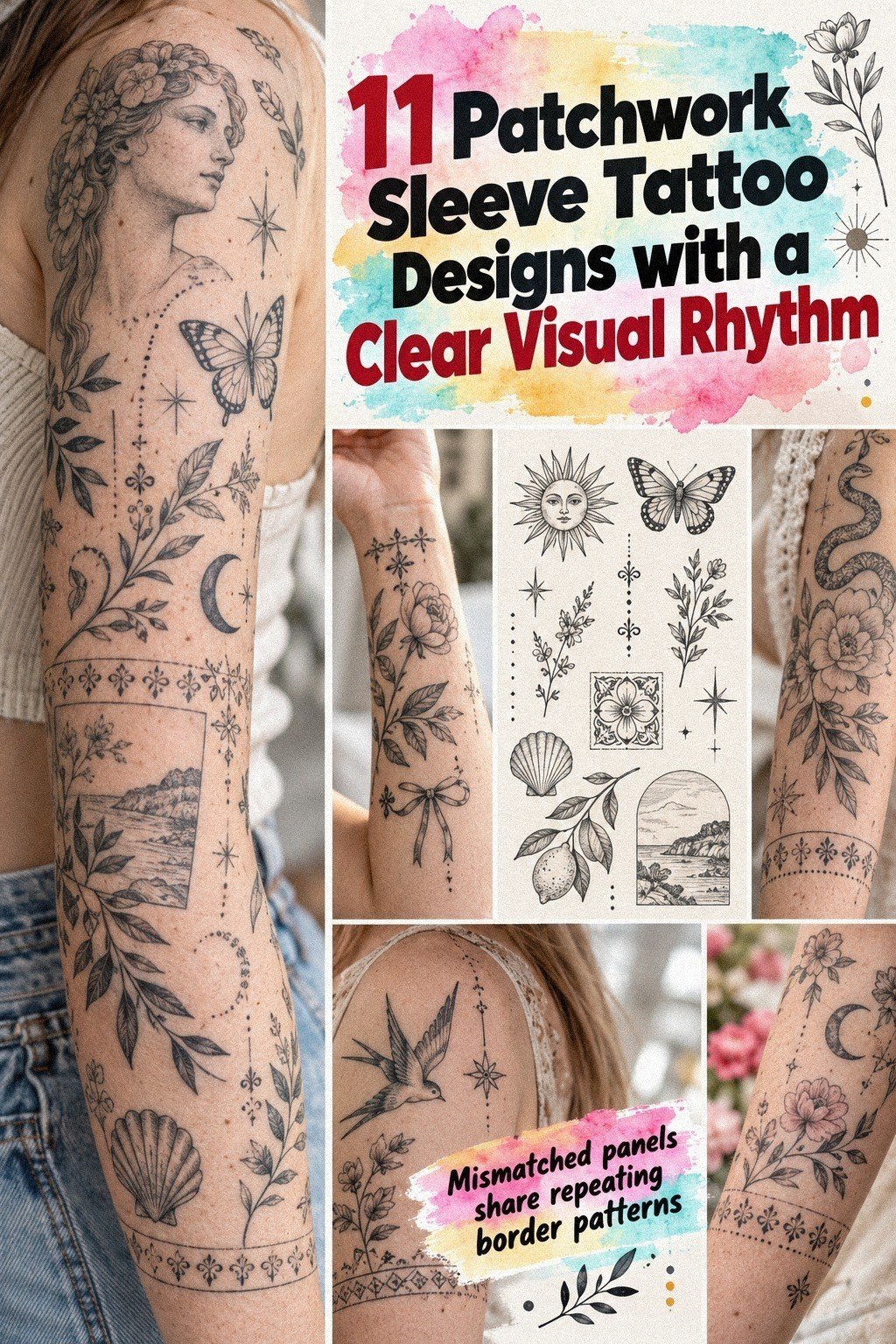
A patchwork sleeve tattoo for women can stay crisp for years, but placement matters more than the trend. I built mine slowly with fine-line black ink, leaving breathing space between pieces. Some details softened. None disappeared. The result is personal, elegant, and far more wearable than I expected.
Before you book, decide whether you want a scattered collection or a sleeve with a visual rhythm. I didn’t need every motif to match. I needed the line weight, spacing, and mood to feel related.
Before the first appointment
Before my first appointment, my forearm was open skin with one tiny existing mark near the wrist. I’d saved that space for months because I didn’t want a rushed idea taking over my arm. You could see every vein and freckle, which made the blank area feel more noticeable than the finished tattoo ever would.
I was unsure about scale. A full sleeve sounded bold, but unrelated tiny symbols could look accidental.
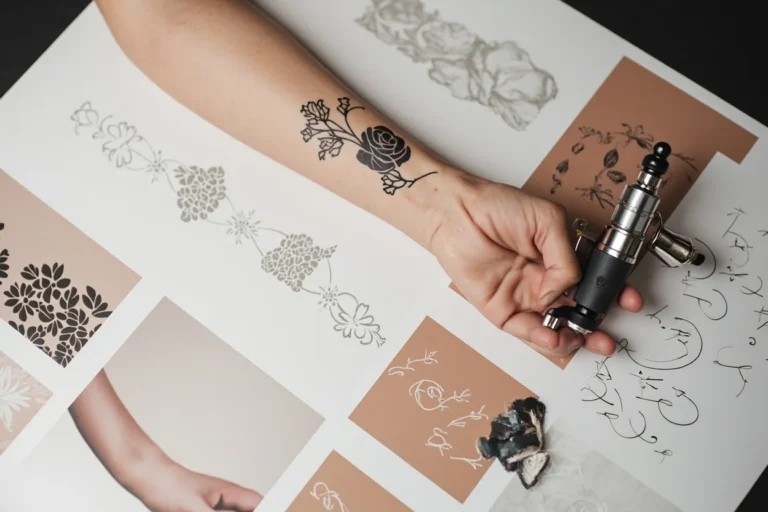
My artist and I studied printed stencil sheets, tested several sizes, and left some designs out. That pause changed everything!
If you’re planning your own sleeve, give your eye time to reject pieces that only seem exciting for one afternoon. I kept returning to patchwork tattoo sleeve ideas until I could explain why each reference worked.
A quick placement check
I held paper versions of the motifs against my arm while standing, sitting, bending my elbow, and turning my wrist. A design that looked striking from the front could disappear when my arm moved. You’ll want to test the collection in motion before you approve the final arrangement.
I also considered daily friction. Cuffs, watchbands, sun exposure, and frequent hand washing can affect how a tattoo settles. My outer forearm gave the strongest visibility, while the inner forearm felt more sensitive and more exposed to bending.
- J’ai choisi une manche patchwork féminine
- J’ai esquissé des motifs délicats assortis
- J’ai placé les pièces autour du bras
- J’ai mélangé fleurs, symboles et linework
- J’ai équilibré motifs audacieux et dainty
- J’ai ajouté une touche personnelle significative
- J’ai testé le rendu en demi-manche
- J’ai choisi une palette d’encre expressive
- J’ai anticipé la douleur selon chaque zone
- J’ai protégé les détails pendant la cicatrisation
- J’ai finalisé une manche élégante et intemporelle
1J’ai choisi une manche patchwork féminine
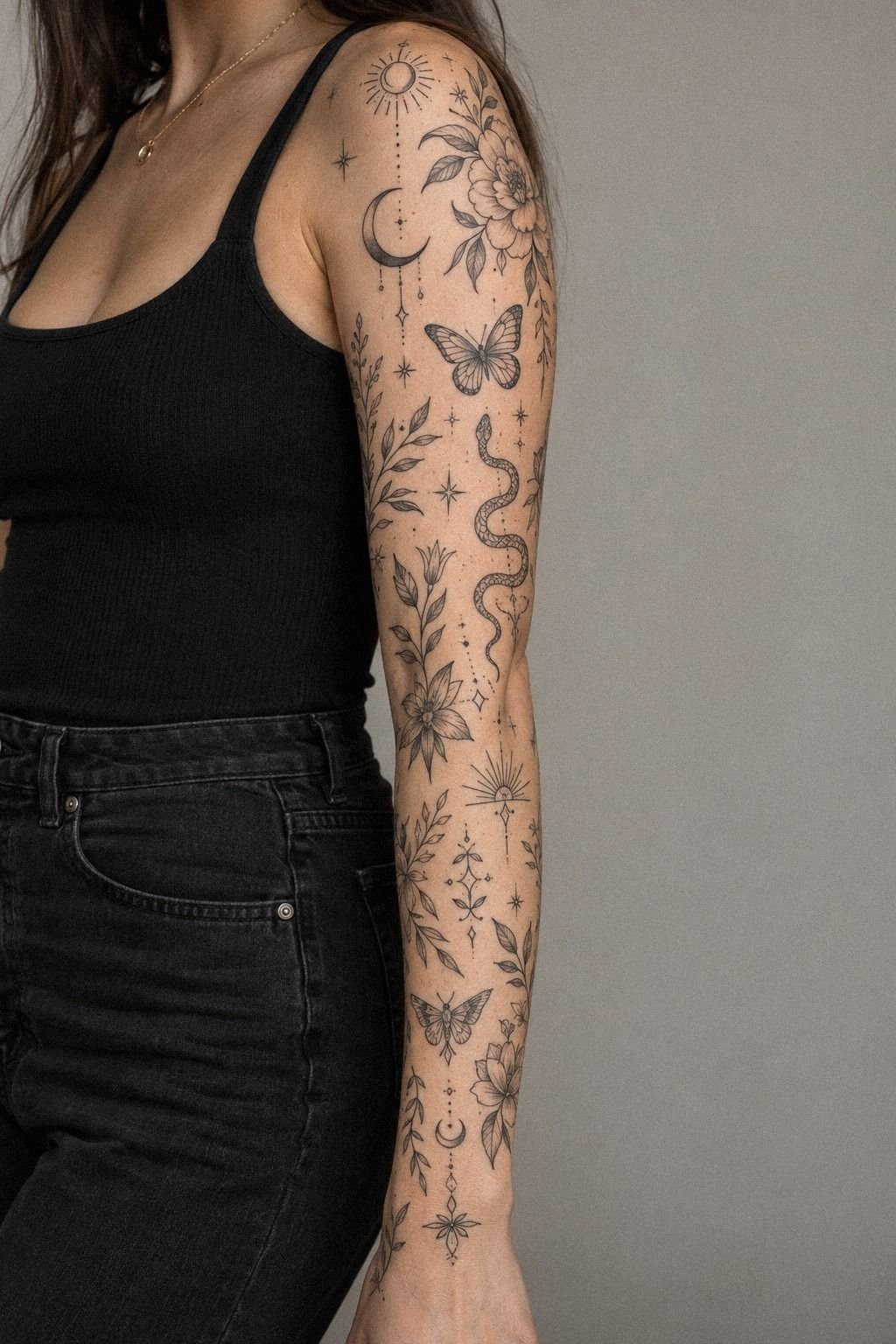
I chose a fine-line forearm sleeve because I wanted something feminine without forcing every motif into flowers and bows. The first sketch had stars, a small dagger, a moth, and a curved botanical stem. It felt striking on paper, yet it still looked measured against my skin.
You’ll want contrast if your collection includes both soft and sharper imagery. A sleeve can be dainty in one corner and edgy in another without looking confused. That tension is what stopped mine from becoming a predictable collection of identical symbols.
My artist printed each idea at several sizes. A moth that looked delicate at two inches became muddy when reduced to one inch, while a simple crescent stayed readable.
I’d skip building the entire sleeve from micro-details. Your best pieces need room for their outlines to remain clear, especially if you’re considering patchwork tattoo sleeve ideas.
The first appointment focused on the lower forearm, not the whole arm. That choice kept the process manageable and let me watch how my skin held the lines.
I was nervous, but I didn’t want the design to look finished on day one. You can always add another piece later.
Removing a crowded feeling isn’t so simple.
The visual rule became my three-anchor layout: one central shape, two smaller pieces, and open skin around all three. It gave the sleeve a minimal rhythm instead of a packed collage. If your arm already has tattoos, count the strongest visual weights first, then build around them rather than starting with the smallest available gap.
A full sleeve doesn’t have to be completed in one dramatic decision. I preferred the value of a slower process because every new piece had to earn its place.
2J’ai esquissé des motifs délicats assortis
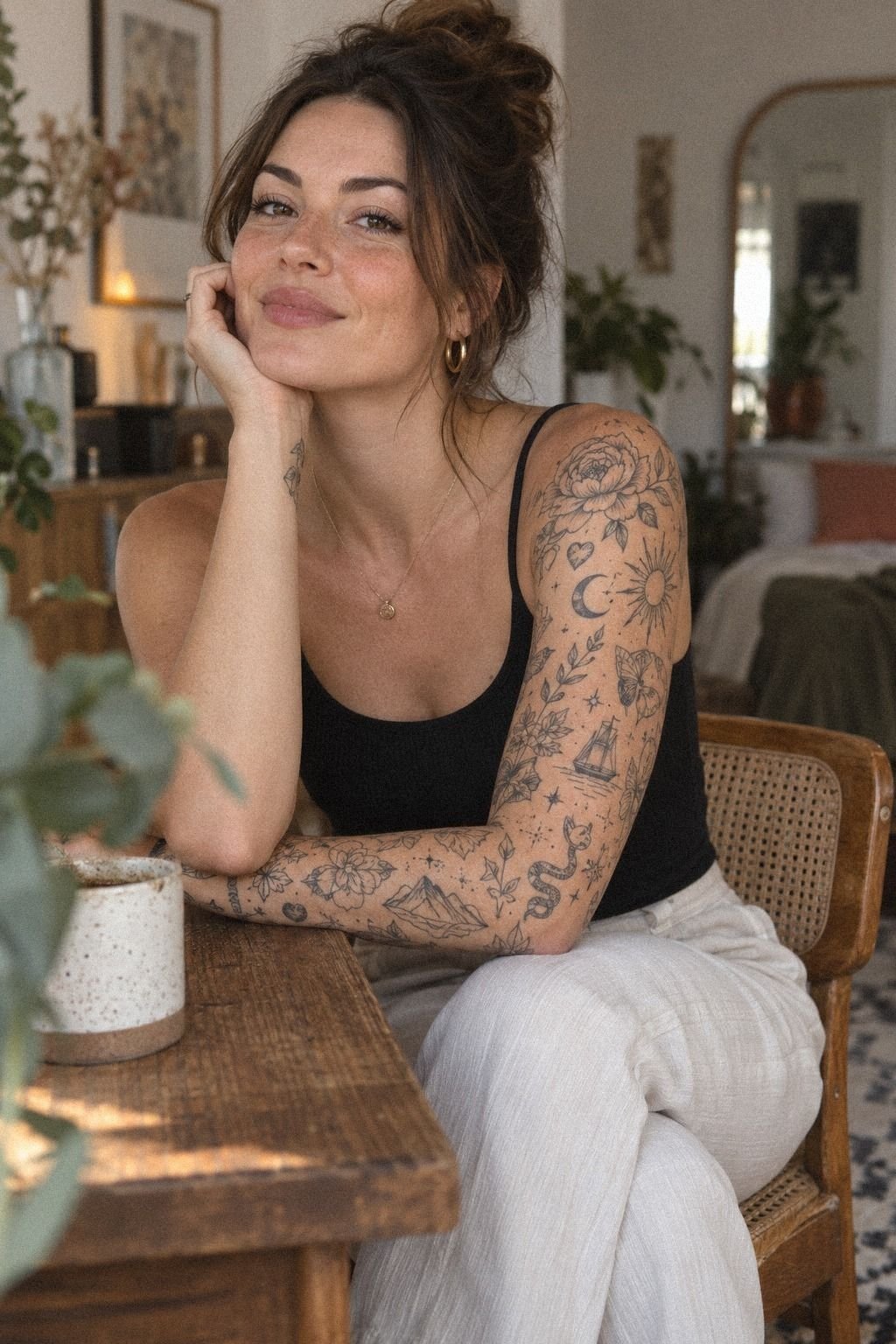
I drew motifs that shared line weight instead of matching subject matter. A clay-toned botanical stem sat beside a moon, a tiny eye, and a ribbon shape.
The collection became intricate through repetition, not clutter. You’re looking for a family resemblance, and line quality can create it even when the symbols mean different things.
My artist tested single-needle linework beside a slightly thicker outline. The thinner mark looked understated at first, but it was less forgiving on curved skin. I chose the thicker version for the outer forearm and reserved the finest lines for flatter areas.
If you’re comparing artists, ask to see healed work, not only fresh portfolio examples. A polished portfolio matters, but healed results tell you more about line spread, contrast, and lasting value.
One early sketch included three nearly identical stars. I removed two.
Repetition can feel playful, but identical tiny motifs may make your sleeve look patterned rather than collected. You’ll get more personality from one star, one crescent, and one symbol with a different silhouette.
For more references, I kept a private board beside my tattoo ideas for women search. I wasn’t copying a single design.
I was comparing spacing, line thickness, and how muted black shading behaved beside bare skin. That distinction helped me develop an original sleeve instead of repeating somebody else’s arrangement.
3J’ai placé les pièces autour du bras
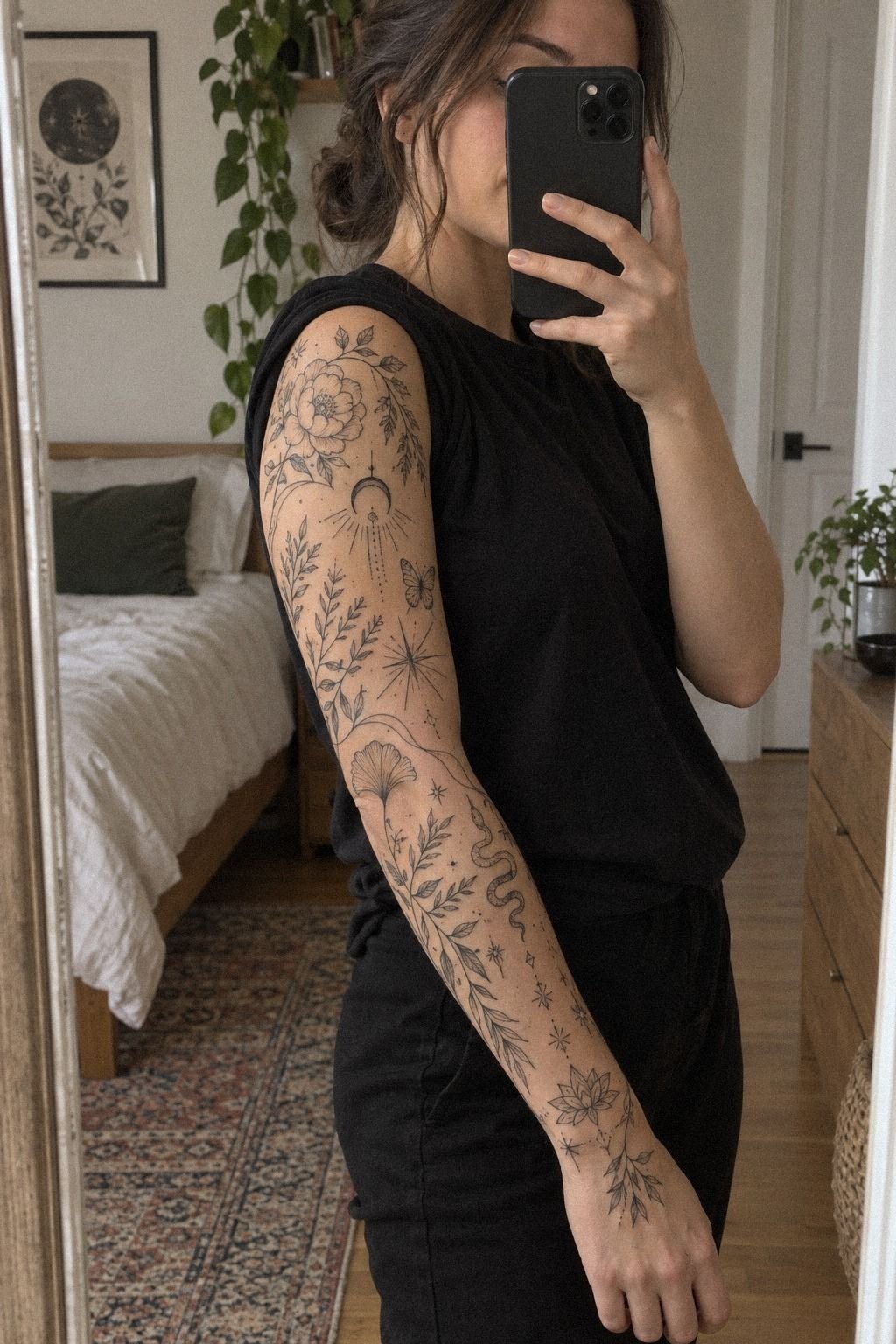
Placement changed the sleeve more than the motifs did. I wrapped one plum-and-grey serpent design slightly toward the side of my forearm, then kept smaller pieces facing forward. That made the tattoo visible in a mirror without forcing every symbol into a front-facing row.
You’ll want to rotate your arm during planning because a sleeve is a moving composition. The best arrangement should still make sense when your wrist turns or your elbow bends. That was the first real test!
The inner forearm was more sensitive for me than the outer side. It wasn’t unbearable, but the vibration felt sharper near the wrist and along thinner skin.
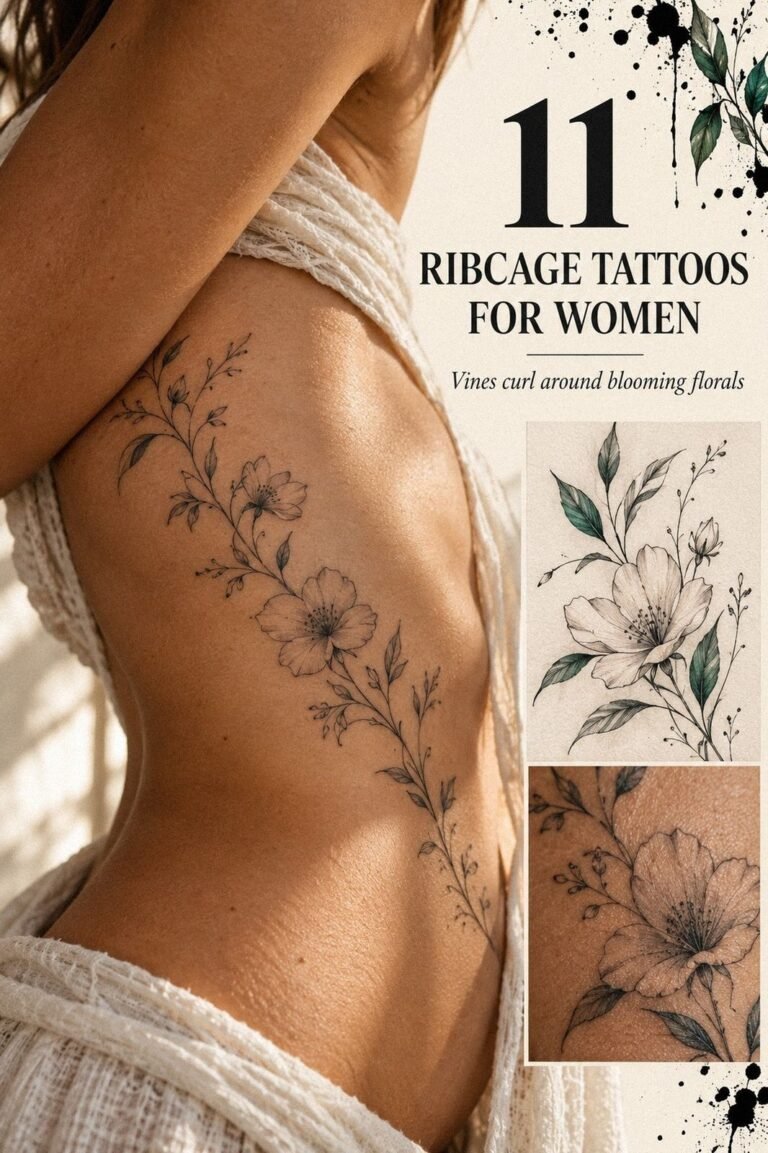
I’d call the upper outer forearm more forgiving. Ribs, feet, hands, and sternum are generally tougher zones, while the forearm, thigh, and shoulder tend to be more tolerable.
My artist used transfer paper stencils to test the angle before touching the skin. I stood, bent my elbow, and turned my wrist several times. The placement looked graceful when my arm rested, then oddly crowded when I reached forward.
The wrap-around forearm tattoo women reference helped me understand movement, but I didn’t want a solid band. I kept gaps between pieces so each image could breathe. That decision made the sleeve feel flowing instead of boxed in, and it gave future additions a natural place to land.
I also compared wrap around forearm tattoo women references with my own arm shape. Some arrangements looked excellent on a straight forearm but lost their balance once the wrist narrowed.
A healed-work reality check
Fresh ink can look sharper, darker, and more dramatic than healed skin. I knew that in theory, but seeing the change in person made the point clearer. My healed linework became the standard I used for every later decision.
If you’re judging whether a style is worth it, ask for healed examples from the same artist. Fresh work shows technical control. Healed work shows restraint, placement, and whether the design still has enough contrast to read.
I didn’t want a sleeve that depended on perfect darkness. A slightly softened mark can still feel timeless when the silhouette is clear. The real value is in choosing shapes that can survive ordinary change.
4J’ai mélangé fleurs, symboles et linework
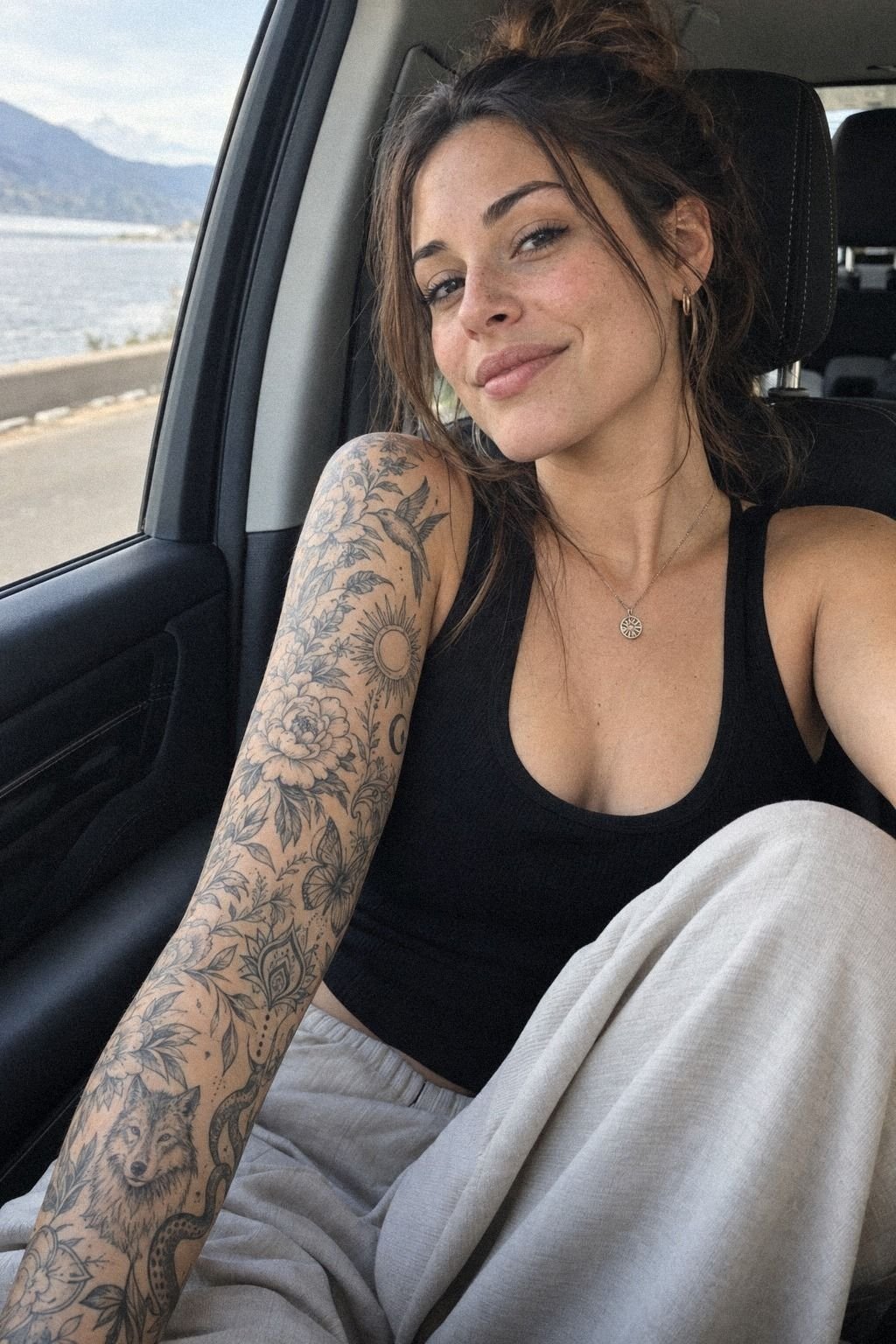
Flowers gave the sleeve its softer center, but I didn’t want a bouquet running from wrist to elbow. I chose one navy wildflower sprig with open petals, then paired it with a tiny key and a dark crescent.
The mix felt symbolic without becoming a visual diary that demanded an explanation from everyone who saw it. You can create meaning through a small gesture rather than making every motif carry a biography.
I asked for open petal outlines rather than heavy fill. The result was romantic, but it still matched the sharper motifs nearby. You can create balance by changing silhouette, not by making every symbol equally sweet.
I’d avoid adding several decorative flowers just because they seem appealing at first. A single irregular stem often has more character than a row of perfect blooms. That’s one reason I saved cool patchwork tattoos for reference instead of copying any one arrangement.
The moment it clicked came when we placed the flower beside a small ornamental dagger. That contrast gave the sleeve a little tension.
One image was gentle; the other felt fierce. You’ll know your collection is working when the pieces don’t all agree, yet their line weight and spacing still belong together.
I stopped browsing before the designs began to blur together. Too much inspiration can flatten your own taste. My best choice came after I closed the reference board and asked what I’d still want on my arm five years later.
5J’ai équilibré motifs audacieux et dainty
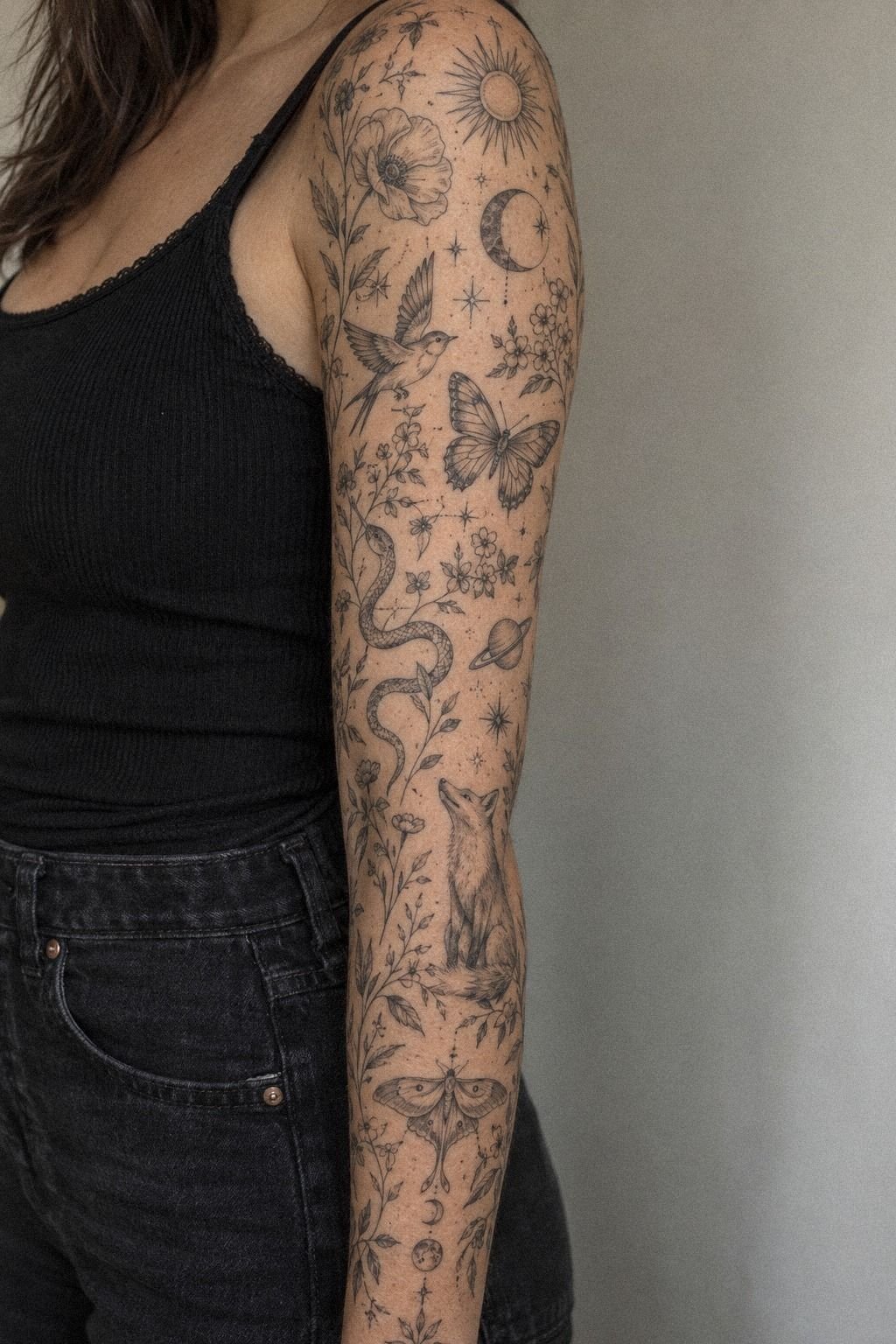
The fifth piece was a blackwork heart with a small emerald accent, and it nearly overwhelmed the collection. Its solid shape looked powerful beside the fine lines, but it pulled attention away from the flower and moth.
I reduced its scale slightly and moved it closer to the upper forearm. That small change gave the heart a supporting role instead of making it the entire visual center. If you’re adding a dark motif, check its weight from several angles before you commit.
The final version felt polished without becoming too formal. I wanted one strong mark, not a sleeve where every piece competed for attention. That restraint made the heart feel more personal.
This is where I found the difference between “more” and “better.” A new tattoo can be exciting, but the value of a patchwork sleeve comes from the relationship between pieces.
6J’ai ajouté une touche personnelle significative
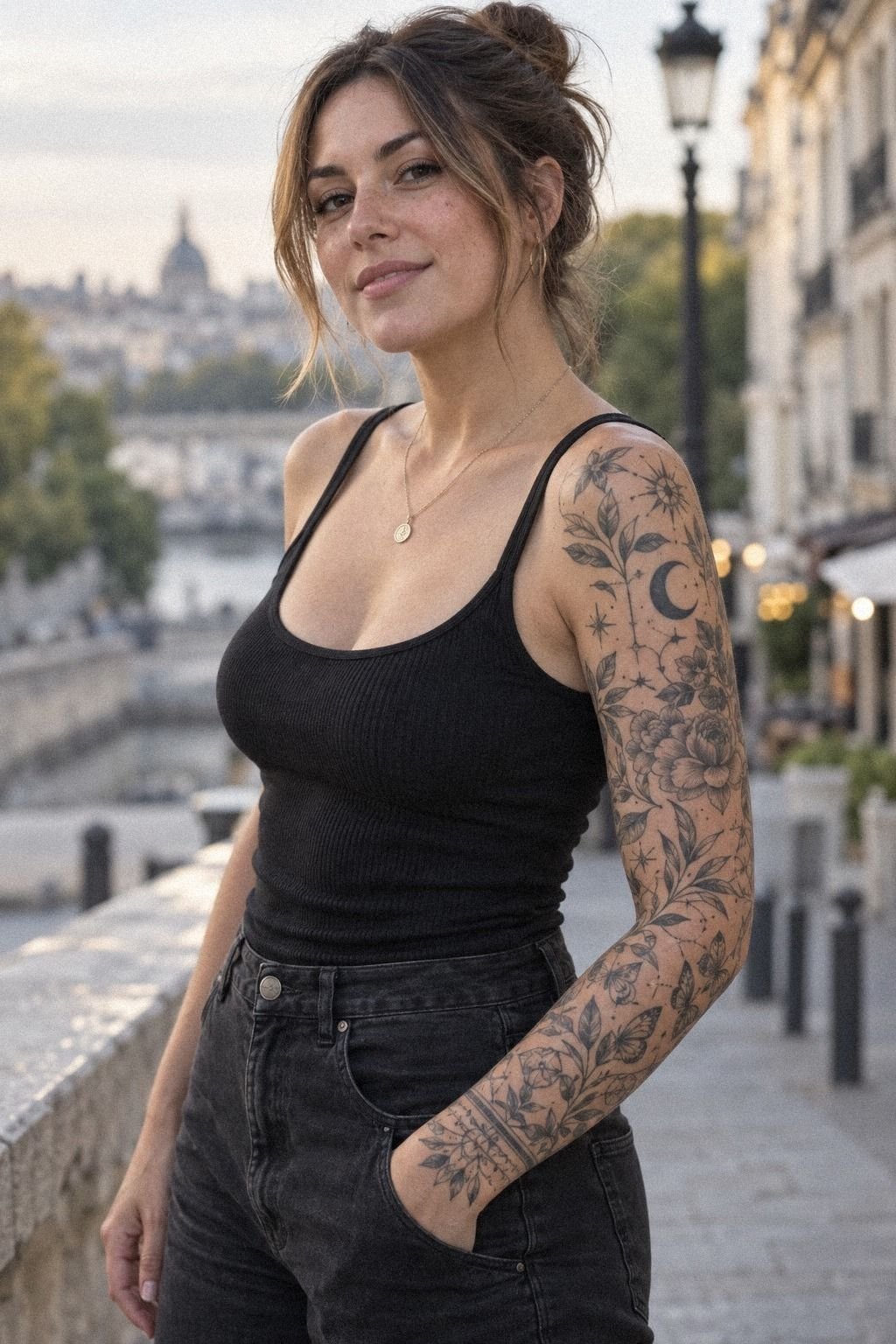
Meaning entered the sleeve slowly. I added a small handwritten initial connected to my family, but I kept it subtle rather than turning the entire collection into a biography. The mark is meaningful to me because it points to a person, not because strangers can decode it.
You don’t need every tattoo to explain itself. A private symbol can still be powerful when it has a clear visual role. I liked that the initial worked as a shape even when nobody knew its story.
I also chose a forest-green matchstick motif after a difficult year. It wasn’t a grand symbol of survival. It simply reminded me that a little light can be made, carried, and protected.
That image feels empowering without looking like a motivational quote.
My artist warned me against squeezing a full sentence into a small space. Letters spread, and fine text can lose clarity as skin changes. I listened.
The initial stayed bold enough to read, while the matchstick kept its expressive shape.
I’d rather have one legible symbol than five cramped explanations. If you’re collecting references, tattoo ideas women Pinterest can help you notice recurring themes, but don’t treat a trend as a meaning.
Your strongest sleeve will include at least one mark that nobody else could have chosen for you. That kind of personal detail is worth protecting from outside opinions.
7J’ai testé le rendu en demi-manche
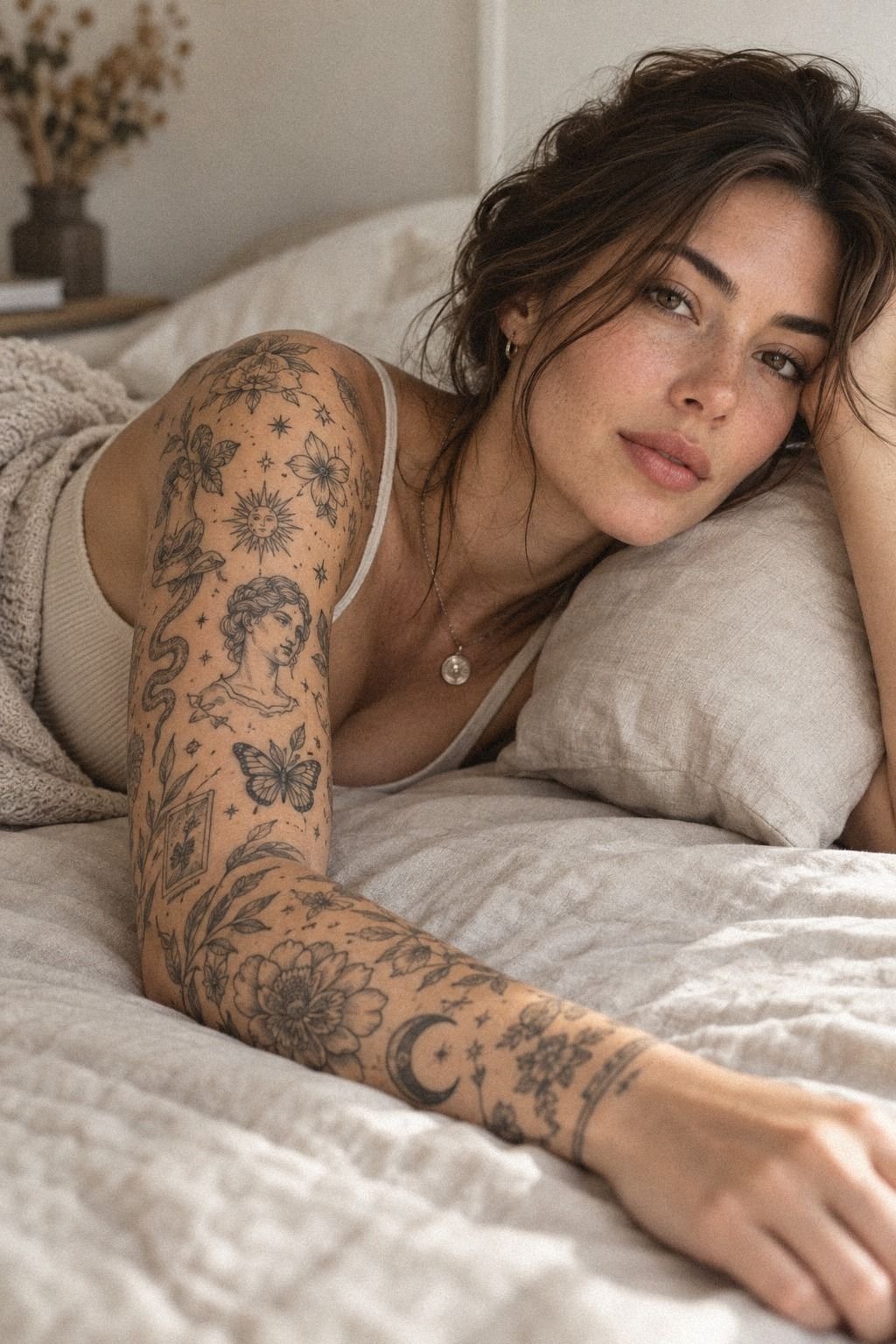
I tested a patchwork-half-sleeve tattoo before committing to the full arm. That gave me a chance to see whether the collection already felt complete or whether I was adding pieces simply because space remained.
The half-sleeve looked elegant with open skin around the motifs. I could have stopped there, and that realization made the next choices more deliberate. You don’t have to finish a sleeve just because you started one.
I wore short sleeves, long sleeves, and fitted cuffs to see which pieces stayed visible. The test helped me decide where future designs should sit. A tattoo has to work with your actual habits, not only with the outfit you imagine wearing for the appointment.
If you’re unsure whether a larger commitment is worth it, start with a smaller cluster and live with it. You’ll learn more from your own arm than from saving another hundred references.
8J’ai choisi une palette d’encre expressive
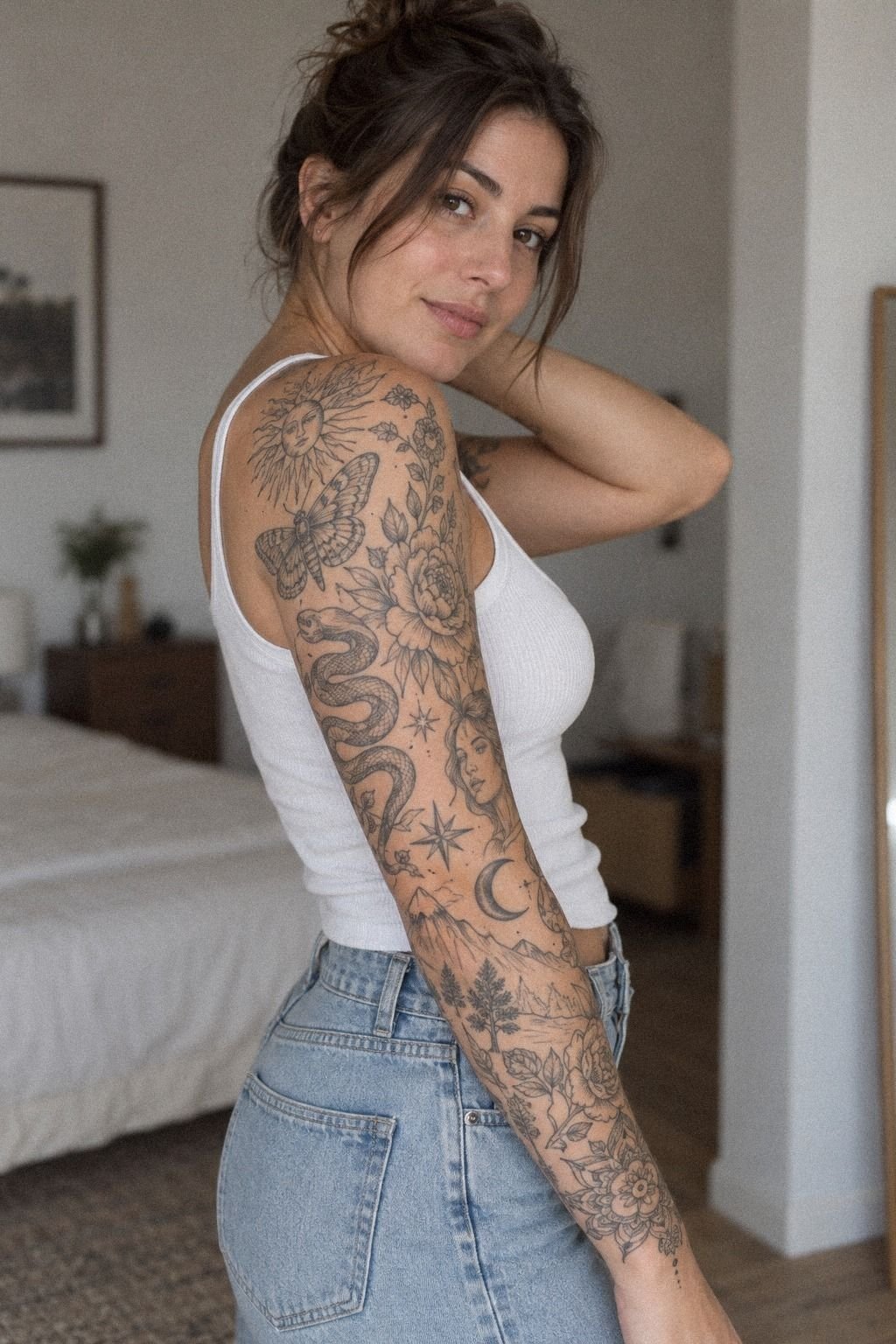
I kept the main palette black, warm ivory, and camel, then added one small ornamental flame with a vibrant black edge. The warmer accents gave the sleeve personality without turning every motif into a colored illustration.
I wanted the color to feel daring, but still connected to the existing linework. A limited palette can make separate pieces feel related, especially when the outlines remain consistent.
9J’ai anticipé la douleur selon chaque zone
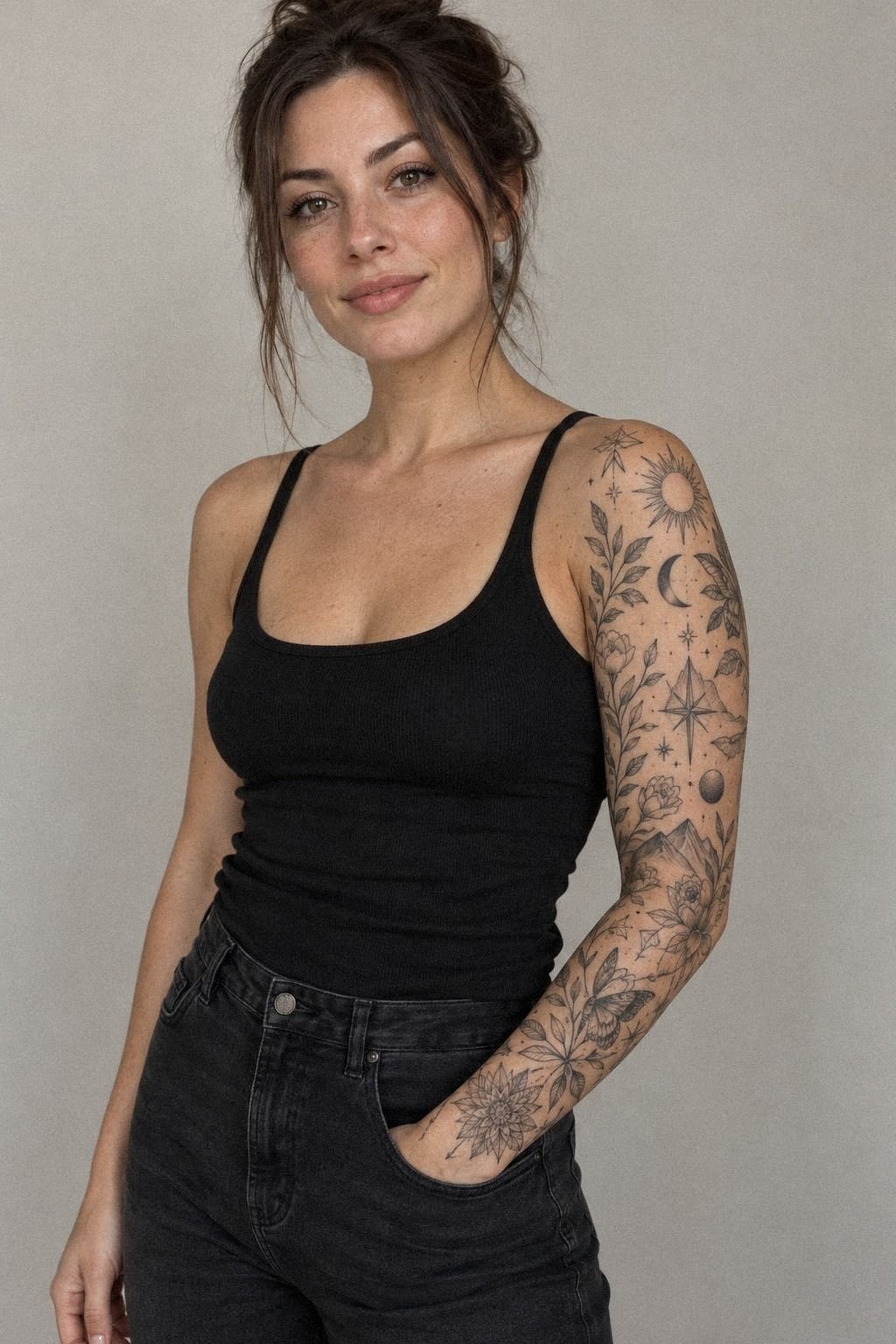
Pain was uneven, and I’m glad I planned around that instead of pretending every placement would feel the same. The outer forearm was manageable for me, while the inner forearm and wrist felt sharper.
I scheduled shorter appointments when I knew the placement would be sensitive. That didn’t make the process painless, but it made the experience easier to control. You can ask for breaks, and you can reschedule a detail instead of forcing yourself through a long session.
My artist explained that linework, shading, pressure, and location all affect the sensation. I appreciated the honest answer. A shorter tattoo session can be better value than pushing through exhaustion and becoming tense.
I ate beforehand, brought water, and wore clothing that left the forearm accessible. Those details sound simple, but they helped. If you’re comparing appointment costs, remember that comfort and pacing are part of the decision.
10J’ai protégé les détails pendant la cicatrisation
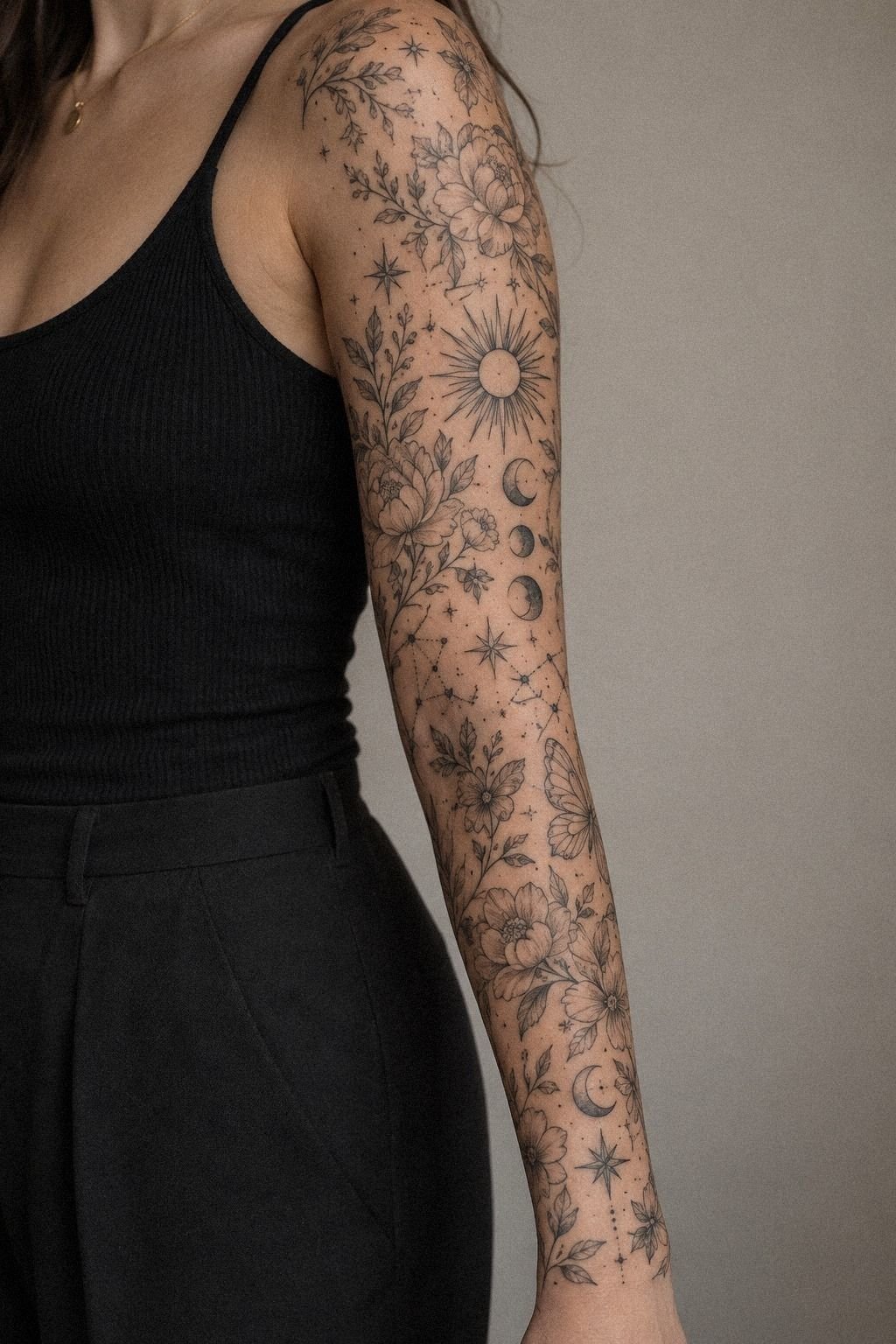
I treated aftercare as part of the tattoo, not an annoying chore afterward. My artist recommended gentle washing, a thin layer of aftercare product, and avoiding direct sun while the surface healed.
That routine helped protect the sage-green details while the skin settled. I didn’t pick at flaking areas, soak the tattoo, or cover it with heavy layers of product.
11J’ai finalisé une manche élégante et intemporelle
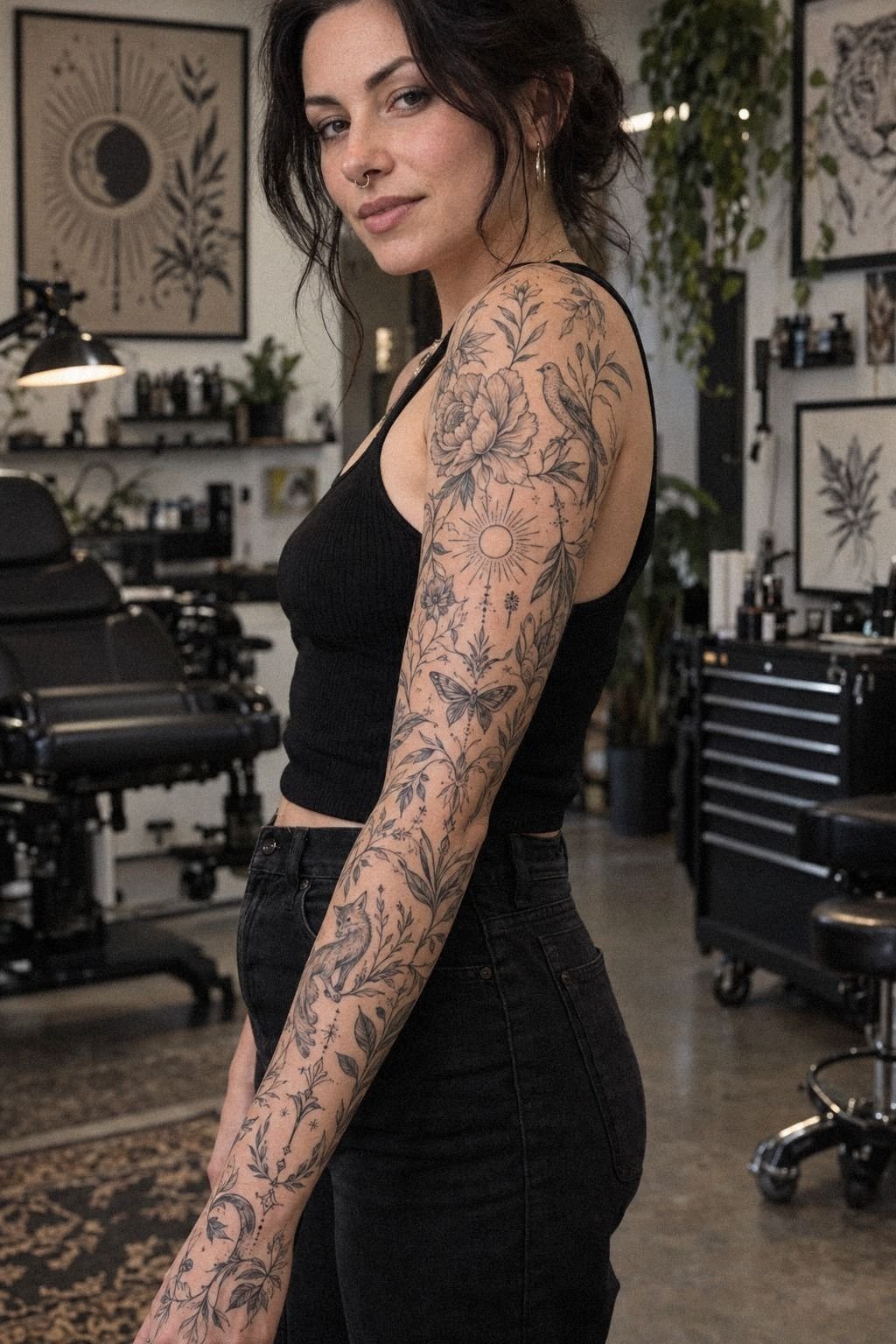
The final additions connected the sleeve without closing every gap. I placed a terracotta crescent moon near the elbow and an olive leaf below it. The result felt graceful and complete, but not sealed off from future ideas.
You should stop when the arrangement feels intentional, not when every inch has been claimed. Leaving space can make the existing pieces look more important.
After years, the tattoo still reads as a collection rather than one giant illustration. The lines softened, yet the strongest silhouettes remain iconic to me: the heart, the flower, the matchstick, and the little dagger.
I wouldn’t chase a fresh touch-up simply because a healed line looks human. Some softness is part of the story. The best tattoo isn’t the one that stays frozen; it’s the one that keeps its identity.
The last appointment was surprisingly emotional. I’d expected excitement, but I mostly felt relief. The healed blackwork details had become familiar enough to feel like part of my gestures.
When I lift a cup or push back my sleeve, I catch a piece without searching for it. That ordinary familiarity is what makes the collection feel truly personal.
If you’re considering a sticker sleeve tattoo, notice how individual shapes can remain separate while sharing one visual language. Mine works because the spacing is intentional.
It feels classic, yet the mix of symbols keeps it from looking formal or dated. I still like that the pieces can be read together or one at a time.
How much it cost
Tattoo pricing varies by artist, city, demand, size, placement, and session length. I won’t invent a neat personal receipt where the brief doesn’t provide one. Typical US references are more useful: boutique minimums often land around $50 to $100, while hourly rates commonly sit around $100 to $250.
My approach was to budget each appointment separately instead of promising myself a single total. You may need one short session for a tiny symbol or several appointments for a larger sleeve. Ask for the artist’s minimum, hourly rate, deposit policy, and whether touch-ups are included before you book.
I’d spend more on a specialist fine-line artist than on extra motifs. The portfolio, hygiene standards, healed examples, and communication mattered more than getting the lowest quote.
You’ll save yourself regret if you compare the artist’s work before comparing prices. The cheapest appointment isn’t automatically the best value.
The least expensive choice isn’t always the lowest-cost outcome. A rushed line, poor placement, or crowded composition can lead to a correction appointment later.
My artist consultation felt worth the money because we solved spacing before the needle touched my skin. If you’re calculating the full cost, include deposits, travel, aftercare products, and possible touch-ups.
Budget questions worth asking
Before I booked, I asked whether the quoted price covered the whole session or only the artist’s minimum. That distinction matters when a collection includes several small motifs. A low starting price can become a higher total once design time and additional hours are included.
I also asked about deposits, rescheduling, and touch-ups. Those policies affect the real budget, and they’re easier to discuss before money changes hands. A clear quote gave me more confidence than a vague promise.
If you’re deciding whether a more experienced artist is worth it, compare healed work and consistency before focusing on the hourly figure. Paying for judgment can protect the placement, scale, and long-term readability of the sleeve.
What I Learned From Living With It
I expected the novelty to fade, but familiarity made the sleeve more useful. I notice how the black linework moves when I bend my arm, how the flower disappears under a cuff, and how the red accent catches sunlight for one second before softening again.
Those ordinary moments tell me more than the first day ever did. The tattoo became part of my gestures rather than an accessory I had to display.
My biggest mistake was treating every blank patch as an invitation. I once considered filling a narrow gap with a tiny symbol simply because it was available. The idea was whimsical, but it had no reason to be there.
I waited, lost interest, and felt grateful I hadn’t made the appointment. That pause saved me both money and a design I would probably have regretted.
Fine lines can spread over time. UV exposure can fade contrast.
Healed skin may not resemble fresh studio work, and that’s normal. The pieces that held up best were the ones with clear silhouettes, enough spacing, and darker marks where the design needed structure.
If you’re choosing between more detail and better readability, I’d choose readability. It usually offers more lasting value than adding another fragile detail.
I also learned that a sleeve doesn’t have to perform femininity in one narrow way. Mine includes flowers, a dagger, a heart, and a matchstick. The mix feels romantic, sharp, and slightly strange, which is exactly why it still feels like me.
You’re allowed to build a collection that refuses one tidy category. That freedom is part of what made the sleeve feel empowering.
For another round of references, I returned to tattoo ideas for women and cool patchwork tattoos, but I used them to study structure rather than copy motifs.
The details I would plan differently
If I started again, I’d check the stencil from more angles before approving it. I’d also leave more time between appointments. A design can feel urgent during planning and much less convincing after a few quiet weeks.
I’d be more cautious with tiny text and pale shading. Both looked stylish when fresh, but stronger silhouettes gave me better long-term confidence. If a motif matters deeply, it deserves enough scale to remain readable.
I’d also ask for a clearer written estimate. Knowing the likely price range would have made each appointment easier to plan. The financial side isn’t romantic, but it affects how relaxed you feel during the process.
What People Always Want to Know
How much does a Patchwork Sleeve Tattoo For Women usually cost?
A typical US boutique minimum is about $50 to $100, while hourly rates often run around $100 to $250. The final price depends on size, placement, artist, region, and session length. Ask for a written estimate before you book, and remember that several small appointments can still become a substantial sleeve.
Are Patchwork Sleeve Tattoo For Women a good idea for a first tattoo?
Yes, a patchwork sleeve can work well for a first tattoo if you start with a manageable piece and choose an experienced artist. Separate motifs make the commitment gradual. The forearm, thigh, and shoulder are often more tolerable than ribs, feet, hands, or sternum, though your experience may differ.
How do I choose a tattoo artist for Patchwork Sleeve Tattoo For Women?
Choose an artist with clean linework, healed examples, strong hygiene practices, and a portfolio that matches your intended scale. Healed work is the best evidence. I’d also ask how the artist handles placement, line spread, touch-ups, and designs that may be too small for lasting clarity.
How much do Patchwork Sleeve Tattoo For Women hurt?
Pain varies by zone, but ribs, feet, hands, and sternum are commonly more sensitive than the forearm, thigh, or shoulder. Short sessions can make the experience easier. You’ll likely manage the appointment better if you eat beforehand, drink water, wear accessible clothing, and schedule breaks.
How long does a Patchwork Sleeve Tattoo For Women take to heal?
The surface usually heals in about two to three weeks, while complete healing can take about two to three months. Gentle washing, light moisturizing, and sun protection support the process. Avoid picking, swimming while the surface is open, and direct UV exposure during early healing.
What’s the best placement for Patchwork Sleeve Tattoo For Women?
The outer forearm is a practical starting point because it’s visible, relatively tolerable, and gives small motifs room to read. The upper arm and thigh offer more space and lower daily friction. Your best placement is the one that protects the design and suits your life.
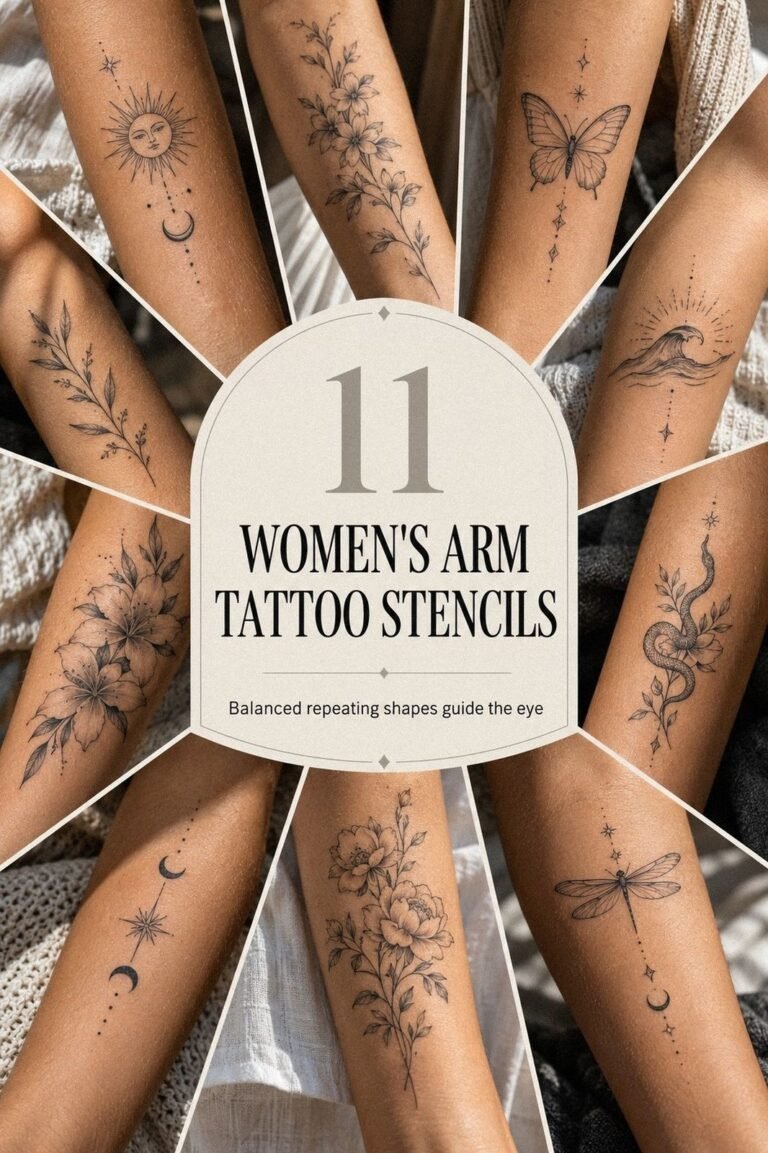
For wraparound planning, compare wrap around forearm tattoo women references before booking. You can also review women s arm sleeve examples to compare scale and spacing.
Where I’d Start First
If I had to pick one, I’d start with the outer forearm. It gives fine lines light, visibility, and enough space to breathe without forcing a full commitment.
I’d save the tattoo ideas women Pinterest references, compare them with patchwork tattoo sleeve ideas, and then wait before booking.
Find an artist with healed work you’d still trust years from now. Start smaller, and don’t rush it! A patchwork sleeve is worth the time when every piece feels chosen rather than simply added.