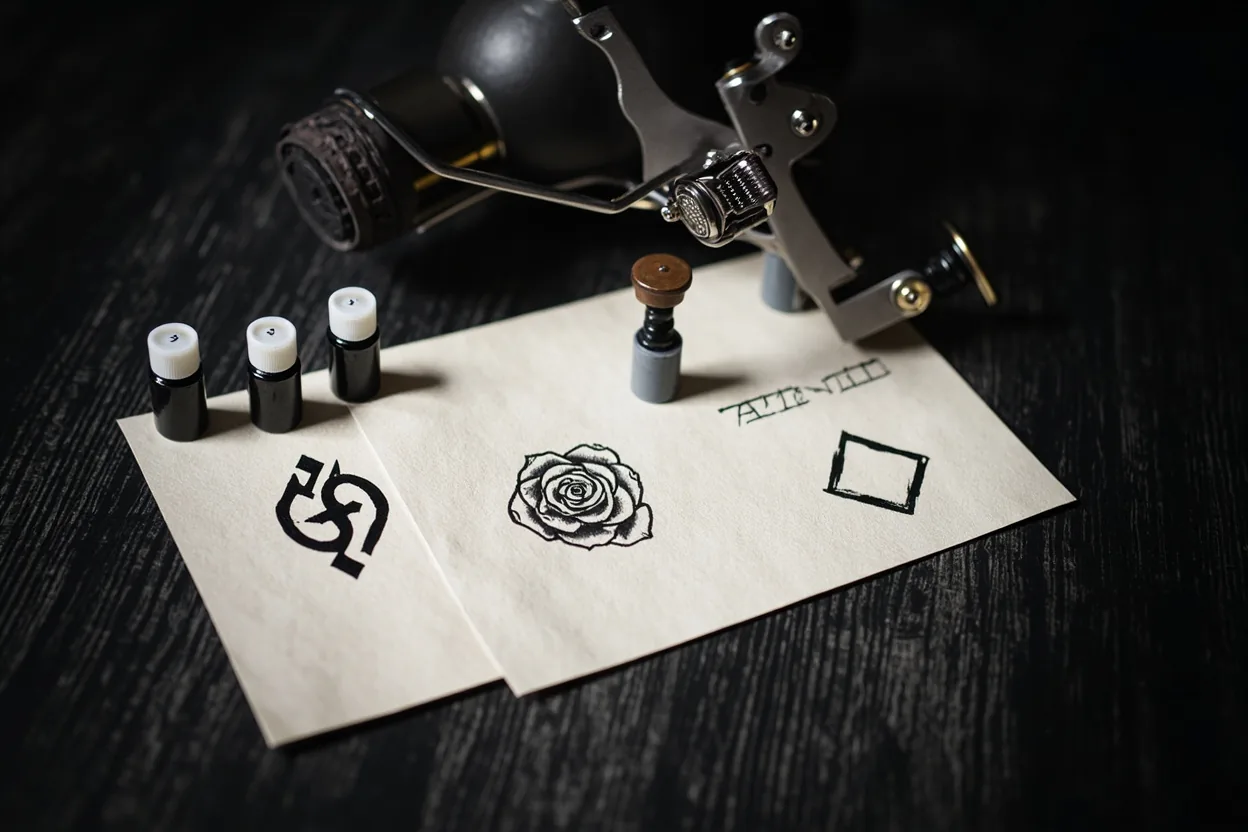
Cool tattoo ideas age better when they are not trying too hard. The idea can be bold, dark, strange, soft, or funny, but it still needs a readable shape and a placement that makes sense on a moving body.
Quick answer: The coolest tattoos usually combine a strong silhouette, a body-aware placement, and a style with enough structure to heal well. Think blackwork symbols, traditional motifs, snakes, abstract marks, custom objects, patchwork pieces, or a familiar image drawn in a less expected scale.
Cool tattoo directions that hold up
A tattoo can feel current without being trapped in one year. Start with designs that have strong bones.
| Direction | Best fit | What to watch |
|---|---|---|
| Blackwork symbol | Graphic, visible placements | Needs clean negative space |
| Traditional motif | Long-term readability | Avoid weak line weight |
| Custom object | Personal meaning without cliche | Simplify the reference |
| Patchwork piece | Collectors building over time | Plan spacing early |
| Abstract mark | Quiet but unusual ideas | Must still look intentional |
Black and grey realism, traditional American, neo-traditional, and Japanese hold up decade after decade because the foundations are sound. Bold outlines contain the pigment. Solid black fill stays black. Whip shading in grey tones softens gracefully instead of turning muddy. Designs that read from across the room at day one still read from across the room at year fifteen. That’s the whole game.
Placement matters as much as style. The outer upper arm, calf, and chest panel are low-wear, low-stretch zones that heal clean and age slowly. The inner bicep and thigh are spicier on the needle but stay sharp long-term. Hands, necks, and feet are high-wear, constant sun exposure, constant friction. Whatever you put there fades faster, full stop.
Cool is mostly restraint
A tattoo should still make sense on you at sixty.
The tattoo that looks effortless usually has fewer ideas than the draft. One snake with good flow beats a snake, dagger, rose, flame, moon, and quote squeezed into the same forearm patch.
If you are saving tattoo ideas from social feeds, step back from the image and ask what would remain without the photo styling. Strong tattoos survive bad lighting.
The coolest tattoos in any shop portfolio tend to be simpler than you think. One strong image, tight negative space, lines that don’t compete. When a client loads up a design with five concepts crammed into a four-inch square, every element fights the others and the whole thing turns into a grey blob by year five. Restraint isn’t a compromise, it’s the actual skill.
Fine line work looks crispy fresh out of the shop. The problem is fine lines in high-movement zones, like the wrist crease or inner elbow, spread. A 0.5mm line becomes a 1.5mm fuzzy line by year three. If you want fine line that stays fine, go with a low-wear zone, keep it out of direct sun, and budget for a touch-up around the eighteen-month mark.
Questions before booking
A cool idea still needs a practical conversation with the artist.
- Ask what detail they would remove first.
- Ask whether the design still reads from two feet away.
- Ask how the tattoo could connect to future work.
- Ask for healed examples in the same style.
What makes a cool tattoo age badly
Trend-specific shapes can burn out fast when the tattoo has no personal reason or strong composition behind it. The fix is not to avoid trends completely. The fix is to make the design work even when the trend is over.
Avoid micro detail used as a substitute for taste. If the tattoo needs a zoomed-in phone photo to look interesting, it may not work well on skin.
Trendy script ages the worst. Handwritten micro-lettering with zero outline looks great in Instagram photos and turns into an unreadable blur on real skin inside a decade. Letters need weight and spacing to survive. Thin script packed tight is basically a timed self-destruct. Same goes for ultra-fine geometric linework with no fill. The lines migrate, gaps close, and the whole pattern loses definition.
Watercolor tattoos without a solid black anchor are another common regret. The color spreads and fades without structure holding it in place. You’ll be left with a pastel smear. Oversaturated color portraits in low-quality ink have the same problem, yellowing and shifting tones as the pigment breaks down. If your artist isn’t talking to you about ink brand and longevity, ask. That conversation matters.