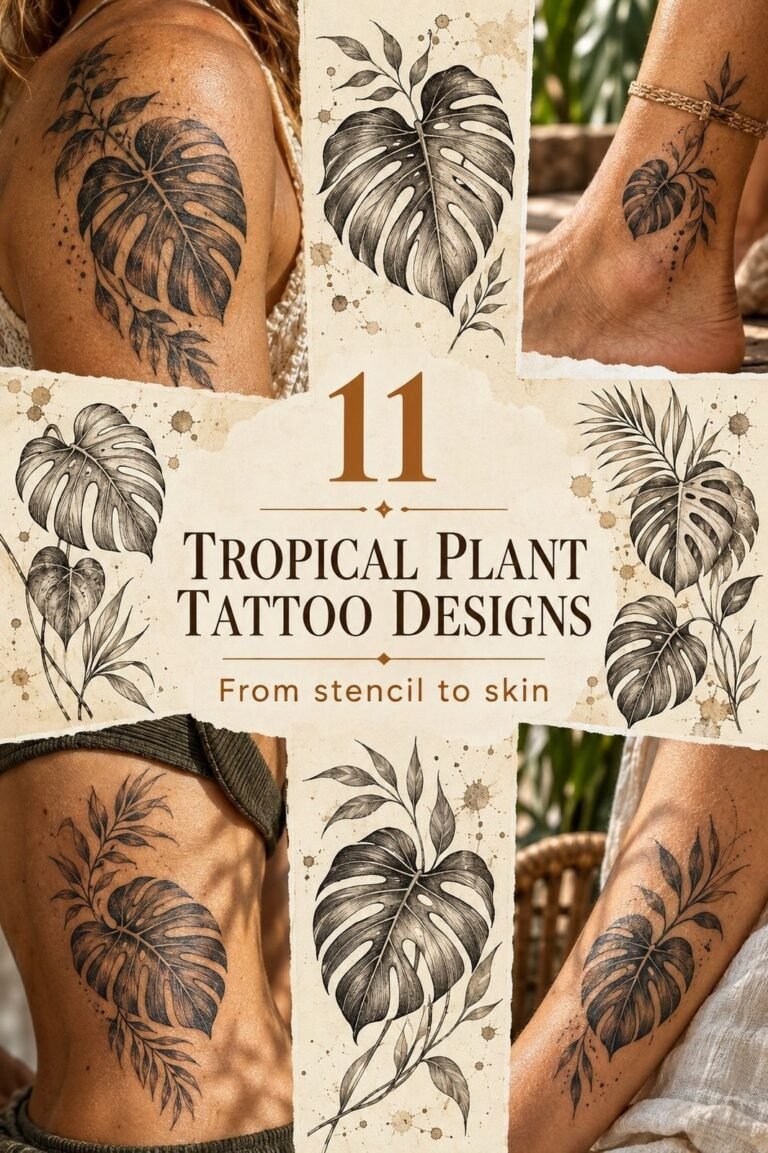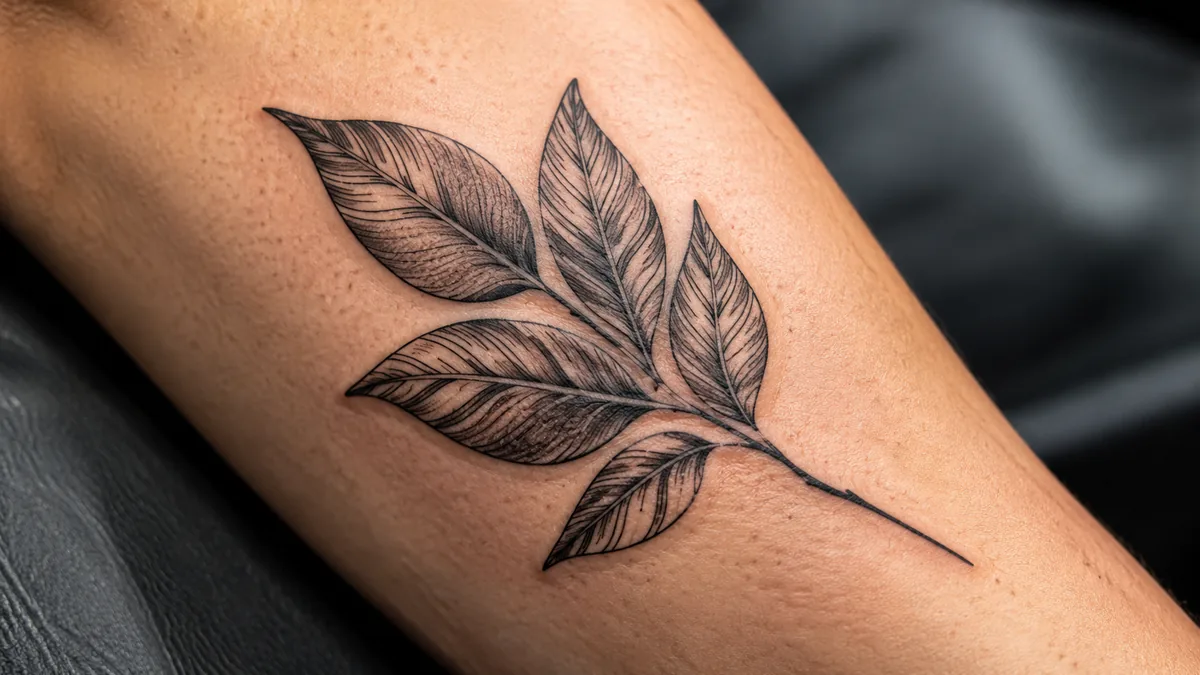
Leaf tattoos are everywhere, and there’s a reason they’ve stuck around. They’re not trend pieces. They carry real weight, rooted in nature, time, and the cycles every human being moves through. Whether you want one tiny leaf on your wrist or a full sleeve of botanicals, the meaning you bring to it is backed up by centuries of symbolism across cultures.
The core reading is change. A leaf grows, peaks, turns, and falls. That’s not just poetry, that’s the actual life cycle sitting on your skin. Depending on the style, the species, and even the color, your leaf tattoo can lean toward hope, loss, resilience, or rebirth. Let’s break down what people actually mean when they get one.
Core Symbolism: What a Leaf Tattoo Actually Means
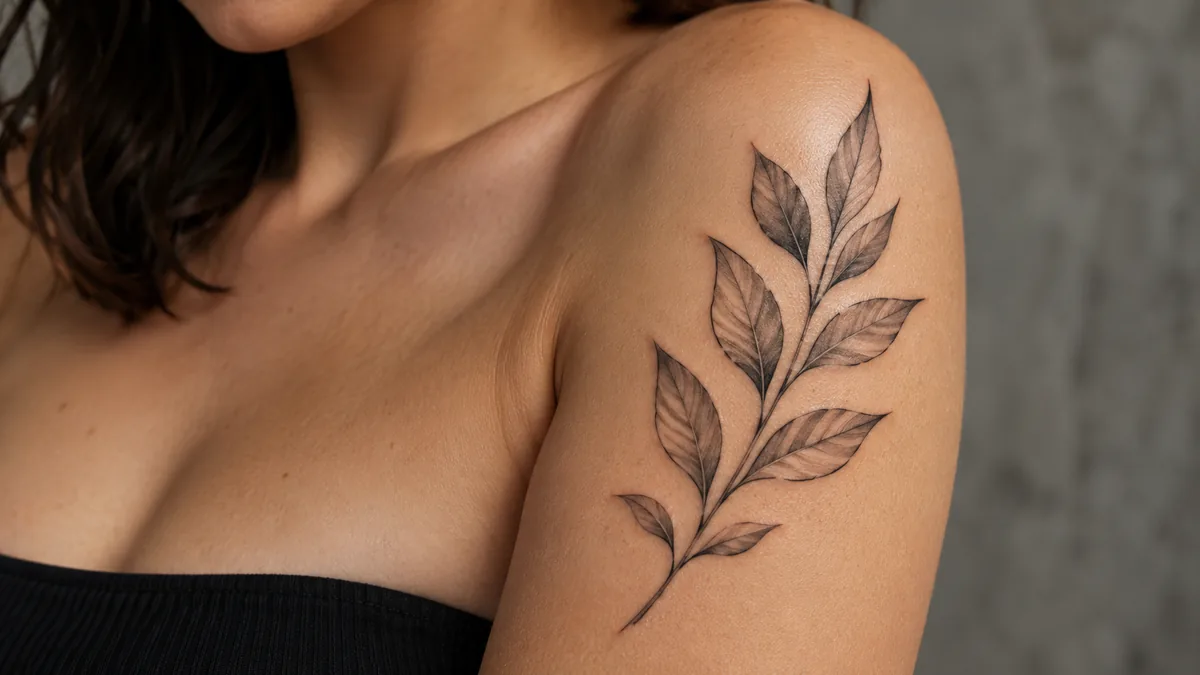
The most universal meaning is change and impermanence. Leaves mark the seasons. They remind us that nothing stays the same, and that’s not a bad thing. A lot of people get leaf tattoos after a major life shift, a move, a loss, a new chapter. The leaf is a clean, honest symbol for that transition without being heavy-handed about it.
Growth is the second big meaning. A young bud or an unfurling leaf reads as potential, new beginnings, starting fresh. A full mature leaf is strength and vitality. A dried or falling leaf leans into acceptance and letting go. You pick the version that fits where you are. That flexibility is part of why leaf tattoos resonate with so many different people.
Cultural and Historical Background
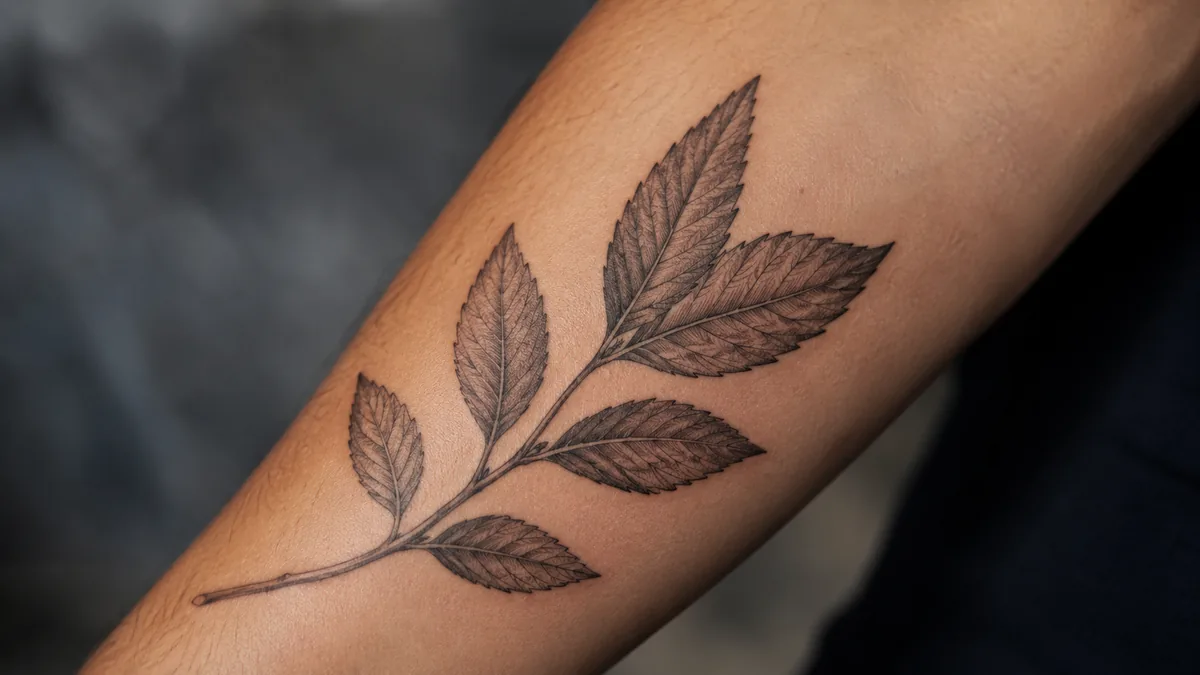
The leaf you choose says more than the tattoo itself ever will.
Leaves have carried meaning across cultures for thousands of years. In ancient Greece, laurel leaves were woven into crowns for victors and poets. Oak leaves symbolized strength and endurance in Celtic and Norse traditions. In Japanese culture, momiji, the red maple leaf, is tied to the autumn practice of appreciating transience, a concept called mono no aware, the bittersweetness of passing things. These weren’t decorative choices. They were deliberate symbolic language.
In many Indigenous traditions across North America, certain leaves carry medicinal and spiritual significance, representing healing and connection to the land. The four-leaf clover, specifically Irish in origin, has long stood for luck. None of this is manufactured meaning. It’s real cultural history that people still draw on when they choose their leaf design. Knowing where your chosen leaf comes from adds a layer most people will never even see.
Popular Design Variations
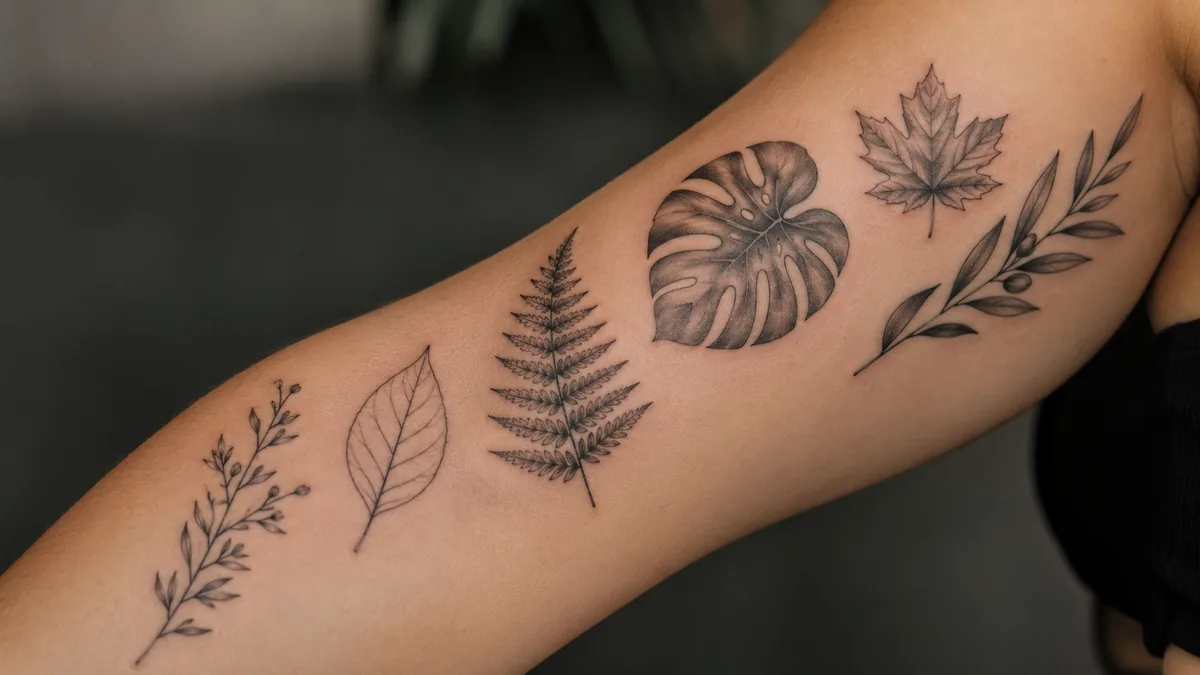
Single botanical leaf: clean, simple, often fine line. Works as a standalone or as part of a larger floral piece. Maple, oak, and ginkgo are the most requested for their distinctive silhouettes that read clearly even small. Fern fronds show up constantly, associated with new life and humility. Monstera leaves bring a tropical vibe but also a modern, graphic quality that looks sharp in both black and grey and color.
Falling or scattered leaves are another popular choice, especially in Japanese-influenced work where momiji petals drift across the arm or back. Some clients go for a full botanical study piece, multiple leaf varieties arranged like pressed specimens. Then there’s the skeleton leaf, just the veining structure with no fill, which reads as fragility and inner detail. Each variation shifts the emotional register of the same basic subject.
Color vs. Black and Grey
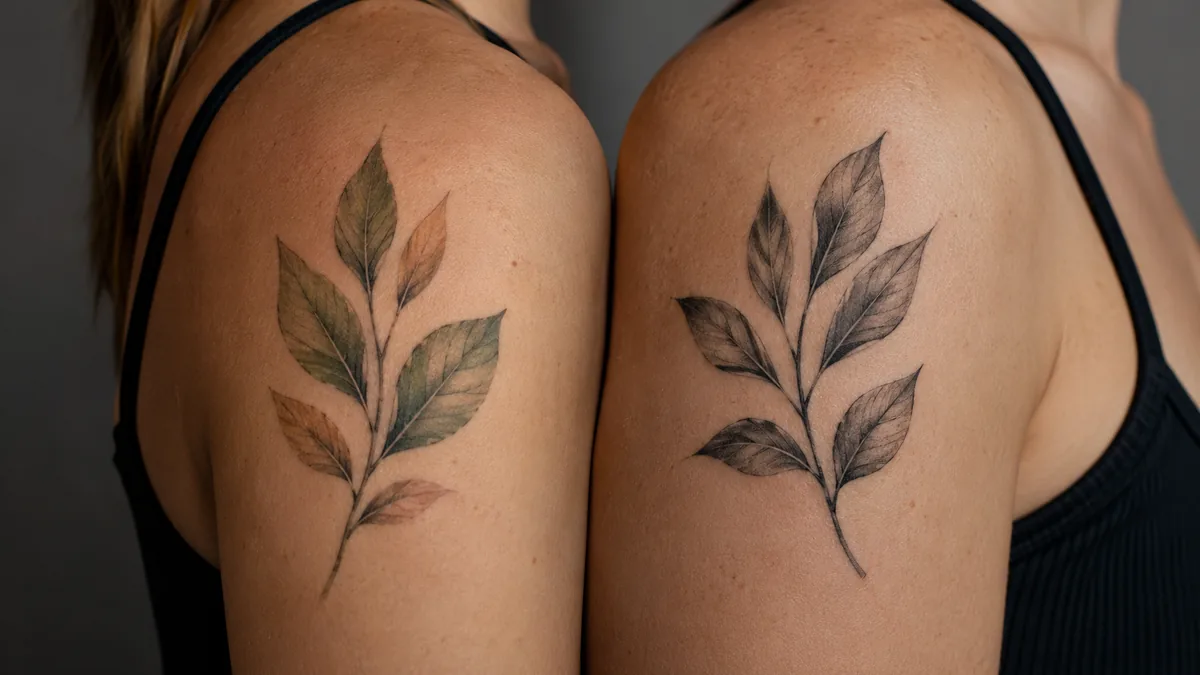
Color leaf tattoos are some of the most striking work you’ll see. Autumn palettes, deep reds, burnt oranges, golden yellows, are rich and warm. A good colorist can make a maple leaf look like it’s backlit by October sun. Saturated greens read fresh and alive. The trade-off is maintenance. Color fades faster, especially lighter tones. Yellows and light greens need touch-ups sooner than darker hues. Placement matters even more with color, keep it out of high-sun, high-friction zones.
Black and grey is where leaf tattoos really shine long-term. Whip shading on a leaf gives incredible texture, mimicking the way light catches a real surface. Fine line black and grey stays crisp and delicate for years if placed right and cared for properly. Solid black botanical work is bold, holds well, reads from across the room. If you’re choosing between color and black and grey and you’re unsure, black and grey ages more predictably and gives you cleaner lines that last.
Best Placements and How They Age
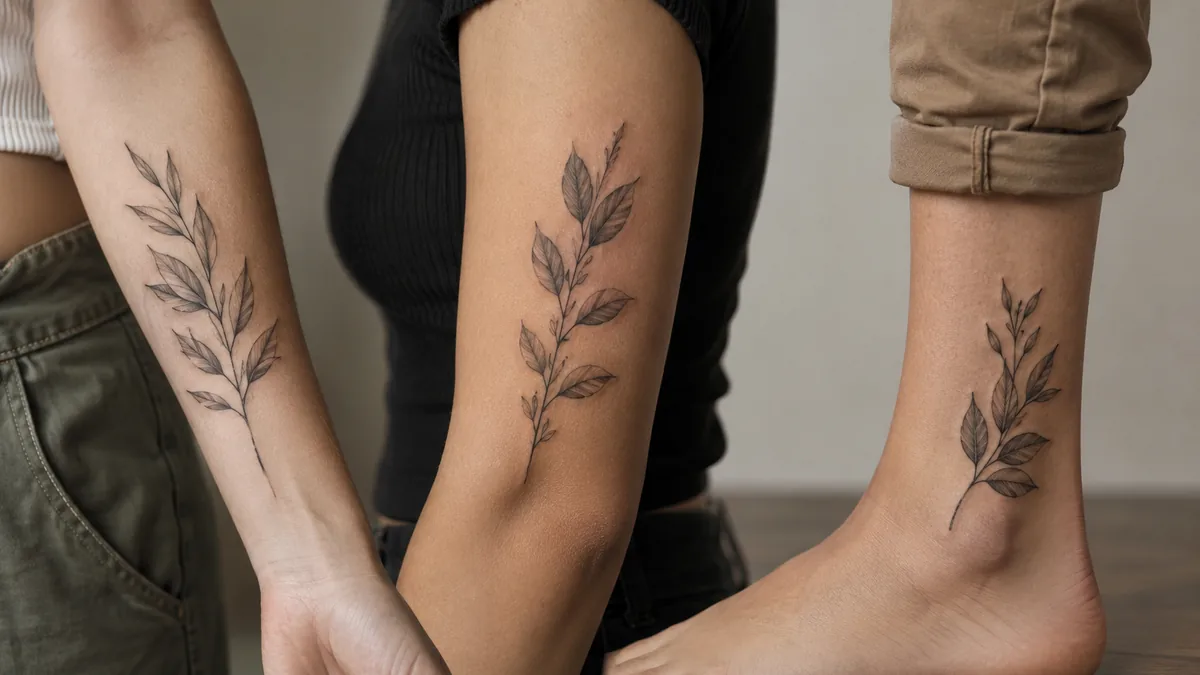
Forearms, upper arms, and calves are the sweet spots for leaf tattoos. The shapes are elongated or spread naturally, which fits the contours of those zones. A single leaf on the inner forearm is a classic. A fern wrapping the calf is a natural fit. The upper back and ribcage work well for larger botanical compositions, but ribs are spicy, expect a sharp session. Behind the ear and wrists work for tiny minimalist pieces but those spots fade faster due to constant movement and sun exposure.
High-wear zones like hands, fingers, and feet will blur out over time no matter how clean the original linework is. Blowout risk is also higher in thin-skinned areas. If you want your leaf tattoo to still look crisp in ten years, pick a low-friction spot and moisturize consistently. A well-done leaf with solid lines and good shading on a protected zone heals nice and holds its detail longer than most people expect.
The Ginkgo Leaf: A Special Case
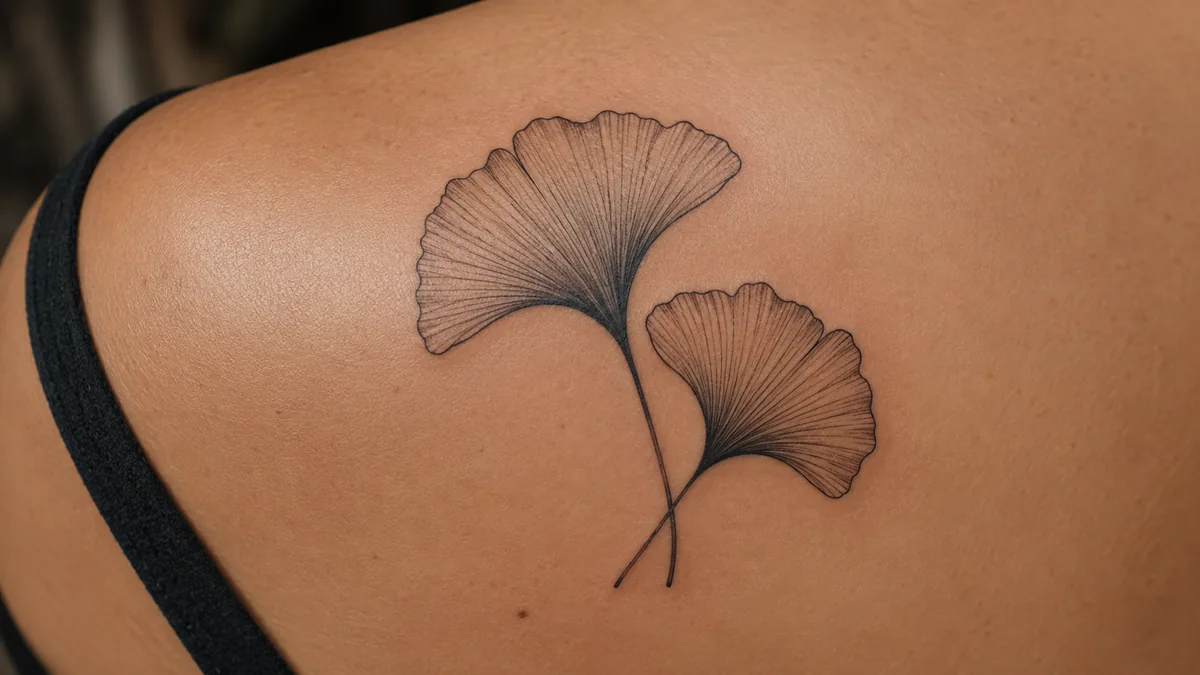
The ginkgo deserves its own mention because it carries specific meaning that people consciously seek out. Ginkgo trees are among the oldest living species on earth, some over 200 million years old. In Japan and China, the ginkgo symbolizes longevity, resilience, and hope. Several ginkgo trees survived the Hiroshima atomic bomb, which cemented their status as symbols of endurance and renewal. People who’ve been through serious hardship, illness, loss, or trauma often choose the ginkgo for exactly this reason.
The leaf shape is also just distinctive and tattoo-friendly. That fan shape with the split at the center reads clearly at almost any size, from a one-inch minimalist piece to a full detailed study. In black and grey it looks elegant. In yellow-gold color it looks like a small flame. It’s one of those designs where the meaning and the aesthetics reinforce each other naturally, which is always the best scenario for a tattoo you’ll wear for life.
Who Gets Leaf Tattoos and How to Make Yours Personal
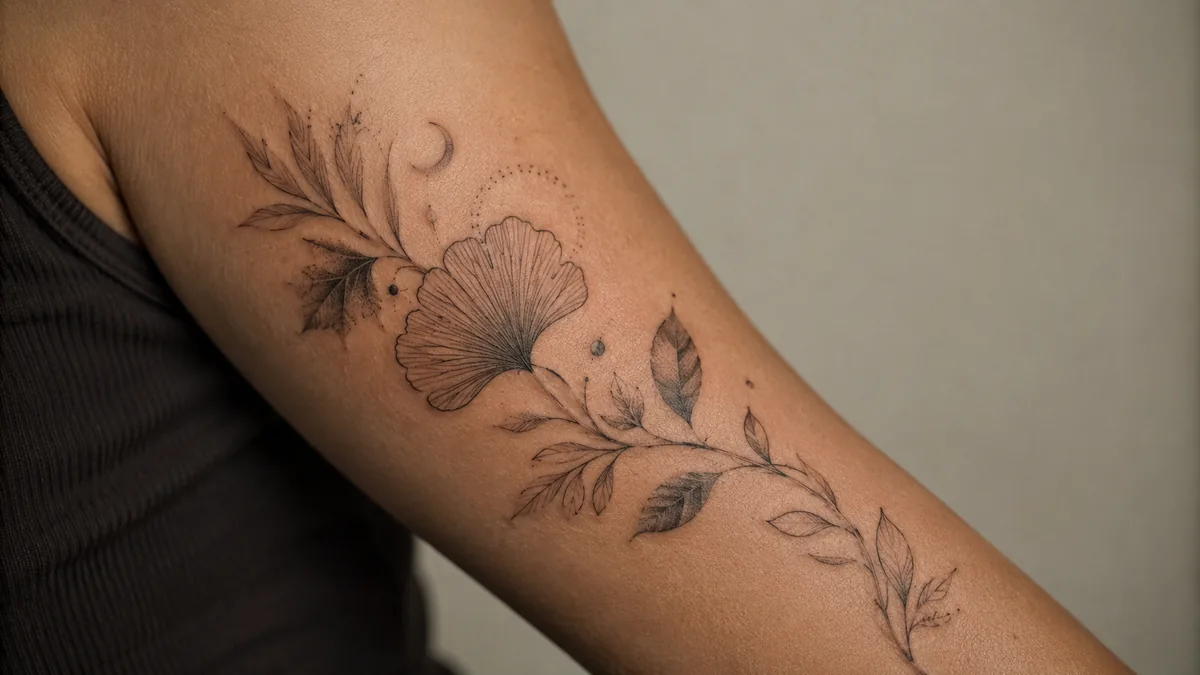
Leaf tattoos cross every demographic. They’re not gendered, not age-specific. People get them after losing someone, to mark a new chapter, to honor a connection to nature or to a specific place. The species you choose is where personal meaning really kicks in. A eucalyptus leaf for someone from Australia. A cannabis leaf for a direct, unapologetic statement. An olive branch for peace. A bay leaf if you’re Italian and your grandmother used them in every pot she ever cooked.
Work with your artist on the species and the stage of the leaf, bud, full, turning, or fallen. That one decision shapes the whole emotional read of the piece. Bring reference photos of the actual plant, not just tattoo inspiration. Real botanical illustration is a better starting point than Pinterest grids. Tell your artist what the piece is for. The best leaf tattoos are specific. They’re not just pretty shapes. They’re a particular leaf from a particular moment in your life, rendered permanent.