
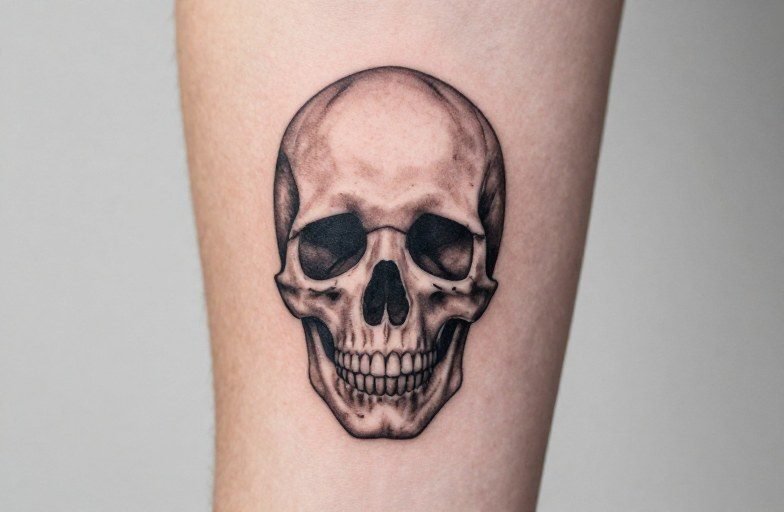
A symbol for the death of a loved one is a permanent mark that carries grief, memory, and the specific shape of a relationship that outlives the person. It is not decoration. The meaning sits in what you choose to carry forward, a date, a visual shorthand for what they loved, or an image that only makes full sense to you. This article breaks down how these tattoos actually function in skin, what holds up over decades, and which symbols carry genuine weight versus borrowed sentiment.
Color vs Black and Grey
Memorial tattoos split cleanly between vivid color and restrained black and grey, and the choice changes how the piece ages and what it communicates.
When Color Works
Bright color suits specific imagery: a parent’s garden roses, a child’s favorite superhero emblem, a sports team logo that defined Sunday afternoons with your brother. Saturated reds and yellows pop for roughly five to eight years before significant fading sets in. Expect touch-ups. Color also carries emotional immediacy, it reads as present-tense, still happening, still felt sharply. On darker skin tones, color requires more saturation and larger fields to stay readable; thin color lines blur faster than bold blocks.
Black and Grey’s Long Game
Black and grey ages with dignity. The contrast between solid black, washed grey, and skin tone creates depth that holds for decades if applied well. This palette suits classical memorial imagery: clocks stopped at specific times, religious iconography, portraits rendered from photographs. Greywash portraits of deceased loved ones demand an artist who specializes in photorealism; mediocre execution produces muddy, unrecognizable results within a few years. For text, names, dates, quotes, black and grey offers the cleanest long-term readability.
- Color: higher maintenance, emotional punch, specific reference
- Black and grey: lower maintenance, timeless weight, better for text and portraits
- Single-needle black work: trendy but ages poorly on memorial pieces you want to last
Best Placements
Where you put a memorial tattoo changes its visibility to others and its visibility to you, which matters more than most people consider upfront.
Private vs Public Placement
Over the heart, inner bicep, or ribcage keeps the symbol close and mostly hidden. These spots hurt more, ribs especially, with thin skin over bone, but the pain becomes part of the ritual for some. Wrist, forearm, or calf puts the memory in daily view, which helps some people process and feels like exposure to others. There is no correct choice; there is only your honest answer to whether you want to explain it to strangers at grocery stores.
Technical Considerations
Finger and hand placements blur fastest due to constant use and sun exposure. Foot tattoos fade from friction and sweat. The upper outer arm and outer thigh offer the best combination of moderate pain, stable aging, and easy aftercare. For text-heavy designs, the flatter the skin, the better the readability, ribs curve, which distorts lettering over time.
- Heart/chest: intimate, painful, stable aging
- Forearm: visible, practical for aftercare, moderate pain
- Ribs: private, very painful, potential distortion on curved surfaces
- Back/shoulder blade: easy to conceal, good canvas size, moderate pain
Similar & Related Symbols
Memorial tattoos cluster around certain imagery, some genuinely rooted in tradition, some co-opted by trend cycles.
Clocks stopped at a specific hour, often linked to Victorian mourning jewelry, though the tattoo adaptation is relatively recent, mark exact moments of death or final breaths. Birds in flight, particularly sparrows and swallows, carry sailor funeral traditions: a swallow meant a soul had reached safe harbor. Hourglasses, less common now than in the 1990s, still appear with banners reading “tempus fugit.”
More personal symbols bypass generic meaning entirely: a fishing lure for a grandfather who taught you to cast, a vinyl record for a mother who played Nina Simone every Sunday, a specific breed of dog they loved. These require no explanation and resist trend obsolescence. The semicolon, originally a mental health symbol representing a life continued, sometimes gets adapted for suicide loss, though this usage is contested within the community that created it.
- Rooted symbols: stopped clocks, specific birds, anchor (maritime loss)
- Personal symbols: objects of shared activity, handwriting reproductions, specific locations
- Trend-cycled: infinity symbols with feathers, dreamcatchers, generic “angel wings”
Mythology & Folklore
Cross-cultural symbols for death and passage offer options beyond the familiar Western canon, though context matters, borrowing without understanding reads as empty aesthetics.
European and Near Eastern Traditions
The Greek psychopomp imagery, Hermes, Charon, the winged soul, sometimes appears in academic or classically trained artists’ work. The poppy, from Greek and Roman sleep/death associations, translates well to botanical tattooing. Celtic knotwork, particularly the endless knot adapted for memorials, is often linked to continuity beyond death, though specific clan or family knot meanings are largely modern inventions by tattoo marketers rather than historical fact.
East Asian and Indigenous Symbols
The Japanese higanbana (red spider lily) blooms during the autumn equinox, commonly associated with the dead and the afterlife in Buddhist tradition. It appears in memorial tattoos, though some Japanese artists consider it melancholic to the point of inauspiciousness. The Mexican marigold (cempasúchil) guides spirits during Día de los Muertos; its use in tattoos by non-Mexican artists sometimes raises questions of appropriation versus appreciation. The Māori koru, representing new life and continuity, has been adapted by some for memorial purposes, though this usage outside Māori culture is sometimes viewed as problematic.
Who Chooses This Tattoo
There is no single profile. Parents mark children lost to miscarriage, stillbirth, or early death, sometimes with footprints, dates, or names that never got spoken aloud. Adult children memorialize parents after long caregiving or sudden absence. Siblings choose matching or complementary pieces. Partners mark spouses, though this sometimes complicates later relationships in ways worth considering.
Timing varies enormously. Some people book appointments within weeks of a death, seeking physical control when emotional control feels impossible. Others wait years, until the first raw grief has settled enough that they can trust their own judgment about what will still matter in twenty years. Both approaches are valid; the risk of the immediate approach is choosing something that serves the moment of crisis rather than the long relationship.
Second memorial tattoos, adding to or covering earlier pieces, happen when the first choice was made too young, too hastily, or with an artist who executed poorly. This is common enough that good artists will ask gently whether you’ve considered the design for several months.
Religious & Spiritual Angles
Faith tradition shapes both acceptable imagery and theological comfort with the practice itself.
Christian and Jewish Contexts
Crosses dominate Christian memorial tattoos, sometimes incorporating names into the horizontal beam or adding doves for the Holy Spirit. Catholic imagery, Mary, specific saints associated with peaceful death, appears in Chicano and traditional American styles. Jewish law traditionally prohibits tattooing as desecration of the body, though Reform and many Conservative practitioners have relaxed this; some Jewish memorial tattoo wearers report family tension around the choice.
Buddhist, Hindu, and Secular Approaches
Buddhist memorial tattoos sometimes use the lotus, representing purification and rebirth, or Sanskrit/Pali phrases about impermanence. The Tibetan “Om mani padme hum” appears, though accurate rendering requires consultation with someone who reads the script, misspelled mantras are unfortunately common. Hindu imagery for deceased loved ones might include specific deity associations: Shiva for transformation, Vishnu for preservation of soul. Secular memorials increasingly use astronomical imagery, specific constellations visible on dates of death, or simply the vastness of space as metaphor for absence.
Before You Decide
Memorial tattoos carry weight that decorative work does not. The skin heals; the meaning does not require the image to be perfect, but it does require the image to be yours. Research your artist’s healed work, not just fresh photos. Ask to see pieces from two or three years prior. Consider whether you want the date visible, some people find the constant arithmetic of “how long it’s been” painful rather than comforting. Think about whether the symbol will still speak to you at forty, at sixty, at eighty. The best memorial tattoos are not the most elaborate; they are the most specific.
Frequently Asked Questions
How soon after a death should I get a memorial tattoo?
There is no required waiting period, but many artists suggest at least six months so you can evaluate the design with clearer judgment. Immediate grief often produces choices that feel wrong later.
Will a portrait of my loved one actually look like them in ten years?
Photorealistic portraits require specialized skill and regular touch-ups. Simpler, more symbolic designs age more predictably and often carry more personal meaning than photographic accuracy.
Is it disrespectful to use religious symbols from a tradition I don’t practice?
Context matters. Symbols with deep cultural specificity, Day of the Dead imagery, Māori patterns, certain Buddhist deities, can read as appropriation. Research and, when possible, consult with practitioners of that tradition.
What if I want to cover or remove a memorial tattoo later?
Cover-ups are possible but depend on size, color density, and placement. Laser removal is more effective on black ink than color. Both processes are more difficult than the original tattoo, so initial choice deserves real deliberation.
Related Tattoo Meanings
- Tarantula Tattoo Meaning: Symbolism, Design Placement Guide
- Tasmanian Devil Tattoo Meaning: Ferocity, Resilience, and Untamed Spir
- English Tattoo Meaning: Language, Heritage, and Ink
- Explore more









