An Aphrodite tattoo carries the weight of one of mythology’s most compelling figures: the Greek goddess of love, beauty, pleasure, and procreation. People choose her image to celebrate romantic resilience, reclaim feminine power, or honor the messy, glorious complexity of desire itself. I’ve tattooed Aphrodite rising from shells, weeping over Adonis, and staring out with cool indifference, each version tells a different story about what the wearer wants to carry on their skin.
Symbolism & History
Aphrodite wasn’t just some pretty figure on a vase. She was born from sea foam castrated into the ocean, which is metal as hell, and she held serious power over gods and mortals alike. Her symbols, the scallop shell, doves, roses, myrtle, swans, each layer meaning onto how she’s rendered in tattoo form.
Love and Desire
The obvious read, sure, but it’s deeper than hearts and romance. Aphrodite represents erotic love in its full, sometimes destructive form. I’ve had clients who’ve survived brutal divorces or abusive relationships choose her as a reclamation project. One woman in my chair last year got Aphrodite’s face on her ribs, half-hidden by a broken shell, after leaving a twenty-year marriage. “She loved who she wanted,” she told me. “And she made them pay when they crossed her.” That’s the energy some people want, not soft focus Valentine’s Day, but the dangerous, autonomous version.
Beauty as Power
In Greek culture, Aphrodite’s beauty wasn’t passive decoration. It was weaponized, strategic, world-altering. The Judgment of Paris, the Trojan War, her looks literally launched ships and burned cities. A tattoo of her can signal that the wearer understands beauty as leverage, not just aesthetic pleasure. We see this a lot with performers, sex workers, and anyone whose livelihood depends on being looked at on their own terms.
- Shell imagery: birth, emergence, vulnerability as strength
- Roses and myrtle: sacred to her cult, often paired with thorns for contrast
- Doves: traditional love symbols, but also her chariot pullers, domesticated wildness
- Mirror: self-regard, vanity reclaimed as self-possession
Common Variations & Styles
How you render Aphrodite changes everything about what the tattoo communicates. I’ve done her in probably six distinct styles, and they read completely differently.
Classical and Neoclassical
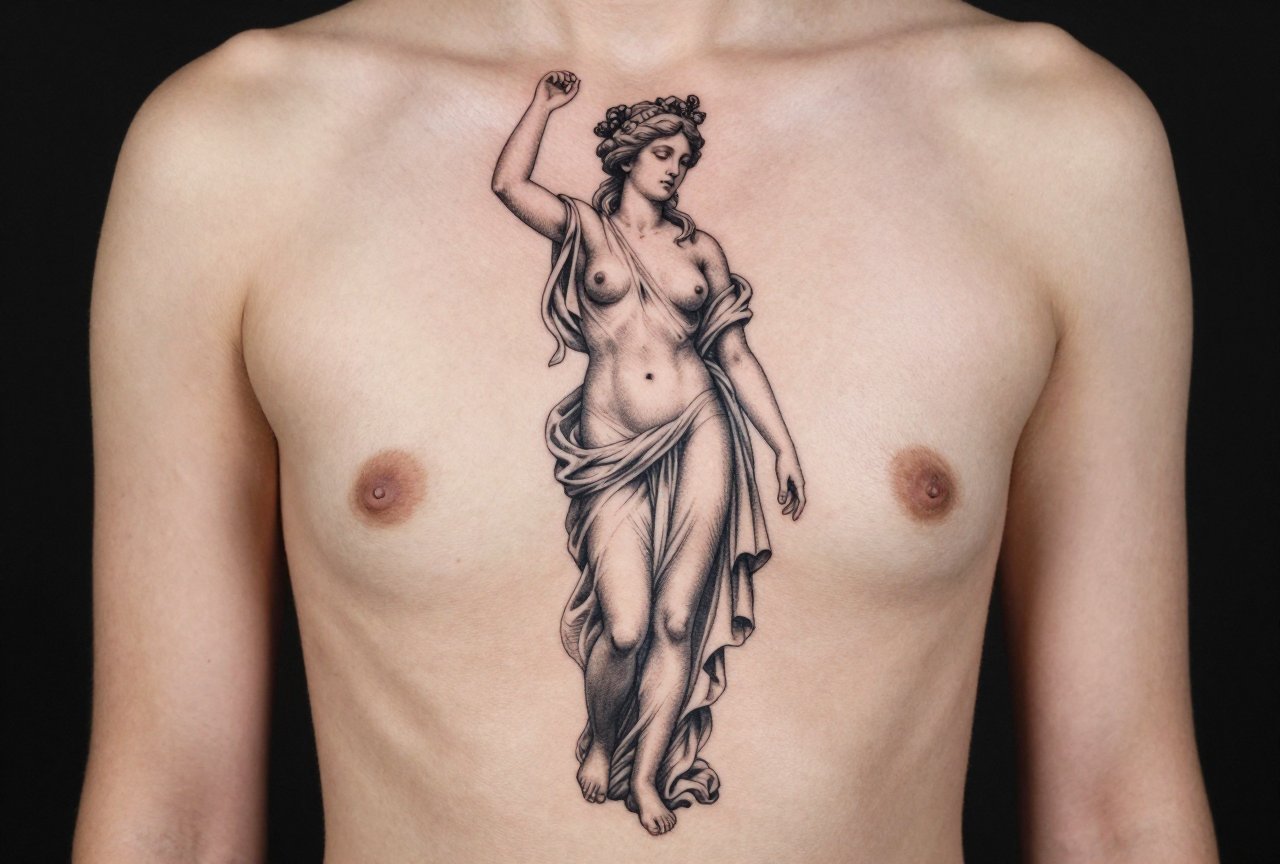
Marble-smooth skin, idealized proportions, draped fabric that falls in perfect folds. This style leans into the museum aesthetic, connecting the wearer to Western art history directly. Line work needs to be immaculate here, any wobble in the drapery kills the illusion. These age well if the lines stay bold; subtle gray shading can muddy over time, especially on sun-exposed areas. I always tell clients: if you want classical Aphrodite, commit to sunscreen like it’s religion.
Blackwork and Woodcut Styles
Heavy blacks, high contrast, less subtlety. This version feels more pagan, more chthonic. The shell becomes jagged, the face more severe. I’ve tattooed Aphrodite as a sort of dark mother figure in this style, surrounded by roses gone to seed and dead doves. It works for people who connect to her older, pre-Olympian origins, she had cults across the Mediterranean that predated the polished Athenian version, and some clients feel that rawer energy.
- Watercolor splashes: popular five years ago, tricky to execute well; too much color bleeding muddies the figure
- Art Nouveau: flowing hair, organic lines, Mucha-inspired halos, gorgeous but requires a specialist
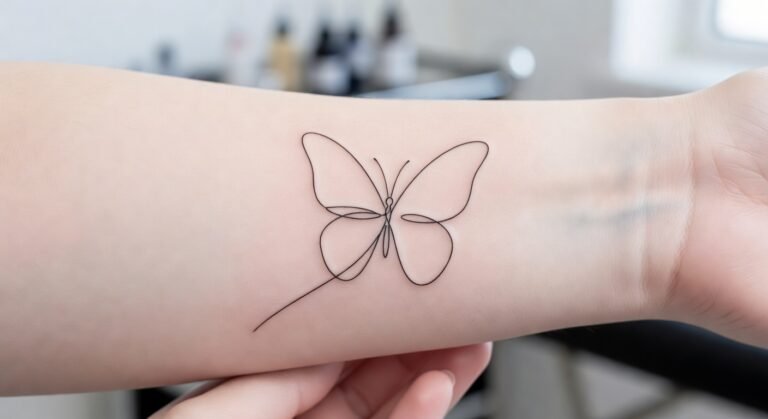
- Minimalist line: single needle, just her profile or shell; delicate, fades faster, best for small placements
- Statue realism: full 3D marble effect, demands serious technical skill and multiple sessions
Best Placements
Where you put Aphrodite matters as much as how you draw her. She’s a figure piece, usually, full body or at least bust with context. That demands real estate.
Thighs and hips are classic for goddess imagery, echoing the traditional placement of pin-up and fertility symbols. The curve of the muscle can work with the curve of her form. I’ve done several full-back pieces where she rises from a shell at the tailbone, hair flowing upward toward the neck, dramatic, but requires the client to commit to the whole canvas, not just a weekend whim.
Ribs work for smaller, more intimate versions. The pain is real there, though. I had a client tap out after three hours on a rib piece; we finished it six months later, and the line quality shift was visible where we picked up. Forearms and upper arms suit portrait-focused designs, especially if the wearer wants to see her regularly. Ankle and foot placements are rare, too small for the complexity, and the healing is miserable with shoes rubbing constantly.
- Back: maximum detail, shell-to-hair compositions
- Thigh: traditional feminine power placement, good for reclining poses
- Ribs: intimate, hidden, painful but personal
- Upper arm/shoulder: framing possibilities with draped fabric extending onto chest or back
Who Chooses This Tattoo / Personal Meanings
After fifteen years in shops, I can tell you there’s no single Aphrodite client. I’ve tattooed her on a sixty-year-old retired marine who wanted to honor his wife’s Greek heritage. On a non-binary person reclaiming femininity after top surgery. On a guy who worked in finance and wanted “something about desire that wasn’t a pin-up girl.”
Survivors and Reclaimers
This is the group I see most often, and it matters how we talk about it. Aphrodite was assaulted in myth, Anchises, maybe others depending on the version, and she survived, retained power, sometimes punished. Clients who’ve experienced sexual violence sometimes gravitate to her as a figure who endured and remained sovereign. I don’t pry, but I listen when they offer. The tattoo becomes a kind of armor, visible only when they choose.
Artists and Aesthetes
Some people just love the visual tradition. They want Botticelli’s Venus on their body because they’ve stood in the Uffizi and felt something shift. That’s valid too. Not every tattoo needs trauma narrative. Sometimes beauty is the whole point, and Aphrodite is its patron.
- Romantic resilience: love lost and still chosen
- Sexual autonomy: desire on the wearer’s terms
- Creative fertility: artists invoking her generative aspect
- Maternal lineage: Greek heritage, grandmother names, family connection
Similar Symbols
Clients sometimes waver between Aphrodite and related imagery. Understanding the distinctions helps them choose honestly.
Venus is the Roman counterpart, functionally identical in most attributes, but the name carries different cultural weight. Italian-American clients sometimes prefer Venus for family connection. Ishtar and Inanna are older Mesopotamian equivalents with more explicit war and political power associations; if a client wants love-plus-vengeance, I might suggest researching them. Lakshmi covers beauty and prosperity but within Hindu context, which requires genuine cultural connection, not aesthetic borrowing. Freyja from Norse tradition has similar overlapping domains but a completely different visual language.
Mermaids are the modern popular cousin, sea-born, beautiful, dangerous. But they’re folkloric, not divine, and lack Aphrodite’s specific cultural depth. Some clients start wanting a mermaid and end with Aphrodite once they understand what they actually crave is the mythic weight.
Final Thoughts
Aphrodite tattoos endure because the goddess herself refuses simplification. She blesses and destroys. She loves freely and punishes absolutely. On skin, she becomes whatever the wearer needs her to be, survivor, seductress, artist’s muse, complicated mother. The technical demands are real: she needs space, she needs skilled line work, she needs a client who understands that a cheap, small version will blur into unrecognizable gray within five years. But done right, with intention and craft, she ages like the myth does, gaining resonance, not losing it. I’ve watched clients cry when they first see her finished, and I’ve watched them return years later to add to her story. That’s the thing about tattooing gods. You’re not just marking skin. You’re inviting a relationship that changes as you do.
Frequently Asked Questions
Does an Aphrodite tattoo have to be large to look good?
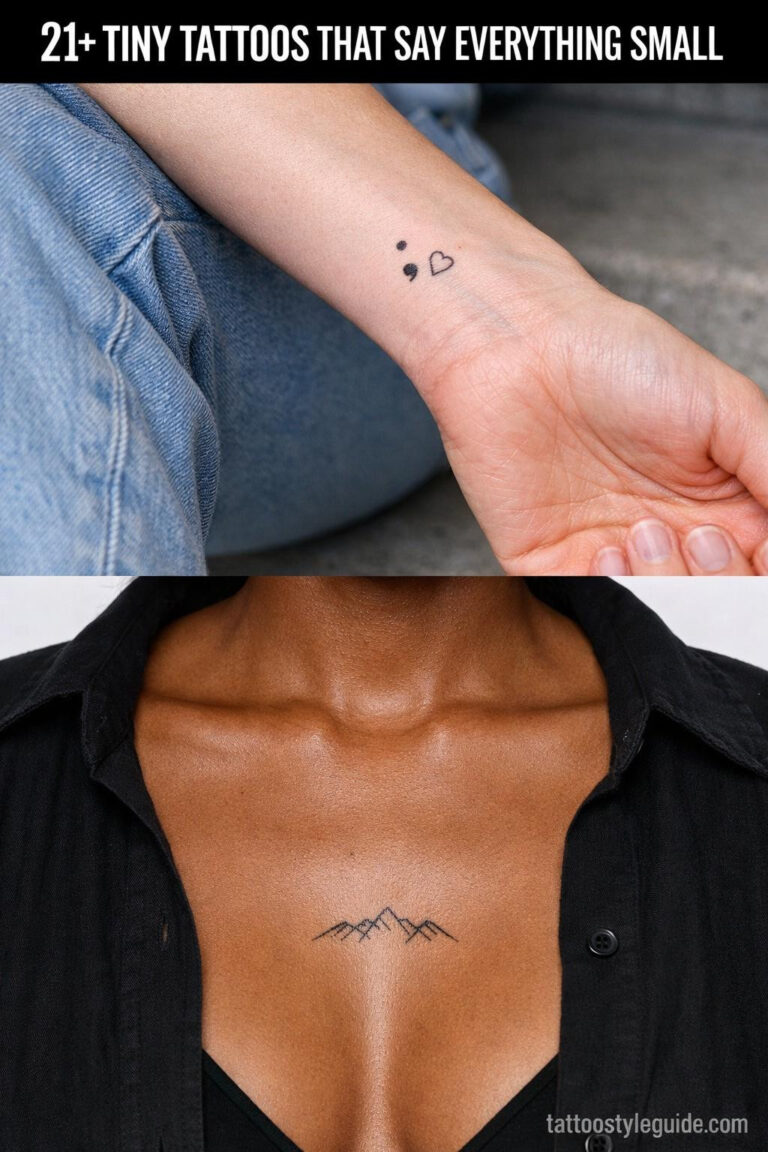
Not necessarily, but the detail matters. Small minimalist versions can work with clean line work, but complex classical renderings need space to breathe. I generally suggest at least palm-sized for any portrait element, or the features muddy within a few years.
Can men get Aphrodite tattoos, or is she strictly feminine?
Men get her constantly. I’ve tattooed Aphrodite on soldiers, construction workers, fathers honoring wives. The goddess represents desire and beauty broadly, there’s no gender restriction on who connects to those forces.
How do I choose between Aphrodite and Venus for my tattoo?
Consider heritage and resonance. Greek family roots or connection to her specific myths point to Aphrodite. Italian lineage or preference for Roman naming conventions suggest Venus. Visually they’re identical; the difference is what name feels true in your mouth.
What symbols pair best with Aphrodite in a larger composition?
Shells and roses are classic for a reason, they anchor her identity immediately. But I’ve seen compelling work with anchors (her sea birth), snakes (renewal and older chthonic associations), and broken swords (love as ceasefire). The key is personal meaning, not just visual pretty.
Related Tattoo Meanings
- Rose Colour Tattoo Meaning: A Full Guide to Symbolism
- 16+ Spiritual Tattoos That Actually Mean Something to You
- Bobby Pin Tattoo Meaning: Everyday Symbols, Deep Stories
- Explore more