
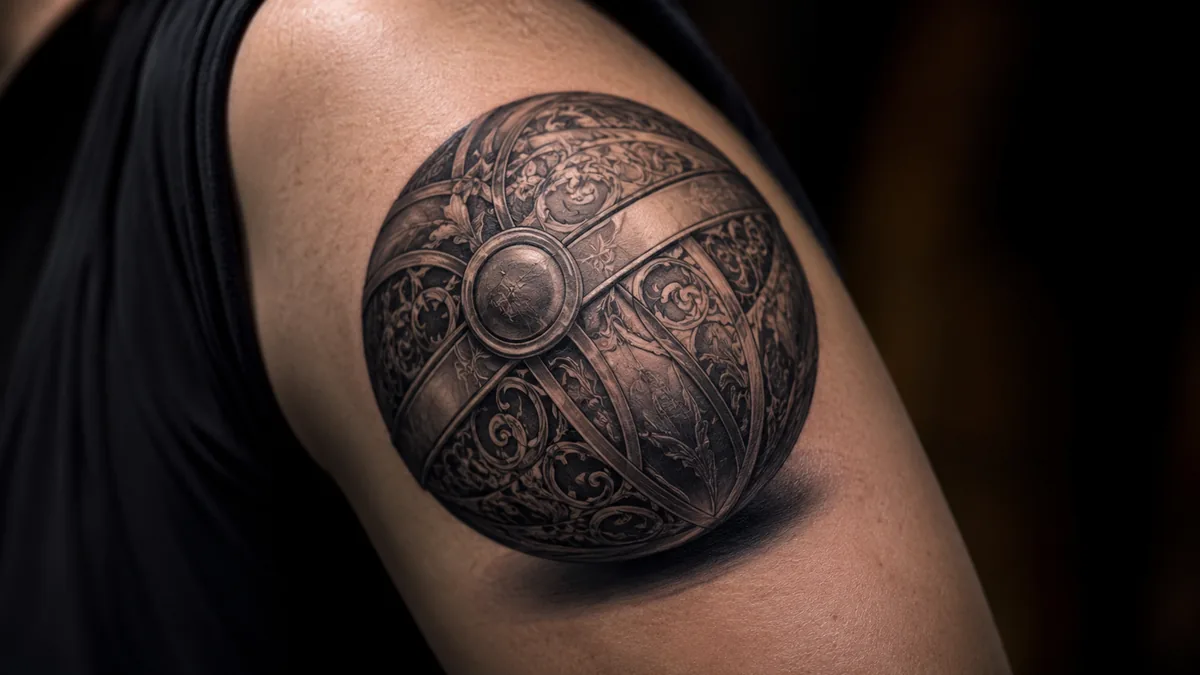
The 8 ball is one of those tattoos that carries serious weight without needing a paragraph to explain itself. Black, bold, reads from across the room. It’s a symbol that most people in the US understand on sight, and that’s exactly what makes it stick.
The meaning isn’t fixed to one thing, and that’s part of the appeal. Depending on your mindset and your design, an 8 ball tattoo can speak to luck, fate, risk, or a dark sense of humor about how life plays out. Here’s the full breakdown.
Core Symbolism: Luck, Fate, and the Edge of Both
The 8 ball sits at the center of pool culture as the final, most dangerous ball on the table. Pocket it at the wrong moment and you lose. That tension between winning and losing is the root of its symbolism. People wear it to represent living close to the edge, where one move can change everything. It’s not just about bad luck. It’s about accepting that luck is out of your hands sometimes.
A common phrase tied to it is ‘behind the 8 ball,’ meaning you’re in a tough spot, backed into a corner but still in the game. Some wear it as a badge of that experience. Others flip it toward pure fortune, using the 8 ball as a nod to prosperity since 8 is a lucky number in several cultures, especially in Chinese tradition where it symbolizes wealth and success.
Cultural Background: Pool Halls, Street Culture, and Old School Tattoo Tradition
Behind the 8 ball is exactly where some people choose to live.
The 8 ball has been part of American tattoo flash since at least the mid-20th century. Old school shops kept it on the wall alongside dice, horseshoes, and playing cards. All of those symbols share the same DNA: gambling, fate, chance. Pool halls in urban America were community spaces, sometimes tied to hustler culture, and the 8 ball carried that street-smart energy into tattooing naturally.
It also shows up in hip-hop and skate culture from the 80s and 90s. The Cross Colours 8 ball jacket is one of the most recognizable pieces of streetwear from that era. That cultural moment cemented the 8 ball as a symbol of cool defiance and urban identity. People who grew up in that world still get it as a direct nod to that time and place.
Design Variations: What You Can Do With the Shape
The classic version is simple: a black sphere with a white circle holding the number 8. Clean, bold, minimal. That’s the version that ages best and reads sharpest. But artists build on that foundation in a lot of ways. A cracked 8 ball suggests damage, inner chaos, or broken luck. Flames shooting off the ball push it into a more aggressive, rebellious read. A pool table scene with the 8 ball in the foreground gives it narrative context.
Some clients pair it with other gambling motifs, dice, cards, a hand holding cue chalk, to build out a larger luck-and-risk theme sleeve or chest piece. Others go more surreal, like an eye inside the ball, a skull reflected in the surface, or the Magic 8-Ball ‘window’ answer panel as part of the design. That last one adds a tongue-in-cheek element since the toy Magic 8-Ball gives vague fate-based answers, which fits perfectly with the tattoo’s core meaning.
Color vs Black and Grey: What Holds, What Pops
The 8 ball is built for black and grey. That glossy black sphere with stark white highlights is already a high-contrast design, and a skilled artist can make it look three-dimensional with just solid black fill and clean whip shade on the highlight. Bold will hold on this one as long as your linework stays tight. The white circle and the number 8 need crispy lines to stay legible as the skin ages.
Color versions exist, usually with a colored glow around the ball, neon outlines, or a background wash, but they’re less traditional. If you go saturated with background color, choose a palette that won’t muddy the black of the ball over time. Red and black together is a classic pairing. Avoid heavy color fills in the white circle area since those lighter tones fade faster and can turn the number muddy within a few years.
Placement and Aging: Where It Lives Best on the Body
The 8 ball is a compact, circular shape, which makes it flexible for placement. Upper arm, forearm, calf, and thigh all work well. It’s a shape that reads clearly on flat or slightly curved surfaces. Smaller versions work on the hand, wrist, or behind the ear, but those are high-wear zones. Hands especially are spicy to tattoo and notorious for fading fast since the skin regenerates quickly. Expect touch-ups if you go that route.
Larger versions, think softball size or bigger, open up the chest, ribs, and back as solid choices. The ribs are a spicy spot pain-wise but give you a clean canvas. Avoid placing fine detail versions anywhere that gets heavy sun or friction, like the inner wrist or ankle, without being ready to maintain them. The simpler and bolder the design, the better it will age on any zone you choose.
Who Gets It and How to Make It Yours
The range of people who get 8 ball tattoos is wide. Pool players and billiards enthusiasts get it as a direct personal reference. People who’ve been through hard times and came out the other side get it as a symbol of resilience, of being behind the 8 ball and not folding. Others get it purely for the aesthetic, the shape is clean, the meaning is layered enough to carry a conversation, and it fits well in both traditional and neo-traditional styles.
If you want to personalize it, think about what angle of the symbolism connects to you. Adding a specific date in the white circle instead of the 8 turns it into a memorial piece. Surrounding it with flowers, thorns, or geometric patterns shifts the feel without losing the core symbol. Talk to your artist about negative space and how to let the black breathe. The 8 ball is one of those designs where restraint usually wins over adding more.









