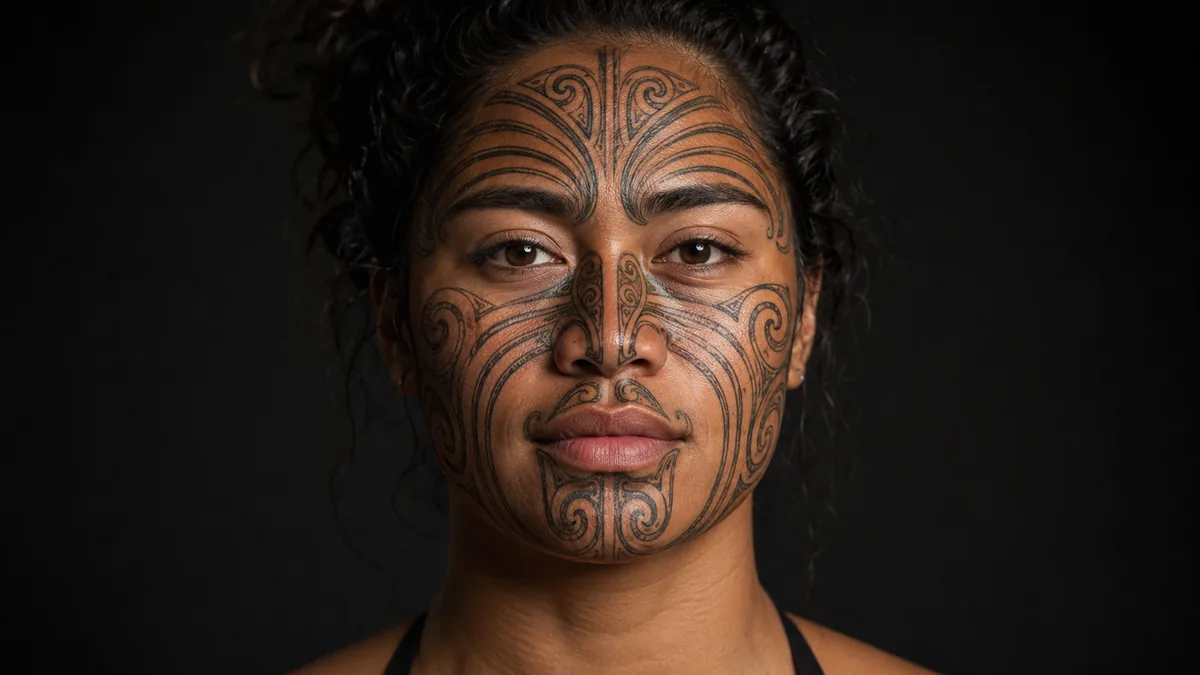
The Maori face tattoo, known as Ta Moko, is one of the most powerful and loaded pieces of body art on the planet. It’s not decorative filler. Every curve, spiral, and line is a record of who you are, where you come from, and what rank you hold in your community.
Ta Moko has been practiced by the Maori people of New Zealand for centuries. Getting one isn’t just a style choice. It’s a statement about identity and ancestry that carries serious cultural weight. If you’re drawn to this imagery, understanding what it actually means is the first step.
What Ta Moko Actually Means
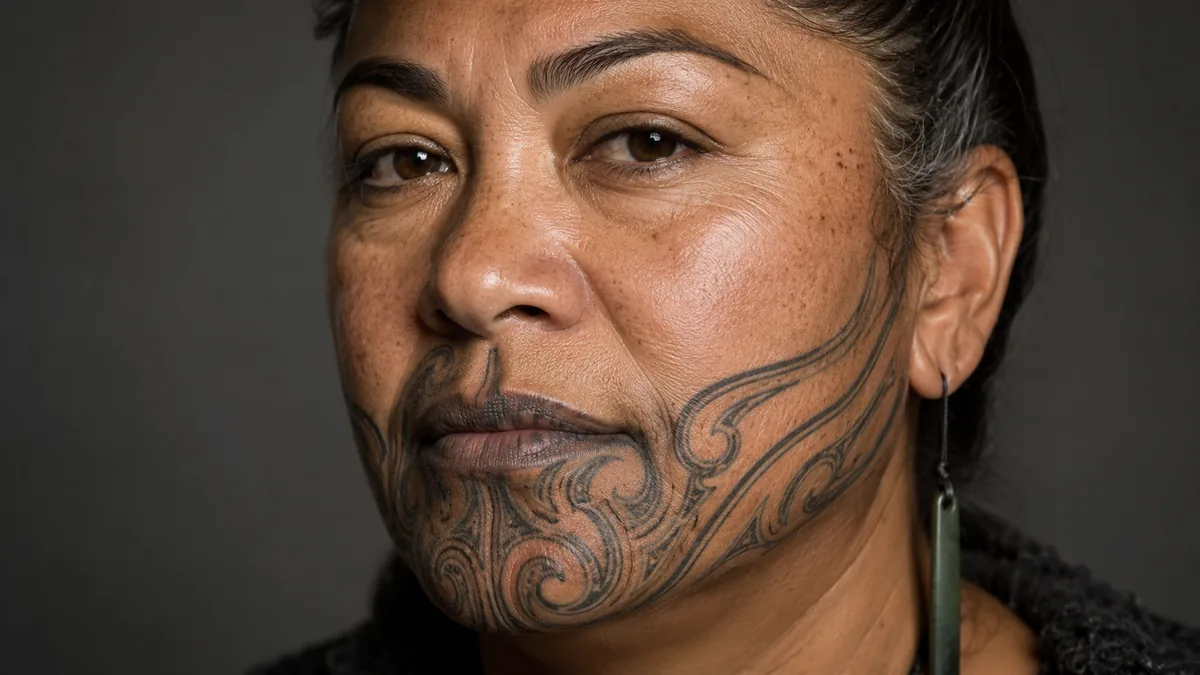
Ta Moko translates roughly to ‘to tap, to strike.’ The face was considered the most sacred part of the body in Maori culture, called the upoko, and placing moko there meant making your personal story permanently visible to the world. Each design served as a living document. It told others your tribe, your bloodline, your achievements, and your spiritual standing without a single word spoken.
Think of it as a biography carved in skin. Traditionally, no two Ta Moko were identical because no two people shared the exact same lineage and status. The patterns on the left side of the face typically represented the father’s lineage, and the right side represented the mother’s. That bilateral storytelling is built into the structure of every genuine moko.
The Core Symbols and Their Meanings
Your face is not a canvas for someone else's ancestry.
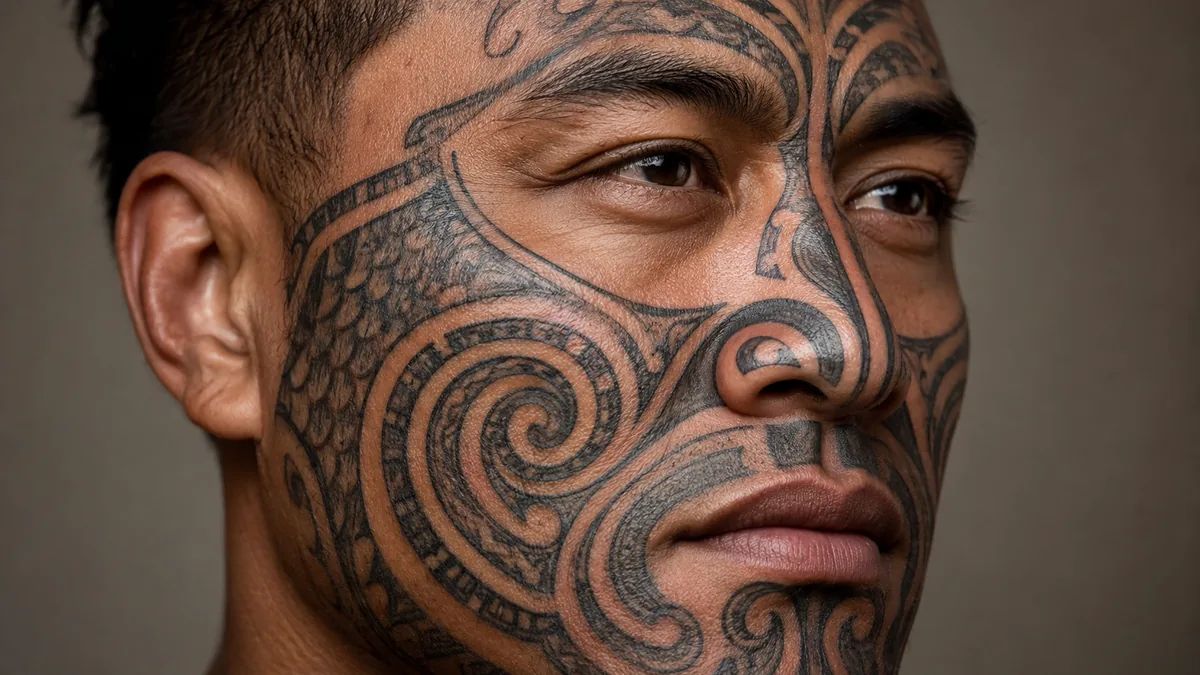
The koru is one of the most recognized Maori motifs. It’s an unfurling fern frond that represents new life, growth, and the cycle of renewal. You’ll see it in the sweeping curved lines throughout traditional moko. The pakati, a pattern of notched lines resembling dog teeth, represents battles fought and enemies overcome. Mangopare, the hammerhead shark pattern, signals strength and agility. These are not random shapes.
Spiral forms called pitau represent prosperity and expansion. The manawa, a wavy centerline, reflects life force and breath. Each element layers meaning on meaning. In a full face moko, you’re reading a stacked narrative. That’s why individual elements pulled out of context and placed randomly lose most of their original signal, even if they look sharp on their own.
Cultural Background and Historical Context
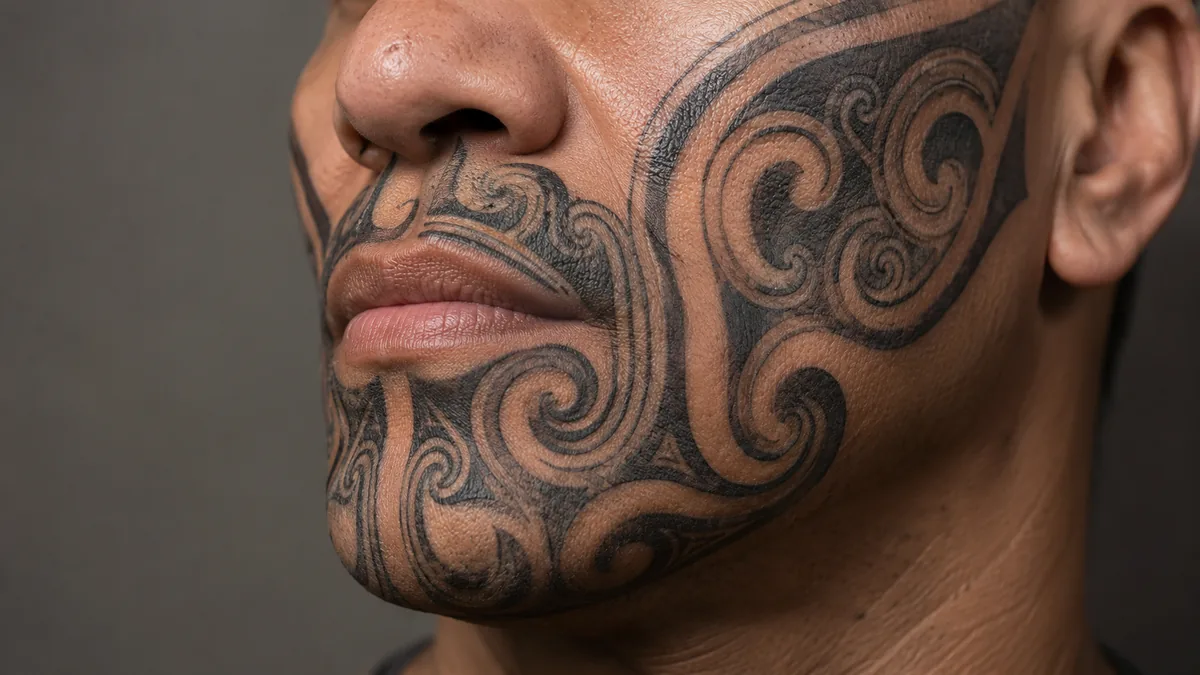
Ta Moko has been documented in New Zealand since long before European contact. Traditional application used chisels made from albatross bone, called uhi, that carved grooves into the skin rather than just depositing ink. This created a textured surface with ridged lines. When European tattooing tools arrived, the technique shifted to needle-based application, but the designs retained their traditional structure.
For Maori men, a full facial moko was a mark of high rank and maturity. Women traditionally received moko kauae, a chin tattoo marking status, fertility, and tribal affiliation. Colonization suppressed Ta Moko heavily and it nearly disappeared by the mid-20th century. Since the 1970s Maori cultural renaissance, it has seen a strong revival, reclaimed by Maori people as an act of cultural identity and resistance.
Design Variations You’ll Actually See
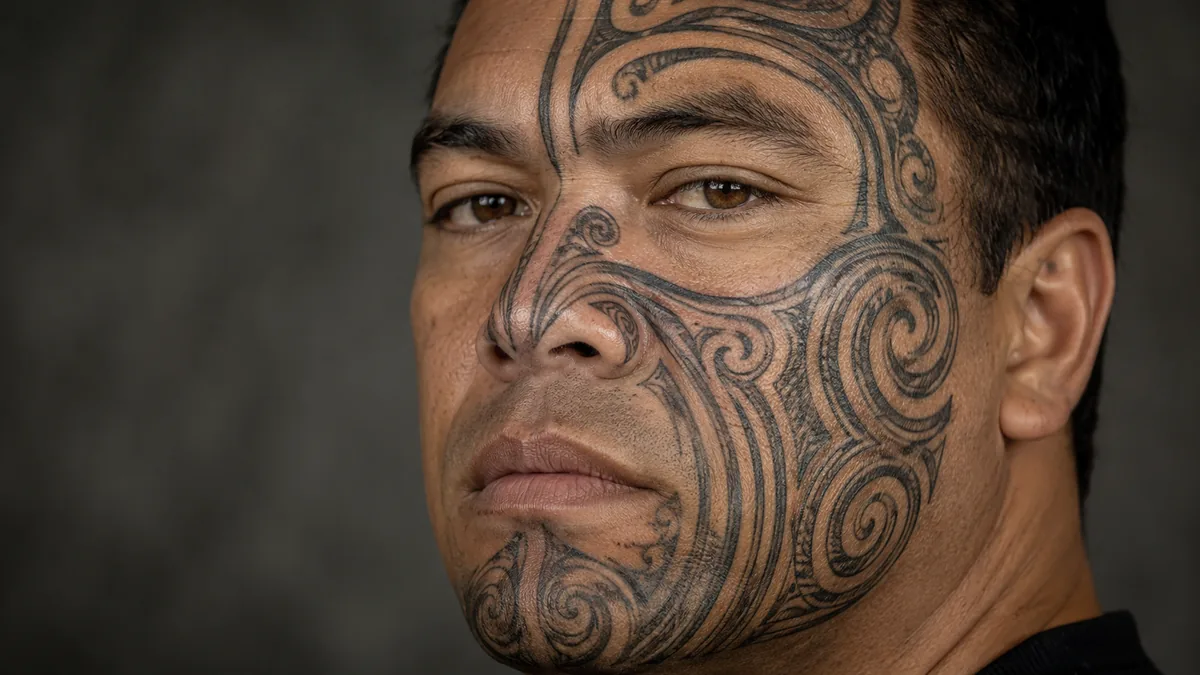
Full face coverage is the most traditional and the most intense. Most people getting Maori-inspired work today go partial: a half-face piece covering chin and jaw, a chin-only panel similar to the women’s moko kauae, or a cheek and temple piece. These partial applications let the foundational spirals and koru forms read clearly without committing to a full facial restructuring of your look.
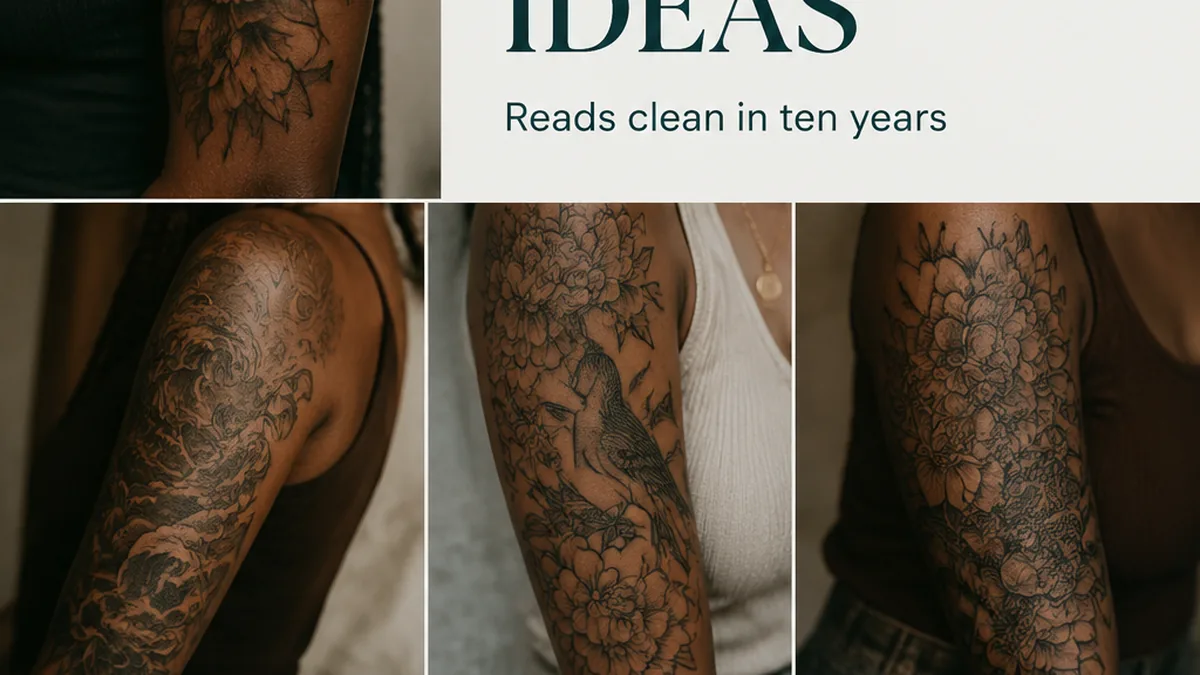
Contemporary Maori artists working in the tradition often use thicker, bolder lines that hold for decades and read from across the room. Some Western-influenced work blends Maori motifs with black and grey realism or incorporates fine line shading between the heavier structural elements. Bold will hold on the face. Fine line detail in high-wear zones like the corners of the mouth or nose crease will fade and blur within a few years.
Black and Grey vs. Traditional Black Work
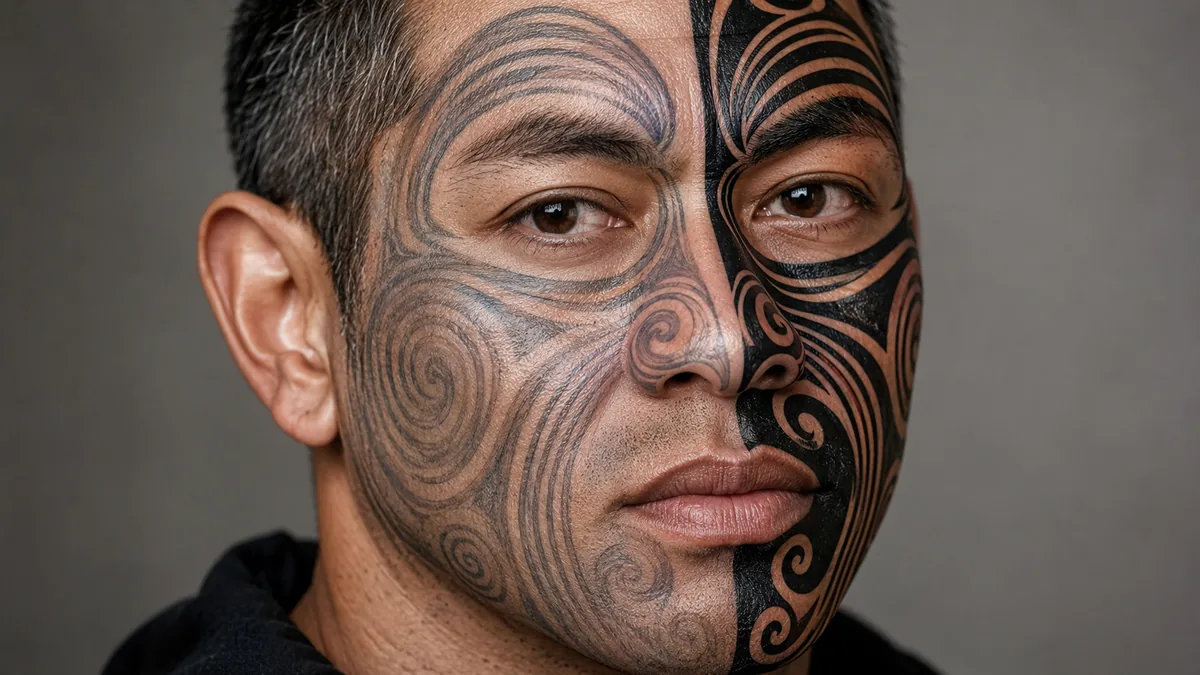
Traditional Ta Moko is pure black, no color, no shading gradients. The power of the design comes from the geometry, the line weight, and the negative space. That’s what gives it the graphic punch it’s known for. Adding color or watercolor washes to Maori-style work dilutes the structural clarity and tends to look dated fast. A clean, saturated black piece will still look crisp in twenty years.
Black and grey shading as a supporting technique can work if handled by an artist who understands line hierarchy. Whip shading behind the primary spirals adds depth without competing with the geometry. What doesn’t work is thin grey linework meant to mimic traditional moko. It looks washed out when fresh and turns into a blur within a few years on the face. The face sweats, moves constantly, and ages the ink differently than the arm or back.
Placement, Pain, and How It Ages
The face is legitimately spicy. Bony areas like the forehead, temples, and jawbone are high on the pain scale. The cheeks tend to be more manageable. Lip borders and the nose area are rough. Nowhere on the face is a cakewalk, but most experienced collectors say it’s more intense than painful for long, because the sessions are usually broken up. Full face work takes multiple sessions over months.
Facial ink ages faster than most placements because of sun exposure, constant movement, and skin cell turnover. Proper aftercare and SPF protection extend the life of the piece considerably. Bold linework holds best, which is exactly what traditional Ta Moko uses. Expect a touch-up within three to five years on high-movement zones like around the mouth. A well-executed piece with solid line weight will still read clearly well into old age.
Cultural Sensitivity and What to Consider
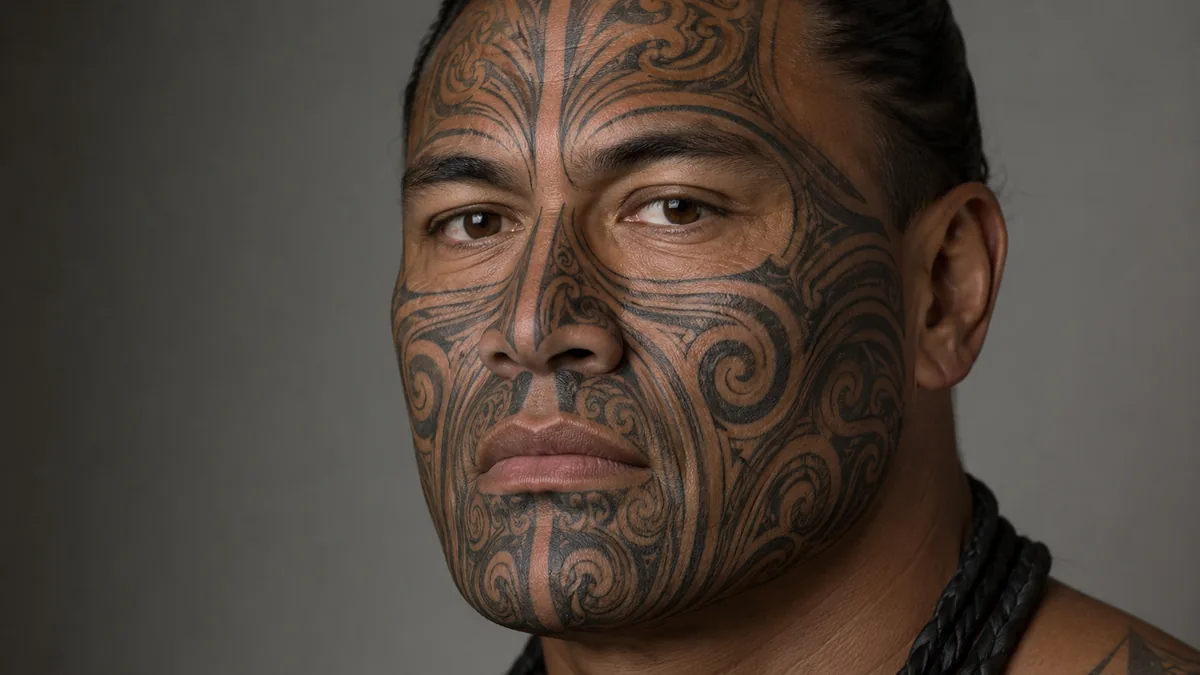
This is a real conversation in the tattoo community. Ta Moko is considered taonga, a treasure, by the Maori people. Many Maori elders and artists draw a clear distinction between Ta Moko worn by someone of Maori descent and Kirituhi, which is Maori-inspired work created for non-Maori people. Kirituhi uses the same visual vocabulary but is not a personal ancestral record. That difference matters.
If you’re not Maori, seeking out a Maori tattoo artist or one trained directly in the tradition is the most respectful path. They will tell you honestly what they will and won’t do, and they can help you build something that honors the aesthetic without misrepresenting your lineage. Wearing fake ancestry is the problem, not the appreciation of a genuinely extraordinary art form.
Who Gets This Work and How to Make It Personal
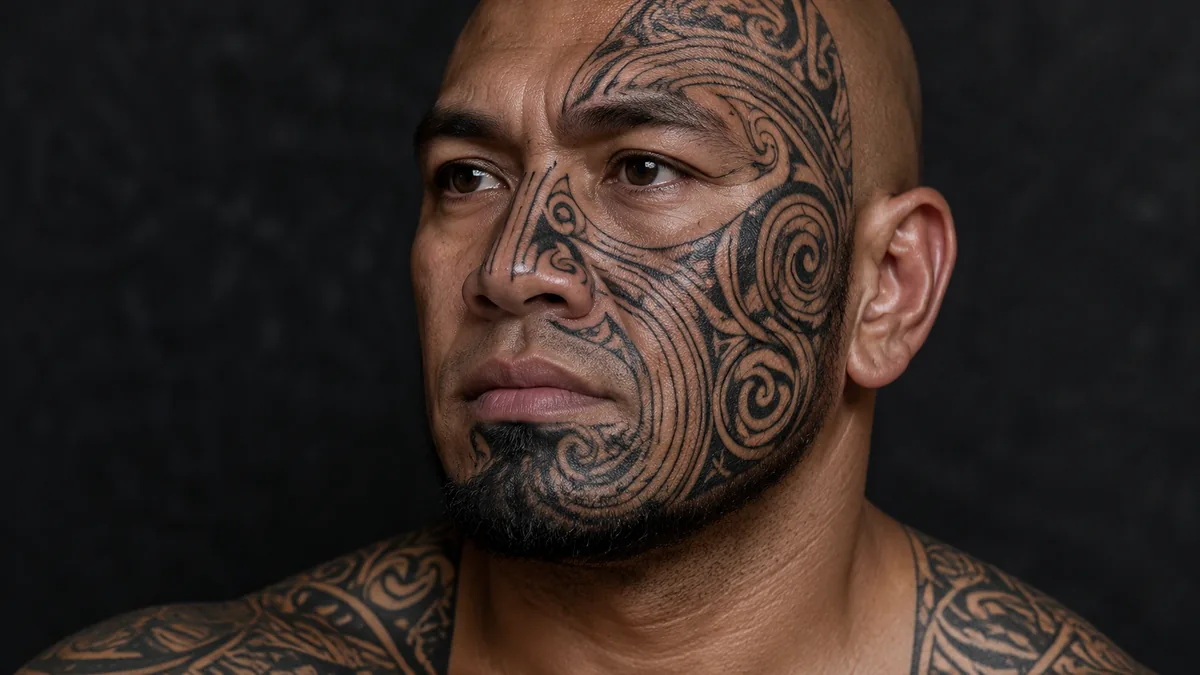
People drawn to Maori face tattoos usually share a few things: they’re committed collectors, they want their identity visible and permanent, and they’re drawn to work that carries narrative weight beyond pure aesthetics. It’s a different mindset from getting a sleeve. Facial work changes how the world interacts with you, daily, permanently. The people who wear it best are the ones who went in clear-eyed about that reality.
Making the design personal without fabricating Maori heritage means leaning into the symbolic vocabulary honestly. Work with your artist on elements that reflect your actual story: family, struggle, growth, protection. The koru for a new chapter, the pakati for adversity overcome, the mangopare for resilience. That approach keeps the work grounded in real meaning while making it genuinely yours, not a costume.